

Yes, beets cause temporary extrinsic staining on teeth due to dark red pigments called betalains.
While these pigments bind to the salivary pellicle (protein film) on enamel, they do not cause permanent structural damage or intrinsic discoloration.
Staining is most severe when beets are consumed with acidic foods like balsamic vinegar, which temporarily softens enamel.
This guide examines the biochemistry of betanin pigments, compares beet acidity (pH 6.3) to red wine, and outlines 5 evidence-based prevention strategies.
Let’s break down why beets stain teeth and how to prevent it easily.
Key Takeaways
-
Certain foods, including beets, can cause temporary tooth discoloration, but the stains are surface-level and reversible with proper care or help from a dental professional.
-
Beets contain dark-colored pigments that attach to the tooth surface, similar to other dark-colored foods and stain-causing foods.
-
Beet juice is a dark liquid, yet its pH is above the enamel erosion threshold, so it does not significantly damage teeth when consumed alone.
-
Compared with red wine, coffee, and other foods that stain, beet stains are milder and easier to remove.
-
To minimize staining, rinse after eating beets, avoid sipping beet juice all day, and brush your teeth immediately when possible.
-
Chew sugar-free gum after meals to increase saliva flow, which helps wash away pigments and keep teeth healthy.
-
Limiting pairing beets with citrus fruits and other acidic items helps protect teeth and maintain a healthy smile, even when you regularly eat berries or other colorful foods.
Do Beets Actually Stain Teeth?
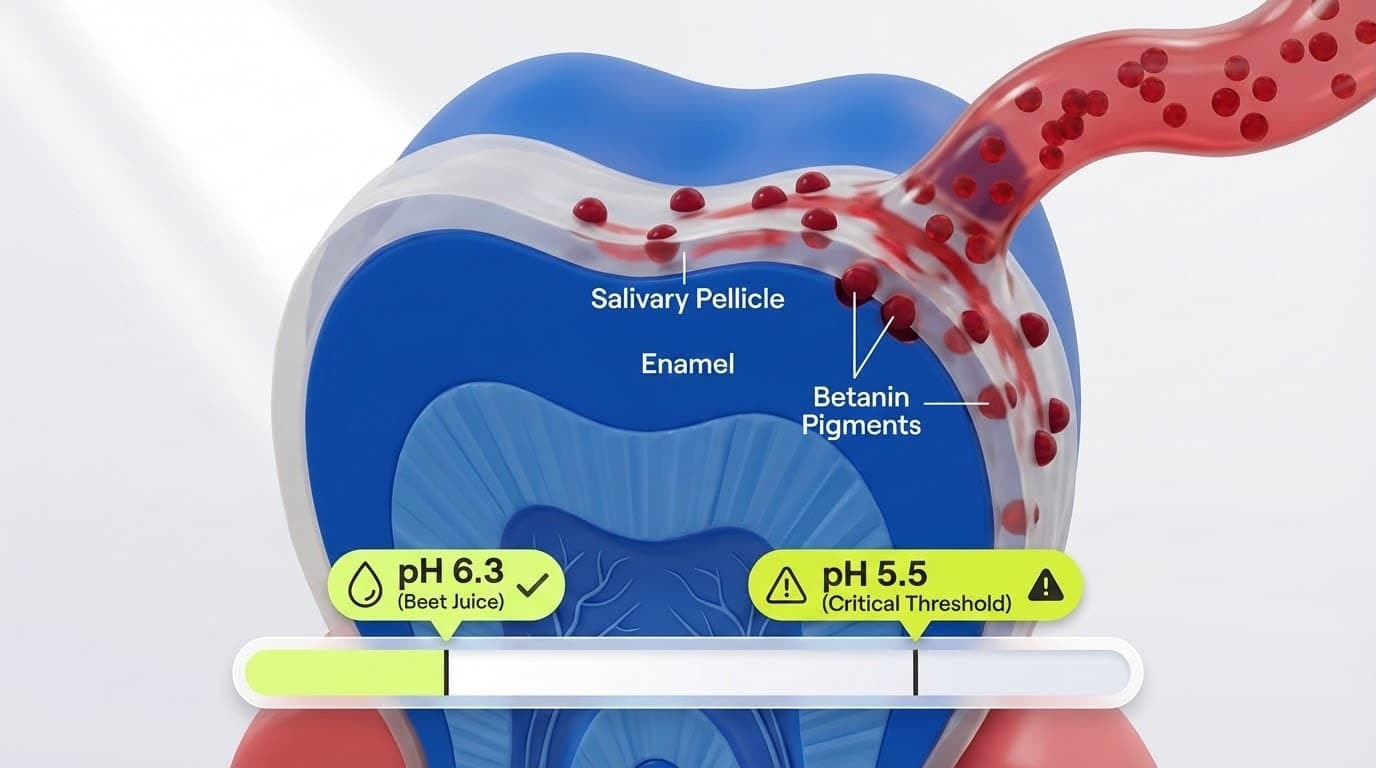
Yes, beets can stain teeth, but it's more about color than damage. Studies show that beet juice causes surface-level teeth staining, not permanent discoloration inside the tooth.
Laboratory analysis confirms that beet juice alters tooth color attributes. (A 2019 study published in the Journal of Indonesian Dental Association found that repeated exposure to beet juice caused significant color deviation on the enamel surface.
However, the study confirmed these changes were strictly extrinsic (surface-level), meaning the pigment did not penetrate the hydroxyapatite crystal structure of the tooth.
The main reason beets stain teeth is a natural red pigment called betanin. This pigment sticks easily to the thin protein layer that coats your teeth. Because of this, beets belong to a group known as teeth-staining foods, along with soy sauce and tomato sauce.
The good news is that beet stains are temporary.
Beet pigments do not cause tooth decay or permanently change the intrinsic tooth color.
Certain habits can make staining more noticeable, including
-
Prolonged Exposure: Drinking beet juice slowly over several hours increases pigment contact time.
-
Frequency: Consuming beets multiple times daily overwhelms the saliva's cleaning capacity.
-
Plaque Retention: Existing plaque provides a rough surface area where pigments adhere 3x faster than on smooth enamel.
-
Acidic Pairing: Eating beets with vinaigrettes lowers mouth pH, facilitating pigment binding.
Beet juice is chemically safe for enamel. With a pH of approximately 6.3, it sits well above the critical threshold of 5.5, below which enamel demineralization occurs.
However, the risk shifts when beets are paired with acids. Consuming beets with balsamic vinegar (pH ~3.0) creates an acidic environment that temporarily softens the enamel surface, increasing the adhesion rate of betanin pigments.
Compared to stronger staining foods, beet stains are easy to remove. Brushing your teeth, chewing sugar-free gum to increase saliva, and keeping up with dental cleanings usually remove the color completely.
Because the stain remains on the surface, teeth whitening treatments are usually unnecessary.
Why Beets Stain Teeth: The Science Explained
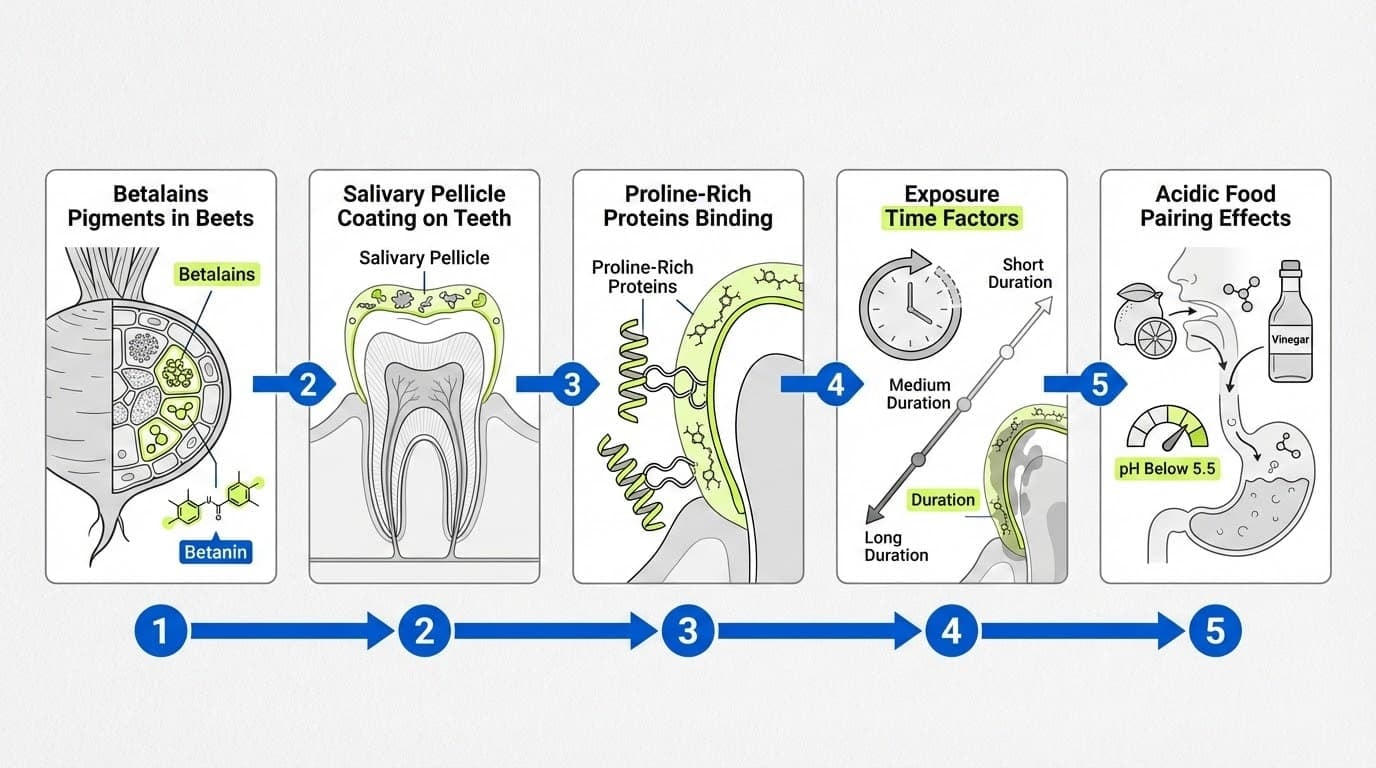
Beets can stain your teeth for several reasons. Let’s break them down using both simple language and science-backed details:
1. Beets Have Powerful Natural Pigments
Beets contain red-violet pigments called betalains. Betanin, a nitrogenous red-violet pigment from the betalain family, functions as the primary chromophore responsible for beet juice's intense coloration.
Betanin absorbs light in a way that makes it intensely visible, especially when it comes into contact with the surface of your teeth.
A 2019 lab study tested beet juice on extracted teeth and found measurable and visible staining after just a few days of exposure. The total color deviation (ΔE) increased significantly, meaning the red tint was not just noticeable to the eye but also confirmed with dental color scanners.
2. Your Teeth Are Coated in a Sticky Layer
Your teeth are naturally covered in a protein film called the salivary pellicle. It forms within seconds after brushing and attracts food pigments. This is why teeth can stain even if your enamel is healthy.
Betanin binds to this layer via chemical forces such as hydrogen bonding and ionic interactions. Once stuck to this film, the pigment becomes resistant to being rinsed away by saliva or water. That is why brushing or professional cleaning is usually needed.
3. Some People Stain More Than Others
Individual differences in saliva also matter. If your saliva has more of certain proteins like proline-rich proteins (PRPs), pigments like betanin bind more easily. This explains why two people can eat the same beet salad, and only one ends up with pink teeth.
Research published in the Journal of Dental Research demonstrates that Proline-Rich Proteins (PRPs) in saliva precipitate tannins and pigments.
Individuals with higher PRP concentrations may experience increased binding of betanin to the enamel surface. People with higher PRPs may experience two to three times more staining than others.
4. How You Eat Beets Affects Staining
Sipping beet juice slowly or frequently eating beets throughout the day increases your teeth’s exposure time. This gives betanin more time to settle onto the tooth surface. If you pair beets with acidic foods like lemon or balsamic vinegar, your enamel may soften temporarily, making it easier for pigments to stick.
According to the General Dentistry Journal, eating acidic foods can lower your enamel’s pH below the safe level of 5.5. This does not cause immediate damage, but it creates a window of time when your enamel is more vulnerable. Brushing during this time can lead to erosion, which might trap more pigments over time.
5. Acidic Foods Can Make Staining Worse
While beet juice itself is not very acidic (its pH is around 6.35), when beets are eaten with acidic foods like tomato sauce, lemon juice, or vinegar, the pH can drop below 5.5. This temporarily weakens the outer layer of your teeth. If you brush right after, you could wear away enamel and make future stains worse.
The Journal of Clinical Oral Investigations reported that enamel demineralization increases when acidic foods and drinks are consumed frequently, especially when proper rinsing or delayed brushing is not performed.
Are Beet Stains Harmful to Teeth?
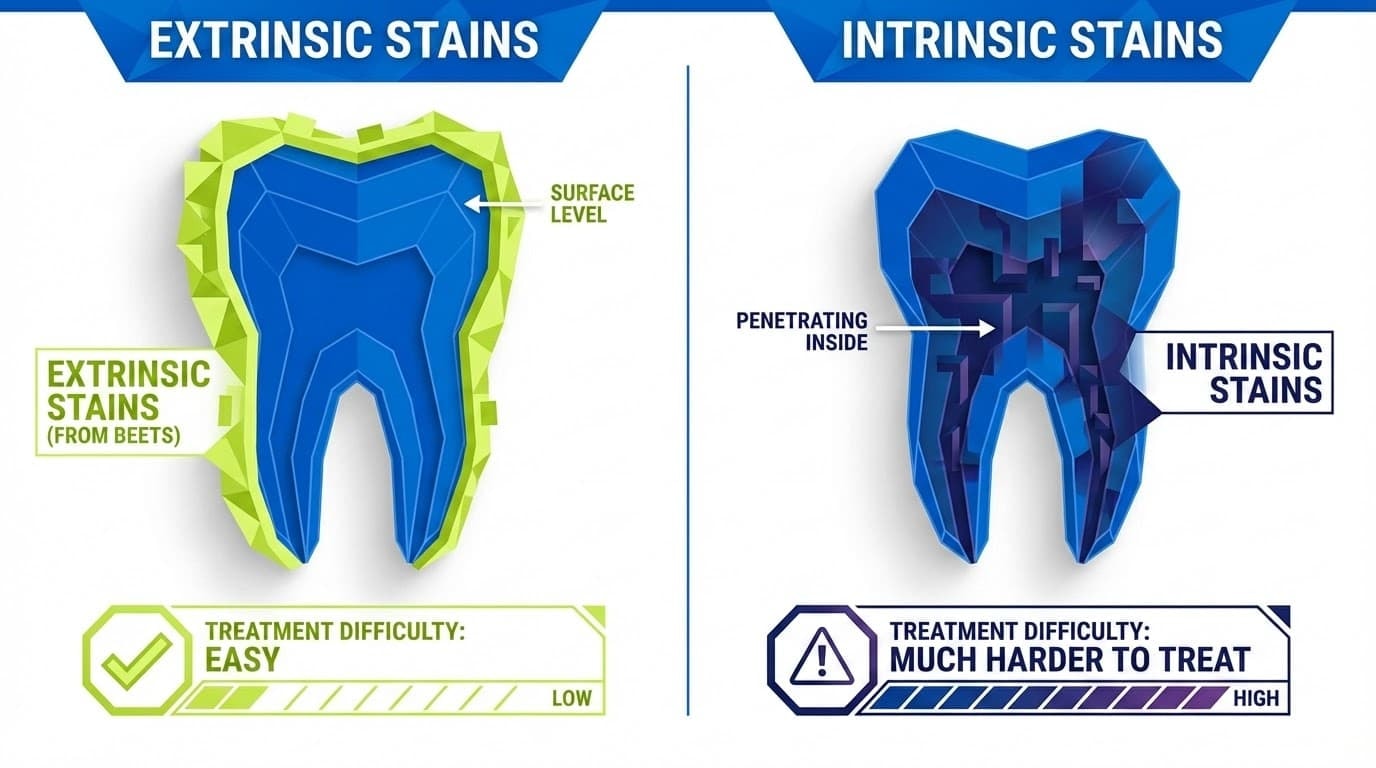
Beet stains may look scary, but they aren’t harmful. They cause extrinsic stains, which means the color is only on the surface. That’s different from intrinsic stains, or tooth discoloration, which affects the inside of the tooth and is much harder to treat.
The only time beets might increase risk is when they’re mixed with acidic foods like balsamic vinegar or tomato sauce. If your enamel is already softened by acids, pigments stick even more easily. To stay safe, wait 30 minutes before brushing your teeth after acidic meals. This gives your enamel time to get strong again.
Compared to drinks like red wine, tea, or coffee, beet stains are much easier to remove. Brushing, rinsing, or using teeth whitening products usually works well. You can also chew sugar-free gum after eating to boost saliva flow, which helps clean your teeth naturally.
In the end, beets might stain teeth, but they don’t hurt them. Their health benefits are worth it, and with simple habits, you can enjoy beets while still maintaining white teeth and keeping your teeth healthy.
Who Is Most Likely to Notice Beet Staining?
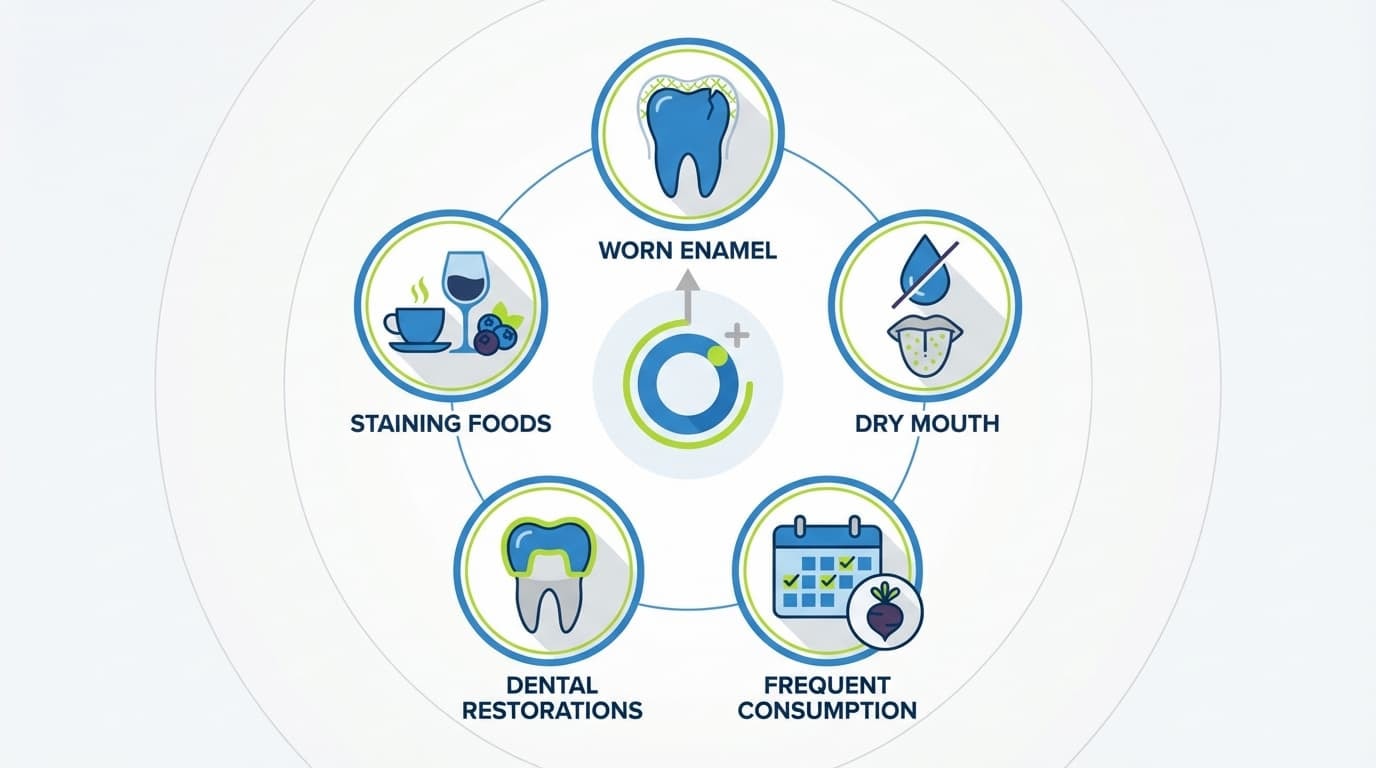
Not everyone experiences beet stains the same way. Some people notice a noticeable pink tint after eating beets, while others don't. That’s because several personal factors can make your teeth more or less likely to hold onto pigment.
Here’s who might be more prone:
1. People with Thinner or Worn Enamel
Tooth enamel acts as a natural barrier against staining, but it’s not created equal. If your enamel is thin, porous, or already worn down from brushing too hard, acid erosion, or age, pigments from beets and other common culprits like coffee or black tea can stick more easily. Weakened enamel also loses its ability to reflect light, making stains more visible.
2. Those with Less Saliva or Dry Mouth
Saliva helps remove plaque, neutralize acids, and wash away food pigments before they can stain teeth. If you experience dry mouth from medication, aging, or dehydration, your risk of stain buildup increases. The protective film on your teeth doesn’t refresh as quickly without adequate saliva flow.
3. Frequent Beet or Juice Consumers
If beets or beet juice are among your favorite foods, you might see more color left behind. Sipping beet juice over time instead of finishing it quickly increases contact with your enamel. The same applies to frequent snacking on dishes rich in beets. These habits allow pigments more time to settle into the protective film on your teeth.
4. People with Certain Dental Restorations
Dental work, such as older composite fillings, veneers, or rough-surfaced crowns, may retain pigments differently than natural enamel. These materials might attract and hold stains longer, especially if they haven’t been polished recently. You may notice staining more around the edges of fillings or on the surface of crowns.
5. Those Who Consume Staining Foods Often
Beets aren’t alone. If your diet regularly includes other foods that stain teeth, such as tomato-based sauces, black tea, coffee, or soy sauce, pigments from beets may compound the problem. While many of these are also among the best foods for overall nutrition, they require extra oral care.
Beets, Acidity, and Enamel: Do They Erode Teeth Too?
Beet juice has a mild acidity with a pH of around 6.3. This is above the critical pH level (5.5), where tooth enamel begins to erode. That means, by itself, beet juice is unlikely to cause enamel breakdown the way lemon juice or sports drinks can.
However, combining beets with highly acidic condiments like balsamic vinegar or citrus can temporarily soften enamel, especially if you brush right after. This softening weakens the protective film on teeth, making them more vulnerable to pigments from beets and other dark-colored foods and drinks.
Tip: To prevent staining and protect enamel, rinse with drinking water after meals, or drink plenty of water, and wait at least 30 minutes before brushing.
How Do Beets Rank Against Coffee and Red Wine for Staining?
Beets aren’t alone among color-rich foods that stain. Many favorite foods have high staining potential. Here's how they compare:
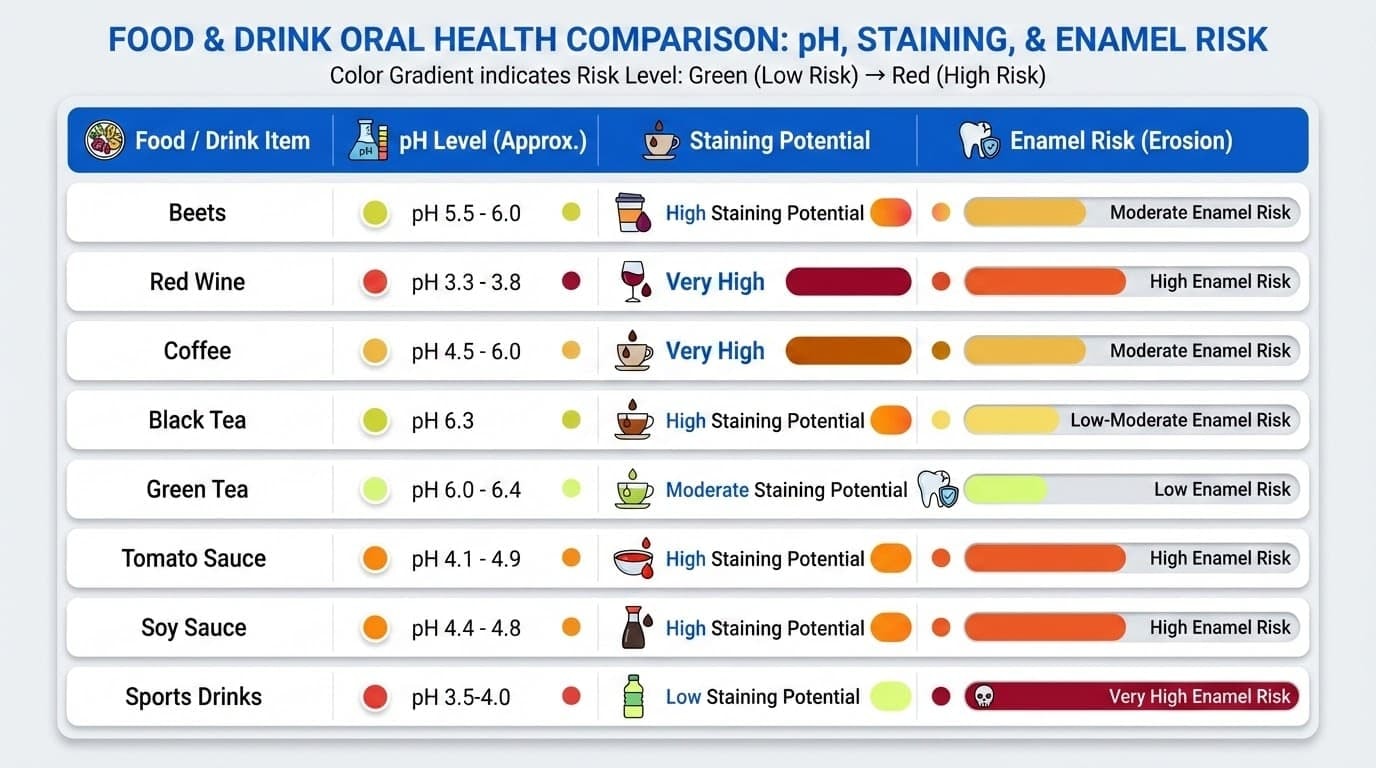
Beets rank high in staining effects but lower in enamel damage unless combined with other acids. In contrast, sports drinks and red wine both stain and actively erode enamel, making them more harmful in the long term.
How to Prevent Beets from Staining Your Teeth
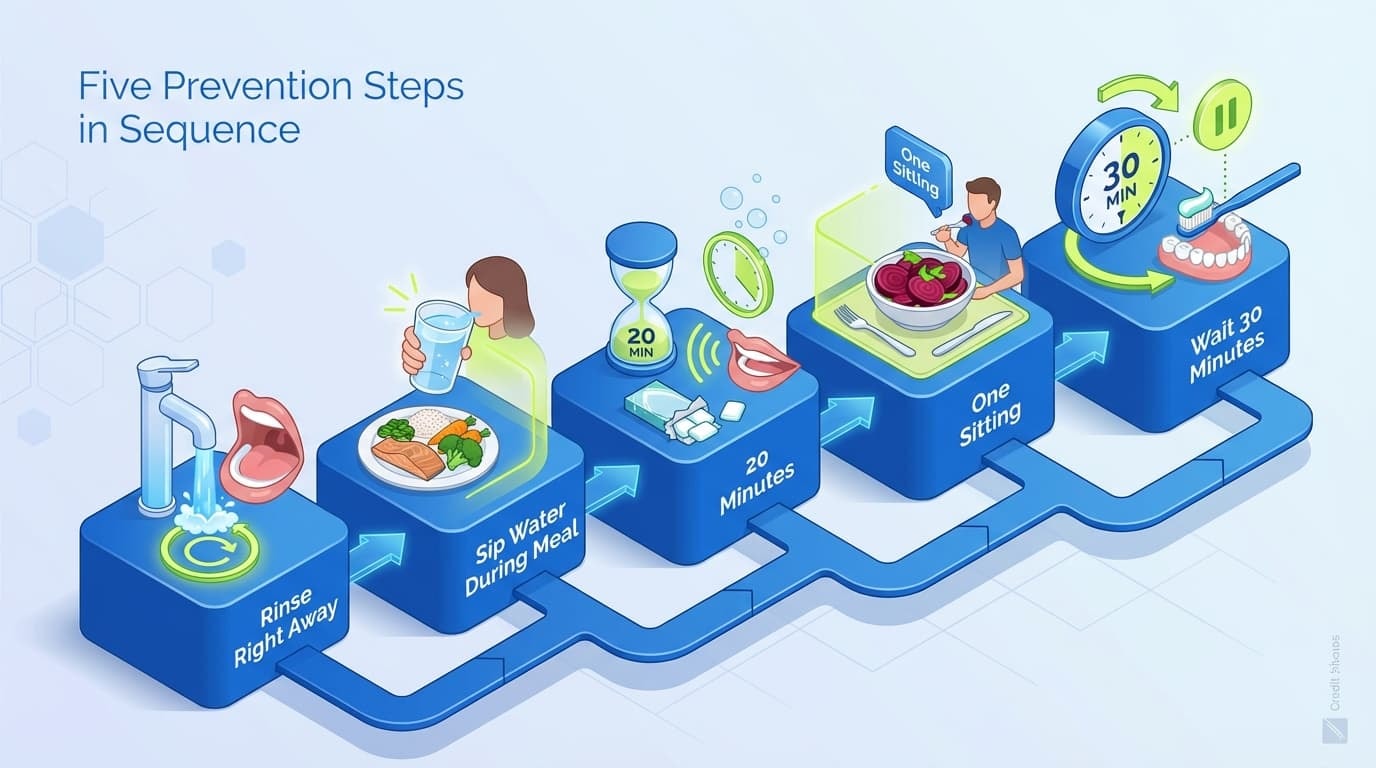
Beets offer impressive health benefits, but their dark pigments can stain your teeth if they linger too long. Follow these simple, science-backed steps to enjoy beets while keeping your smile bright.
Step 1: Rinse right away
Rinse your mouth with water immediately after eating beet-based meals. This helps remove food particles and pigment before they stick to your enamel.
Step 2: Sip water during your meal
Drink plenty of water while eating. Staying hydrated supports saliva flow, which naturally washes away staining compounds.
Step 3: Chew sugar-free gum after eating
Chew sugar-free gum for about 20 minutes after your meal. This boosts saliva production and helps naturally clean your teeth.
Step 4: Eat beets in one sitting
Avoid grazing on beets throughout the day. Eating them all at once limits how long pigments stay in contact with your teeth.
Step 5: Wait before brushing
If your meal includes balsamic vinegar, citrus fruits, or other acidic foods, wait at least 30 minutes before brushing. This protects enamel that may be temporarily softened.
SNOW Whitening Mouthwash is peroxide-free and safe for daily use. It helps lift surface stains caused by foods like beet juice, coffee, and red wine without damaging enamel. Using it after meals can reduce pigment buildup and help maintain white teeth.
Can Beet Stains on Teeth Be Removed?
Yes, beet stains are extrinsic and can be removed with the right care. Here are options based on severity:
-
At-home brushing and flossing remove light staining. Use a soft-bristle toothbrush and gentle circular motions to avoid damaging enamel.
-
Whitening toothpaste with mild abrasives can gradually lift surface discoloration.
-
Professional dental cleaning offers instant results, using ultrasonic tools or air polishing to eliminate stubborn pigment buildup.
SNOW Teeth Whitening Kit system uses an enamel-safe peroxide-based serum to lift surface stains at home without sensitivity. Great for ongoing stain removal.
Practical Eating Tips for Beet Lovers
Love eating beets but hate the stains? These practical strategies can help you balance health with maintaining white teeth:
-
Eat fiber-rich foods (like leafy greens or carrots) alongside beets to scrub the teeth while you chew.
-
Use a straw when drinking beet juice to limit direct contact with teeth.
-
Brush your teeth 30 to 60 minutes after eating if your meal included acidic items.
-
Rinse your mouth with water or a mouthwash right after beet-based meals.
-
Limit your intake of other dark-colored foods, such as coffee, black tea, or fruit juices, at the same meal.
With stain-lifting jet power and a whitening solution compartment, the SNOW Water Flosser is ideal for removing food particles and stains from hard-to-reach areas.
Upgrade your Routine with the SNOW Water Flosser Today
Final Thoughts
Beets are colorful, nutritious, and great for overall oral health, even though their pigments can temporarily stain teeth. The good news is these stains are surface-level and do not damage teeth when proper care is followed.
Simple habits can help prevent staining and keep teeth white. Rinsing after meals, supporting saliva production, and limiting staining foods all make a difference. Green and herbal teas are gentler options than dark drinks, and avoiding hard candy can help protect the enamel's natural protective layer.
If discoloration appears, professional cleanings and whitening options can help remove stains and restore brightness.
To support daily care and reduce staining from everyday foods, explore the full SNOW Collection. From whitening toothpaste to mouthwash and LED kits, each product is designed to help protect your smile.
FAQs
How long do beet stains typically last on teeth?
Beet stains on teeth typically last about 24 to 48 hours if they’re mild. Your mouth’s natural saliva production, along with regular brushing, helps remove stains quickly. However, if you're consuming beet juice daily, the staining effects may build up. In that case, consistent oral hygiene can still reduce staining within a few days. If stains persist beyond a week, a professional cleaning can remove them completely.
Is it safe to brush teeth immediately after eating beets?
Yes, it is generally safe to brush your teeth immediately after eating beets alone. Beet juice has a pH of around 6.3, which is not acidic enough to cause enamel erosion. But if you eat beets with acidic foods like citrus fruits, tomato-based sauces, or balsamic vinegar, wait 30 minutes before brushing. This helps protect the enamel’s outer layer, which can temporarily soften due to acidic exposure.
Are children’s teeth more at risk from beet stains?
Children’s teeth are slightly more at risk from beet stains because they have thinner enamel and a developing protective layer. However, beet stains are completely harmless and temporary. Parents can help prevent noticeable discoloration by having kids drink water afterward, chew sugar-free gum, or brush within an hour of eating brightly colored foods like beets.
Can beets permanently stain dental work like veneers or crowns?
Beets do not permanently stain high-quality dental work, such as glazed ceramic veneers or polished crowns. These materials are designed to resist staining. However, older restorations or composite fillings may be more porous and could absorb pigment over time. If you notice stains that don’t go away with brushing, your dental professional can remove them during a cleaning.
Do cooked beets stain teeth less than raw beets or beet juice?
Cooked beets do not stain teeth significantly less than raw beets or beet juice. The betanin pigments responsible for staining remain present even after cooking. However, eating whole cooked beets as part of a meal may result in less exposure than sipping beet juice throughout the day. The fiber in whole beets can also help reduce how much pigment sticks to your teeth.


