

Here’s a situation that may sound familiar: You pop on a set of whitening strips while relaxing at home, pick up your phone to text a friend back and scroll your favorite apps, then panic when you realize you have no idea how long you’ve left the strips on for. So, what happens if you leave whitening strips on too long? If this was a one-time mistake, the most common effects are temporary tooth sensitivity, irritated or white-looking gums, and a briefly uneven or chalky-looking smile. Those reactions can be uncomfortable, but they don’t automatically mean you caused permanent damage.
Here at SNOW, we know the real question isn’t whether you broke the timer rule. You already know that part. You want to know what the extra contact may have done, what should settle on its own, and what would actually be worth showing a dentist. We’ll start there, then work backward to how long is too long for different whitening formats and how to avoid repeating the same problem.
Key Takeaways
-
One overlong whitening session is more likely to cause temporary sensitivity or gum irritation than cause lasting damage.
-
Sensitivity, temporary white gums, and a blotchy-looking result should trend toward normal after whitening stops.
-
Severe or worsening pain, blistering, bleeding, swelling, or an open sore shouldn’t be treated like routine whitening irritation.
-
There isn’t one universal wear-time ceiling for strips, trays, and pens. The correct limit is the timing given for that exact product.
-
Repeated overexposure matters more than one accidental long session. Extra time doesn’t reliably create extra whitening.
What To Do When You’ve Left Whitening Strips On Too Long
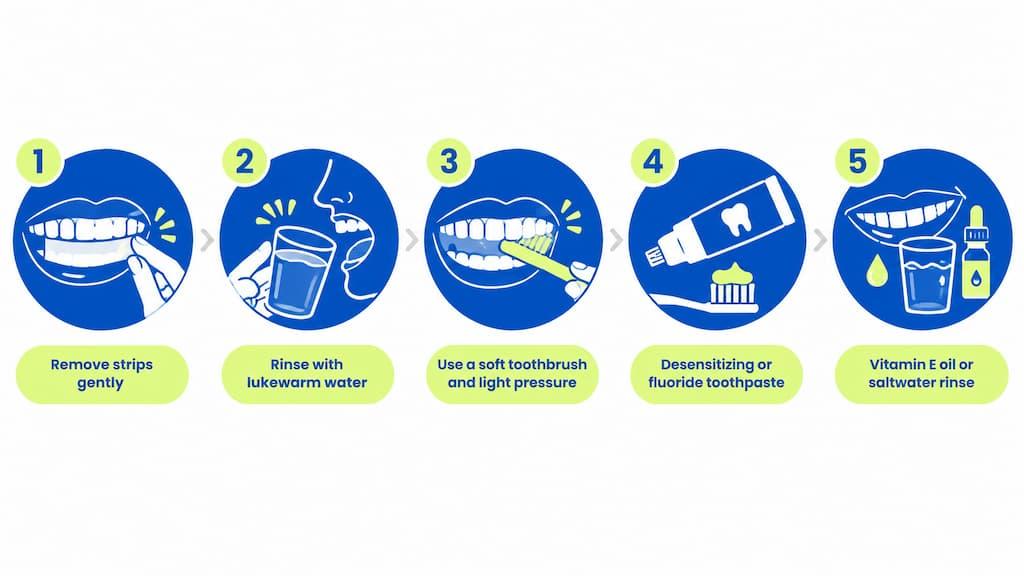
If the strips are still on, remove them gently. Rinse away remaining whitening gel with lukewarm water, rinse gently, and avoid hot water; if a strip feels stuck, use gentle removal rather than pulling at it. If brushing feels uncomfortable, use a soft toothbrush and light pressure rather than scrubbing at the teeth or gumline.
If you notice increased tooth sensitivity, use desensitizing toothpaste or fluoride toothpaste, and consider an over-the-counter pain reliever such as ibuprofen while your mouth settles.
A small amount of vitamin E oil can help soothe minor irritation on sore gums, and a saltwater rinse may also help.
From here, the symptoms matter more than the exact number of minutes you went over. Ten extra minutes with mild sensitivity is a different situation from waking up hours later with sharp pain or visibly injured gum tissue.
What Is Usually Reversible After Overusing Whitening Strips?
Whitening products typically use active ingredients such as hydrogen peroxide or carbamide peroxide to change the appearance of stains. When whitening gel sits against teeth or gums longer than directed, it can increase exposure without guaranteeing an improvement in shade.
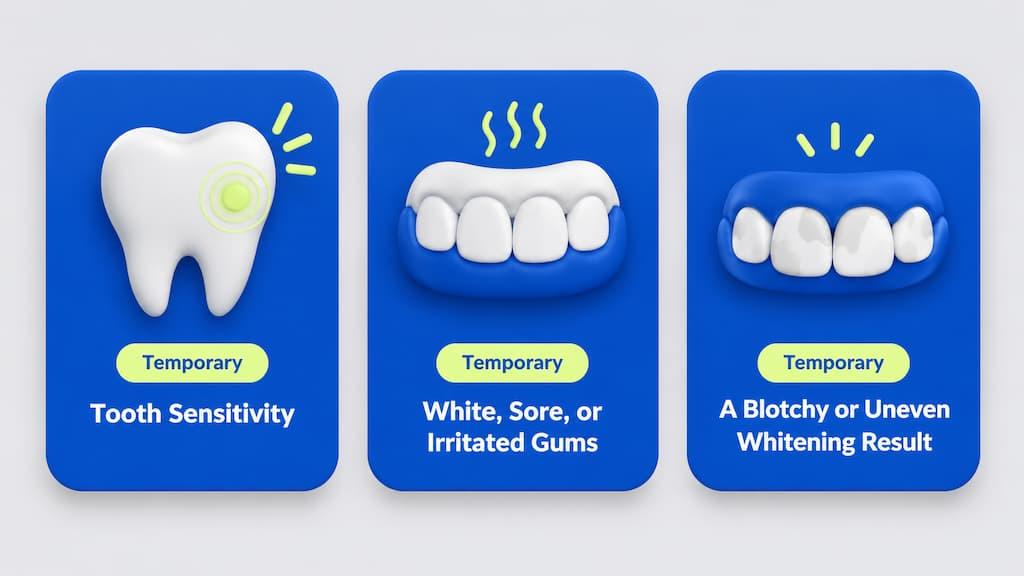
The first things people notice when they’ve left strips on too long are usually sensitivity and gum irritation, which are also among the most common side effects of tooth whitening. These reactions are generally temporary, which is why what happens after you remove the strips matters just as much as how long you left them on.
Temporary Tooth Sensitivity
Sensitive teeth may react to cold air, water, hot drinks, sweets, or even brushing after an extended whitening session because the whitening process allows whitening agents to pass through the tooth’s outer layer, which can leave tooth enamel more reactive after prolonged exposure. You might feel a quick zing across several teeth or notice that they’re simply more reactive than usual.
That doesn’t automatically point to enamel damage. Peroxide whitening can temporarily make teeth more sensitive, and the reason teeth can feel sensitive after whitening comes down to how the whitening agent interacts with the tooth beneath the enamel. Longer contact can cause enamel weakening and, with misuse or repeated overexposure, enamel erosion that may expose nerve endings. Longer contact can also make that sensitivity more noticeable.
For now, let the whitening routine pause. Avoid piling on another whitening treatment while your teeth are still telling you they’ve had enough for the day. Wait at least 24 to 48 hours before using whitening strips again, and use fluoride toothpaste or desensitizing toothpaste if your teeth stay reactive.
White, Sore, or Irritated Gums
If a strip overlaps the gumline, prolonged exposure to whitening gel can irritate the soft tissue. Your gums may look temporarily white or pale, feel tender, or develop a sore spot where the gel sat. More intense contact can cause a whitening strip burn, chemical burns, or gum burns.
Mild gum whitening or irritation should begin moving back toward normal after the product is removed. The important word is moving. Tissue that looks and feels better is a different situation from a patch that becomes more painful, blistered, or open.
A saltwater rinse may calm sore gums and minor irritation, but worsening tissue changes should not be self-treated.
Before your next session, placement matters just as much as timing. Small habits such as keeping excess gel off the gumline are part of protecting your gums during whitening, especially if your strips tend to sit high. Repeated exposure can also contribute to gum recession, which is different from temporary irritation because it can expose more sensitive areas.
A Blotchy or Uneven Whitening Result
Right after an overlong session, teeth can look patchy, chalky, or uneven. That can make the instinct to “fix” it with another strip very strong. Resist the sequel.
A temporary blotchy appearance can soften as your mouth returns to normal. Give the result time before deciding one area needs more whitening. Adding another round immediately can worsen sensitivity and gum irritation without giving you a more predictable result.
These three reactions have something useful in common: they should improve after exposure stops. That gives us the line into the next question. What if yours isn’t improving?
When Shouldn’t You Wait It Out?
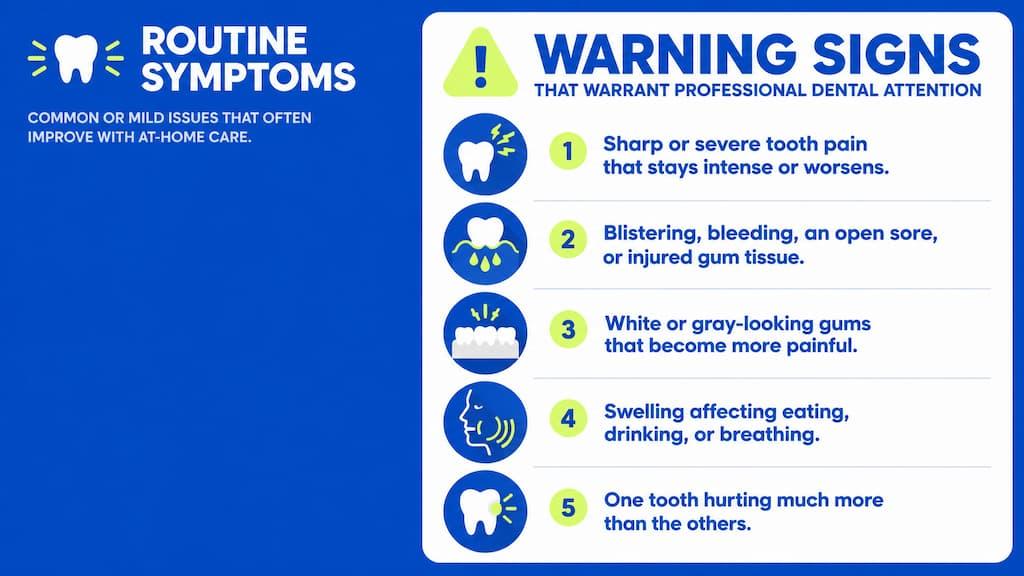
This is where “reversible versus not” needs a little nuance. A symptom that needs a dentist doesn’t automatically mean permanent damage. It does however mean that you need to pay close attention to the situation, especially if you notice any of the following:
-
Sharp or severe tooth pain that stays intense, keeps returning, or gets worse.
-
Blistering, bleeding, an open sore, or a clearly injured patch of gum tissue.
-
White or gray-looking gums that become more painful instead of returning toward their usual color.
-
Swelling, especially if normal eating, drinking, breathing, or swallowing becomes difficult.
-
One tooth hurting much more than the others, which may point to a crack, exposed root, restoration issue, or another cause that whitening happened to uncover.
Those signs deserve professional guidance. Whitening isn’t the only possible cause of tooth sensitivity. Cracked or chipped teeth, worn fillings, and other dental issues can cause it too, which is why persistent tooth sensitivity deserves a closer look. A dentist can look at the tooth structure, gum tissue, exposed roots, and restorations in person. That’s much more useful than trying to decide from a bathroom selfie whether you have “weakened enamel.”
If you experience severe pain or symptoms that keep worsening, stop whitening until you’ve been assessed. The goal here isn’t to scare you with every potential risk, but to give you a clear point where reassurance stops being the useful answer.
So, How Long Is Actually Too Long ?
Once the immediate worry is sorted, this is usually the next question: how far past the timer counts as too far? There isn’t one universal number because teeth whitening strips, trays, and pens don’t all use the same formula, amount of whitening gel, or contact method.
The safe ceiling is the labeled wear or application time for the exact product in your hand. If the directions say to remove a strip after a set period, that’s the end of the session. Feeling fine at that moment isn’t an invitation to keep going for longer.
|
Whitening Format |
What Sets the Limit |
What Overdoing It Changes |
|---|---|---|
|
Whitening strips |
The wear time printed for that strip |
Longer contact can increase tooth sensitivity and gum irritation without reliably making teeth whiter. |
|
Whitening trays |
The schedule for the tray and gel formula |
Some are designed for longer contact than strips. Overnight use only makes sense when that exact system says it does. |
|
Whitening pens |
The product’s application directions |
Targeted placement gives more control, but extra gel or repeated applications can still irritate teeth and gums. |
If strips are your preferred format, our breakdown of how long to leave whitening strips on goes deeper into timing by strip type. Here, the bigger lesson is that you can’t borrow a tray schedule for a strip or assume every peroxide product follows the same clock.
And no, leaving whitening strips on longer isn’t a glow-up cheat code. Once you pass the product directions, you’re increasing exposure and risk, not buying a guaranteed extra shade.
One Long Session Is Different From Repeated Overexposure
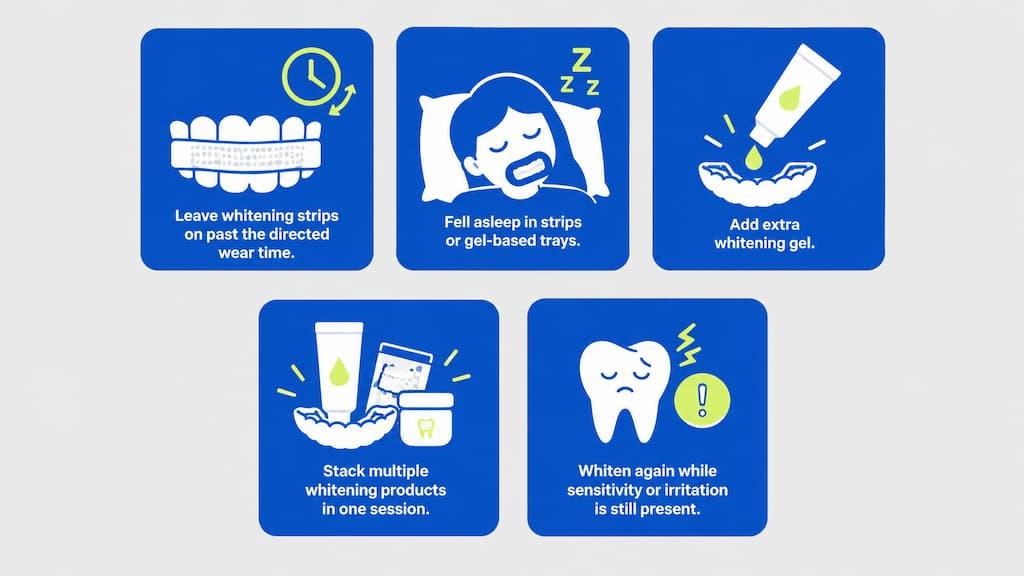
This is the distinction that matters most for the “permanent damage” fear. Repeated overexposure can look less dramatic because each individual session may only feel a little uncomfortable. The problem is that the routine keeps ignoring the same boundary. Take note if:
-
You regularly leave whitening strips on past the directed wear time because you want faster results.
-
You fell asleep or accidentally fell asleep in strips or gel-based trays that aren’t intended for overnight use.
-
You add extra whitening gel because the directed amount doesn’t feel like enough.
-
You stack multiple whitening products in one session to try to speed up the process.
-
You whiten again while tooth sensitivity or irritated gums from the last session are still present.
Repeated misuse is more likely to cause long term sensitivity, enamel weakening, and other lasting oral health problems than a single mistake, and people with existing dental issues may experience sensitivity more easily.
That’s when the fix should be bigger than setting one timer. If your routine repeatedly makes you overdo the product, change when you whiten, how you apply it, or which format you use. Whitening should be repeatable, not something you have to recover from every time.
If you notice any severe sensitivity, pain, or discoloration, contact your dentist as soon as possible. When it comes to your oral health, better safe than sorry is always the way to go.
Build a Whitening Routine You Don’t Have to Rescue
Once your teeth and gums feel normal again, you can think about whitening as a routine problem rather than an emergency problem. SNOW makes it easy to find a product that fits your lifestyle, offering powerful formulas with convenient formats that work for any routine preference.
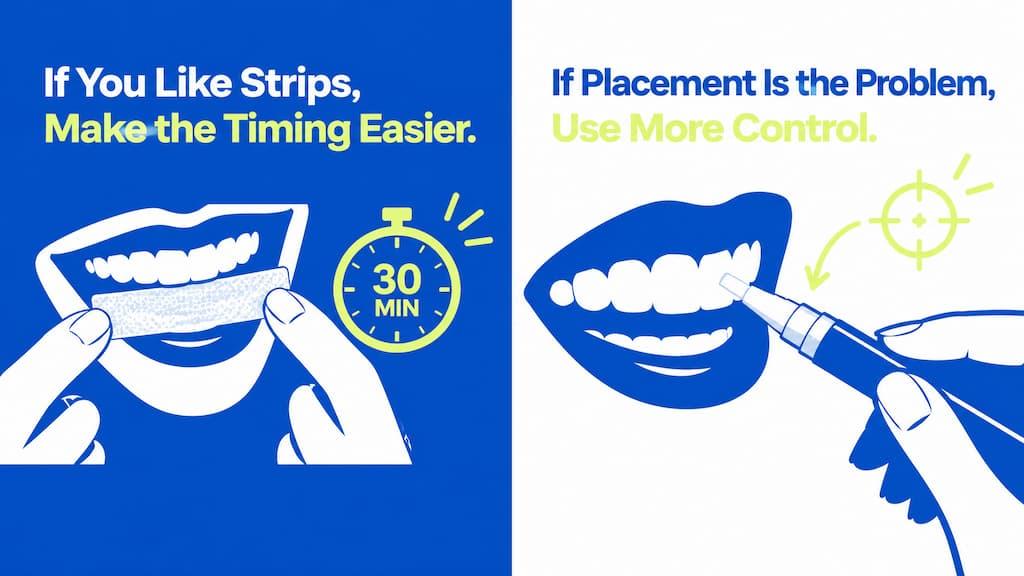
If You Like Strips, Make the Timing Easier
One overlong session doesn’t mean whitening strips are suddenly wrong for you. If you like the simple peel-and-place format, move the session earlier in your routine and set your timer before the strips go on. That keeps the product you already like while removing the part that went wrong.
If Placement Is the Problem, Use More Control
If gel keeps reaching your gums, your strips keep sliding, or your current routine causes repeated irritation, SNOW’sOvernight Teeth Whitening Pen can be a safer alternative because it gives you a brush-on format with more targeted placement. It’s a different routine from a timed strip, so follow its own directions rather than carrying over the timing rules from another format.
The point isn’t that one format is universally safer or better. It’s that the best whitening routine is the one you can actually use as directed.
Try a More Targeted Whitening Routine
The Bottom Line: More Time Is Not More Whitening
If you accidentally left whitening strips on too long, start by separating temporary reactions from symptoms that aren’t improving. Tooth sensitivity, mild gum irritation, temporary white gums, and a blotchy appearance can happen after extended exposure. Severe pain, worsening tissue changes, swelling, bleeding, or an open sore deserve a dentist’s attention.
Here at SNOW, we’d rather help you build a whitening routine that works without treating the timer like a suggestion. Follow the listed wear time for the exact product, let your teeth and gums fully settle before whitening again, and choose a format that fits how you actually use it. Your brighter smile doesn’t need overtime.
Find Your Next SNOW Whitening Routine
FAQs About Leaving Whitening Strips On Too Long
Still have questions after your whitening strip incident? These cover the details that don’t need another full section.
Can leaving whitening gel on too long cause permanent damage?
One overlong session doesn’t automatically mean permanent damage occurred. What matters is how your teeth and gums respond afterward. Mild sensitivity or irritation that improves is different from severe pain, blistering, swelling, or tissue changes that persist. If symptoms are significant or worsening, stop whitening and ask a dentist to assess them.
How do I know if I have a whitening strip burn?
A whitening strip burn may involve a clearly irritated white patch, soreness, blistering, bleeding, or an open area where whitening gel had prolonged contact with the gums. Mild temporary whitening can also happen, so watch whether the tissue is improving. Worsening pain or visible injury deserves dental guidance.
When can I use whitening strips again after leaving them on too long?
Wait until your teeth and gums feel normal again, then return to the schedule on the product directions. Don’t shorten the recovery period or extend the next session to compensate. If sensitivity keeps returning or doesn’t settle, check with your dentist before continuing.
Can overusing whitening strips make my teeth look uneven?
Yes, teeth can look temporarily blotchy or uneven after an extended session. Give the appearance time to settle before adding more whitening. If a color difference remains, remember that crowns, fillings, bonding, and other restorations don’t whiten the same way natural teeth do.
Should I use charcoal toothpaste after I leave whitening strips on too long?
Skip aggressive whitening steps while your teeth or gums feel irritated. Brush gently with fluoride toothpaste and let your mouth settle before adding another whitening product. If cold, hot, or acidic foods trigger sensitivity, avoiding those triggers for the moment may also make the recovery period easier. If sensitivity lingers, avoid hot drinks and foods for now, and skip acidic choices like citrus fruits until your teeth feel normal again.


