

The hidden costs of yellow teeth represent a lifetime financial and psychological burden estimated between $110,000 and $530,000 in 2026.
These costs stem from lost career earnings, reduced social confidence, and the escalation from simple whitening to expensive restorative veneers ($1,500/tooth) due to neglected enamel care.
What starts as a dull smile can turn into a deeper problem over time. And while teeth whitening might seem like a luxury, taking action early can actually save you thousands of dollars and years of self-doubt.
Let’s break down the real-life effects of teeth yellowing problems and how to stay ahead of them.
Key Takeaways
-
Yellow teeth don’t just affect your looks. They can impact your mental health, social life, and even your career.
-
The lifetime impact of avoiding professional teeth care or treatment can cost an estimated $110,000 to $530,000 in lost income, confidence, and health-related issues.
-
Professional teeth whitening treatments, such as in-office laser or gel whitening, cost around $500 to $1,000 CAD per session and can brighten your smile by up to 8 shades, delivering dramatic results.
-
Surface stains from coffee, wine, and smoking are common causes of yellowing teeth, but deeper staining may require long-term care.
-
Simple steps like good hygiene, early prevention, and safe whitening options can reduce both the visible and emotional burden of yellow teeth.
What We Really Mean by “Yellow Teeth” (And Why Color Isn’t Just Cosmetic)
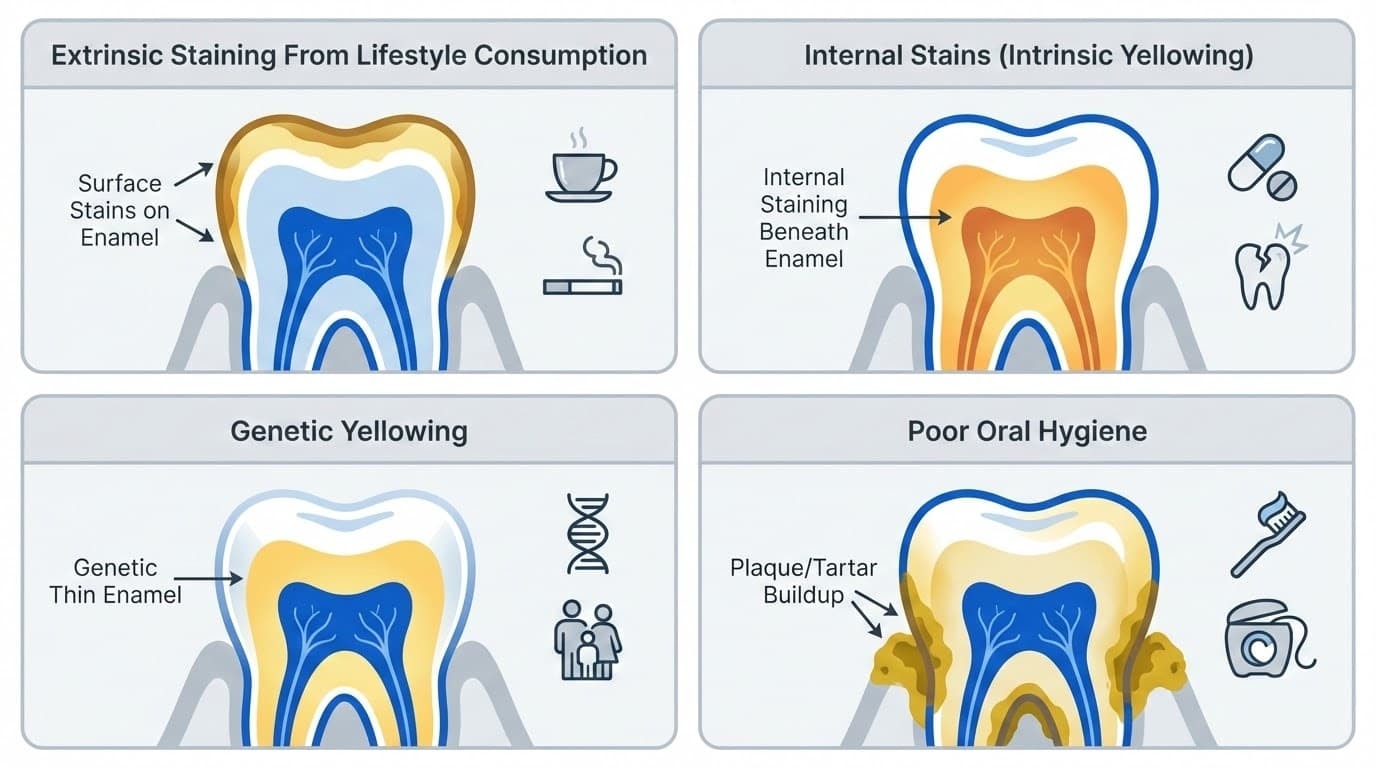
When we say yellow teeth, we're not just talking about a slightly off-white smile. Tooth discoloration comes in many forms, and some types are easier to fix than others.
Let’s break it down so you know what’s actually happening and which teeth whitening treatment or prevention method makes the most sense for you.
1. Extrinsic Staining From Lifestyle Consumption
These are the most common types. They form on your tooth enamel, the outermost layer, and come from daily habits like:
-
Drinking coffee, tea, or red wine
-
Eating dark berries or tomato-based sauces
-
Smoking or chewing tobacco
-
Letting plaque buildup harden into tartar
Surface stains can often be removed with good oral hygiene, regular dental cleanings, or light whitening treatments like hydrogen peroxide strips or professional whitening sessions.
2. Internal Stains (Intrinsic Yellowing)
This type of tooth discoloration happens beneath the enamel. It’s usually caused by things like:
-
Aging, which naturally thins enamel and reveals the yellow dentin underneath
-
Tetracycline antibiotics or blood pressure medications during tooth development
-
Tooth trauma or damage in childhood
-
Overexposure to fluoride as a kid can cause yellow or white spots called fluorosis
These types of stains don’t respond well to regular toothpaste or at-home kits. You’ll likely need professional whitening treatments, like trays or in-office systems, to see a difference.
3. Genetic Yellowing
Believe it or not, some people are just born with naturally thinner enamel or yellower dentin. Even with good oral hygiene, their teeth may always look slightly yellow, and that’s perfectly normal.
Genetics affect tooth color just like they do hair or skin tone. But if you’d like a brighter smile, there are still safe teeth whitening options worth exploring.
4. Poor Oral Hygiene Makes It Worse
Skipping brushing or dental visits? That speeds up yellowing fast. Without good oral hygiene, plaque buildup and tartar can trap stains and lead to tooth decay, which causes both color changes and deeper dental issues over time.
In fact, up to 80% of yellowing in neglected cases comes from surface-level stains that could’ve been avoided with daily brushing, flossing, and checkups.
Not all yellowing is created equal. Some stains are just on the surface, while others go deeper. By understanding the difference, you can choose the right teeth whitening treatment and take the first step to prevent yellow teeth from getting worse.
How Yellow Teeth Affect Confidence and Mental Health
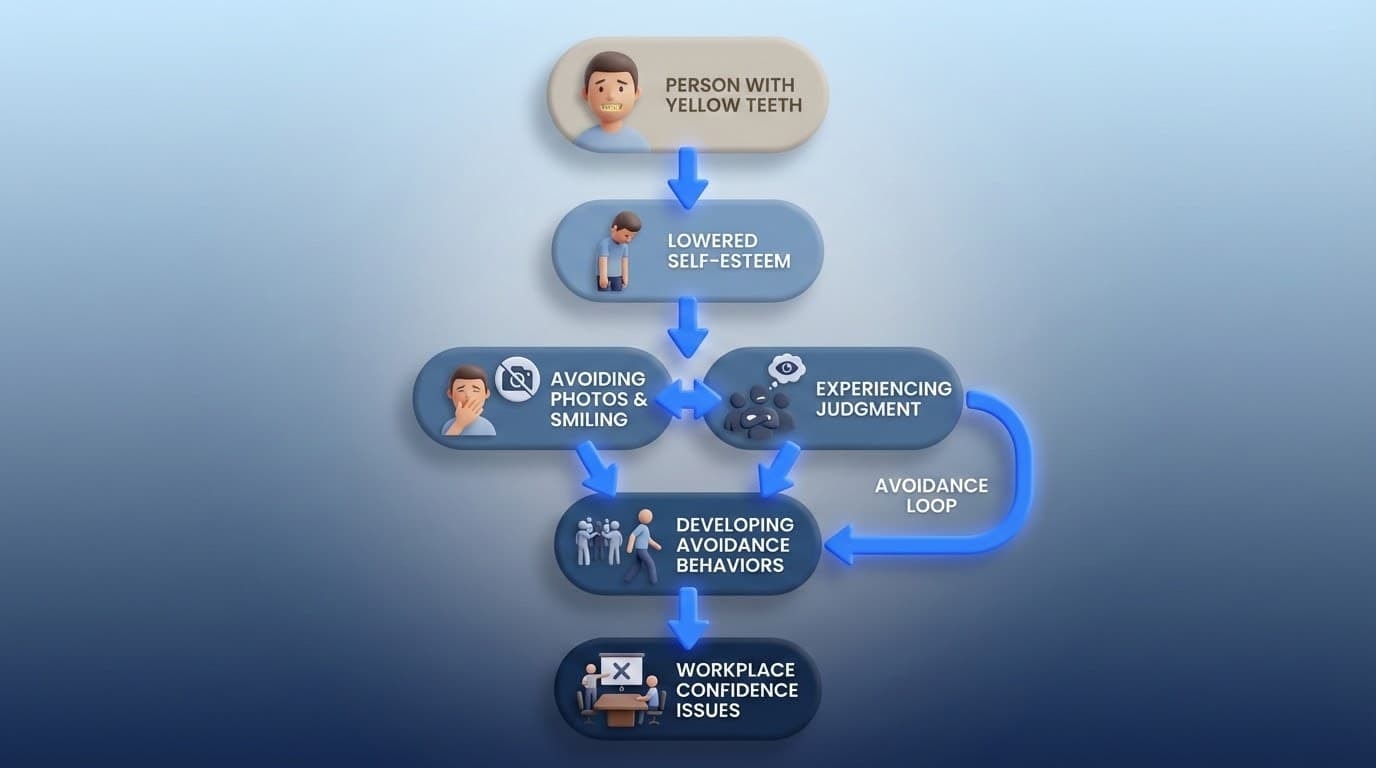
Yellow teeth aren’t just about appearance. For many people, they quietly impact how we feel about ourselves and how we show up in the world. Whether it’s avoiding a photo, skipping a conversation, or hiding your smile, the emotional toll of tooth discoloration is very real.
Let’s explore how this happens and why it matters.
It Starts with Self-Esteem
People with yellow stains or visible tooth discoloration often feel self-conscious about their smiles. That self-consciousness can quickly lead to lower self-esteem, even in otherwise confident individuals.
Research shows that people with yellow teeth are more likely to feel unattractive, avoid mirrors, and downplay their own appearance, especially in social settings.
Smiling Becomes Stressful
Many people with stained or intrinsic stains report hesitating to smile in group photos or in public situations. Some even avoid laughter in conversations, afraid of showing their teeth.
This smile suppression isn’t just a small thing. It limits emotional expression, weakens social bonds, and can lead to isolation and increased anxiety.
In fact, another study links visible tooth stains to fear of judgment, leading people to hide their smiles in both personal and professional environments.
People May Judge You Without Realizing It
Even though we know better, we often make snap judgments based on appearance. Sometimes, yellow or discolored teeth are associated with assumptions about poor oral hygiene, gum disease, or bad habits like smoking, even if none of those things were true.
Unfortunately, that means yellow teeth can silently influence first impressions, job interviews, and social acceptance.
Embarrassment Can Spiral into Avoidance
The emotional effects aren’t just momentary. One study found that anterior (front-tooth) staining triggered high levels of embarrassment, anxiety, and depression in both teens and adults.
And the pattern continues. People start avoiding social events, interviews, or speaking in meetings because they don’t want their tooth discoloration to be noticed.
This is often called an “avoidance loop,” and it’s a common result of visible oral issues.
It Even Shows Up at Work
Discolored or stained teeth may make a person seem less confident, friendly, or trustworthy in professional settings. In customer-facing roles, this perception can be damaging, even for highly skilled individuals.
People with professional whitening results tend to report feeling more confident in meetings, presentations, or sales calls simply because they’re no longer worried about being judged by their smile.
How Yellow Teeth Can Lead to Bullying and Academic Struggles
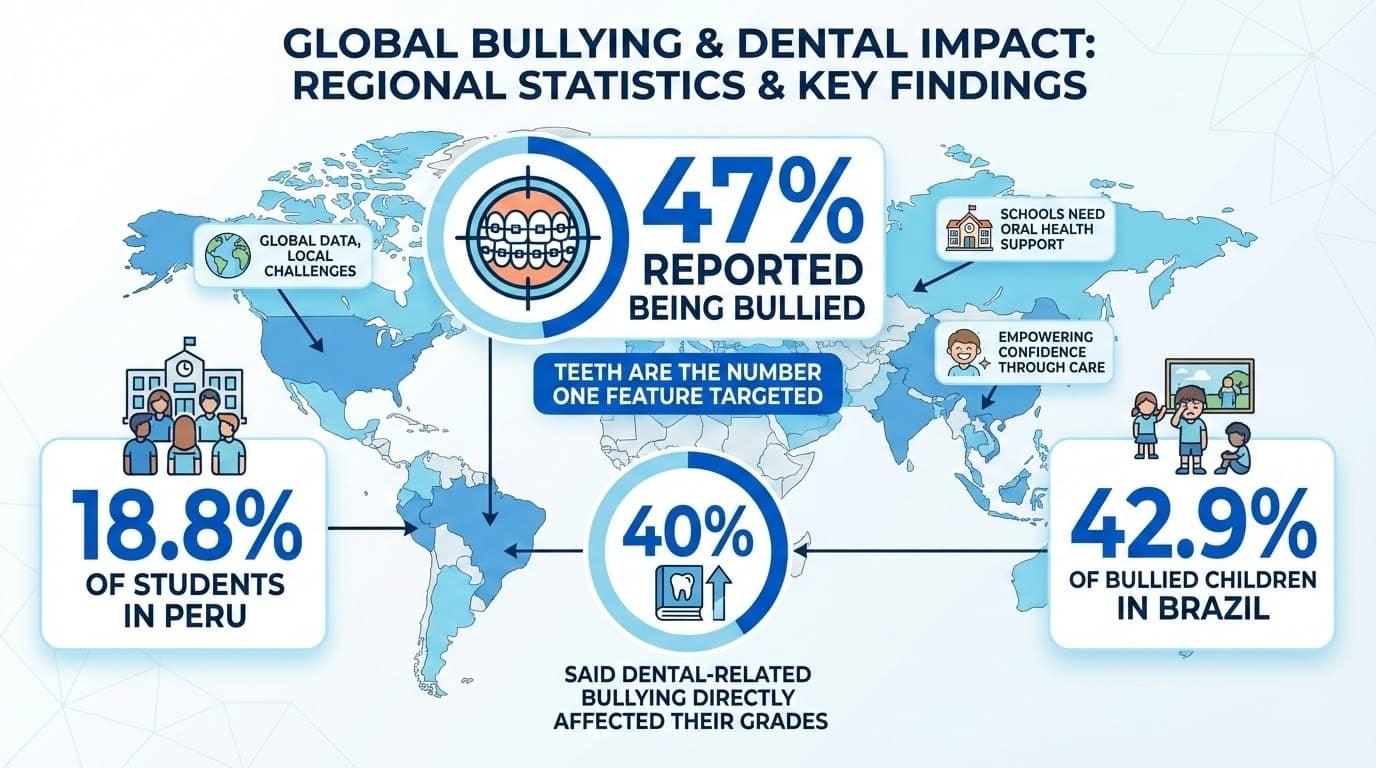
For children and teens, having yellow teeth, crooked smiles, or missing teeth isn't just a cosmetic concern. It can make them a target. Dental appearance is one of the most common triggers for bullying in school-aged kids, and the effects go far beyond the playground.
Dental Appearance Is One of the Top Targets
In a survey of 920 students aged 11 to 12, nearly 47% reported being bullied, with teeth being the number one feature targeted by bullies. In fact, half of those bullied said their teeth were the specific reason they were picked on.
And it’s not just one group. Across several countries, rates of bullying due to dental features remain high:
-
In Peru, 18.8% of students experienced bullying specifically about their dental appearance
-
A UK study of 700 kids (ages 10–14) found that misaligned teeth led to frequent ridicule, especially among girls
-
In Brazil, 42.9% of bullied children were targeted because of their teeth
Common triggers include yellow stains, crooked or protruding teeth, gaps, or missing front teeth.
The Academic Consequences Are Real
The emotional stress of being bullied over tooth discoloration can spill into the classroom. Many kids start to withdraw, skip school, or avoid speaking up during lessons.
In the previously mentioned study, 40% of students said dental-related bullying directly affected their grades and motivation to attend school.
And students who were missing teeth due to decay or trauma were found to be more likely to be bullied, leading to even more school absences and anxiety.
Dental Treatment Can Reduce the Risk
There’s good news! Studies show that access to dental treatment reduces bullying risk significantly. One European study found that adolescents who received treatment for dental issues were 1.7 times less likely to be bullied than those who didn’t get help.
That’s a significant difference, especially when you consider how bullying affects self-esteem, academic progress, and long-term confidence.
How Yellow Teeth Affect Dating and First Impressions
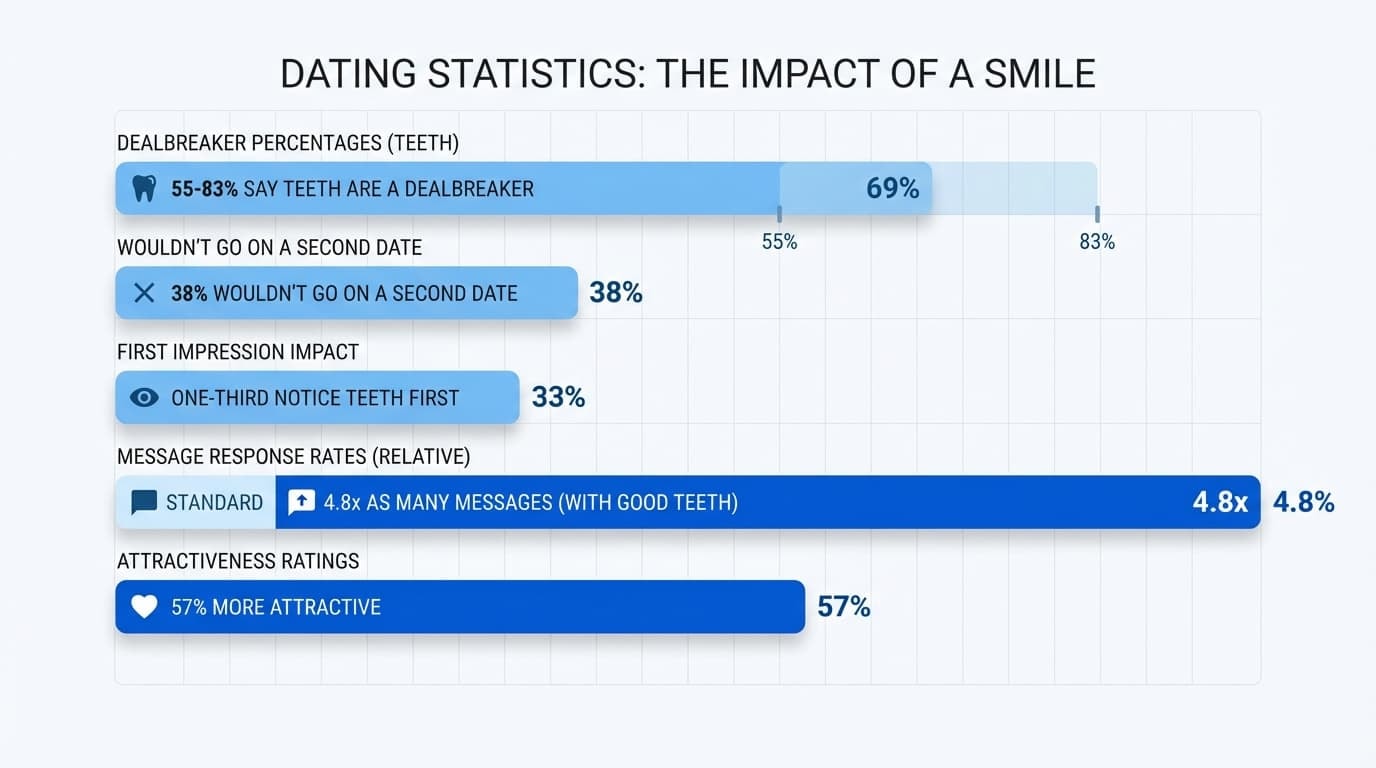
Your smile might be more powerful than you think. In dating, it often matters more than your clothes, hairstyle, or even your job. In fact, 55 to 83 percent of singles say teeth are a dealbreaker for a second date.
The importance starts with first impressions. One-third of people notice teeth first, and 25 percent remember them the longest after meeting someone. A study of dating profiles found that ideal smiles received 4.8 times as many messages as those with yellow or flawed teeth.
The impact isn’t just about how others see you. People with yellow or crooked teeth often smile less, hide their mouths, or feel nervous showing their teeth. That hesitation can be read as low confidence or unfriendliness, even when it’s not true.
Appearance really does affect perception:
-
38 percent wouldn’t go on a second date with someone who has crooked teeth
-
Straight teeth profiles were seen as 57 percent more attractive
-
Aligned teeth rated significantly better for dating potential than crowded or missing teeth
A bright smile boosts confidence, and whitening treatments such as professional cleanings or safe at-home options can reduce surface stains from foods, drinks, or aging. Along with good oral hygiene, these small steps can make a big difference.
Your smile can shape how you're seen, how you're remembered, and how confident you feel. Taking care of it is more than cosmetic. It’s a key to feeling and connecting better.
The Direct Financial Costs Behind Yellow Teeth
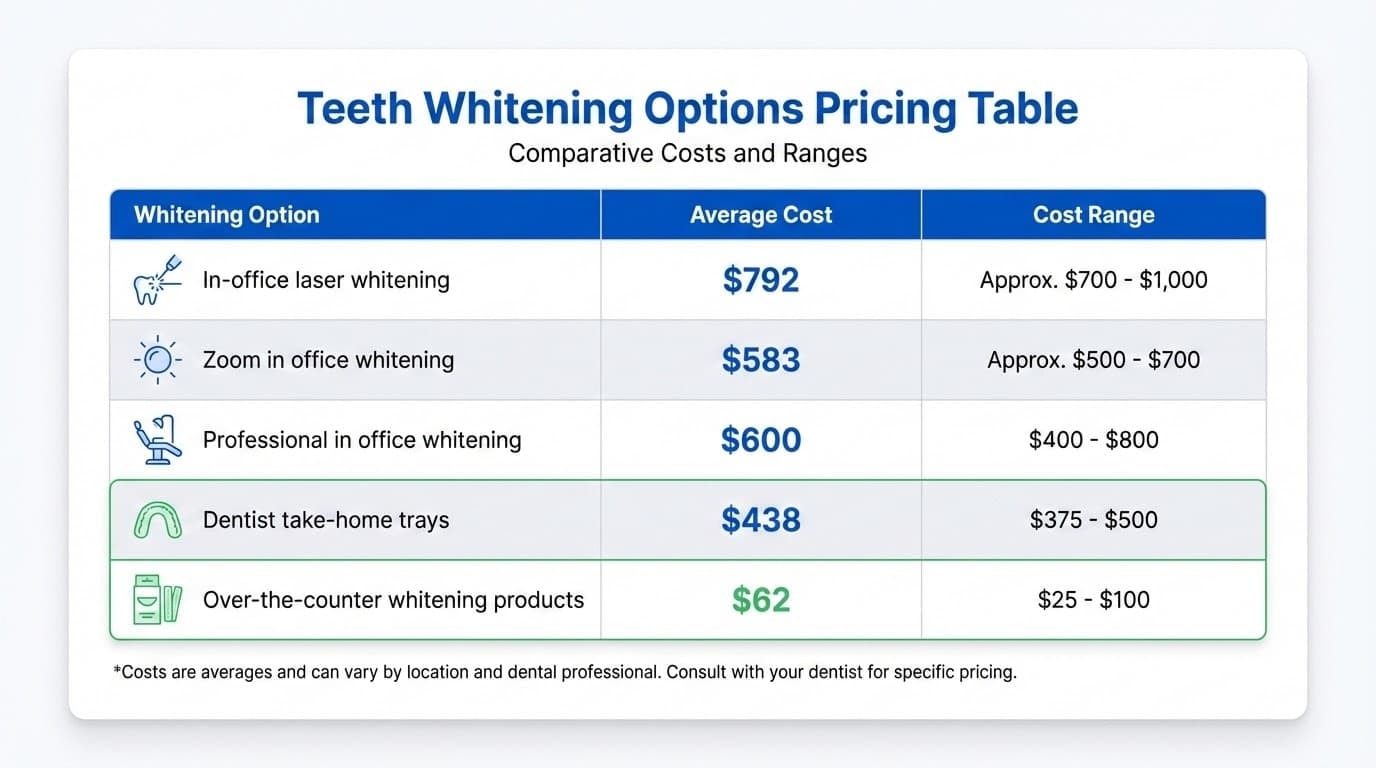
Yellow teeth can affect confidence and opportunity, but they also come with real financial costs. Whitening prices vary widely depending on the method you choose, where you live, and how long you want results to last.
Understanding the numbers helps you decide which option fits your goals and budget.
Common Teeth Whitening Costs

Why Costs Vary So Much
Professional whitening prices vary by location and technology. In the United States, the average cost for whitening is about:
-
California is averaging $982 per session
-
Alabama is averaging $681 per session
-
Hawaii reaching $1,129 per session
Higher costs usually reflect newer equipment, longer appointment times, and stronger whitening systems.
If you are looking for a budget-friendly alternative without the dentist visits, the SNOW® LED Teeth Whitening Kit is a strong choice. It offers noticeable results in as little as 7 to 10 days and is designed for people with sensitive teeth who want an easy, at-home solution.
Try the SNOW® LED Whitening Kit Today
The Hidden Lifetime Costs of Doing Nothing
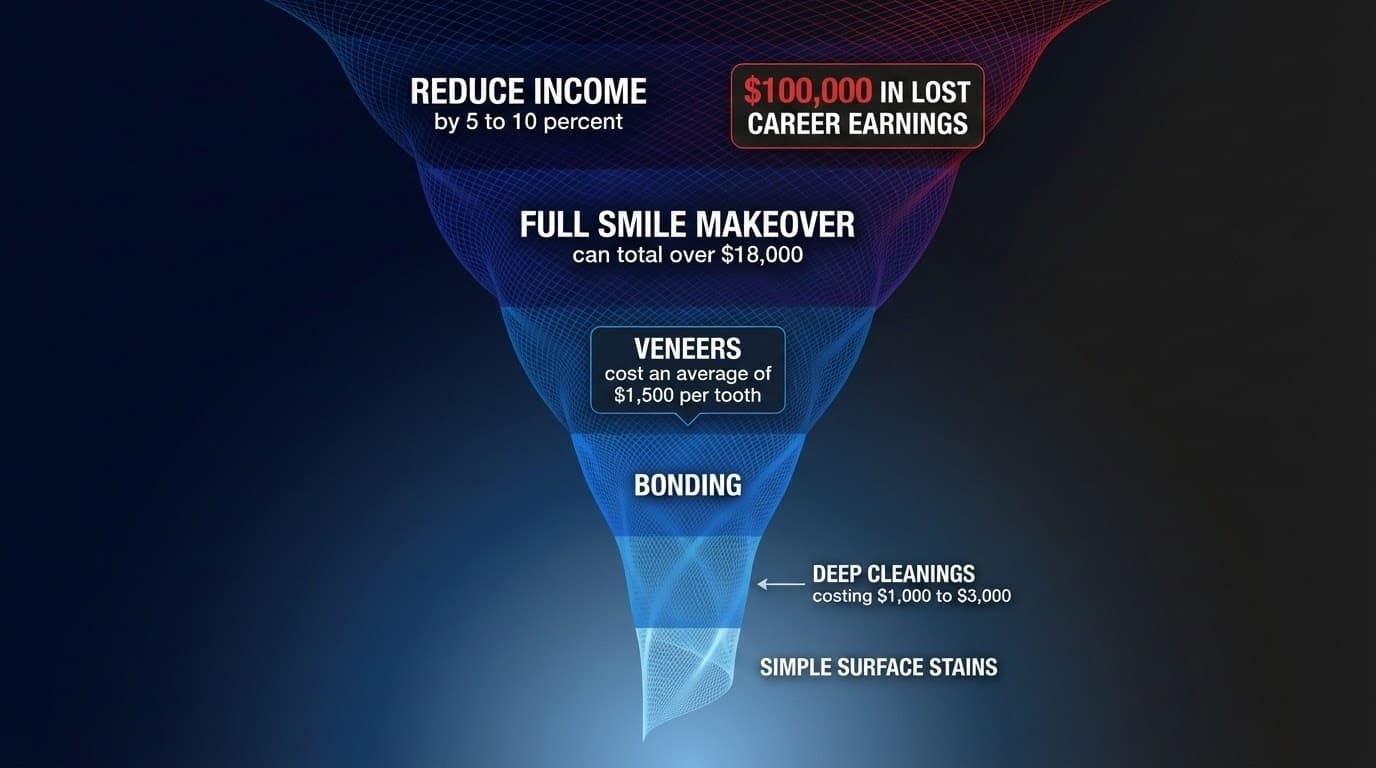
Leaving yellow teeth untreated can quietly lead to thousands of dollars in cosmetic fixes, emotional stress, and long-term health issues. Many of these consequences are preventable with early care and simple whitening solutions.
1. From Whitening to Veneers: The Escalation Cost
Tooth discoloration may start on the surface, but over time, it wears down enamel and leads to deeper stains. Once the yellowing becomes too advanced, options like veneers may be required. Veneers cost an average of $1,500 per tooth, and a full smile makeover can total over $18,000. Bonding may seem like a short-term fix, but it often chips or stains within 3 to 5 years, requiring repeated replacements that add up to $4,800 or more over time.
The SNOW® LED Whitening Kit is a non-invasive way to target surface stains before they get worse. It uses a combination of LED light and a gentle whitening serum designed for sensitive teeth. You can use it at home, at your own pace, without the cost or discomfort of in-office treatments.
Try the SNOW® LED Whitening Kit Today
2. Career and Confidence Losses That Compound
Yellow teeth don't just affect looks. They influence how confident you feel in interviews and how others respond to you. Studies show yellow teeth may reduce income by 5 to 10 percent, adding up to $100,000 in lost career earnings. Job seekers with stained teeth are less likely to negotiate salaries, often due to fear of judgment or social discomfort.
The SNOW® Whitening Toothpaste with Nano-Hydroxyapatite offers daily enamel-safe whitening that fits into any routine. It helps lift surface stains while strengthening your enamel and protecting against new discoloration. Ideal for coffee, tea, or red wine drinkers.
Upgrade Your Routine with SNOW® Whitening Toothpaste
3. The Health Costs of Delay
When yellow teeth are ignored, they can signal more serious issues, such as decay and gum disease. These problems often require deep cleanings costing $1,000 to $3,000 or even implants if teeth are lost. Delaying care increases plaque buildup and worsens oral health. Prevention is far less expensive than repair.
Regular whitening touch-ups every 5 to 7 years cost around $400 per session, totaling $2,400 over a lifetime. That is still much lower than the cost of restorative procedures or cosmetic veneers.
Prevention and Treatment Plan for Yellow Teeth
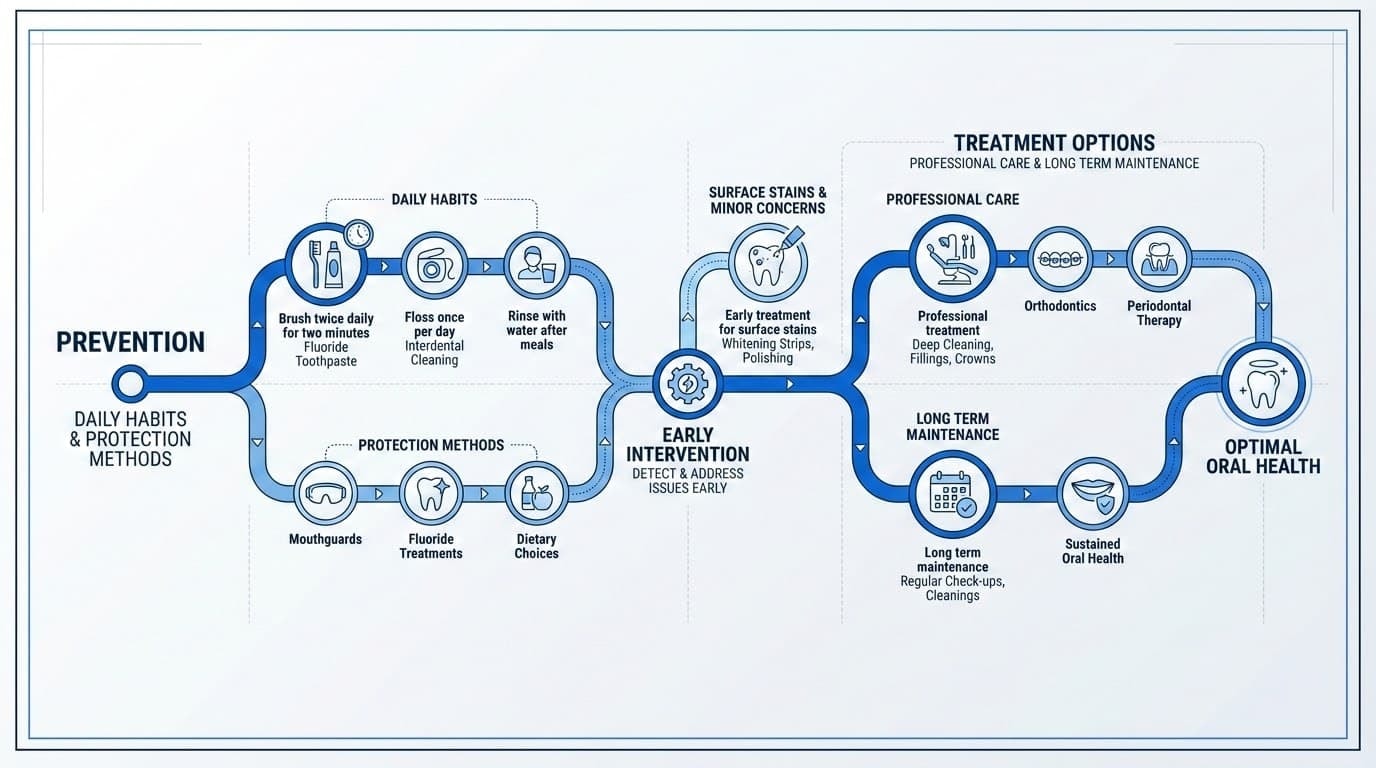
Yellow teeth do not appear overnight. They develop slowly from daily habits, aging enamel, and tooth surface buildup. The key is knowing what you can prevent and when treatment is needed. This complete plan helps you protect your smile early and fix discoloration before it becomes expensive or permanent.
Prevention Starts With Daily Care
Prevention is always easier and cheaper than treatment. These habits protect your enamel and slow yellowing.
Daily Oral Hygiene
-
Brush twice daily for two minutes using a soft toothbrush
-
Floss once per day to remove plaque between teeth
-
Rinse with water after meals or dark drinks
-
Replace your toothbrush every three months
These steps help prevent plaque buildup, tooth decay, and surface stains.
Protect Your Enamel
Strong enamel keeps teeth naturally whiter.
-
Avoid brushing immediately after acidic foods
-
Limit citrus fruits, soda, and sports drinks
-
Use gentle toothpaste rather than abrasive formulas
-
Drink water often to prevent dry mouth
When enamel thins, the yellow dentin underneath becomes more visible.
Reduce Staining Habits
Common causes of yellowing include:
-
Coffee and tea
-
Red wine
-
Dark sauces and berries
-
Smoking or tobacco use
Rinsing after these foods helps prevent stains from settling.
Early Treatment for Surface Stains
If yellowing has already started, early treatment can reverse it.
Surface stains respond best to consistent whitening combined with good oral hygiene. This stage is ideal because discoloration is still on the enamel and has not reached deeper tooth structure.
SNOW® Whitening Toothpaste is designed for everyday treatment without damaging enamel. It uses nano-hydroxyapatite to help strengthen tooth enamel while gently lifting surface stains. The formula is fluoride-free, safe for sensitive teeth, and suitable for daily use. It is especially helpful for people who regularly drink coffee or tea.
Get SNOW® Whitening Toothpaste Today
When Professional Treatment Is Needed
If discoloration does not improve with home care, professional treatment may be required.
You may need dental treatment if:
-
Yellowing appears gray or brown
-
Stains do not change after several weeks
-
Discoloration is caused by medications or aging enamel
-
Teeth appear uneven in color
Professional teeth whitening treatments use stronger agents, such as hydrogen peroxide, to penetrate deeper into stains.
Long Term Maintenance
Once your smile improves, maintenance is essential.
-
Continue brushing and flossing daily
-
Maintain regular dental cleanings
-
Use whitening products gently and consistently
-
Avoid frequent harsh bleaching
This prevents stains from returning and protects your oral health long term.
Final Thoughts: Your Smile Deserves More Than Delay
Yellow teeth are not just a surface issue. They can affect your confidence, your relationships, and even your career opportunities. Over time, the emotional and financial impact can quietly grow much larger than expected.
The good news is, you can take control now. By improving your daily habits and using the right whitening support, you can prevent deeper stains and avoid costly treatments later.
If you’re looking for a gentle way to start, SNOW® offers effective and affordable products that work with real life. Their whitening toothpaste and kits are safe for sensitive teeth, free from harsh chemicals, and designed to strengthen enamel while lifting everyday stains.
Start where you are. Whether you want a cleaner smile, a brighter look, or just more confidence when you speak or smile, SNOW® can help.
Explore the Full SNOW® Collection Today
FAQs
Got questions about yellow teeth? Here are quick, clear answers to the most common concerns.
What is the main cause of yellow teeth?
The main causes of yellow teeth are a mix of extrinsic stains from coffee, tea, red wine, and citrus fruits, combined with plaque and tartar buildup and natural enamel erosion. Over time, enamel thins, exposing more of the yellow dentin beneath. Poor dental care, dry mouth, and even certain health conditions, such as liver disease, can also contribute.
How much does it cost to fix yellow teeth?
Fixing yellow teeth can cost anywhere from $20 to over $1,000, depending on the treatment. Basic whitening toothpaste with baking soda or bleaching agents may help mild stains. For a more noticeable result, dentists offer professional whitening treatments that cost $400 to $1,000 per session. Severe intrinsic stains or dental fluorosis may require veneers, which can reach $1,500 per tooth.
Can yellow teeth turn white again?
Yes, yellow teeth can turn into white teeth again, especially if the stains are external. Regular brushing, good dental care, and the right treatment options, such as professional whitening, can make a significant difference. For deeper brown stains or intrinsic stains, you might need custom options from your dentist, but even aging or wear and tear doesn’t mean it’s too late to reclaim a healthy smile.
How much does it cost to clean yellow teeth?
A basic cleaning to remove plaque and surface stains costs about $75 to $200. This won't dramatically whiten your smile, but it helps prevent gum disease, gum irritation, and further enamel erosion. To truly brighten your smile, ask your dentist about whitening treatments, such as in-office sessions or take-home kits, that can tackle yellow stains and help restore your smile's brilliance.


