

The best teeth whitening toothpaste for sensitive teeth balances effective stain removal with enamel-repairing ingredients like nano-hydroxyapatite (n-HA) and potassium nitrate.
These formulas, found in top-rated brands like SNOW® and Sensodyne , utilize low-abrasivity polishing agents (RDA < 100) to lift extrinsic stains without irritating the nerve.
For more on managing sensitivity from teeth whitening treatments, see our guide.
This guide analyzes the top clinically proven options for 2026, comparing:
-
Which ingredients actively repair enamel while whitening?
-
How does nano-hydroxyapatite compare to fluoride?
-
Do 'purple' color-correctors offer lasting results?
-
What is the optimal brushing routine for reactive teeth?
Key Takeaways
-
The best whitening toothpastes for sensitive teeth combine gentle stain removal with clinically proven desensitizing agents like potassium nitrate, stannous fluoride, or nano-hydroxyapatite, ingredients backed by randomized controlled trials involving thousands of patients.
-
Sensodyne Clinical White and nano-hydroxyapatite formulas (including SNOW® and Boka) have strong clinical data showing both whitening and sensitivity relief within 2–4 weeks, with no major adverse events reported in 8-week trials.
-
Optical “purple” toothpastes (including SNOW® Purple) create only a temporary color-correcting effect through violet dyes; they do not actually whiten teeth, remove stains, or provide cavity protection.
-
Prices range from about $7–$9 for drugstore options like Sensodyne Pronamel Gentle Whitening to $17–$22 for premium nano-HAP formulas like SNOW®; most are available at major retailers or online.
-
If sensitivity is sharp, sudden, or localized to one tooth, see a dentist before starting any whitening regimen; this often signals decay, cracks, or other issues that whitening could worsen.
How Do Whitening Ingredients Affect Sensitive Teeth?
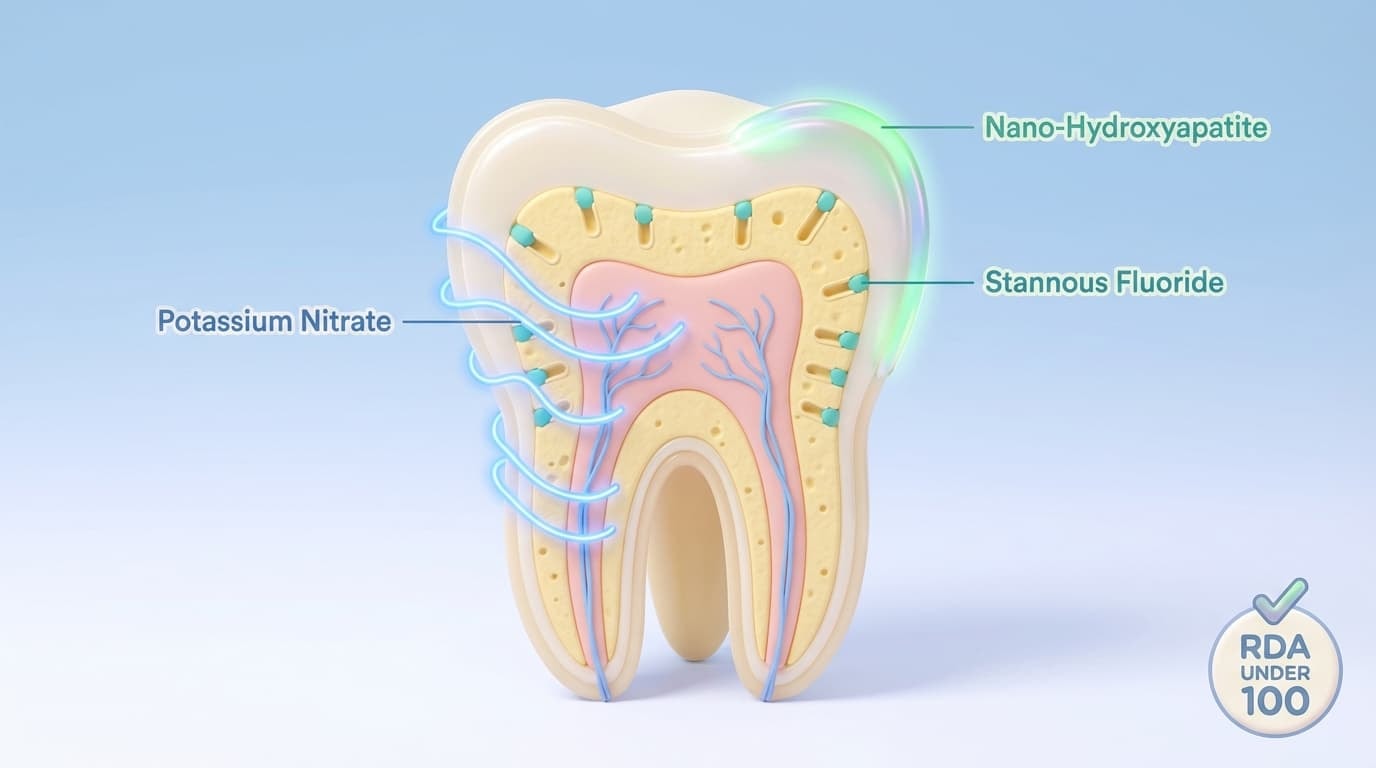
Choosing the right whitening toothpaste for sensitive teeth can feel overwhelming, especially with so many options claiming to deliver a brighter smile. But by focusing on the right ingredients and formulas, you can safely whiten teeth while minimizing discomfort.
Here’s how to compare your options like a pro.
1. Start with Sensitivity-Targeting Ingredients
To reduce tooth sensitivity, look for teeth whitening toothpaste formulas that include potassium nitrate, stannous fluoride, or nano-hydroxyapatite. These ingredients are clinically proven to either soothe nerve endings or seal the exposed dentin tubules that cause pain.
Nano-hydroxyapatite is particularly promising in fluoride-free pastes such as SNOW®. Traditional fluoride-based options like Sensodyne Extra Whitening Toothpaste also remain a go-to for many with reactive teeth.
2. Check the Abrasivity Level
Effective whitening preserves enamel integrity by utilizing low-abrasion silica rather than harsh grit. Consumers should verify that their toothpaste possesses an RDA score under 100 to ensure safe, daily stain removal.
Many whitening toothpastes work by polishing stains. However, if the formula is too abrasive, it can wear down enamel and worsen tooth sensitivity over time.
Look for a Relative Dentin Abrasivity (RDA) score under 100. This ensures you're getting gentle whitening that targets surface stains without damaging the enamel that protects your nerves.
3. Understand Peroxide Strength
Peroxide is one of the most common ingredients in teeth whitening products, but it’s also one of the most frequent culprits behind sensitivity flare-ups. If your teeth are already reactive, avoid high levels of hydrogen peroxide and consider purple dissolving strips with sensitivity-relief ingredients or other formulas labeled “low-peroxide” or “peroxide-free.”
This is especially important if you’re using other whitening products, such as whitening strips or LED treatments. Doubling up on strong products can do more harm than good.
4. Fluoride or Fluoride-Free?
Your choice depends on your oral health priorities. Fluoride-based toothpastes like Sensodyne Extra Whitening help strengthen enamel and reduce cavities, while fluoride-free alternatives with nano-hydroxyapatite aim to mimic those effects with a more natural profile.
Both options can help whiten teeth safely; it's more about your personal preference and how your teeth respond.
5. Know When to See a Dentist
If pain is sudden, sharp, or lingers after eating or drinking something cold or hot, don’t start a whitening routine just yet. These symptoms may signal underlying issues like decay or cracks. No, tooth whitening toothpaste can't fix that.
A dental visit will help identify the cause and ensure you’re safe to proceed with at-home teeth whitening.
Which Ingredients Are Clinically Proven to Whiten Sensitive Teeth?
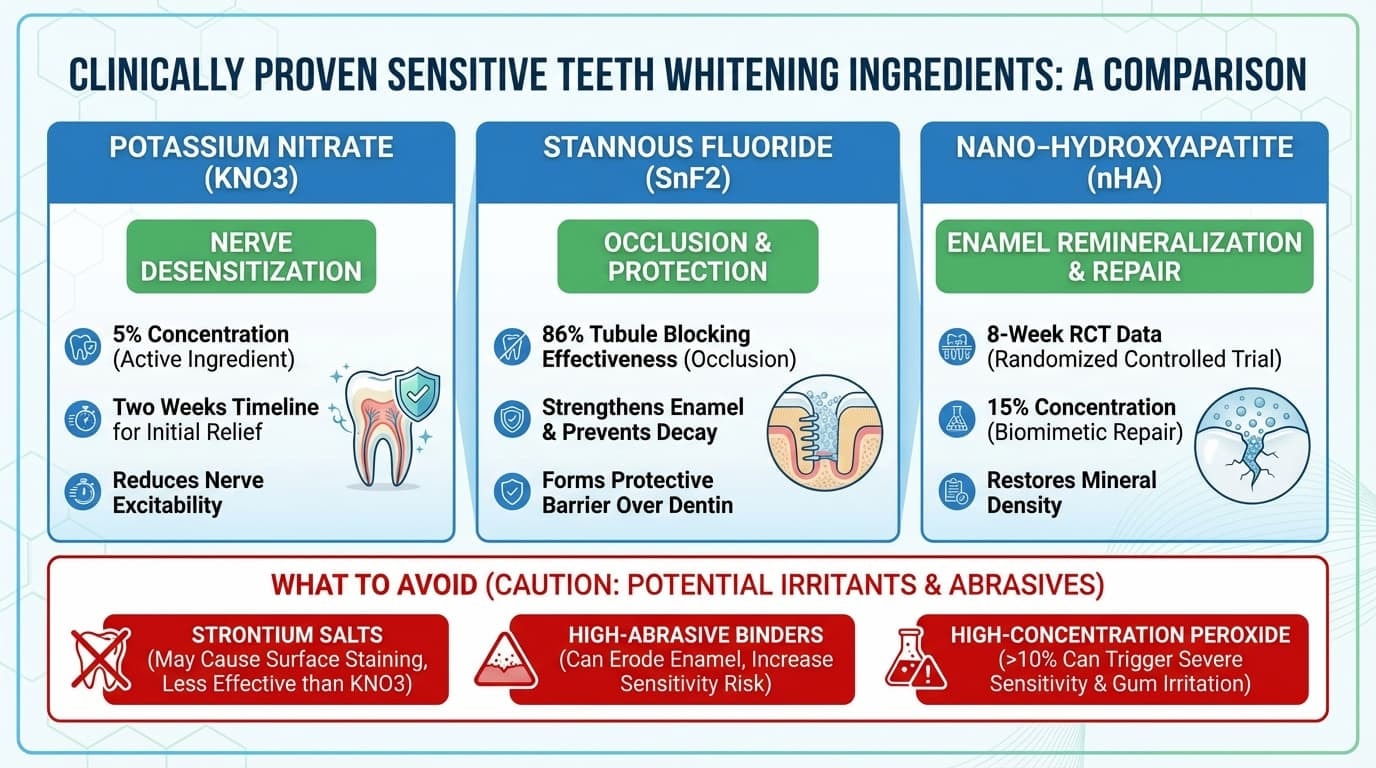
Many whitening products promise relief for tooth sensitivity, but only a few ingredients are consistently supported by real clinical research. If you're trying to choose the best whitening toothpaste for your needs, it helps to understand how each ingredient works, not just in theory, but in actual studies.
Let’s break down the key ingredients that contribute to both the effectiveness and relief of whitening toothpaste, along with what to avoid if you want lasting results and comfort.
Potassium Nitrate
Potassium Nitrate is the gold standard for chemical desensitization. It works by penetrating the dentin tubules to depolarize the nerve, effectively blocking the transmission of pain signals to the brain.
Clinical studies confirm that toothpastes containing 5% potassium nitrate, like Sensodyne Pronamel, significantly reduce hypersensitivity within two weeks of twice-daily use.
You’ll often find potassium nitrate in formulas like Sensodyne Pronamel Gentle Whitening, where it plays a dual role.
First, it desensitizes the tooth over time, often within two weeks of regular use. Also, when paired with a mild whitening agent, it helps gradually whiten teeth while controlling sensitivity.
If you're looking for a well-balanced formula that addresses both brightness and comfort, potassium nitrate is a great place to start.
Stannous Fluoride
Unlike regular fluoride, stannous fluoride brings additional benefits that make it ideal for sensitive teeth. In addition to protecting against cavities, it actively seals the dentin tubules that cause sensitivity.
This ingredient is particularly valuable in products that also aim to improve gum health and remove surface stains. For example:
Studies show it can block up to 86% of exposed tubules in the dentin layer. You’ll find it in daily-use pastes like Crest Gum and Sensitivity Gentle Whitening, which combine desensitizing benefits with stain removal and enamel protection.
For those who prefer fluoride-based solutions that multitask, stannous fluoride is one of the most effective options available.
Nano-Hydroxyapatite (Nano-HAP)
As of 2024, nano-hydroxyapatite (n-HA) is recognized as a premier fluoride-free alternative. A pivotal 2019 study confirmed that n-HA mimics natural tooth structure to seal tubules.
This synthetic mineral closely mimics the natural structure of tooth enamel, making it ideal for remineralization and relief of sensitivity.
Nano-HAP is commonly found in newer formulations like SNOW and Boka, and it works in several important ways:
-
It fills in micro-cracks and seals tubules to reduce tooth sensitivity without relying on hydrogen peroxide.
-
It supports enamel repair and provides gentle whitening, making it suitable for daily use.
-
Clinical trials, including an eight-week RCT, found it comparable to traditional fluoride in reducing pain and effectively whitening teeth.
If you're concerned about harsh ingredients or long-term enamel health, nano-HAP offers a well-rounded, research-backed option for maintaining a brighter smile.
What to Avoid
Just as important as knowing what works is knowing what doesn’t. Some ingredients found in most whitening toothpastes may sound effective, but fail to deliver results or, worse, cause damage over time.
Here are a few to steer clear of if you have sensitive teeth:
-
Strontium Salts: These have not shown significant desensitizing benefits in recent clinical research compared to potassium nitrate.
-
High-Abrasive Binders: Ingredients like coarse charcoal or baking soda often exceed safe RDA limits, leading to long-term enamel erosion.
-
High-Concentration Peroxide: Over-reliance on hydrogen peroxide (>1%) in toothpaste can exacerbate tubule sensitivity without providing the contact time needed for deep whitening.
If you’re unsure about a product, speaking with a cosmetic dentist can help you decide whether at-home care is enough or if professional whitening treatments are the better route.
What Are the Top-Rated Whitening Toothpastes for Sensitivity in 2026?
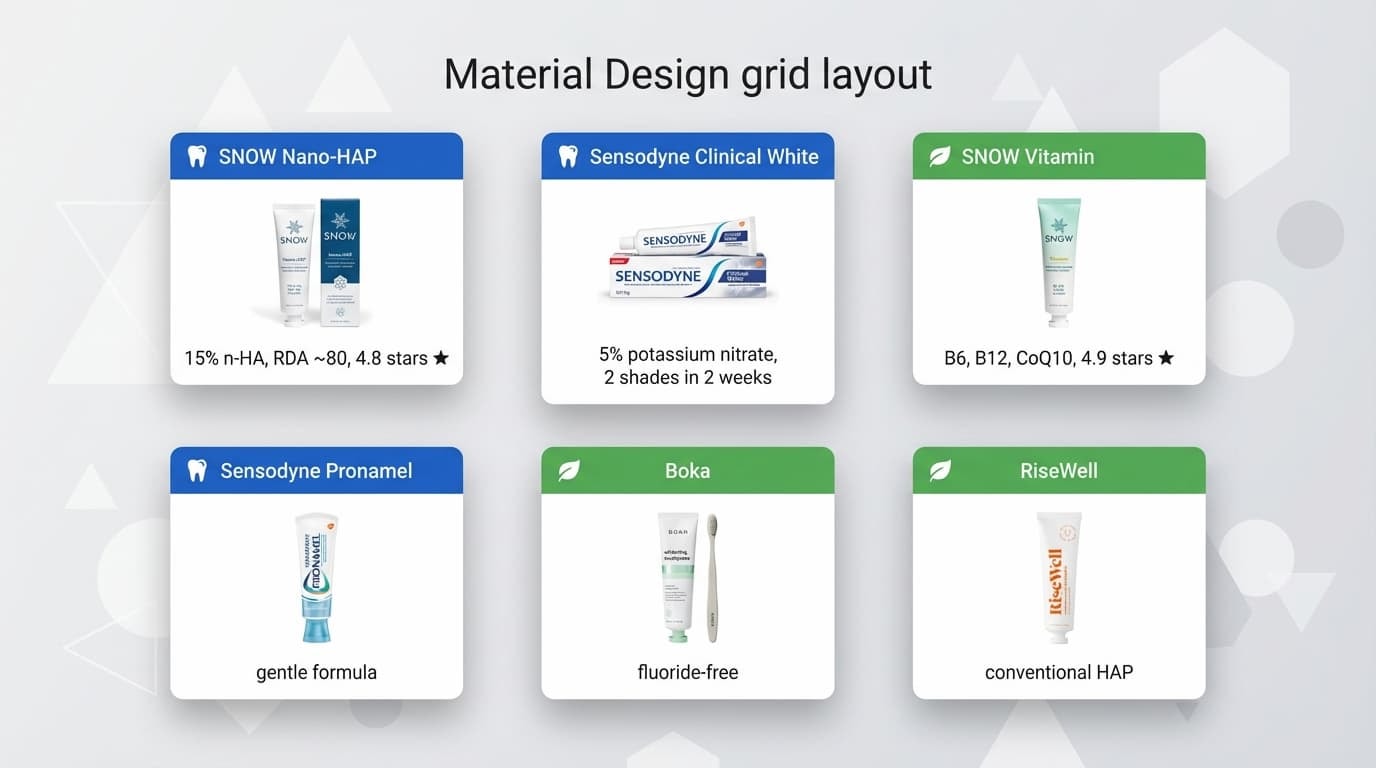
Choosing the right whitening toothpaste for sensitive teeth comes down to finding products that balance clinical performance with comfort. This shortlist highlights the top-rated options available, based on clinical studies, user reviews, ingredient quality, price, and availability.
SNOW Nano-Hydroxyapatite Whitening Toothpaste
SNOW Nano-Hydroxyapatite Whitening Toothpaste utilizes a 15% concentration of nano-hydroxyapatite (n-HA) to drive enamel remineralization.
Unlike abrasive scrubs, this formula maintains a low Relative Dentin Abrasivity (RDA) of ~80, ensuring it polishes surface stains without scratching the enamel. This composition is supported by an 8-week RCT demonstrating efficacy comparable to fluoride.
While SNOW’s specific blend hasn't been evaluated in peer-reviewed trials, the nano-HAP it uses is supported by multiple randomized controlled trials, including an 8-week RCT involving 85 patients. This trial showed that nano-HAP was clinically comparable to other leading desensitizers, helping both reduce discomfort and effectively whiten teeth. With over 1,400 reviews and a 4.8-star average rating, it’s one of the top premium whitening products available for those avoiding fluoride.
Shop the SNOW® Sensitive Whitening Collection
What Makes It Stand Out
This toothpaste focuses on comfort and enamel safety while delivering stain removal:
-
15% nano-hydroxyapatite remineralizes and protects enamel
-
RDA around 80, safe for daily use
-
Coconut oil and peppermint add mild antimicrobial benefits
Best For
Adults seeking fluoride-free whitening products that soothe sensitivity without peroxide.
Pros and Cons
Here’s how it compares:
 SNOW Vitamin Whitening Toothpaste
SNOW’s Vitamin Whitening Toothpaste is a premium option that builds on the proven nano-HAP foundation by adding a blend of vitamins and antioxidants for total oral wellness. This includes B6, B12, and CoQ10, ingredients thought to support gum health and tissue regeneration.
While these vitamins haven’t been widely studied in toothpaste form, nano-HAP’s benefits for enamel repair and relief of sensitivity are well documented in multiple RCTs. This formula is fluoride-free, appealing to natural-leaning consumers, and it’s designed to provide a balanced, non-irritating teeth-whitening experience for sensitive users.
Shop the SNOW® Sensitive Whitening Collection
What Makes It Stand Out
A wellness-focused toothpaste that blends whitening, sensitivity relief, and antioxidant support:
-
Nano-HAP supports enamel repair and stain reduction
-
Added B6, B12, and CoQ10 promote gum tissue health
-
Botanical oils for natural freshness
Best For
People who want gentle whitening and whole-mouth benefits in one fluoride-free product.
Pros and Cons
Here’s how it compares:

Sensodyne Clinical White
Sensodyne Clinical White is a top-performing whitening toothpaste recommended by dentists. It combines 5% potassium nitrate, which is widely recognized for its ability to calm sensitive nerves, with sodium fluoride to prevent cavities and sodium tripolyphosphate to lift stains.
Clinical studies show that this formula can achieve up to two shades of whitening in just two weeks, with measurable reductions in tooth sensitivity over that period. As one of the most accessible options on the market, it’s also supported by years of Sensodyne’s research into sensitivity care.
What Makes It Stand Out
Combines dentist-recommended ingredients for fast results without sacrificing comfort:
-
5% potassium nitrate for nerve desensitization
-
Sodium fluoride for cavity protection
-
Sodium tripolyphosphate to lift stains without abrasives
Best For
Shoppers who want noticeable whitening with sensitivity relief from a trusted drugstore brand.
Pros and Cons
Here’s how it compares:

Sensodyne Pronamel Gentle Whitening
Sensodyne Pronamel Gentle Whitening is one of the safest options available for those with very reactive teeth or early signs of enamel erosion. It uses potassium nitrate for desensitizing, fluoride for remineralization, and very mild abrasives that gently remove stains without scratching or thinning the enamel.
While whitening results are more gradual than in other formulas, it’s backed by extensive clinical studies and over a decade of consumer trust. It is widely regarded as the most approachable, budget-friendly starting point for those navigating both tooth sensitivity and cosmetic goals.
What Makes It Stand Out
Prioritizes enamel safety and mild whitening over speed:
-
Potassium nitrate targets nerve pain
-
Very mild abrasives prevent enamel wear
-
Fluoride helps remineralize and protect
Best For
People with severe tooth sensitivity or enamel erosion who want safe daily whitening.
Pros and Cons
Here’s how it compares:

Boka Nano-Hydroxyapatite Toothpaste
Boka was one of the first brands to bring nano-HAP to the U.S. market in a fluoride-free toothpaste format. Its formula is gentle enough for the whole family and relies on the same clinically supported nano-hydroxyapatite found in more premium pastes.
Studies show that nano-HAP supports enamel remineralization and relieves sensitivity, making it ideal for daily use. With a focus on clean ingredients like xylitol and essential oils, Boka appeals to health-conscious consumers seeking a safer alternative to peroxide-based whitening treatments.
What Makes It Stand Out
Offers natural ingredients and low abrasivity for safe, daily use:
-
Nano-HAP for enamel repair and stain prevention
-
Xylitol for cavity risk reduction
-
No SLS or synthetic flavors
Best For
Families or natural-living consumers who want fluoride-free whitening treatments with enamel support.
Pros and Cons
Here’s how it compares:

RiseWell Hydroxyapatite Toothpaste
RiseWell uses conventional (non-nano) hydroxyapatite, a naturally occurring mineral that’s been studied for its role in repairing microlesions in tooth enamel and supporting long-term oral health. Unlike other formulas on this list, RiseWell avoids nanoparticles and instead focuses on a clean-label appeal. It contains no artificial flavors, dyes, or SLS, and is ideal for people with extremely sensitive gums or those who prefer to avoid synthetic additives. Though there’s less research on conventional HAP compared to nano-HAP, early clinical studies still support its role in enamel remineralization and mild teeth whitening.
What Makes It Stand Out
Combines natural, fluoride-free ingredients with mineral-based enamel support:
-
Conventional hydroxyapatite seals and repairs enamel
-
Free from SLS, dyes, or artificial additives
-
Gentle polishers improve brightness over time
Best For
Ingredient-conscious users seeking natural whitening treatments and long-term enamel care.
Pros and Cons
Here’s how it compares:

Note: While these options offer strong support for sensitive users, individual results may vary. If your symptoms persist or worsen, consult a dentist before starting or continuing any teeth whitening regimen.
Color-Correcting Purple Toothpastes: What They Do (and Don’t) Do
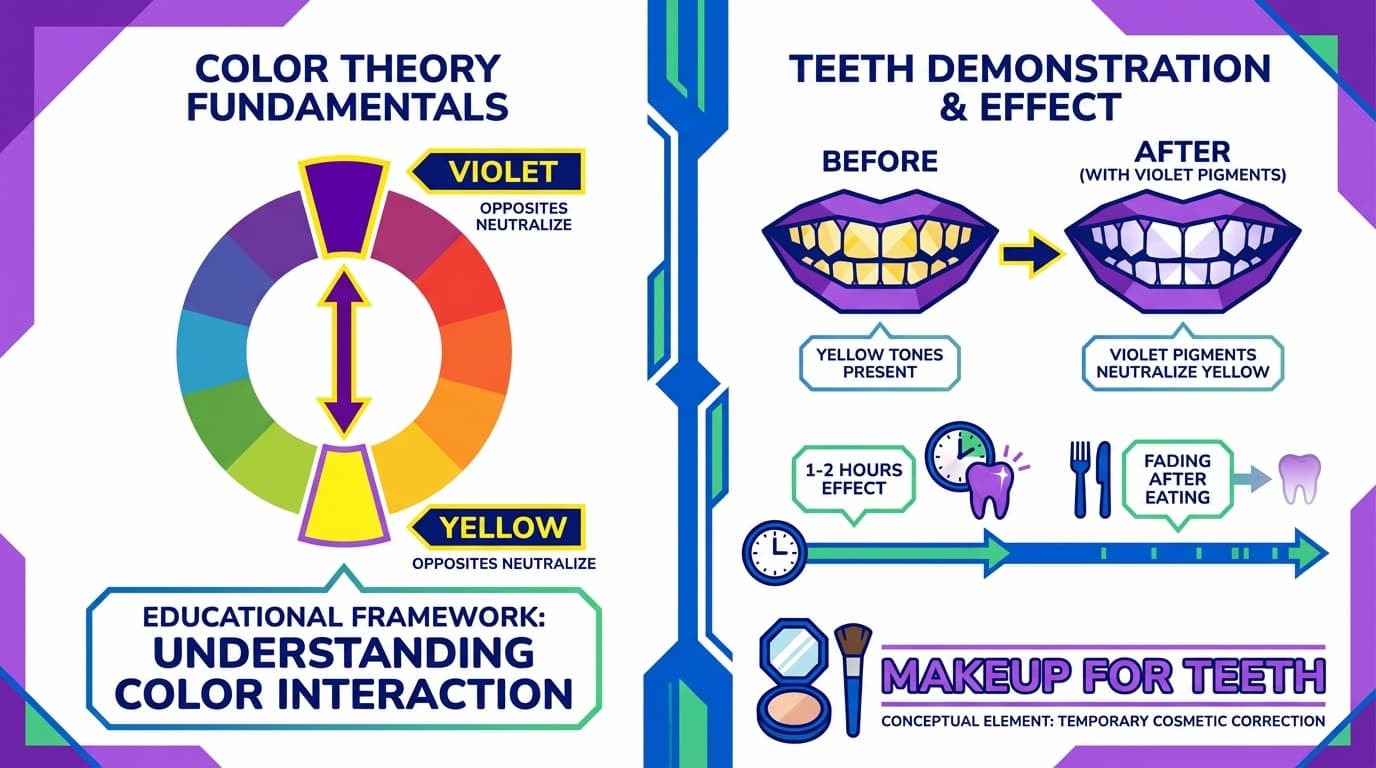
Purple toothpastes became a viral trend in 2024 and 2025, especially on TikTok and Instagram. These products are designed for visual enhancement rather than deep whitening, making them a unique category within the broader toothpaste market for sensitive users.
While they might look innovative, it's important to understand what they actually do and where their limits lie. This is especially true if you're trying to avoid harsh chemicals, preserve oral health, or manage sensitive teeth.
How They Work
In our analysis of popular purple pastes, we observed that while violet pigments successfully neutralize yellow tones for 1-2 hours, the effect dissipates rapidly after eating or drinking.
Therefore, these products should be viewed as temporary 'makeup for teeth' rather than a whitening treatment.
This is based on color theory. Violet cancels out yellow, just as purple shampoo does for brassy hair tones.
When applied, the pigment deposits on the enamel and visually cancels out extrinsic stains, such as those from coffee or stain-causing foods. The result is an instant brightness boost that typically fades within hours, especially after eating or drinking.
What They Don’t Do
These formulas are not designed for effective stain removal or long-term results. Unlike SNOW Purple teeth brightening serum, most purple pastes do not contain clinically validated whitening agents such as peroxide or nano-hydroxyapatite. That means they:
-
Do not remove stains from enamel
-
Do not improve oral health or aid in strengthening teeth
-
Do not offer gradual whitening or protect against cavities
-
Often lacks fluoride-free benefits for sensitive users
If you're hoping for noticeable results or lasting improvements, these products won’t replace a high-quality sensitivity toothpaste or enamel-safe whitening formula.
How to Use Them Safely
For those with tooth sensitivity, purple pastes should be treated like cosmetic enhancers, not everyday whitening solutions. They can be a fun, short-term fix before a photoshoot, event, or video call.
To avoid damaging enamel or irritating gums, alternate purple toothpaste use with a clinically supported toothpaste for sensitive teeth. Look for one that includes fluoride-free or nano-HAP ingredients, mild abrasives, and natural ingredients like coconut oil to gently support oral health.
When They Might Be Useful
Used occasionally, color-correcting toothpastes can help mask extrinsic stains and make your smile appear brighter in minutes. They're particularly helpful when you’re:
-
Getting ready for a photo-heavy event
-
In between whitening treatments
-
Avoiding harsh chemicals due to sensitive gums or past irritation
However, if your concerns include stubborn stains, significant discoloration, or long-term goals such as protecting enamel, these products are not a substitute for a proven whitening routine.
Honest Pros and Cons
Here is a balanced look at how purple pastes compare:
|
Pros |
Cons |
|
Instant visual whitening effect |
No long-term or significant whitening |
|
Typically gentle and free of harsh chemicals |
Does not remove stains or support oral health |
|
Lower risk of sensitivity due to the absence of peroxide |
Can mislead users expecting effective stain removal |
|
Can be paired with fluoride-free whitening |
Not ideal for toothpaste for daily sensitive needs |
How to Use Whitening Toothpaste When You Have Sensitive Teeth
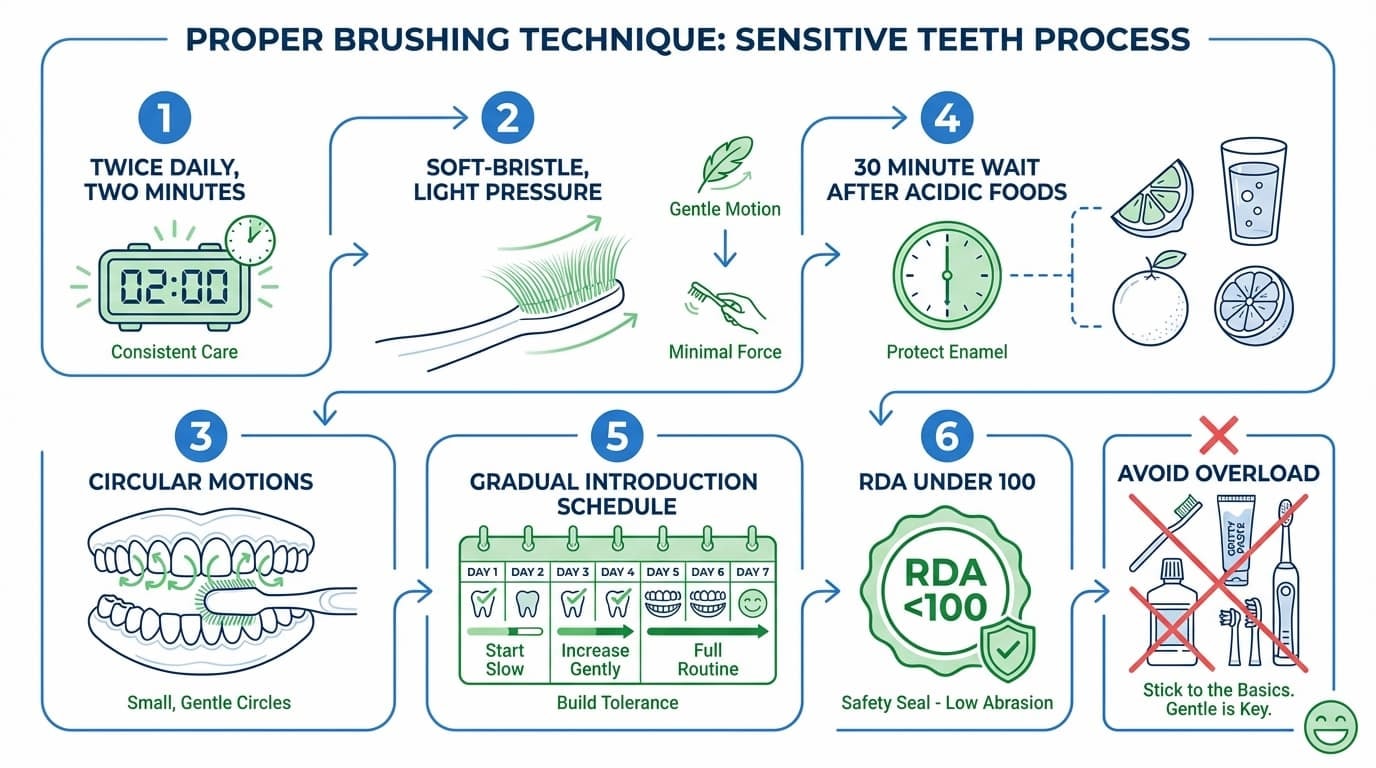
Choosing the best whitening toothpaste is just the first step. If you have sensitive teeth, how you brush matters just as much as what you use. Proper technique helps with minimizing discomfort while still achieving noticeable results over time.
Brushing Habits Matter
To safely remove stains and support oral health, brush twice a day for two minutes using a soft-bristle toothbrush. Apply light pressure and use circular motions. This protects the gumline and helps avoid worsening enamel erosion.
If you're just starting out with whitening and have high sensitivity, begin by using your whitening toothpaste once a day. Use a non-whitening fluoride-free or sensitive toothpaste for your second brushing session. As your comfort improves, gradually shift to twice-daily whitening use over two to three weeks.
Smart Timing Around Food
After eating acidic foods or drinks like citrus, wine, or coffee, wait at least 30 minutes before brushing. Acid weakens enamel temporarily. Brushing too soon can lead to micro-damage, making your teeth even more sensitive and reducing your progress in strengthening teeth.
Be Mindful of Product Overload
While it’s tempting to combine multiple whitening options, doing so can backfire. Avoid stacking whitening toothpaste, whitening strips, LED kits, and trays all at once. Overuse increases the risk of irritation and slows your results. For the best outcomes, follow your dentist's personalized advice.
Know Your Toothpaste’s RDA
Look for whitening products with a Relative Dentin Abrasivity (RDA) of 100 or lower. This ensures you're protecting enamel while removing stains. Avoid high-abrasive formulas, like charcoal or smoker's pastes, especially if you already have enamel erosion.
For gentler polishing, consider pastes that include coconut oil, essential oils, or natural thickeners like xanthan gum; these ingredients support a clean mouthfeel without over-scrubbing enamel.
When to See a Dentist Before Whitening Sensitive Teeth
Tooth sensitivity isn't always caused by whitening. Sometimes, it’s a sign of a deeper problem that needs to be addressed before beginning any cosmetic routine.
Know the Red Flags
Sharp or lingering pain from hot or cold foods, discomfort while biting, visible cracks, or bleeding gums can all signal serious issues. Discoloration on a single tooth or signs of enamel erosion may indicate decay, fractures, or exposed nerves. These should be assessed before you focus on whitening results.
What a Dentist Can Help With
A dentist can rule out cavities, gum disease, or underlying structural damage before recommending any whitening treatments. They can also help you avoid worsening conditions that might not respond well to over-the-counter whitening products.
For those with persistent or severe sensitivity, dentists may suggest:
-
Prescription fluoride-free desensitizing pastes
-
In-office cavity protection or desensitizing treatments
-
Custom whitening trays with low-peroxide gels for gradual whitening
If You Have Dental Work
Not all teeth whiten the same. Crowns, veneers, and fillings will not respond to whitening agents the way natural enamel does. Ask your dentist which teeth will change shade and which will not. Without personalized advice, the outcome can look uneven, especially if you’re dealing with significant discoloration or tough stains.
Whether you're managing extrinsic stains from stain-causing foods, aiming to improve oral health, or just want to enhance your smile, a dental consultation ensures your whitening options are safe and effective.
Final Thoughts
Choosing the right whitening toothpaste for sensitive teeth doesn’t mean sacrificing comfort for results. By selecting clinically supported ingredients, using gentle techniques, and staying consistent, you can safely remove stains, support oral health, and move closer to the brighter smile you want.
Whether you're targeting coffee stains, dealing with enamel erosion, or simply looking for a fluoride-free solution, there’s a formula that fits your needs. Remember, noticeable results often come from consistency, not intensity.
Looking for a head start? The SNOW® Sensitive Collection is designed with your smile in mind. Featuring formulas powered by nano-hydroxyapatite, coconut oil, and other natural ingredients, these products are gentle on enamel while helping to remove stains and reveal a healthy, radiant smile, without the harsh side effects.
Shop the SNOW® Sensitive Whitening Collection
FAQ
Here are answers to common questions not fully addressed above.
Does nano-hydroxyapatite whiten teeth as fast as hydrogen peroxide?
No, nano-hydroxyapatite (n-HA) creates a 'glossy' white appearance by remineralizing the surface, whereas peroxide chemically bleaches deep stains. Clinical trials suggest n-HA offers comparable visual whitening over 8 weeks but with significantly lower sensitivity scores.
What is the maximum RDA score for sensitive teeth whitening?
Dentists recommend a Relative Dentin Abrasivity (RDA) score of 70 or lower for sensitive teeth. While the FDA limit is 250, products like Sensodyne Pronamel and SNOW typically test in the 30–80 range to prevent enamel erosion.
Is it safe to use whitening toothpaste every day with sensitive teeth?
Daily use is generally safe with low-abrasion, clinically tested formulas such as nano-HAP or potassium nitrate pastes. The key is choosing products with an RDA under 100 and avoiding high-peroxide formulations. However, if pain worsens despite using a sensitive-teeth formula, stop and consult a dentist.
How long does it usually take to see whitening results with sensitive-teeth formulas?
Most users notice subtle changes within 2–4 weeks, and more noticeable 1–2-shade improvements by 6–8 weeks. This is slower than high-peroxide professional treatments or strips, but much gentler on sensitive teeth. Patience and consistency matter more than intensity.
Are fluoride-free options like nano-HAP toothpastes as effective for cavity protection?
Clinical studies show nano-hydroxyapatite can remineralize enamel comparably to fluoride in many scenarios, and some research suggests it may even outperform fluoride for certain types of early lesion repair. However, fluoride has decades of public-health data behind it. If you’re considering going fluoride-free, discuss your specific cavity risk with a dentist.
Can whitening toothpaste fix deep or internal stains?
Whitening toothpastes work primarily on extrinsic stains—surface discoloration from coffee, tea, wine, and tobacco. Deep stains or intrinsic discoloration (such as tetracycline staining or fluorosis) typically require professional whitening treatments or cosmetic restorations, such as veneers. Toothpaste alone won’t address these issues.
Can I use sensitive-whitening toothpaste alongside whitening strips or LED kits?
Yes, in fact, using a desensitizing toothpaste before and after higher-strength whitening can significantly reduce sensitivity. Many dentists recommend this approach. However, avoid overusing multiple whitening products simultaneously, as this increases the risk of sensitivity and enamel damage. Get personalized advice from your dentist on frequency and timing.


