

The best toothbrush for daily usage in 2025 is a soft-bristled electric toothbrush featuring a built-in pressure sensor and a two-minute timer.
Clinical data confirms that this specific configuration removes 11-23% more plaque than manual brushes while preventing gingival abrasion caused by over-brushing.
This guide outlines what to look for in a toothbrush, the science behind manual vs. electric toothbrushes, and how to choose the right one based on your needs, budget, and oral health. Whether you’ve got sensitive gums, braces, or just want the best daily clean, you’ll find the right brush here.
Key Takeaways
-
A soft-bristled electric toothbrush with a built-in timer and pressure sensor (like the Oral-B Smart 1500 or Oral-B iO3) is the best default choice for most adults in 2025.
-
Cochrane 2025 and other meta-analyses confirm electric brushes remove 11–23% more plaque and reduce gingivitis by 6–11% more than manual brushes over 3+ months—but technique and consistency still matter more than the specific model.
-
Soft bristles are recommended for daily use across most populations; medium bristles are suitable only for people with very healthy gums who use light pressure; hard bristles should not be used on natural teeth.
-
The right toothbrush depends on your situation: children, elderly users, people with disabilities, travelers, and those with sensitive teeth each benefit from different specific models covered in this guide.
-
Brushing twice a day for 2 minutes, with gentle pressure at a 45° angle, consistently over the years, delivers more oral health benefits than any premium smart feature or luxury design.
Quick Verdict: Best Toothbrush in 2025
If you're asking which toothbrush is best for daily use, the evidence indicates that a soft-bristled electric toothbrush with a built-in timer and pressure sensor is the top choice for most adults in 2025.
A leading option is the SNOW LED Whitening Electric Toothbrush (Gen 2). It combines 39,000 sonic vibrations per minute with LED blue-light whitening technology to support plaque removal and visible brightness in your everyday routine.
Other strong contenders include the Oral-B Smart 1500 and the Philips Sonicare 4100, both backed by clinical evidence supporting long-term oral care.
According to a 2025 Cochrane Review, electric toothbrushes reduce plaque by up to 23 percent more than manual brushes when used over several months. For most people, the upgrade leads to healthier gums and better brushing habits.
Do Electric Toothbrushes Clean Better Than Manual Brushes?
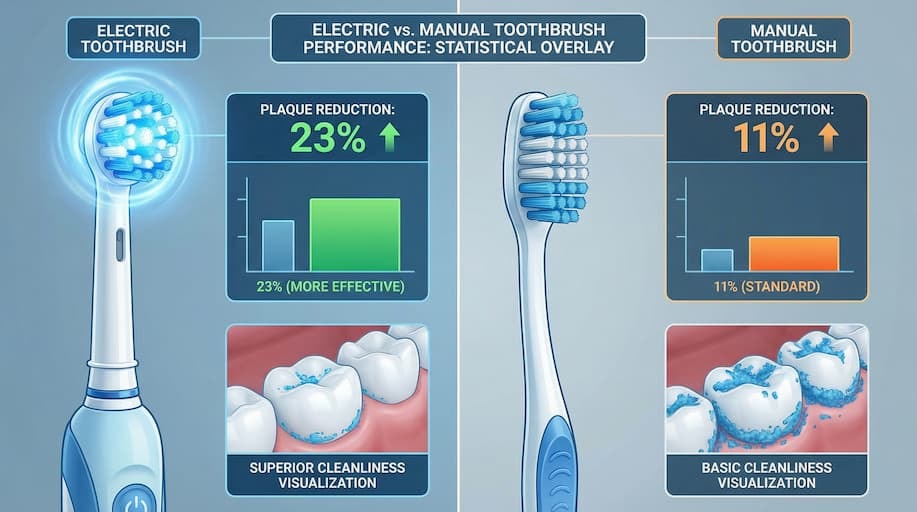
Electric toothbrushes are statistically superior to manual options for long-term plaque control. According to a 2025 Cochrane Review, electric models reduce plaque by 11% in the short term and up to 23% after three months of use compared to manual brushing.
According to the 2025 Cochrane Review, electric toothbrushes reduce plaque by about 11 percent more in the first few months and up to 23 percent more after extended use. Gingivitis also improves more with electric toothbrushes, resulting in a 6-11% reduction over time.
Electric brushes also promote better user consistency. Features such as timers, quadrant pacing, and pressure sensors help users brush effectively, avoid gum damage, and stay engaged for the full two-minute session.
In contrast, manual brushes require precise form and timing every time, which most users find difficult to maintain without guidance.
Which Bristle Firmness Is Best for Daily Usage?
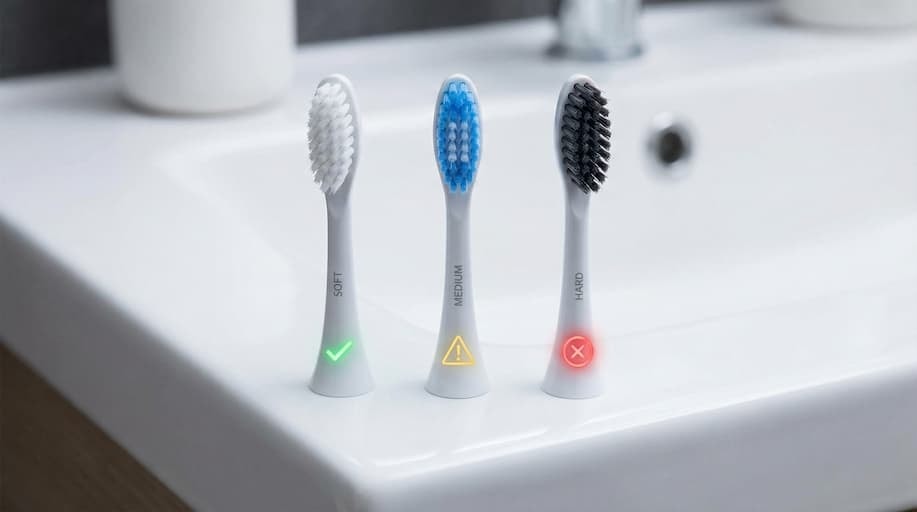
When choosing the best toothbrush for daily use, the type of bristles is just as important as whether the brush is manual or electric. Bristle firmness directly impacts plaque removal, enamel protection, and gum health.
Many assume firmer bristles clean better, but research shows that softer options are more effective and much safer for long-term use. Here's what you need to know.
Soft Bristles: The Safe Daily Standard
Soft bristles are the clinical standard for daily cleaning because they bend to accommodate the gingival margin without abrading tissue.
The American Dental Association reports that soft filaments effectively disrupt biofilm while minimizing the risk of gingival recession, a condition exacerbated by medium or hard bristles.
This flexibility allows the bristles to reach 1-2mm into the sulcus (gum line), removing subgingival plaque that stiffer bristles miss.
Soft bristles are best for:
-
Children and older adults
-
Sensitive teeth or gum recession
-
Post-surgical care or whitening routines
-
Anyone brushing twice a day who wants long-term protection
Modern soft brushes often feature tapered or feathered bristles that reach into tight areas and provide excellent cleaning with less pressure. For most people, a soft-bristled brush is the most dependable option for daily care.
Medium Bristles: Use With Caution
Medium bristles can remove slightly more plaque in lab tests, but they increase the risk of gum irritation and enamel wear when used improperly. Their stiffness can be harsh on soft tissues, especially when excessive pressure is applied.
Use medium bristles only if:
-
Your dentist confirms your gums are healthy
-
You do not experience sensitivity
-
You naturally brush with light pressure
-
You're confident in your brushing technique
Unless specifically advised by a dental professional, medium bristles are not the best choice for daily use, especially for those prone to bleeding or discomfort while brushing.
Hard Bristles: Not Recommended
Hard-bristle toothbrushes are no longer considered safe for cleaning natural teeth. While they may seem more effective at scrubbing away stains, they often do more harm than good.
Hard bristles can wear down enamel, irritate gums, and lead to long-term sensitivity or gum recession. This damage can be difficult to reverse over time.
Hard bristles may only be appropriate for:
-
Occasional use on dentures
-
Stain removal under dental supervision
For natural teeth and daily brushing, hard bristles are not a safe option.
What Are the Top-Rated Toothbrushes of 2025?
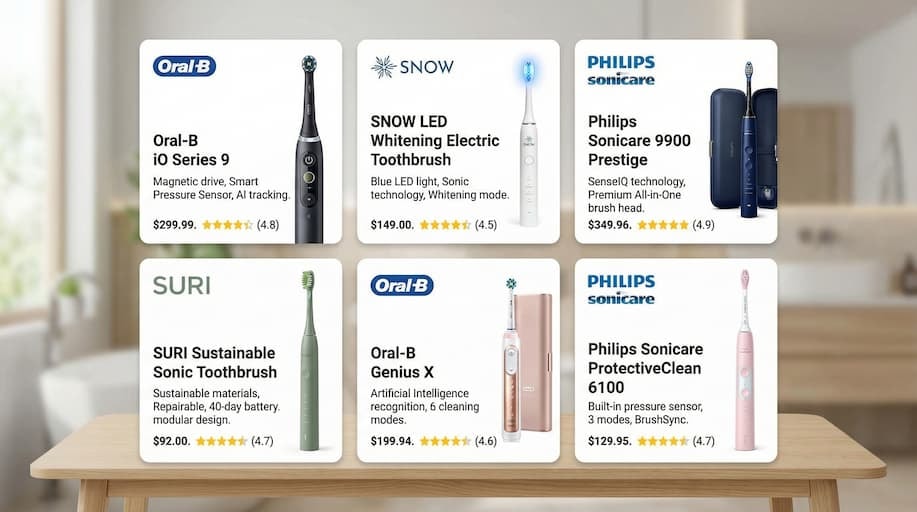
When deciding which toothbrush is best for daily usage, it helps to look at category leaders across different needs.
From advanced tech features to budget-friendly picks, every brush on this list meets essential criteria for oral health: effective plaque removal, safe bristles, a well-designed brush head, and features that encourage regular brushing habits.
All picks below are evaluated based on clinical performance, brushing comfort, durability, and overall value.
Whether you're shopping for sensitive gums, travel convenience, or top tech, there's a toothbrush to match your oral health needs.
Best Overall: Oral-B Smart 1500
The Oral-B Smart 1500 is an oscillating-rotating electric toothbrush designed for optimal plaque removal. It features a visible Pressure Sensor that slows the brush speed if you press too hard, protecting gum tissue.
We selected this model as 'Best Overall' because it balances clinical performance with value. Its 3D cleaning action (oscillating, rotating, and pulsating) breaks up 100% more plaque than a regular manual toothbrush along the gumline.
Key Features:
-
3 brushing modes
-
2-minute timer with 30-second pacer
-
Built-in pressure sensor
-
Oscillating-rotating brush head
Price: $87.94
Best For: Users who want a well-rounded electric toothbrush that improves brushing habits, reduces plaque, and supports good oral health without premium pricing.
Best for Whitening and Smart Features: SNOW® LED Whitening Electric Toothbrush (Gen 2)
SNOW® LED Whitening Electric Toothbrush (Gen 2) is an advanced electric toothbrush from SNOW, designed to do more than clean. It whitens as you brush. Combining 39,000 sonic vibrations per minute with built-in blue LED light therapy, it targets surface stains and supports overall oral health without causing gum irritation. Ideal for those with sensitive teeth who want a brighter smile and a tech-forward brushing experience.
KEY FEATURES:
-
Built-in LED blue light for teeth whitening
-
39,000 sonic vibrations/min for deep cleaning
-
4 brushing modes: Clean, Whiten, Polish, Sensitive
-
2-minute smart timer with 30-second quadrant reminders
-
Long-lasting battery (up to 30 days)
-
Includes 2 soft-bristle LED brush heads
-
Designed by dental professionals
PRICE: $85 USD (one-time purchase) | $70 USD with subscription
BEST FOR: People looking for a whitening toothbrush that also prioritizes gentle care, advanced features, and a sleek, dentist-approved design.
Shop the SNOW LED Whitening Toothbrush
Best Budget: Oral-B Pro 500
Oral-B Pro 500 offers many of the same essential features as higher-end models at a more accessible price point. It uses the same round-brush-head design, features a built-in timer, and delivers effective plaque removal.
Key Features:
-
Single-mode brushing
-
Built-in timer
-
Compact round head for back teeth access
Price: $85
Best For: Budget-conscious users who still want the benefits of an electric toothbrush with clinically proven performance.
Best for Sensitive Gums: Philips Sonicare 4100 Series
Philips Sonicare 4100 Series is a gentle sonic brush with soft bristles and a slim, lightweight handle. It’s designed to minimize irritation and pressure on sensitive gums or teeth while still delivering effective plaque removal.
Key Features:
-
Soft-bristle toothbrush head
-
Pressure sensor to prevent enamel damage
-
Sonic vibrations for deep but gentle cleaning
Price: $38.78
Best For: Those with gum recession, tooth sensitivity, or recent dental procedures. Also ideal for users seeking a simple, quiet sonic option.
Best Tech Features: Philips Sonicare 9900 Prestige
Philips Sonicare 9900 Prestige is one of the most advanced electric models available. This brush includes Bluetooth connectivity, five cleaning modes, and AI-powered tracking to improve technique and consistency over time.
Key Features:
-
App-enabled brushing feedback
-
Smart pressure sensor
-
5 brushing modes including whitening and gum care
-
Long-lasting 28-day battery
Price: $379.96
Best For: Tech-savvy users looking to elevate their oral hygiene routine with high-end personalization and data-driven brushing improvements.
Best Eco/Travel-Friendly: SURI 2.0 Electric Toothbrush
SURI 2.0 Electric Toothbrush is designed for sustainability and portability. It offers a minimalist aesthetic with high functionality. Also, it includes a long battery life and recyclable materials without compromising performance.
Key Features:
-
Two brushing modes
-
42-day battery life
-
Compact and travel-ready
-
Made with a recycled aluminum body
Price: $92
Best For: Eco-conscious users and frequent travelers who need a brush that’s both environmentally friendly and effective for maintaining good oral hygiene on the go.
Choosing Based on Specific Needs
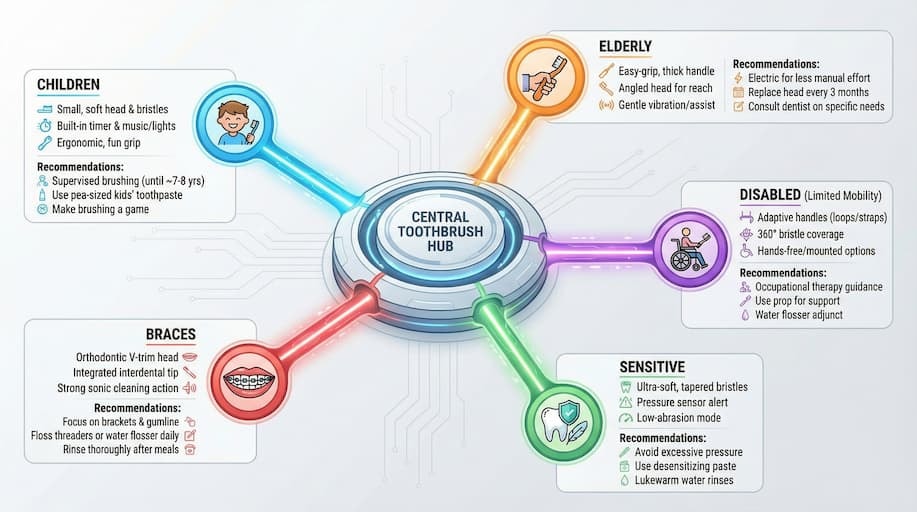
Finding the best toothbrush for daily usage isn’t just about picking a top-rated product. It’s about tailoring your choice to your oral health needs and personal situation.
Whether you're buying for a child with developing teeth, an elderly parent with arthritis, or someone with orthodontic braces or cognitive challenges, choosing the right toothbrush can significantly impact comfort, compliance, and long-term dental health.
Here's how to match the brush to the person, and why that match matters.
Children
Children require toothbrushes that do more than clean. They need tools that help develop regular brushing habits, protect fragile, developing teeth, and make brushing a positive experience.
Key Considerations:
-
Soft bristles are essential for gently cleaning new enamel and protecting sensitive gums
-
A small brush head allows better maneuverability in tiny mouths and hard-to-reach areas
-
Built-in timers, lights, or music features can keep children engaged for the full 2-minute brush time
-
Ergonomic, non-slip handles make it easier for kids to hold the brush independently
Elderly or Limited Dexterity
Aging often brings challenges such as arthritis, tremors, or reduced grip strength, all of which can affect daily toothbrushing. In such cases, comfort, ease-of-use, and adaptability become key.
Look for:
-
Larger, ergonomic handles that are easier to hold with reduced hand strength
-
Electric toothbrushes with automatic motion, pressure sensors, and built-in timers to reduce reliance on precise technique
-
Multi-surface brush heads (like U-shaped or triple-headed) that simplify cleaning multiple surfaces at once
Disabilities or Special Needs
Oral care can be uniquely challenging for individuals with cognitive, sensory, or motor disabilities. The best toothbrushes here should simplify technique and reduce overstimulation or discomfort.
Key Features:
-
Soft bristles or ultra-soft heads to minimize gum irritation
-
Automated or U-shaped designs that require little to no technique
-
Quiet operation and gentle motion settings for those with sensory sensitivity
-
Single-step brushing experience for cognitive ease
Sensitive Teeth
Brushing with sensitive teeth or gums can be painful, leading users to shorten or skip brushing altogether. The goal is to reduce abrasion and pressure while still effectively cleaning.
What Matters Most:
-
Ultra-soft or soft bristles to avoid further enamel erosion
-
Electric models with lower-intensity modes and pressure sensors
-
Brush heads that are rounded and gentle, preventing irritation
-
Compatibility with fluoride toothpaste for enamel strengthening
Braces & Orthodontics
Orthodontic devices create tight, complex spaces that make brushing a challenge. Proper cleaning around brackets and wires is essential to prevent tooth decay and gingivitis.
Important Features:
-
Compact or orthodontic-specific brush heads for better navigation
-
Sonic or oscillating motion to dislodge food particles and plaque from tight spots
-
Interchangeable brush heads for interdental cleaning or even built-in flossers
-
Tools that reduce the risk of gum recession from poor brushing technique
For anyone with braces, maintaining oral hygiene can feel like a daily challenge. Traditional floss often struggles to reach between wires and brackets, increasing the risk of plaque buildup and gum inflammation. That’s where water flossers come in, not just for convenience, but for proven clinical effectiveness.
If you're managing braces, a device like the SNOW Water Flosser can make daily flossing easier, gentler, and more thorough, without the frustration of threading a string around every bracket.
Upgrade Your Routine With The SNOW Water Flosser
Which Smart Toothbrush Features Actually Improve Oral Health?
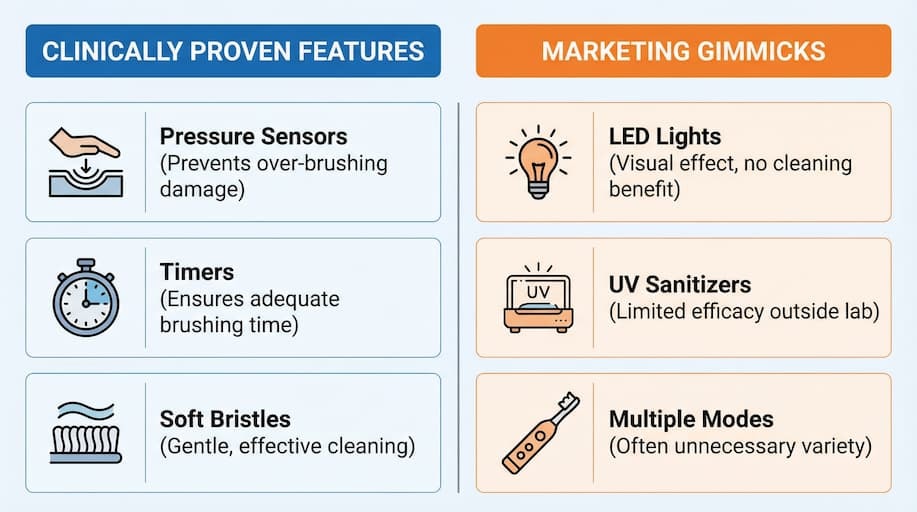
When choosing the best toothbrush, it’s easy to get distracted by flashy add-ons like LEDs, UV lights, or high-gloss finishes. But most dental hygienists and researchers agree: what matters most are the features that improve your brushing technique and consistency.
What Actually Matters
Before investing in a new toothbrush, prioritize these clinically backed features:
-
Pressure Sensors: These prevent users from applying too much pressure, which can damage tooth enamel and cause gum recession. Studies show that people using electric toothbrushes with pressure sensors maintain better oral health over time, especially those with sensitive gums or a higher risk of gum disease.
-
Built-in Timer and Quad-Pacer: Most people brush for less than the recommended two minutes. Timers ensure proper duration, while quad-pacers help you clean all four sections of your mouth evenly.
-
Soft Bristles: Recommended by the American Dental Association and most dental professionals. Soft bristles are effective for plaque removal without harming the gums or tooth enamel. Research shows soft-bristled toothbrushes perform better in interproximal cleaning when used with proper brushing technique.
-
Small Brush Head: A smaller brush head provides easier access to hard-to-reach areas, such as behind molars. Especially beneficial for users with smaller mouths, children, or limited dexterity.
-
Rechargeable Battery (14+ Days): Long battery life reduces friction to daily use and supports regular brushing habits, especially for travelers or forgetful users.
What Doesn’t Matter (Much)
Many toothbrushes advertise luxury features that have little to no proven clinical benefit. These can drive up costs without improving outcomes:
-
LED Lights or Whitening Beams: No evidence supports that built-in lights improve whitening or health outcomes. Whitening is more effectively achieved with chemical agents in toothpaste or through professional treatments.
-
UV Sanitizers: While UV may reduce surface bacteria, studies haven’t shown any additional benefit to your oral hygiene. Keeping your toothbrush dry and replacing it regularly (every 3 months) is more important.
-
Multiple Brushing Modes: While sensitive or whitening modes may slightly enhance comfort, most people benefit from a single effective mode combined with proper technique.
-
Aesthetic Finishes or Bluetooth Games: While apps can encourage brushing in children, flashy design does not replace clinical effectiveness. Consider them only if they help you or your child stay consistent.
Technique & Consistency Matter More Than Price
No matter how advanced your brush is, your results still depend on how well you use it.
Research from the Cochrane Collaboration and recent trials shows that technique and consistency outweigh features in oral health outcomes.
Key Habits That Actually Protect Your Teeth
-
Brush Twice a Day: Morning and night brushing removes plaque before it hardens into tartar. Brushing frequency correlates directly with reduced risk of tooth decay and gum disease.
-
Use the Proper Technique: Hold your brush at a 45-degree angle to the gum line. Use gentle circular motions and avoid scrubbing side-to-side. Spend at least 30 seconds per quadrant.
-
Don’t Apply Too Much Pressure: Especially if using a manual toothbrush. Too much force can erode tooth enamel and irritate the gums. A pressure sensor in an electric toothbrush can prevent this.
-
Pair With Daily Interdental Cleaning: No toothbrush, manual or electric, can clean between teeth alone. Use floss or a water flosser once per day. Studies show that water flossers are up to 93% more effective than string floss in reducing gingival bleeding in special populations, such as orthodontic and implant patients.
-
Replace Your Brush Head Every 3 Months: Frayed bristles lose effectiveness. Regular replacement ensures consistent plaque removal.
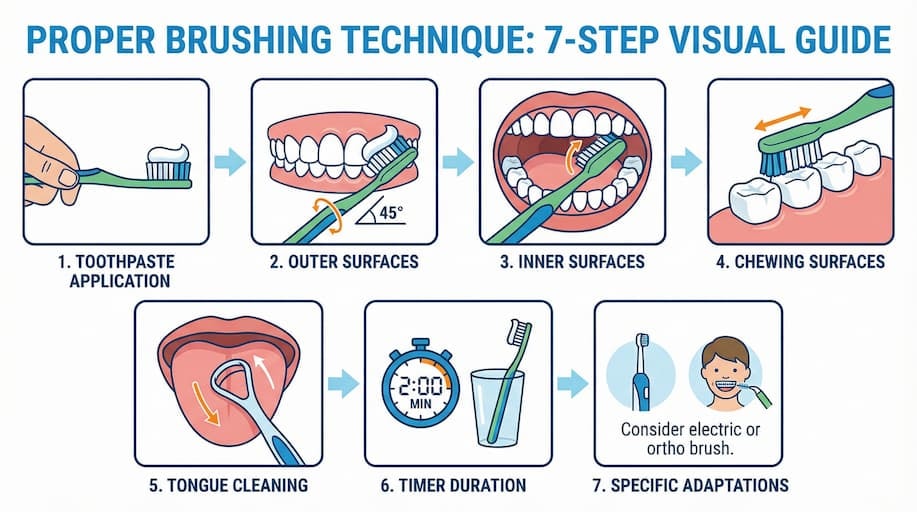
Proper Brushing Steps
Brushing your teeth correctly is just as important as brushing regularly. Here’s a step-by-step guide recommended by dental hygienists for optimal daily brushing:
-
Apply Fluoride Toothpaste: Use a pea-sized amount of fluoride toothpaste on a soft-bristle toothbrush. This is enough to clean your teeth without causing foam overload or wasting product. Fluoride helps remineralize enamel and protects against early signs of tooth decay, especially if you frequently consume acidic foods.
-
Start with the Outer Surfaces: Begin brushing the outside surfaces of your teeth (the ones visible when you smile). Use a systematic approach, working one quadrant at a time to ensure even coverage. Place the brush at a 45-degree angle toward the gumline and make short, circular strokes or gentle back-and-forth motions, depending on whether you’re using a manual or electric toothbrush.
-
Move to the Inner Surfaces: Tilt the brush vertically and use up-and-down strokes to clean the inner surfaces of the front teeth, where plaque tends to build up unnoticed. These hard-to-reach areas are often missed, which can lead to gum disease if not brushed properly.
-
Clean the Chewing Surfaces: Focus on the tops of your molars, where food debris and plaque can accumulate. Use firmer, yet controlled, motions across the biting surfaces. If you're using a Philips Sonicare or other electric brush, let the device do the work with gentle guidance.
-
Brush the Tongue: Finish by brushing your tongue from back to front. This helps remove bacteria that contribute to bad breath and supports a healthy smile. Tongue cleaning is often overlooked in oral care routines, but it makes a noticeable difference.
-
Brush for 2 Minutes Twice a Day: Maintain this full routine twice a day, morning and night. Most electric toothbrushes with built-in timers or pacer modes help ensure you meet the recommended brushing duration without applying excessive pressure or over-brushing, which can cause gum recession.
-
Adapt for Specific Dental Needs: If you have developing teeth, limited manual dexterity, braces, or other specific dental concerns, consider using toothbrushes with ergonomic handles, smaller brush heads, or specialized heads for removing plaque around wires and tight contacts.
Final Thoughts
Keeping your teeth clean and preventing issues such as tooth decay and enamel erosion starts with choosing the right tool for your unique dental needs.
From kids with developing teeth to adults with specific dental concerns or limited manual dexterity, matching the right features to the right user is key. With so many types of toothbrushes available, including soft, medium, and hard options, it’s not about picking the most expensive one; it's about choosing the one that fits your habits and health goals.
Avoiding acidic foods, brushing gently, and removing plaque daily all contribute to long-term oral health. If you’re ready to upgrade your routine, SNOW’s toothbrush collection combines smart features and a safe bristle design to help protect your enamel while delivering a better clean.
FAQs
Got more questions about daily brushing? We’ve got answers for you!
How often should I replace my toothbrush or electric brush head?
Every 3 months is generally recommended, or sooner if bristles are frayed. A worn toothbrush can’t effectively remove food debris or clean hard-to-reach areas.
Is a very expensive smart toothbrush worth it compared to a mid-range model?
Not usually. A mid-range option, such as a Philips Sonicare with soft bristles and pressure control, helps you brush effectively without applying excessive pressure or risking enamel erosion.
Do I still need to floss if I use a high-end electric toothbrush?
Yes. Even top-rated toothbrushes can’t reach tight interdental spaces where food debris hides. Flossing supports proper technique and prevents gum recession.
Can I share an electric toothbrush handle with family members?
Yes, as long as each person has their own toothbrush head. Sharing a single head can transfer bacteria and impact your ability to maintain a healthy smile.
What if my gums bleed when I start using a new toothbrush?
This may happen if your brushing habits were inconsistent. Switch to a soft brush, avoid hard toothbrush bristles, and practice proper technique during regular brushing. Persistent bleeding may signal gum issues.


