

Yes, for most adults, water flossers are statistically as effective as string floss for reducing plaque and often superior for reducing gingival bleeding. Knowing how long dental floss stays effective can also help you maintain consistent results with either method.
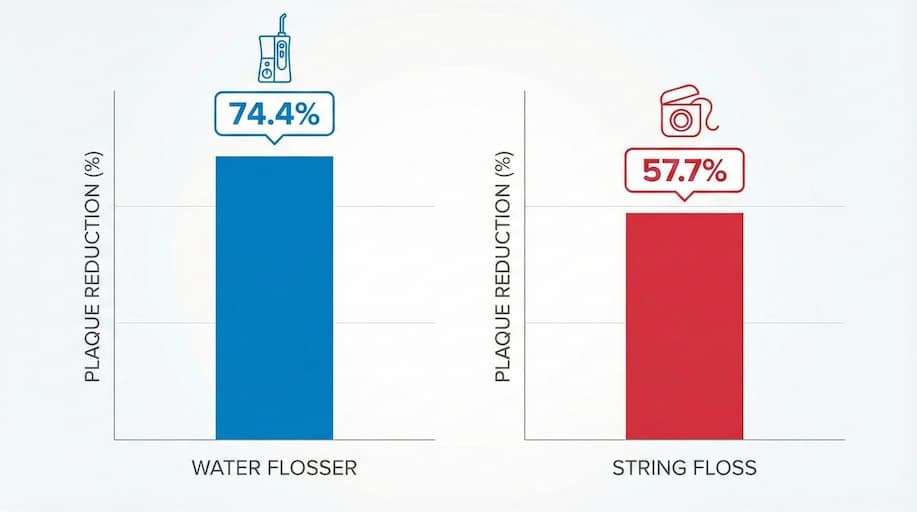
A 2013 randomized controlled trial found that water flossers reduced whole-mouth plaque by 74.4%, compared to 57.7% with string floss.
This guide explains how water flossing compares to traditional string floss, what science says about plaque removal, and whether you can use a water flosser to replace flossing in your daily oral care routine.
Key Takeaways
-
For most adults, a water flosser is at least as effective as string floss for plaque and bleeding reduction and often superior in hard-to-reach areas. A 2013 randomized controlled trial found that water flossers reduced whole-mouth plaque by 74.4%, compared with 57.7% with traditional dental floss.
-
Water flossers excel for specific populations: patients undergoing orthodontic treatment achieve 3-5x better plaque removal, while those with dental implants experience a 145% reduction in bleeding compared to regular flossing.
-
A 2024 systematic review of 7 RCTs (396 adults) concluded that 4 of 7 studies favored water flossers, particularly for inaccessible interproximal areas, and assigned a “moderate” evidence grade.
-
Key caveats exist: upfront cost ($30-60), device cleaning requirements, and 2021 lab research showing internal biofilm colonization within 3 weeks of daily use. Long-term real-world compliance data remains limited.
-
The practical bottom line: most people can safely treat a water flosser as a full alternative to floss. Those who already use string floss consistently may get the best results by combining both methods.
Quick Verdict: Are Water Flossers Just as Good?
Yes. In many cases, using a water flosser is as effective as traditional string floss and can be even better.
According to a 2013 clinical study published in PubMed, people who used a water flosser in addition to manual brushing achieved 74.4% plaque reduction, compared with 57.7% with string floss and brushing. That is a nearly 30% improvement in whole-mouth plaque removal, which is important for good oral health and preventing gum disease.
If you struggle with string floss or just don’t like it, switching to water flossing may be one of the simplest upgrades you can make in your oral care routine.
Water Flossers vs String Floss: How They Work?
To compare water flossers with traditional flossing, you need to understand how each method removes bacteria and food debris between your teeth.
How String Floss Works
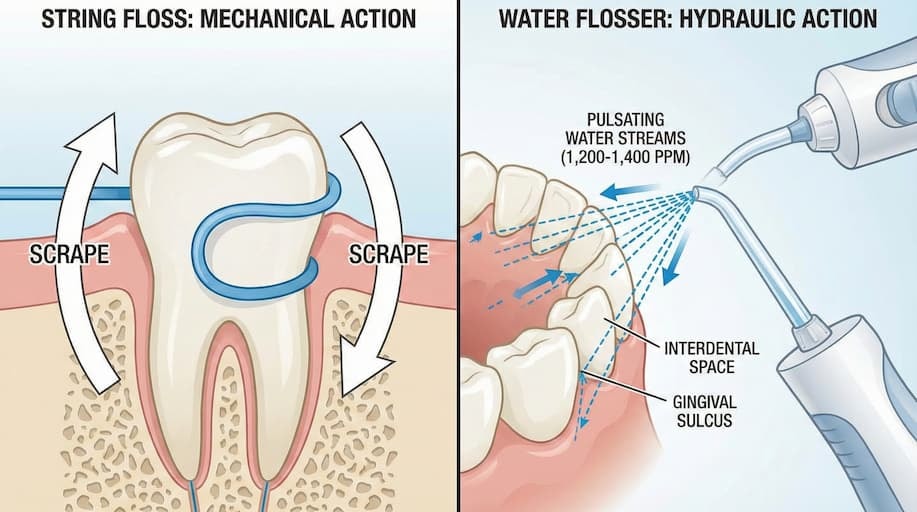
Traditional flossing involves using a thin dental floss thread to physically remove plaque and foodfrom tooth surfaces. Slide the floss between each tooth, curve it into a C-shape, and clean just under the gumline.
Manual mechanical scraping effectively removes plaque, but requires fine motor skills that many users lack, leading to inconsistent results in posterior teeth.
When used correctly and consistently, string floss is very effective. But for many people, it feels awkward or time-consuming.
How Water Flossers Work
A water flosser utilizes a motor to generate a pulsating stream of water (typically 1,200 to 1,400 pulses per minute).
This pulsation creates a compression-decompression phase that flushes out food debris and bacteria from the interdental space and gingival sulcus—areas often missed by manual scraping.
This hydrodynamic action disrupts the biofilm matrix without the mechanical abrasion associated with nylon floss.
For many users, learning to use a water flosser is easier and more comfortable than mastering a perfect flossing method.
Clinical Data: Plaque Removal and Gingival Bleeding Reduction Rates
Dozens of randomized controlled trials over the past two decades support water flossing.
-
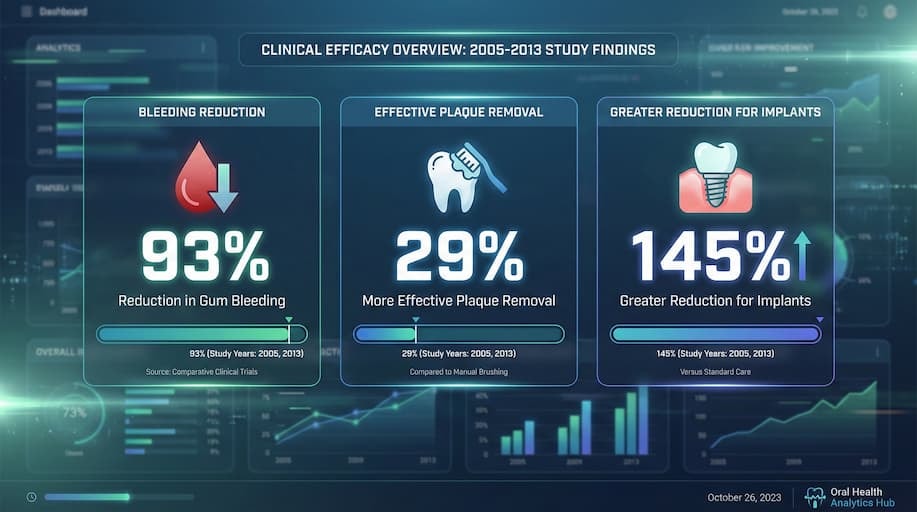
A 2005 study published in the Journal of Clinical Dentistry found water flossers reduced gingival bleeding by up to 93% and improved gum health by 52% more than traditional flossing.
-
In a 2013 PubMed study, water flossers were 29% more effective than string floss for plaque removal, and 33% more effective on hard-to-reach surfaces.
-
In a 2013 trial on dental implants, water flossers achieved a 145% greater reduction in bleeding than floss. Nearly 82% of implant sites improved in the water flosser group compared to 33% in the floss group.
These results show that water flossers are not just a backup option. They are often the better choice for certain dental needs.
2024 Review Confirms Non-Inferiority to String Floss
A 2024 systematic review looked at seven trials involving 396 adults. The review rated the evidence as moderate quality and concluded that water flossers perform as well as, or better than, traditional string floss for most people.
-
Four out of seven trials favored water flossers, especially in hard-to-clean areas between and behind teeth.
-
No trial showed water flossers performing worse than floss.
-
All studies agreed that both methods improved oral hygiene and reduced inflammation.
If you have difficulty reaching certain areas with floss, a water flosser may be more effective.
Who Should Prioritize Water Flossers
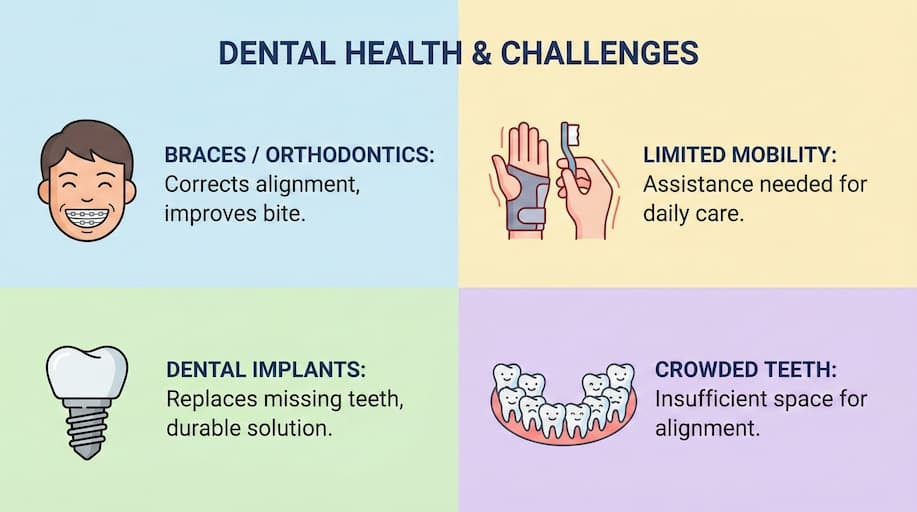
In clinical observation, patient compliance is the primary barrier to oral health. While string floss is effective, we observe that patients with arthritis or crowded teeth frequently abandon the habit due to physical difficulty—a gap that water flossing effectively bridges.
They aren’t just a modern upgrade. They’re a proven tool, especially helpful for people with specific dental needs.
Research ranging from 2005 to 2024 demonstrates that water flossers frequently outperform string floss in complex oral environments.
Braces and Orthodontics
If you’ve ever tried to floss around brackets and wires, you know how frustrating it is. Traditional floss gets tangled, and most people eventually stop trying.
Water flossers make this easy. They use a pulsating water stream to clean between teeth and under wires. Research shows they’re 3 to 5 times more effective than string floss at removing plaque in orthodontic patients, with about 26% less bleeding. That’s a big win for gum health during braces.
Implants, Bridges, and Dental Work
For patients with implants, bridges, or crowns, water flossers are statistically superior. Clinical trials indicate a 145% greater reduction in gingival bleeding around implants compared to string floss.
The water jet effectively flushes debris from the 'micro-gaps' under bridges and around implant abutments where string floss often snags or shreds.
That’s where a water flosser is useful. They’re also better at flushing debris from under bridges and around tricky areas your floss can’t reach.
Limited Mobility or Dexterity
For people dealing with arthritis, Parkinson’s, or other physical challenges, flossing can feel impossible. Threading floss between teeth takes fine motor skills that aren’t always available.
With a water flosser, all you need is one hand and a few seconds. Just point and rinse. No gripping, wrapping, or awkward angles, just clean teeth and healthier gums.
Crowded Teeth or Deep Gum Pockets
Some smiles are harder to clean. If you have tight contacts, overlapping teeth, or deep gum pockets, floss might miss spots.
Water flossers help rinse out hard-to-reach areas. They can clean along the gum line and between complex dental restorations, areas where string floss sometimes struggles.
In fact, the previously mentioned 2024 systematic review recommends water flossers for adults with implants, braces, or manual challenges. If flossing has never worked for you, this tool may be your new best friend.
Where Traditional Floss Still Wins
Water flossers have advantages, but traditional flossing remains a strong part of many routines. In certain situations, it remains the more practical and precise choice.
Precision in Tight Spaces
Traditional floss is especially effective for cleaning between tightly spaced teeth. The string can hug the curves of each tooth and reach into areas where water streams may not fully flush out debris. For people with minimal gaps or tight contacts, this physical scraping action helps remove stubborn plaque and maintain gum health.
Easy, Portable, and No Setup
String floss also excels in simplicity and convenience. It doesn’t require power, water, or counter space. Whether you're traveling, heading to work, or flossing in a hurry, you can take floss with you wherever you go. There’s no charging or cleaning needed, just use and toss.
Want a Cleaner, Brighter Upgrade?
If you prefer traditional floss but want more than just plaque removal, consider switching to something that enhances your routine without complicating it.
SNOW® Whitening Floss Picks with Activated Charcoal combine ultra-thin bamboo fibers with natural charcoal to gently lift surface stains and absorb bacteria between the teeth. These strong yet comfortable floss picks also feature a refreshing peppermint finish that leaves your mouth feeling clean and fresh after every use. They offer an easy way to support good oral hygiene while helping your smile stay bright.
You can try them with a one-time purchase, or subscribe and save 15% for monthly deliveries with the flexibility to pause or cancel anytime.
Explore SNOW® Whitening Floss Picks Here
Head-to-Head: Pros and Cons of Water Flossers vs Traditional Floss
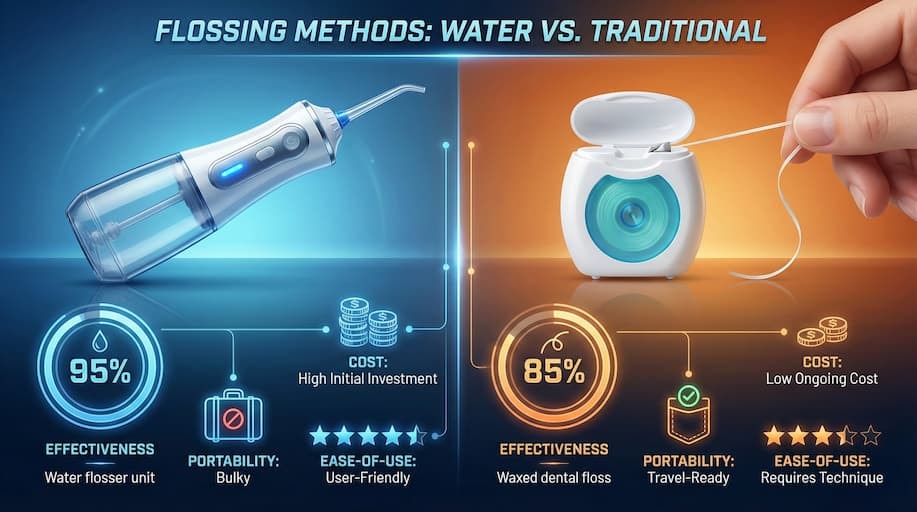
Trying to choose between a water flosser and regular string floss? Each tool has its strengths, and the right choice depends on your daily habits, budget, and dental needs.
Use this comparison table to determine which option best fits your lifestyle.
 If you struggle with flossing or have dental appliances, a water flosser may make your routine faster and easier. On the other hand, if you already floss daily with good technique, traditional floss remains a proven, low-cost option.
Not a fan of either? Upgrade your flossing experience with SNOW® Whitening Floss Picks. These charcoal-infused picks are thin but strong, helping remove stains and plaque while freshening breath with a natural peppermint finish. They're a simple way to level up your oral hygiene routine without switching devices.
Explore SNOW® Whitening Floss Picks Here
Real-World Drawbacks and Data Gaps
Water flossers have gained a reputation for being easy to use and highly effective, especially for people with dental appliances or sensitive gums.
But like any tool, they come with limitations, and the research has a few blind spots worth noting.
Biofilm Buildup: A Hygiene Issue You Can’t Ignore
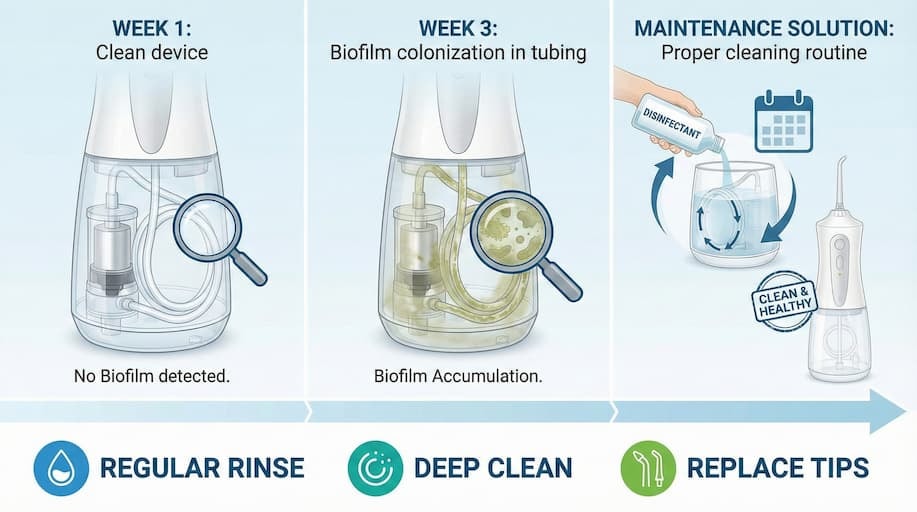
A critical maintenance requirement for water flossers is the prevention of internal contamination. 2021 laboratory research demonstrated that internal biofilm colonization can occur within the device's tubing after just 3 weeks of daily use if not properly cleaned.
Unlike single-use string floss, the moist environment of the flosser reservoir creates ideal conditions for bacterial growth, necessitating regular vinegar or antimicrobial rinses.
-
Daily moisture and tubing design create ideal conditions for bacterial growth inside the flosser.
-
While cleaning the nozzle and water tank helps, it doesn’t reach the internal water pathways.
-
Simply swapping out tips won’t prevent contamination; each user should ideally have their own device.
-
If left uncleaned, these areas can become breeding grounds for bacteria, increasing the risk of cross-contamination in shared households.
This doesn’t mean water flossers are unsafe. It just means proper care is essential. Regular rinsing, drying, and following the manufacturer’s cleaning instructions are key to long-term, hygienic use.
Unknowns Around Long-Term Use
Many clinical studies show strong short-term results, but what happens after the first month? That’s still unclear.
-
Most research only tracks participants for 2 to 6 weeks, so we don't yet know how consistent users are in the real world.
-
Daily water refilling, battery charging, and cleaning may reduce how often people use them.
-
Devices can also take up valuable bathroom space and may not suit everyone’s lifestyle.
Compared to floss picks or string floss, which are quick and portable, water flossers require more setup, which can make daily flossing feel like a chore for some users.
High Clinical Variability in Studies
Even though the science behind water flossers is growing, there’s still a lot of variation across studies:
-
Different designs, durations, plaque indices, and baseline oral health make it difficult to compare results directly.
-
Some studies examine single-use outcomes, while others track plaque removal or bleeding over a few weeks.
-
Few trials assess long-term adherence or measure outcomes after six months or a year of real-world use.
That means while the science supports water flossers in many situations, we’re still learning how well they hold up in daily routines, especially when compared to simpler flossing tools.
How to Choose the Best Option for You
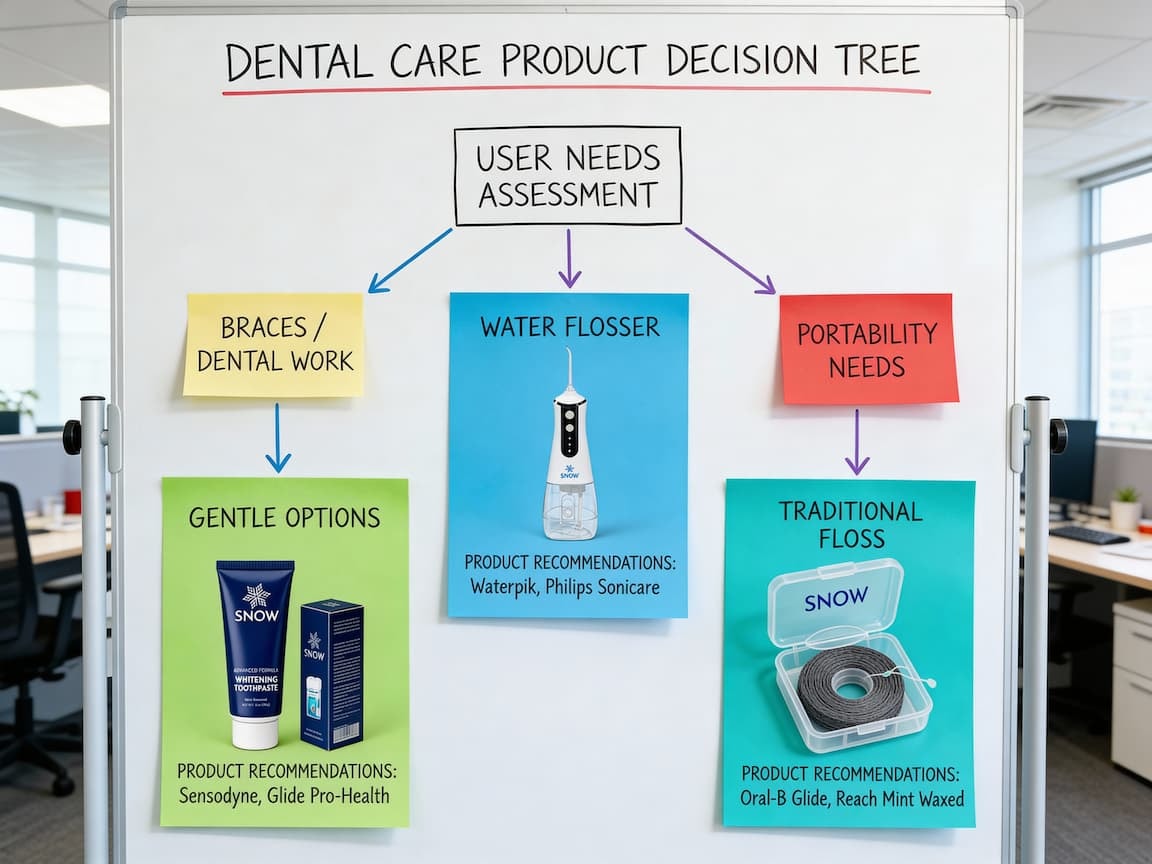
When it comes to flossing, there’s no one-size-fits-all answer. The right tool depends on your dental work, gum sensitivity, lifestyle, and how consistent you are with your routine.
Let’s break it down so you can confidently choose what works best for your mouth.
If You Have Braces, Implants, or Complex Dental Work
Water flossers are usually the better fit.
Traditional flossing can be a struggle with brackets, wires, crowns, and bridges. Threading a string through tight spaces or under dental appliances is not just time-consuming; many people simply skip it. That’s where oral irrigation becomes a game-changer.
-
Devices like the SNOW® AquaJet Pro use a targeted stream of water to flush away food debris and plaque from tight spaces that string floss can’t reach.
-
It’s also gentle on sensitive areas, including implant sites, without irritating the gum line.
-
With features such as multiple pressure settings, a cordless design, and a mouthwash-compatible tank, AquaJet Pro delivers a deeper clean with ease.
If You Have Sensitive Teeth or Gums
Water flossing can offer a gentler experience.
If regular flossing causes discomfort or bleeding, you may benefit from a water flosser's pulsating water stream. It cleans without scraping and lets you adjust the pressure to your comfort level.
-
Start with the lowest pressure and increase gradually.
-
Avoid sharp snapping or tugging, as they can irritate the gums.
-
This gentle method still effectively removes food particles and supports overall oral health.
Many people who prefer water flossers do so because they can clean thoroughly while avoiding gum pain or flare-ups.
If You Value Simplicity or Portability
Traditional floss or floss picks may suit your lifestyle better.
Not everyone wants a countertop device. If you’re traveling often, short on space, or just want something fast and disposable, floss picks offer a no-fuss solution.
-
Try SNOW® Whitening Floss Picks with Activated Charcoal. They’re thin, strong, and designed to remove surface stains while capturing bacteria.
-
Their compact size makes them easy to keep in your bag, car, or desk drawer.
-
Infused with peppermint, they also leave your mouth feeling extra fresh — a bonus if you deal with bad breath.
Try SNOW® Whitening Floss Picks Now
If You Want the Best of Both Worlds
You don’t have to choose just one method. In fact, many dental professionals recommend combining tools for the best results.
Here’s how to build a hybrid routine:
-
Use SNOW® Charcoal Whitening Floss during the day for quick, effective stain removal in spaces between teeth.
-
Use the AquaJet Pro in the evening to rinse along the gum line, flush out hard-to-reach areas, and reduce buildup.
-
This combo supports a healthy smile by maximizing coverage while keeping your routine manageable.
Shop SNOW® Whitening Floss Collection
Best Practices for Each Method
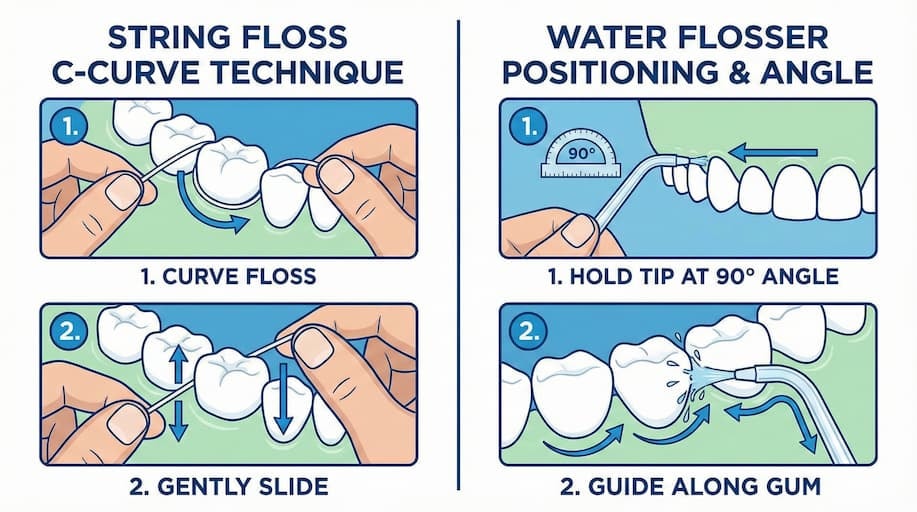
Choosing between flossing tools like traditional string floss and modern oral irrigation systems is only part of the equation. To truly support good oral hygiene, it's just as important to use the right technique.
Whether you use string floss or a water jet, consistent daily habits help prevent plaque buildup, protect against periodontal disease, and maintain healthy teeth and gums.
Traditional Flossing: Get the Technique Right
Many people use dental floss every day, but fewer use it correctly. Traditional flossing involves gently scraping plaque from both sides of each tooth, but poor technique can lead to missed spots or gum irritation.
How to floss teeth effectively:
-
Use 18 inches of floss and wrap most of it around your middle fingers, keeping a few inches taut.
-
Slide the floss between teeth using a gentle sawing motion.
-
Curve it around each tooth in a C-shape and slide it below the gum line.
-
Move to a clean section of floss between every space to avoid transferring bacteria.
This method is especially helpful for tight spaces and areas with sticky plaque, though it may be harder for those with sensitive gums or limited dexterity.
Water Flossing: How to Use It Effectively
Water flossers, also called oral irrigators, offer a simpler and often gentler way to clean between teeth. They use a pulsating water stream to flush out food debris and disrupt plaque, great for those with dental work, gum sensitivity, or interdental cleaning challenges.
How to use a water flosser:
-
Fill the tank with warm water.
-
Choose a pressure setting that suits your comfort level.
-
Lean over the sink and keep your mouth slightly open.
-
Point the tip at a 90-degree angle to the gum line.
-
Trace slowly along the gum line and between each tooth.
-
Pause briefly in hard-to-reach areas to ensure full cleaning.
Water flossers are particularly useful for removing food particles around braces, implants, or crowns. And because the stream of water does not require fine motor skills, it can be a game-changer for people who find traditional flossing difficult.
How Often Should You Floss?
No matter which flossing method you use, frequency is key to maintaining good oral health.
-
Most dental professionals and the American Dental Association recommend flossing at least once a day.
-
Brushing twice a day is also essential for plaque control.
-
Whether you're using string dental floss, interdental brushes, or a water flosser, the goal is to remove plaque and bacteria before they lead to tooth decay or bleeding gums.
A consistent routine is more important than choosing the “perfect” tool. Both methods can support overall oral health when used properly, especially when paired with regular dental checkups and attention to proper technique.
Final Thoughts
Whether you prefer a water flosser or traditional string floss, what matters most is finding a flossing method you’ll use daily. Both options are effective for removing plaque and reducing the buildup of plaque and food particles, especially when paired with regular brushing and a consistent oral care routine.
While no single tool can fully replace flossing, many people find that combining interdental brushes, traditional dental floss, or a water flosser provides the best support for optimal oral hygiene.
Not sure where to start? SNOW offers a curated selection of flossing essentials, from whitening floss picks to advanced oral jets, designed to make flossing easier and protect your dental health.
Explore SNOW’s full flossing collection to upgrade your routine, with expert-backed tools that even a dental hygienist would love.
Shop the SNOW Flossing Collection Today
FAQs
Got questions about water flossers? Here are quick answers to help you decide what's right for your oral care routine.
Does high-pressure water flossing damage attached gingiva?
No, when used correctly, pulsating water is safe. However, users should start on the lowest pressure setting (typically 10-20 PSI) to avoid tissue trauma, as noted in gum sensitivity protocols.
Can I put mouthwash or chlorhexidine in a water flosser tank?
Yes, adding antimicrobial mouthwash to the reservoir can enhance bacterial reduction. However, the unit must be flushed with plain water immediately after to prevent internal crystallization or tube blockage.
How often should I replace water flosser tips, and how can I minimize bacteria build-up?
Replace standard tips every 3–6 months, or sooner if water flow weakens. To reduce bacteria buildup, empty and dry the reservoir daily, and run a vinegar or antimicrobial rinse through it regularly. Avoid sharing devices, even with different tips, to reduce the risk of contamination.
Is it better to water floss before or after brushing?
Either order is fine as long as you do both consistently. Some prefer brushing first; others prefer flossing first. It depends on your routine and what feels easiest to maintain daily. The ADA recommends flossing once a day, but doesn’t require it before or after brushing.
Are cordless travel water flossers as effective as countertop models?
Yes, most cordless water flossers are effective for daily use, especially for removing food particles and cleaning around dental work. Countertop models offer more power and features, but a compact cordless model is a good option if portability helps you stick to your oral care routine.


