

The best electric toothbrush for gum recession minimizes mechanical trauma while maximizing plaque removal through sonic or oscillating technology.
The ideal device must feature ultra-soft bristles, a dedicated low-frequency sensitive mode, and a 2-minute pacing timer to protect exposed dentin and prevent further gingival attachment loss.
The best electric toothbrush for gum recession in 2026 is one built around gentle control, not raw power.
That means prioritizing:
-
Ultra-soft bristles to protect exposed root surfaces
-
A true Sensitive mode with lower-intensity vibrations
-
A sonic or oscillating motor that removes plaque without scrubbing
-
A 2-minute timer to prevent over-brushing
A pressure sensor is helpful, especially if you tend to brush aggressively, but it is not mandatory if you are disciplined with light pressure.
For comfort-focused sonic brushing, the SNOW® LED Whitening Electric Toothbrush Gen 2 is a strong option. It combines ultra-soft bristles, 39,000 sonic vibrations per minute, a dedicated Sensitive mode, and a built-in timer, making it a practical choice for effective cleaning without aggravating sensitive gum tissue.
Get the SNOW® LED Electric Toothbrush Gen 2
Now let’s break down exactly why these features matter and how to choose the safest option for your gums.
Key Takeaways
-
Gum recession cannot be reversed, but it can be slowed. Protecting long-term gum health means reducing inflammation, plaque buildup, and irritation that contribute to gum disease.
-
Over-brushing with a manual brush is a common cause. A manual brush makes it easy to scrub too hard without realizing it. Many dental hygienists' recommendations for recession start with correcting aggressive manual brushing habits and improving poor oral hygiene patterns.
-
Electric brushes reduce the damaging scrubbing motion. Unlike a manual brush, a powered brush uses controlled sonic or oscillating movement to clean, lowering horizontal abrasion along the gumline.
-
Soft bristles and a pressure sensor matter most. Ultra-soft bristles protect exposed roots, and a pressure sensor can help prevent pushing too hard. These features are often more important than whether you choose a Sonicare electric toothbrush or another brand.
-
Snow Gen 2 is a sensitivity-first option. As a toothbrush for receding gums, the SNOW Gen 2 combines soft bristles, 39,000 sonic vibrations per minute, a 2-minute timer, and whitening support, prioritizing gum health while helping reduce surface stains.
What is Gum Recession, and How Does Mechanical Brushing Impact It?
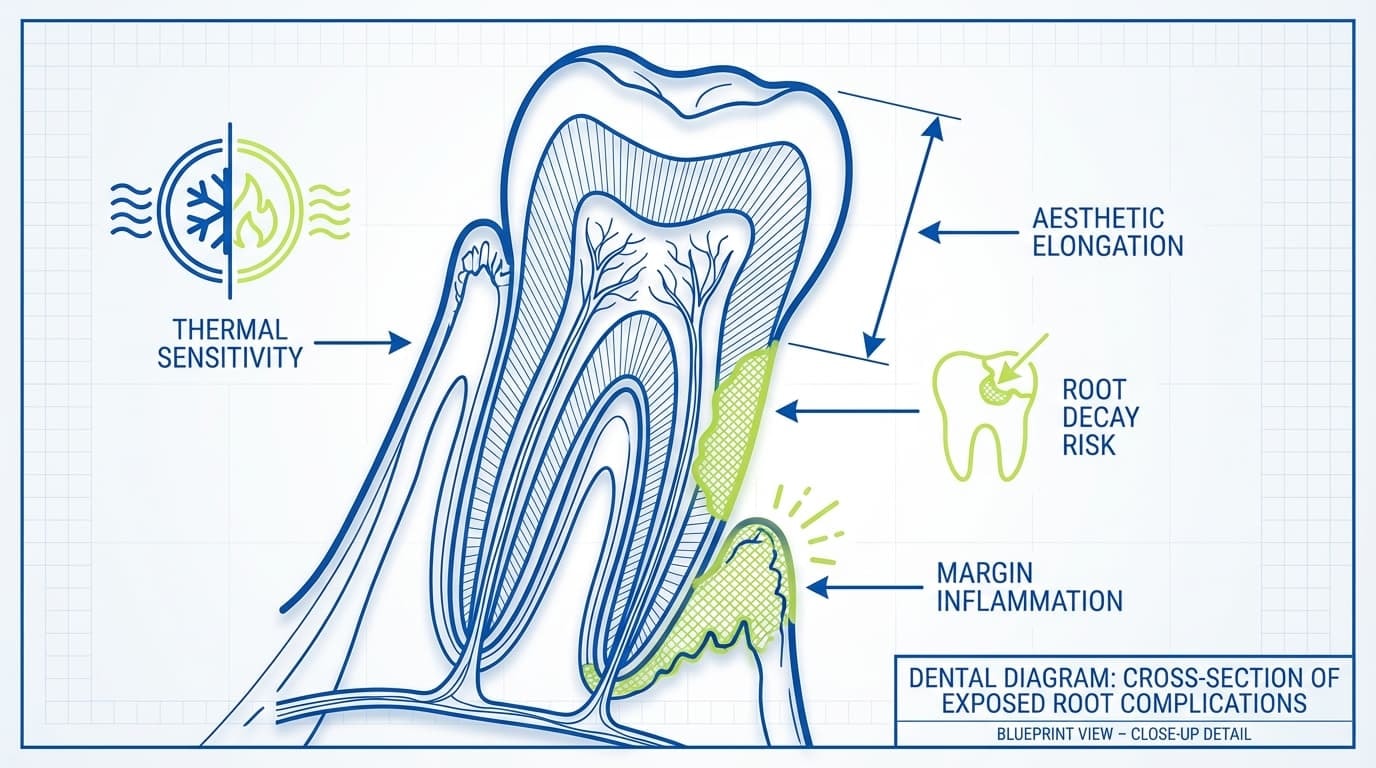
Gingival recession is the gradual loss of gum tissue around the teeth. As the gumline pulls away, it exposes the root surface, which is softer and more vulnerable than enamel.
-
As the gumline pulls away, it exposes the root surface (dentin), which is significantly softer than enamel. Dentin exposure directly causes four clinical complications:
Thermal Sensitivity: Sharp pain when consuming hot or cold foods.
Aesthetic Elongation: Teeth appearing visibly longer due to tissue loss.
Root Decay Risk: Increased susceptibility to cavities below the enamel line.
Margin Inflammation: Chronic irritation along the remaining gum tissue.
Unlike enamel, dentin, the exposed root surface, wears down more easily under mechanical stress. Lost gum attachment does not naturally regenerate.
That is why prevention, not reversal, is the goal.
Long-term gum stability depends on two factors:
-
Effective plaque control
-
Minimizing mechanical trauma
Research over the past decade consistently shows that electric toothbrushes improve plaque reduction compared to manual brushing. Better plaque control supports healthier gum tissue over time. However, the type of brush and its use determine whether it protects or irritates vulnerable areas.
Primary Mechanical and Biological Causes of Gingival Recession
Gum recession is multifactorial. Brushing habits are only one contributing factor.
Common causes include:
-
Aggressive brushing, especially with medium or firm bristles
-
Chronic inflammation from untreated periodontal disease
-
Grinding or clenching
-
Tobacco use, which reduces blood flow to the gum tissue
-
Naturally thin gum tissue due to genetics
Repeated horizontal scrubbing along the gumline is one of the most common mechanical contributors. Over time, microscopic trauma accumulates, particularly in patients who believe that harder brushing results in cleaner teeth.
For patients with sensitive gums, reducing force and switching to ultra-soft bristles can significantly decrease further abrasion.
The “Brushing Fear Paradox”
Many people with recession fall into what we call the Brushing Fear Paradox. When they see plaque near the gum line, they brush harder.
Harder brush strokes feel productive, but with a manual brush, there is no motion control. The result is more trauma to already fragile gum tissue.
This is one reason why electric brushes and power toothbrushes are often recommended for receding gums. A sonic toothbrush or a rechargeable toothbrush performs thousands of controlled movements per minute, reducing the need for aggressive scrubbing.
For gum protection, the goal is simple:
-
Use soft bristles or ultra-soft bristles
-
Avoid excess force
-
Clean thoroughly without irritating sensitive gums
The right brush supports long-term gum care, especially when combined with flossing, interdental brushes, and professional monitoring for periodontal disease.
Electric vs Manual for Receding Gums: What Research Says?
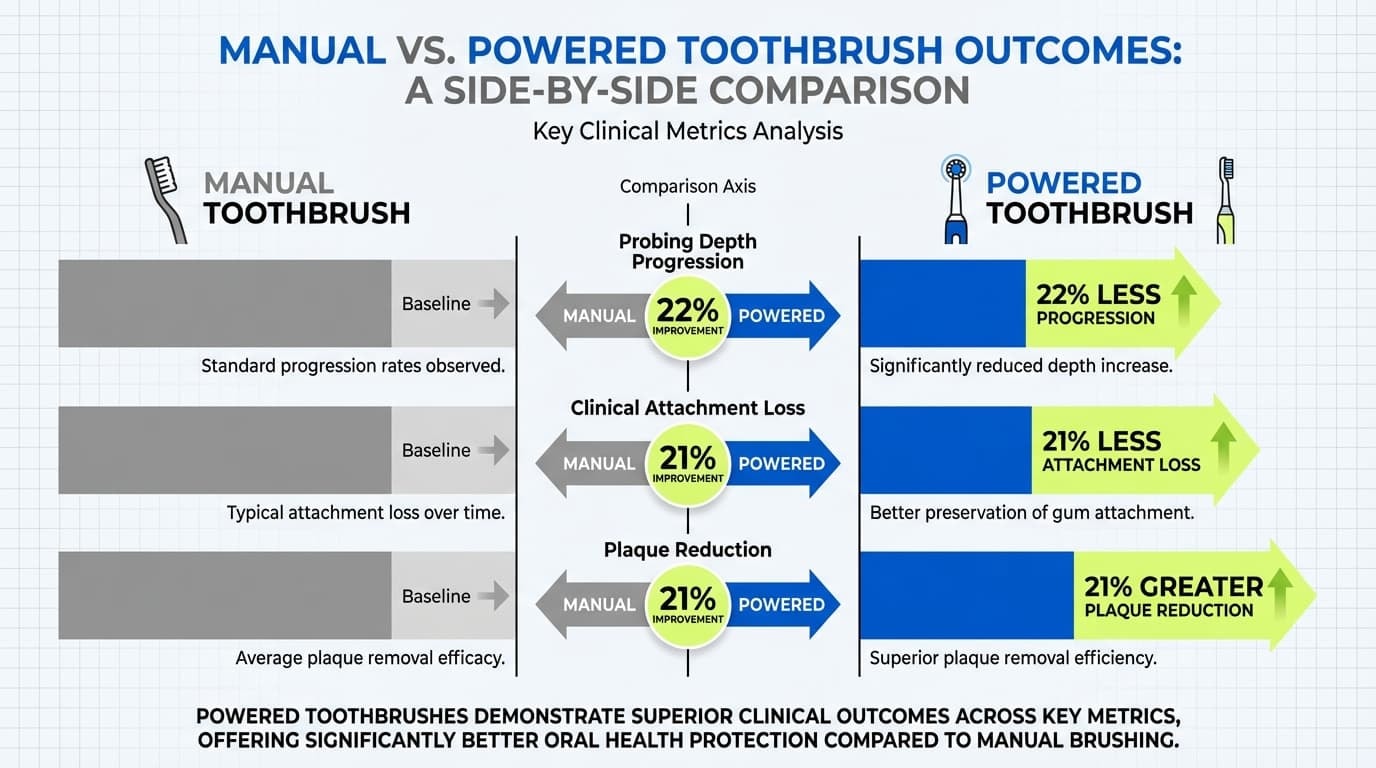
In an 11-year cohort study, Pitchika et al. (Journal of Clinical Periodontology, 2021) demonstrated that powered toothbrush users experienced 22% less probing depth progression and 21% less clinical attachment loss than manual brush users.. Researchers followed more than 2,800 adults and compared outcomes between manual and powered brush users.
The findings were clinically meaningful:
-
22% less probing depth progression
-
21% less clinical attachment loss
Probing depth and attachment levels are key indicators of gum stability. Less progression means slower breakdown of supporting gum and bone structures over time.
This was not a short, tightly controlled lab trial. It reflected real-world brushing habits over more than a decade, making the findings highly relevant for people managing gum recession.
Plaque Reduction Evidence
Systematic reviews, including Cochrane Oral Health analyses, consistently show that electric toothbrushes reduce plaque more effectively than a manual toothbrush.
On average, powered brushes demonstrate about 21% greater plaque reduction at the three-month mark. That difference matters. Plaque is the primary driver of inflammation, and chronic inflammation is what fuels gum recession and periodontal breakdown.
Less plaque means less inflammation along the gum line. Less inflammation means a lower risk of further tissue loss.
Why Powered Brushes Reduce Mechanical Trauma
The key advantage of electric brushes is not just plaque removal. It is motion control.
With a manual brush, you create the movement. That often leads to horizontal scrubbing across the gum line. Repeated over the years, this shearing motion contributes to tissue trauma.
With a powered brush, the motor performs the cleaning motion. Your role is to guide the brush head slowly from tooth to tooth. This reduces aggressive back-and-forth scrubbing and encourages more controlled contact with the gum margin.
Electric does not mean aggressive. In fact, when paired with soft bristles and proper technique, a powered brush is often gentler than a manual one.
That said, technique still matters. Pressing too hard, lingering too long in one area, or using the wrong mode can still cause irritation. The tool helps, but your brushing habits complete the equation.
What Specific Toothbrush Features Protect Exposed Root Surfaces?
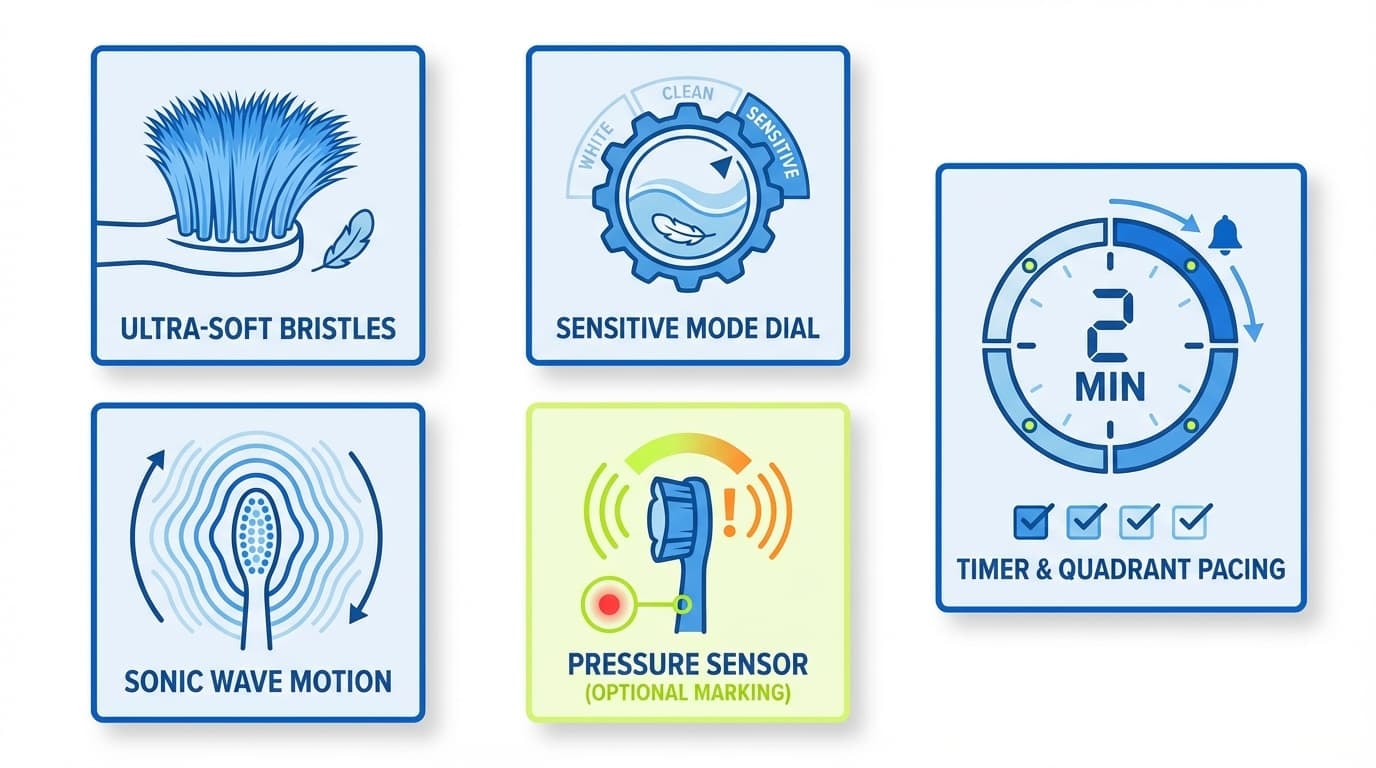
Before recommending any specific toothbrush, we need clear criteria. The right brush for gingival recession is defined by how it protects gums, supports plaque control, and fits real-world brushing habits.
Brand comes second. Features come first.
1. Ultra-Soft Bristles (Non-Negotiable)
If you have exposed roots, ultra-soft bristles are essential. Receding gums expose dentin, which is softer than enamel and more vulnerable to abrasion.
Soft bristles help:
-
Protect exposed root surfaces
-
Reduce abrasion during brushing
-
Lower the risk of further damage
-
Support long-term oral health
Medium or firm-bristle brushes can help remove plaque, but they also increase the risk of excessive force being applied to fragile tissue. When gums are already compromised, minimizing mechanical trauma matters more than achieving an intense clean feeling.
The right brush prioritizes safe plaque removal over aggressive scrubbing.
2. Sensitive Mode
A true sensitive mode lowers vibration intensity and modifies the brushing experience for inflamed or super-sensitive tissue.
This matters during flare-ups, after deep cleanings, or when gums bleed easily. Sensitive mode lets you continue brushing twice a day without worsening irritation.
Many electric toothbrush models include multiple brushing modes, but not all sensitive modes are calibrated the same way. A well-designed gum care mode focuses on controlled movement along the gum line rather than solely on speed.
3. 2-Minute Timer with Quadrant Pacing
Over-brushing one area is a common cause of gum damage. When you feel sensitivity in one section, you may unconsciously spend more time there, increasing trauma.
A built-in 2-minute timer with 30-second pacing prevents this. It ensures you:
-
Brush evenly
-
Avoid concentrating pressure in one area
-
Maintain consistent plaque control
Consistency improves plaque removal and reduces plaque buildup, both of which directly affect gum health and blood flow to the tissue.
Smart timing is not just convenience. It is protection.
4. Sonic or Oscillating Motion
Both sonic and oscillating motors can clean effectively without aggressive scrubbing.
Sonic technology, found in brands like Philips Sonicare, uses high-frequency vibrations to remove plaque by moving fluid around teeth and along the gum line. Oscillating systems, like Oral-B Genius or Oral-B iO Series, use a round brush head that rotates around individual teeth to remove plaque in hard-to-reach areas.
The key advantage over a manual toothbrush is this: the motor performs the movement. You guide the toothbrush instead of creating forceful brush strokes yourself.
This reduces horizontal scrubbing, which is a major contributor to gum recession.
Electric does not mean harsh. It means controlled plaque removal.
5. Pressure Sensor (Helpful but Not Required)
A pressure sensor alerts you when you apply too much force. For heavy-handed brushers, this feature can prevent further damage over time.
That said, not every safe toothbrush includes a pressure sensor. Some models rely more on technique and bristle design.
If you know you tend to press hard during brushing, a pressure sensor adds an extra layer of protection. If your brushing habits are already light and controlled, ultra-soft bristles and sensitive mode may be sufficient.
The most important thing is that the toothbrush supports gentle, effective plaque removal without contributing to oral health problems.
When evaluating options, focus on:
-
Ultra-soft bristles
-
A well-calibrated sensitive mode
-
Consistent plaque control
-
Protection against too much force
-
A brushing experience you can maintain comfortably twice a day
That is how you choose the right brush for long-term gum care.
Our Top Pick for Gum Comfort in 2026: SNOW® LED Whitening Electric Toothbrush (Gen 2)
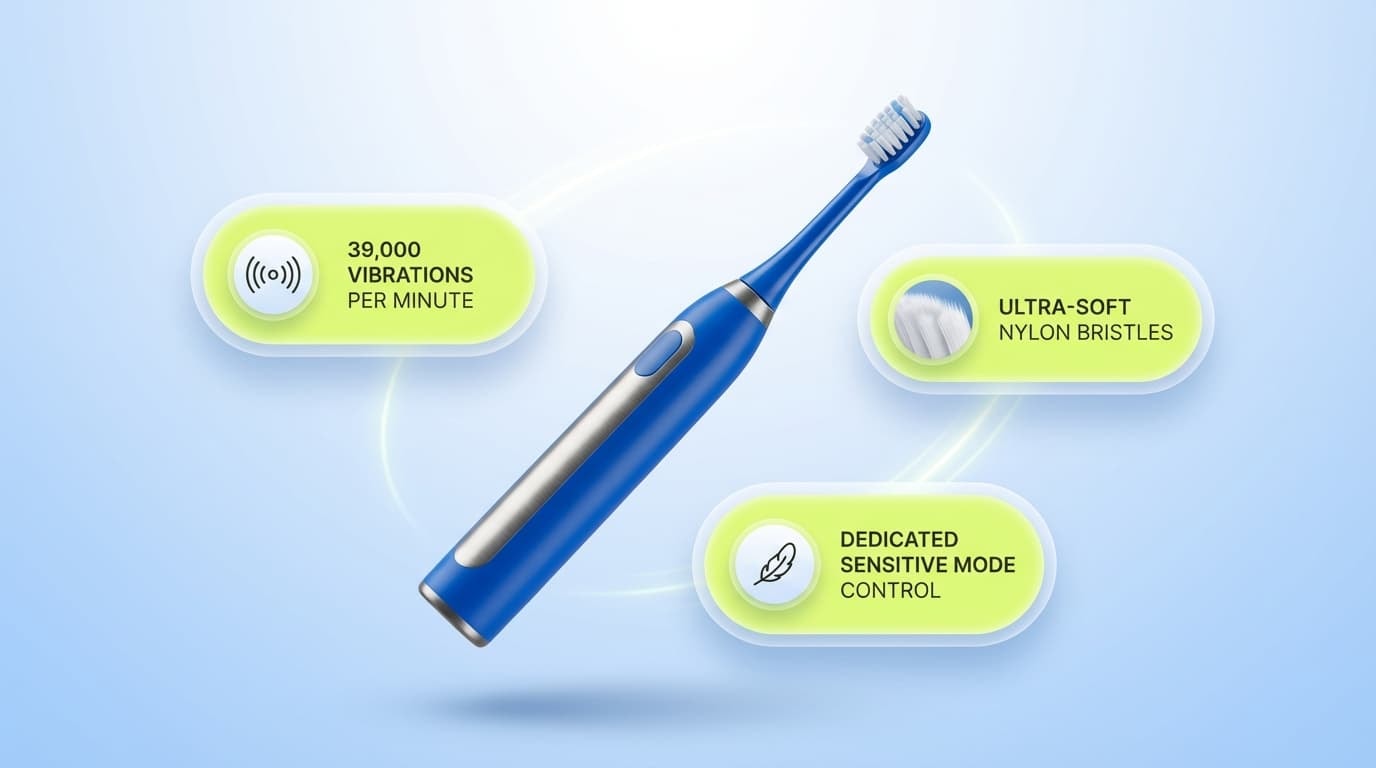
Now that we have defined what truly protects vulnerable gum tissue, it makes sense to identify which brush aligns best with those criteria. Based on comfort, bristle design, sonic performance, and daily usability, the SNOW® LED Whitening Electric Toothbrush Gen 2 is a strong option for people managing gum recession in 2026.
Before we break down the details, here is a quick overview of why it fits recession-prone users.
The SNOW® Gen 2 Electric Toothbrush supports recession-prone users by combining mechanical safety with effective plaque disruption. Key protective features include:
-
Sonic Frequency: 39,000 vibrations per minute to disrupt plaque fluid dynamics without scrubbing.
-
Bristle Architecture: Ultra-soft nylon designed specifically for exposed root surfaces.
-
Vibration Control: A dedicated Sensitive mode for post-cleaning tenderness.
Important clarification: this model does not include a pressure sensor. It is best for users who can maintain light, controlled pressure during brushing.
Get the SNOW® LED Electric Toothbrush Gen 2
Sensitivity-First Design
When evaluating a toothbrush for gum recession, comfort is not a luxury. It is foundational. If a brush feels aggressive, users compensate by brushing less thoroughly or inconsistently.
The SNOW Gen 2 was designed around ultra-soft bristles rather than high-force scrubbing. That distinction matters for exposed root surfaces and thin gum margins.
Before looking at the features, it helps to understand what that means clinically. The design focuses on:
-
Minimizing abrasion along the gumline
-
Reducing irritation during daily brushing
-
Supporting long-term comfort for exposed roots
Its dedicated Sensitive mode lowers vibration intensity, making it appropriate for flare-ups, post-cleaning tenderness, and ongoing maintenance. For many recession-prone users, this becomes the default daily setting rather than an occasional setting.
The overall brushing experience is controlled and measured, not intense.
Get the SNOW® LED Electric Toothbrush Gen 2
Sonic Technology Without Scrubbing
The next question is whether a gentler brush can still clean effectively. This is where sonic technology matters.
With 39,000 vibrations per minute, the motor disrupts plaque without requiring aggressive horizontal brush strokes. Instead of scrubbing back and forth across the gumline, you guide the brush slowly, tooth by tooth.
To understand why this helps recession-prone users, consider what changes mechanically:
-
The motor performs the repetitive motion
-
You reduce horizontal shearing against the gumline
-
Plaque disruption happens through vibration rather than pressure
This is especially useful for cleaning along exposed root surfaces and near the gum margin, where manual scrubbing often causes further trauma.
The key point is that 'electric' does not mean 'aggressive'. In many cases, it means more control.
Get the SNOW® LED Electric Toothbrush Gen 2
Whitening Without Abrasive Toothpaste
Many patients with gum recession still want cosmetic improvement. The challenge is that traditional whitening methods often rely on abrasive pastes that can worsen sensitivity near exposed roots.
The SNOW Gen 2 features blue LED support for whitening during brushing. It is important to position this correctly. The LED is a cosmetic support feature. It is not a treatment for gum disease and should not be viewed as a periodontal therapy tool.
What this does, however, is allow a shift away from high-abrasion charcoal or gritty whitening formulas.
Instead of increasing mechanical aggression, users can focus on:
-
Ultra-soft bristles
-
Controlled sonic movement
-
Proper technique
-
Whitening support is built into the brush
That balance is what makes it appealing for people who refuse to choose between gum protection and aesthetics.
Get the SNOW® LED Electric Toothbrush Gen 2
Practical Compliance Benefits
Even the best toothbrush fails if it is not used consistently. For gum recession, long-term habits matter more than short-term intensity.
Before listing the practical benefits, it is important to understand why compliance matters. Over-brushing one quadrant, rushing through sessions, or skipping nighttime brushing all contribute to uneven plaque control and inflammation.
The SNOW Gen 2 addresses consistency in several practical ways:
-
A 2-minute timer with 30-second pacing to prevent over-brushing one area
-
A 14-day battery life to reduce charging interruptions
-
Easily available replacement heads
-
A 60-day money-back guarantee and a 2-year warranty
The timer is especially valuable. Many patients unconsciously linger on sensitive areas. The pacing system helps distribute brushing time evenly across the mouth.
Get the SNOW® LED Electric Toothbrush Gen 2
Is SNOW Gen 2 Right for You?
Not every electric toothbrush is appropriate for every stage of gum recession. The right choice depends on your brushing habits, sensitivity level, and whether you need pressure feedback. Use the table below to determine whether SNOW Gen 2 aligns with your specific needs.
 SNOW Gen 2 is best suited for comfort-focused users managing mild to moderate gum recession who can maintain light brushing pressure. Individuals with aggressive brushing habits or those advised to use a pressure sensor may benefit from models that provide real-time force feedback.
How SNOW Compares to Sonicare & Oral-B
Choosing the right toothbrush for receding gums is not about brand loyalty. It is about matching features to your gum condition, brushing habits, and comfort preference.
Below is a structured comparison of SNOW® LED Whitening Electric Toothbrush Gen 2 and two commonly considered alternatives.
SNOW Gen 2 vs Oral-B Pro 3 3000
The Oral-B Pro 3 3000 may suit heavy-handed brushers who benefit from an active pressure alert. SNOW Gen 2 may feel more comfortable for patients with exposed roots or thin gum tissue due to its ultra-soft bristle focus and sonic motion.
 SNOW Gen 2 vs Philips Sonicare ProtectiveClean 5100
Both models use sonic technology. The key difference is pressure feedback and whitening integration. Users prioritizing comfort and cosmetic support may prefer SNOW. Those who want built-in pressure alerts may lean toward Sonicare.

How to Brush Properly with Receding Gums
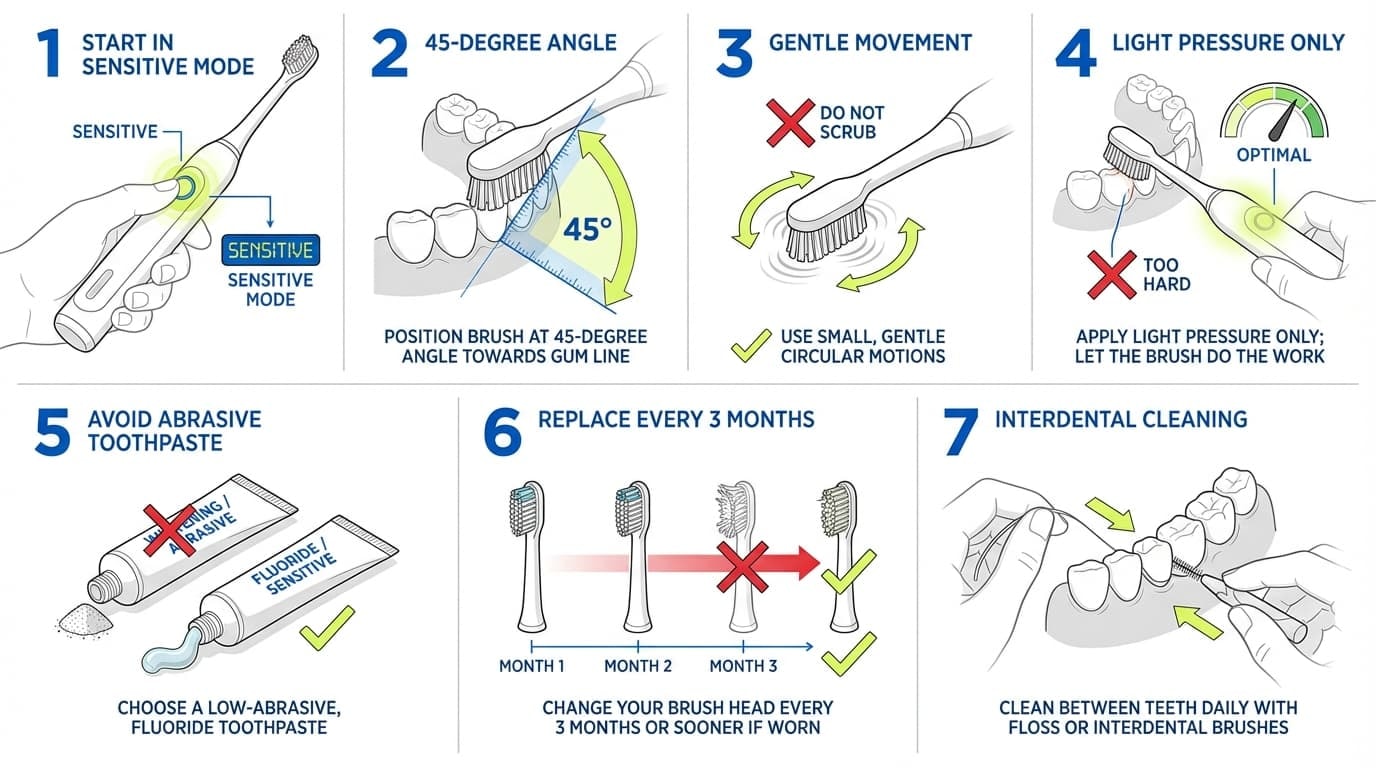
Even the best toothbrush will fail if your brushing technique is aggressive. Whether you use SNOW, an Oral-B model, a Philips Sonicare toothbrush, or other electric brushes, gum protection comes down to how you use it. Receding gums and gingival recession are often worsened by years of subtle, repeated trauma. Correcting brushing habits is just as important as choosing the right brush.
If you are using the SNOW Gen 2 rechargeable toothbrush, or any sonic toothbrush designed for sensitive gums, follow this method carefully.
Before we get into the steps, understand this: the goal is gentle plaque removal and plaque control, not an intense clean.
Start in Sensitive Mode
When dealing with gum tissue that has already receded, always begin with Sensitive mode. SNOW’s Sensitive mode is designed to reduce vibration intensity while still delivering effective plaque removal.
If your teeth feel tender or you have sensitive teeth, this mode reduces the risk of irritating sensitive gums. Many electric toothbrushes offer multiple brushing modes, but not all gentle cleaning modes are equal. Use the lowest comfortable setting during flare-ups.
Hold the Brush at a 45-Degree Angle
Position the ultra-soft bristles at a precise 45-degree angle against the gum margin. This angulation allows the sonic vibrations to sweep plaque bacteria out of the gingival sulcus without aggressively shearing the delicate tissue.
This technique helps prevent gum recession from progressing and supports healthier gums over time. The angle matters more than pressure.
Do Not Scrub
One of the biggest mistakes patients make is using electric brushes like a manual brush. With a manual brush, people rely on brush strokes. With power toothbrushes, the motor does the work.
Avoid horizontal scrubbing. That motion, especially with a medium-bristled or hard-bristled toothbrush, can create abrasion along exposed roots. Instead, slowly guide the brush from tooth to tooth and let the sonic vibration remove plaque.
Use Light Pressure Only
Too much pressure is one of the leading contributors to further damage in gingival recession. SNOW Gen 2 does not include a built-in pressure sensor or pressure indicator, so you must monitor the force yourself.
The bristles should barely flex. If you see soft bristles spreading or feel the head digging into the gums, you are applying too much force. Patients with a history of heavy-handed brushing may prefer a brush with a built-in pressure sensor.
Avoid Abrasive Toothpaste
If you have exposed roots, avoid charcoal pastes and highly abrasive whitening formulas, and consider safer non-abrasive toothpaste alternatives formulated for exposed dentin. Abrasion on root surfaces increases sensitivity and decay risk.
SNOW’s LED supports stain removal during brushing so you do not need an aggressive paste for cosmetic benefit. That balance supports gum care without sacrificing aesthetics.
Replace Brush Heads Every 3 Months
A worn toothbrush head becomes less effective at plaque control and slightly harsher on gum tissue. Replace your soft brush head every three months, or sooner if the bristles splay.
Frayed bristles do not remove plaque efficiently and can contribute to oral health problems over time.
Do Not Skip Interdental Cleaning
Even the best toothbrush for receding gums cannot fully clean between teeth. Use floss or interdental brushes daily to remove plaque buildup in hard-to-reach areas.
A buildup of plaque between teeth increases inflammation and the risk of periodontal disease, which can worsen gum recession.
If you brush twice a day with proper technique, maintain light pressure, and combine brushing with professional cleanings, you significantly reduce your risk of further damage.
Can Any Toothbrush Reverse Gum Recession?
This is where honesty matters.
No toothbrush, manual brush, or electric toothbrush for receding gums can regrow lost gum tissue. Healthy gum tissue growth does not occur simply from changing brushes. Once attachment is lost due to periodontal disease or trauma, it does not spontaneously regenerate.
The real goal is to slow progression and preserve the remaining attachment.
Electric brushes and power toothbrushes help by:
-
Improving plaque removal along the gum line
-
Reducing horizontal scrubbing
-
Supporting better plaque control over time
-
Encouraging consistent twice-a-day brushing
Long-term research over more than a decade shows that powered brushing can reduce the progression of periodontal disease compared to manual brushing alone.
However, brushing alone cannot prevent gum recession in advanced cases. To prevent gum recession from worsening, combine your brushing routine with:
-
Regular professional cleanings
-
Periodontal therapy when indicated
-
Management of grinding or clenching
-
Tobacco cessation to improve blood flow to the gum tissue
-
Correction of poor oral hygiene habits
An electric toothbrush is a tool for protecting the gums. It is not a cure for periodontal disease.
Final Words
Gum recession does not mean you have to choose between protecting your gums and maintaining a bright smile. The key is using the right toothbrush with the right technique. Ultra soft bristles, a true Sensitive mode, and controlled sonic movement matter far more than aggressive power or flashy extras.
No toothbrush can regrow lost gum tissue, but the right one can help slow progression, improve plaque removal, and support long-term gum health without causing further damage.
If you want a comfort-first option that balances gentle cleaning with whitening support, the SNOW® LED Whitening Electric Toothbrush Gen 2 is built for that exact purpose.
Get the SNOW® LED Electric Toothbrush Gen 2
FAQs
Quick answers to common questions about using SNOW® for receding and sensitive gums.
Is the Snow LED electric toothbrush safe to use if my gums already bleed?
Occasional bleeding when you first improve your oral hygiene is common—it often indicates that your gums are responding to better plaque control. However, persistent heavy bleeding can signal gum disease that needs professional evaluation.
SNOW’s ultra-soft bristles, Sensitive mode, and pressure sensor are specifically designed to minimize trauma, making it suitable for many people with bleeding gums. Start with the Sensitive mode, use light pressure, and consult your dentist if bleeding doesn’t noticeably improve within 1-2 weeks of gentle, twice-daily brushing.
Which SNOW brushing mode is best if I have gum recession and sensitivity?
Begin with the Sensitive mode for all brushing during flare-ups of sensitivity or active gum tenderness. This delivers lower-intensity vibrations calibrated for compromised tissue.
Once your gums feel calmer—often after several weeks of gentle brushing—you can alternate between Sensitive and Clean modes. Reserve Whiten or Polish modes for occasional use only if they don’t provoke discomfort. Any mode causing pain, buzzing discomfort at the gum line, or prolonged post-brushing sensitivity should be avoided until evaluated by a dental professional.
Does the blue LED light on the SNOW toothbrush help with gum health, or is it just for whitening?
Blue LED light (around 420nm) has shown strong antimicrobial effects in laboratory studies—one study demonstrated 99.2% killing of P. aeruginosa after 4 hours of exposure. However, clinical trials demonstrating reduced gum disease during standard 2-minute home brushing are still limited.
SNOW primarily positions the LED as a whitening-supportive feature. The main gum health benefits come from the soft bristles, sonic cleaning technology, and pressure control. Don’t rely solely on LED for gum treatment; maintain regular dental checkups and professional cleanings.
Can I switch from a manual toothbrush straight to SNOW if I’ve been told I have periodontal disease?
In most cases, switching immediately to a gentle electric toothbrush like SNOW is appropriate and beneficial. However, it should complement—not replace—professional periodontal therapy. Inform your dentist or periodontist that you’re switching so they can provide personalized guidance on brushing technique and mode selection based on your pocket depths and tissue condition. After deep cleanings (scaling and root planing), many clinicians encourage soft-bristle electric brushing once initial tenderness subsides, focusing on gentle plaque disruption at the gum line.
How often should I replace SNOW brush heads if I have receding gums?
Replace sensitive brush heads at least every 3 months, or sooner if bristles begin to flare, splay, or feel rougher against your gums. Worn bristles become less effective at plaque removal and slightly harsher on delicate gum margins—undermining the benefits of starting with soft bristles. SNOW’s replacement and subscription options help maintain the toothbrush head's bristles, keeping them fresh and soft without requiring manual reordering.


