

The best at-home teeth whitening kits rely on hydrogen peroxide or carbamide peroxide to oxidize intrinsic stains, with some systems incorporating how LED light activates whitening formulas to support the whitening process.
Clinical evidence supports ADA-Accepted whitening strips for surface efficacy, while custom-fitted trays with carbamide peroxide offer the best balance of depth and sensitivity management. Understanding how LED light technology enhances whitening results is also important, as LED devices remain popular despite showing mixed long-term efficacy compared with whitening gel alone.
At SNOW, we see this confusion constantly. That’s exactly why this list exists: not to push a single solution, but to help people make informed choices based on evidence, comfort, and real-world use, especially when considering the natural tooth color spectrum.
Discover SNOW’s Whitening Collection
This guide focuses only on at-home teeth whitening kits, not in-office treatments. We compare options honestly, weigh results against sensitivity risk, and focus on realistic outcomes. No hype. Just clear, science-backed guidance to help you choose what fits your teeth, your routine, and your goals.
Key Takeaways
-
The best at-home teeth whitening kits use hydrogen peroxide or carbamide peroxide as active ingredients, balance visible results with manageable sensitivity, and differ mainly in format, strips, trays, LED kits, or whitening pens.
-
Crest 3D Whitestrips variants with the ADA Seal of Acceptance are strong strip choices, while dentist-style carbamide peroxide trays and sensitivity-aware LED kits like the SNOW Diamond Teeth Whitening Kit cater to users wanting professional-level or comfort-focused whitening at home.
-
Higher peroxide concentration can whiten teeth faster but slightly increases the risk of temporary tooth sensitivity and gum irritation. It is also worth being mindful of what you consume afterward, including whether drinking Sprite after teeth whitening is advisable, as these effects usually resolve when you stop or pause treatment.
-
Current evidence does not consistently show LED light improving long-term whitening stability, so gel formulation and fit matter more than the light itself.
-
Before buying, consider your stain level, sensitivity history, budget, and preferred application style. When in doubt, consult a dentist, especially if you have cavities, gum disease, or dental work on front teeth.
How Does At-Home Teeth Whitening Chemically Work?
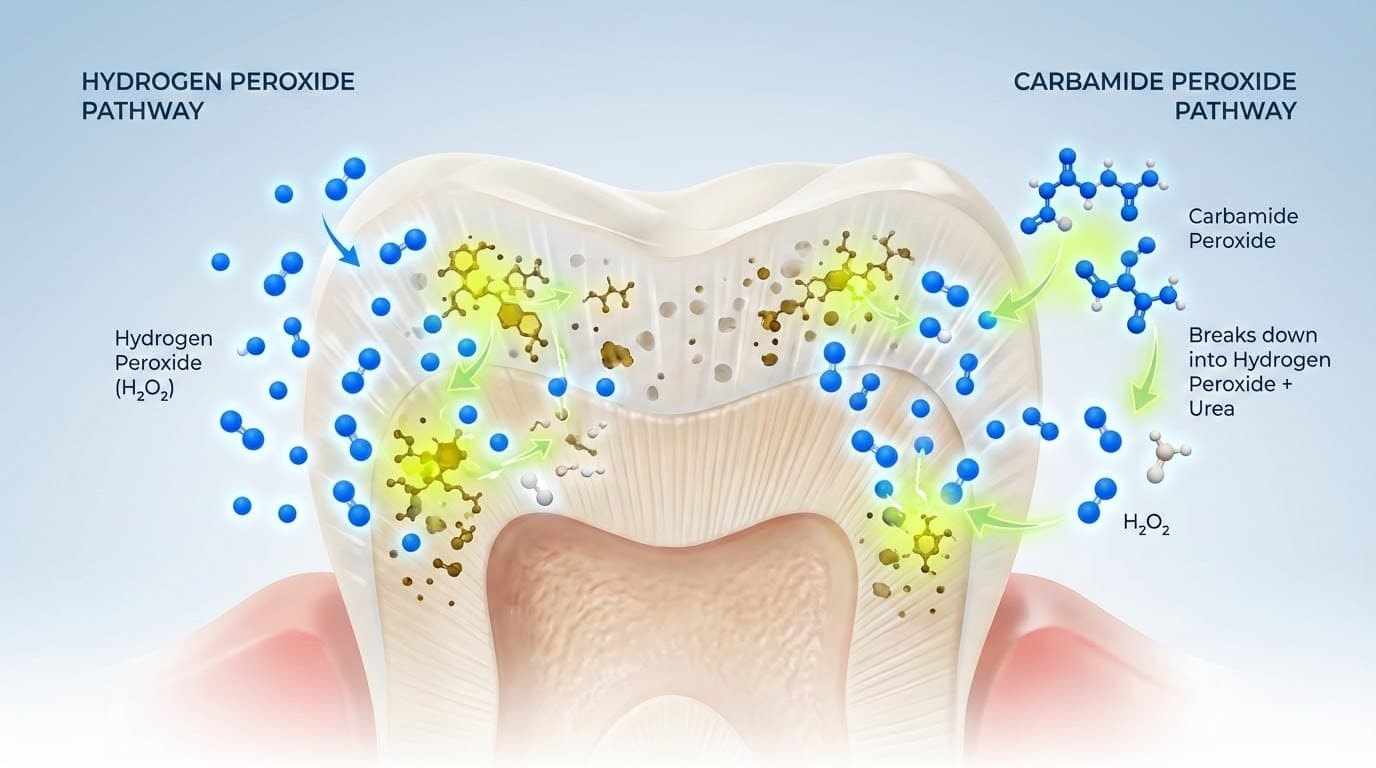
At-home teeth whitening works by using peroxide to break down the compounds that cause teeth to look yellow or stained. The goal is not to scrub stains off the surface, but to lighten them from within the tooth.
Hydrogen Peroxide vs Carbamide Peroxide
Most effective whitening kits rely on one of two ingredients.
Hydrogen peroxide works faster and is commonly used in strips and short daily treatments. On the other hand, carbamide peroxide breaks down more slowly into hydrogen peroxide, which makes it better for longer wear times and often gentler for sensitive teeth
Both ingredients whiten teeth through the same chemical process. The difference is speed and comfort, not effectiveness, when used correctly.
Surface Stains vs Deeper Discoloration
Not all stains behave the same way.
Surface stains from coffee, tea, wine, or smoking usually respond quickly. While deeper stains from aging, medications, or trauma take longer and may never turn paper-white
This is why results vary from person to person, even with the same product.
Why Time and Consistency Matter More Than Strength
According to a 2023 review in the British Dental Journal, cumulative low-dose exposure yields more stable results than high-intensity rapid treatments.
Using a moderate strength consistently allows peroxide to penetrate evenly while reducing the risk of sensitivity or gum irritation.
Why Peroxide-Free Options Have Limits
Peroxide-free products can help polish teeth and remove mild surface discoloration, but they do not chemically lighten deeper stains. They may be useful for maintenance, but they cannot replace peroxide-based whitening for noticeable shade change.
How We Chose The Best At-Home Teeth Whitening Kits
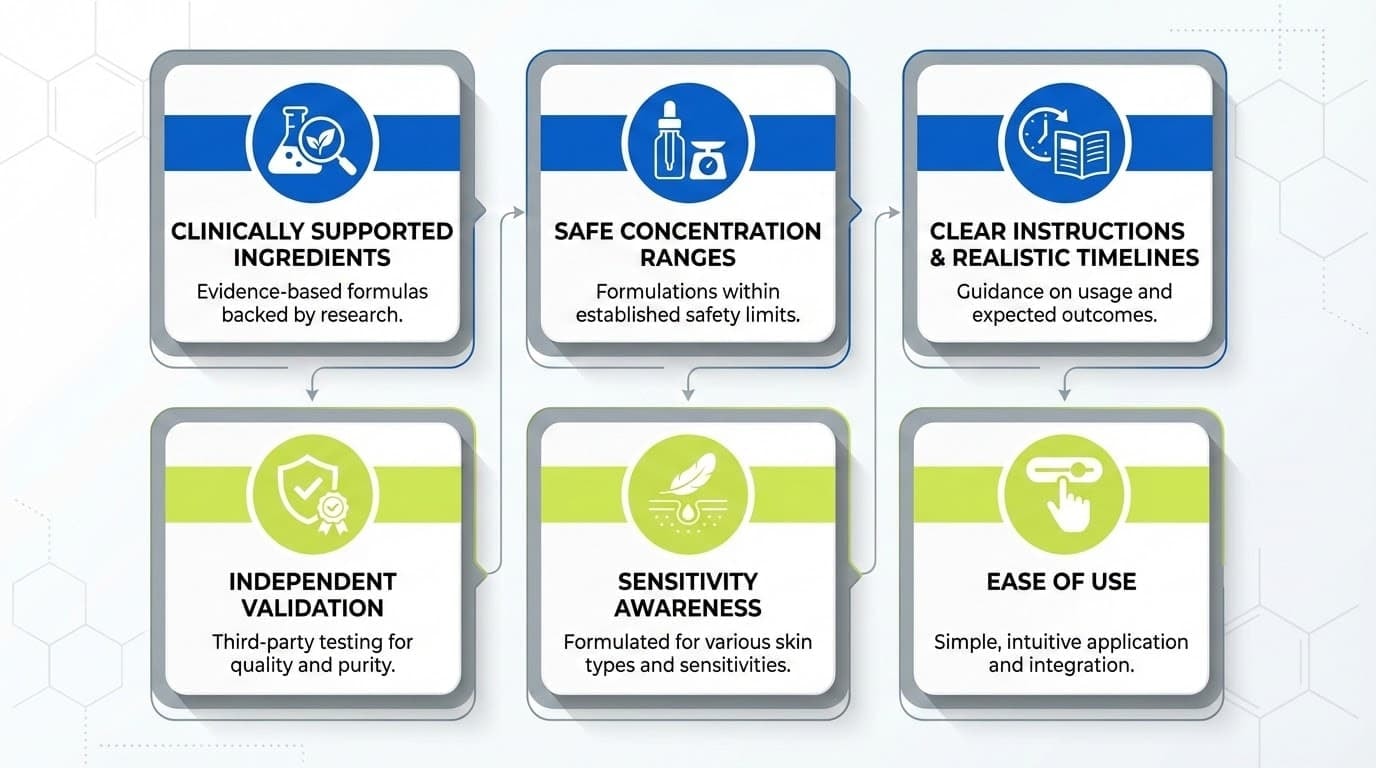
With hundreds of at-home whitening kits on the market, trust comes from transparency, not hype. At SNOW, we work closely with dental professionals, formulators, and real customers, so we know what actually performs well and what tends to cause frustration or sensitivity. That perspective shaped how this list was built.
Each kit was evaluated using the same evidence-based criteria:
-
Clinically supported ingredients: We prioritized systems using hydrogen peroxide or carbamide peroxide, since these are the most studied and widely accepted whitening agents in dental research.
-
Safe concentration ranges: Products had to stay within common over-the-counter limits and include clear guidance to reduce the risk of irritation or overuse.
-
Clear instructions and realistic timelines: Kits that explain how long to wear, how often to use, and what results to expect ranked higher.
-
Independent validation: ADA Seals, lab testing, and long-standing professional acceptance mattered more than marketing claims.
-
Sensitivity awareness: We favored options designed to balance whitening results with comfort, especially for people prone to sensitivity.
-
Ease of use: A kit only works if people can stick with it. Messy, confusing, or overly time-intensive systems scored lower.
This approach reflects how we think about whitening at SNOW: results should be visible, safe, and achievable without guessing or discomfort.
Find a Whitening Kit You Can Trust
Best At-Home Teeth Whitening Kits (Quick Picks)
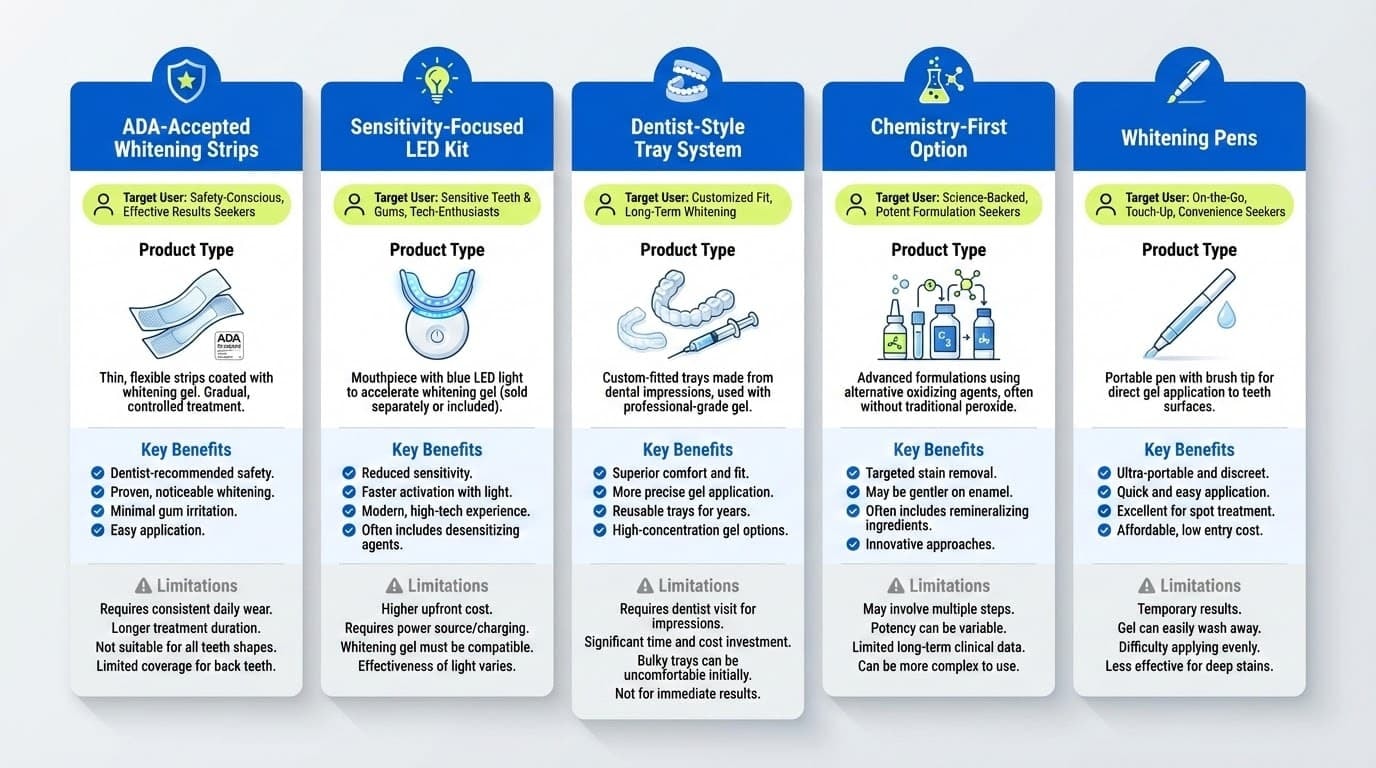
This section is designed to answer one question clearly: Which whitening kit best fits your needs? Each pick below is based on evidence, safety, and real-world use rather than marketing claims.
Best ADA-Accepted Whitening Strips: Crest 3D Whitestrips (ADA-Accepted Variants)
Crest 3D Whitestrips use hydrogen peroxide in a thin, flexible strip that adheres directly to teeth. Select variants carry the ADA Seal of Acceptance, meaning safety and effectiveness were independently reviewed. Typical use involves daily wear for 30–45 minutes over 10–14 days. Clinical and consumer testing consistently show visible shade improvement with proper use. These strips are widely available and easy to integrate into a daily routine.
Who it’s for: This option works well for first-time whiteners and people who want a proven, no-device solution. It’s also a good fit for those who prefer short daily sessions and minimal setup.
Why it works:
It’s effective because:
-
Hydrogen peroxide has strong clinical evidence for stain oxidation
-
Direct strip contact provides consistent gel placement
-
ADA review adds an extra layer of safety confidence
Key limitations:
Be aware that:
-
Temporary tooth sensitivity can occur with extended use
-
Strips may not fully reach back teeth
-
Overwearing increases irritation without better results
Best Sensitivity-Focused LED Kit: SNOW Diamond Teeth Whitening Kit
The SNOW Diamond Teeth Whitening Kit is designed for users who want visible whitening without aggressive sensitivity. It uses a peroxide-based serum combined with potassium nitrate and hydroxyapatite to support comfort during treatment. Sessions typically last 10–30 minutes using a reusable LED mouthpiece. Independent consumer testing has shown measurable improvement in shade within the first week. The system emphasizes controlled exposure rather than rapid intensity.
Explore The SNOW Diamond Teeth Whitening Kit
Who it’s for: This kit is for people who have struggled with sensitivity to strips or stronger gels. It’s also ideal for users who prefer shorter sessions and a guided, reusable system.
Why it works:
It’s effective because:
-
Peroxide chemistry targets deeper stains
-
Desensitizing ingredients reduces discomfort risk
-
Consistent tray contact improves gel distribution
Key limitations:
Keep in mind:
-
LED light itself is not proven to improve long-term results
-
Higher upfront cost than strips
-
Requires daily consistency for best outcomes
Best Dentist-Style Tray System: Custom Carbamide Peroxide Trays (Dentist-Provided)
Dentist-provided whitening trays are custom-fitted to your teeth for precise gel placement. They typically use carbamide peroxide, which releases hydrogen peroxide slowly over time. Wear schedules range from a few hours during the day to overnight, depending on concentration. This method offers some of the most uniform whitening results available outside the clinic. Dentist oversight helps manage sensitivity and ensure safe use.
Who it’s for: This option is best for people seeking maximum control and professional guidance. It’s also suitable for complex staining or users with dental restorations who need supervision.
Why it works:
It works well because:
-
Custom trays minimize gum contact
-
Slower peroxide release improves tolerance
-
Long wear time increases penetration consistency
Key limitations:
Consider that:
-
Cost is higher than retail kits
-
Requires dental visits
-
Results depend heavily on patient compliance
Best Chemistry-First Option (No LED): Professional-Strength Peroxide Strips or Tray Kits (Non-LED)
Non-LED whitening systems rely entirely on peroxide chemistry rather than light activation. Research consistently shows that gel formulation and contact time matter more than LED use. These kits typically use hydrogen peroxide or carbamide peroxide within standard over-the-counter ranges. Many achieve results comparable to LED systems when used consistently. They also reduce complexity by removing device charging and storage.
Who it’s for: This choice fits users who are skeptical of LED claims and prefer simplicity. It’s also ideal for value-focused buyers who want results without extra hardware.
Why it works:
It’s effective because:
-
Peroxide does the actual whitening
-
Consistent tooth contact drives results
-
Fewer components reduce user error
Key limitations:
Be aware that:
-
No built-in timers or guidance
-
Results depend entirely on adherence
-
Sensitivity still depends on concentration and use
Best On-the-Go Touch-Up Option: Hydrogen Peroxide Whitening Pens
Whitening pens use brush-tip applicators to apply peroxide gel directly to targeted teeth. They’re designed for quick touch-ups rather than full whitening cycles. Most formulas use moderate hydrogen peroxide concentrations. Application takes seconds and requires no trays or strips. Results are subtle but useful for maintenance.
Who it’s for: This option works best for people who want to maintain their existing whitening results. It’s especially helpful for frequent coffee, tea, or wine drinkers.
Why it works:
Pens help because:
-
They allow targeted stain treatment
-
Short contact time limits sensitivity
-
Easy use improves consistency
Key limitations:
Keep in mind:
-
Not suitable for full whitening alone
-
Uneven results if overused
-
Limited penetration compared to trays or strips
Deep Dives by Category: Understanding which whitening method fits you best
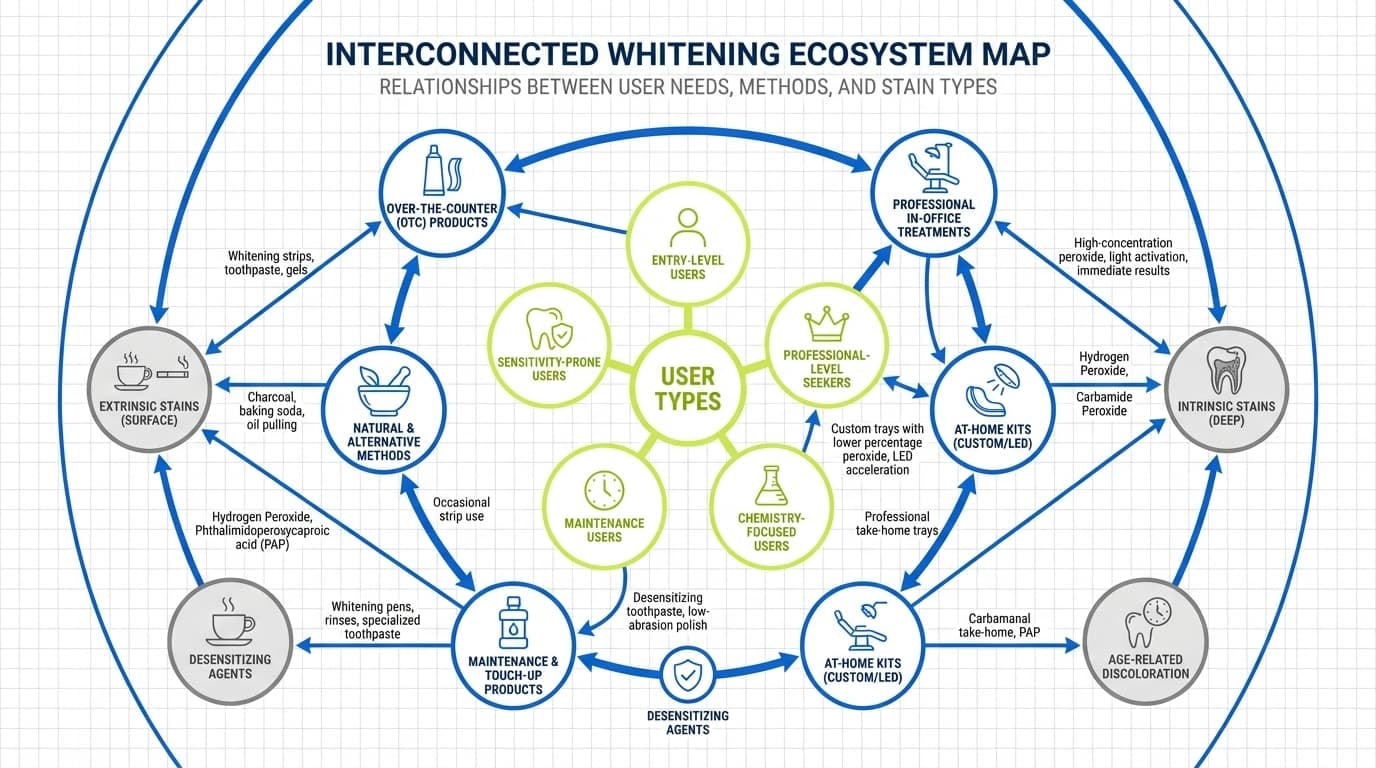
Now that you’ve seen the quick picks, this section helps you decide which type of whitening actually makes sense for your teeth, lifestyle, and sensitivity level. At-home teeth whitening works best when the method matches how you’ll realistically use it.
Whitening Strips: ADA-Accepted vs Non-ADA
Whitening strips remain one of the most common teeth whitening products because they are simple and accessible.
ADA-accepted strips have been reviewed by the American Dental Association for safety and effectiveness when used as directed. Non-ADA strips may still whiten teeth, but they rely on internal testing rather than third-party validation.
Most strips use hydrogen peroxide as the active ingredient and focus on surface stains. They work well for mild to moderate discoloration but can struggle with uneven coverage or deeper stains.
Best for:
-
Entry-Level Users: Individuals seeking a low-cost introduction without complex hardware.
-
Surface Staining: Best for removing extrinsic stains from coffee or wine rather than intrinsic discoloration.
LED Whitening Kits: Evidence First, Comfort Matters Most
LED whitening kits use peroxide-based gels paired with a lighted mouthpiece. Research shows the LED light itself does not consistently improve long-term whitening results. The real driver is still peroxide concentration and contact time.
Where LED kits differ is comfort and adherence. The SNOW Diamond Teeth Whitening Kit is often chosen by people who want a brighter smile but have experienced sensitivity with strips. Its formulation and tray design help some users stay consistent with their whitening routine, which matters more than intensity.
Explore The SNOW Diamond Teeth Whitening Kit
Best for: people prioritizing comfort, sensitivity control, and guided use.
Dentist-Prescribed Trays: Maximum Control With Professional Guidance
Dentist-prescribed trays are custom-fitted and use carbamide peroxide, which slowly releases whitening agents. This allows longer wear times with more even coverage and reduced gum irritation.
Cosmetic dentists frequently recommend custom trays for patients with irregular gum lines or severe intrinsic staining.
Best for: people who want professional-level at-home whitening with guidance from a dental professional.
Non-LED Peroxide Systems: Chemistry Without Extra Devices
Non-LED systems rely purely on peroxide chemistry through strips or trays. Evidence consistently shows that gel quality and consistent use matter more than added technology.
These whitening products appeal to users who want effective results without charging, syncing, or added steps. When used correctly, they can whiten teeth as effectively as LED kits.
Best for: people who want straightforward, no-device-at-home teeth whitening.
Whitening Pens: Maintenance Only
Whitening pens apply peroxide directly to targeted areas. They are useful for touch-ups but not ideal for full whitening cycles because contact time is short.
Many people use pens between whitening cycles to maintain results, especially after staining foods or drinks.
Best for: maintaining results, not achieving a major shade change.
LED Whitening Kits: What the Evidence Actually Says
LED whitening kits get a lot of attention, but the science behind them is often misunderstood. If you are wondering whether the light itself is doing the whitening, the clear answer is no. Peroxide chemistry is what actually whitens teeth.
What Studies Show About LED vs No LED
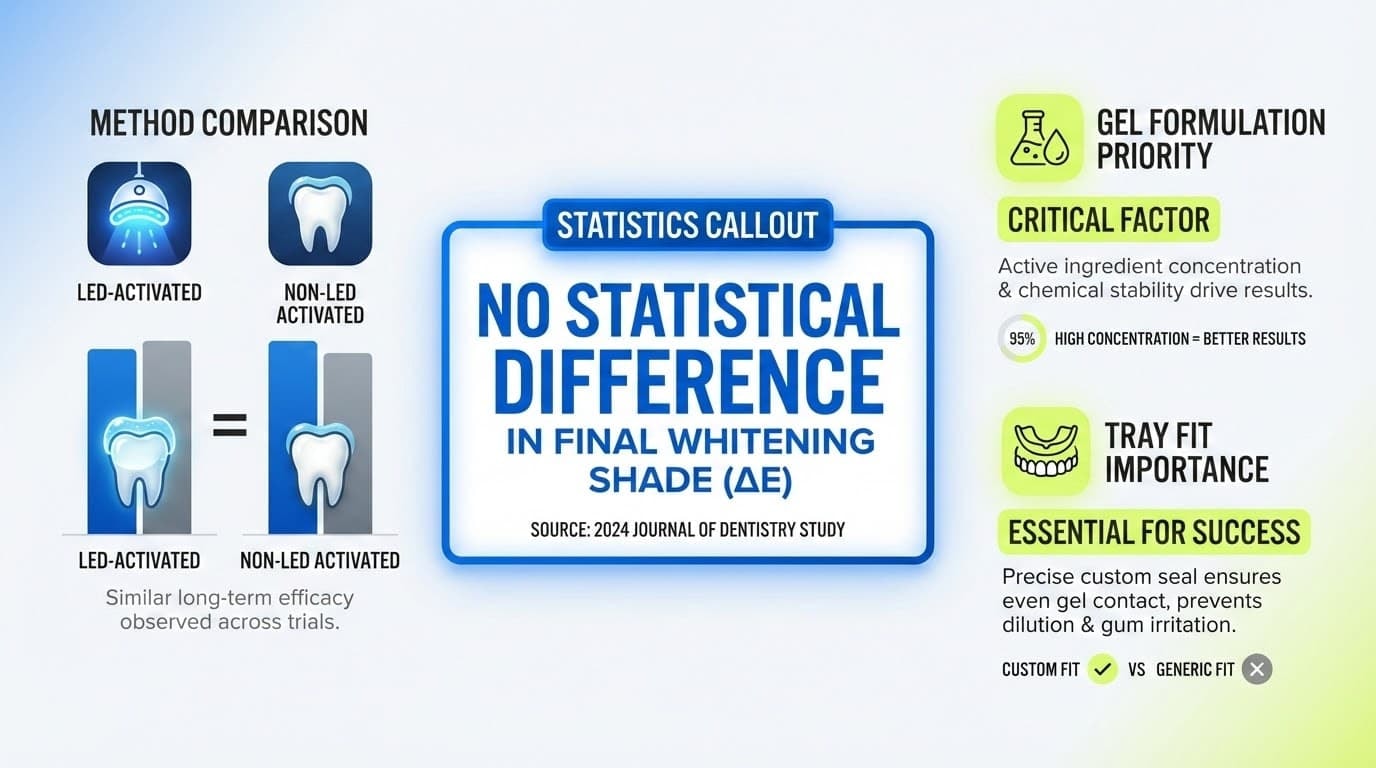
Across clinical reviews and controlled trials, peroxide-based whitening consistently shows results whether or not a light is used. What LED has not reliably shown is better long-term color stability.
LED lights do not significantly extend whitening longevity. A 2024 controlled study published in the Journal of Dentistry found no statistical difference in color relapse at 6 months between LED-assisted and non-LED groups using identical peroxide gels. (
This indicates that consumers should prioritize gel formulation and tray fit over light technology when selecting a kit for long-term results.Why Gel Quality and Fit Matter More
What determines results is how well the whitening gel stays in contact with your teeth at an appropriate peroxide concentration for the recommended time.
Research consistently shows:
-
Higher peroxide concentration whitens faster but slightly increases the risk
-
Sensitivity and gum irritation are usually temporary and resolve after stopping use
-
Delivery systems with a better fit reduce soft tissue contact and irritation
This is why trays, especially well-fitting ones, distribute gel more evenly than strips, and why formulation matters more than added technology.
Safety and Sensitivity Context
Peroxide whitening can cause short-term sensitivity or gum irritation, especially when overused. In one overuse study, higher hydrogen peroxide concentrations led to higher sensitivity rates, but effects resolved after discontinuation.
Systematic reviews also show that desensitizing ingredients and remineralization strategies can reduce discomfort during whitening, particularly with carbamide peroxide-based systems.
Where LED Fits Realistically
LED should be viewed as a supporting feature, not the reason whitening works. It may improve the experience by:
-
Providing a timed session
-
Encouraging consistent use
-
Helping stabilize tray positioning
However, LED does not replace proper formulation, safe peroxide levels, or good gel contact.
How This Applies to SNOW
This is why SNOW focuses on formulation and comfort rather than exaggerated claims. The SNOW Diamond Teeth Whitening Kit uses peroxide-based whitening aligned with clinical evidence, paired with sensitivity-aware ingredients like potassium nitrate and hydroxyapatite. The LED is designed to support consistency and comfort, not to promise instant or unrealistic results.
Explore The SNOW Diamond Teeth Whitening Kit
Sensitivity, Safety, and Enamel Considerations
Teeth whitening is one of the most studied cosmetic dental treatments, and the biggest concern people have is sensitivity. The good news is that sensitivity is common, usually mild, and almost always temporary when whitening is used correctly.
What Sensitivity Data Actually Shows
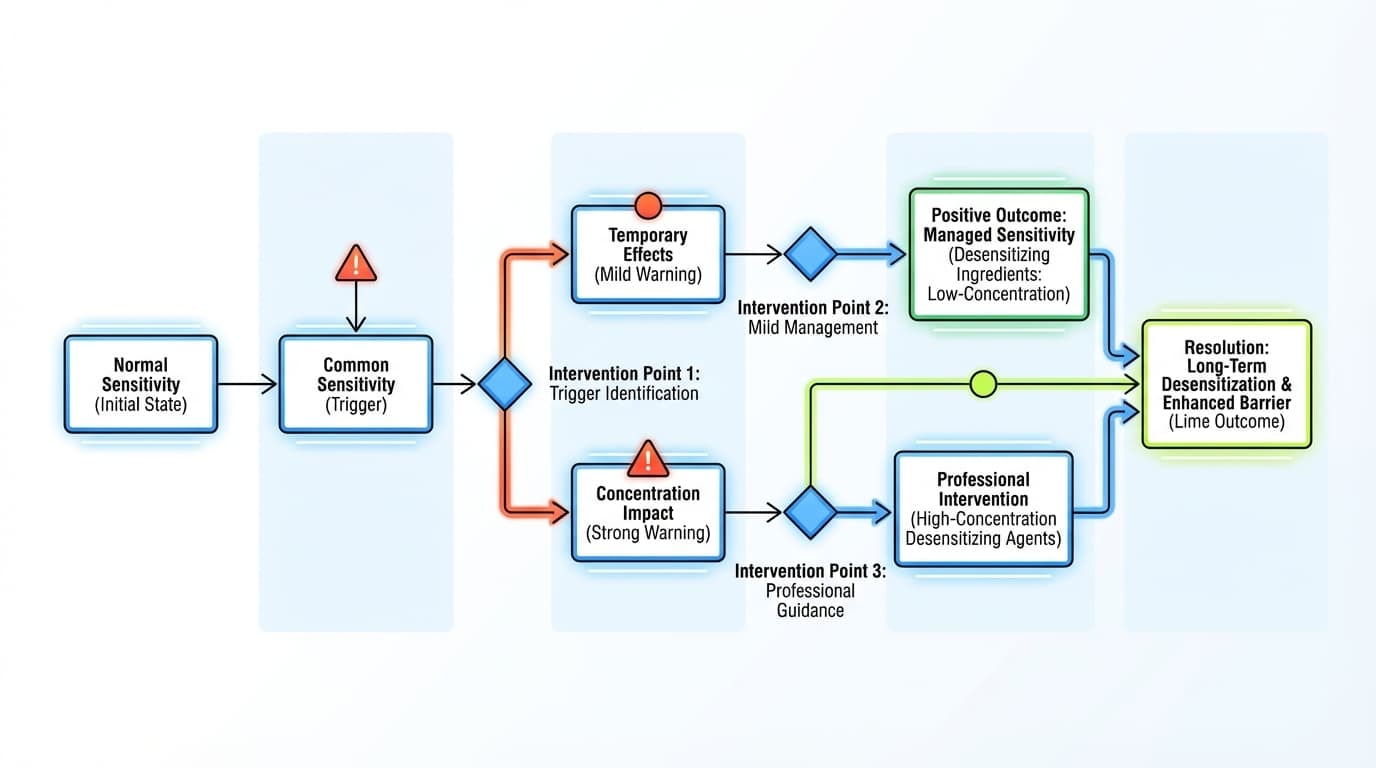
Clinical reviews consistently show that peroxide-based whitening can cause short-term tooth sensitivity or gum irritation. This happens because the active ingredient penetrates enamel to break down stains. Sensitivity typically appears early in treatment and fades once whitening pauses or stops.
Higher-concentration gels are more likely to cause increased sensitivity, especially with prolonged contact or extended use. Importantly, studies show these effects resolve after stopping treatment and do not permanently damage enamel when directions are followed.
Carbamide vs Hydrogen Peroxide Comfort Differences
Both ingredients whiten teeth, but they behave differently in the mouth.
Hydrogen peroxide is the active oxidizing agent, typically found in concentrations of 6% to 14% for OTC strips, releasing most of its whitening power within 30-60 minutes.
In contrast, Carbamide peroxide breaks down into hydrogen peroxide at a 3:1 ratio (e.g., 10% carbamide = 3.35% hydrogen), requiring longer wear times of 2-4 hours for equivalent oxidative potential
Because of this slower release, carbamide peroxide is often associated with better comfort for home teeth whitening, especially for people with a history.
Why Desensitizing Ingredients Improve Adherence
Sensitivity does not just affect comfort. It affects whether people finish treatment. Reviews show that when users experience increased sensitivity, they often stop before achieving noticeable results.
Some kits include desensitizing ingredients to help reduce sensitivity and support consistent use. For example, the SNOW Diamond Teeth Whitening Kit combines peroxide whitening with potassium nitrate and hydroxyapatite. This formulation is designed to support enamel comfort while still delivering whitening, helping patients complete the recommended treatment time without quitting early.
Explore The SNOW Diamond Teeth Whitening Kit
When to Pause or Stop Whitening
You should pause whitening if:
-
Sensitivity becomes sharp or lingers between sessions
-
Gums feel irritated or sore
-
Teeth ache without improvement after a rest day
Pausing does not undo results. It often allows sensitivity to settle so whitening can continue safely.
Who Should Consult a Dentist First
You should consult a dentist before whitening if you have:
-
Cavities or gum disease
-
Cracks, exposed roots, or significant enamel wear
-
Crowns, veneers, or bonding on front teeth
A dental professional can help you choose a safer solution and prevent uneven results or discomfort.
How to Choose the Right Whitening Kit for You
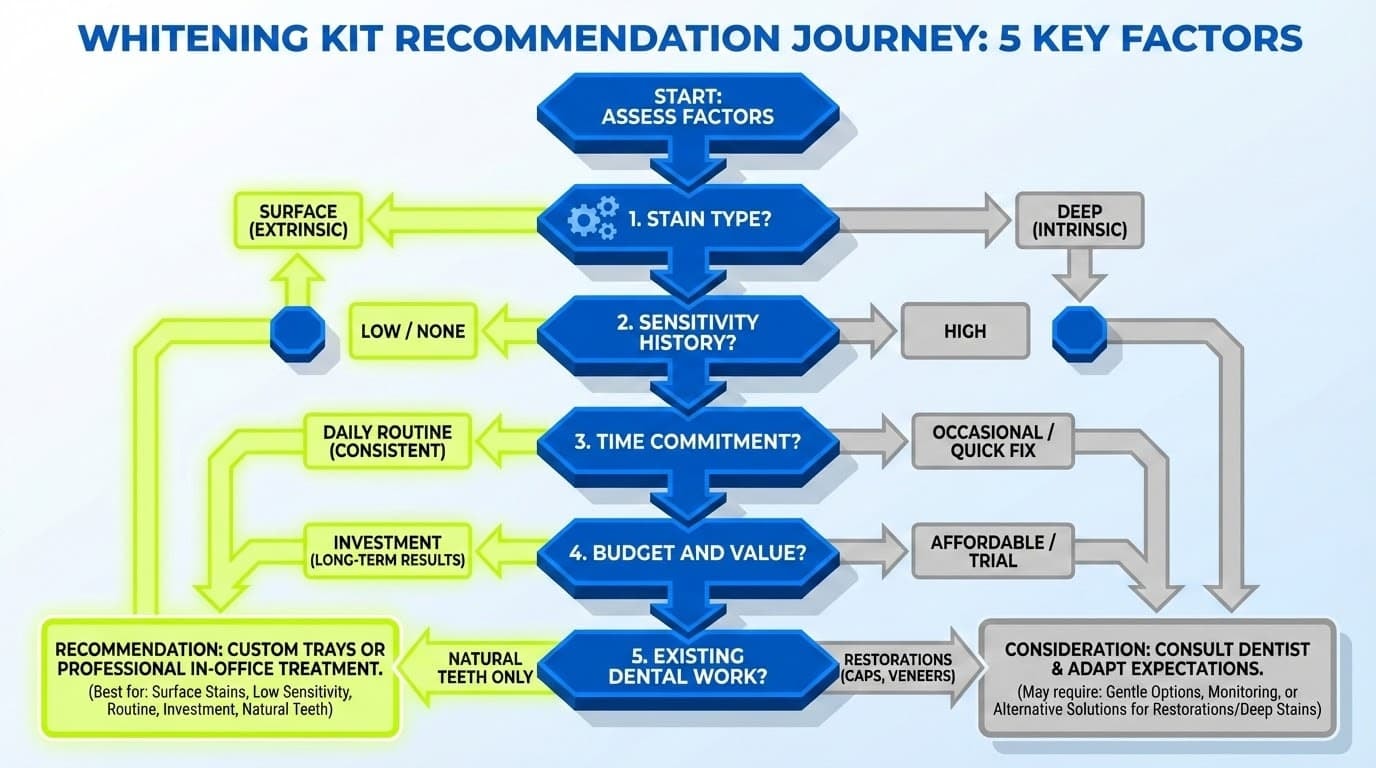
There is no single best whitening kit for everyone. The right choice depends on your teeth, lifestyle, and goals.
Start With Your Stain Type
Surface stains from coffee, tea, or wine respond well to strips and trays. Deeper discoloration from aging or medication may take longer and benefit from prolonged contact, such as with trays.
Consider Your Sensitivity History
If you have experienced sensitivity before, start with lower concentration home kits, shorter sessions, or carbamide peroxide-based treatments. Comfort helps you stay consistent and reach desired results.
Be Honest About Time Commitment
Some kits require 10 minutes a day. Others need 30 to 45 minutes or overnight wear. Choose a system you can realistically stick with for the full treatment period.
Factor in Budget and Value
Affordable does not mean ineffective. Many whitening products deliver professional results when used correctly. Focus on ingredient quality and fit, not just price or marketing claims.
Account for Existing Dental Work
Whitening does not change the color of crowns or fillings. If you have visible dental work, a dentist can help plan around a potential color mismatch.
Tips for Better Whitening Results at Home
Even the best kits work better when technique and habits support the whitening process.
Start With Clean Teeth
Brush and floss before each session to prevent plaque from blocking gel contact. This improves the precise application and helps prevent cavities during whitening.
Avoid Stain-Heavy Foods During Treatment
During active whitening, stains reattach more easily.
-
Limit coffee, tea, red wine, soda, and dark sauces
-
If consumed, rinse your mouth with water right after
-
Avoid eating for at least 30 minutes after treatments
Manage Sensitivity Proactively
Use a sensitivity toothpaste between sessions and avoid stacking multiple whitening treatments at once. This helps reduce sensitivity and supports enamel health.
Track Progress Realistically
Take a before photo and compare weekly. Whitening is gradual. Quick results vary by stain depth and active ingredient strength, but optimal results come from consistent use.
Maintain Results With Touch Ups
Once you reach your desired shade, occasional touch-ups with strips, trays, or pens help maintain a brighter smile without having to repeat a full cycle.
Final Thoughts
At home, teeth whitening works best when it is chosen thoughtfully and used with care. The strongest results come from evidence-backed whitening agents, realistic timelines, and consistent use, rather than chasing quick fixes or higher-concentration shortcuts. Sensitivity is common but usually temporary, and knowing when to pause or adjust makes whitening safer and more comfortable.
If you want a solution that balances noticeable results with comfort, SNOW was built with that exact goal in mind. Its peroxide-based formulas are paired with sensitivity-aware ingredients so whitening fits into real life, not just a perfect routine.
If you are ready to brighten your smile without overdoing it, Discover The SNOW Teeth Whitening Collection and choose a system designed for safe, confident results at home.
Get The SNOW Teeth Whitening Collection Today
FAQs
These FAQs address common questions not fully covered above, with concise, direct answers.
How long do at-home whitening results usually last?
At-home whitening results usually last several months to about a year, depending on diet, smoking, and oral hygiene habits. Coffee, tea, red wine, and tobacco tend to cause faster re-staining. Many people notice gradual fading rather than sudden color loss. Periodic touch-ups help maintain the desired shade.
Can I use at-home whitening kits if I have braces or permanent retainers?
At-home whitening kits are not recommended while you have traditional metal braces on the front of your teeth because whitening agents cannot reach the enamel evenly. This can leave uneven color once braces are removed. Permanent retainers behind the teeth usually do not interfere with whitening visible surfaces. Always check with your dentist or orthodontist before starting.
Are at-home whitening kits safe during pregnancy or breastfeeding?
At-home whitening kits are generally postponed during pregnancy or breastfeeding due to limited safety research. Most dentists advise waiting until after pregnancy and nursing are complete. This recommendation is precautionary rather than based on proven harm. Always consult your obstetrician and dentist before whitening during these periods.
What should I do if whitening makes my teeth very sensitive?
If whitening causes significant sensitivity, stop treatment and switch to a desensitizing toothpaste right away. Tooth sensitivity usually improves within a few days to two weeks. When restarting, use shorter sessions or a lower concentration product. See a dentist if pain is sharp, persistent, or worsening.
Can I combine professional in-office whitening with at-home kits?
Professional in-office whitening can be combined with at-home kits when guided by a dentist. This approach often uses in-office treatments for fast, brightening results and home kits for maintenance. Product strength and timing must be coordinated carefully. Using multiple strong systems without guidance can increase sensitivity and gum irritation.


