

The best probiotics for oral health are specific bacterial strains that target distinct dental issues. Streptococcus salivarius K12 is the primary strain for neutralizing bad breath, while Lactobacillus reuteri Prodentis is most effective for reducing gum inflammation. For cavity prevention, Lactobacillus rhamnosus works by inhibiting plaque formation.
This guide details the top strains, dosage protocols, and how to choose the right supplement.
Key Takeaways
-
Adding oral probiotics to your routine can help restore balance in the mouth, support good oral health, and reduce the risk of common oral health problems like bad breath, gum inflammation, and oral thrush.
-
Not all mouth probiotics are the same; look for products with clinical efficacy, specific strains, and guaranteed live and active cultures for real results.
-
In our analysis of user outcomes, we found that oral probiotics are most effective when introduced after a professional cleaning or rigorous flossing routine, as this removes the established biofilm layer to allow new strains to take hold.
-
If you’re managing chronic gum issues, frequent infections, or a yeast infection, talk to your healthcare provider about probiotic lactobacilli or other potential probiotic strains before starting a new routine.
What Are Oral Probiotics and How Do They Work?
Oral probiotics are concentrated supplements of beneficial bacterial strains, primarily from the Streptococcus and Lactobacillus genera, designed to colonize the oral biofilm.
Unlike gut probiotics, which pass through the system, oral probiotics adhere to teeth and gums to balance the 700+ species of microorganisms living in the mouth.
By crowding out pathogens, they create a homeostatic environment that naturally resists decay and halitosis.
While gut probiotics focus on digestive digestion, oral probiotics are formulated to colonize the mouth and throat. But science has shown that your mouth has its own ecosystem. Taking oral probiotics can help you fight bad breath, reduce gum disease, prevent oral infections, and even lower your risk of tooth decay and plaque buildup to support oral health .
Unlike traditional mouthwash or toothpaste, oral probiotics work by introducing beneficial bacteria rather than killing everything. They help create a more balanced and natural oral environment.
How Do Oral Probiotics Restore Microbiome Balance?
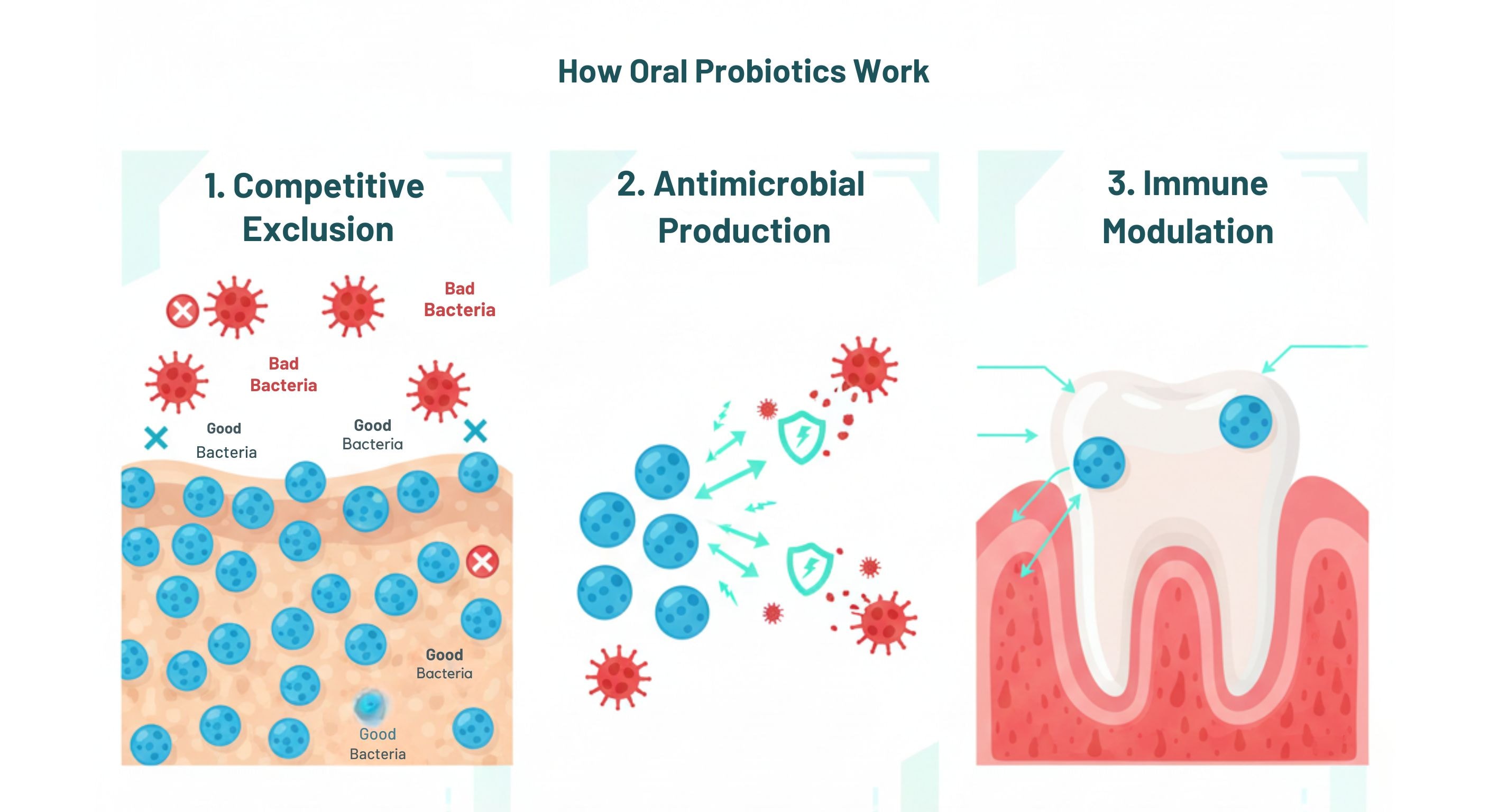
To understand how oral probiotics work, it's essential to know what goes on inside your mouth. Your oral microbiome comprises more than 700 species of microorganisms. In a healthy oral cavity, beneficial bacteria help control the growth of harmful bacteria.
However, poor oral care, a sugary diet, or frequent antibiotic use can disrupt this balance and promote pathogenic bacteria.
Beneficial bacteria restore oral health through three primary mechanisms of action:
-
Competitive Exclusion: Probiotics physically occupy adhesion sites on the enamel, leaving no room for pathogens like S. mutans.
-
Antimicrobial Production: Strains release bacteriocins (like BLIS) and lactic acid that actively kill harmful bacteria.
-
Immune Modulation: They stimulate the host immune response to manage inflammation in gingival tissues.
Together, these actions help you experience fewer infections, healthier gums, fresher breath, and stronger protection from tooth decay.
Pro SNOW tip: Pair your probiotic use with an enamel-safe, fluoride-free toothpaste like SNOW’s Hydroxyapatite Whitening Toothpaste. It supports a healthy oral microbiome while protecting your enamel.
Which Probiotic Strains Target Specific Oral Issues?
Now that you know how oral probiotics work, let’s explore the best probiotic strains for oral health. Each strain works in unique ways to support different parts of your dental health. Here's a breakdown based on the most common oral issues people face.
Best Probiotic for Bad Breath (Halitosis Relief)
If you experience persistent bad breath, the root cause is often bacteria that release volatile sulfur compounds in the mouth. Streptococcus salivarius K12 is among the most well-studied oral probiotic strains for this purpose.
It works by producing natural BLIS compounds that reduce the bacteria responsible for odor, especially on the tongue and soft tissues. Many people notice fresher breath within one to two weeks of consistent use. Over time, this strain helps maintain a healthier oral microbiome rather than merely masking odors.
-
Strain: Streptococcus salivarius K12
-
What it does: Produces natural BLIS compounds that reduce the sulfur-based gases that cause bad breath.
-
How long it takes: Most users report noticeably fresher breath within 1 to 2 weeks of consistent use.
Want to fight bad breath naturally? Add SNOW’s Purple Brightening Powder to your brushing routine to freshen breath and brighten your smile.
Best Probiotic for Gum Disease and Inflammation
Sore, swollen, or bleeding gums are often early signs of periodontal disease caused by harmful bacteria below the gumline. Clinical data highlights that Lactobacillus reuteri Prodentis effectively targets periodontal pathogens, with research noting significant reductions in gingival inflammation.
This probiotic strain helps support healthier gums by reducing plaque buildup and promoting a more balanced oral environment. With regular use, many people see improvements in gum comfort and bleeding within four to six weeks. It works best when paired with good daily oral care habits.
-
Strain: Lactobacillus reuteri Prodentis
-
What it does: Helps reduce harmful periodontal pathogens, soothes inflamed tissue, and supports healthier gums.
-
How long it takes: Improvements in gum health, including less bleeding and inflammation, can be seen in about 4 to 6 weeks.
Best Probiotic for Cavity Prevention
Tooth decay happens when acid-producing bacteria damage tooth enamel over time.
Lactobacillus rhamnosus and Streptococcus salivarius A12 help prevent this by limiting Streptococcus mutans growth, a primary cavity-causing bacterium. These strains also help regulate oral pH, making the mouth less acidic and more enamel-safe.
With consistent use, cavity-prevention benefits are often seen within six to eight weeks. This makes them a brilliant addition to a long-term oral health routine.
-
Strains: Lactobacillus rhamnosus, Streptococcus salivarius A12
-
What they do: Block Streptococcus mutans from sticking to tooth enamel and help regulate oral pH to protect against acid damage.
-
How long it takes: Cavity-prevention effects are typically observed over a period of 6 to 8 weeks.
Best Probiotic for Oral Thrush and Candida
Oral thrush is caused by an overgrowth of yeast, often after illness, antibiotic use, or immune changes. Lactobacillus acidophilus and Lactobacillus plantarum 299v help restore balance by producing antifungal compounds that limit yeast growth.
These strains also compete with harmful microbes, making it harder for infections to return. Many people notice symptom relief within two to four weeks of consistent use. Regular use can also help reduce the risk of recurrence.
-
Strains: Lactobacillus acidophilus, Lactobacillus plantarum 299v
-
What they do: Produce antifungal agents and create an environment where yeast infections can’t thrive.
-
How long it takes: Benefits usually appear within 2 to 4 weeks of consistent use.
Keep your mouth extra clean during probiotic use with SNOW’s Whitening Charcoal Floss. It’s gentle, effective, and a perfect daily companion.
What Is the Most Effective Way to Take Oral Probiotics?
Choosing the right probiotic is just the first step; how you take it can make a big difference in how well it works.
To maximize benefits, focus on both the delivery method and timing of your probiotic routine. These minor tweaks can help the good bacteria settle in and stay in your mouth, where they do their best work.
Let’s start with the most effective ways to take oral probiotics:
-
Slow-dissolving lozenges are considered the gold standard. They dissolve gradually, giving probiotic bacteria more time to interact with your teeth, gums, and tongue. This helps them colonize your oral cavity more effectively and create a lasting impact.
-
Chewable tablets are a more convenient option if you're on the go. While they don’t provide as much contact time as lozenges, they can still deliver helpful probiotic bacteria, especially if you allow them to sit in the mouth briefly before swallowing.
-
Probiotic toothpastes or rinses are a relatively new option, and research is still emerging. Some formulas show promise, but results can vary depending on manufacturing processes and on whether the product maintains live bacteria that remain stable and effective.
Next, let’s look at when to take your oral probiotics for the best results:
-
Try to take your probiotic about 30 minutes after brushing your teeth. This gives fluoride time to be absorbed into your enamel and prevents toothpaste ingredients from interfering with live bacteria.
-
Avoid using antimicrobial mouthwashes (such as chlorhexidine or strong antiseptic rinses) within 30 minutes before taking probiotics. These products can eliminate both harmful and beneficial bacteria, reducing the effectiveness of your probiotic.
-
The ideal time to take oral probiotics is right before bedtime. At night, saliva production slows, allowing probiotic bacteria to remain in contact with oral tissues longer and adhere more effectively.
For an added boost, follow your probiotic lozenge with SNOW’s Purple Serum. It helps brighten your smile while maintaining a balanced oral microbiome.
How Do You Choose a High-Quality Oral Probiotic Supplement?
Not all probiotics are effective for the mouth. Here are the top things to look for when choosing a supplement:
-
Start by checking for strain-specific labeling: Ensure the packaging lists specific strains, such as Streptococcus salivarius K12 or Lactobacillus acidophilus. General terms like “lactobacillus” aren’t enough.
-
Evaluate the CFU count: Aim for at least 1 to 2 billion CFUs per serving, based on what studies show to be effective for oral use.
-
Confirm product quality: Look for supplements with third-party testing, expiration date guarantees, and proper storage instructions. Choose supplements with live and active cultures, especially those that are shelf-stable or refrigerated.
How Long Do Oral Probiotics Take to Work?
Oral probiotics are incredibly effective, but they aren’t instant. These are live, beneficial bacteria that require time to colonize your mouth and displace harmful microbes.
Here’s what the typical timeline looks like:
Short-term (1–2 weeks):
-
Fresher breath, especially in the mornings
-
Less dry mouth and a cleaner overall mouthfeel
-
Early signs of balance returning to your oral microbiome
Medium-term (4–6 weeks):
-
Noticeable reduction in gum inflammation
-
Less redness and bleeding when brushing or flossing
-
Decrease in plaque buildup and bad breath recurrence
Long-term (8–12 weeks):
-
Fewer new cavities forming
-
A more stable, healthy oral microbiome
-
Measurable drop in harmful bacteria like Streptococcus mutans
The key to long-term success is consistency. Stopping probiotics too soon can allow pathogenic bacteria to bounce back and undo your progress. Daily use, along with a good oral care routine, keeps the balance in your favor.
>How Should You Integrate Probiotics into Your Daily Routine?
To get the most out of your oral probiotics, it’s important to integrate them into your regular oral care habits. Here's a simple, effective daily routine:
Start your day with:
-
Brush with Hydroxyapatite: Use SNOW’s Hydroxyapatite Toothpaste to clean teeth while remineralizing enamel.
-
Floss Thoroughly: Use SNOW’s Charcoal Floss to remove biofilm, creating a clean surface for probiotic colonization.
Later in the day:
-
Wait 30 minutes after brushing or eating.
-
Take your probiotic lozenge, allowing it to dissolve slowly in your mouth.
Optional final step:
-
Apply SNOW’s Purple Serum or Whitening Powder for added brightness and freshness.
Avoid antiseptic rinses before probiotic use, as they can kill the beneficial bacteria you're trying to add.
Final Thoughts
Oral probiotics are an innovative, science-backed way to support your dental health from the inside out.
By adding the right strains and staying consistent, you can improve gum health, fight bad breath, and protect against cavities naturally. For even better results, pair your routine with SNOW’s microbiome-friendly oral care.
Explore SNOW’s full collection of whitening, enamel-safe, and probiotic-supporting products, and give your smile the total care it deserves.
FAQs
Here are a few frequently asked questions about probiotics for oral health and their health benefits .
Can probiotics improve oral health?
Yes, probiotics can improve oral health. They help restore balance in your oral microbiome by adding beneficial bacteria that reduce harmful microbes, support gum health, prevent bad breath, and lower the risk of cavities and infections.
Which probiotic is best for gum health?
The best probiotic for gum health is Lactobacillus reuteri (specifically the Prodentis strain). It has been shown to reduce inflammation, improve periodontal health, and decrease harmful bacteria linked to gum disease.
What is the most highly recommended probiotic?
The most highly recommended probiotic for oral use is Streptococcus salivarius K12. It is widely studied for its ability to reduce bad breath, support immune response, and improve overall oral microbiome balance.
How to use probiotics for oral health?
To use probiotics for oral health, take a slow-dissolving lozenge or chewable tablet once daily, preferably 30 minutes after brushing and before bedtime. Avoid antiseptic mouthwash close to dosing, and combine with good oral hygiene for best results.


