

Teeth whitening does not permanently damage enamel when performed correctly using professional-grade peroxide products. While whitening agents temporarily open enamel pores to lift stains, causing short-term sensitivity, the enamel naturally remineralizes within 48 hours, and real teeth whitening before and after transformations demonstrate how safe, properly formulated treatments can deliver visible results.
This guide explains the biology of this process, the risks of DIY methods, and how to safely maintain a bright smile.
Key Takeaways
-
Whitening doesn’t permanently damage enamel when done safely. Professional and dentist-approved whitening products use controlled levels of hydrogen or carbamide peroxide that only cause temporary changes to the enamel. With proper aftercare, your enamel can fully recover.
-
Post-whitening care is just as important as the treatment itself. The first 48 hours after whitening are critical for enamel recovery. Avoid acidic foods and drinks, and use remineralizing products like fluoride or nano-hydroxyapatite toothpaste to strengthen and protect your enamel.
-
Not all whitening methods are created equal. DIY remedies and unregulated products can cause irreversible enamel damage. Stick to in-office treatments or trusted at-home kits, and always follow guidance from a dental professional.
Does Teeth Whitening Damage Enamel? What the Science Says
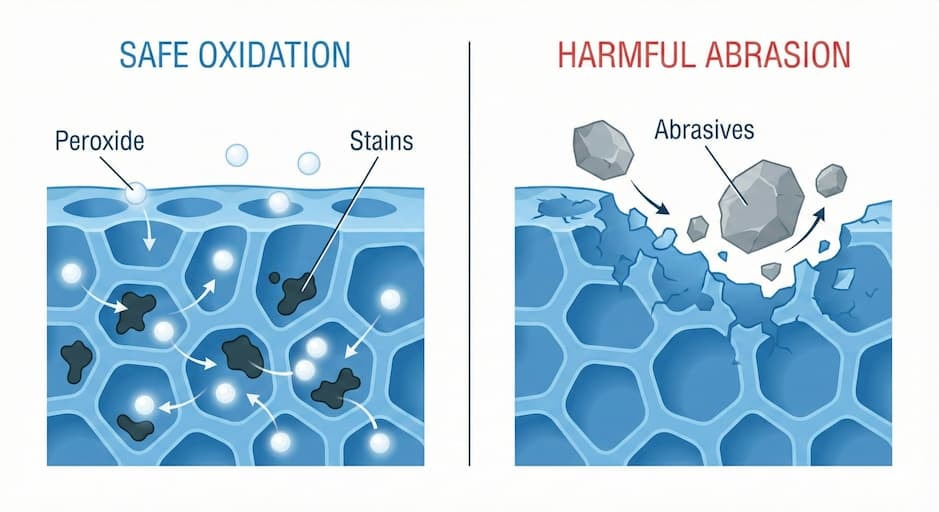
Scientific research confirms that teeth whitening is safe for enamel when used according to professional guidelines. Most treatments utilize hydrogen or carbamide peroxide, which permeates the enamel's porous structure to oxidize stain molecules without eroding the mineral matrix. This distinction between chemical oxidation (safe) and physical abrasion (harmful) is key to understanding modern whitening safety
A 2021 study from the University of Toronto tested a 10% carbamide peroxide gel and found that this formula reduced enamel protein by up to 50%, which allows deeper stain removal.
However, 35% carbamide peroxide showed harmful effects on inner tooth tissues in lab tests, so it should only be used with dental supervision.
Another study tested different whitening treatments and their effect on enamel hardness:
-
Professional teeth whitening with 35% hydrogen peroxide caused an 18% drop in enamel hardness.
-
At-home treatments with 10% carbamide peroxide caused a 12% drop.
-
Over-the-counter products with 6% hydrogen peroxide caused a 6% drop.
These changes are temporary. Your tooth enamel recovers through saliva and good oral care. Whitening safely does not cause permanent damage and can support a brighter smile and better oral health.
How Does Teeth Whitening Affect Enamel?
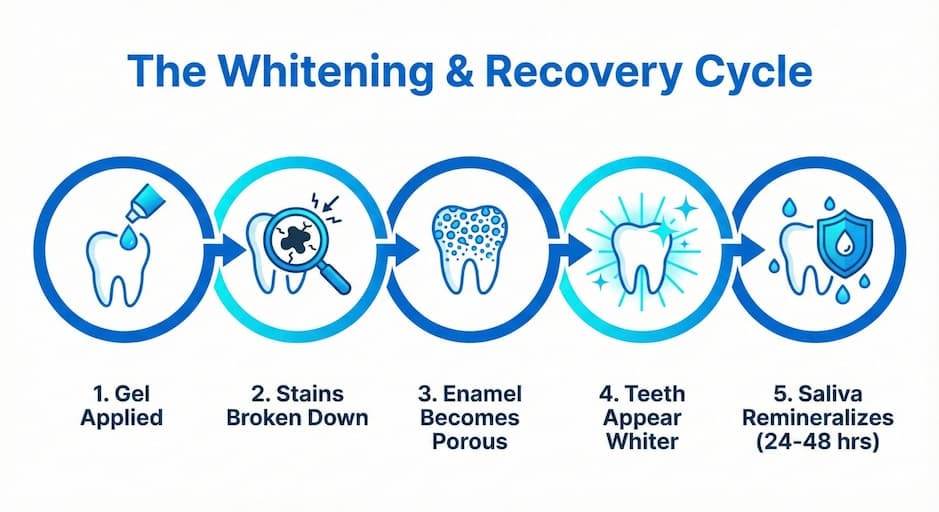
Teeth whitening affects enamel by temporarily increasing its permeability to allow active agents to reach deep stains. Enamel is a mineralized tissue containing microscopic pores; peroxide agents penetrate these pores to break down discolored bonds in the underlying dentin. This process creates a temporary 'open' state, which is why sensitivity occurs, but it does not remove the enamel structure itself.
Here’s what happens during the whitening process:
-
Whitening gel is applied to the teeth. It contains hydrogen peroxide or carbamide peroxide, which starts the process.
-
The gel breaks down stains. These ingredients reach the dentin layer under your enamel, where most deep stains live.
-
Your enamel becomes temporarily porous. The gel opens up tiny pores, which can make your teeth feel sensitive for a short time.
-
Teeth appear whiter. As light reflects off the surface, your smile looks brighter because stains are gone.
-
Saliva starts to reharden enamel. Within 24 to 48 hours, your enamel naturally returns to its normal strength.
The British Dental Health Foundation recommends avoiding acidic foods immediately after whitening to prevent acid erosion on the temporarily porous enamel surface.
Can Enamel Recover After Whitening?
While enamel cannot regenerate tissue, it actively recovers hardness through remineralization. Saliva is rich in calcium and phosphate, which naturally fill the enamel pores opened during whitening, restoring surface hardness within 7 days. This natural repair process means that post-whitening softness is transient, not permanent.
If enamel wears down due to erosion or cracks, the damage is permanent and may require dental repair.
However, the changes caused by teeth whitening are usually small and temporary. A 2015 study published in Acta Biomaterialia found that bleaching agents can make enamel softer right after treatment, but the enamel returned to normal hardness within 7 days when exposed to saliva.
Even better, some dental products can speed up this recovery. A 2023 systematic review in the journal Bioengineering found that ingredients like nano-hydroxyapatite, fluoride, and CPP-ACP help rebuild minerals in early enamel damage and reduce white spots. One study showed:
-
MI Paste Plus reduced white spots by 65% in 3 months
-
Remin Pro improved them by 60%
-
A regular toothpaste only helped by 7%
Another trial found that nano-hydroxyapatite toothpaste worked even better than fluoride toothpaste in fixing early enamel damage over 6 months.
Some new ideas, such as combining nano-hydroxyapatite with ozone therapy, show promise but are still being tested and aren’t yet part of everyday dental care.
How Do Different Whitening Methods Impact Enamel?
Not all teeth whitening treatments are created equal.
Here's how the most common methods compare in terms of safety, strength, and their effects on your tooth enamel and oral health.
 The safest way to whiten your teeth without damaging tooth enamel is to use proven teeth-whitening options, especially those approved or provided by a dental professional. Always follow instructions and avoid overuse to protect your oral health.
Why Is the 48-Hour Recovery Window Critical?
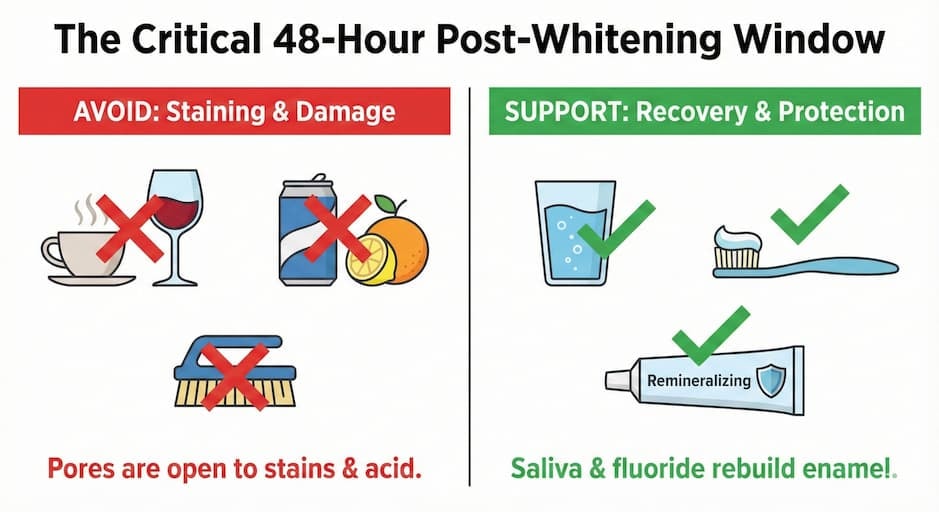
After any teeth whitening treatment, your tooth enamel needs time to recover. For the first 48 hours, your teeth are more sensitive, and the enamel surface is temporarily softer. That’s why what you do in this window really matters.
Here’s what’s happening:
-
Whitening agents like hydrogen peroxide open up tiny pores in your enamel
-
This lets bleaching agents remove surface stains, but it also makes your teeth a little more vulnerable
-
Your saliva naturally begins to rehydrate and remineralize enamel within 1 to 2 days
During this time, you should avoid:
-
Coffee, tea, red wine, and dark-colored sauces
-
Acidic drinks like soda or citrus juice
-
Brushing too hard or using abrasive toothpaste
These things can stain or irritate your enamel while it's still recovering. Instead, use teeth whitening products that are gentle and approved by a dental professional.
If you use over-the-counter products too often or combine them with harsh DIY methods, you could damage enamel and increase tooth sensitivity. Although most whitening treatments are safe, they work best when you follow the proper aftercare steps. If sensitivity is a concern, exploring whitening options designed for sensitive teeth can help you achieve results without discomfort.
What Are the Safe Whitening Guidelines?
Whitening your teeth can be safe, but only when you follow the proper steps.
Dentists and researchers agree that taking proper care during and after teeth whitening helps prevent problems such as tooth sensitivity and enamel damage.
Here’s how to keep your smile bright without harming your tooth enamel.
Use the Right Products
Always choose teeth-whitening products that contain safe whitening agents such as hydrogen peroxide or carbamide peroxide. These ingredients help lift deep stains without harming your enamel when appropriately used. Look for options that are tested by dental experts and approved for long-term use.
SNOW’s Teeth Whitening Kit is an excellent example of this. It uses dentist-formulated ingredients to gently whiten your teeth without causing sensitivity. The LED light technology boosts results while keeping your enamel protected.
Shop SNOW's Teeth Whitening Kit
Don’t Overdo It
Over-whitening can lead to thin enamel, gum irritation, and lasting tooth sensitivity. Even though whitening treatments are safe, using them too often can cause problems. Professional whitening treatments should be done only once or twice a year, while at-home products must be used exactly as directed.
Always follow instructions, and give your teeth time to recover between treatments.
Protect Your Enamel
After whitening, your enamel becomes more open and needs time to heal. Support it by using fluoride toothpaste or ingredients such as nano-hydroxyapatite, which strengthen enamel. Don’t brush too hard, and avoid acidic or dark drinks for the next 48 hours.
Your body naturally rebuilds enamel, but you can make it easier by being gentle with your teeth and avoiding rough scrubbing or harsh DIY methods.
Ask Your Dental Professional
Before starting any whitening routine, talk to your dental professional. If you have gum disease, fillings, or very sensitive teeth, your dentist can help you choose the right product and schedule. They’ll make sure your whitening plan fits your oral health needs and doesn't cause long-term harm.
Want results that are safe, fast, and enamel-friendly? SNOW’s dentist-designed whitening system lifts stains while keeping your smile strong and healthy.
Try SNOW’s Whitening System Today
When Does Whitening Become Harmful?
While teeth whitening is generally safe when done correctly, using the wrong products or overusing the routine can lead to serious problems. Whether you’re using in-office bleaching, custom trays, or over-the-counter products, knowing the signs of enamel damage, gum irritation, or teeth sensitivity can help you avoid long-term harm.
Warning Signs to Stop Whitening
If you notice any of these symptoms, stop your whitening process and talk to a dental professional:
-
Persistent tooth pain for more than 72 hours
-
Gums that feel irritated or burned after whitening
-
Discolored teeth edges that look bluish or see-through
-
Sharp pain from hot or cold drinks
-
Rough or chalky enamel texture
-
More cavities or signs of tooth decay appear suddenly
These signs may indicate that your tooth enamel is weakening or that your teeth are reacting poorly to the bleaching agent, such as hydrogen peroxide or carbamide peroxide.
Avoid Overuse and DIY Whitening Hacks
Whitening too often, layering over-the-counter strips with whitening gel, or trying DIY whitening hacks (like baking soda and lemon juice) can do more harm than good. These quick fixes may seem like a fast way to get a bright smile, but they can wear down young teeth, increase sensitivity, and make it harder to prevent cavities later.
If you’re whitening a child’s teeth or have concerns about pediatric dentistry, always speak with a pediatric dentist before starting. Young teeth are more porous and sensitive, which makes professional care even more critical.
SNOW’s Teeth Whitening System was created under the guidance of trained professionals and uses a gentle but powerful whitening gel that protects your enamel while lifting surface stains. It’s ideal for teens, adults, and anyone who wants a brighter smile without the risks.
You’ll see noticeable results fast, with no harsh irritation. Plus, it’s backed by science and trusted by most dentists.
How Should You Structure an Enamel-Safe Routine?
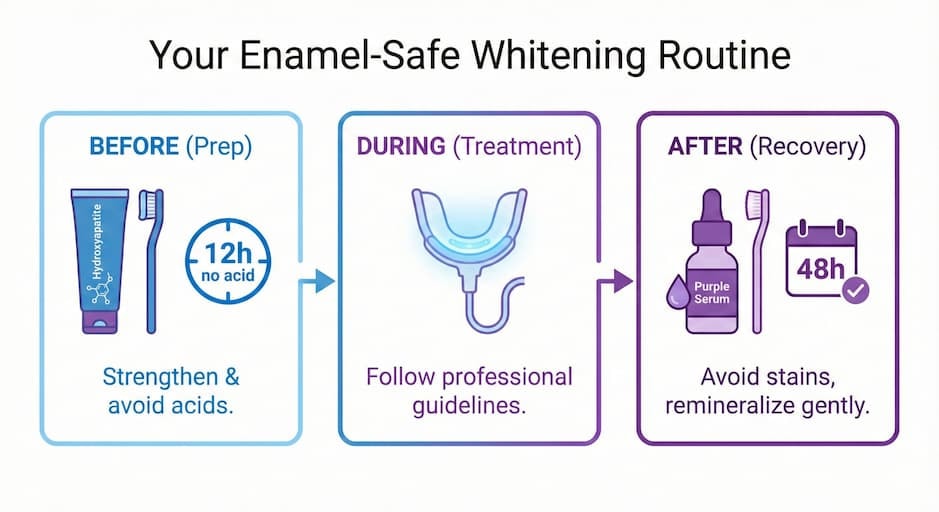
A smart whitening routine starts before the first treatment and continues well after. These steps help you protect your tooth enamel, reduce teeth sensitivity, and make your whiter smile last longer, all without risking damage.
Before Whitening
Get your teeth ready the right way:
-
Brush and floss using SNOW’s Vitamin Infused Whitening Toothpaste, which contains hydroxyapatite to strengthen enamel while gently removing surface stains
-
Avoid acidic foods like citrus, soda, and vinegar-based dressings for at least 12 hours
-
Talk to your dental professional if you have gum sensitivity, braces, or signs of gum disease
-
If whitening a child’s or a teenager’s teeth, always check with a pediatric dentist for safety
Custom-fitted trays from your dentist or products like SNOW's LED Whitening Kit are ideal for safe, even application of bleaching agents like hydrogen peroxide or carbamide peroxide.
After Whitening
Post-treatment care is critical to avoid enamel damage or gum irritation:
-
Stay away from coffee, tea, red wine, and berries for at least 48 hours
-
Brush gently using SNOW’s Purple Whitening Toothpaste, designed to brighten while supporting oral health
-
Apply SNOW’s Purple Serum to neutralize yellow tones and protect enamel
-
Stay hydrated and use a desensitizing toothpaste if your teeth feel sore
-
Avoid brushing too soon or too hard after treatment
Give your tooth enamel a chance to remineralize, and space out treatments to prevent long-term sensitivity or erosion.
With the SNOW Purple Whitening Toothpaste, Vitamin Toothpaste, and Enamel Care Serum, you can safely brighten your smile without worrying about teeth whitening damaging enamel. Each product is designed to work gently while protecting your enamel and delivering noticeable results.
Final Words
Whitening your teeth doesn’t have to mean damaging your enamel. When done correctly, with safe ingredients, proper timing, and smart aftercare, the whitening process can give you a brighter smile without compromising your oral health.
Whether you're using professional teeth whitening, over-the-counter products, or at-home kits, always follow your dental professional's advice and listen to your teeth. Choosing enamel-safe options and spacing out treatments can help you avoid tooth sensitivity, gum irritation, or long-term enamel damage.
SNOW makes it easier to whiten safely. Their science-backed whitening kits and enamel care products are designed for real results, no shortcuts, no harsh effects.
FAQs
Have questions? We’re happy to help!
Does whitening your teeth damage enamel?
Whitening your teeth does not damage enamel when done properly. Professional treatments and approved at-home products use safe levels of hydrogen peroxide that temporarily open enamel pores but do not cause permanent harm.
Does enamel grow back after whitening?
No, enamel does not grow back after whitening. However, the surface can remineralize and regain strength over time with help from saliva, fluoride, and enamel-safe products like nano-hydroxyapatite toothpaste.
How can I whiten my teeth without ruining my enamel?
You can whiten your teeth without ruining your enamel by using dentist-approved products, avoiding overuse, spacing out treatments, and supporting your teeth with remineralizing care between sessions.
Is getting your teeth whitened at the dentist bad for you?
Getting your teeth whitened at the dentist is not bad for you. In fact, it’s the safest method since it’s done under professional supervision using controlled concentrations and protective measures to keep enamel and gums safe.


