

The best whitening routine for coffee and wine drinkers involves protecting enamel before consumption, rinsing immediately after, and using gentle agents like hydroxyapatite and low-concentration carbamide peroxide.
This approach neutralizes acidity and lifts surface stains without irritating sensitive dentin. This guide covers the science of staining, a step-by-step daily schedule, and the safest products for sensitive teeth.
Key Takeaways
-
Harsh treatments often increase pain in sensitive teeth. Instead, use whitening toothpaste and low-peroxide strips to remove surface stains without damaging the enamel.
-
Timing matters when you drink coffee or red wine. Waiting 30 to 60 minutes before brushing, rinsing your mouth with water, and using a straw can greatly reduce staining and protect softened enamel.
-
A full daily routine gives better results. Morning protection, smart daytime habits, and careful evening cleaning help manage stains while keeping tooth sensitivity under control.
-
The right ingredients make a big difference. Products with hydroxyapatite, potassium nitrate, and low carbamide peroxide support enamel health while delivering safer, longer‑lasting whitening results.
Why Do Coffee and Red Wine Stain Sensitive Teeth?
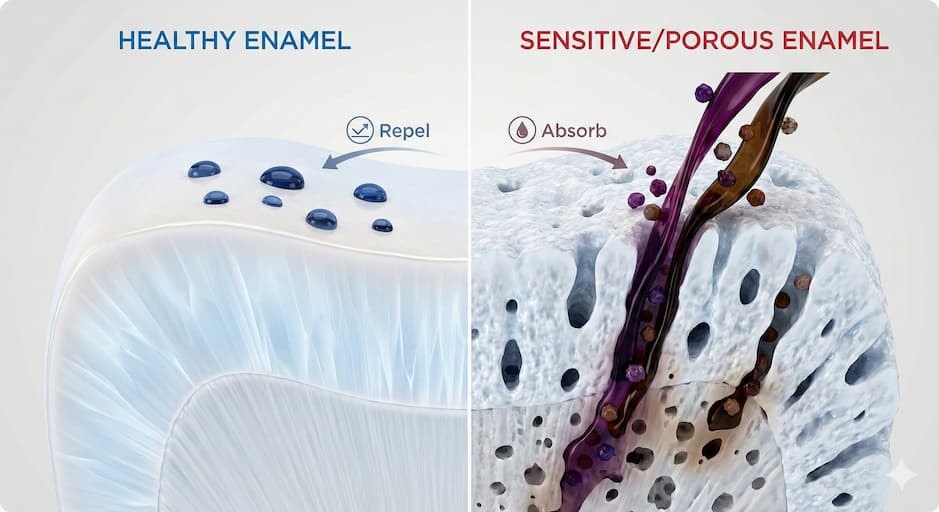
Coffee and red wine stain sensitive teeth more aggressively because they combine intense pigmentation with acidity that exploits enamel defects. These beverages are high in tannins—polyphenols that bind to proteins on the tooth surface—which a 2022 study in PMC confirmed causes significantly deeper staining than other beverages. In sensitive teeth, the protective enamel is often thinner, exposing the porous dentin layer underneath.
This allows pigments to penetrate deeper into the tooth structure, making stains harder to remove with standard brushing alone. Once that layer gets softer, stains can sink in more easily.
If you have sensitive teeth, the problem gets worse. Sensitive teeth are characterized by exposed dentin tubules—microscopic channels leading to the nerve—which a 2025 review in ResearchGate notes are significantly larger and more numerous in hypersensitive teeth.
A 2022 study published in the European Journal of Dentistry confirmed that black tea and red wine produced the highest levels of staining among common beverages. But coffee still caused noticeable surface stains, especially without milk. Another test showed red wine and cola made teeth darker than coffee after whitening, proving how strong their pigments are.
People with sensitive teeth need to be extra careful because acids and strong colors reach deeper. This is why your daily whitening routine for coffee and red wine drinkers with sensitive teeth needs to be extra gentle, using tools like whitening toothpaste and mild whitening treatments.
How Should You Structure Your Daily Whitening Routine?
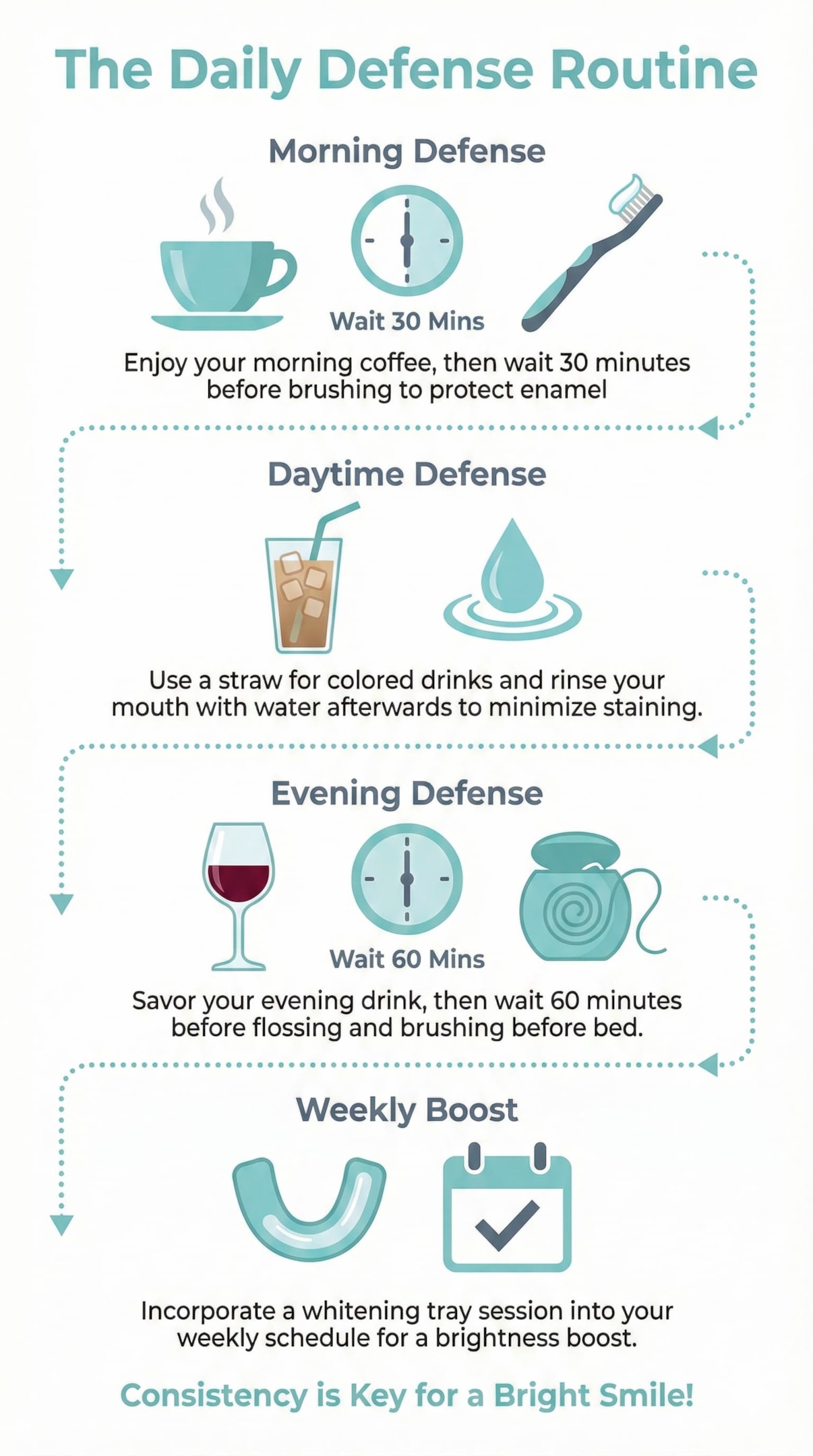
If you drink coffee in the morning and enjoy red wine at night, stains can build up quickly, especially if you have sensitive teeth. With the right daily whitening routine for coffee and red wine drinkers with sensitive teeth, you can protect your smile and gently remove surface stains without discomfort.
Let’s break it into four simple parts: morning prep, daytime care, evening cleanup, and weekly extras.
Start your morning by protecting your teeth before your first cup of coffee.
This helps shield your enamel from acids and keeps tooth sensitivity under control.
-
Rinse with a fluoride mouthwash to help strengthen tooth enamel before drinking coffee
-
Brush gently with a whitening toothpaste made for sensitive teeth, using a soft-bristled brush
-
Wait at least 30 minutes after brushing before you drink coffee to give the fluoride time to work
-
If your teeth are very sensitive, use a potassium nitrate gel before drinking to block pain signals and reduce staining
During the day, try small habits that help prevent stains while protecting your enamel.
This is key to avoiding stubborn stains without giving up the drinks you enjoy.
-
Use a wide straw when drinking iced coffee or red wine to limit contact with your teeth
-
Rinse your mouth with water right after drinking to help remove surface stains before they set in
-
Chew sugar-free xylitol gum to increase saliva, which helps wash away staining compounds naturally
-
Drink coffee or wine within 15 to 30 minutes instead of sipping for hours to reduce acid exposure
In the evening, clean away stains and give your teeth time to recover.
This part of your routine supports enamel repair and keeps your smile bright.
-
Wait at least 60 minutes after drinking red wine or coffee before brushing
-
Brush gently using toothpaste specifically formulated for tooth sensitivity and whitening
-
Floss with waxed floss to remove plaque buildup and wine stains between teeth
-
Apply a fluoride gel or leave-on enamel treatment to reduce tooth sensitivity and strengthen enamel overnight
Once or twice a week, add a gentle whitening treatment to your routine.
This helps remove deeper stains from wine and coffee without harming sensitive teeth.
-
Use custom trays filled with a professional grade whitening gel containing 10 percent carbamide peroxide
-
Apply a desensitizing gel before and after treatment to protect your enamel and gums
-
Limit whitening sessions to 30 minutes and take at least two days off between each one
-
Ask your dental professional about the best whitening method for your level of tooth sensitivity
By following these daily steps, you can safely remove surface stains and enjoy a brighter smile without causing more sensitivity. A good oral hygiene routine and the right whitening products will help you manage both your love for coffee and red wine and your tooth health.
Which Whitening Products Are Safe for Sensitive Teeth?
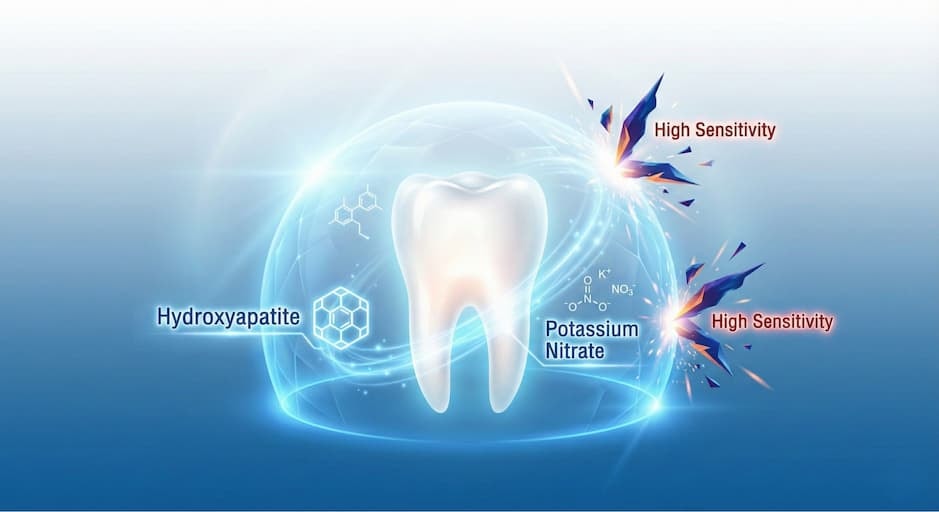
If you have sensitive teeth but still want a whiter smile, don’t worry. There are safe and gentle whitening products made just for you. These are designed to remove surface stains from coffee, tea, and red wine without making your teeth feel sore or irritated.
1. Whitening Toothpaste for Daily Use
Look for a toothpaste specifically formulated for sensitive teeth. Choose one that contains potassium nitrate to help block sensitivity and hydroxyapatite to support your enamel. These ingredients are often recommended by dental professionals to reduce discomfort while gently lifting everyday stains.
If you need a toothpaste that supports enamel and helps remove coffee and wine stains without harsh ingredients, SNOW’s Fluoride-Free Whitening Toothpaste with Hydroxyapatite is a great pick. It’s designed for daily use and includes xylitol and coconut oil, giving you a cleaner smile while helping reduce sensitivity.
Try SNOW’s Gentle Whitening Toothpaste
2. Whitening Strips That Melt on Teeth
Some whitening strips are too strong for sensitive teeth, but newer versions are made with lower peroxide levels and soothing ingredients. Look for ones that dissolve gently and don’t require peeling off, which can irritate your gums.
SNOW’s DiamondSeries® Dissolving Whitening Strips contain hydroxyapatite to support enamel and help reduce post-use sensitivity. They’re mess-free, easy to use, and designed to fit into your routine without discomfort.
3. Serum Pens for Quick Touch-Ups
If you need fast results but want to avoid harsh formulas, serum pens can be helpful. Choose a pen with a dual-peroxide formula in a lower strength, and one that includes ingredients like potassium nitrate for comfort.
SNOW’s Extra-Strength Whitening Gold Serum Pen is designed to lift stains from coffee and wine on the go, while using gentler whitening agents than many traditional treatments. It’s easy to apply, portable, and trusted by millions of users.
Get the SNOW Gold Whitening Pen
4. Whitening Boosters for Existing Toothpaste
A whitening booster can be sprinkled onto your regular toothpaste for extra power without changing your full routine. Choose boosters with hydrated silica, gentle calcium carbonate, or purple color-correcting technology to reduce yellow tones.
SNOW’s Magic Whitening Toothpaste Booster Powder contains hydroxyapatite and xylitol and is made to be dipped or sprinkled with any toothpaste. It’s a simple way to brighten your smile every day without over-bleaching.
Brighten up with SNOW’s Magic Powder Booster
How Can You Manage Sensitivity While Whitening?
Getting a radiant smile is possible even with sensitive teeth, but understanding tooth sensitivity is essential for success. Many whitening products contain bleaching agents like hydrogen peroxide or carbamide peroxide, which can irritate exposed dentin or soften enamel, especially after consuming dark beverages like coffee or red wine. To minimize sensitivity, timing and technique are everything.
Whiten at the Right Time
Avoid whitening right after meals or acidic drinks. Acidic foods and beverages can soften enamel temporarily, increasing your risk of discomfort.
Property managers should wait at least 60 minutes after consuming acidic drinks before brushing, a guideline recommended by the American Dental Association to allow saliva to neutralize acids.
What to Do If Sensitivity Flares Up
If you feel pain while whitening teeth, stop immediately. Apply a sensitivity-reducing gel with potassium nitrate or a fluoride-rich treatment to rebuild enamel and soothe discomfort.
Alcohol free mouthwash with fluoride can also reduce inflammation and support enamel health. Reduce the frequency of whitening sessions, switch to lower strength carbamide peroxide, or take longer breaks between treatments to minimize sensitivity.
Know When to Call the Dentist
If you experience prolonged pain, sharp zaps, or visible white spots, it’s time to pause and contact your dental professional. These could be signs of enamel erosion, improper product use, or deeper stains requiring in-office treatments. Dental professionals can suggest safer whitening products or custom treatments tailored to your enamel health and sensitivity level.
What Maintenance Habits Prevent Future Stains?
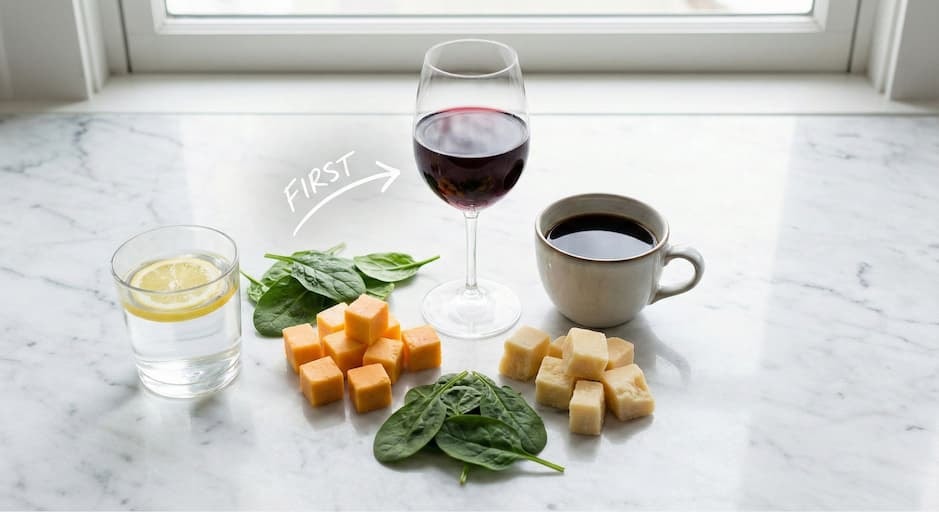
Once you get great teeth whitening results, it’s all about keeping them. Small daily habits can make or break your progress, especially when your diet includes dark beverages or strongly colored foods.
To keep your smile bright and minimize new stains, consistent brushing and smart choices matter.
Eat Smart to Protect Your Whitening Results
Before drinking wine or coffee, eat certain foods like cheese or leafy greens to coat your teeth and protect enamel. These create a physical barrier that reduces the impact of staining agents. After your drink, rinse your mouth with water or eat crunchy vegetables to scrub away dark pigments and minimize staining.
Stay Hydrated and Keep Up Cleanings
Water helps rinse away staining substances and neutralize acids that discolor teeth. Drinking water between sips of red wine or iced coffee can help reduce its staining power. Regular dental cleanings every 4 to 6 months prevent plaque buildup and help maintain optimal whitening results.
Lifestyle Tips for Long-Lasting Whitening
Use whitening toothpaste with mild abrasives like calcium carbonate to gently remove surface stains without damaging enamel. Choose a soft-bristle toothbrush and practice good oral hygiene to avoid tooth discoloration caused by plaque and tartar. Avoid overuse of baking soda or other natural remedies that can scratch enamel over time.
Avoid frequent use of over-the-counter products without supervision. For stubborn discoloration, consult your dentist about professional treatments. A whitening method that fits your lifestyle and enamel sensitivity will always give the best and safest results. Protect your enamel, keep your smile, and enjoy your favorite tasty beverages with a little extra care and planning.
Final Thoughts
Keeping your smile bright when you love coffee and red wine is completely possible. You do not need to give up your favorite drinks or suffer through painful whitening treatments. With the right daily routine and enamel-safe products, you can manage tooth sensitivity and still achieve a noticeable difference in your teeth whitening results. The key is being consistent, gentle, and informed.
If you are unsure where to begin, start by choosing products that use ingredients like carbamide peroxide, hydroxyapatite, and potassium nitrate. These help reduce sensitivity, remove surface stains, and support your overall oral health without risking damage.
SNOW’s full whitening collection is thoughtfully designed to support all of this. Whether you need a daily toothpaste, gentle whitening strips, or a smart serum for deeper stains, there is an option that fits your lifestyle and sensitivity level.
Explore SNOW’s Full Collection
FAQs
Here are a few frequently ased questions about the whitening routine for coffee and wine drinkers.
How often can I safely whiten my sensitive teeth while drinking coffee daily?
You can safely whiten sensitive teeth 2 to 3 times per week if you drink coffee daily. Use lower concentration products with 6 to 10 percent carbamide peroxide and wait at least 48 hours between sessions to protect enamel and reduce sensitivity.
Can I use whitening mouthwash daily if I have sensitive teeth and drink wine regularly?
Yes, you can use whitening mouthwash daily if it is alcohol free and designed for sensitive teeth. Limit use to once per day and alternate with a fluoride mouthwash to help strengthen enamel and prevent irritation.
What’s the best time to whiten teeth when drinking both coffee in the morning and wine at night?
The best time to whiten teeth is late afternoon, several hours after coffee and before wine. This timing allows enamel to recover from acids and helps reduce sensitivity during whitening.
Are natural remedies safe for sensitive teeth exposed to staining beverages?
Some natural remedies are safe, but acidic options like lemon juice should be avoided because they can damage enamel. Oil pulling is gentle, while baking soda should only be used occasionally due to its abrasive nature.
How do I know if my whitening routine is too aggressive for my sensitive teeth?
Your whitening routine may be too aggressive if pain lasts longer than 24 to 48 hours or if sharp sensitivity increases. White spots, gum irritation, or ongoing discomfort are signs to stop whitening and consult a dentist.


