

The primary ingredients to avoid in oral care are Sodium Lauryl Sulfate (SLS), which triggers mucosal irritation, and alcohol concentrations above 20%, which disrupt the oral microbiome.
Additionally, highly abrasive agents like charcoal (RDA > 100) and long-term use of chlorhexidine should be avoided to prevent enamel erosion and surface staining
This guide analyzes the safety profiles of common additives:
-
Why do foaming agents like CAPB cause contact dermatitis?
-
Which whitening abrasives permanently damage enamel?
-
How does benzocaine affect oxygen levels in the blood?
-
What are the safe, clinical alternatives for sensitive mouths?
We’ll walk you through the most common culprits, such as sodium lauryl sulfate, artificial sweeteners, abrasive clays, and high-alcohol mouthwashes. You’ll also get simple tips for swapping them out with gentler choices that still protect your enamel, gums, and fresh breath.
If your mouth feels worse after brushing or rinsing, your products might be the problem. Let’s fix that.
Key Takeaways
-
Focus on three product categories when reading labels: toothpaste, mouthwash, and whitening/targeted products. Each has its own red-flag ingredients to watch for.
-
High-risk medicinal additives like benzocaine (linked to methemoglobinemia per FDA Safety Announcement (2018)) and long-term chlorhexidine (staining after 4+ weeks) should be avoided without professional supervision.
-
Common irritants, including sodium lauryl sulfate, high-alcohol rinses, and overly abrasive clays or charcoal, can trigger canker sores, dry mouth, and enamel erosion in sensitive users.
-
Evidence is nuanced: some ingredients work well in the short term or in specific clinical cases but aren’t ideal for daily “clean” oral care routines.
-
Simple swaps exist—SLS-free toothpaste, alcohol-free mouthwash, enamel-safe whitening—that deliver results without the burn, dryness, or gimmicks.
How Do Harmful Ingredients Impact Oral Health and Enamel?
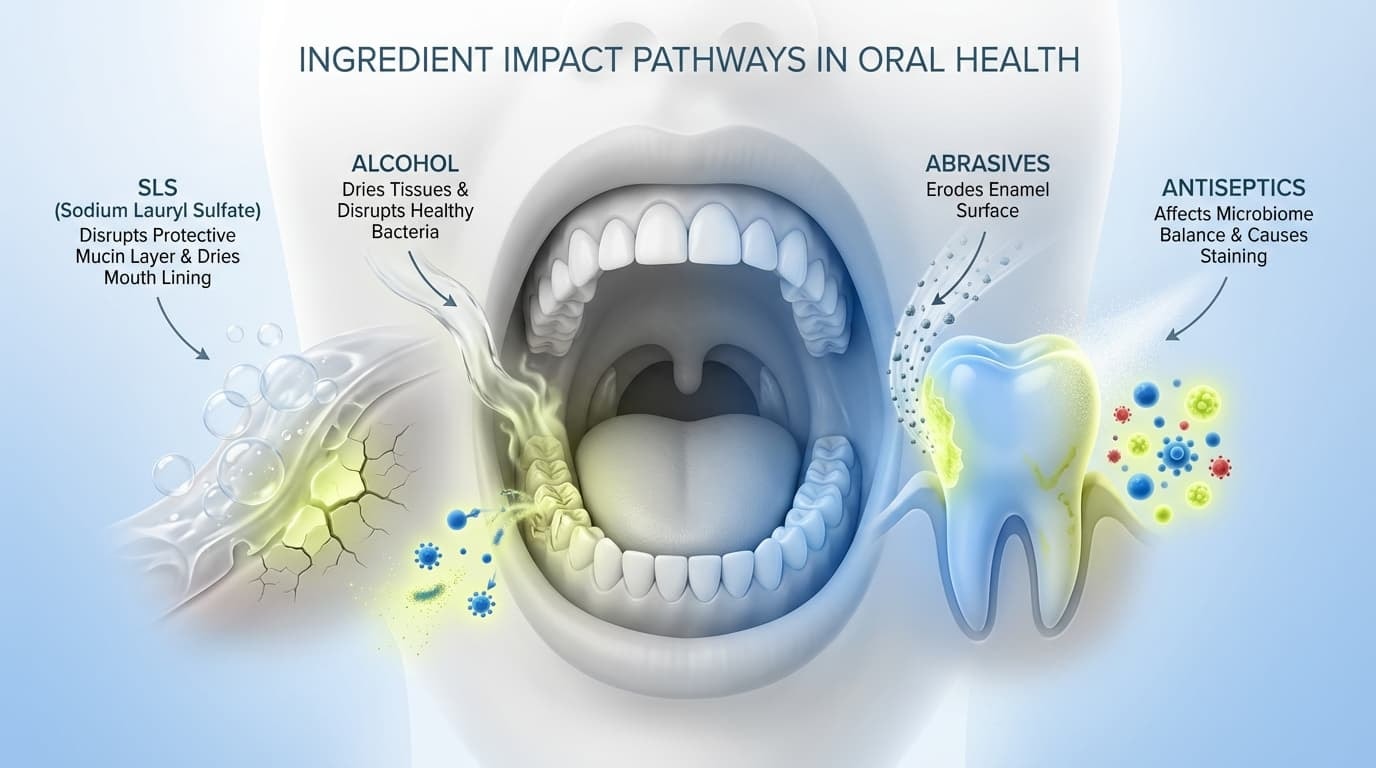
Some ingredients in everyday oral care products can quietly irritate your mouth or weaken your enamel. Below are the most common issues they can cause, and who should be most cautious.
Why Some Ingredients Cause Problems
Certain toothpaste and mouthwash ingredients can damage the delicate tissues inside your mouth or weaken your tooth enamel over time. For example:
-
Sodium lauryl sulfate (SLS) is a common foaming agent. It makes toothpaste feel sudsy but can dry out the mouth lining, increase irritation, and even trigger canker sores in some people.
-
Alcohol-based mouthwashes may feel like they’re working, but the high alcohol content can worsen dry mouth and disrupt the balance of healthy bacteria in your mouth. This increases your risk of irritation and long-term gum disease.
-
Harsh abrasives like charcoal or certain clays may scrub surface stains, but over time, they can wear down tooth enamel, making your teeth feel more sensitive and look more yellow.
-
Some strong antiseptics, such as chlorhexidine, are meant for short-term use only. Long-term use without a dentist’s guidance can cause staining, taste changes, and even affect your oral microbiome.
-
Medicinal-grade numbing agents like benzocaine, used in gels or sprays for ulcers or toothaches, have been linked to serious side effects such as methemoglobinemia, a rare but dangerous oxygen disorder.
Even ingredients marketed as “natural” aren’t always safe. Some contain essential oils or baking soda levels that are too abrasive or irritating for daily use.
In short, many of these chemicals were designed for short-term or clinical use. But when added to everyday products without proper context, they can cause allergic reactions, long-term tissue damage, or worsen the very issues you're trying to treat.
Who’s Most Affected
Anyone can react to harsh oral care ingredients, but some people are more vulnerable than others. If you fall into one of these groups, ingredient awareness is especially important:
-
People with sensitive gums or a history of canker sores may find SLS or strong mint flavorings irritating.
-
If you struggle with dry mouth (from medications, health conditions, or age), alcohol-based rinses or strong antiseptics can worsen the dryness.
-
Patients with braces, crowns, or dental restorations need gentler options to avoid damage around those areas.
-
Those prone to allergic reactions or who’ve had patch-test diagnoses (such as contact dermatitis from CAPB or flavor additives) should avoid products with long ingredient lists or artificial dyes.
-
People undergoing dental treatment, managing chronic conditions, or recovering from oral surgery should avoid medicated products such as chlorhexidine or benzocaine unless specifically prescribed by a dentist.
The more sensitive or compromised your oral environment is, the more carefully you need to choose products that support dental health without causing setbacks. Picking the right toothpaste or mouthwash isn’t just about fresh breath; it’s about keeping your oral health stable and comfortable over time.
Which Toxic Ingredients Are Common in Toothpaste and Mouthwash?
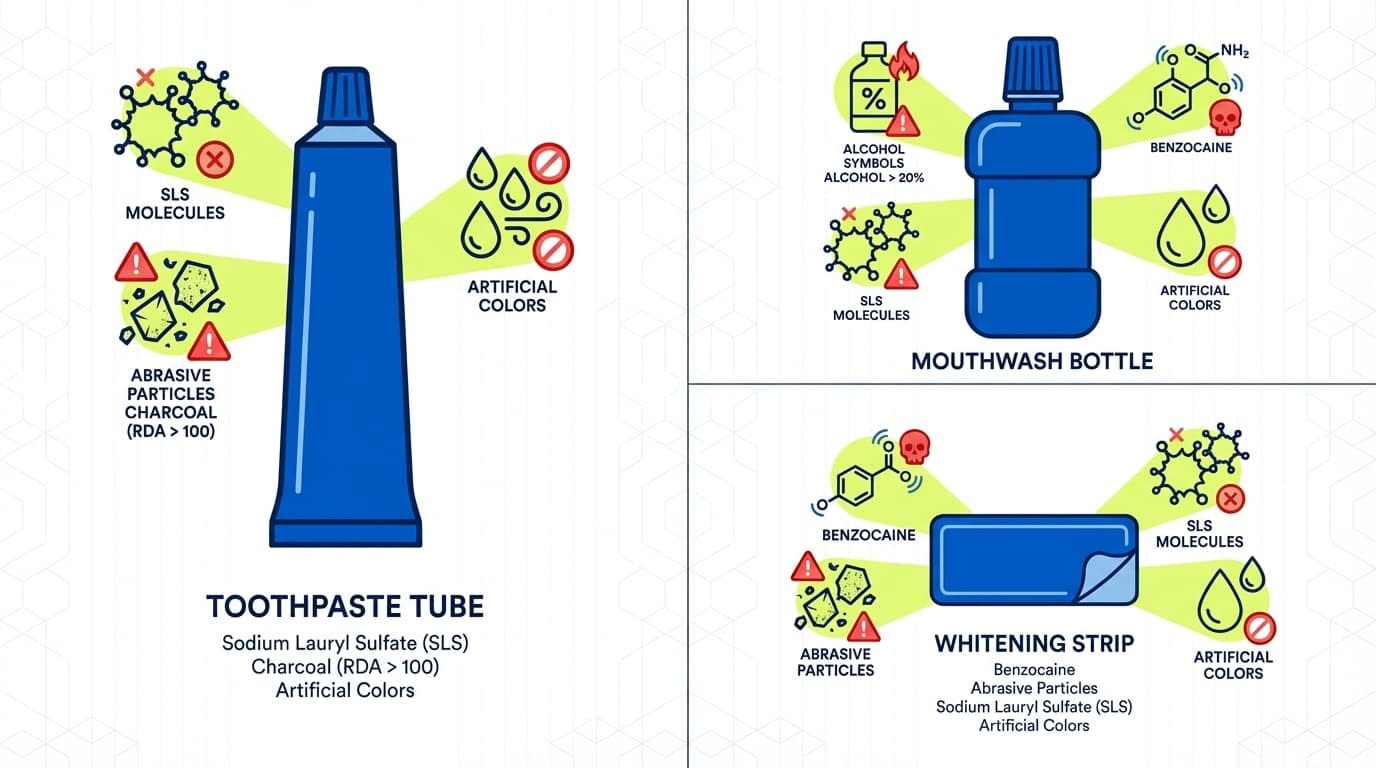
Not all oral hygiene products are created equal. Some contain ingredients that can do more harm than good, especially for people dealing with oral health issues like sensitivity, mouth ulcers, or dry mouth.
Below, we break down the top ingredient red flags to avoid in toothpaste, mouthwash, and whitening or pain-relief products, and explain why they matter.
Toothpaste Ingredients to Avoid
Toothpaste is something you use every day, often twice a day.
So even small irritants can cause big problems over time, especially if your mouth is sensitive, dry, or prone to ulcers.
Sodium Lauryl Sulfate (SLS) as a Mucosal Irritant
Sodium Lauryl Sulfate (SLS) is a surfactant that creates foam but acts as a potent mucosal irritant. As a protein denaturer, SLS strips the mucin layer—the mouth’s protective lining—exposing the underlying tissue to acidity and bacteria.
Clinical reviews link SLS exposure to a 30-50% increase in the frequency of Recurrent Aphthous Stomatitis (canker sores) in prone individuals.
While the foaming action provides a psychological sense of cleanliness, it offers no antimicrobial benefit and actively compromises the oral barrier, making SLS-free formulas essential for patients with chronic dry mouth or ulcers.
Cocamidopropyl Betaine (CAPB)
CAPB is another foaming agent, often found in toothpastes labeled “natural” or made for sensitive teeth.
Even though CAPB sounds gentler, it can still trigger allergic reactions in some people. In a 2024 study of people with mouth irritation, about 6% tested positive for sensitivity to CAPB or the leftover chemicals used to make it.
Reactions can show up as red, raw cheeks, peeling skin near the lips, or even a tingling tongue that feels “off” after brushing.
If you’ve already switched to SLS-free toothpaste but your mouth still feels uncomfortable, CAPB could be the reason. It’s frustrating when you’re trying to do the right thing and still don’t feel better—but there’s an answer.
Highly Abrasive Clays or Charcoal
Abrasive ingredients like activated charcoal function by physically scouring the tooth surface, often exceeding safe limits. Products with a Relative Dentin Abrasivity (RDA) score above 100 can erode the outer enamel layer faster than it can remineralize.
Once this enamel is stripped, the naturally yellow dentin underneath is revealed, paradoxically causing teeth to appear darker and yellow over time despite the 'whitening' claims.
Artificial Dyes and Strong Flavor Compounds
Bright colors and bold flavors make toothpaste more fun to look at and use. It’s why kids’ pastes are often blue or sparkly, and adult ones have strong mint or cinnamon tastes.
These ingredients don’t actually help clean your teeth or protect against cavities. For some people, they can cause inflammation, peeling, or irritation inside the mouth.
Dyes and flavoring agents such as benzoic acid, cinnamon oil, or strong menthol can trigger mild allergic reactions or worsen existing sensitivities. If your mouth feels sore, tingly, or burned after brushing, this could be why.
When your toothpaste causes discomfort, brushing feels like a chore, or even something to dread. That can lead to less frequent brushing, which in turn causes more oral health problems.
Mouthwash Ingredients to Avoid
Mouthwash can be a helpful part of a good dental care routine, but not all formulas are right for everyone. If your rinse leaves your mouth feeling dry, sore, or uncomfortable, certain ingredients might be to blame.
Below are the key ingredients to watch for and why they may cause problems.
High Alcohol Formulas
Manufacturers formulate mouthwashes with alcohol (ethanol) to act as a solvent for flavor oils and a broad-spectrum antiseptic.
That burning sensation is not a sign of extra cleaning. It often means your mouth tissues are being irritated. Mouthwashes with more than 20 percent alcohol can dry out your mouth, especially if you already have dry mouth from medications or aging. A dry mouth makes it harder to protect against bacteria and tooth decay.
Some studies have found that regular use of alcohol-based rinses can increase acetaldehyde in the mouth. Acetaldehyde is a chemical that may damage cells when it builds up over time.
Long-Term Use of Chlorhexidine (CHX)
Chlorhexidine is a strong antiseptic that dentists often prescribe to treat gum disease or to prevent infection after oral surgery. It can reduce plaque and harmful bacteria very effectively in the short term.
Chlorhexidine is not meant for daily use. Using it for longer than a few weeks without a dentist's supervision can lead to unwanted side effects. These may include:
-
Brown staining on teeth
-
Loss of taste or metallic taste
-
Changes in your oral microbiome, which is the healthy bacteria in your mouth
Overusing CHX can harm the balance of your mouth's natural defenses.
Triclosan and Strong Antiseptics
Triclosan and other strong antiseptics are used to kill germs and reduce plaque. Triclosan was once common in toothpaste and mouthwash.
Triclosan has been banned from hand soaps because it may affect hormones and increase the risk of antibiotic resistance. It can still be found in older oral care products.
Other strong antiseptics can damage the balance of healthy bacteria in your mouth if used too often. While it is important to fight harmful bacteria, your mouth also needs good bacteria to stay healthy.
Artificial Dyes and Sweeteners
Colorants make mouthwash look appealing, and artificial sweeteners like saccharin or aspartame help improve the taste without using sugar.
These ingredients do not improve your dental health and can sometimes cause reactions in sensitive users.
Artificial dyes may lead to inflammation, burning, or peeling in people who are allergic or sensitive. Some sweeteners may also trigger rare reactions.
Whitening and Pain Relief Products to Avoid
Whitening pastes and pain relief gels can be helpful in the right situation, but many of these products contain strong ingredients that may do more harm than good, especially when used every day.
Below are the top ingredients to avoid and safer tips for using these types of products.
Benzocaine (Especially for Children)
Benzocaine is a numbing agent found in gels and sprays that treat mouth sores or toothaches. It helps reduce pain by temporarily numbing the area.
The U.S. Food and Drug Administration (FDA) has warned that benzocaine can cause a rare but serious condition called methemoglobinemia.
This condition affects how oxygen moves in your blood. In severe cases, it can be life-threatening. Babies under two years old are at the highest risk, especially when benzocaine is used for teething pain.
Symptoms to watch for include:
-
Pale or blue skin, lips, or fingernails
-
Trouble breathing or fast breathing
-
Feeling tired or confused
Overly Abrasive Whitening Powders or Strips
Many whitening powders and strips work by scrubbing or bleaching the teeth with strong ingredients. These often promise fast results, especially with frequent use.
Whitening too aggressively can wear down the protective enamel on your teeth. Once enamel is gone, it cannot grow back. This may lead to:
-
Tooth sensitivity to hot or cold foods
-
Gums that feel sore or irritated
-
Teeth are looking more yellow as the dentin underneath shows through
Some products also contain high levels of hydrogen peroxide, which can burn soft tissues in your mouth if overused.
Intense Flavor or Dye Blends
Pain relief gels and whitening pastes often include strong mint, cinnamon, or artificial colors to make them taste and look more appealing.
These strong additives do not help your teeth and can cause burning, redness, or allergic reactions, especially if you have sensitive skin or a history of mouth irritation. Dyes and flavoring agents like cinnamaldehyde or benzoic acid are known to trigger mouth inflammation in some users.
If your mouth feels sore, dry, or irritated after using a whitening or numbing product, check the ingredient list. Avoid formulas with long lists of dyes and "cooling" flavors.
Why These Ingredients Are Still Common
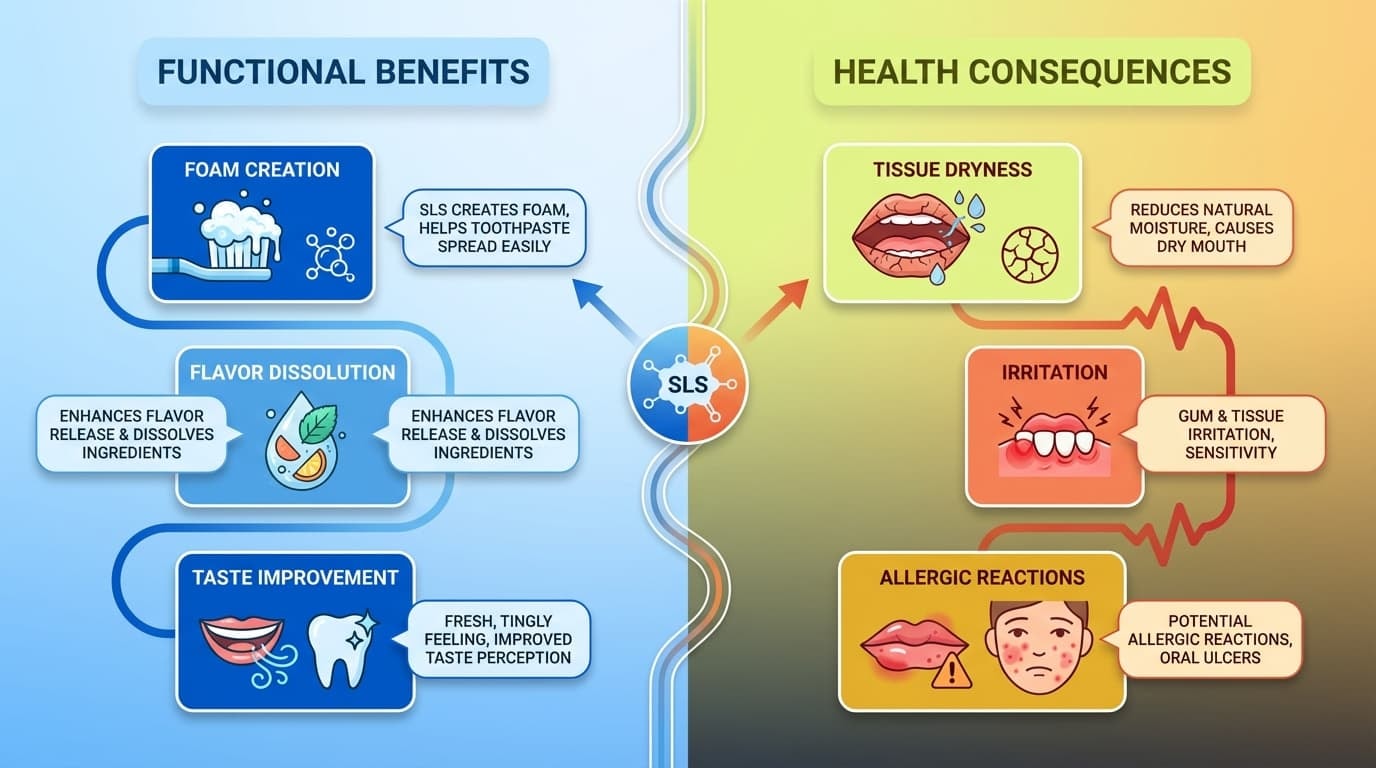
Many oral care products use ingredients like sodium lauryl sulfate, alcohol, and artificial sweeteners because they help the product work in specific ways.
-
SLS creates foam, which helps toothpaste spread more easily.
-
Alcohol in mouthwash helps dissolve flavors and gives a fresh, tingly feeling. Artificial sweeteners make toothpaste taste better without using sugar.
But there are trade-offs. These ingredients can cause dryness, irritation, or allergic reactions in some people. That’s why more users are now looking for mouth-healthy alternatives that clean effectively without harsh side effects.
If you're looking for a toothpaste that skips harsh foaming agents and supports a healthy smile, try SNOW’s Fluoride-Free Whitening Vitamin Toothpaste with Hydroxyapatite. It strengthens enamel, tastes great, and contains no SLS, dyes, or alcohol.
Get SNOW® Fluoride-Free Whitening Toothpaste Today
Better Alternatives That Still Work
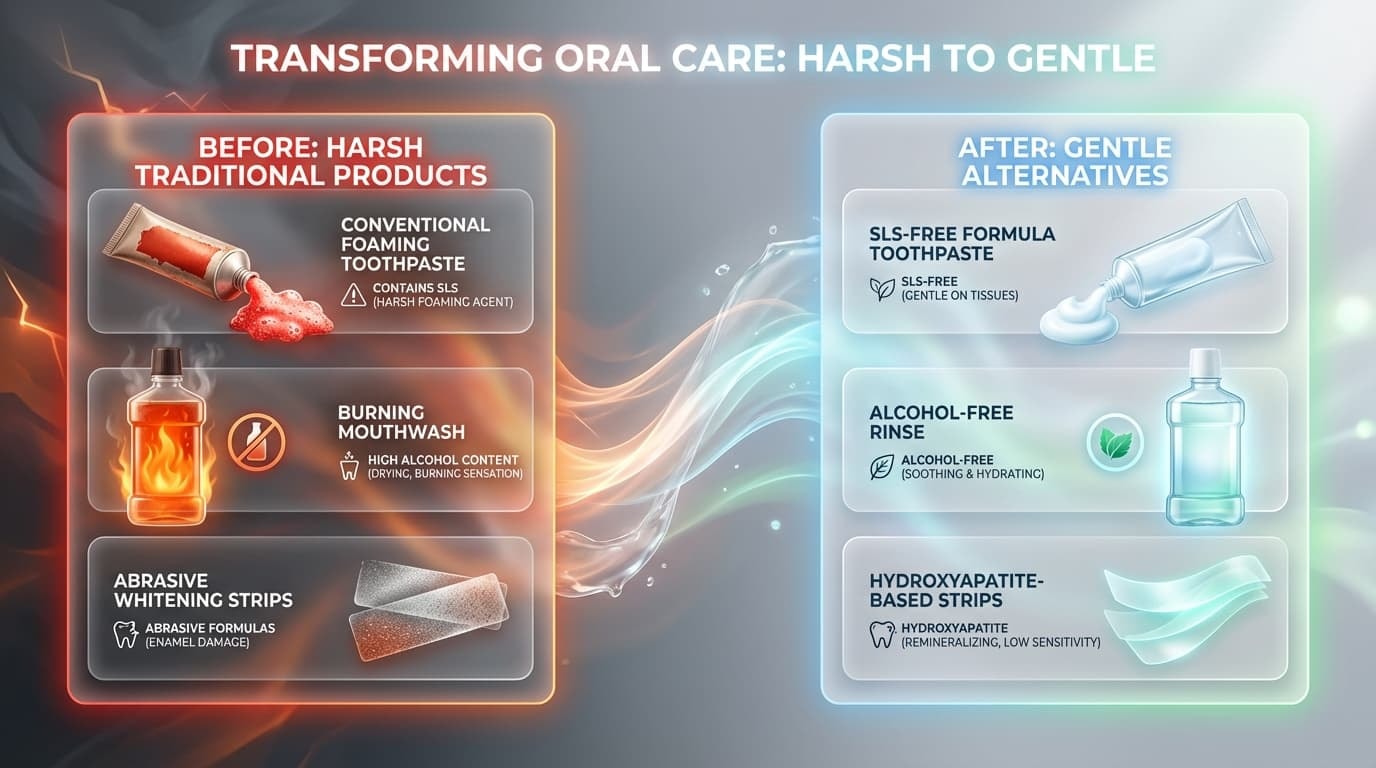
When switching to cleaner oral care, it’s important to find safe alternatives that actually get results. You don’t have to sacrifice a healthy smile just to avoid common irritants.
Below are smart swaps that protect your enamel, reduce sensitivity, and support your overall health without the harsh side effects.
Safer Toothpaste Options
Many toothpastes on store shelves still contain sodium lauryl sulfate, bentonite clay, or harsh abrasives that may increase your risk of enamel erosion. Some even include benzoic acid, artificial colors, or trace amounts of heavy metals. These common ingredients may cause issues for those with sensitivity or gum inflammation.
A great example is SNOW® Magic Whitening Toothpaste Booster Powder. It supports a mouth-healthy balance while instantly enhancing brightness. Powered by hydroxyapatite, it helps protect against toothpaste-related enamel erosion, rebuilds tooth structure, and offers a fluoride-free alternative backed by research.
Get SNOW® Magic Whitening Booster Powder Today
Safer Mouthwash Options
If your current mouthwash burns, dries your mouth, or lists alcohol as a main ingredient, it may be time for a change. Alcohol-based rinses can disturb the balance of beneficial bacteria in your mouth and worsen dry mouth, especially with daily use. For many people, that increases the risk of bad breath, irritation, and long-term gum issues.
Instead, look for alcohol-free options that use gentler antimicrobial agents, such as CPC (cetylpyridinium chloride), or natural alternatives, such as tea tree oil. These support your oral health without harming your microbiome.
Even within the general population, a preliminary study found that users who switched to low-alcohol or alcohol-free mouthwashes reported improved comfort and less irritation.
SNOW’s AquaJet® Pro Water Flosser is a perfect addition to your rinse routine. It pairs beautifully with gentle rinses and reaches where brushing alone can’t, making it a huge win for better oral hygiene.
Get SNOW® AquaJet® Pro Water Flosser Today
Safer Whitening and Relief Options
Whitening shouldn’t come with a side of pain. Many strips and powders rely on abrasive formulas or peroxide-heavy gels that can damage enamel over time, especially with daily use.
To steer clear of irritation, opt for low-sensitivity products that are enamel-safe and backed by clean science.
SNOW’s DiamondSeries® Dissolving Whitening Strips with Hydroxyapatite offer visible whitening without triggering sensitivity or inflammation. No scrubbing, no burning, just whiter teeth that still feel strong.
Get SNOW® Dissolving Whitening Strips Today
For added protection and overnight relief, the SNOW® Overnight Sensitive Whitening Serum gently brightens while supporting remineralization. It’s ideal for people who want results without the harsh tradeoffs of traditional cosmetic products.
Get SNOW® Overnight Whitening Serum Today
A Simple Daily Routine for Sensitive Mouths
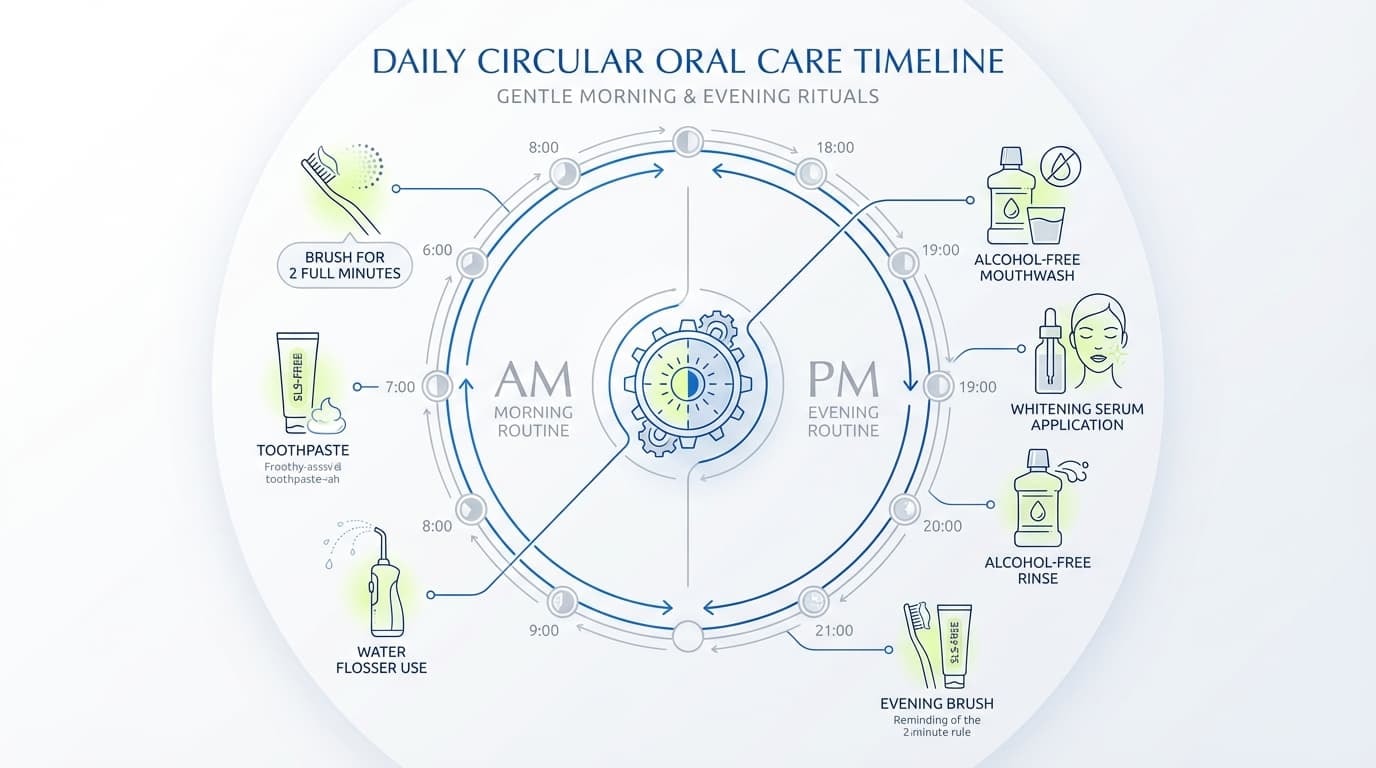
If you deal with dry mouth, irritation, or sensitive gums, even brushing your teeth can feel uncomfortable. A gentler routine can make a big difference in how your mouth feels each day.
The goal is to clean effectively without causing burning, peeling, or enamel wear. Here's a simple plan to follow from morning to night.
Morning Routine
-
Brush for 2 full minutes with a soft-bristle toothbrush and sensitive-teeth toothpaste. Try SNOW® Fluoride-Free Whitening Toothpaste, which uses calcium carbonate and hydroxyapatite instead of harsh ingredients like sodium lauryl sulfate. It helps clean without causing enamel erosion.
-
Rinse with an alcohol-free mouthwash containing xylitol or essential oils, such as tea tree oil. These help freshen breath and support healthy bacteria in your mouth, without causing dryness or stinging.
-
For an extra whitening step that won’t irritate, apply SNOW® Overnight Sensitive Whitening Serum. It gently brightens while helping strengthen enamel and reduce sensitivity over time.
Evening Routine
-
Brush again for two minutes, just like in the morning. Use the same low-abrasion toothpaste and soft brush to help remove the day’s buildup while keeping your enamel strong.
-
Floss gently, using a floss pick, soft thread floss, or a water flosser like the SNOW® AquaJet® Pro. Water flossing is a great option for anyone with sensitive gums or dental work, such as crowns or braces.
-
Use a gentle mouth rinse only if needed. If your current rinse causes dryness or discomfort, switch to a dye- and alcohol-free rinse. Look for formulas with ingredients like xylitol or CPC instead of stronger antiseptics.
-
Want an upgrade to your brushing routine? The SNOW® LED Whitening Electric Toothbrush uses soft sonic cleaning and LED light to help clean more deeply and whiten teeth without causing irritation. It's perfect for sensitive users who still want great results.
Get SNOW® LED Whitening Toothbrush Today
Smart Shopping Tips for Oral Care
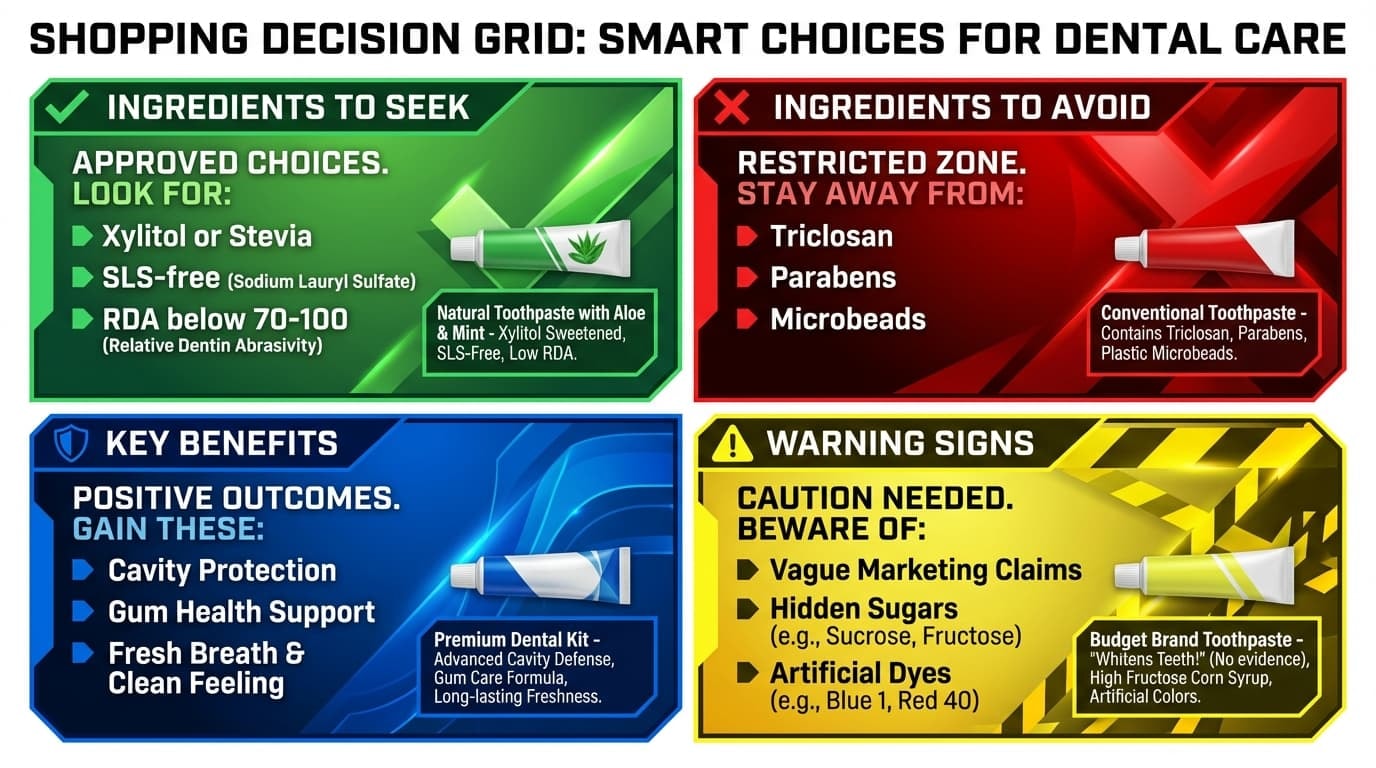
Choosing the right toothpaste, mouthwash, or whitening product can feel overwhelming. This quick checklist table helps you focus on what matters most without memorizing every chemical name or technical term.
Use this table when you're shopping to make better, more informed choices:

When to Ask a Dentist
It’s always okay to ask for professional help when:
-
You have frequent canker sores or mouth ulcers
-
You notice new sensitivity or enamel erosion
-
You’re unsure which dental products are right for you
-
Your dry mouth symptoms are getting worse
Dentists can also help you avoid harmful ingredients and choose products that support your oral health. If you want to get started on a safer, more effective routine today, check out SNOW’s full line of enamel-safe, irritation-free solutions for daily oral care.
Final Words
Choosing the right oral care products can make a big difference in how your mouth feels every day. By learning which common ingredients to avoid and why they cause problems, you can reduce irritation, protect your enamel, and support long-term oral health without giving up results.
Small changes like avoiding harsh foaming agents, high alcohol rinses, and overly abrasive whiteners often lead to a calmer mouth, fewer canker sores, and a healthier smile overall. The goal is not perfection, but informed choices that work for your needs and lower your risk of ongoing discomfort.
If you are ready to simplify your routine with clean, enamel-safe formulas designed for real results, explore SNOW’s full collection of oral care essentials today and build a routine your mouth actually feels good using.
Get SNOW® Oral Care Essentials Today
FAQs
Quick, clear answers to common oral care questions to help you make informed choices for a healthier mouth.
Is alcohol in mouthwash always bad, or can I use it sometimes?
Alcohol in mouthwash isn’t always harmful, but daily use can dry out the mouth and increase irritation. A preliminary study found that alcohol-based rinses may raise acetaldehyde, which has been linked to cancer risk. People with dry mouth, mucosal issues, or a history of oral conditions should steer clear. For the general population, using an alcohol-free rinse supports better long-term oral health.
How can I tell if my toothpaste is too abrasive?
You can tell if your toothpaste is too abrasive if it feels gritty or if your teeth become more sensitive. Ingredients like bentonite clay, charcoal, or “whitening powder” are common indicators of a higher risk of enamel erosion. Many toothpastes don’t list RDA values, but smoother pastes and gels are often gentler. If your front teeth look translucent or more yellow, switch to a low-abrasion toothpaste.
What should I do if I suspect I’m reacting to an oral care ingredient?
If you think an ingredient is causing problems, stop using the product and switch to a formula with fewer common ingredients. Many toothpastes contain benzoic acid, artificial sweeteners, or preservatives that can irritate the mouth. For informed choices, look for dye-free, fluoride-free, or SLS-free options. A dental or allergy specialist can help confirm what’s causing the reaction.
Are “natural” toothpastes automatically safer?
Not always. “Natural” isn’t a regulated term, and some ingredients, like bentonite clay or strong essential oils, can actually increase the risk of enamel erosion or irritation. Some "green" toothpaste options even contain trace heavy metals. Choosing the right toothpaste is about the formula’s safety, not just the label. Review ingredient lists and look for proven health benefits, not just claims.
How often is it safe to use chlorhexidine mouthwash?
Chlorhexidine should only be used short-term under dental guidance, usually for 1–2 weeks. Daily use beyond that can lead to staining, taste changes, and microbiome imbalance in the mouth. It’s not ideal for long-term use in the general population. To maintain freshness or prevent bad breath, steer clear of strong antiseptics and opt for safer oral health products.


