

Maintaining professional dental cleaning results at home requires a daily sequence of mechanical plaque disruption, targeted interdental irrigation, and enamel remineralization.
While home routines cannot remove hardened calculus (tartar), a structured 5-step daily sequence safely prevents the soft bacterial biofilm from mineralizing between six-month clinical visits.
The truth is that a professional clean feeling is not random. It follows a method. Hygienists use a structured sequence every time they clean your teeth. They examine, remove buildup, polish, and protect in a specific order.
You cannot replace your dentist at home. But you can apply the same logic to your daily routine. When you do, your regular visits become simpler, faster, and more about confirmation than correction.
This guide explores the clinical logic of oral hygiene, including:
-
What are the 5 clinical steps of a professional dental cleaning?
-
Which dental procedures strictly require professional intervention?
-
How can you safely replicate the hygienist sequence at home?
-
What are the most effective evidence-based tools for plaque disruption?
Key Takeaways
-
You can closely follow the same sequence a hygienist uses by examining, removing plaque, cleaning between teeth, polishing safely, and protecting enamel.
-
Hardened tartar still requires professional removal. No home device can safely replace scaling performed in a dental office.
-
Electric toothbrushes and water flossers remove significantly more plaque than manual brushing alone when used correctly.
-
The goal is not to replace your dentist. It is to make each visit shorter, easier, and focused on maintenance instead of repair.
-
A professional-level at-home routine protects your natural teeth for decades and keeps your smile consistently fresh.
What a Hygienist Actually Does During a Professional Cleaning
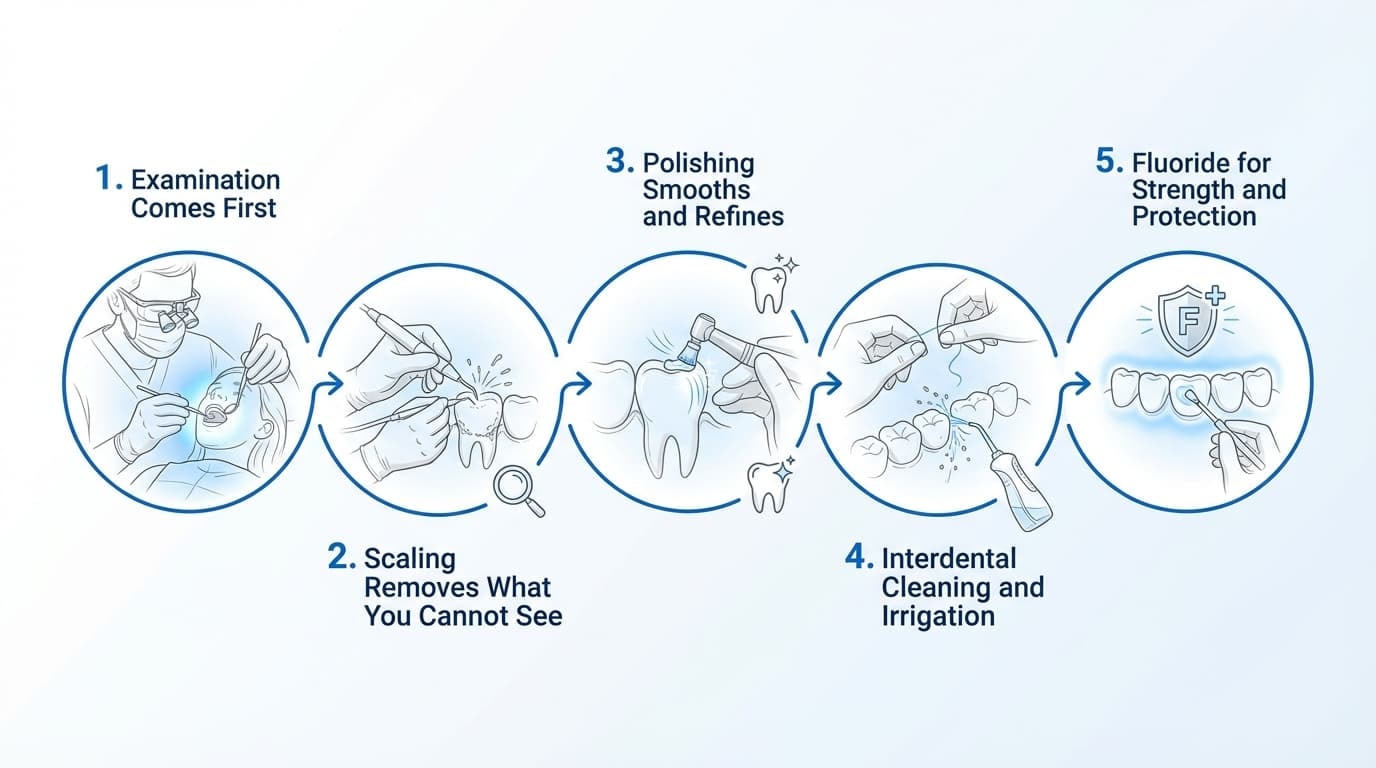
If you want professional-level results at home, it helps to understand what actually happens during a dental cleaning.
A professional dental prophylaxis (cleaning) is a carefully structured clinical sequence designed to systematically remove bacterial biofilm and protect both enamel and gingival tissue long-ter
Each step builds on the one before it. The order is intentional.
1. Examination Comes First
Before any tools are used, your hygienist examines your mouth closely. Using a mirror and periodontal probe, they assess the condition of your teeth and gums.
During the initial periodontal evaluation, the hygienist assesses several critical markers:
-
Gingival Inflammation: Identifying redness or swelling along the gum margin.
-
Bleeding on Probing (BOP): Detecting bleeding points that signal active periodontal infection.
-
Biofilm Accumulation: Mapping areas where plaque structurally adheres to enamel.
-
Pocket Depth: Measuring gingival sulcus depths (above 3mm) that indicate early periodontal disease.
This step is about prevention. Many dental problems do not cause pain in the early stages. A visual and tactile exam allows small concerns to be identified before they require more complex treatment.
Daily at-home hygiene routines frequently fail because patients skip the initial awareness phase. Brushing without prior visual evaluation means patients routinely miss localized inflammation or interdental food impaction along the lower anterior teeth.
By implementing a 30-second tactile and visual assessment prior to brushing, patients can target specific high-risk zones, mimicking the preventative accuracy of a professional periodontal exam.
2. Scaling Removes What You Cannot See
Scaling is the most important clinical step in a cleaning. This is where plaque and hardened tartar are removed from the tooth surface.
Plaque is soft and sticky. Tartar, also called calculus, forms when plaque is left undisturbed and hardens. Once tartar forms, it bonds tightly to the tooth surface and cannot be brushed away.
Hygienists use:
-
Hand instruments to gently scrape deposits
-
Ultrasonic tools that vibrate to break apart hardened buildup
-
Water spray to flush debris from below the gum line
Ultrasonic instruments are especially effective because they can disrupt buildup in areas that are difficult to access manually.
This is also where gum health improves significantly. When tartar is removed, inflammation often decreases in the following weeks.
It is important to understand that this is the one step that cannot be safely replicated at home. Hardened tartar requires professional tools and training.
3. Polishing Smooths and Refines
Following the scaling process, the hygienist uses a rotating rubber cup and mildly abrasive prophylaxis paste to actively polish the enamel, removing microscopic surface irregularities and external stains.
Why does this matter?
Because plaque adheres more easily to rough surfaces. When enamel is smoothed, it becomes harder for bacteria to reattach quickly.
This is what creates that ultra-smooth feeling when you leave the office. It is not just clean. It is refined.
4. Interdental Cleaning and Irrigation
Even after scaling and polishing, small particles can remain between teeth and along the gum line.
Your hygienist will floss carefully between every tooth. This is done with precision, not speed. They often adjust pressure depending on gum sensitivity and pocket depth.
Some offices also use irrigation systems to flush away remaining debris and bacteria from below the gum line.
This step is critical because most cavities and gum issues begin between teeth, not on the flat chewing surfaces.
Professional cleanings treat these areas with focused attention.
5. Fluoride for Strength and Protection
Many appointments end with a fluoride treatment.
Cleaning temporarily removes the biofilm layer that naturally coats teeth. Fluoride helps replenish minerals in the enamel and strengthens it against acid attacks from food and bacteria.
Fluoride treatments can:
-
Help reverse early demineralization
-
Strengthen weakened enamel
-
Reduce future cavity risk
Think of this as sealing and protecting the work that was just done.
What You Can And Can’t Safely Reproduce at Home
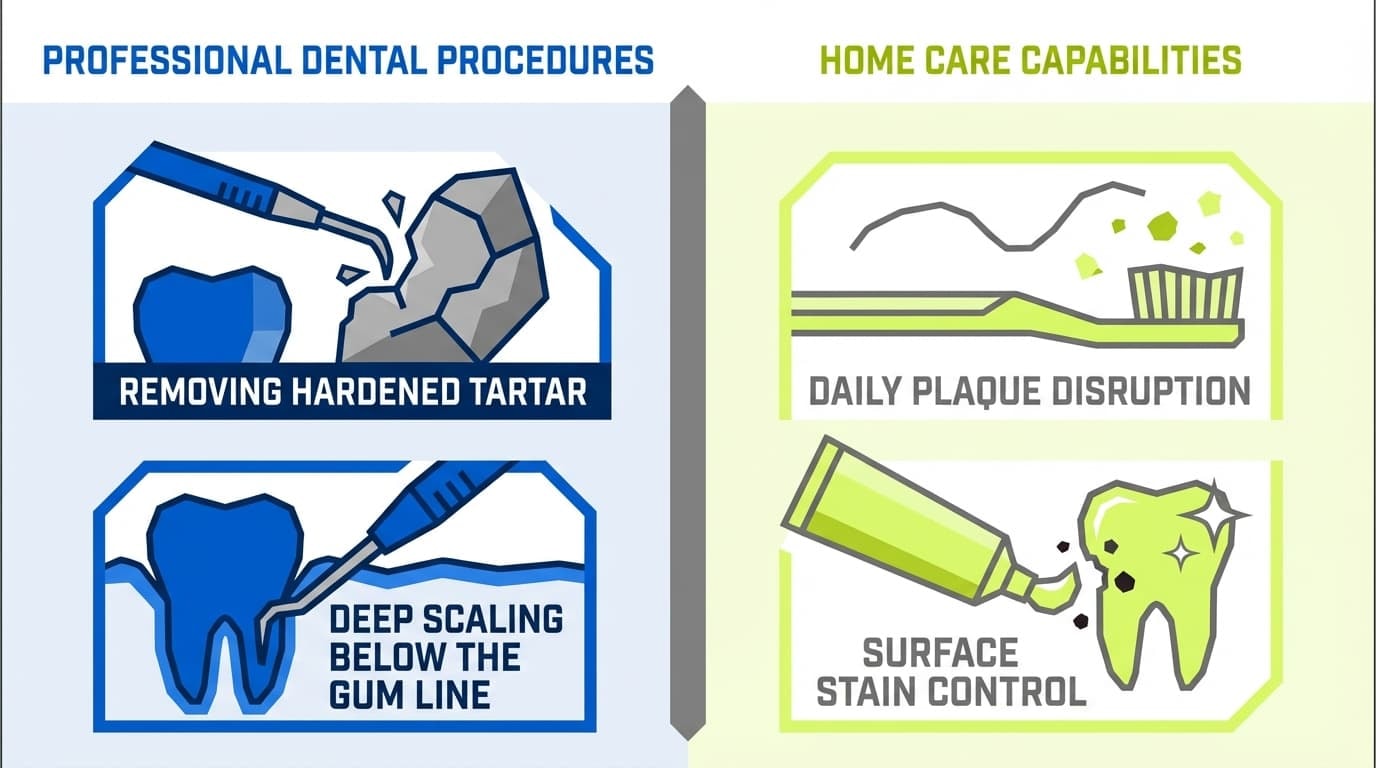
Let’s be honest about something important.
Home care is powerful, but it has limits. Understanding those limits protects your teeth and keeps you from trying shortcuts that can cause real damage.
What Requires Professional Care
There are certain procedures that should only happen in a dental office.
-
Removing hardened tartar: Once plaque hardens into calculus, it bonds tightly to the tooth surface. No toothbrush, rinse, or home device can safely remove it. Attempting to scrape it yourself can scratch enamel or injure your gums.
-
Deep scaling below the gum line: If gum pockets deepen due to periodontal disease, specialized instruments are required to clean beneath the gums. This is delicate clinical work that requires training and precision.
-
Oral cancer screening and full diagnostic exams: A professional visit is more than just a cleaning. Dentists check soft tissues, evaluate bone levels, and assess overall oral health in ways that cannot be replicated at home.
-
Subgingival deposit removal: Bacteria that settle below the gum line contribute to the progression of gum disease. These deposits require professional tools to remove safely.
These steps are not optional. They are essential for long-term health.
What You Can Realistically Achieve at Home
Now here is the empowering part.
You can prevent most of the buildup that leads to those professional interventions.
-
Daily plaque disruption: Soft plaque forms every day. When you remove it consistently through brushing and cleaning between teeth, it never gets the chance to harden.
-
Surface stain control: Coffee, tea, wine, and everyday foods leave pigment on enamel. With the right routine, you can reduce surface staining before it becomes noticeable.
-
Gum margin care: Keeping the gum line clean helps prevent inflammation, bleeding, and early gum disease.
-
Enamel support: Using fluoride toothpaste or remineralizing products strengthens enamel and helps reverse early mineral loss.
-
Fresh breath maintenance: Consistent cleaning of teeth, gums, and tongue helps control odor-causing bacteria.
These are not small tasks. They are the foundation of lifelong oral health.
The Mindset Shift
The real shift is this.
Home care is professional-level maintenance. Dental visits are deep resets.
It is not an either-or situation. They work together.
The more consistent you are at home, the less intense your cleanings tend to be. Hygienists often notice when patients follow structured routines. There is less tartar, less inflammation, and less time spent on corrective scaling.
Daily brushing and interdental cleaning help prevent the more serious problems that require complex treatment.
Your dentist handles what you cannot. You control what happens every single day in between.
That partnership is what keeps natural teeth healthy for decades.
Step-by-Step: A Hygienist-Inspired Home Routine
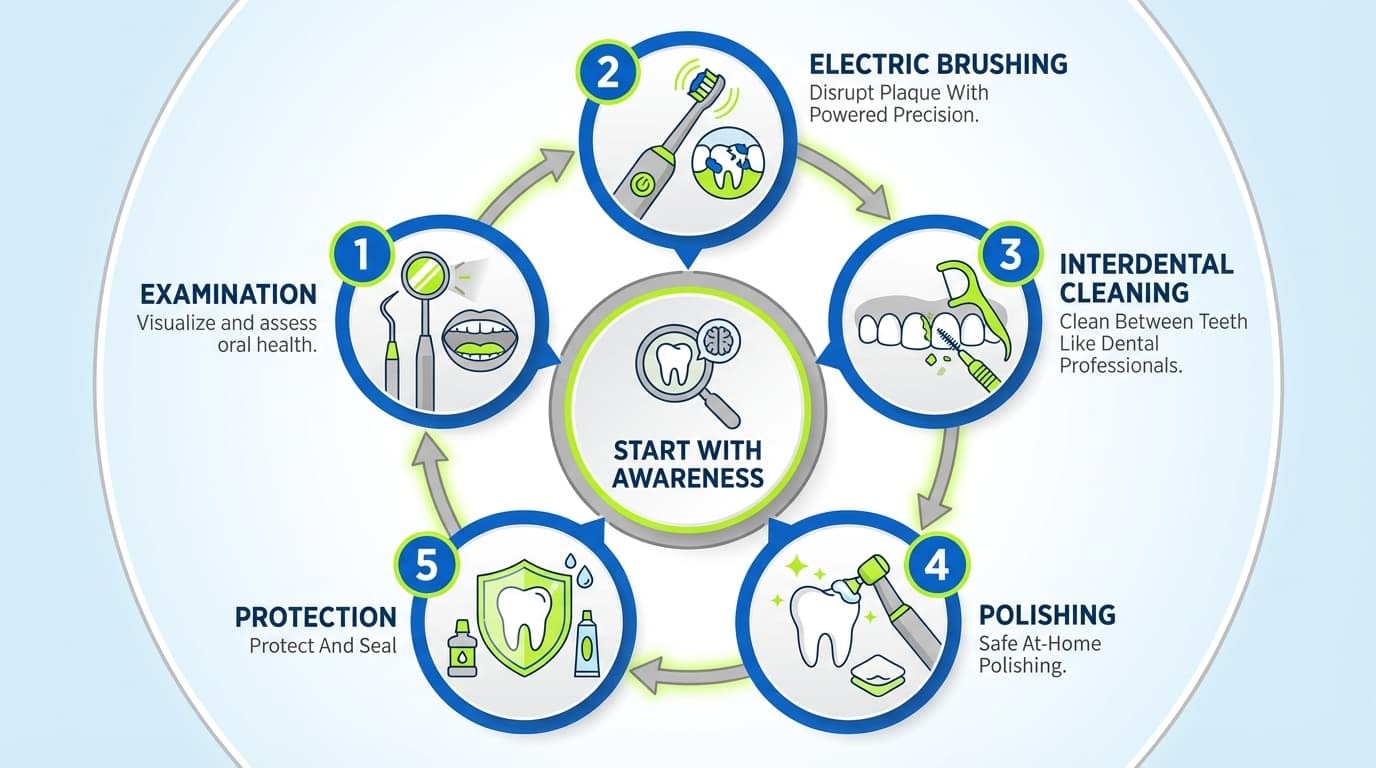
Maintaining optimal oral health focuses on following the same clinical sequence using safe tools designed for at-home care.
Dental professionals follow a structured system during a comprehensive cleaning. When you apply that same structure consistently, you support long-term oral health between regular dental visits and reduce tartar buildup that leads to more frequent visits.
This routine takes 7 to 10 focused minutes and supports excellent oral health without replacing professional care in a dentist's office.
Step 1: Start With Awareness
Every professional dental cleaning begins with evaluation. A dental hygienist does not begin polishing immediately. They assess your teeth and gum line first.
Before brushing your teeth, take 30 seconds to examine your mouth in good lighting. Look closely along the gum line, especially the lower front teeth, where saliva production often increases tartar buildup. Watch for gum inflammation, visible plaque and tartar, or food particles lodged between teeth.
This simple awareness habit strengthens oral hygiene discipline and helps catch dental problems early before they require professional equipment or specialized instruments.
Professional care always begins with assessment. Your routine should too.
Step 2: Disrupt Plaque With Powered Precision
Scaling during a professional dental appointment removes plaque and tartar with specialized tools. At home, your goal is to prevent plaque from hardening.
The SNOW LED Whitening Electric Toothbrush is designed to mirror professional-level disruption safely. Its sonic technology and pressure sensor help remove buildup along the gum line without damaging tooth enamel. Consistent daily brushing with proper technique and timing helps maintain optimal oral health and reduces the risk of gum disease and periodontal disease.
Powered brushing has been shown to outperform manual brushing and flossing alone in plaque removal, especially in hard-to-reach areas.
Upgrade Your Brushing Routine-Shop Now!
Step 3: Clean Between Teeth Like Dental Professionals
Most dental issues begin between teeth and along the gum line, where brushing cannot reach. Dental professionals spend significant time here during teeth cleanings because plaque and tartar often hide in these areas.
Use traditional floss first to disrupt debris, then follow with the SNOW Water Flosser. The steady stream of water helps flush food particles and bacteria from hard-to-reach areas, supporting healthier gums and reducing gum inflammation. Patients benefit significantly when they floss regularly and incorporate water irrigation into their daily brushing habits.
This combination supports long-term oral health and helps prevent gum disease progression between regular cleanings.
Step 4: Safe At-Home Polishing
In a dentist's office, polishing uses professional equipment and specialized instruments that smooth enamel after scaling. While you cannot replicate that exactly, you can safely support surface refinement.
The SNOW Nano-Hydroxyapatite Whitening Toothpaste uses gentle polishing agents to reduce surface stains while supporting tooth enamel strength. Used consistently with fluoride toothpaste on alternating days, it helps maintain a healthy smile without increasing plaque formation or enamel wear. This approach supports lifelong oral health without aggressive abrasion.
The goal is not over-whitening. It is smooth surfaces that resist plaque and tartar buildup.
Step 5: Protect And Seal
Most professional dental visits end with a fluoride treatment because cleaning temporarily removes the protective biofilm on teeth. Fluoride helps strengthen enamel and protect against future dental problems.
At home, finish your routine with fluoride toothpaste and consider a fluoride rinse at night. SNOW’s enamel-supporting formulas combine whitening with strengthening ingredients to reinforce tooth enamel while maintaining oral health. This step protects your work overnight and supports maintaining optimal oral health between regular dental visits.
Professional care removes buildup. Daily protection prevents it from returning.
Explore SNOW Enamel Support Solutions
The System That Supports Professional Dental Care
This five-step structure mirrors the logic used during a comprehensive cleaning without attempting to replace professional dental care. You still need regular cleanings, oral cancer screenings, and periodontal disease evaluations in a dentist's office.
But when you're at home, care follows this sequence consistently, and teeth cleanings become faster and easier. Dental hygienists often notice reduced gum inflammation and less tartar buildup in patients who follow structured oral hygiene routines.
Professional dental visits and daily oral hygiene go hand in hand. That partnership protects dental health, supports long-term oral health, and keeps your smile bright for years to come.
Home Tools That Support Dentist-Level Results
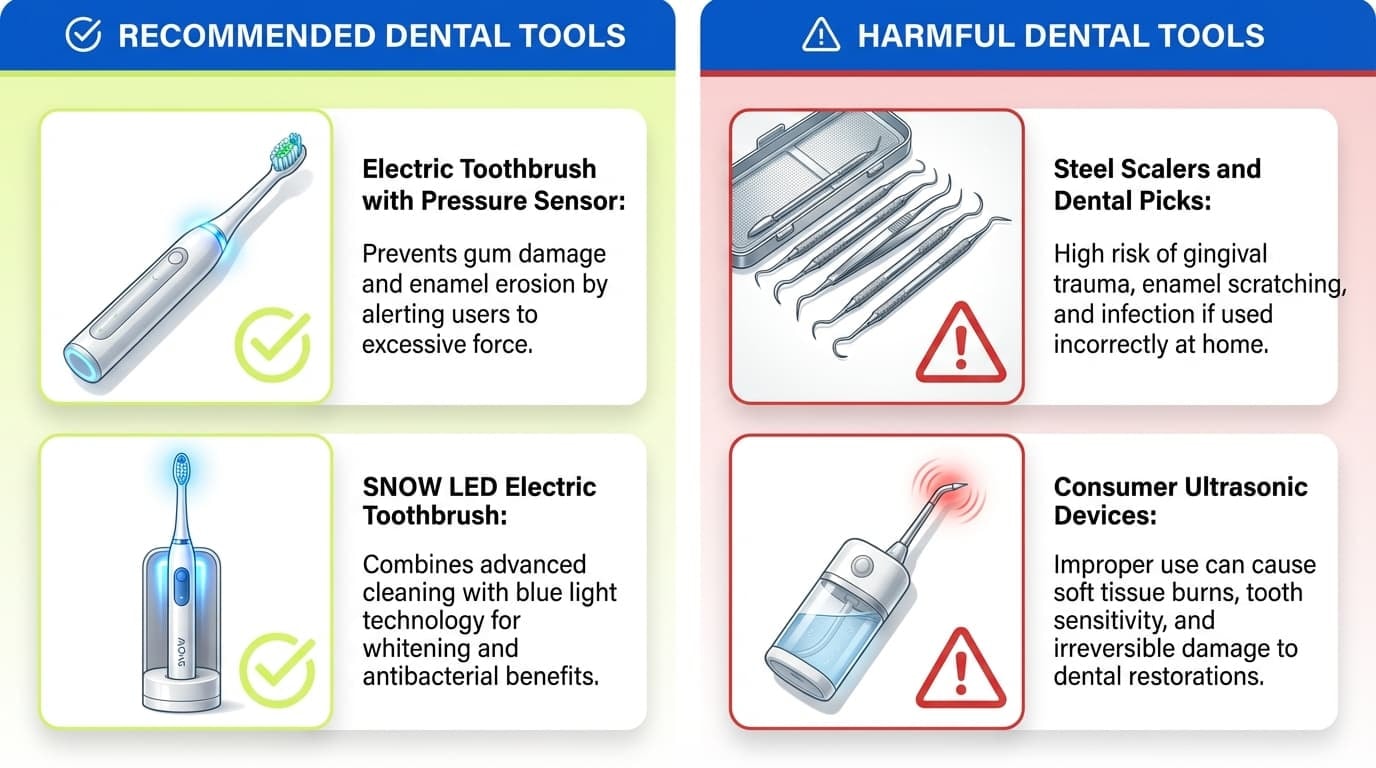
Creating a professional dental routine at home is not about buying more tools. It is about choosing the right ones and avoiding the wrong ones.
Dental professionals use specialized instruments in a controlled setting. At home, your goal is to use evidence-supported tools that improve oral hygiene without increasing risk.
Tools That Actually Make a Difference
Some tools consistently show measurable improvements in plaque control and gum health when used correctly.
-
Electric toothbrush with pressure sensor: A rechargeable electric toothbrush helps disrupt plaque more efficiently than manual brushing. Pressure sensors prevent excessive force that can damage the gum line and wear down tooth enamel over time. The SNOW LED Electric Toothbrush is designed to support safe, consistent daily brushing with built-in timing guidance.
-
Water flosser: Water flossers improve cleaning in hard-to-reach areas between teeth and along the gum line. They are especially helpful for people with braces, implants, or tight spacing. Used consistently, they help reduce plaque buildup and support healthier gums.
-
Fluoride toothpaste: A toothpaste containing at least 1,000 ppm fluoride strengthens enamel and helps protect against decay. This supports long term oral health and reinforces the results of regular cleanings.
-
Floss or interdental brushes: Mechanical disruption between teeth remains critical. Even the best electric brush cannot replace targeted interdental cleaning.
-
Tongue scraper and alcohol-free rinse: Remove bacteria from the tongue, then finish with a fluoride rinse to support overall oral health and fresher breath.
The key is not perfection. It is consistency. An organized hygiene kit placed where you will actually use it increases follow-through and supports maintaining optimal oral health between visits to the dentist's office.
Optional Upgrades
Some patients benefit from enhanced tools.
AI-enabled toothbrushes with app feedback can improve brushing technique over time. Interdental brushes in multiple sizes can help patients with gum recession or spacing changes. Night guards may be recommended if grinding contributes to enamel wear or dental issues.
These are enhancements, not replacements for daily oral hygiene and professional dental care.
Tools and Techniques to Avoid
This is where boundaries matter most.
-
Steel scalers and dental picks: Consumer metal tools are not safe substitutes for professional equipment. Without training, it is easy to cut gum tissue, scratch enamel, or push bacteria deeper below the gum line. Removing hardened tartar requires specialized instruments and clinical judgment.
-
Consumer ultrasonic devices: Home ultrasonic “scalers” are not approved for subgingival use. Even trained dental professionals must use these devices carefully. Improper use can create microscopic enamel damage and increase sensitivity.
-
Aggressive DIY whitening methods: Baking soda scrubs, charcoal powders, and abrasive pastes may feel effective, but they can roughen enamel surfaces. Rough enamel attracts more plaque and tartar over time.
-
Social media tartar removal trends: Visible tartar buildup, especially behind lower front teeth, cannot be safely removed at home. It requires professional dental cleaning using calibrated instruments in a dentist's office.
How Often Should You Aim for Professional-Level Cleaning at Home
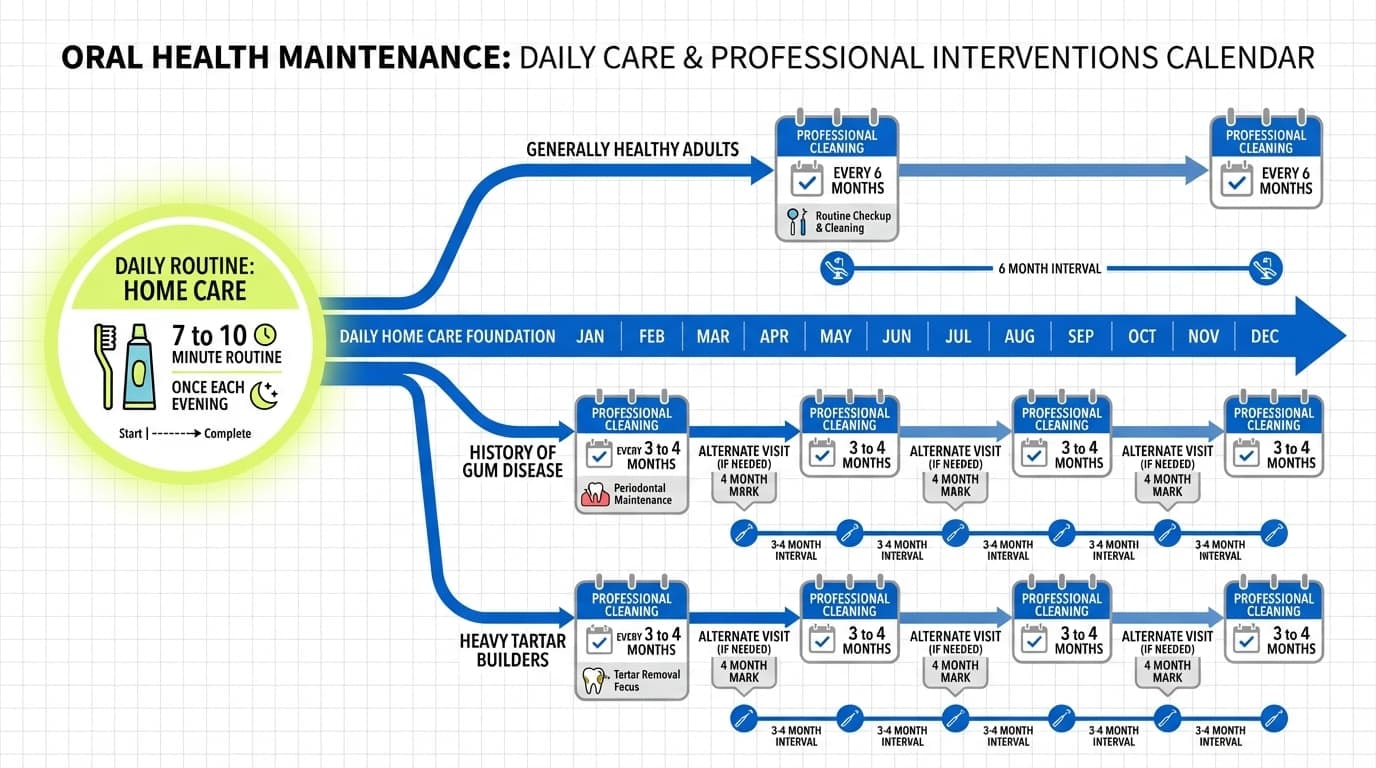
The rhythm that supports long-term oral health is simple. Daily consistency combined with regular visits to your dentist.
Most patients benefit from a structured daily routine that prevents plaque formation before it hardens. Removing plaque every day protects teeth and gums from inflammation, cavities, and more serious issues that develop quietly over time.
Your Daily Foundation
A full 7 to 10 minute routine once each evening makes the biggest difference. This is when you remove the full day’s buildup from sugary foods, saliva production, and plaque accumulation. A shorter morning routine keeps your mouth fresh and supports maintaining healthy teeth and gums throughout the day.
Consistent brushing and flossing help prevent plaque from turning into hardened tartar. Once hardened tartar forms, home care alone cannot safely remove it. That requires professional tools and specialized instruments in a dentist’s office.
Recommended Professional Cleaning Schedule
Even the best home practices do not replace professional dental cleaning. Most patients should follow this general cadence:
-
Generally healthy adults: every 6 months
-
History of gum disease: every 3 to 4 months
-
Heavy tartar builders: every 3 to 4 months
-
After periodontal treatment: As recommended by your dentist
Regular cleanings allow dental professionals to remove hardened tartar from hard-to-reach areas below the gum line and identify hidden problems before they become major problems.
Home care alone cannot manage subgingival buildup or diagnose early signs of oral cancer, cavities, or periodontal disease.
Making It Stick
Maintaining excellent oral health is about structure.
Sync reminders with your calendar. Pair brushing and flossing with a consistent anchor, such as after dinner. Keep your tools visible so your daily routine becomes automatic.
The importance of consistency cannot be overstated. Patients who commit to removing plaque and thoroughly cleaning their teeth and gums often experience shorter dental cleanings and less discomfort during scaling. Their dentist spends less time correcting buildup and more time confirming progress.
Your hygienist can confirm your work instead of managing advanced tartar buildup.
When Home Care Is Not Enough
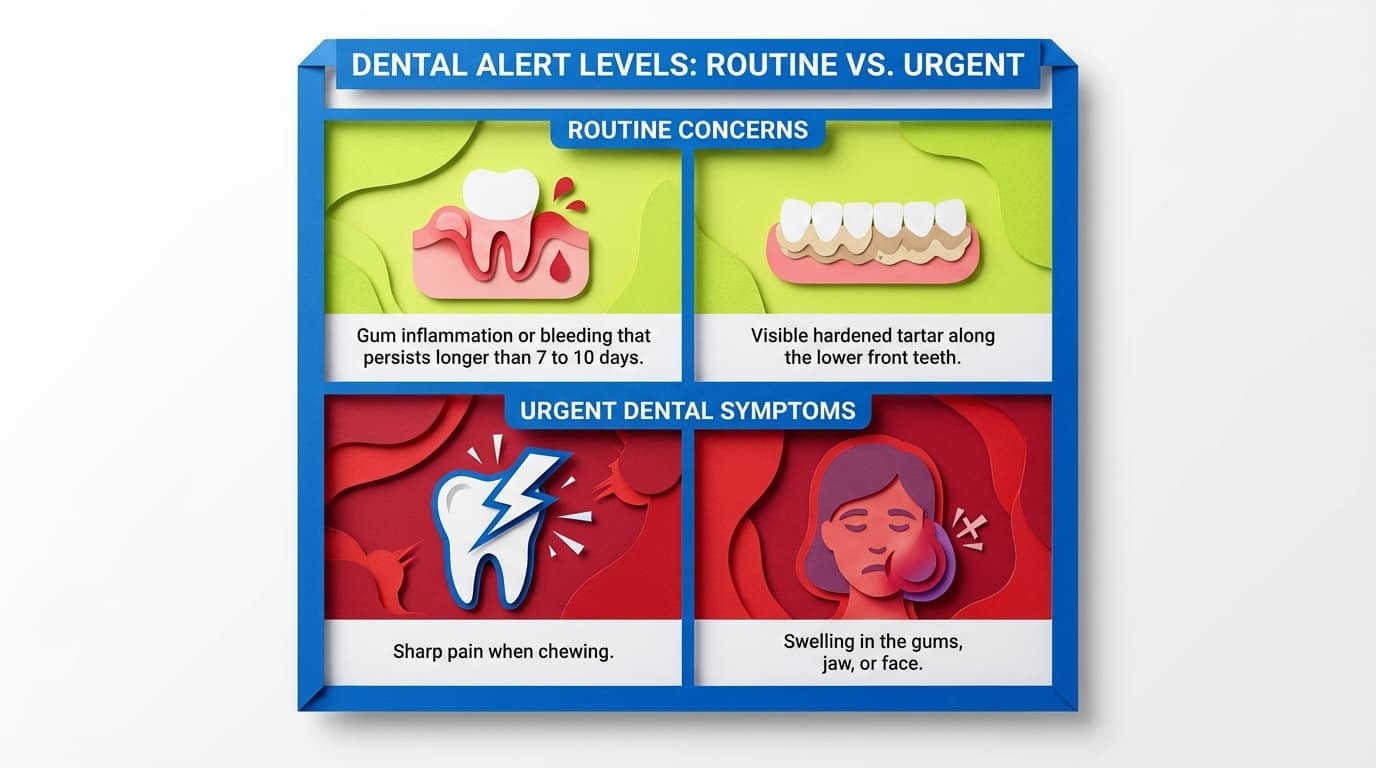
Even strong home care has limits. Certain warning signs mean it is time to schedule an appointment.
Book a visit soon if you notice:
-
Gum inflammation or bleeding that persists longer than 7 to 10 days
-
Ongoing bad breath despite improved brushing and flossing
-
Visible hardened tartar along the lower front teeth
-
Increasing sensitivity to hot or cold
-
Surface stains that deepen despite consistent care
These symptoms can signal early dental issues that require professional care before they escalate into more serious issues.
Seek prompt care if you experience:
-
Sharp pain when chewing
-
Loose teeth or shifting bite
-
Swelling in the gums, jaw, or face
-
Sores in the mouth that do not heal within two weeks
Ignoring these signs increases risk. Untreated gum disease has been associated with systemic conditions, including heart disease. What begins as mild gum inflammation can progress to periodontal disease and eventually tooth loss.
Home care supports your teeth. Your dentist protects what home care alone cannot.
Final Thoughts
Professional results do not come from one long appointment. They come from what you do every day between visits. When you stay consistent with brushing, flossing, and smart home care, you reduce plaque buildup, protect your gums, and make every dental visit easier. Regular cleanings handle what home care cannot, but your daily routine is what keeps your teeth stable and strong.
At SNOW, we design our oral care tools and whitening formulas to support that partnership. From electric toothbrushes to enamel-supporting toothpaste, our collection is built to help you maintain a healthy, confident smile at home.
Explore The SNOW Oral Care Collection And Elevate Your Routine
FAQs
Still have questions about getting professional-level results at home? Here are clear, straightforward answers to the most common ones.
Can I deep clean my teeth at home as a dentist does?
You can copy the structure of a professional cleaning, but you cannot fully replicate it. You can remove plaque, clean between teeth, and polish surfaces. However, you cannot safely remove hardened tartar below the gums without professional tools and training. A dentist and hygienist handle what home care cannot.
What is the best at-home dental cleaning kit for professional-looking results?
The best kit includes an electric toothbrush with a timer and pressure sensor, fluoride toothpaste, floss or interdental brushes, a water flosser, and an alcohol free rinse. These tools support effective plaque removal and gum care. The best setup is one you will use consistently every day.
Can a water flosser replace string floss for professional-level cleaning?
A water flosser is highly effective at reducing plaque and supporting gum health. However, many dental professionals recommend using both floss and a water flosser together. Floss helps break up debris, and the water flosser helps flush it away. The combination yields stronger results than using either alone.
Is it possible to remove tartar at home without damaging my teeth?
No, once tartar has hardened, it requires professional removal. Using sharp tools at home can damage enamel and irritate the gums. The safer strategy is daily plaque control to prevent tartar from forming. Regular dental cleanings remove what has already hardened.
How quickly will I notice professional-style results from a new home routine?
Many people feel their teeth are smoother and their breath fresher within a few days. Visible improvements in gum health often appear within two to four weeks with consistent brushing and flossing. Your next dental visit will confirm your progress. Shorter cleanings and less buildup are strong signs your routine is working.


