









You can prevent stained teeth from braces by maintaining a strict oral hygiene routine that includes brushing after every meal, using a fluoride mouthwash to remineralize enamel, and avoiding high-pigment foods like coffee and soda. This guide explains the causes of demineralization, the best preventive habits, and professional treatments for post-braces discoloration.
Key Takeaways
-
Stained teeth during braces are primarily caused by plaque buildup, poor oral hygiene, and dietary choices, which lead to enamel demineralization.
-
Preventing stains while wearing braces requires proper dental care, including regular brushing, flossing, and the use of fluoride mouthwash.
-
After braces removal, professional treatments like teeth whitening, microabrasion, and resin infiltration can effectively address post-braces discoloration.
Why Do Braces Cause Stained Teeth?
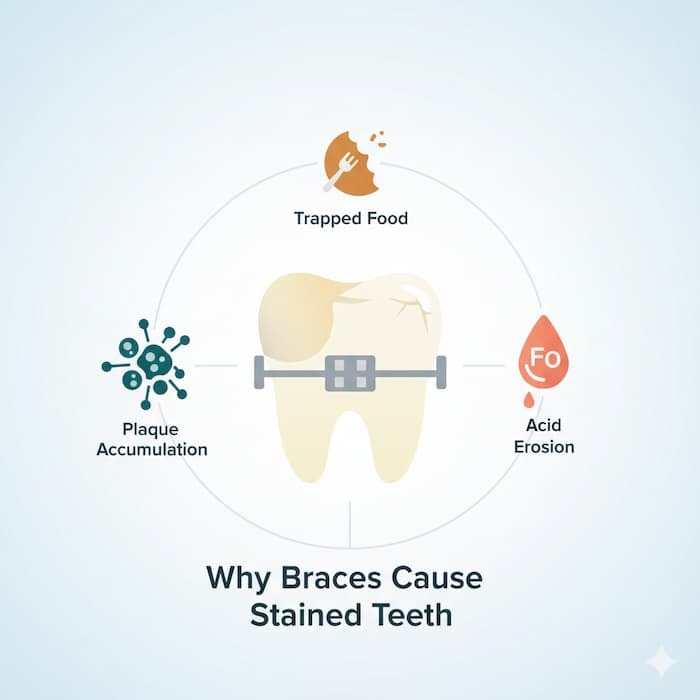
Stained teeth from braces are one of the most common concerns patients face during orthodontic treatment. While braces are highly effective for straightening misaligned teeth, they also create tight spaces that make it harder to clean teeth properly. Brackets and wires trap food particles and encourage plaque buildup, which often leads to tooth discoloration.
Maintaining good oral hygiene becomes more challenging while wearing braces. If plaque and bacteria are not removed consistently, they produce acids that weaken tooth enamel. This process, known as demineralization, leads to white spots, brownish or yellow discoloration, and, in some cases, tooth decay. Understanding how these stains form is the first step to preventing them.
What Specific Factors Cause Discoloration?
Stained teeth from braces usually result from a combination of factors that develop over time during orthodontic treatment. If not managed early, these can lead to visible tooth discoloration once the braces come off. Here’s what typically causes the problem, and how each factor plays a role.
Plaque Buildup
Plaque accumulation is the primary biological cause of discoloration during orthodontic treatment. When bacteria, saliva, and food particles adhere to brackets and wires, they form a biofilm that releases acid, directly demineralizing the enamel and creating permanent white spots.
Because orthodontic hardware creates physical barriers to brushing, this biofilm hardens into tartar more rapidly than on bare teeth, making manual removal nearly impossible without specialized tools.
When you’re wearing braces, plaque tends to accumulate around:
-
The edges of brackets
-
Underneath arch wires
-
In the crevices where the brush can’t easily reach
If this plaque buildup isn’t removed regularly, it can release acids that begin to attack your tooth enamel. That’s when you see:
-
White spots from enamel demineralization
-
Brownish or yellow discoloration as plaque hardens into tartar
-
A higher risk of tooth decay and inflamed gums
What’s more, this trapped plaque can remain hidden until braces are removed, revealing uneven patches of color across your teeth. This is why plaque management is the foundation for preventing stained teeth caused by braces.
Dietary Choices
Dietary choices directly impact enamel integrity through the introduction of chromogens and acids. Highly pigmented foods like red wine and coffee contain chromogens that attach to porous enamel, while acidic beverages like soda erode the protective surface, allowing these pigments to penetrate deeper.
This chemical double-threat accelerates staining around brackets, creating a 'picture frame' effect that becomes visible only after the appliances are removed.
The top offenders include:
-
Red wine, coffee, and black tea
-
Dark sauces like soy sauce, tomato sauce, and balsamic vinegar
-
Acidic drinks such as soda, sports drinks, and citrus juices
-
Sticky sugary foods that cling to brackets and cause decay
These not only leave behind stains but also erode your tooth enamel, making it easier for stains to stick. When your enamel becomes thinner, your teeth appear more yellow, dull, or patchy.
Frequent consumption of staining foods can create long-lasting discoloration that’s hard to reverse, especially when combined with plaque accumulation. This is one reason why white teeth are often associated with deliberate effort and consistent care. Some studies show why Americans prioritize bright, white teeth, and one key takeaway is that diet plays a massive role.
Poor Oral Hygiene
Even the best dental appliances can't fix poor oral hygiene. In fact, braces can make the effects even worse if you’re not consistent with cleaning.
Here’s how it impacts your teeth:
-
When you skip brushing or rush through it, plaque sits on the teeth longer
-
This plaque releases acid that weakens enamel and causes white marks or chalky areas
-
Over time, stains become more visible, especially in the regions where brackets once sat
If you don’t floss properly, food debris can become trapped between teeth and around brackets and wires, forming plaque and later tartar. This not only causes stubborn stains but can also irritate your gums and lead to early signs of gum disease.
It’s also worth noting that enamel can be more susceptible to discoloration if your body lacks specific nutrients. If you’ve noticed rapid color changes or white spots, it might be worth learning more about the connection between tooth discoloration and vitamin or mineral deficiencies.
A solid daily oral hygiene routine, including brushing, flossing, and rinsing, is your best defense against these risks.
How Can You Prevent Stains During Treatment?
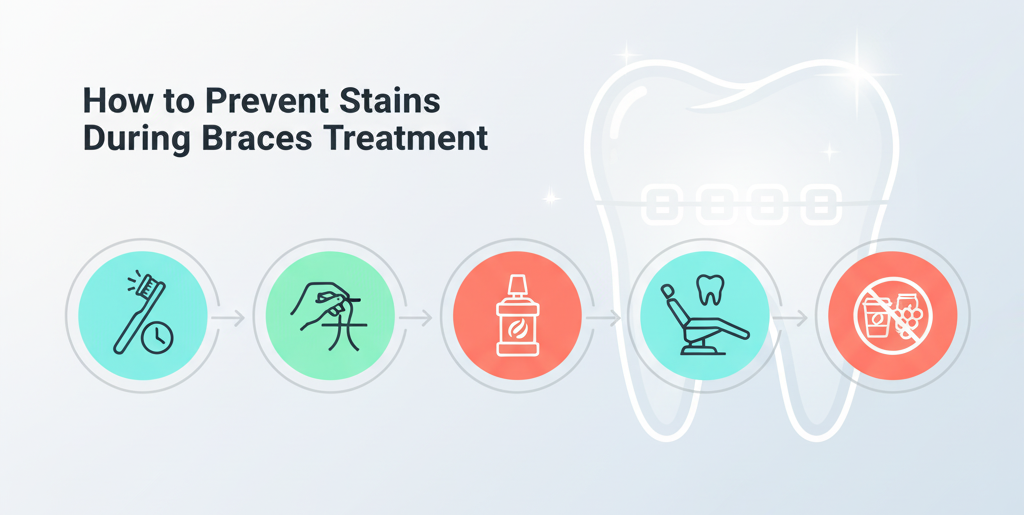
Avoiding stained teeth from braces starts with building solid daily habits. While orthodontic treatment helps straighten your smile, it also creates more places for plaque buildup, which can lead to tooth discoloration and tooth decay if not managed carefully.
Here’s your complete guide to preventing stains and keeping your tooth enamel healthy while wearing braces.
1. Master Brushing Techniques
When you have braces, brushing is no longer just a quick step. It is your first line of defense against teeth stains and white spots. The brackets and wires from traditional braces trap food and plaque in tight spaces that a standard brush might miss.
Tips for brushing effectively:
-
Brush your teeth after every meal, not just morning and night
-
Use a soft-bristle brush or an electric toothbrush with an orthodontic head
-
Hold the brush at a 45-degree angle to reach above and below the brackets
-
Brush for at least two full minutes, covering every surface of each tooth
Incorporating a whitening toothpaste with fluoride can help. While it doesn’t bleach your teeth, it gently lifts surface stains and protects tooth enamel from weakening. Be sure to choose one that’s enamel-safe and low in abrasiveness.
SNOW’s Whitening Toothpaste is a great option here. It's formulated to polish away new discoloration without damaging enamel safely. It is ideal for use during braces.
2. Floss Smarter, Not Harder
Flossing becomes more challenging but more important with braces. Plaque and food particles hide between teeth and under the braces wire, increasing your risk of plaque accumulation and tooth decay.
Make flossing easier with these tips:
-
Use a floss threader to get underneath wires
-
Try orthodontic floss picks for quicker access
-
Floss once a day, ideally before bed
-
Don’t skip back teeth. They’re often overlooked, but just as important.
Regular flossing reduces the likelihood of chalky white spots and helps prevent permanent braces stains. It also supports your overall oral hygiene, which is key to keeping your smile bright.
3. Don’t Skip Fluoride Mouthwash
Brushing and flossing alone might not fully protect your teeth during braces treatment. A fluoride mouthwash helps strengthen tooth enamel, prevent white spots, and keep stained teeth at bay.
Look for one that:
-
Contains fluoride to remineralize weakened enamel
-
Is alcohol-free to prevent dry mouth
-
Has antibacterial properties to reduce oral bacteria
This added layer of protection is invaluable if you're eating or drinking acidic or stain-prone foods or drinks. Swishing after brushing helps rinse away leftover debris while boosting enamel health.
4. Stay on Top of Dental Checkups
Visiting your dentist or orthodontist regularly isn’t just about adjusting your braces. It is crucial for catching signs of braces discoloration, tooth decay, or early demineralization.
Here’s what regular visits help with:
-
Professional cleanings that remove surface stains and hardened tartar
-
Monitoring areas where white spots may be developing
-
Personalized advice for your daily oral hygiene routine
It’s also an excellent opportunity to ask about teeth whitening treatment options for post-braces care. Your provider can help determine the best course once your braces are off.
5. Watch What You Eat and Drink
Diet has a direct impact on your enamel’s health. While wearing braces, certain foods and drinks can cause or accelerate tooth staining.
Avoid or limit:
-
Coffee, tea, and red wine
-
Curry, soy sauce, and tomato-based sauces
-
Soda and other acidic drinks
-
Sticky candies and high-sugar snacks
Acidic and sugary foods weaken tooth enamel, making it more porous and more prone to staining. If you do indulge, drink water after or chew sugar-free gum to stimulate saliva and help neutralize acids.
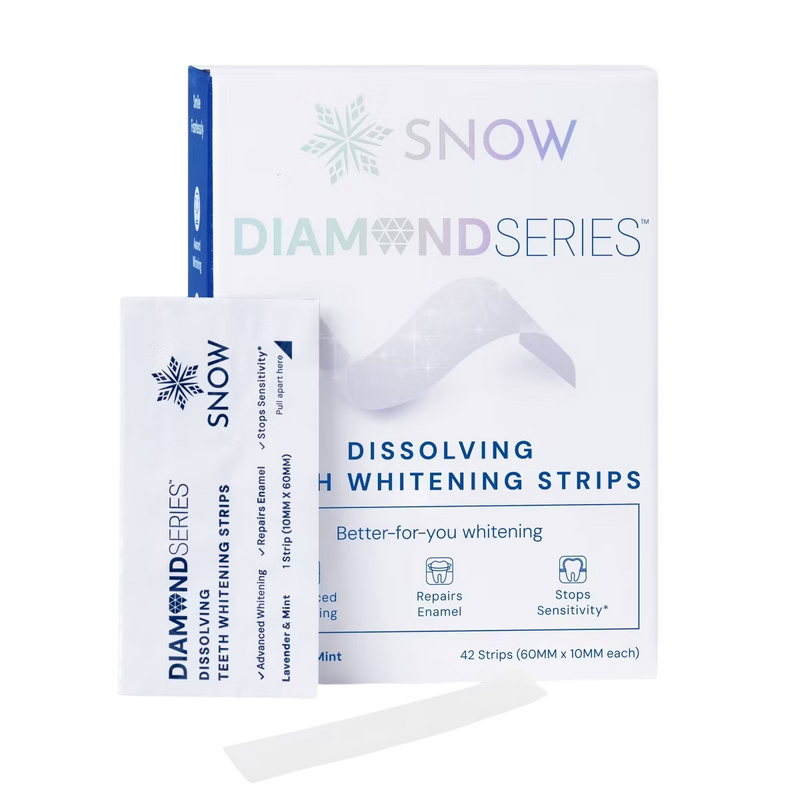
To further defend your teeth from staining, SNOW offers products designed to remove early discoloration. Pair your routine with SNOW Whitening Strips, a gentle solution you can use once your braces are off.
Why Are Professional Cleanings Critical?
Frequent dental checkups are essential for maintaining your oral hygiene during orthodontic treatment. While brushing and flossing at home are critical, professional dental cleanings go further by removing surface stains, hardened plaque, and tartar that are difficult to eliminate on your own.
Routine appointments allow your dentist or orthodontist to:
-
Check for discomfort or irritation caused by your braces
-
Professionally clean around the brackets and wires
-
Identify early signs of braces discoloration or white spots
-
Offer guidance on brushing, flossing, and dietary habits
Skipping these visits increases the risk that untreated plaque will turn into stubborn stains or even tooth decay. Staying on top of your appointments helps you maintain healthy teeth and a cleaner smile throughout treatment.
How Do You Treat Stains After Braces Removal?
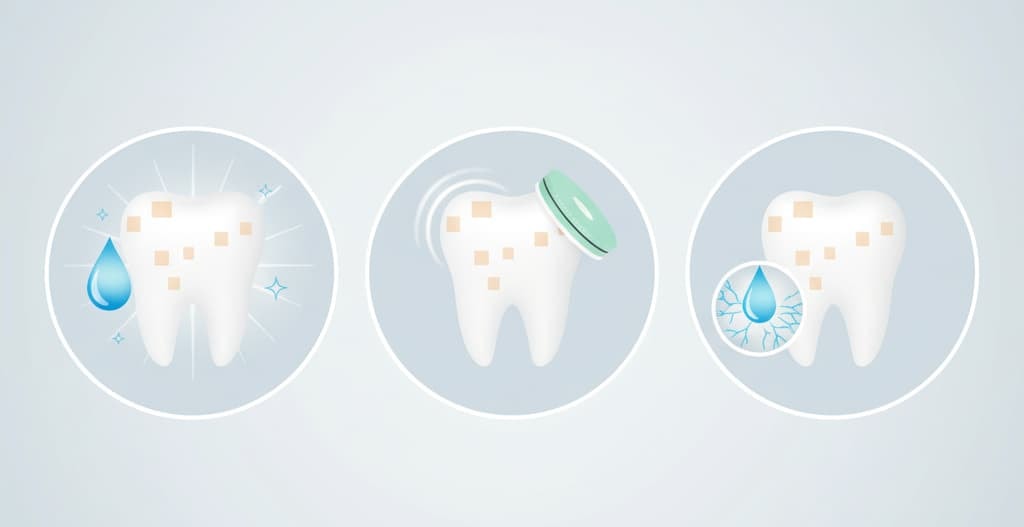
Getting your braces removed is an exciting milestone in your orthodontic treatment, but it can sometimes come with an unexpected downside: stained teeth. It’s common to notice white spots or uneven tooth discoloration where brackets once were. These are often signs of enamel demineralization, caused by plaque buildup during treatment.
Fortunately, several safe and effective cosmetic solutions are available. Before diving into whitening or other procedures, it’s recommended to wait at least 4 to 6 weeks after your braces are removed. This gives your tooth enamel time to settle and respond better to treatments.
Professional Teeth Whitening
In-office teeth whitening is one of the most effective ways to brighten your smile after braces. It targets deep stains caused by tartar, plaque buildup, or food pigments. Performed under the supervision of a dental professional, these treatments use powerful gels and controlled light exposure to produce fast, even results.
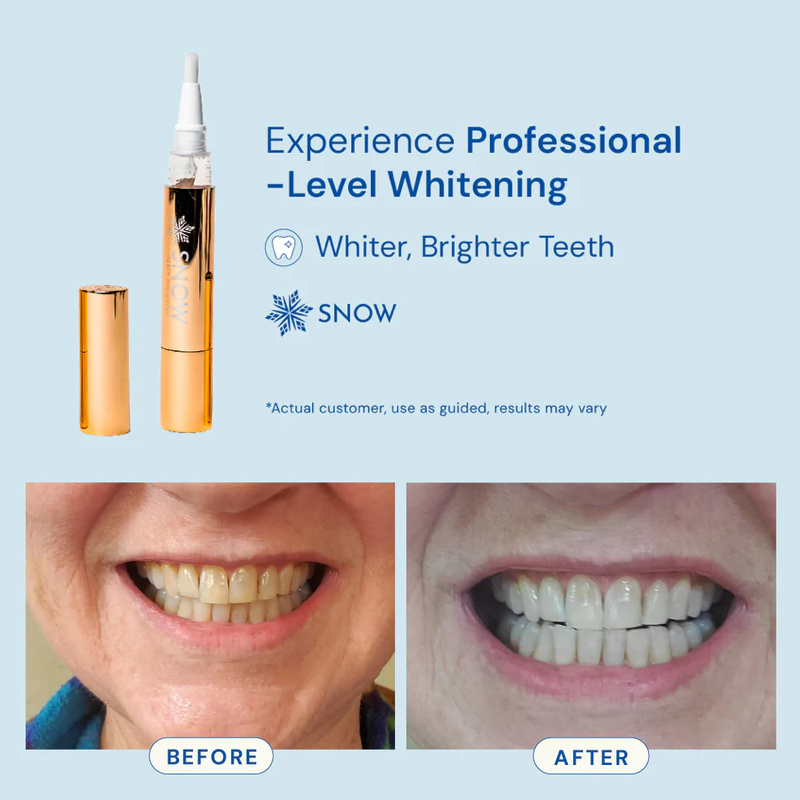
If you’re prepping for a big event or just want your best smile quickly, this is a great option. For those looking to maintain their smile at home, SNOW offers professional-grade teeth whitening solutions that are enamel-safe, non-irritating, and easy to use.
Try the SNOW Teeth Whitening Kit
Microabrasion
Microabrasion is ideal for treating mild white spots or surface-level stains. This non-invasive procedure gently removes a thin layer of enamel using a mix of mild acid and abrasive particles. It can significantly reduce the appearance of chalky patches and improve the smoothness and brightness of your tooth surface.
In most cases, results are visible immediately after treatment and may only require a single visit. It is a popular choice for patients who want quick cosmetic improvement with minimal downtime.
Resin Infiltration (ICON Treatment)
ICON treatment is an advanced technique for treating stubborn white spots caused by enamel demineralization. Instead of removing enamel, this method uses a tooth-colored resin to penetrate and fill the porous areas, blending the place with your natural enamel.
It offers several advantages:
-
No drilling or anesthesia
-
Natural-looking results
-
Longer-lasting than typical whitening treatments
Although results can last years, touch-ups may be needed depending on your diet and habits. Avoid dark liquids, smoking, and whitening products for 24 hours post-treatment to maximize your outcome.
If you're not ready for in-office procedures, the strongest whitening gel is a great place to start. It's formulated for tough stains and post-orthodontic discoloration.
When Are Advanced Cosmetic Solutions Required?
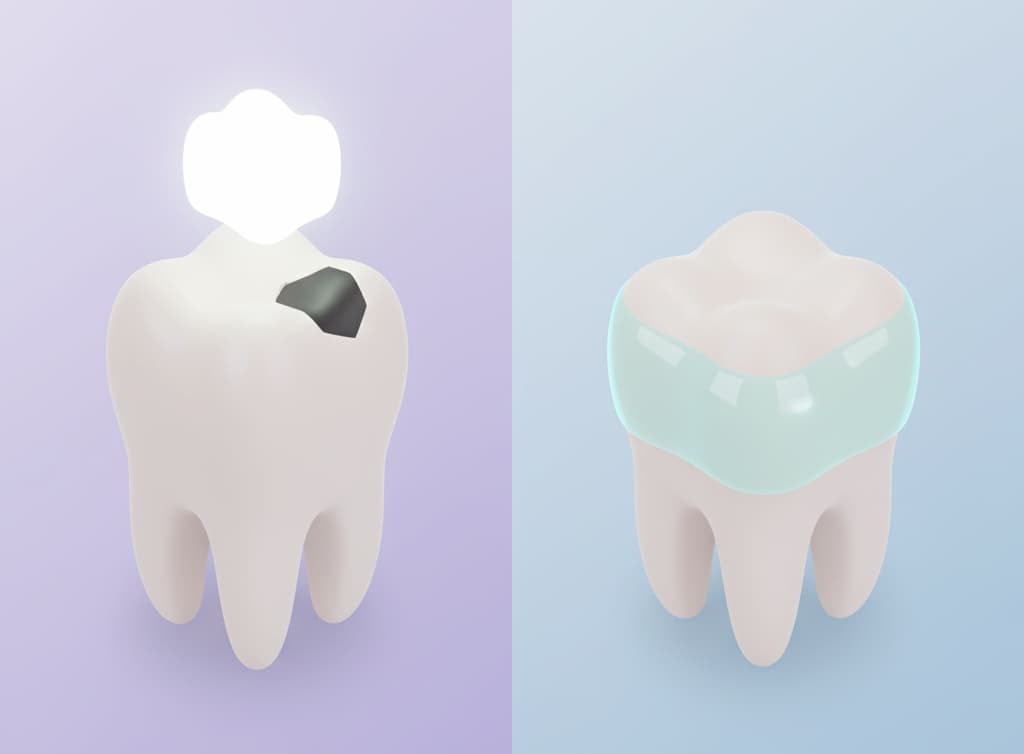
For more severe staining or decalcification after braces, advanced cosmetic solutions may be needed. Teeth whitening treatments range from at-home options to professional in-office procedures, catering to varying levels of discoloration and patient preferences.
Two popular advanced cosmetic solutions are composite restoration and veneers. These options offer comprehensive coverage and long-lasting results for teeth with extensive staining or damage.
Composite Restoration
Composite restoration uses tooth-colored resin to cover cracks, chips, and decay, effectively masking discolored areas. The resin bonds to enamel and dentin, providing long-term coverage and enhancing the tooth’s appearance.
The procedure replaces discolored areas with matching resin, ensuring a natural look. Dental bonding can cover more severe decalcification or staining, but is more invasive than microabrasion or resin infiltration.
Composite restoration is an excellent option for those seeking a durable and aesthetically pleasing solution to post-braces stains.
Veneers
Veneers are thin shells made from porcelain or composite that cover discoloration on the front of teeth. They provide a uniform appearance for teeth with extensive staining, ensuring a flawless smile.
Porcelain veneers are generally more stain-resistant than composite veneers, making them a better option for those at risk of discoloration. Veneers can transform your teeth’s appearance, offering a long-lasting solution for a bright, beautiful smile post-braces.
Final Thoughts
Keeping your smile bright during and after orthodontic treatment takes more than just routine visits. It requires consistent care and awareness of what causes stained teeth from braces in the first place. From plaque buildup and staining foods to poor oral hygiene, the small habits you form while wearing braces can make a lasting difference in how your smile looks once the brackets come off.
To prevent stained teeth, make regular brushing and flossing a non-negotiable part of your daily routine. Add fluoride toothpaste, mouthwash, and regular dental checkups to protect your tooth enamel and stop discoloration before it starts.
If you're looking for a safe, enamel-friendly way to brighten your teeth at home, SNOW offers advanced whitening treatments that gently yet powerfully brighten your smile.
Frequently Asked Questions
Quick answers to common concerns about stains, care, and smile recovery after braces.
Do teeth stain more with braces?
Yes, teeth can stain more with braces, but this is primarily due to inadequate oral hygiene rather than the braces themselves. Proper brushing and flossing are essential to prevent plaque buildup and maintain tooth color during orthodontic treatment.
What are the common causes of white spots on teeth after braces?
White spots on teeth after braces are commonly caused by inconsistent oral hygiene, a high-sugar diet, insufficient fluoride exposure, plaque buildup, and extended periods without professional cleanings. It's essential to maintain a rigorous dental care routine to prevent these issues.
How can I prevent stains while wearing braces?
To prevent stains while wearing braces, maintain excellent oral hygiene by brushing and flossing regularly, using fluoride toothpaste, and limiting sugary and acidic foods. Regular dental checkups are also essential for optimal care.
What is resin infiltration (Icon Treatment)?
Resin infiltration, known as ICON treatment, is an effective, minimally invasive procedure that addresses white spots on teeth by blending the enamel's color without drilling, delivering immediate results.
When should I consider professional teeth whitening after braces?
Consider professional teeth whitening 4-6 weeks to 6 months after your braces are removed to achieve the best and most even results. This waiting period allows your teeth to recover from the orthodontic treatment fully.