

Yes, vitamin deficiencies—specifically in Vitamin D, Vitamin C, and Calcium—can cause teeth discoloration. A lack of these nutrients weakens enamel and causes gum inflammation, making teeth porous and more susceptible to absorbing yellow or brown stains from food and bacteria.
This guide explains which vitamins impact your smile, how to spot the signs, and the best ways to restore your enamel health.
Key Takeaways
-
Vitamin deficiencies can cause yellow or stained teeth. When your body lacks proper nutrients like vitamin D, C, or B12, your enamel becomes weak and porous. This makes your teeth more likely to absorb stains from food, drinks, or bacteria.
-
Bleeding gums and sensitivity may be early warning signs. Gum problems often appear before tooth discoloration and can signal issues like low vitamin C or B12. If you notice bleeding, soreness, or dull-looking teeth, it may point to a deeper nutritional problem.
-
Improving your diet can help reverse vitamin-related tooth discoloration. Eating foods rich in essential vitamins and minerals or using safe supplements can restore enamel health and brighten your smile within a few months. Pairing this with good oral hygiene and dentist-approved whitening boosts results.
How Does Vitamin Deficiency Lead to Discoloration?
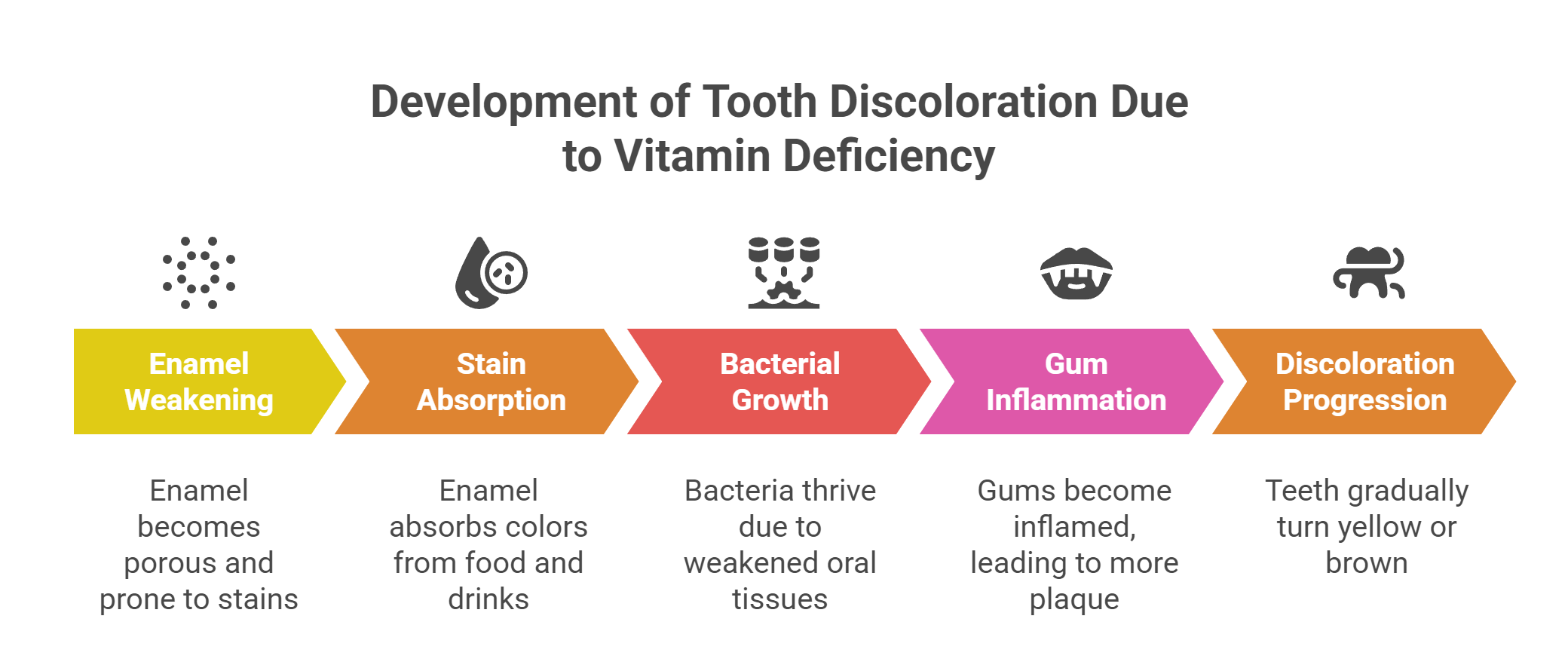
Nutritional deficiencies compromise the structural integrity of enamel, causing teeth to lose their natural whiteness and absorb extrinsic stains.
1. Enamel Weakening and Porosity
Your tooth enamel is the hard outer layer that protects your teeth. Studies show that low levels of vitamin D, vitamin A, calcium, and phosphorus can cause enamel to form poorly or become weak.
Research reviews explain that when enamel does not harden properly, it becomes thin, soft, and full of tiny holes. This type of enamel often looks chalky white, yellow, or brown. Because it is porous, it absorbs colors from food and drinks more easily, which leads to yellow teeth and visible stains.
Consequently, individuals with Vitamin D or mineral deficiencies experience accelerated discoloration and a 20-30% higher risk of cavity development.
2. Lower Resistance to Stains and Bacteria
Vitamins also help your mouth fight bacteria. Studies show that low vitamin C levels are linked to bleeding gums, swelling, and gum disease. When gums are inflamed, plaque builds up faster and stains collect near the gum line.
Other research shows that vitamin B12 deficiency weakens the mouth’s tissues. This causes sore gums, redness, slow healing, and more plaque. When plaque stays on teeth longer, it makes stains from foods and drinks harder to remove.
Together, these studies explain how a vitamin deficiency causes yellow teeth by making it easier for bacteria and stains to stick.
3. Timeline of How Discoloration Develops
Studies do not give exact timelines, but they show a clear pattern:
-
First, enamel becomes dull and less shiny
-
Next, stains appear in small spots or near the gums
-
Over time, teeth turn more yellow or brown as plaque and bacteria increase
Research on periodontal disease and enamel defects indicates that the longer a vitamin deficiency persists, the more severe tooth discoloration becomes. Early treatment helps protect dental health and keeps teeth looking clean.
Which Vitamins Are Essential for White Teeth?
Maintaining healthy teeth goes beyond brushing and flossing. The vita
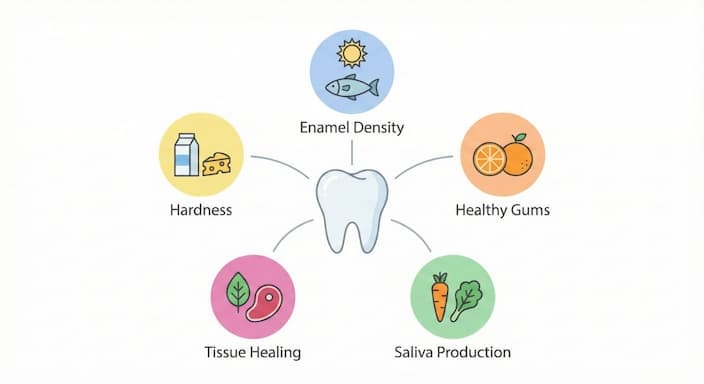
mins and minerals you get from your diet play a major role in how your teeth look and how well they resist stains, plaque, and enamel damage.
Below, we break down how specific nutrients affect your tooth color, what happens when you’re missing them, and the best foods to eat for strong, bright teeth.
Vitamin D
Vitamin D deficiency directly causes discoloration by preventing the body from absorbing the calcium needed for white, dense enamel. When calcium absorption fails, teeth develop with 'enamel hypoplasia'—a condition where the outer layer is thin, porous, and chalky. These microscopic pores act like a sponge, absorbing pigments from dark foods and bacteria significantly faster than healthy, mineralized teeth.
According to a 2024 review in the World Journal of Advanced Research and Reviews, Vitamin D deficiency significantly disrupts odontogenesis (tooth development), leading to enamel hypoplasia and increased porosity.
These showed up as white, yellow, or brown patches that felt rough and trapped more stains over time. Another 2024 review confirmed that vitamin D deficiency during tooth development can lead to enamel hypoplasia — thin, soft enamel that breaks down more easily and lets dark pigments stick.
You may not notice a vitamin D deficiency right away, but over time, you could see yellow teeth, increased tooth sensitivity, or even signs of early tooth decay. Good sources of vitamin D include fatty fish like salmon, egg yolks, fortified milk, and spending time in the sun.
Vitamin C
A lack of Vitamin C leads to 'apparent' tooth discoloration by damaging the gum tissue that frames your smile. Without this antioxidant, collagen production slows, causing gums to inflame, bleed, and recede. As the gums pull away (recede), they expose the tooth root (dentin), which is naturally darker and yellower than the white enamel crown, creating a stained appearance.
A 2024 study in the Journal of Clinical Medicine confirms that patients with lower plasma Vitamin C levels exhibit significantly higher rates of gingival inflammation and bleeding.
A lack of vitamin C also reduces your mouth’s ability to fight off bacteria, causing more visible staining over time.
Scurvy, a severe vitamin C deficiency, is rare today, but even a mild shortage can cause changes in how your teeth look. To support gum health and protect your smile, eat foods like oranges, strawberries, bell peppers, broccoli, and kiwi.
Vitamin A
Vitamin A supports the soft tissues in your mouth and helps your body make healthy saliva. Without it, your mouth can become dry, which makes it easier for food particles, bacteria, and stains to stick to your teeth.
Experts say that vitamin A helps with cell growth in your gums and the enamel-forming layers of your teeth. When you don’t get enough, your enamel might not form properly, leading to dull or patchy spots that stain more easily.
Vitamin A deficiency can also make your gums and inner cheeks feel rough, dry, or inflamed, all of which can make brushing uncomfortable and increase your risk of plaque buildup. Carrots, sweet potatoes, spinach, eggs, and liver are all rich in vitamin A and help keep your enamel and soft tissues healthy.
B Vitamins (B12, B6, Folate)
B vitamins support the health of your gums, tongue, and other soft tissues in the mouth. If you’re low in B12, B6, or folate, you may develop a swollen tongue, painful mouth sores, or bleeding gums. These symptoms make it easier for plaque and bacteria to settle in, which can darken your tooth surfaces over time.
According to a 2024 analysis published in PMC, older adults with marginal or deficient Vitamin B12 levels had significantly higher DMFT (Decayed, Missing, and Filled Teeth) scores than those with normal levels.
Other research shows that when B vitamin levels are low, the mouth doesn’t heal as quickly. That makes it harder to recover from plaque buildup or gum inflammation, both of which lead to staining and dull-looking teeth.
You can get B12 from foods like eggs, dairy, meat, and fish. Folate and B6 are found in leafy greens, legumes, and fortified cereals. Keeping these nutrients in balance helps your gums stay firm and pink, which supports a cleaner-looking smile.
Calcium (Mineral)
Calcium is the main mineral that makes up your tooth enamel. When you don’t get enough, your enamel becomes weak and brittle. This can lead to small cracks, chalky spots, or yellow-brown areas where stains sink in and stick.
Studies show that teeth with low calcium levels tend to look more uneven or dull in color. These teeth also reflect light differently, making them appear less white, even after brushing or whitening. Calcium is especially important for kids and teens, whose permanent teeth are still forming.
To keep your enamel strong and white, make sure you’re eating enough calcium-rich foods. Good sources include milk, cheese, yogurt, leafy greens, almonds, and canned fish like sardines with soft bones.
Recognizing the Signs
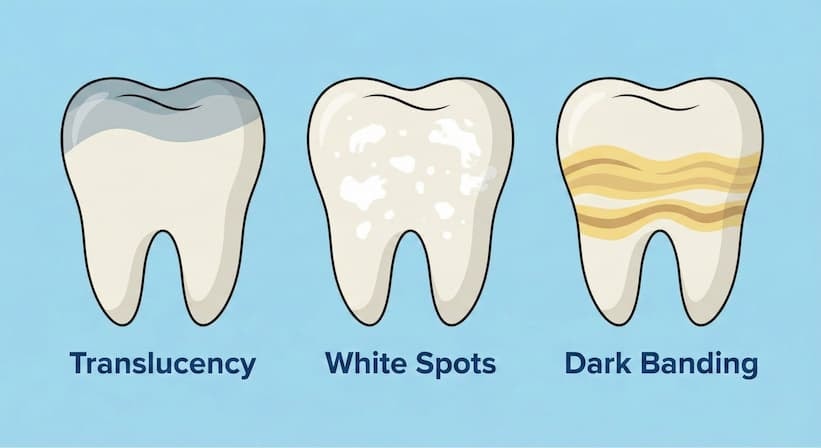
If a vitamin deficiency is affecting your oral health, the warning signs often show up before major damage occurs. Tooth discoloration usually develops slowly, so paying attention early can help protect healthy teeth and prevent long-term problems.
You can identify vitamin-related damage by looking for three distinct visual changes:
-
Translucency: Teeth appear see-through or dull, particularly at the biting edges.
-
White Spots: Chalky, bright white patches on the surface indicate early demineralization.
-
Dark Banding: Brown or yellow horizontal lines often signal that enamel formation was interrupted by a nutrient shortage
Physical symptoms may include:
-
Tooth sensitivity to hot or cold drinks, often linked to enamel erosion or vitamin D deficiency affecting calcium absorption
-
Bleeding gums during brushing or flossing, a common sign of low vitamin C and weakened gum health
-
Mild gum inflammation or tenderness that does not improve with good oral hygiene
If these signs continue, or if tooth discoloration appears alongside gum disease symptoms, schedule a visit to your dental office. Early care can help prevent tooth decay, enamel loss, and long-term dental health issues.
For daily support, try SNOW’s Vitamin-Infused Whitening Toothpaste. It helps with enamel-safe teeth whitening while supporting your smile with essential vitamins and minerals.
Try SNOW’s fluoride-Powered Toothpaste Today
What Other Factors Cause Teeth to Yellow?
Vitamin deficiency isn’t the only reason your teeth might look yellow or stained. Your daily habits and overall health also affect your smile.
Here are other common causes of tooth discoloration:
Poor Oral Hygiene
Not brushing and flossing regularly lets plaque and food particles build up. This makes it easier for stains to stick, especially if your tooth enamel is already weakened by vitamin D or calcium deficiency.
Lifestyle Habits
Smoking and chewing tobacco stain teeth and reduce saliva production, which helps protect your enamel. Also, drinking alcohol can lower your body’s ability to absorb key vitamins. Lastly, eating too much sugar or acidic foods, like soda, citrus fruits, red wine, and coffee, can wear away enamel and cause discoloration over time — especially for daily drinkers looking for stain-fighting whitening picks for daily drinkers.
Medical Conditions
Health issues like Crohn’s disease, celiac disease, or frequent use of antacids can block your body from absorbing important nutrients like calcium and vitamin D. These conditions don’t just affect digestion, they also impact your dental health.
If any of these factors apply to you, making small changes can help protect your tooth color and enamel.
How Can You Treat and Prevent Nutrient-Based Stains?
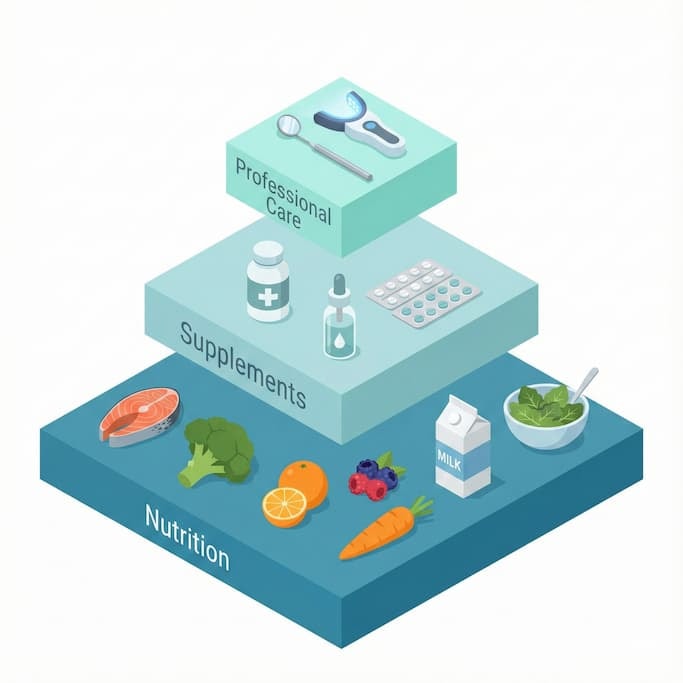
If vitamin deficiency causes yellow teeth, then proper nutrition is your first step to reverse it. Here’s how you can treat and prevent teeth discoloration caused by vitamin imbalances.
Nutrition First
A balanced diet rich in essential vitamins keeps teeth healthy. Fatty fish and fortified dairy help you get enough vitamin D. Leafy greens, berries, and citrus fruits supply vitamin C. Carrots and sweet potatoes deliver vitamin A, while whole grains, legumes, and meat support your B vitamin needs. For strong tooth enamel, get calcium from dairy, sardines, and fortified plant milks.
Supplement Guidelines
Sometimes, food isn’t enough. If you have a diagnosed deficiency or trouble absorbing nutrients, supplements can help. Vitamin D should be taken with fat to improve absorption. B12 may work best in sublingual or liquid form for better uptake. Always check with a doctor before starting high doses.
Professional Dental Options
Professional cleanings remove buildup that makes yellow teeth worse. Fluoride treatments help remineralize enamel weakened by poor calcium absorption or vitamin D deficiency. Once enamel is stronger, whitening treatments may help restore your tooth color. SNOW’s LED Whitening Kit is enamel-safe and perfect for at-home teeth whitening with real results.
Shop SNOW’s Bestselling LED Whitening Kit
Monitoring & When to See a Doctor
If your teeth aren’t improving after 2-3 months of diet changes and supplements, or if you develop gum inflammation, receding gums, or tooth pain, consult your dentist or physician. They may suggest blood tests to identify hidden deficiencies or underlying issues.
How Do You Maintain a Bright Smile Long-Term?
Preventing discoloration from coming back means staying consistent with both your nutrition and dental care routine.
Focus on a balanced diet full of foods rich in calcium, vitamin D, vitamin C, vitamin A, and B vitamins. Hydrate well and limit acidic or sugary foods that erode enamel. Don’t forget about good dental hygiene, brushing twice daily with fluoride toothpaste, flossing, and using antibacterial mouthwash keeps enamel strong and your smile healthy.
If you're prone to vitamin deficiency or have medical issues that affect absorption, monitor your vitamin levels regularly with your healthcare provider.
SNOW’s Complete Care System makes it easy to maintain good oral health at home with daily essentials that protect tooth enamel and support long-term smile brightness.
Discover SNOW’s All-In-One Oral Health System Today
Final Thoughts
To keep your smile healthy, you need more than just good dental hygiene. A lack of key vitamins can weaken your teeth, cause gum problems, and change your tooth color over time. Calcium deficiency, not enough vitamin C, or low B vitamins may lead to enamel erosion, dry mouth, and even tooth loss.
Certain vitamins protect your enamel and help keep your gums healthy by fighting inflammation and plaque. Without proper nutrients, the protective outer layer of your teeth becomes more porous, making surface stains from red wine, sugary foods, and chewing tobacco harder to remove.
The root cause of tooth discoloration isn’t always stains, it could be missing nutrients. That’s why a full routine matters: from eating foods rich in vitamins to using fluoride toothpaste and antibacterial mouthwash.
SNOW makes it easy with enamel-safe products that help you get whiter teeth while caring for your overall health.
Explore SNOW’s Full Whitening Collection Today
FAQs
Have questions? We’re happy to help!
How long does it take for vitamin supplements to improve tooth discoloration?
Vitamin supplements typically begin improving tooth discoloration within 3–4 months, especially when combined with a diet of foods rich in proper nutrients. Most people see noticeable changes in teeth color and oral hygiene by 6 months, and full natural brightness may return in 9–12 months with support from a dental office.
Can vitamin deficiency cause permanent tooth damage?
Yes, vitamin deficiency can cause permanent tooth damage if left untreated. Long-term lack of essential vitamins like vitamin D and B vitamins can lead to enamel erosion and even tooth loss, especially when the root cause is ignored.
Are there specific blood tests to check for vitamin deficiencies affecting teeth?
Yes, your healthcare provider can order blood tests to check for vitamin D, vitamin C, and B vitamins. These tests help identify deficiencies that may be harming your teeth, including weakening the outer layer and causing gum problems.
Do children’s developing teeth respond differently to vitamin deficiencies than adult teeth?
Yes, children's teeth are more at risk because they are still forming. Without proper nutrients during early growth, enamel defects and discoloration can become permanent, though kids typically respond faster to treatment than adults.
Can taking too many vitamin supplements cause tooth problems?
Yes, too much supplementation can harm your teeth. High doses of vitamin C may cause enamel erosion, and excess iron can cause surface stains, while too much fluoride can discolor enamel, making it harder to get whiter teeth naturally.
What other lifestyle habits affect tooth discoloration?
Lifestyle habits like chewing tobacco, drinking red wine, and poor oral hygiene can stain teeth and damage enamel. These habits trap food particles and make surface stains harder to remove, preventing you from keeping a smile bright.
What’s the best way to support a healthy smile routine?
Use fluoride toothpaste, maintain good oral hygiene, and eat foods rich in vitamins. Add antibacterial mouthwash if needed, and visit your dental office regularly to protect your teeth and keep your gums healthy.


