

Does this sound familiar? That sharp sting when you sip something hot or bite into something cold. Tooth sensitivity can quickly take the enjoyment out of everyday moments.
At SNOW, we understand how limiting that feels. Sensitivity often happens when enamel wears down or gums recede, exposing the inner layer of your teeth.
Research published in the Journal of Dentistry shows dentin hypersensitivity affects roughly 1 in 3 adults worldwide. It happens when enamel erosion or gum recession exposes the sensitive inner layer of your teeth.
The encouraging news: It doesn’t have to be permanent. By taking the right steps, you can reduce sensitivity, support your tooth enamel, and get back to whitening comfortably.
Key Takeaways
-
Tooth sensitivity is caused by enamel erosion and gum recession that expose dentin tubules, triggering pain from cold temperatures, heat, and acidic foods.
-
Most desensitizing products only block pain. Using a toothpaste with hydroxyapatite can help support enamel mineral content and reduce sensitivity over time.
-
Brushing with a soft-bristle toothbrush, avoiding acidic foods and drinks, and using rinses support your overall oral health every day.
-
Professional fluoride treatments, bonding, and gum grafts provide additional relief for more severe cases of tooth sensitivity.
-
Fixing sensitivity does not mean you have to give up on teeth whitening. With supported enamel, you can whiten comfortably again.
How to Fix Sensitive Teeth at Home (Step-by-Step)
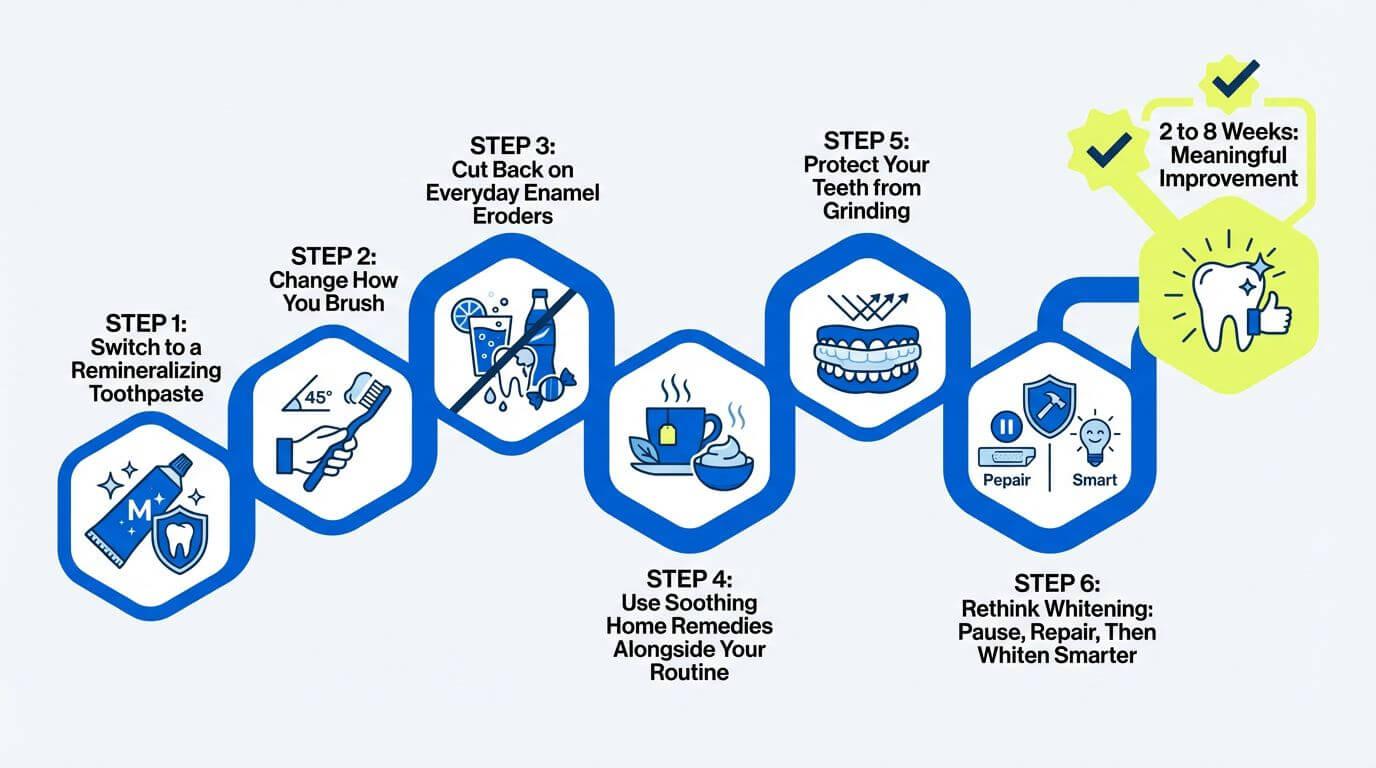
We know how frustrating it can be to manage sensitive teeth every single day. These steps are built around what the evidence actually supports. Stay consistent, and most people see meaningful improvement within 2 to 8 weeks.
Step 1: Switch to a Remineralizing Toothpaste
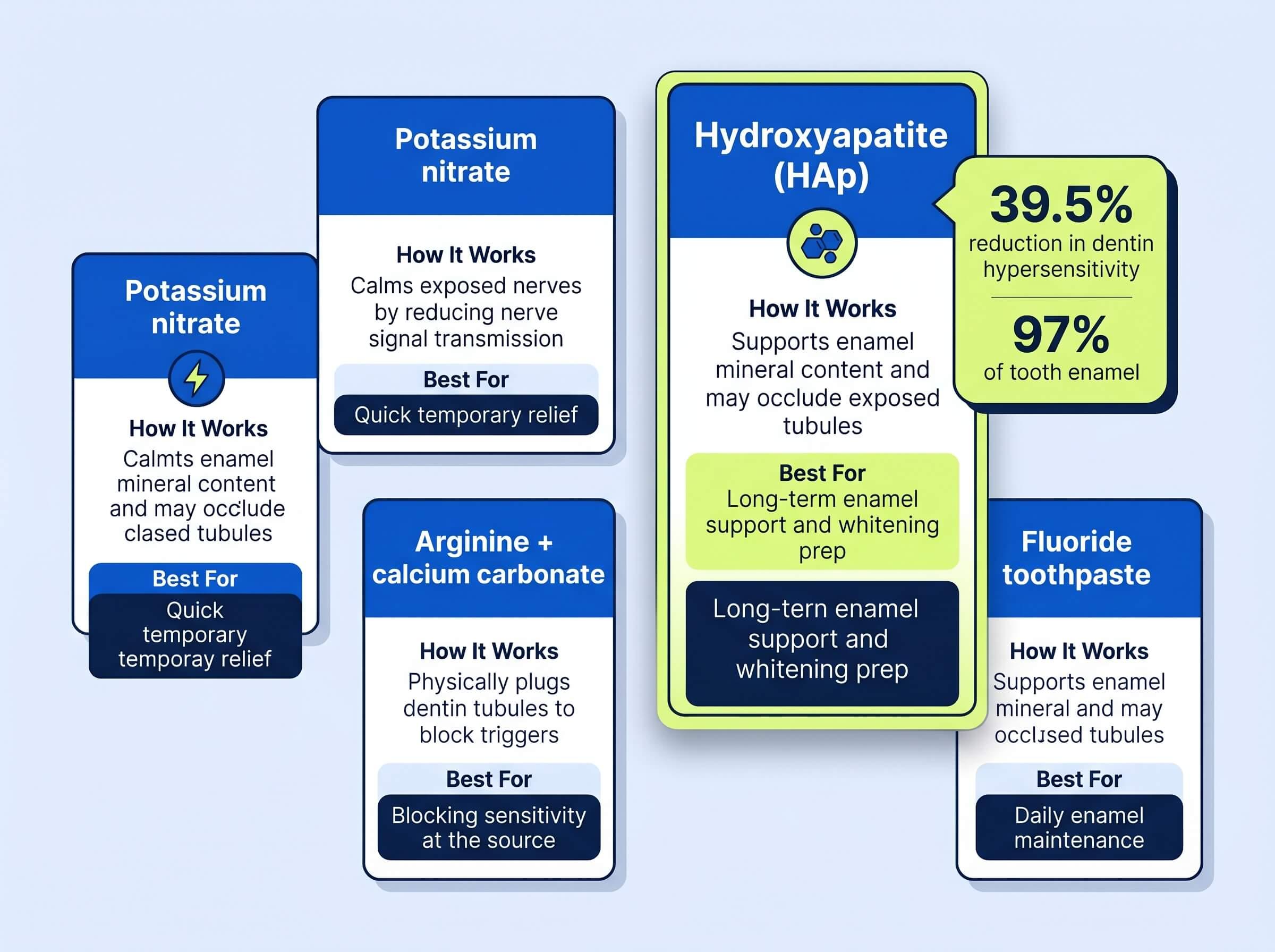
This is the single most impactful change you can make. Most people with cold-sensitive teeth reach for a standard desensitizing toothpaste, and while these can provide temporary relief, many products only block nerve signals without addressing enamel wear or exposed root surfaces.
A double-blind randomized controlled trial published in BDJ Open found that nano-hydroxyapatite toothpaste significantly reduced dentin hypersensitivity at both 2 and 8 weeks compared to a placebo, with results consistent across cold and air stimuli.
Here is a quick breakdown of your main options:

Hydroxyapatite is the mineral that makes up 97% of tooth enamel. Unlike ingredients that only numb the pain, a systematic review and meta-analysis published in Dentistry Journal analyzed 44 clinical trials and found that HAP toothpaste produced a significant 39.5% reduction in dentin hypersensitivity compared to a placebo. It is also what can make comfortable teeth whitening possible again once your enamel is in better shape.
That is exactly why we developed SNOW Hydroxyapatite Toothpaste. It is formulated with nano-hydroxyapatite to support enamel while being gentle enough for daily use on sensitive teeth. No harsh abrasives. No masking the pain without addressing it. If you only change 1 thing, make it this.
Step 2: Change How You Brush
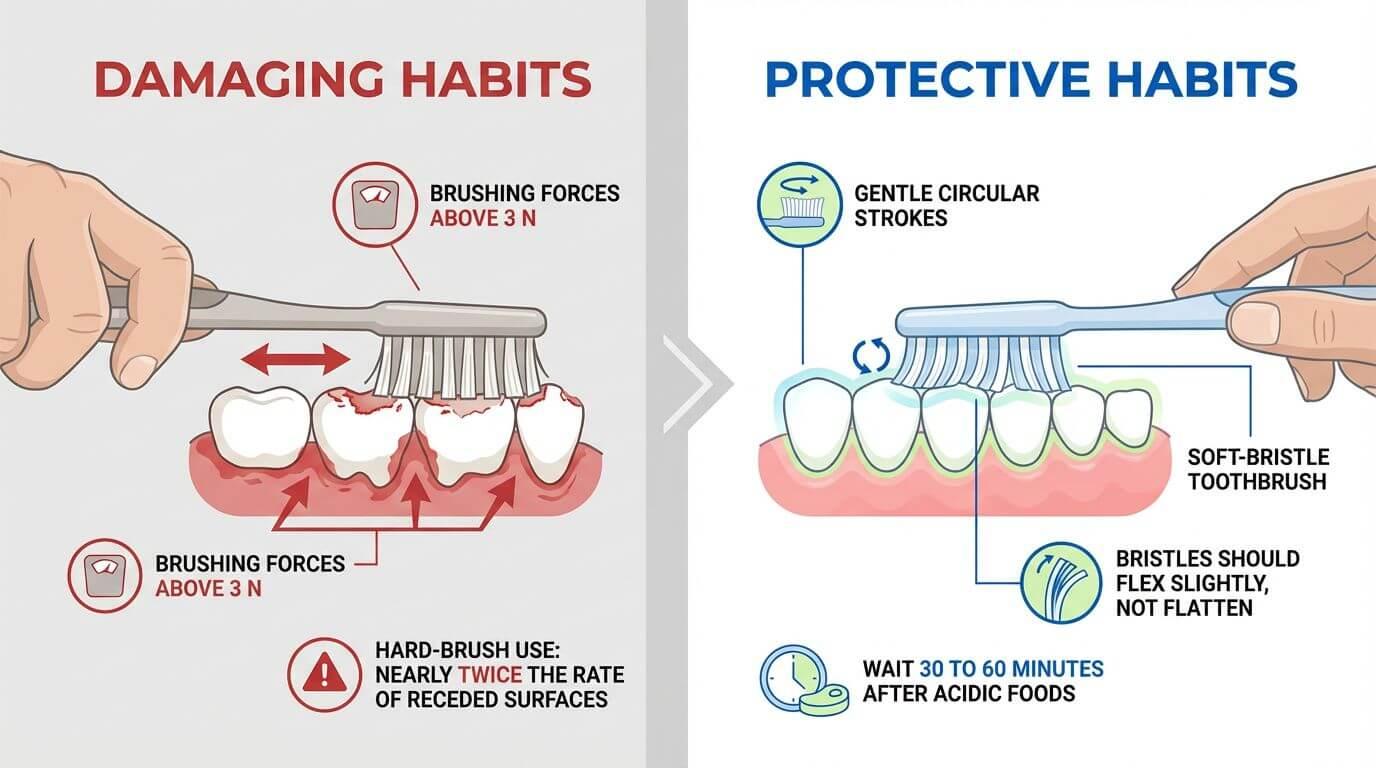
Hard brushing is 1 of the most common and overlooked drivers of sensitive teeth. It strips enamel and, over time, pushes the gum tissue down, exposing root surfaces without enamel protection.
A study in the Journal of Periodontology found that subjects with a history of hard-brush use had nearly twice the rate of receded surfaces compared to those without, and that recession worsened significantly with increased brushing frequency.
A 2025 narrative review in PMC confirmed that brushing forces above 3 N are directly associated with more severe gum recession and enamel loss.
Switch immediately and:
-
Use a soft-bristle toothbrush or an extra-soft brush. Firmer bristles are not more effective, and may even be damaging your teeth.
-
Apply gentle circular strokes, not a back-and-forth scrubbing motion, along the gumline.
-
Keep light fingertip pressure. Bristles should flex slightly, not flatten.
-
Wait 30 to 60 minutes after consuming acidic foods before brushing softened enamel.
This 1 habit change alone makes a noticeable difference for most people within a few weeks. The SNOW LED Whitening Electric Toothbrush uses sonic vibration to clean effectively without the aggressive scrubbing that can damage sensitive gum tissue. It supports good oral hygiene without risking your enamel.
Step 3: Cut Back on Everyday Enamel Eroders
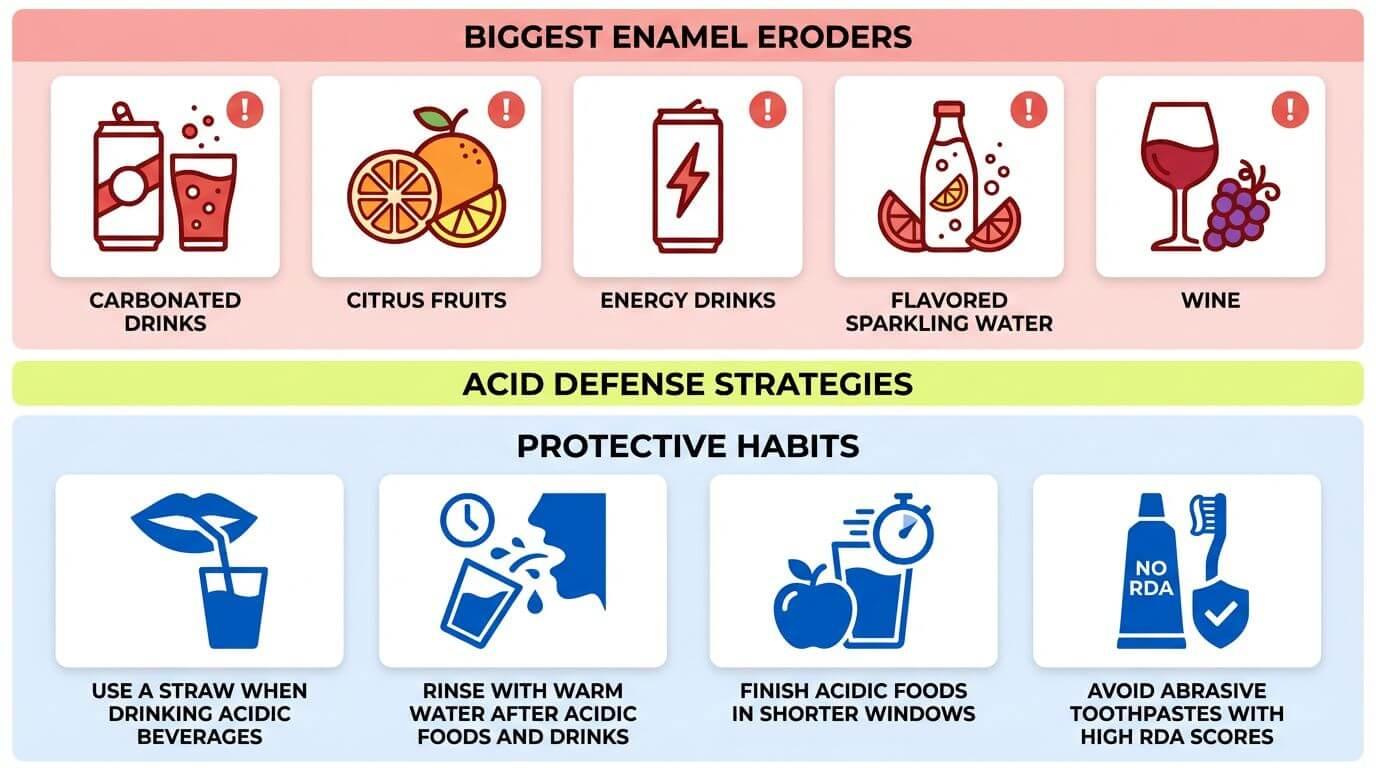
Frequent acid exposure keeps your enamel in a constant cycle of wear.
A chapter in Monographs in Oral Science confirmed that frequent consumption of carbonated and soft drinks is the main dietary factor associated with erosive tooth wear, while intake of certain dairy products like milk and yogurt is protective. The biggest culprits for tooth erosion include carbonated drinks, citrus fruits, energy drinks, flavored sparkling water, and wine.
Below are a few small shifts that add up quickly:
-
Finish acidic foods and drinks in shorter windows rather than sipping throughout the day
-
Use a straw when drinking acidic beverages to reduce direct contact with your teeth
-
Rinse with warm water after acidic foods and drinks, but avoid brushing right away
-
Avoid abrasive toothpastes with high RDA scores, especially alongside frequent acid exposure
You don’t have to give up acidic foods forever. You just need to reduce how often you eat them and how long your teeth are exposed to them.
Step 4: Use Soothing Home Remedies Alongside Your Routine
Home remedies will not rebuild enamel on their own, but they can soothe sensitivity and reduce inflammation during flare-ups. Think of them as short-term comfort while your toothpaste does the deeper work. A few home remedies that can help with tooth sensitivity include:
-
Saltwater rinse: Mix 1 teaspoon of salt into a cup of warm water, then swish for 30 to 60 seconds once or twice daily. Salt water has well-documented anti-inflammatory properties that can temporarily soothe sensitive teeth during active flare-ups.
-
Hydrogen peroxide mouth rinse: Use a 3% solution diluted 1:1 with water, no more than twice per week. Overuse can irritate soft tissues and delay healing.
-
Clove oil: Contains eugenol, a compound with natural anti-inflammatory properties. Apply a small amount to the affected area with a cotton ball for short-term relief.
-
Coconut oil: Swishing coconut oil for 10 to 15 minutes may support overall oral health. Evidence is limited, but it is gentle on gum tissue and widely used as a home remedy for sensitivity.
Use these alongside your remineralizing routine, not instead of it. They are best for getting through uncomfortable days while you work on the root cause.
Step 5: Protect Your Teeth from Grinding
If your sensitivity is at its worst in the mornings, teeth grinding could be the underlying cause you have been missing. Bruxism creates micro-cracks, wears down enamel, and worsens cold sensitivity over time. Polysomnographic research published in PubMed confirms that sleep bruxism affects around 8% of adults under 60, and many go years without realizing they have it. Signs include morning jaw soreness, dull headaches on waking, and teeth that appear flatter or chipped at the edges.
Talk to your dentist about a custom night guard to protect your teeth while you sleep. During the day, try keeping your teeth slightly apart with your lips closed when you are not eating or speaking. Protecting your enamel from grinding also protects any whitening results you work toward down the line.
Step 6: Rethink Whitening: Pause, Repair, Then Whiten Smarter
At SNOW, we’ve heard the following often: “I tried whitening, and it hurt, so I stopped.” We understand. But whitening sensitivity almost always comes down to enamel condition, not whitening itself. What you experienced is a signal that your enamel needed support first, not a sign that whitening is permanently off the table for you.
Here’s what to do if you’ve experienced sensitivity after whitening:
-
Pause high-peroxide whitening for 2 to 4 weeks while focusing on enamel support
-
Once cold sensitivity calms, choose enamel-safe whitening products designed for sensitive teeth
-
Start with shorter sessions and skip days if you experience tooth sensitivity
-
Avoid abrasive toothpastes or whitening products with harsh formulas during the repair period
The SNOW Whitening Strips with Hydroxyapatite were designed exactly for this situation. They use a gentle formula paired with hydroxyapatite to support enamel while delivering real whitening results. Many customers who had painful whitening experiences in the past found these strips comfortable and effective after a focused enamel-support period first.
Professional Treatments That Can Help
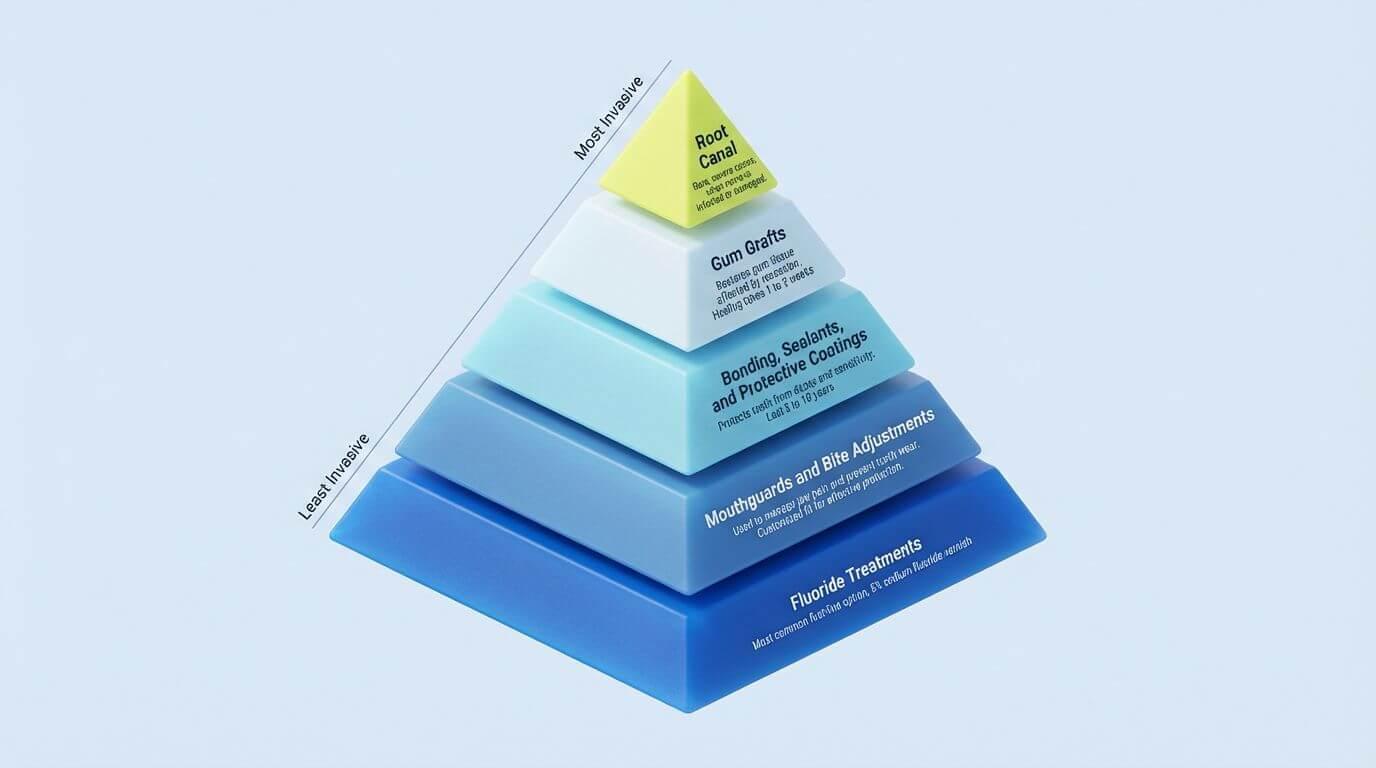
If sensitivity is new, getting worse, or not improving after 6 to 8 weeks of home care, visit your dentist. They can distinguish simple dentin hypersensitivity from more serious causes, such as cracked teeth, plaque buildup, advanced gum disease, or deep tooth decay, that home care alone cannot resolve.
Fluoride Treatments
In-office fluoride treatments use a 5% sodium fluoride varnish, delivering 22,600 ppm of fluoride.
A comprehensive review published in Clinical Oral Investigations found that fluoride in varnish and gel form provides both instant and long-term relief from dentin hypersensitivity by promoting partial tubule occlusion and supporting enamel mineral content.
A randomized clinical trial published in the Journal of the American Dental Association confirmed that fluoride varnish significantly reduced cold and air sensitivity at 2, 8, and 24 weeks after a single application.
Bonding, Sealants, and Protective Coatings
For specific spots with exposed dentin or exposed root surfaces, dentists can apply bonding resin or sealants to physically block stimuli from reaching the nerve. These provide immediate relief for 1 or more teeth and typically last 5 to 10 years. They are a strong option when sensitivity is localized to a specific area.
Gum Grafts for Receding Gums
When receding gums leave significant root surfaces exposed, a periodontist can graft gum tissue to cover them. The American Academy of Periodontology reports that connective tissue grafts have a high long-term success rate and provide lasting coverage of exposed root surfaces. Healing takes 1 to 2 weeks, and the results are permanent for most patients.
Mouthguards and Bite Adjustments
Custom night guards protect your teeth from grinding damage while you sleep. Properly fitted guards are comfortable, do not disrupt sleep, and prevent further enamel loss from bruxism. If your bite is uneven, your dentist can also make small adjustments that reduce pressure on sensitive areas and prevent further damage.
When a Root Canal Is the Right Fix
In rare, severe cases where the tooth nerve is irreversibly inflamed due to deep tooth decay or a large fracture, a root canal removes the nerve and eliminates the pain. This is not a treatment for ordinary sensitivity. Your dentist will tell you clearly whether this is actually needed after a proper examination.
Is It Safe to Keep Using Sensitive Products Long-Term?
Most over-the-counter desensitizing toothpaste options, including potassium nitrate, arginine-based formulas, and hydroxyapatite, are safe for long-term adult use. A systematic review published in the Dentistry Journal reviewed 44 clinical trials and confirmed that HAP products have an excellent safety profile, with no adverse effects reported across short- and long-term use.
The 1 important caution to keep in mind: Relying on pain-masking products without regular dental checkups can allow underlying problems like tooth decay, plaque buildup, or gum disease to go undetected for too long. See your dentist regularly so your home care plan stays both safe and effective. High-concentration prescription fluoride products specifically require professional supervision throughout their use.
Myths, Misconceptions, and What Actually Works
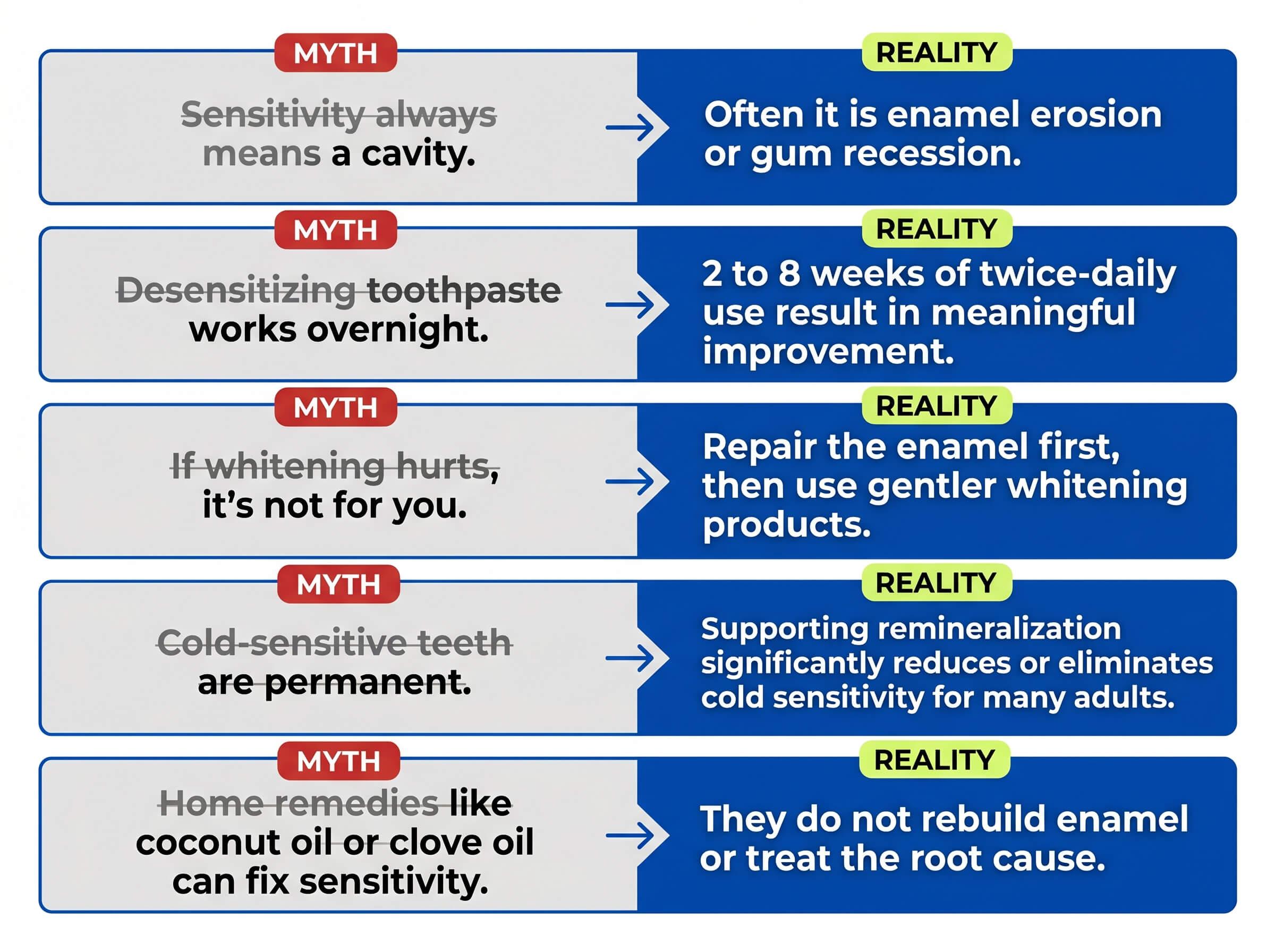
There is a lot of incomplete advice online about how to soothe sensitive teeth. Here is what the evidence actually shows:
-
“Sensitivity always means a cavity.” Often, it is enamel erosion or gum recession. Only a dental exam tells the difference for certain.
-
“Desensitizing toothpaste works overnight”. Clinical trials consistently show that 2 to 8 weeks of twice-daily use result in meaningful improvement. Patience is part of the process.
-
“If whitening hurts, it’s not for you.” The real issue is the condition of the enamel. Repair the enamel first, then use gentler whitening products with shorter sessions.
-
“Cold-sensitive teeth are permanent.” Supporting remineralization and making the right habit changes significantly reduces or eliminates cold sensitivity for many adults.
-
“Home remedies like coconut oil or clove oil can fix sensitivity.” They can provide temporary relief and support overall oral health, but they do not rebuild enamel or treat the root cause.
There’s a real difference between products that mask pain and products that support enamel health. That is the distinction behind how we formulate every SNOW product.
Putting It All Together
Here is what a practical 8-week plan looks like when you apply these steps consistently:
-
Weeks 1 to 2: Stop the biggest irritants. Adjust brushing habits. Start a hydroxyapatite toothpaste. Pause high-peroxide whitening.
-
Weeks 3 to 4: First noticeable reduction in everyday sensitivity. Keep building the habit.
-
Weeks 5 to 8: Continue enamel support. Slowly reintroduce whitening with gentle products and shorter sessions.
Sensitive teeth feel like a limitation, especially when eating ice cream, drinking hot coffee, or breathing cold air is a daily reminder. But sensitivity is a signal, not a sentence. With the right products, gentle habits, and a little patience, you can get real relief and enjoy everyday activities again.
SNOWS's products are designed specifically to help with this. Explore our full collection built for sensitive teeth and reclaim a smile that is comfortable, healthy, and bright.
Frequently Asked Questions
Have more questions? Here is what people ask us most about sensitive teeth and how to fix them.
Why are my teeth sensitive to cold even after using sensitive toothpaste?
Teeth can still be sensitive to cold if your toothpaste only blocks nerve signals rather than supporting enamel mineralization. Your enamel may still be eroded, or your gums may have receded, leaving dentin exposed underneath. Switching to a remineralizing toothpaste with hydroxyapatite can help address the underlying issue rather than just masking the pain.
Can I whiten my teeth if they are sensitive?
Yes, you can whiten sensitive teeth once the enamel condition is supported first. Pausing whitening for 2 to 4 weeks while focusing on enamel repair is recommended. After that, enamel-safe whitening products with shorter sessions make the process comfortable and effective.
How long does it take to reduce tooth sensitivity?
Tooth sensitivity typically takes 2 to 8 weeks to reduce with consistent use of remineralizing products and gentler oral care habits. Immediate relief is rare. Gradual enamel support and daily habit changes are what drive lasting improvement.
Are home remedies like saltwater rinses effective for sensitive teeth?
Saltwater rinses can temporarily reduce inflammation and soothe sensitive teeth, but they do not support enamel the way remineralizing products do. They are best used as a supportive tool alongside an enamel-focused routine, not as a standalone treatment.
When should I see a dentist about sensitive teeth?
See a dentist if sensitivity is severe, localized to 1 or more teeth, or not improving after 6 to 8 weeks of consistent home care. Throbbing or persistent pain is always a reason to schedule a dental appointment. A dentist can determine whether professional treatments such as fluoride treatments, bonding, or gum grafts are needed.
Is it safe to use desensitizing toothpaste long-term?
Yes, most over-the-counter desensitizing toothpaste options are safe for long-term use. The main caution is relying on pain-masking without regular dental checkups, which can allow underlying problems like tooth decay or gum disease to go undetected. Regular visits to your dentist keep your plan both safe and effective.


