

Teeth whitening strips are a part of beauty routines everywhere. They’re straightforward, effective, and easy to use, which also makes them easy to forget, especially before bed. If you fell asleep with whitening strips on, remove them gently, rinse your mouth with lukewarm water, and pause whitening for now so your teeth and gums can recover. You may notice temporary tooth sensitivity or gum irritation after the extra exposure, and the next step is to watch how things feel rather than trying to “fix” it with more whitening.
At SNOW, we know an accidental overnight whitening session can send you straight into the search bar. If you use whitening strips and woke up realizing you left them on too long, this guide walks you through what to do right away, what you may notice over the next 24 hours, how prolonged exposure can affect your teeth and gums, when it’s time to call a dentist, and how to keep it from happening again. Whitening strips are common and easy to forget, so knowing how to respond can help you protect your smile without unnecessary stress.
Key Takeaways
-
One accidental overnight session can raise the chance of temporary tooth sensitivity and gum irritation, but one mistake doesn’t necessarily mean permanent enamel damage.
-
Over the next 24 hours, watch whether sensitivity, gum tenderness, or white-looking gum tissue starts improving rather than getting worse.
-
Leaving whitening strips on longer than directed can increase exposure without giving you a reliably better whitening result.
-
Sharp pain that does not ease, blistering, bleeding, swelling, or worsening gum changes deserve professional guidance.
-
For your next session, follow the product’s wear time. If timed strips are easy to forget at night, a different whitening format may fit your routine better.
-
For now, keep the plan simple: remove, rinse, pause, and watch for improvement. The rest of the article helps you tell normal post-whitening irritation from the signs that need a dentist.
I Fell Asleep With Whitening Strips On. What Should I Do Now?
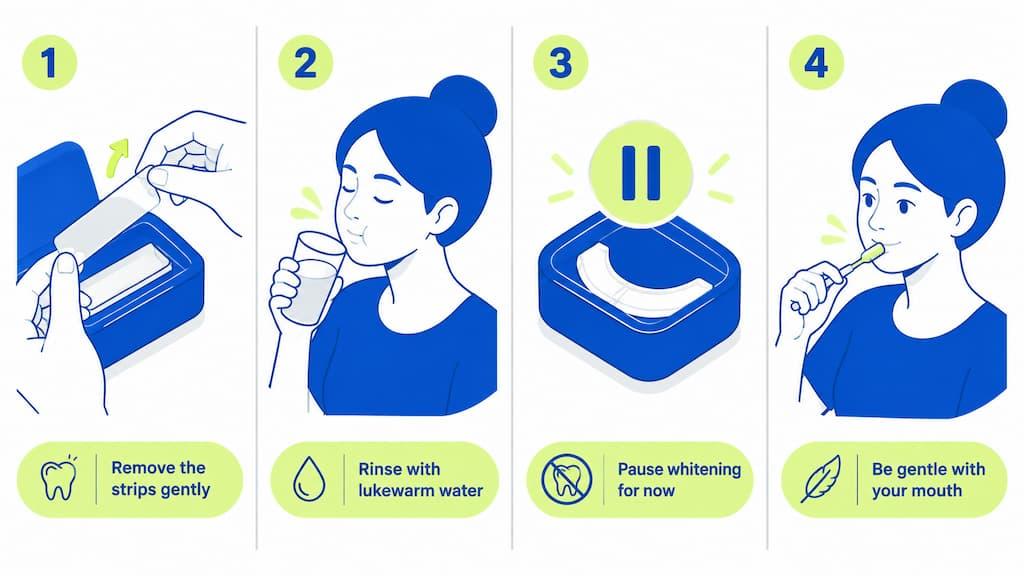
Start with the boring but helpful part: Get the whitening product off your teeth and give your mouth a break, since whitening strips are engineered for short application times, typically 30 to 60 minutes. No panic-cleaning required, just follow these steps:
-
Remove the strips gently: Peel them away without scrubbing or pulling hard at the gumline. If whitening gel is still sitting on your teeth or gums, do not leave it there to “finish the job,” and do not leave whitening strips on to keep working after you wake up.
-
Rinse with lukewarm water: Swish gently to clear away leftover whitening gel. Very hot or cold water may feel rough if your teeth are already sensitive.
-
Pause whitening for now: Do not put on a fresh strip, add more whitening gel, or stack another whitening treatment on top. Let your teeth and gums settle first.
-
Be gentle with your mouth: When you brush, use light pressure and a soft toothbrush. If your teeth feel sensitive, a fluoride or desensitizing toothpaste may be more comfortable than an abrasive whitening toothpaste.
That’s enough for right now. Your bathroom doesn’t need to become an emergency command center before breakfast.
Potential Side Effects: What You May Notice Over the Next 24 Hours
Whitening strips keep whitening agents such as hydrogen peroxide or carbamide peroxide against the tooth surface for a set period; these active ingredients show how whitening strips work, because the process whitening strips involves is a peroxide-driven chemical reaction from bleaching agents on the tooth surface. Sleeping in them stretches that contact far beyond the intended routine, so temporary sensitivity and gum irritation become more likely.
That’s why wear time matters. More exposure isn’t a shortcut to a brighter smile, especially once your teeth or gums are already telling you they’ve had enough, and the potential risks of extended exposure mean extra time does not safely improve whitening results; following directions is what supports optimal results.
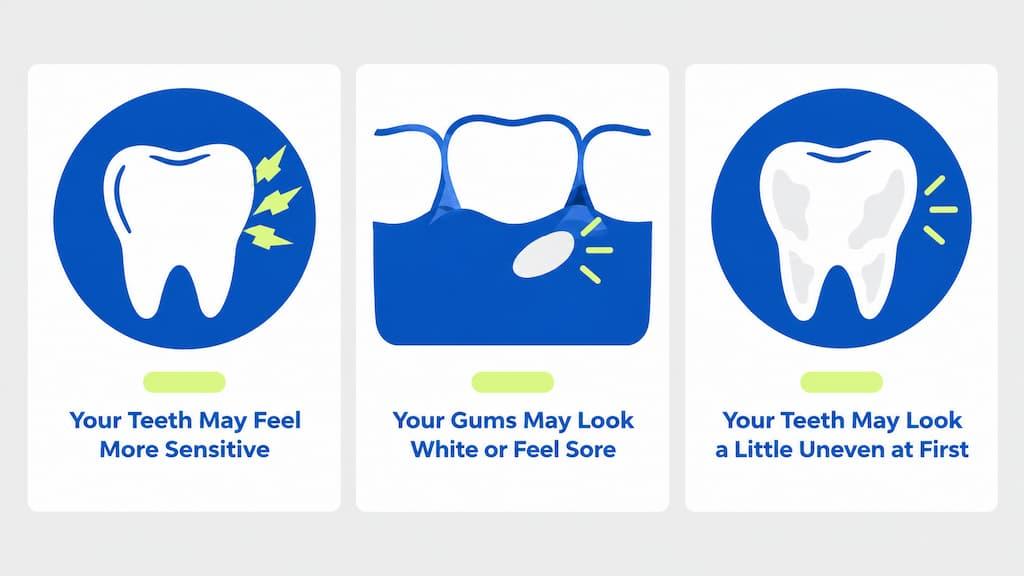
Your Teeth May Feel More Sensitive
Cold water, cool air, sweet foods, or even brushing may suddenly feel sharper than usual. That temporary increased sensitivity can happen because peroxide whitening can make the inner tooth more reactive during and after treatment, and repeated use can raise the risk of long term sensitivity by affecting tooth enamel and enamel integrity. Some people experience sensitivity more than others, especially with thin enamel. It may feel like a quick “zing” or a more general tenderness.
If that sounds like what you’re feeling, keep the rest of your routine gentle. The same sensitivity can happen after a normal session too, as it’s not uncommon for teeth to hurt after whitening strips.
Your Gums May Look White or Feel Sore
Whitening gel that sits against gum tissue for too long can cause irritation, and extended contact can lead to chemical burns. You may notice white gums or a pale patch near the gumline, tenderness, or a mildly sore spot where the strip overlapped; leaving whitening strips on overnight can cause this kind of gum irritation or burn. That can look dramatic in the mirror, especially at 7 a.m. when everything feels more dramatic, but the important thing is whether it begins to settle after the product is removed, since worsening changes or severe pain can need dental attention.
For future sessions, keeping whitening products off the gumline is part of protecting your gums during whitening rather than trying to tolerate more contact for a stronger result.
Your Teeth May Look a Little Uneven at First
Don’t judge your final tooth color the second the strips come off. Because saliva production drops during sleep, teeth can look temporarily chalky or show uneven whitening after prolonged exposure, and differences in tooth structure can also affect how even the result looks. Give the appearance time to settle before deciding you need another whitening session to “fix” it.
The pattern you want is improvement. In this case, that means less sensitivity, calmer gums, and a more normal-looking tooth surface are reassuring signs. Symptoms that keep intensifying belong in a different category.
When Falling Asleep With Whitening Strips Warrants a Dentist
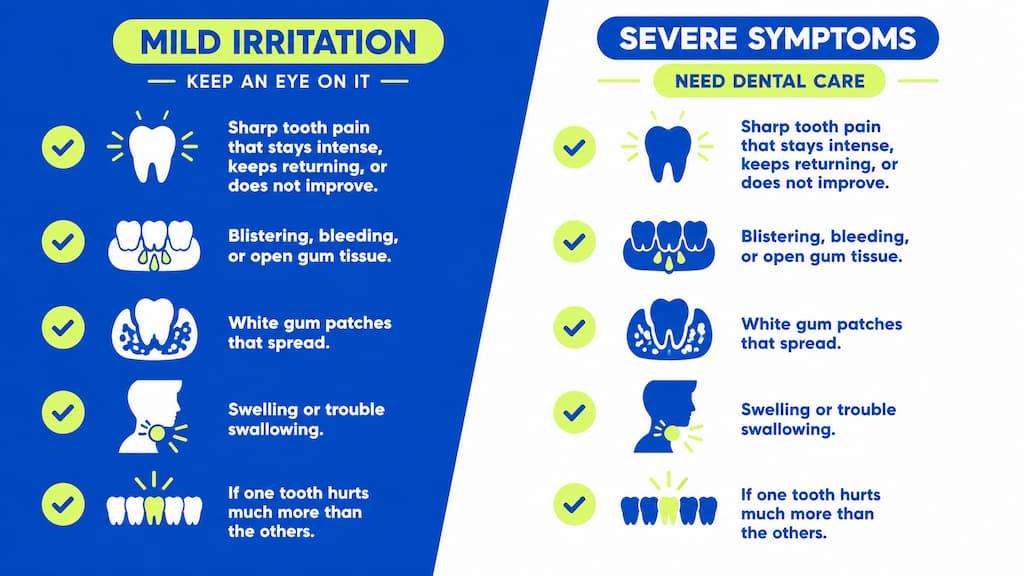
A dentist becomes more important when symptoms are severe, cause severe pain, keep getting worse, or don’t follow the improving pattern you would expect after the strips are removed.
-
Sharp tooth pain that stays intense, keeps returning, or does not improve is worth having checked.
-
Blistering, bleeding, or open gum tissue goes beyond mild gum irritation and should be assessed.
-
White gum patches that spread, become more painful, or do not begin settling after the strips are removed need a closer look, since those changes can reflect chemical burns.
-
Swelling or trouble swallowing needs prompt medical care, especially if breathing or swallowing is affected.
-
If one tooth hurts much more than the others, a dentist can check for another issue such as a crack, exposed root, or restoration problem.
The main thing to watch is the direction your symptoms are moving. Mild irritation that settles is different from pain or tissue changes that keep getting worse. When in doubt, always ask your dentist to help protect your oral health.
Be Extra Careful Before Whitening Again If...
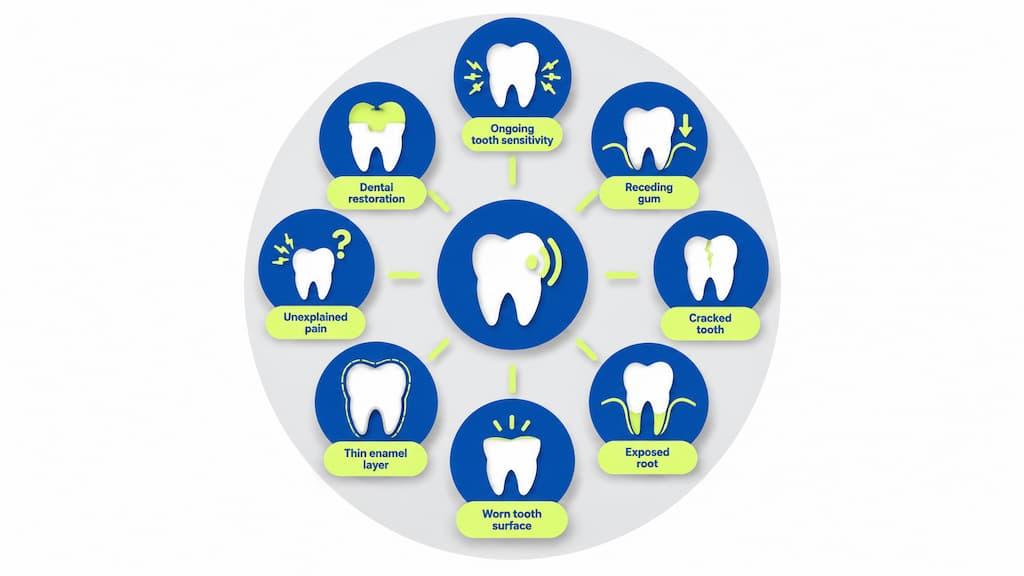
Some people have less room for trial and error with at-home teeth whitening. If you have ongoing tooth sensitivity, gum recession, cracks, exposed roots, worn tooth surfaces, thin enamel, restorations, or dental pain you cannot explain, check with a dentist before your next round.
Professional teeth whitening may make more sense if you need closer supervision or have a complicated dental history. Whether using whitening strips depends on your dental history and sensitivity pattern, and enamel weakening can make future whitening less comfortable. Not every sensitive tooth needs professional whitening, but persistent pain deserves more than another at-home experiment.
Does Leaving Whitening Strips On Overnight Whiten Teeth Faster?
Not in a useful, predictable way. Whitening strips are designed around a specific formula and contact time, including a recommended duration. Once you go far beyond that window, you’re not unlocking a secret overnight setting. You’re mainly increasing how long whitening gel sits against your teeth and gums.
Research on whitening-strip wear shows that treatment duration affects both whitening and sensitivity, but that doesn’t make unlimited contact a better strategy. Going past the directed time may increase sensitivity without producing reliably whiter teeth. The safer rule is still the boring one: Use whitening strips for the directed time and stop when the instructions say to stop.
If a strip shifts while you sleep, gel contact may also become less even across the tooth surface. More hours can mean more exposure without more control, and results only matter if you are not compromising the tooth surface or enamel. Not exactly the glow-up loophole we were hoping for.
How to Make the Next Day More Comfortable
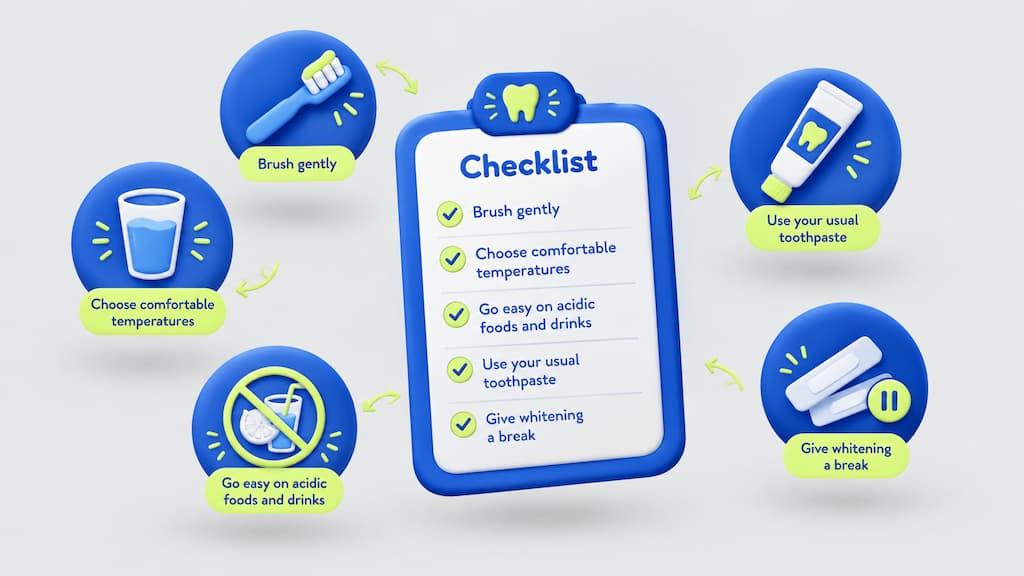
If your mouth feels tender during that first day, avoid piling irritation on top of irritation. You don’t need a complicated recovery routine, just the following:
-
Brush gently: Use a soft toothbrush and light pressure. Skip aggressive scrubbing and very abrasive whitening toothpaste while your teeth feel reactive.
-
Choose comfortable temperatures: Very hot or cold foods and drinks can trigger sensitivity, so avoiding them for 24 to 48 hours may help minimize sensitivity. Lukewarm or room-temperature choices may feel easier for now.
-
Go easy on acidic foods and drinks: Avoid acidic foods for 24 to 48 hours after using whitening strips if your teeth or gums already feel irritated.
-
Use your usual toothpaste: If you already use a desensitizing toothpaste, follow its directions. This gentler approach can help during recovery. Don’t treat it as permission to start whitening again while you’re still feeling discomfort
-
Give whitening a break: Resume only after your teeth and gums feel normal, and follow the directions for whichever product you use next.
Comfort is the checkpoint here. If a simple glass of cool water still feels like a personal attack, your next whitening session can wait.
How to Keep a Whitening Session From Turning Into an Overnight One
If you accidentally fell asleep once, the fix is less about becoming a more disciplined person and more about making the routine harder to forget. Tiny system, fewer 2 a.m. surprises:
-
Set a timer before the strips go on: Do it first, not after you open another app and forget why you picked up your phone.
-
Whiten earlier in the day: If you know you get sleepy in bed, do not make bedtime your strip window. If you accidentally left them on overnight once, changing the time can help keep it from happening again.
-
Follow the exact product directions: Whitening strips depend on the formula and product, so do not borrow a wear time from another box or brand. Crest White Strips and other options may have different wear times, so do not assume one schedule fits all.
-
Do not stack whitening products: Using strips, whitening gel, whitening toothpaste, or another treatment together does not automatically mean faster visible results.
And no, this accident doesn’t mean strips are secretly meant for overnight use. The deliberate version of the question is whether you can sleep with strips, where the answer comes down to following the format you actually bought.
Choose the Whitening Format That Fits Your Routine
Once your teeth and gums feel normal again, you do not necessarily have to give up whitening strips. The better question is whether they still fit your routine.
If You Still Like Strips, Stick to Them
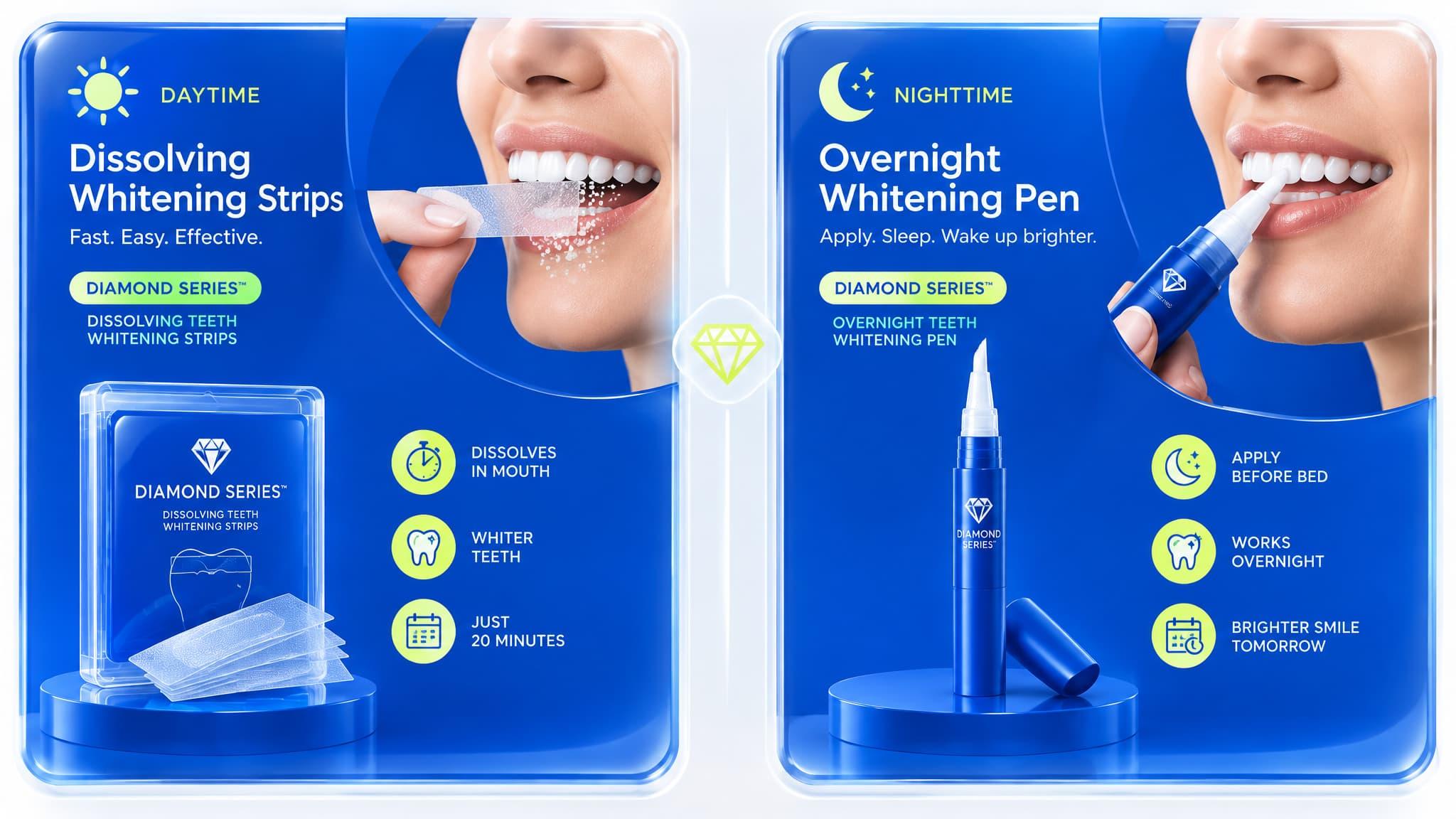
Falling asleep with whitening strips once doesn’t make strips a bad fit for you. If you like the grab-and-go routine, SNOW’s Diamond Series Dissolving Teeth Whitening Strips give you a strip-based option to use while you are awake and able to follow the recommended wear time. Brushing first to remove plaque helps the strips sit evenly and support visible results. Because they dissolve while you wear them, there’s no need to worry about having to remove them. The Hydroxyapatite-powered formula helps visibly lift surface stains for a brighter looking smile and a whiter smile with no peeling and no residue. Just apply, dissolve, and get back to your day (or night).
If Bedtime Keeps Winning, Change the Format
If “I’ll just lie down for a second” keeps accidentally turning into an overnight whitening session, the timing may be the problem.
SNOW’s Overnight Teeth Whitening Pen gives bedtime whiteners a format designed around an overnight routine. Instead of trying to make a timed strip work before you get to sleep, choose a product that better fits when you actually remember to whiten. No timer required, just swipe it on and rest easy.
The Bottom Line: You Fell Asleep, Now Let Your Mouth Reset
If you accidentally fell asleep with whitening strips on, remove them, rinse, pause whitening, and pay attention to how your teeth and gums feel. Don't try to make the extra wear time “worth it” with another session.
Here at SNOW, we think whitening should fit your routine, not ask you to push past the directions for a brighter smile. Once everything feels normal again, choose the format that works with the way you actually whiten, whether that's strips, a pen, or another at-home option.
Find Your Next Whitening Routine
FAQs About Falling Asleep With Whitening Strips
Still have one oddly specific question after the strips are finally in the trash? These cover the smaller details that do not need a full section of their own.
Can I swallow my saliva while wearing whitening strips?
Swallowing normal saliva is expected while whitening strips are on. Try not to swallow the strip or whitening gel itself. If you swallow more than a small incidental amount, feel unwell, or develop concerning symptoms, follow the product label and contact a medical professional or poison service for guidance.
Can falling asleep with whitening strips cause permanent damage?
An accidental overnight session does not automatically mean permanent damage occurred. Prolonged peroxide contact can cause tooth sensitivity and gum irritation, and individual reactions vary. Persistent sharp pain, worsening gum injury, or a tooth that feels very different from the others should be checked by a dentist.
When can I use whitening strips again?
Wait until your teeth and gums feel normal again, then follow the product’s directions for your next session. Don’t make up for the accident by leaving the next strip on longer. If sensitivity keeps returning, feels severe, or does not settle, ask your dentist before resuming whitening.
Should I brush right after I remove whitening strips?
Rinse away leftover gel first. If you brush while your teeth or gums feel tender, use a soft toothbrush and light pressure instead of scrubbing. Your usual fluoride toothpaste is a better fit than adding another aggressive whitening step while your mouth feels irritated. Pause whitening until things feel normal again, and skip charcoal toothpaste right after because it can be abrasive on already irritated teeth and gums.


