

How long to leave whitening strips on sounds like it should have one very easy answer. Fifteen minutes? Thirty? An hour? Unfortunately, your bathroom timer needs a little more context.
Most peroxide whitening strips have a set wear time somewhere between 5 and 60 minutes, depending on the formula, peroxide concentration, and delivery method. SNOW Dissolving Teeth Whitening Strips, for example, use a 15-minute routine, while some Crest Whitestrips are labeled for 30 or 60 minutes.
Here at SNOW, we like whitening routines with fewer opportunities for bathroom-counter improvisation. The useful rule is simple: the timer belongs to the formula. Here’s how timing changes by strip type, why longer doesn’t automatically mean better, and when your teeth might tell you to clock out early.
Key Takeaways
-
How long you keep whitening strips on depends on the specific product. Follow its labeled wear time rather than borrowing instructions from another brand or format.
-
SNOW Dissolving Teeth Whitening Strips use a 15-minute session. Standard Crest Whitestrips are commonly 30 minutes, while some express formulas use 60 minutes.
-
Longer isn’t automatically better. Peroxide concentration, contact time, and the way the gel is delivered are designed to work together.
-
Stop the session if you develop notable tooth sensitivity, gum irritation, or pain. Rinse, let the area settle, and follow product or dentist guidance before whitening again.
-
Consistency across the labeled routine matters more than stretching one session in hopes of a whiter smile overnight.
How Long Do You Keep Whitening Strips On? Start With the Format
How long you leave teeth whitening strips on depends on the specific product, whitening agent, peroxide concentration, backing, and adhesion system. Most whitening strips are designed around a tested wear window, so the instructions for your specific product are the definitive answer. This table gives you a useful comparison before we get into why those times vary.
|
Product or format |
Typical wear time |
How it finishes |
What to follow |
|---|---|---|---|
|
SNOW Dissolving Teeth Whitening Strips |
15 minutes |
Dissolving strip |
SNOW product instructions |
|
SNOW Purple Dissolving Teeth Whitening Strips |
15 minutes |
Dissolving strip + optical color correction |
SNOW product instructions |
|
Crest Whitestrips, standard formulas |
Often 30 minutes |
Peel off after timed wear |
Exact Crest product label |
|
Crest 1 Hour Express |
60 minutes |
Peel off after timed wear |
Exact Crest product label |
|
Generic peroxide whitening strips |
About 5 to 60 minutes |
Usually peel-off |
Manufacturer instructions |
|
Whitening trays |
30 minutes to several hours |
Remove tray after directed contact time |
Product label or dentist directions |
The big takeaway is simple: “whitening strips” is a category, not one formula. A 60-minute product isn’t permission to leave a 15-minute strip on four times longer. Same goal. Very different timer.
Same Brand, Different Strip: How SNOW Timing Works
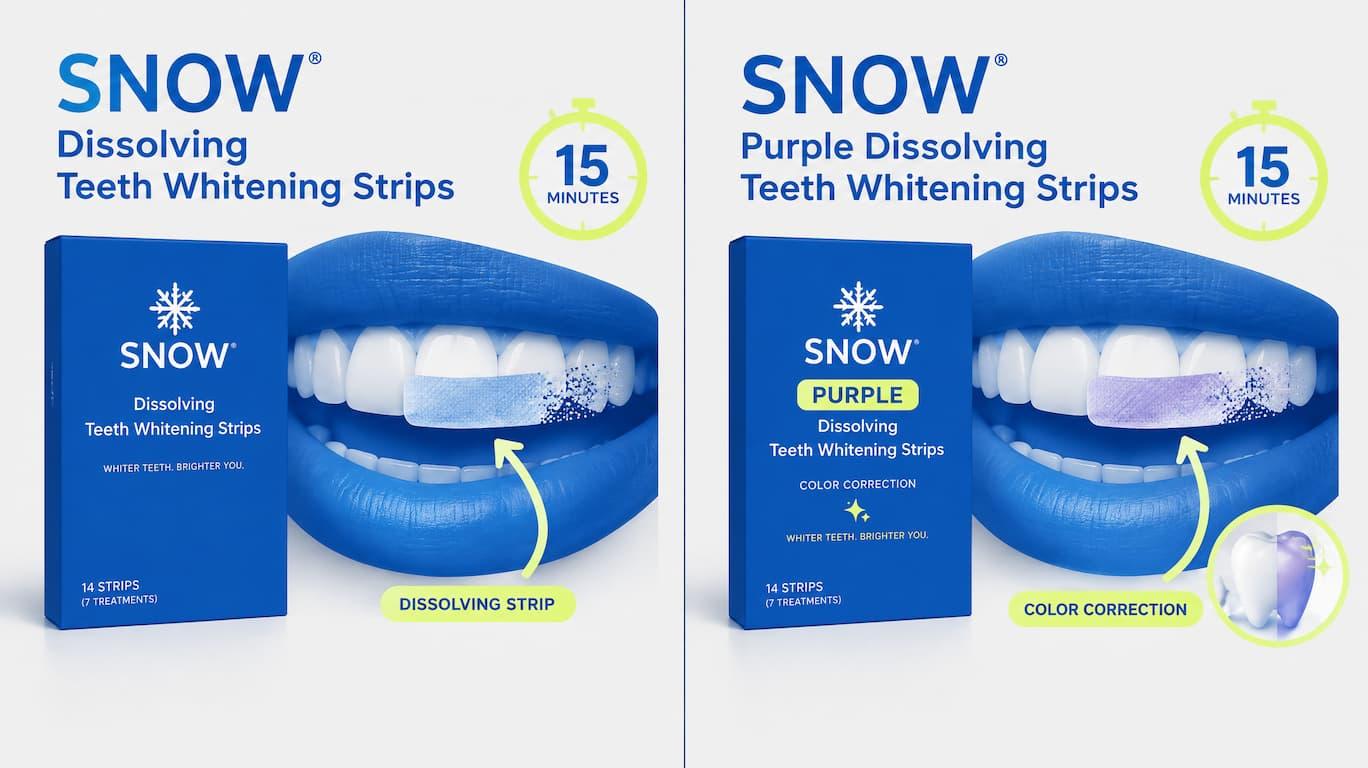
Even within SNOW’s strip lineup, timing comes down to the format you choose. Both options keep the routine short and straightforward, but they serve slightly different jobs depending on whether you want traditional whitening or whitening with an immediate color-correcting boost.
SNOW Dissolving Strips Keep the Timer at 15 Minutes
SNOW’s Dissolving Teeth Whitening Strips use a 15-minute wear time. Instead of keeping an intact plastic backing on your teeth until you peel it away, the strip dissolves during the routine. That gives the format a visible, physical cue that the session is moving along, while the 15-minute timing still sets the endpoint.
If you’re new to using whitening strips, the application matters just as much as the timer. Place them as directed so the whitening gel sits against the tooth surface rather than folding heavily onto the gums. SNOW’s steps for using whitening strips cover the routine from application through removal or dissolution.
For someone who wants a short, low-fuss routine, that 15-minute format has a clear job: it’s easy to fit around getting ready, showering, or whatever else is happening at the bathroom mirror. If a straightforward whitening routine is the priority, this is the simpler of SNOW’s two strip options. You don’t need to turn one session into an evening activity to chase a brighter smile.
Try SNOW Dissolving Whitening Strips
Purple Adds Color Correction, Not Extra Minutes
SNOW’s Purple Dissolving Teeth Whitening Strips add another cosmetic job to the strip routine. The purple pigment can temporarily balance the appearance of yellow tones through color correction, while the whitening formula follows its own labeled directions for use.
That distinction matters. A visible purple effect is not a signal to keep the strip on longer, and color correction is not the same thing as permanently changing the underlying tooth shade. If you want a dissolving strip routine plus temporary color correction for the appearance of yellow tones, the purple format has that specific job. Its visual effect still doesn’t give you permission to improvise the wear time.
Add Purple Color Correction to Your Routine
How Crest and Generic Peroxide Strips Compare
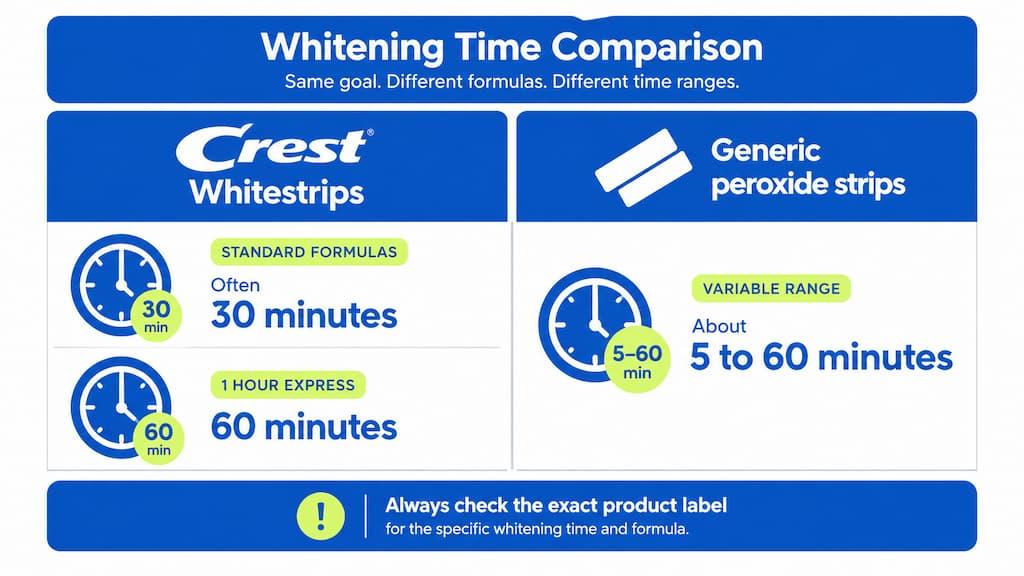
SNOW isn’t the only strip format with its own timing. Crest and generic peroxide strips can also make sense depending on the routine, price point, and product format you prefer.
-
Crest Whitestrips: A familiar option for shoppers who want an established strip format with clearly labeled timing. Standard Crest Whitestrips commonly use a 30-minute wear time, while the 1 Hour Express format uses a 60-minute session. That range also shows why it’s important to check the exact Crest product rather than assuming every Whitestrip follows the same clock.
-
Generic peroxide strips: These can offer more flexibility in price, formula, and wear time. Some are designed for quick sessions, while others stay on closer to an hour. That variety gives you more options to compare, but it also makes the label especially important. Check the whitening agent, frequency, and stated wear time together before deciding whether a product fits your routine.
Neither option is automatically better because it stays on longer or uses a higher peroxide concentration. Different chemistry, different clock. Whether you choose Crest, a generic peroxide strip, or SNOW’s 15-minute dissolving format, the useful comparison is which formula and wear time fit your routine, then following the directions for that specific product.
Why Longer Isn’t Better (Even If You’re Impatient)
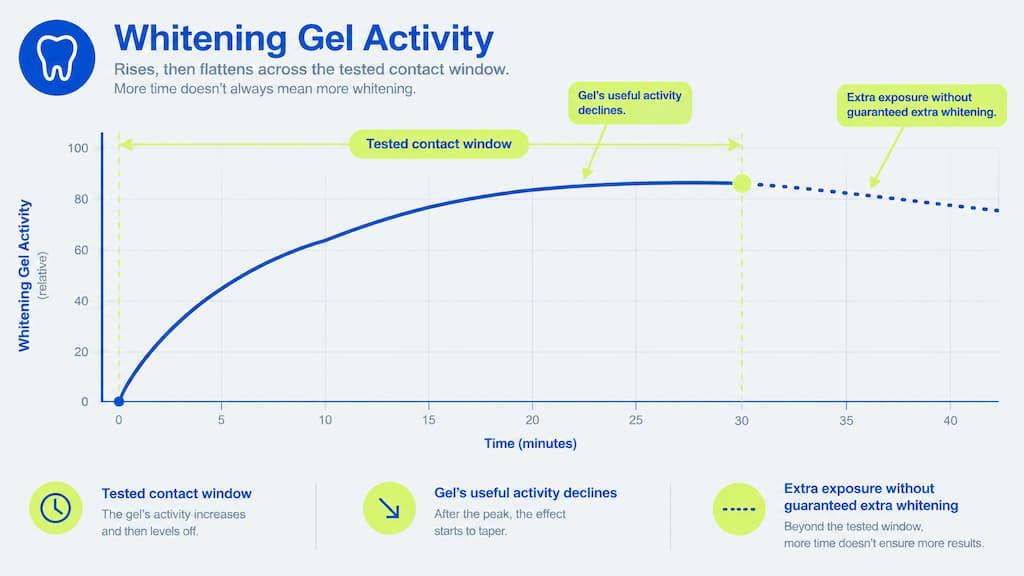
Hydrogen peroxide and carbamide peroxide are common whitening agents that help break down stain-causing compounds. The American Dental Association notes that temporary tooth sensitivity and gingival irritation are the most commonly reported side effects of tooth whitening. That matters for timing because more contact is still more exposure, even after you have passed the wear time the formula was designed around.
The useful idea behind “peroxide saturation” is that whitening activity doesn’t rise forever just because the clock keeps running. Peroxide is consumed as the reaction proceeds, so the gel's useful activity declines over the session. Translation: peroxide doesn’t keep getting more productive just because you refuse to stop the clock. Once you’re past the tested contact window, extra minutes can mean extra exposure without guaranteed extra whitening.
So if your strip says 15 minutes, 30 minutes, or 60 minutes, don’t add a bonus round because you have an event tomorrow. And definitely don’t turn a daytime strip into an overnight treatment unless that specific product explicitly says it is designed for overnight wear. Leaving whitening gel on for too long can increase the risk of tooth sensitivity and gum irritation without guaranteeing a brighter result. If you accidentally go far past the label, SNOW’s guidance on leaving whitening gel on too long explains what to watch for next.
When Should You Take Whitening Strips Off Early?
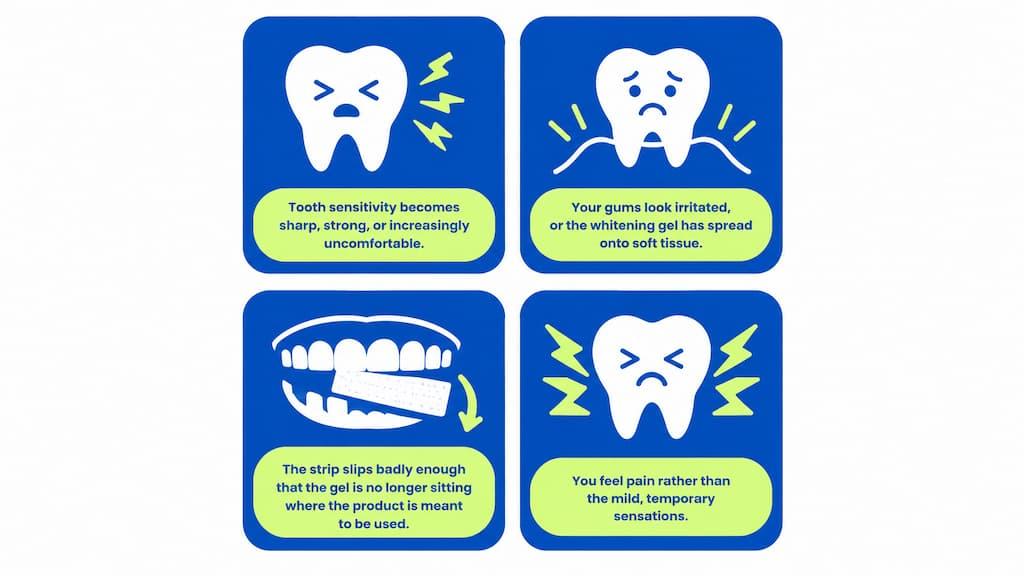
The timer tells you the planned endpoint. Your mouth can still give you a reason to stop sooner. Remove the strip and rinse if the session becomes clearly uncomfortable instead of trying to “get your minutes in.”
-
Tooth sensitivity becomes sharp, strong, or increasingly uncomfortable.
-
Your gums look irritated, or the whitening gel has spread onto soft tissue.
-
The strip slips badly enough that the gel is no longer sitting where the product is meant to be used.
-
You feel pain rather than the mild, temporary sensations that can sometimes happen with whitening.
Removing a strip early doesn’t mean you should reapply it later that day or double the next session. Let any discomfort settle and return only according to the product directions. Persistent or pronounced pain deserves a dentist’s attention.
Whitening Strips vs. Trays: Why Tray Timing Can Be Much Longer
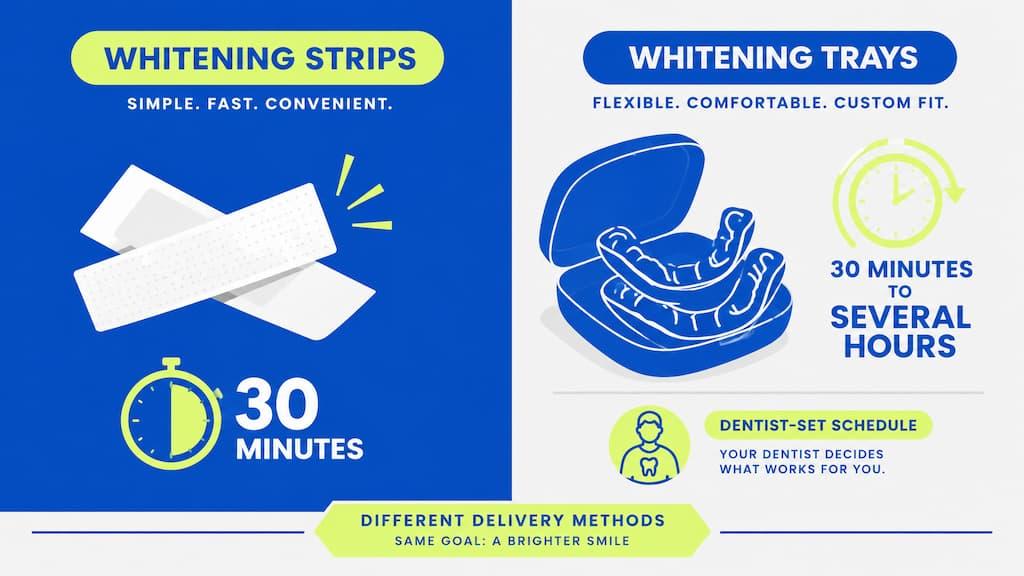
Whitening trays belong in the comparison because they show why wear time can’t be separated from delivery method. Some tray systems use carbamide peroxide, which releases peroxide more gradually than hydrogen peroxide. Depending on the formula, a tray may be directed for 30 minutes, several hours, or another dentist-set schedule.
That doesn’t make trays a better or more powerful version of whitening strips. It makes them a different treatment format. Professional treatments and dentist-directed trays can use different concentrations, bleaching agents, and schedules, so instructions from your dentist or specific product matter more than a generic strip timer. Professional teeth whitening also comes with direct clinical supervision, which changes the routine again.
The useful comparison is not “Which one can I leave on longest?” It is “Which routine can I follow properly?” A 15-minute strip may fit one person perfectly. A longer tray routine may fit someone else. The best timer is the one attached to a routine you’ll actually follow. Consistency beats improvisation.
Want Better Results? Don’t Add Bonus Minutes
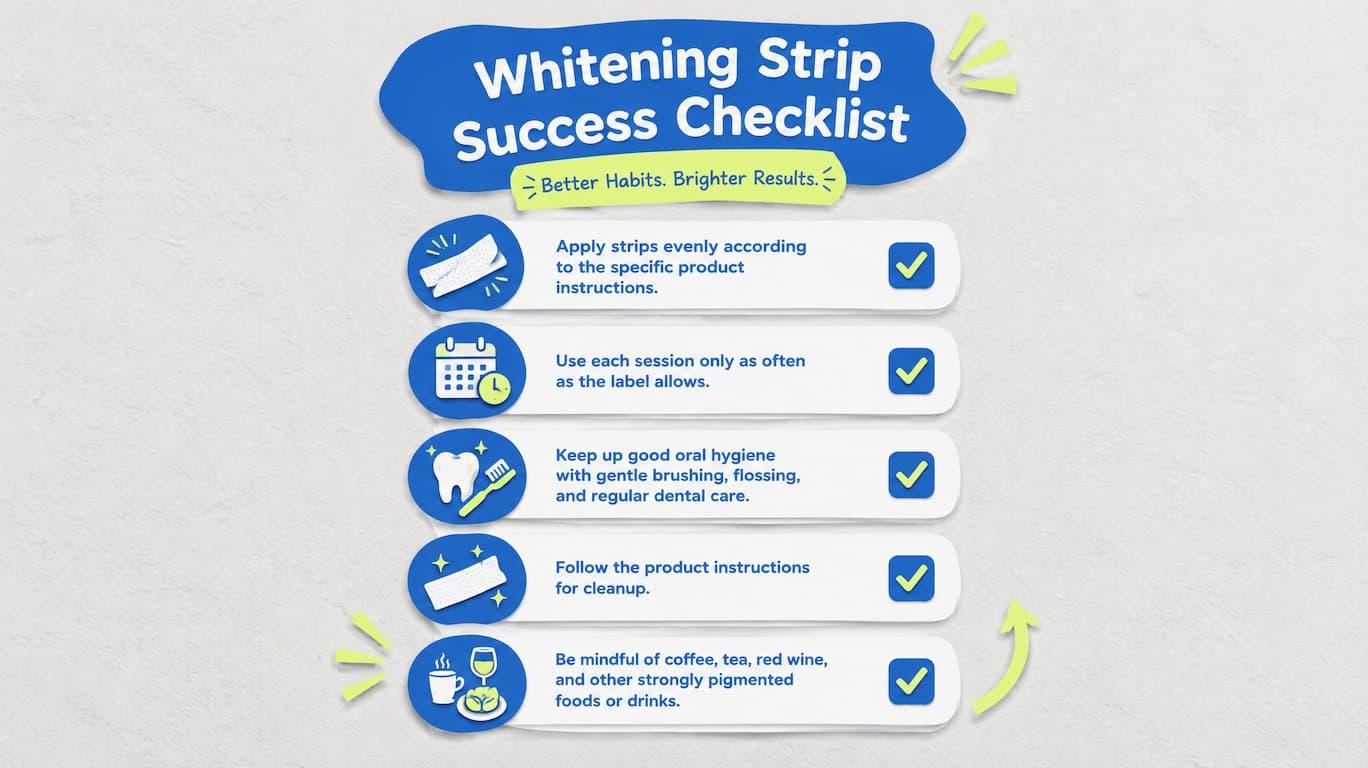
If you want a whiter smile, the best results usually come from making the labeled routine easier to repeat, not stretching the wear time. Good application and simple post-whitening care can do more for consistency than staring at the timer and negotiating with it.
-
Apply strips evenly according to the specific product instructions. If the label tells you not to brush immediately before application, build that wait into your routine instead of scrubbing right before the gel goes on.
-
Use each session only as often as the label allows. Daily use should mean the product says daily use. Avoid whitening again just because one session felt short or you want faster results.
-
Keep up good oral hygiene with gentle brushing, flossing, and regular dental care. A soft-bristled toothbrush is an easy choice when your teeth or gums feel slightly more reactive after whitening.
-
After the strip comes off or dissolves, follow the product instructions for cleanup. Rinse away remaining gel with water when directed, and don’t aggressively brush teeth that already feel sensitive.
-
Be mindful of coffee, tea, red wine, and other strongly pigmented foods or drinks after a session if you are trying to maintain whitening results. If your specific product gives a wait time before eating or drinking, follow that timing rather than borrowing a rule from another brand.
The goal is a routine you can repeat without turning every application into an experiment. Whitening toothpaste or mouthwash can be part of someone’s wider oral-care routine, but they don’t change the labeled wear time of a strip. The same goes for chasing a radiant smile before a big photo or confidence boost before an event. Stick with the timer that belongs to the product. Whitening is already doing enough chemistry. It doesn’t need creative direction.
The Timer Belongs to the Formula, Not the Category
Fifteen minutes, 30 minutes, an hour. There isn’t a magic number for every whitening strip because there isn’t a single formula in every box. SNOW Dissolving Teeth Whitening Strips use a 15-minute routine, while other strips and trays come with their own timelines.
Here at SNOW, we’d rather make the routine clear than turn longer wear into a beauty hack. Follow the timer your product was actually designed for, stop if your teeth or gums are clearly unhappy, and let consistent sessions do the work.
No bonus minutes. No bathroom chemistry experiment. Just follow the timer. Boring? A little. Useful? Very.
Find the SNOW Routine for Your Smile
FAQs About Whitening Strip Timing
Still staring at the clock? These are the timing questions that are useful after you know the basic wear window.
What if my whitening strips start dissolving before the timer ends?
Follow the directions for that specific product. Dissolving can be part of the format, but the way a strip looks or feels is not a universal measure of peroxide activity. Do not extend the session just because some material remains.
Can I shorten the wear time if I have sensitive teeth?
If you experience tooth sensitivity or discomfort, stop the session rather than pushing through it. Do not invent a new long-term schedule on your own. Check the product directions, and ask a dentist for guidance if sensitivity is persistent or pronounced.
Should I use whitening strips again the same day if I removed them early?
Not unless the product instructions specifically allow another application. Reapplying can increase total peroxide exposure beyond the intended routine. Let your teeth and gums settle, then continue with the next labeled session.
Does a longer wear time mean a whitening strip is stronger?
No. Wear time alone does not tell you the strength of a whitening product. Peroxide concentration, gel amount, adhesion, and delivery method all affect the routine. Compare the full instructions rather than assuming a 60-minute strip is automatically stronger than a 15-minute one.


