

Teeth whitening pens effectively brighten smiles by lifting surface stains through the application of peroxide-based gels. These pens use whitening gel with active ingredients like hydrogen peroxide to lift surface stains from your teeth.
Whitening pens offer a cost-effective solution, typically retailing between $20-$30, and allow for application in under 60 seconds.
While results are usually subtle and temporary, most people notice their teeth look a shade or two whiter. Just keep in mind that some users experience mild tooth sensitivity.
In this guide, we’ll break down how teeth whitening pens work, what they can and can’t do, and how to use them safely.
Key Takeaways
-
Teeth whitening pens provide a convenient, affordable option for removing surface stains and brightening smiles, but results are typically modest and temporary compared to professional treatments.
-
Active ingredients such as hydrogen peroxide or carbamide peroxide in whitening pens effectively break down surface stains but may cause tooth sensitivity in some users.
-
Proper application and maintenance practices, such as avoiding staining foods post-treatment and regular touch-ups, are essential for achieving the best results and prolonging the effects of whitening pens.
What Are Teeth Whitening Pens?
Teeth whitening pens are portable oral care devices containing a hydrogen peroxide or carbamide peroxide-based gel dispensed through a brush tip. Designed for precision application, these pens target specific surface stains on the enamel without the need for trays or strips. This delivery system allows for immediate, low-cost maintenance of tooth brightness between professional dental visits.
Our analysis of the top 10 whitening pens confirms that efficacy correlates directly with peroxide concentration. Consumers should prioritize formulas listing hydrogen peroxide (3-10%) or carbamide peroxide (10-35%) as the primary active ingredient.
Plaque accumulation and mineral deposits create physical barriers on the enamel that reduce the penetration and effectiveness of whitening gels.
You can learn more about the white hard stuff on teeth and how to treat it.
Composition and Design
These pens are slim tubes filled with a whitening gel that you apply directly to your teeth with a brush tip. They're designed to remove surface stains caused by coffee, red wine, or smoking, and are ideal for targeting specific discolored areas without using full trays or strips.
Inside most whitening pens, you'll find either hydrogen peroxide or carbamide peroxide, which gently lift stains from enamel. While they use the same ingredients as professional teeth whitening, the concentration is lower, making them suitable for at-home use.
You can safely pair a pen with other teeth-whitening products, such as whitening toothpaste or whitening strips, especially if you want to enhance your daily maintenance.
However, if you have sensitive teeth or have experienced tooth sensitivity, look for pens labeled "teeth whitening" that are safe to use without irritation. To learn about whitening pen safety and potential side effects, it's important to choose the right formula for your needs.
Users may temporarily observe white spots, a condition often caused by enamel dehydration, as noted by the Cleveland Clinic.
The Chemical Whitening Mechanism
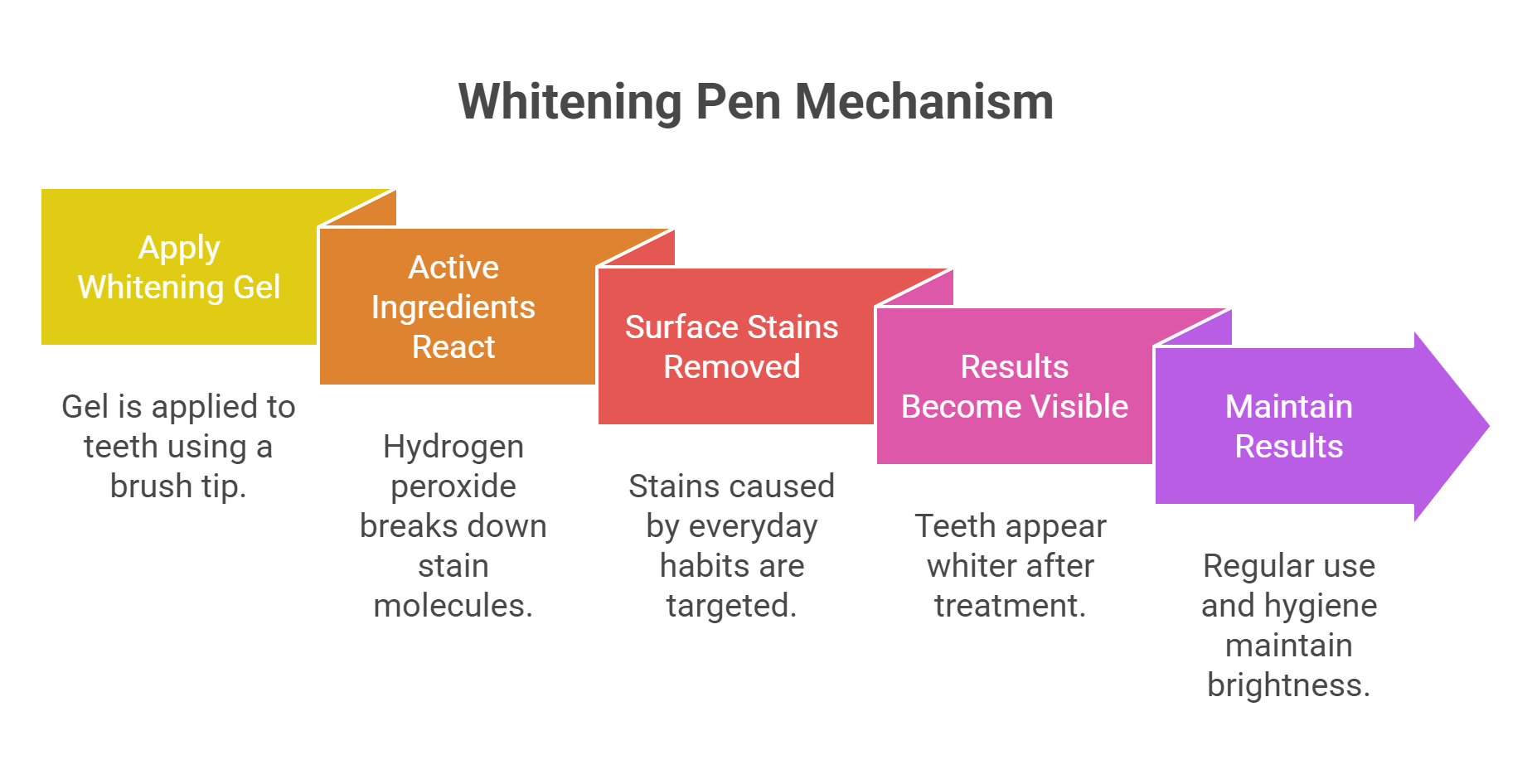
Whitening pens function by chemically oxidizing organic stain molecules on the tooth surface. The active ingredient—typically hydrogen peroxide—penetrates the porous enamel rods and breaks down the chromogens (pigment compounds), causing discoloration. This chemical reaction alters the way light reflects off the tooth, resulting in a perceptibly whiter appearance.
Here is a clear breakdown of how whitening pens work:
1. Active Ingredients Lift Stains
Most whitening pens use hydrogen peroxide, carbamide peroxide, or a combination of both. These ingredients release oxygen molecules that react with stain compounds, breaking them apart. If you have sensitive gums or sensitive teeth, carbamide peroxide works more gently and slowly than hydrogen peroxide.
The SNOW Extra‑Strength Whitening Pen uses a dual‑peroxide formula to speed up brightening while helping reduce the risk of tooth sensitivity.
2. Surface Stains Are the Main Target
Whitening pens work best on surface stains caused by everyday habits such as drinking red wine, coffee, tea, or cola. They do not remove deep intrinsic stains that live inside the dentin layer of your teeth. For deeper discoloration, professional whitening treatments are often needed.
Pens are ideal for light stain removal and for maintaining results between professional treatments.
3. Brush‑Tip Gel Delivery
Each pen contains a whitening gel that is applied through a brush tip for precision. When the gel is applied directly to dry enamel, the active ingredients immediately begin breaking down stain buildup and improving the appearance of your smile.
The SNOW whitening pen is designed to deliver visible results in as few as one session, thanks to its dual‑peroxide formula that reaches stains efficiently without irritating the gums.
4. Safe When Used Correctly
Whitening pens are safe for most users when applied according to the manufacturer’s instructions. Some people may experience temporary tooth sensitivity, especially if they already have gum disease or worn enamel. Avoid getting gel on the gums and allow it to dry before eating or drinking to maintain the whitening effect.
The SNOW formula includes enamel‑friendly ingredients such as xylitol and peppermint oil to help provide added comfort during whitening.
5. Results Are Noticeable but Require Upkeep
Most pens deliver a visible improvement of one to three shades with consistent use. Results are not permanent, so occasional touch‑ups are needed to smile bright over time. Pairing whitening pens with whitening toothpaste, regular brushing, and good dental hygiene helps maintain long‑term brightness.
The SNOW pen is often used between whitening sessions to maintain dramatic results longer, and many users keep it on hand for on‑the‑go stain removal.
How Effective Are Teeth Whitening Pens?
Do whitening pens work? In most cases, yes. But the level of improvement depends on factors like the type of stains, the consistency of use, and the strength of the ingredients.
According to the American Dental Association (ADA), over-the-counter whitening products containing lower peroxide concentrations typically lighten teeth by 1 to 3 shades.
While whitening pens do not usually deliver results as dramatic as professional whitening, they offer a visible improvement for people who want a quick, accessible way to brighten their smile.
Clinical Research Findings
Scientific research supports the effectiveness of whitening pens for surface-level stain removal:
-
A 2025 comparative analysis of gel pens indicates that users experience visible results within 7 to 14 days, according to data from G-P Dental Some users reported visible improvement after only five days. These results were less dramatic than professional treatments but aligned with user expectations for over-the-counter whitening.
-
A clinical trial testing a PAP-based whitening pen demonstrated effective whitening after 14 days. No participants reported tooth sensitivity. While the whitening effect was slightly lower than that of hydrogen peroxide formulas, the reduced risk of irritation made it an excellent option for sensitive gums and teeth.
-
An ex vivo study applied whitening pens to extracted teeth and tested their efficacy against staining agents such as coffee and red wine. The study found that teeth coated with the pen showed delayed discoloration compared to untreated teeth. This indicates that whitening pens can also help prevent stains.
-
Broader reviews of whitening products confirm that pens containing hydrogen peroxide or carbamide peroxide can remove surface stains and lighten tooth color when used consistently. These results were achieved with minimal sensitivity in most cases.
Real-World Results
User feedback on popular products supports clinical findings. SNOW’s Extra-Strength Whitening Pen, which uses a dual-peroxide formula, often delivers visible results within a week. Its enamel-safe blend of hydrogen peroxide and carbamide peroxide works quickly and gently to brighten teeth without irritation.
Many users also report success with the VieBeauti teeth whitening pen. It is praised for its convenience and ability to reduce discoloration caused by coffee, tea, or red wine.
Although whitening pens do not usually deliver dramatic results, they are excellent for quick stain removal and touch-ups between professional treatments. Most users see subtle whitening that lasts several days to a couple of weeks without additional maintenance.
What Are the Pros and Cons of Whitening Pens?
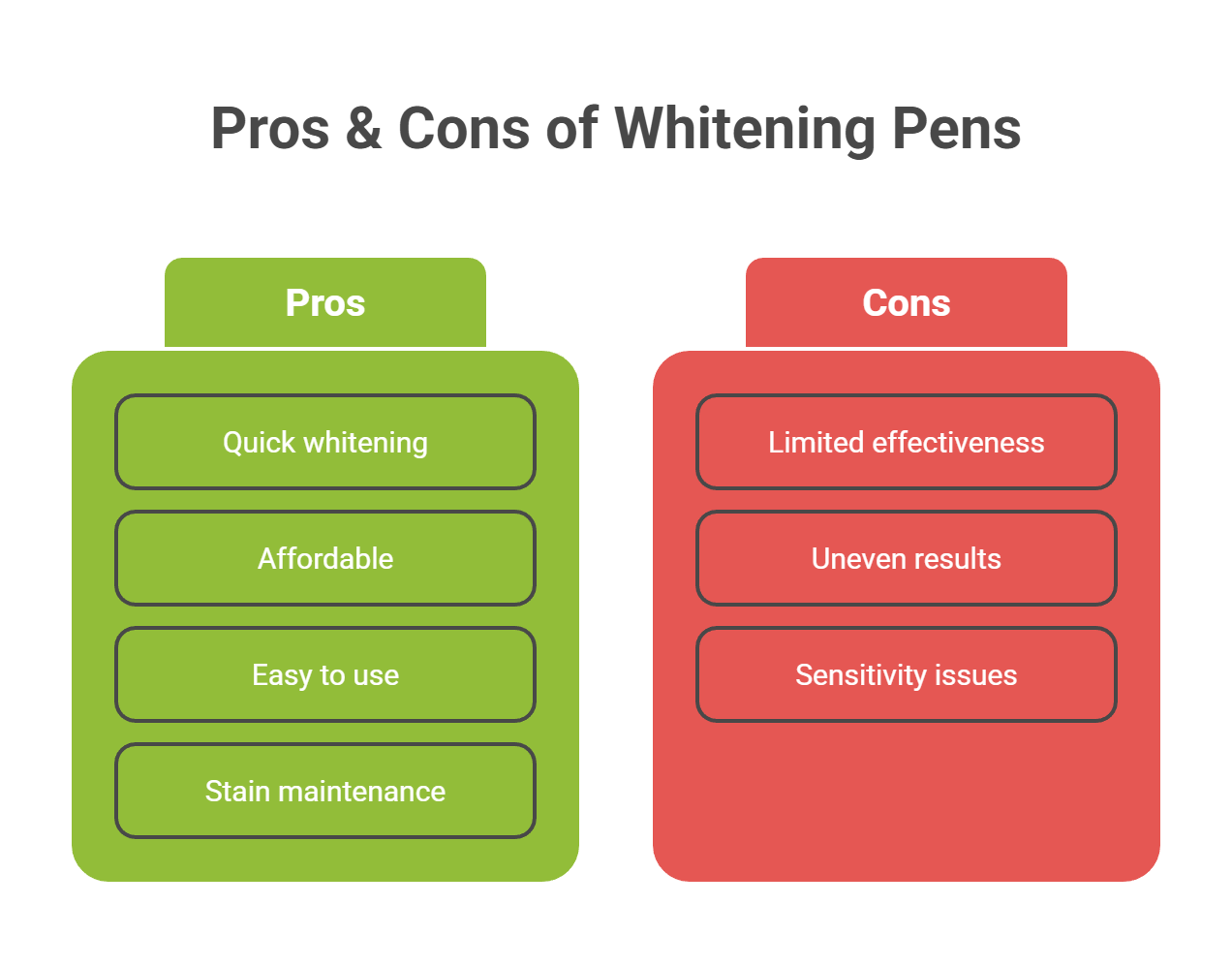
Teeth whitening pens have become a go-to option for people looking to brighten their smile without committing to traditional whitening treatments, and shoppers often weigh overnight pen options worth comparing before settling on one. But before jumping into a new teeth-whitening regimen, it’s essential to understand both the benefits and limitations of this method.
Benefits of Whitening Pens
If you're thinking about adding a pen to your teeth whitening regimen, here are some of the key advantages to consider:
-
Quick and Convenient Whitening: Whitening pens are compact and easy to carry, making them ideal for travel or daily touch-ups. The brush tip ensures a clean and targeted application.
-
Affordable Compared to Professional Treatments: While professional treatments can be costly, most whitening pens are priced affordably, offering results at a fraction of the cost.
-
Easy to Use Without a Mess: No trays, strips, or lights required. Just twist, apply the whitening gel, and go. It’s mess-free and fits into any routine.
-
Great for Mild Stains and Maintenance: Perfect for touch-ups between professional treatments or maintaining a recent whitening boost. Great for coffee, wine, or tea drinkers looking to manage surface stains.
Drawbacks of Whitening Pens
Despite the convenience, whitening pens aren’t a one-size-fits-all solution. Here are a few limitations to keep in mind:
-
Limited Effectiveness on Deep Stains: Whitening pens target surface stains only. If your discoloration goes deeper into the enamel or dentin, it won’t be enough.
-
Modest Whitening Results: Most users see improvements of 1 to 3 shades lighter. While noticeable, it’s not the same as professional whitening.
-
Sensitivity and Gum Irritation Risks: Overuse or incorrect application can cause tooth sensitivity or gum irritation. Follow the manufacturer’s instructions closely.
-
Requires Consistency: To see and maintain results, you’ll need to apply the pen regularly. Skipping applications can reduce effectiveness.
-
Not a Substitute for Oral Hygiene: Pens can’t replace good oral hygiene practices or professional cleanings. Think of them as a support tool, not a total solution.
How Do Pens Compare to Strips and Professional Treatment?
If you're aiming for a whiter smile, whitening pens are just one option among several. To choose the right solution for your needs, it helps to understand how they compare with other popular teeth-whitening methods, including professional treatments, strips, and trays.
Whitening Pens vs. Professional Treatments
Professional whitening treatments are known for delivering fast, dramatic results. Here’s how they differ from whitening pens:
-
Use high concentrations of bleaching agents for quicker whitening.
-
Offer customized treatment under professional supervision.
-
Provide long-lasting results but often come with a higher price tag.
-
Typically require an in-office visit or a prescribed at-home system.
In contrast, whitening pens like SNOW’s Extra-Strength Serum Pen offer a more accessible, at-home alternative. While the results may not be as dramatic as a dental office treatment, they’re great for:
-
Touch-ups between professional visits
-
Maintaining results from previous treatments
-
Convenient use at home or on the go
Plus, SNOW’s pen contains a dual-peroxide formula for a more powerful whitening effect, while still being gentle on enamel and suitable for sensitive teeth.
Whitening Pens vs. Whitening Strips and Trays
Whitening strips and trays have long been popular for at-home whitening. They often use 20% carbamide peroxide, which can produce significant whitening when used consistently.
However, whitening strips and trays typically require:
-
Longer application times
-
A more involved process (custom trays, exact placement, etc.)
-
Greater potential for mess or uneven coverage
Whitening pens, on the other hand, provide a faster, cleaner solution. SNOW’s brush-tip applicator makes it easy to target specific areas without waste or fuss.
While strips and trays may deliver deeper whitening, pens like SNOW’s are ideal for ongoing maintenance or for people who want results with minimal effort.
How Do You Use a Whitening Pen Correctly?
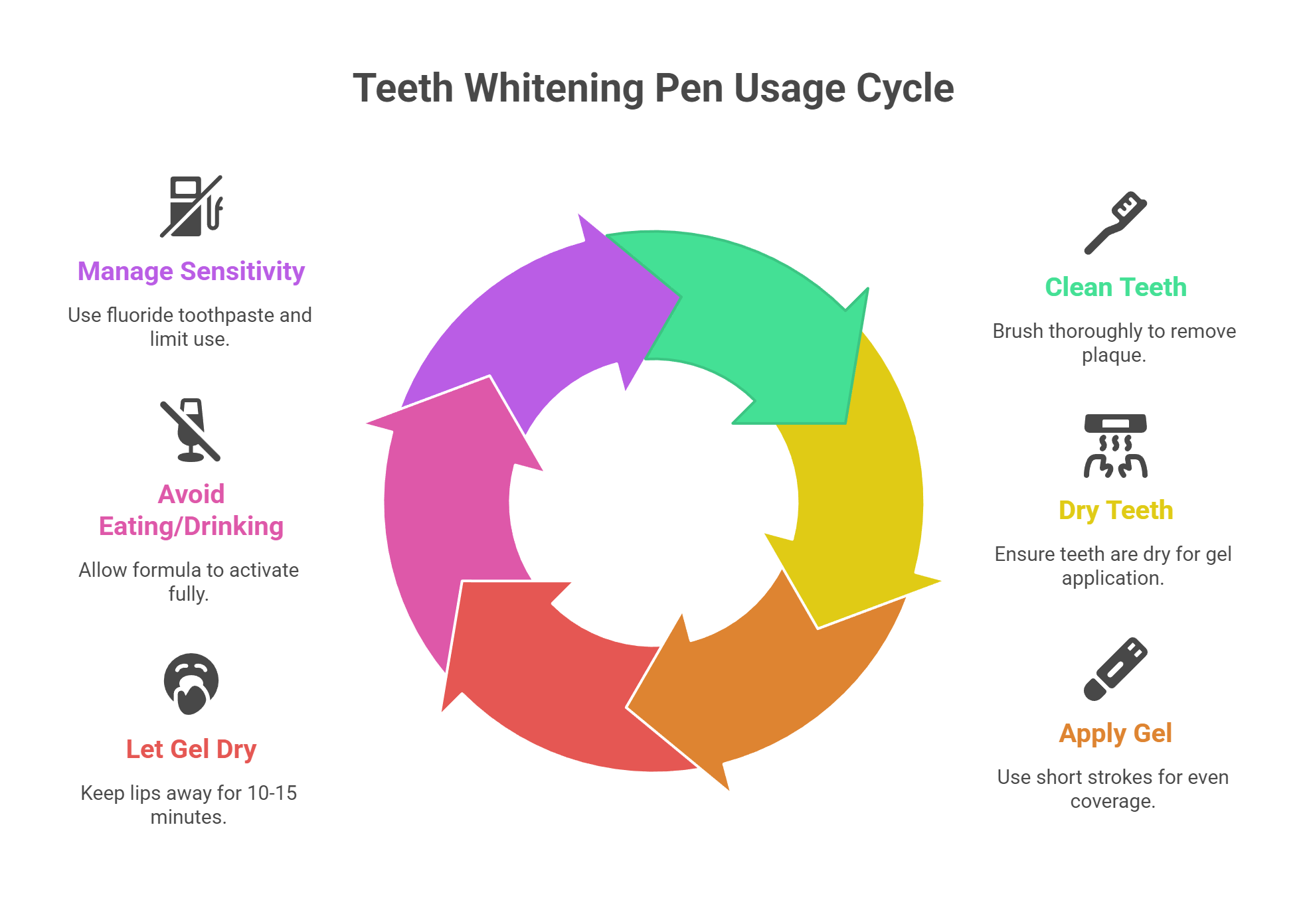
To get the most out of your teeth whitening pen, it’s not just about applying it, it’s about how and when you use it. Even the best teeth-whitening pens require proper technique, timing, and care to deliver noticeable results without discomfort.
Whether you’re targeting mild surface stains or maintaining your results between professional treatments, following these best practices helps ensure safe, effective whitening.
Application Tips
A good whitening pen does more than just whiten; it can serve as a precise stain-removal tool when used correctly. Follow these pro tips to maximize each use:
-
Clean your teeth first. Brush thoroughly to remove plaque that could block the whitening agent from contacting your enamel.
-
Dry your teeth before applying the gel. Moisture can dilute the product and reduce its effect.
-
Apply a thin layer using the built-in brush tip with short, vertical strokes for full, even coverage.
-
Keep your lips away from your teeth for 10 to 15 minutes to let the gel dry and start the whitening process.
-
Avoid eating or drinking immediately after application to allow the formula to activate fully.
Managing Sensitivity
If you have sensitive gums or have experienced discomfort from whitening products in the past, managing irritation is key.
Here’s how to reduce your risk:
-
Use a fluoride-based toothpaste daily to strengthen tooth enamel and reduce reactivity.
-
Limit whitening pen use to once daily or every other day if discomfort occurs.
-
Avoid applying gel directly near the gum line to prevent gum irritation.
For those with gum disease or weakened enamel, it’s best to consult with a dental professional before starting or continuing use. This helps ensure safe results and avoids worsening any existing issues.
How Do You Maintain Whitening Results?
To maintain a bright smile after using a whitening pen, it’s important to:
-
Have good daily habits
-
Perform occasional touch-ups
-
Practice proper oral hygiene
-
Avoid staining foods and beverages
These steps are essential for sustaining whitening results.
By following these maintenance tips, you can prolong the effects of your whitening pen and keep your smile looking its best.
Post-Whitening Care
After the visible improvement comes the upkeep. Whitening pens are excellent tools to brighten your smile, but maintaining results takes more than reapplication.
Follow these tips to keep your results longer:
-
Limit exposure to staining foods and beverages, such as coffee, tea, and red wine, for at least 24 hours after whitening.
-
Rinse your mouth or drink water after meals to prevent pigment buildup.
-
Maintain good oral hygiene by brushing, flossing, and scheduling regular professional cleanings.
-
Avoid overuse to protect your natural tooth enamel from thinning or sensitivity.
For additional care tips, explore how to get rid of yellow teeth and understand how long teeth whitening lasts.
Touch-Up Frequency
While most pens can lighten your smile by one to three shades lighter, those effects are not permanent. Continued use is necessary to maintain the results, especially if you indulge in staining habits.
How often should you reapply?
-
For best results, touch up every few days depending on your lifestyle and stain exposure.
-
For dramatic results or consistent whitening, consider pairing your pen with other whitening treatments, such as LED kits or traditional whitening strips.
-
Reapply after consuming red wine, curry, or other intensely pigmented foods.
Remember: whitening pens work best as part of a teeth-whitening regimen, not as a replacement for your entire oral hygiene routine.
When Is Professional Dental Advice Necessary?
Whitening pens are safe for most, but in some cases, extra care is needed. You should talk to a dental professional if:
-
You have recurring discomfort, even with limited use
-
You experience irritation despite following the manufacturer's instructions
-
You have deeper discoloration that has not improved with over-the-counter methods
In such cases, consider professional whitening or explore options in cosmetic dentistry for more effective, long-lasting results.
Final Thoughts
Teeth whitening pens are a practical, budget-friendly option for achieving a brighter smile without the hassle of trays, strips, or in-office visits. They work well for removing surface stains, especially those caused by coffee, wine, or smoking, and are ideal for quick touch-ups between professional whitening sessions.
While results are typically modest and not as long-lasting as professional treatments, whitening pens remain a reliable maintenance tool. Proper use, consistent oral hygiene, and realistic expectations are key to getting the best outcomes. If you have concerns about tooth sensitivity or gum irritation, it’s always wise to check with a dental professional before starting or continuing any whitening regimen.
For those looking for a more powerful formula that’s still gentle on enamel, SNOW’s Extra-Strength Whitening Pen combines hydrogen and carbamide peroxide to deliver visible results with minimal sensitivity, all in a sleek, travel-ready design.
Frequently Asked Questions
Quick answers to the most common questions about how whitening pens work, what to expect, and how to use them safely.
How do teeth whitening pens work?
Teeth whitening pens work by applying a gel that contains bleaching agents, such as hydrogen peroxide, which break down stain molecules on your teeth and enhance their brightness. This targeted approach makes whitening easy and convenient on the go.
Are teeth whitening pens safe to use?
Teeth whitening pens are generally safe when used as directed, but be cautious of potential tooth sensitivity and avoid overuse to protect your enamel.
How long do the results from teeth whitening pens last?
The results from teeth whitening pens typically last from a few days to a couple of weeks, but regular touch-ups can extend their effectiveness.
What are the benefits of using teeth whitening pens over other methods?
Teeth whitening pens offer convenience, portability, and affordability, making them ideal for on-the-go touch-ups and maintaining brightness between professional treatments. Their ease of use enhances their effectiveness compared to other whitening methods.
When should I consult a dental professional about teeth whitening?
You should consult a dental professional before starting any teeth whitening process, particularly if you have dental issues or severe staining, to ensure safety and achieve the desired results.


