

Most toothbrush bristles today are made from synthetic nylon, primarily Nylon 6 or Nylon 6.6. Over 90% of modern brushes use these petroleum-based plastics because they’re durable, flexible, and more hygienic than older materials.
That matters because those bristles touch your enamel and gums twice a day, every day. The material affects how gently your teeth are cleaned, how your gums respond, and how much bacteria the brush can hold between uses.
Before 1938, bristles were made from animal hair. Then DuPont introduced the first nylon toothbrush, and the industry shifted almost overnight due to improved hygiene and consistency.
At SNOW, we design every toothbrush, including the SNOW Electric Toothbrush, with enamel safety and bristle performance in mind. That means focusing on softness, density, and durability before anything else. Understanding what bristles are made of is the first step in choosing a brush that will protect your smile in the long term.
In this guide, we’ll break down all major bristle types and what they mean for your mouth and the environment.
Key Takeaways
-
Over 90% of modern toothbrush bristles are made from petroleum-based nylon (primarily Nylon 6 and 6.6), with emerging plant-based and specialty options slowly entering the market.
-
Bristle material directly affects three things you care about: cleaning effectiveness, gentleness on gums and enamel, and the amount of plastic waste generated.
-
Soft, end-rounded synthetic bristles are recommended by dentists and the American Dental Association for almost everyone, regardless of the exact plastic type used.
-
Most “eco” toothbrushes with bamboo handles still use plastic bristles; fully compostable bristles are rare and typically made from animal hair, which carries hygiene and ethical concerns.
Quick Answer: What Are Toothbrush Bristles Made Of Today?
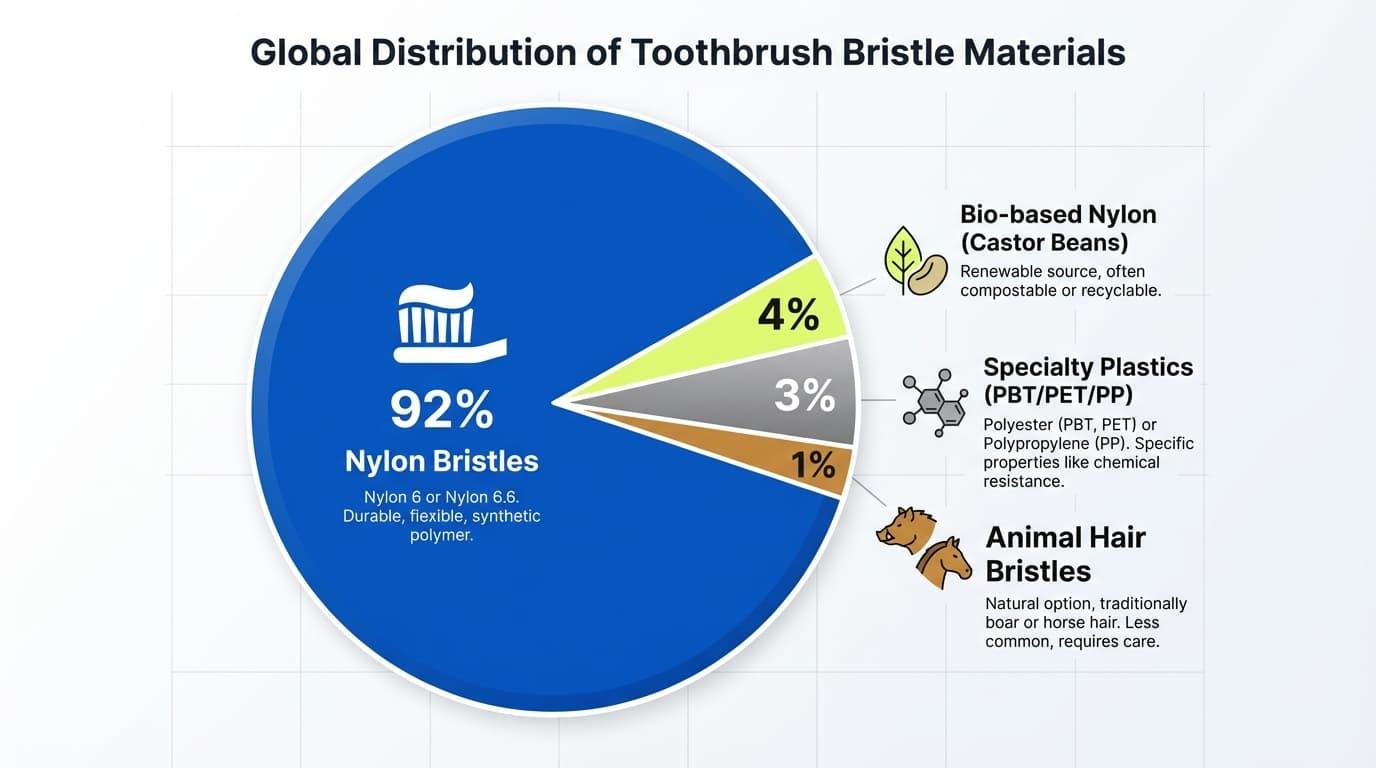
Today, over 90% of manual toothbrushes and electric heads use nylon bristles, most commonly Nylon 6 or Nylon 6.6. These materials dominate because they’re durable, flexible, and reliable for everyday oral health.
Beyond standard nylon bristles, some plastic toothbrushes use specialty plastics like PBT, PET, or PP. These are still synthetic materials, just with slightly different stiffness or durability profiles.
There are also bio-based versions of nylon made from plant sources such as castor beans. They function like traditional nylon bristles, but reduce fossil fuel use in production.
Natural options exist, including animal hair bristles, boar bristles, and pig bristles. Historically, pig hair bristles were common before synthetic materials took over.
One important clarification: most bamboo toothbrush bristles are not bamboo. While the toothbrush handles may be bamboo, the bristles are usually still nylon or bio-based plastic for hygiene and oral health performance.
Why Did Nylon Become the Global Standard for Toothbrush Bristles?
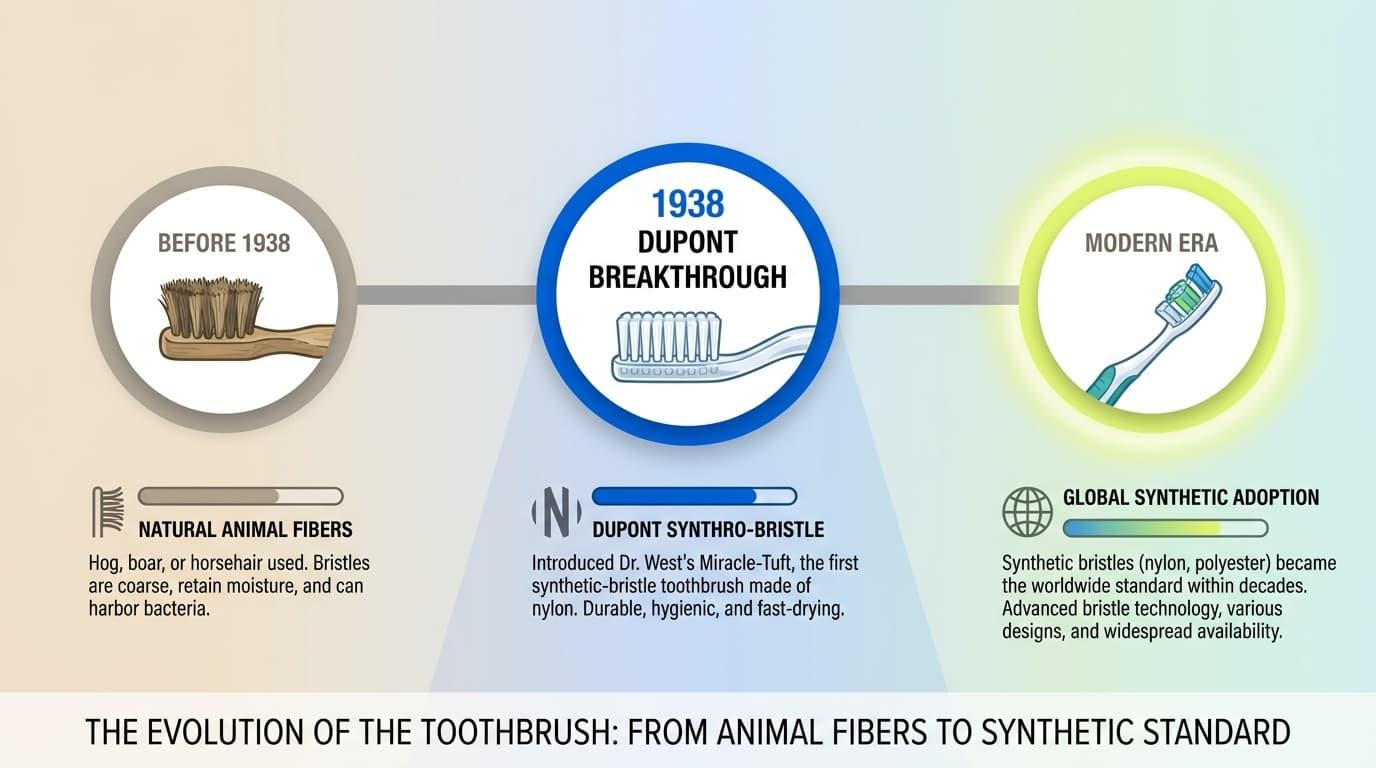
Before synthetic materials existed, toothbrushes relied on natural animal fibers. While usable, these early bristles absorbed moisture easily and did not dry well between uses. That created hygiene concerns at a time when the understanding of bacteria was improving rapidly.
In 1938, DuPont introduced the first commercially successful synthetic-bristle toothbrush. This was not just a material swap. It was a manufacturing breakthrough. For the first time, bristle thickness, stiffness, and shape could be engineered with precision rather than relying on the variability of natural hair.
Synthetic filaments allowed manufacturers to produce brushes with consistent softness, improved durability, and predictable performance. That consistency mattered for both consumer comfort and clinical recommendations.
Within a few decades, synthetic bristles became the default worldwide. Their reliability, mass production capability, and performance stability secured their place as the industry standard—a position they continue to hold today.
Modern Synthetic Bristle Types (Easy Breakdown)
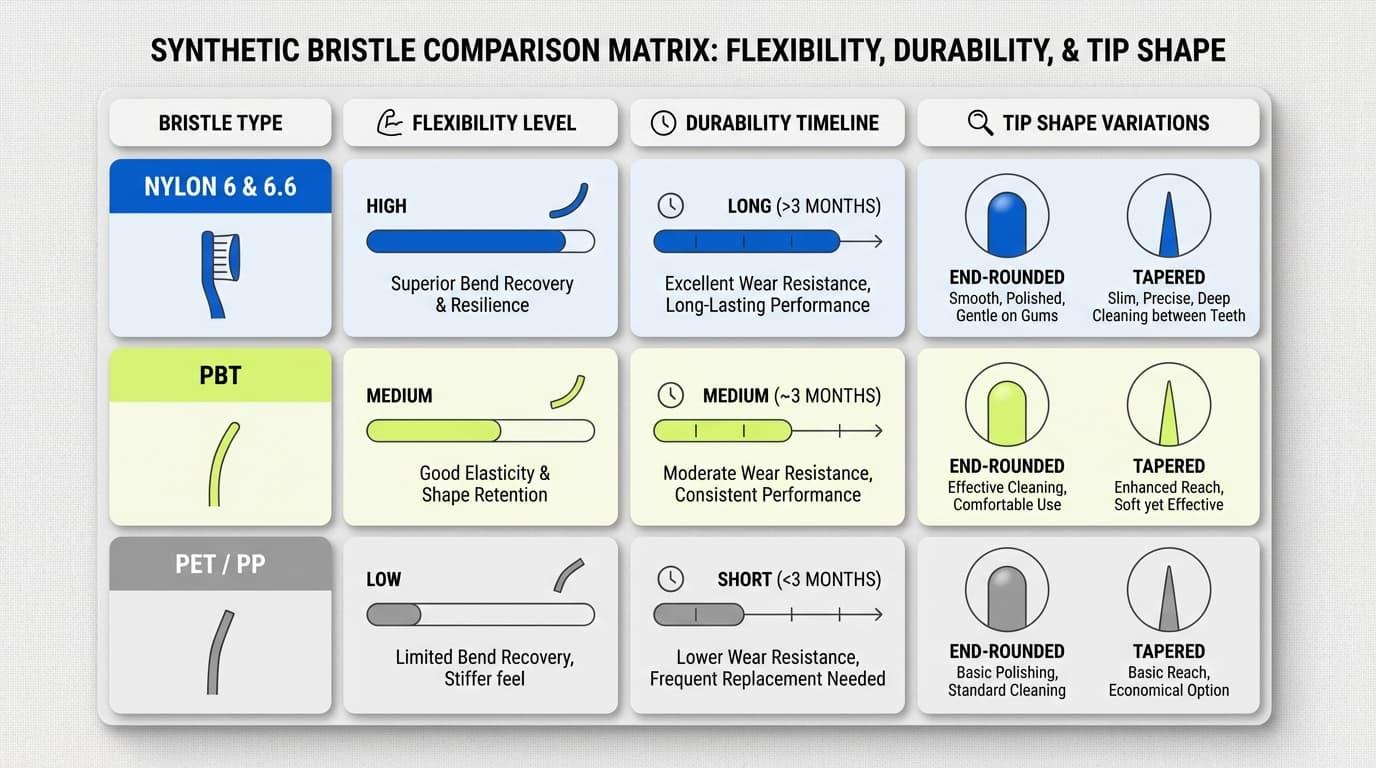
Not all plastic bristles work the same way. Even if they look alike, the type of plastic and the shape of the tip can change how they clean your teeth and how gentle they feel.
Nylon 6 and Nylon 6.6
These are the most common bristles used today. They are flexible, which means they bend rather than scrape hard against your teeth. This helps protect your enamel and gums.
They usually last about three months before they start to bend outward, which is when dentists say it’s time to replace your brush. They work well in both regular and electric toothbrushes.
PBT
PBT bristles are a little stiffer than nylon. Because of that, they are often used in electric toothbrush heads that move at very high speeds.
They hold their shape well, but if you press too hard, stiffer bristles can cause more wear on your teeth. That is why brushing gently is important.
This is why high-quality electric toothbrushes, including the SNOW Electric Toothbrush, use soft, engineered synthetic bristles designed to maintain their shape under high-speed movement while remaining gentle on enamel and gums.
Get The Snow Electric Toothbrush
PET and PP
These are usually found in cheaper toothbrushes. They are less flexible and may bend out of shape faster, sometimes in just a few weeks.
When bristles flare out, they do not clean as well and can become rougher on your teeth.
Tapered vs End-Rounded Tips
The tip shape matters a lot.
End-rounded bristles have smooth, rounded tips. These are gentle on teeth and are a safe choice for most people.
Tapered bristles get thinner at the tip. Studies from the University of Zurich found that tapered bristles caused less dentine wear when brushing with normal pressure. That means they may be softer on sensitive teeth.
Are Bio-Based and Eco-Friendly Toothbrush Bristles Actually Plastic-Free?
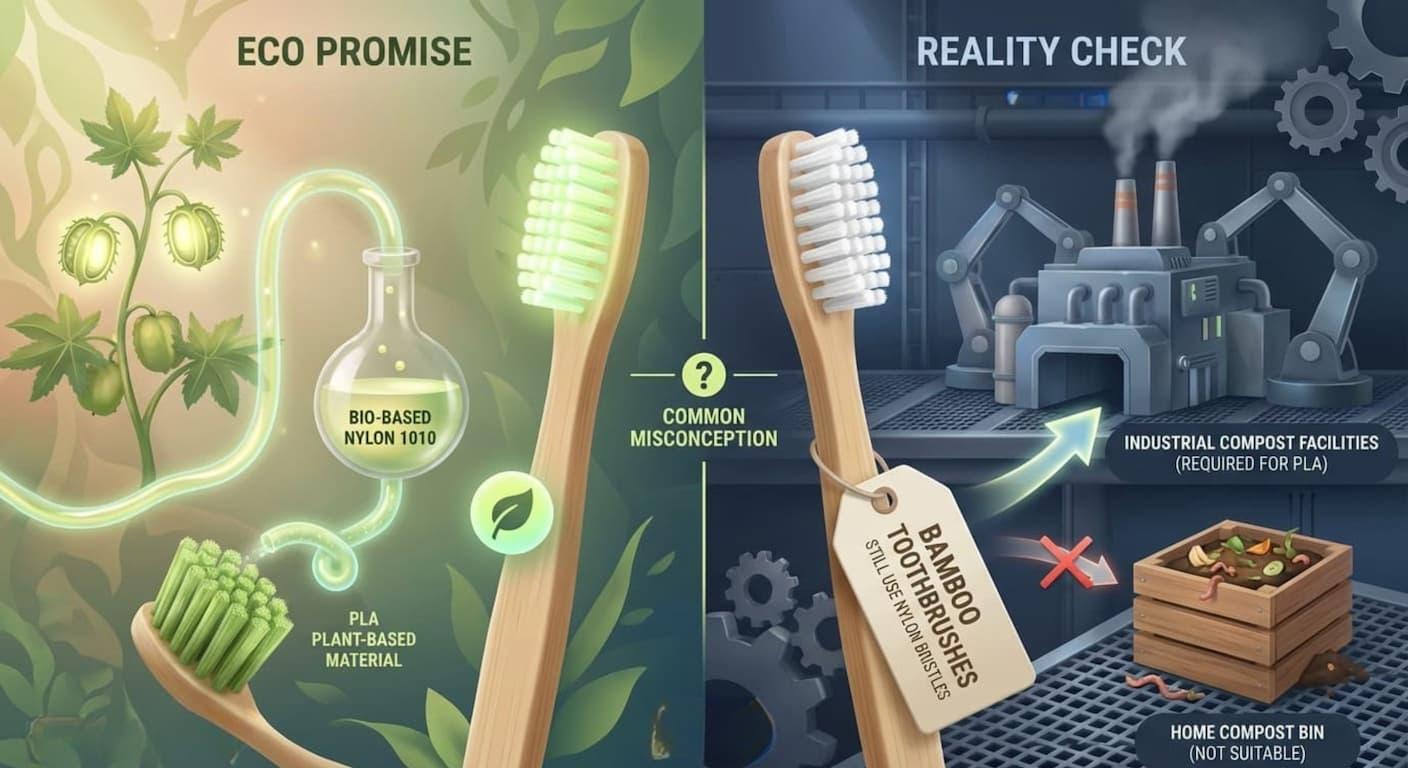
As concerns about plastic waste grow, many brands now offer “eco” options. But eco does not always mean plastic-free.
Some bristles are made from bio-based nylon, such as Nylon 1010 derived from castor beans. It behaves almost exactly like traditional nylon. It is still flexible, durable, and suitable for daily cleaning with toothpaste. The difference is the source of the material, not the brushing feel.
PLA is another plant-based material. It is often labeled biodegradable, but here is the important detail:
-
Most PLA only breaks down in industrial compost facilities.
-
It usually will not decompose in a home compost bin.
Many bamboo toothbrushes still use nylon bristles. The handle may be bamboo, but the bristles are typically plastic. Some manufacturers use recycled or plant-based materials, but the bristles still function like plastic at the end of life.
In short, bio-based options can reduce fossil fuel use. They do not fully eliminate plastic. Understanding this helps you choose based on real environmental impact rather than marketing claims.
Natural Bristles: Animal Hair & Plant Fibers
Before nylon was invented, toothbrush bristles were made from natural fibers such as boar hair, pig hair, or even horsehair. These materials are biodegradable and plastic-free, which appeals to some users.
However, natural hair bristles are porous. That means they can trap moisture and increase the risk of bacteria if not properly rinsed and dried. Hygiene is a key factor when something sits in your mouth twice a day.
Animal-based bristles also raise ethical considerations. They are not cruelty-free, which makes them unsuitable for many people.
Plant options such as miswak or neem sticks are another alternative. Instead of a standard brush head, you chew one end until fibers form natural bristles. These are fully biodegradable and widely used in certain cultures.
Still, there are tradeoffs:
-
They may not provide the same soft, controlled cleaning as modern synthetic brushes.
-
Some fibers can feel more abrasive on enamel and gums.
-
Durability can vary, and frequent trimming is needed to maintain hygiene.
Natural materials reduce plastic use. Synthetic materials offer more consistent softness and durability. Choosing between them depends on which factors matter most to you: hygiene, environmental impact, or ethical preferences.
Specialty Bristles: Charcoal & Infusions
Walk into any pharmacy, and you’ll see a toothbrush claiming whitening power, antibacterial protection, or advanced technology built into the bristles. These features sound impressive, but it’s important to separate marketing from evidence.
Charcoal-infused bristles are usually standard synthetic fiber with activated charcoal mixed in. The claims often include whitening and odor control. However, current research does not provide strong evidence that charcoal bristles clean better than regular soft bristles.
Some brushes advertise silver ion or antibacterial coatings. The idea is to reduce bacteria on the toothbrush head. But good rinsing, air drying, and replacing your toothbrush every few months already address most hygiene concerns. There is limited strong comparative data showing these infused bristles improve real-world oral care outcomes.
Whitening claims are also common. In reality, whitening mainly comes from toothpaste ingredients and brushing technique, not additives inside the bristles.
The clear takeaway is simple: softness matters more than special coatings. For daily oral care, the best toothbrush is not the one with the most additives. It is the one with soft, well-finished bristles used gently and consistently.
Bristle Design Matters More Than Material
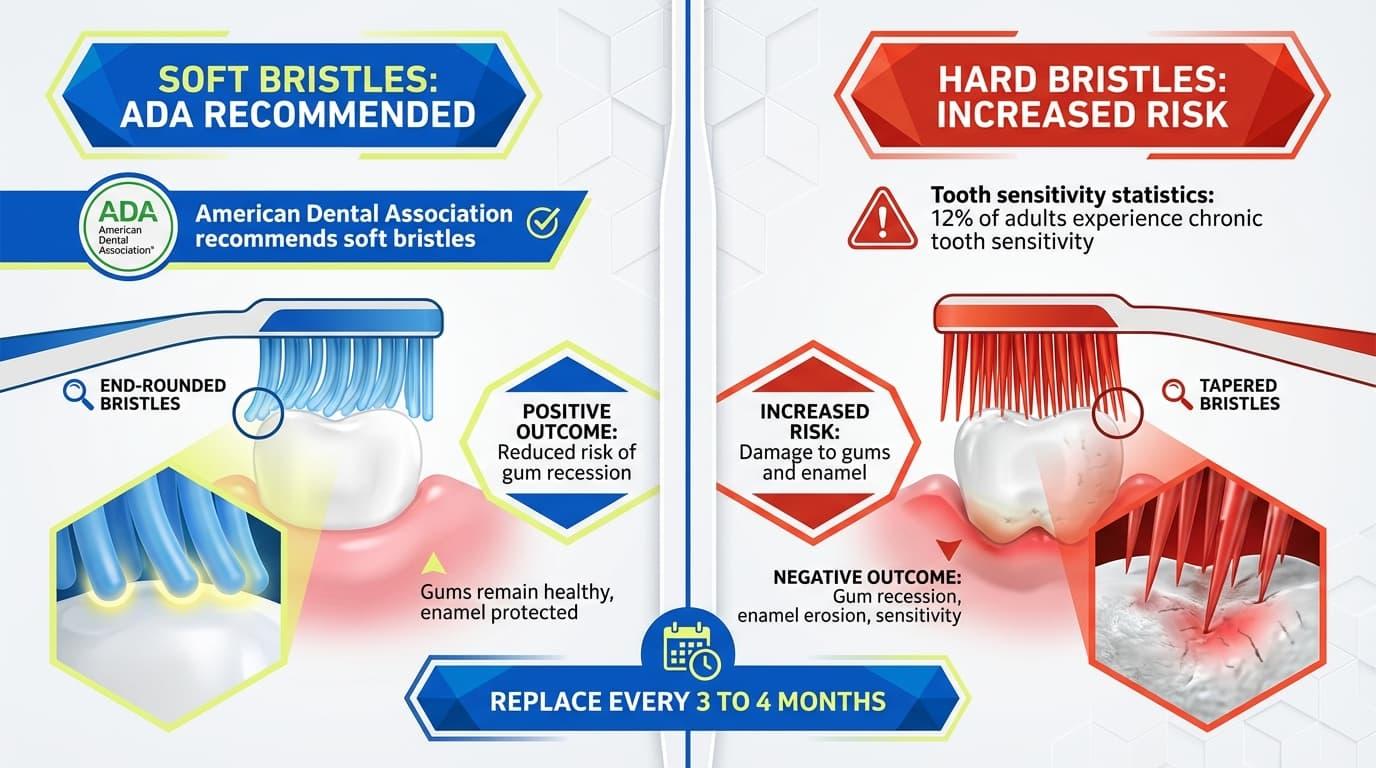
When choosing a toothbrush, design often matters more than the type of bristles (nylon or another synthetic fiber). This is the most important section for protecting your teeth and gums.
Soft vs Medium vs Hard
The American Dental Association recommends soft bristles for most people. Soft bristles clean plaque effectively while reducing the risk of abrasion.
Medium- and hard-bristle brushes can feel powerful, but they increase the risk of enamel wear and gum damage. About 12% of adults experience chronic tooth sensitivity, and aggressive brushing with stiff bristles can make it worse.
For nearly everyone, soft bristles are the preferred choice.
That principle is central to SNOW’s approach. The SNOW Electric Toothbrush is built with soft, densely packed, end-rounded bristles designed to clean effectively while minimizing abrasion risk. Because protecting enamel is not optional.
Get The Snow Electric Toothbrush
End-Rounded vs Tapered
End-rounded bristles have smooth, polished tips. These are gentle on enamel and gums and widely recommended for safe daily use.
Tapered bristles narrow toward the tip. They can reach slightly deeper along the gumline and may reduce dentine wear when used with proper pressure.
Both designs can work well. The key is a gentle brushing force.
Wear and Splaying
Over time, bristles bend outward. This is called splaying. When a toothbrush head looks flared, cleaning effectiveness drops, and the risk increases.
Most toothbrushes should be replaced every 3 to 4 months. Replace sooner if the bristles look frayed.
Sensitivity and Abrasion Risk
Enamel does not grow back. Once it wears down, the damage is permanent. That is why gentle brushing matters so much in daily oral care.
If you have sensitive teeth or gum recession, choose extra-soft bristles and use light pressure. Eco-friendly alternatives with wooden handles or fully natural fibers may appeal to sustainability or ethical concerns, but the softness and design of the bristles remain the most important factors in protecting your teeth.
Environmental Impact of Toothbrush Bristles
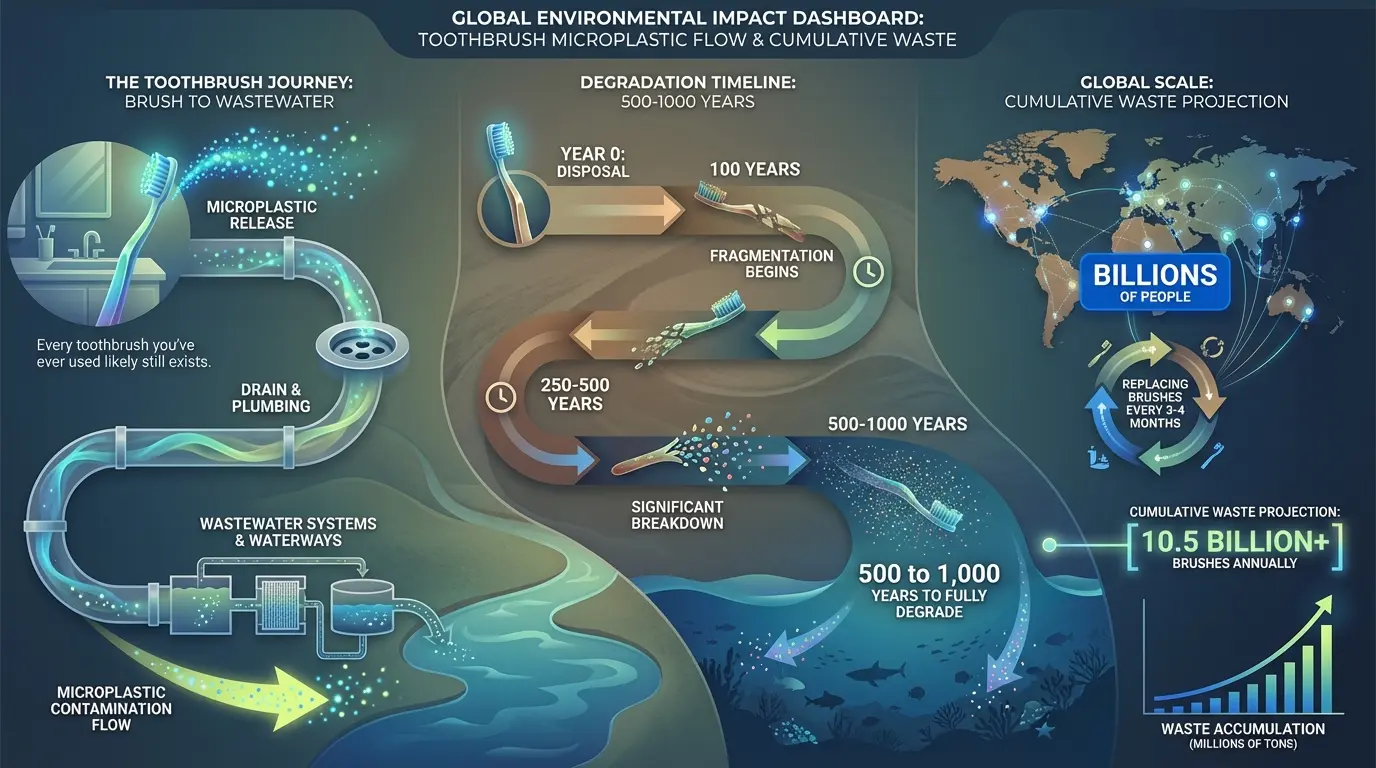
Every toothbrush looks small. But when billions are thrown away each year, the impact adds up.
Microplastics
Most toothbrush bristles are made from plastic-based synthetic materials. As you brush, tiny fragments can wear off over time. These particles are called microplastics. They are too small to see, but they can enter wastewater systems and eventually reach rivers and oceans.
Current research is still in its early stages, but scientists agree that reducing overall plastic waste is important for long-term environmental health.
Persistence
Plastic bristles do not break down quickly. In landfills or natural environments, they can take 500 to 1,000 years to fully degrade. That means every toothbrush you’ve ever used likely still exists in some form.
Waste Scale
A single toothbrush seems insignificant. But multiply that by billions of people replacing brushes every three to four months, and the waste becomes substantial.
Even bamboo toothbrushes often still use plastic bristles, meaning part of the product remains long-lasting waste.
Comparison Snapshot
Here’s a simplified comparison:

No option is perfect. Some reduce fossil fuel use. Others reduce plastic waste. Most still involve tradeoffs.
Recycling Limitations
Recycling is difficult. Bristles are too small to process in most municipal systems. Even when toothbrush handles are recyclable, the bristles usually must be removed first. Specialized mail-in recycling programs exist in some areas, but they are not widely available.
The reality is simple: reducing total consumption and choosing replaceable-head systems may have a greater impact than switching to a different bristle type alone.
How to Choose the Right Bristle for You
Material matters. But brushing technique, pressure, and consistency matter more.
For Most Adults
Choose a soft-bristled toothbrush. Replace it every three to four months. Focus on gentle brushing for two minutes, twice daily. This supports strong enamel and healthy gums.
For Sensitive Teeth
Look for extra-soft bristles. Use light pressure. Avoid hard or medium bristles. Sensitivity often worsens with aggressive brushing, not weak bristles.
For Kids
Choose small brush heads with soft bristles. Children tend to press too hard, so softer options are safer. Supervise brushing until good habits form.
For Eco-Priority Users
If sustainability is your main concern, consider a toothbrush with a reusable handle or lower-impact materials. Understand that most bristles are still made of plastic. Appropriate brush extension and responsible disposal also matter.
For Orthodontics
Braces and retainers require careful cleaning. Soft bristles are still recommended, but specialized orthodontic brush designs may help clean around brackets more effectively.
Final Words
Most toothbrush bristles today are made from nylon or other synthetic materials because they offer reliable hygiene, durability, and gentle cleaning. Eco and natural options exist, but each comes with tradeoffs in lifespan, performance, or compostability.
What protects your teeth most is simple. Soft bristles, light pressure, and replacing your brush on time. Technique will always matter more than trends.
If you are looking for thoughtfully designed oral care tools built around softness, durability, and enamel safety, explore the SNOW collection. SNOW focuses on high-quality bristle design and everyday performance so you can protect your smile with confidence, twice a day.
Explore The SNOW Whitening Collection
FAQs
Below are clear, direct answers to common questions about toothbrush bristles, safety, and sustainability.
Are any toothbrush bristles fully compostable and plastic-free?
Yes, some toothbrush bristles are fully compostable and plastic-free, but they are usually made from animal hair, such as boar or pig bristles, or from raw plant fibers like sisal. These materials can break down in a home compost under the right conditions. However, most brushes marketed as eco or bamboo still use nylon bristles, which are not compostable. Compostable options may require more frequent replacement due to hygiene and durability limits.
Do toothbrush bristles release harmful chemicals into my mouth?
Modern toothbrush bristles do not release harmful chemicals into your mouth under normal use. Materials like nylon and PBT are designed to remain stable in water and toothpaste. While microplastic shedding can occur, current evidence does not show harmful exposure levels from regular brushing. Replacing worn or damaged brushes helps minimize any potential risk.
Is one type of nylon better for the environment?
Some types of nylon are slightly better for the environment, but none are fully compostable in home settings. Nylon 6 and 6.6 are widely used and can persist for hundreds of years in landfills. Bio-based nylon, such as Nylon 1010, uses plant-derived sources instead of petroleum, reducing fossil fuel use. However, it still behaves like plastic at the end of life.
Can I recycle toothbrush bristles separately from the handle?
In most cases, you cannot recycle toothbrush bristles separately through standard household recycling. The bristles are too small and often contaminate other materials. Some specialized recycling programs accept entire toothbrushes for proper separation. Check local guidelines or mail-in programs instead of placing bristles in regular plastic bins.
How often should I replace my toothbrush because of bristle wear?
You should replace your toothbrush every 3 to 4 months, or sooner if the bristles are frayed or splayed. Worn bristles clean less effectively and can become more abrasive on enamel and gums. If you have been sick, replacing your toothbrush sooner is also recommended. Regular replacement supports better oral hygiene and helps remove plaque.


