

Silver diamine fluoride is a non-invasive dental treatment used to manage dental caries and treat tooth sensitivity, especially in primary teeth. While effective, silver diamine fluoride can cause side effects such as tooth discoloration, mild gum irritation, or a metallic taste. In a clinical trial of 888 preschoolers, 6.6% reported pain, 2.8% gum swelling, and 4.7% gum bleaching after SDF treatment. No severe reactions were noted. Knowing what to expect helps patients make informed choices about managing tooth decay with SDF or fluoride varnish.
Key Takeaways
-
Common side effects of silver diamine fluoride (SDF) include mild gingival irritation and a temporary metallic taste, both of which typically resolve quickly.
-
Tooth discoloration is a permanent result of SDF application, especially noticeable in carious lesions, making informed consent crucial for patient acceptance.
-
SDF treatment is considered safe with a significant safety margin. However, individuals with a silver allergy should avoid its use, and minor pain post-treatment may occur, but is generally manageable.
Common Side Effects of Silver Diamine Fluoride
Silver diamine fluoride treatment is a powerful tool in arresting caries and managing tooth sensitivity, but it’s essential to understand the possible side effects before beginning SDF treatment. While the benefits to oral health are significant, some patients may experience mild, short-lived reactions.
Temporary Reactions: Gum Irritation and Metallic Taste
The most commonly reported side effects of SDF treatment include mild gingival irritation and a temporary metallic taste. According to data from multiple clinical reviews and a large randomized clinical trial, around 6.6% of patients report tooth or gum pain after application. Gum swelling is seen in about 2.8% of cases, while 4.7% experience mild gum bleaching. These effects usually resolve within a few days without the need for medical treatment. The metallic taste is brief and often improved by rinsing.
Tooth Discoloration in Treated Areas
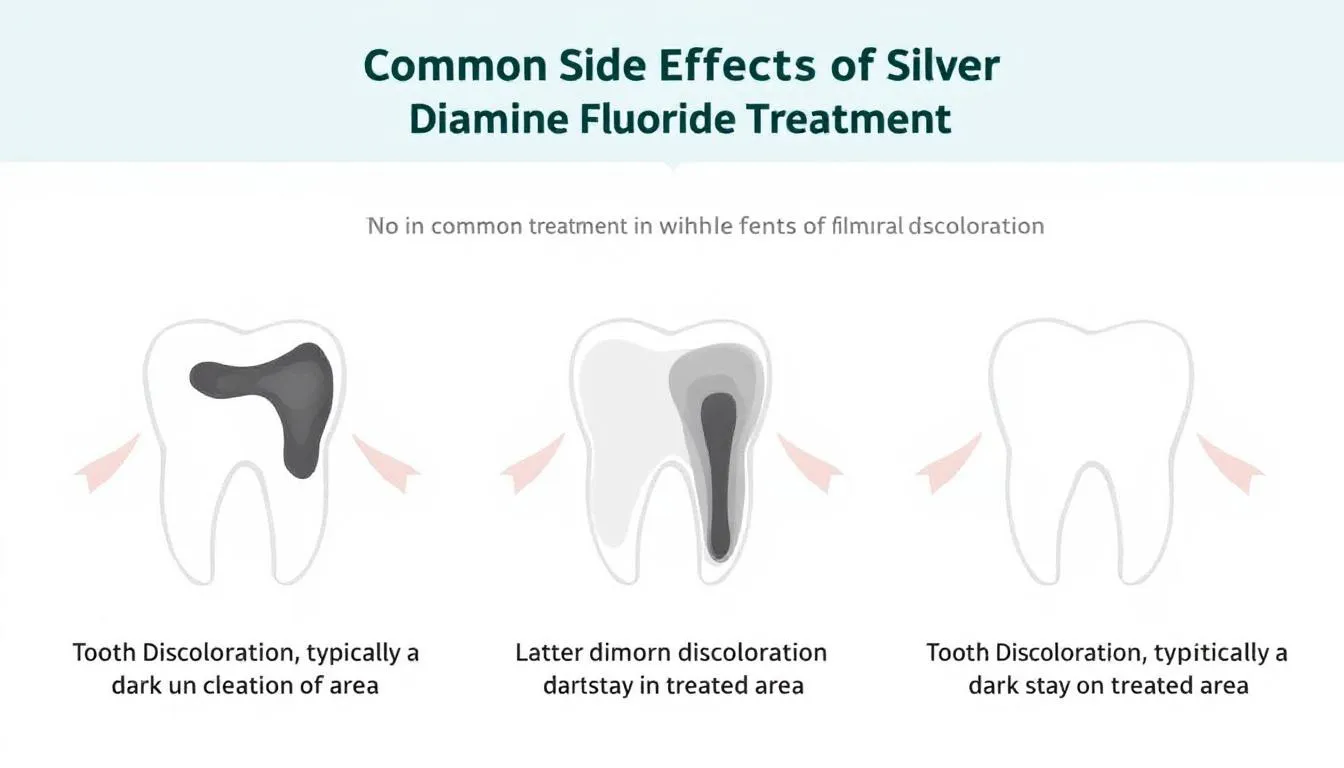
Tooth discoloration is the most prominent visible result of silver diamine fluoride treatment. When SDF contacts a caries lesion, it leaves a permanent black stain. This occurs in 37% to 76% of cases, depending on the concentration and application frequency. While this aesthetic change can be more noticeable on front teeth, it indicates effective caries progression control. Despite this, parental satisfaction remains high, with 61% to 71% of caregivers accepting the discoloration, especially for primary teeth.
Low Risk of Serious Reactions
No serious systemic adverse effects have been linked to silver diamine fluoride in extensive clinical studies. Even among preschool children, no acute systemic illness or long-term health issues were observed. Compared to fluoride varnish, SDF delivers less fluoride per application, minimizing the risk of systemic exposure.
Managing Side Effects and Setting Expectations
Although side effects such as tooth sensitivity or taste disturbances can occur, they are usually mild. SDF is also commonly used to treat tooth sensitivity. The key to success with SDF lies in communication and proper risk assessment. Dentists can help patients and caregivers understand what to expect and decide whether this dental treatment is the right choice for their oral health needs.
Gingival Reactions and Management
Before reaping the full benefits of silver diamine fluoride treatment, some patients may encounter mild gingival responses. These reactions are generally temporary but essential to understand.
A bit of redness or irritation along the gums may occur shortly after application. Though uncommon, gum bleaching or slight swelling may also develop if the solution comes into contact with soft tissue. These minor effects usually resolve on their own within a couple of days. Applying petroleum jelly around the lips and gums helps create a barrier, reducing direct contact and minimizing discomfort.
This is why a professional application is critical. A skilled dentist can ensure the solution touches only the affected tooth surface, preventing unwanted gum contact.
Want to keep your gums calm and protected at home? SNOW’s fluoride-free, enamel-friendly toothpaste is a gentle option designed for sensitive mouths.
Try SNOW’s Soothing Toothpaste
Why Choose Silver Diamine Fluoride
Now that we've covered the risks and side effects, it's equally important to understand why silver diamine fluoride is becoming a go-to dental treatment for managing tooth decay.
SDF offers a range of clinical and practical advantages for patients of all ages:
1. Arrests Existing Decay
Unlike preventive treatments like fluoride varnish, SDF can stop active caries progression in its tracks. It penetrates deep into the caries lesion, killing bacteria and hardening softened dentin without drilling or anesthesia.
2. Non-Invasive and Painless
SDF treatment is quick and completely non-invasive, making it ideal for young children, seniors, or anyone anxious about dental procedures: no needles, no drilling, just a simple brush-on application.
3. Reduces Need for Advanced Procedures
By halting decay early, SDF may prevent the need for fillings, crowns, or root canals. This not only saves time but also lowers long-term dental costs and reduces discomfort.
4. Helps Treat Tooth Sensitivity
Because it can seal dentinal tubules, SDF is also used to treat tooth sensitivity, especially in patients with gum recession or enamel wear.
5. Cost-Effective and Efficient
With fewer applications and longer-lasting results than many other treatments, SDF is both affordable and effective, especially in underserved communities or for patients with limited access to dental care.
6. Versatile for Different Ages and Needs
SDF is safe for preschool children, older adults, and everyone in between. Its adaptability makes it a practical solution for diverse dental care needs.
After receiving SDF treatment, maintaining oral health with a gentle, effective routine is key. SNOW offers fluoride-free options, such as their Hydroxyapatite Whitening Toothpaste, which supports remineralization without interfering with your SDF results.
Shop SNOW’s enamel-safe toothpaste now
Systemic Fluoride Toxicity: Assessing the Risk
Concerns about systemic fluoride toxicity from silver diamine fluoride SDF are common but largely theoretical. When used appropriately, SDF has a significant safety margin, especially in children. The American Academy of Pediatric Dentistry reports no serious systemic adverse effects associated with SDF when applied according to guidelines.
Clinical studies show that the incidence of significant reactions, such as gingival swelling, is low. Minor gingival erythema has been observed, but no severe tissue changes, such as ulceration or discoloration, have been reported. This reaffirms the safety of SDF when appropriately used.
A single drop of SDF applied to a 10 kg child provides a 400-fold safety margin against acute fluoride toxicity. Such data should reassure parents and caregivers about SDF's safety, even for young children. Concerns about silver toxicity are also unfounded based on clinical evidence.
Allergic Reactions to Silver Diamine Fluoride
While allergic reactions to SDF are rare, they are an essential consideration. Individuals with a known allergy to silver should avoid using SDF due to potential allergic reactions. It’s crucial to inform your dentist about any known allergies to ensure safe treatment.
The primary absolute contraindication for SDF is a documented silver allergy. For those without such allergies, SDF remains a safe and effective option for managing dental caries and treating tooth sensitivity. Always discuss any concerns with your dentist to ensure the best care.
Pain and Sensitivity Post-Treatment
Pain and sensitivity are minor side effects that some patients experience post-treatment. Approximately 6.6% of patients report minor tooth or gum pain. This discomfort is generally mild and short-lived, making it manageable for most individuals. To treat tooth sensitivity, various methods can be explored.
Children, in particular, may experience mild discomfort. However, the benefits of SDF in arresting caries and preventing further decay far outweigh these temporary side effects. Communicate with your dentist about any pain or sensitivity to ensure proper management and care.
Importance of Proper Application Technique
The success of SDF treatment largely depends on the proper application technique. An effective technique minimizes the risk of staining and irritation, enhancing the overall success of the treatment. Properly following application protocols ensures the effectiveness of SDF while reducing adverse effects.
Practitioners are advised to develop patient-specific treatment plans that include proper application protocols. This includes using protective measures, such as petroleum jelly, to safeguard the lips and perioral areas. A meticulous approach in applying SDF can make a significant difference in patient outcomes.
Special Considerations for Different Age Groups
Different age groups have unique considerations when it comes to SDF treatment. For preschool children, SDF offers a non-invasive alternative to traditional dental procedures, which can be challenging for young patients. Parents appreciate the simplicity and effectiveness of SDF, often preferring it to more invasive options that might require anesthesia.
Older adults, especially those with root caries, benefit significantly from SDF in managing caries progression and dentin stability. Regular applications help stabilize dental health before more invasive treatments are necessary. The American Academy of Pediatric Dentistry emphasizes the importance of assessing each patient’s unique circumstances and preferences before proceeding with dental interventions.
SDF’s ability to provide substantial caries prevention with a single application makes it a cost-effective option in settings with limited dental access. This versatility underscores the importance of considering SDF for a wide range of patients, from young children to older adults, helping to prevent cavities.
Parental Satisfaction and Follow-Up Care
Parental satisfaction with SDF treatment is notably high, especially when their child has previously experienced dental pain or inflammation. The simplicity and effectiveness of SDF make it a preferred treat choice for many parents.
The American Academy of Pediatric Dentists recommends regular follow-up assessments to monitor the success of SDF treatment. These follow-ups are crucial for ensuring that the dental treatment is working effectively and for addressing any potential concerns that may arise in evidence-based dentistry.
Comparing Silver Diamine Fluoride to Fluoride Varnish
Comparing silver diamine fluoride to fluoride varnish reveals some interesting differences. SDF contains less fluoride than fluoride varnish, potentially reducing concerns over systemic fluoride exposure. This makes SDF a safer option for many patients.
The initial severity of carious lesions significantly influences treatment outcome with sodium fluoride (NaF), but this is not the case with SDF. SDF application produces lower increases in serum fluoride than fluoride varnish treatment. This difference highlights the unique benefits of SDF in managing dental caries.
Understanding these differences can help patients and caregivers make informed decisions about their dental care. By comparing the two treatments, one can see that SDF offers a safer and more effective option for arresting and managing caries.
Final Thoughts
Silver diamine fluoride stands out as a clinically proven, non-invasive solution for managing dental caries and tooth sensitivity. From arresting caries progression to offering a cost-effective alternative to traditional restorations, the advantages of SDF treatment are both practical and profound.
At the same time, understanding potential side effects such as tooth discoloration and minor gingival irritation is crucial for making confident, informed decisions, especially for caregivers of young children or older adults.
When guided by a dental professional and paired with the right home care strategy, SDF becomes an invaluable part of any preventive oral health plan.
To keep your teeth strong and clean post-treatment, SNOW’s Hydroxyapatite Toothpaste and LED Electric Toothbrush are gentle on enamel and designed to complement your dentist’s care.
Frequently Asked Questions
Still curious about silver diamine fluoride? Explore our Frequently Asked Questions below to get clear, evidence-based answers about what to expect before and after SDF treatment.
What are the common side effects of silver diamine fluoride treatment?
Common side effects of silver diamine fluoride treatment include transient gingival irritation and a metallic taste. Fortunately, these effects are typically mild and resolve quickly.
Will SDF treatment stain my teeth?
Yes, SDF treatment can cause permanent dark staining in treated areas, especially in carious lesions. This effect should be considered before proceeding with the treatment.
Is silver diamine fluoride safe for children?
Yes, silver diamine fluoride is safe for children when used appropriately, as it has a significant safety margin, and no serious systemic adverse effects have been reported.
Can I use SDF if I have a silver allergy?
If you have a silver allergy, it is essential to avoid using SDF, as it may trigger allergic reactions. Always consult with your healthcare provider for alternative options.
How does SDF compare to fluoride varnish?
SDF has a lower fluoride content than fluoride varnish, minimizing systemic fluoride exposure and resulting in lower post-treatment serum fluoride increases. This makes SDF a safer alternative in some instances.


