





The best whitening toothpaste for smokers utilizes nano-hydroxyapatite or low-concentration hydrogen peroxide to chemically dissolve nicotine and tar stains without relying on harsh abrasives. These specific formulas remineralize enamel weakened by smoking while safely reducing surface yellowing within 4 to 8 weeks.
Some products marketed as the best whitening toothpaste for smokers rely on very abrasive formulas that scrub stains away. While that may help at first, too much abrasion can wear down enamel over time.
At SNOW, we’ve seen many people run into this issue while exploring teeth-whitening options. To help make things simpler, we looked closely at common whitening agents and formulas used in smoker-focused products.
This guide explores the specific chemistry of smoker-safe whitening:
-
Why do nicotine and tar stains require a specialized toothpaste?
-
What are the essential ingredients for dissolving tobacco stains?
-
Which whitening toothpastes perform best for smokers in 2026?
-
What are the most common whitening mistakes made by smokers?
Key Takeaways
-
Nicotine and tar stains bond more deeply to enamel than coffee or wine stains, making them significantly harder to remove with standard whitening toothpaste formulas.
-
High-abrasion “smokers' toothpastes” can damage already-weakened enamel, accelerating yellowing over time by exposing the naturally yellow dentin beneath.
-
Hydrogen peroxide-based formulas significantly outperform charcoal for cigarette smoke stains according to 2025 in vitro research (p<0.001).
-
SNOW Nano-Hydroxyapatite Whitening Toothpaste is the only option in this lineup that targets nicotine stains and actively remineralizes enamel weakened by smoking.
-
No whitening toothpaste can fully erase decades of intrinsic smoker stains—it mainly tackles surface discoloration and maintenance between professional treatments.
Why Smokers Need a Different Whitening Toothpaste
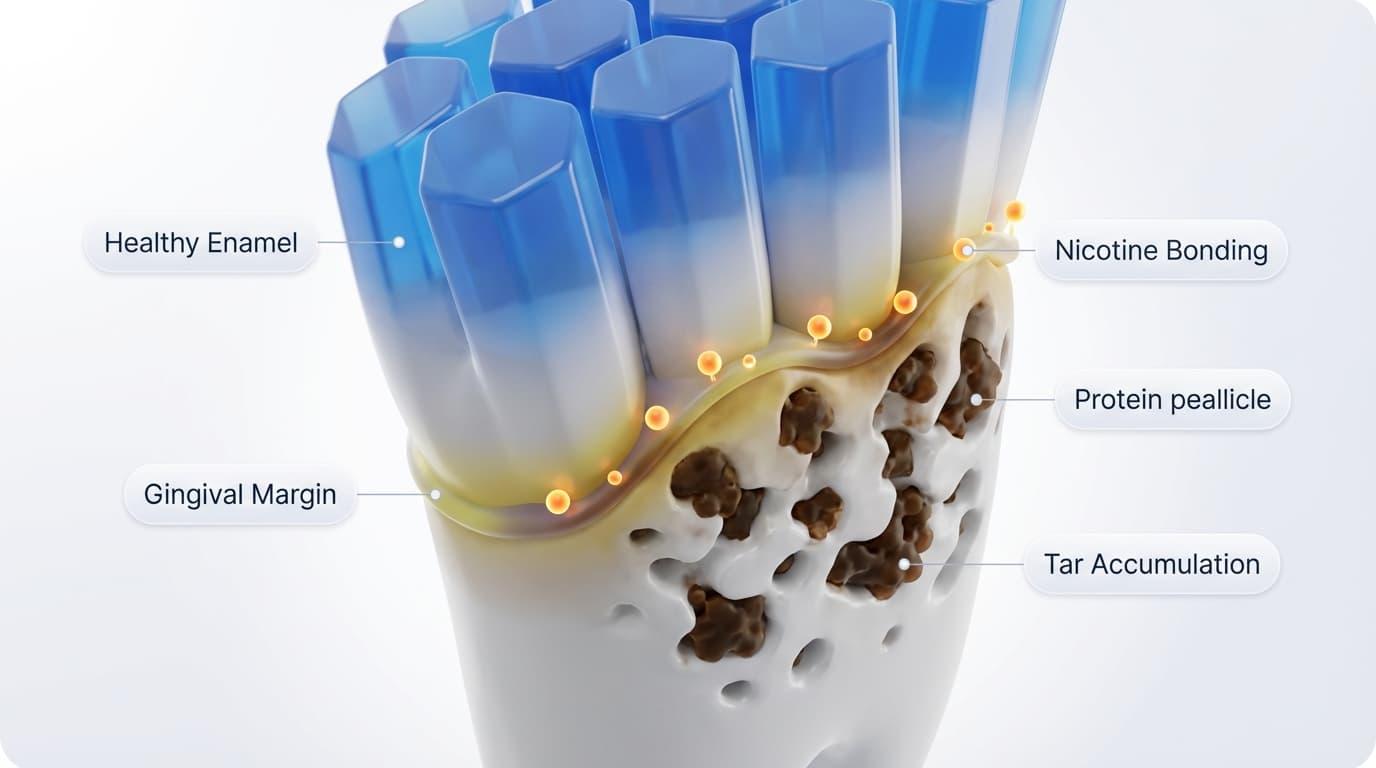
Smoking stains behave very differently from everyday stains like coffee or tea. While many whitening toothpaste formulas can remove common surface stains, tobacco stains tend to cling much more tightly to tooth enamel.
This happens because of two main compounds in tobacco smoke:
-
Nicotine Bonding: A colorless chemical that reacts with oxygen to form a yellow compound, tightly binding to the protein pellicle of the tooth enamel.
-
Tar Accumulation: A naturally dark, sticky resin that settles into microscopic enamel pores and collects heavily around the gingival margin (gumline).
Over time, this buildup can make teeth look darker and more uneven in color. Research supports this effect. A systematic review published in Clinical and Experimental Dental Research found clear evidence in a 2023 systematic review published in Clinical and Experimental Dental Research that tobacco exposure deeply stains dental hard tissues and composite restorative materials.
Smoking also affects oral health beyond staining. Tobacco use can reduce saliva flow, increase plaque buildup, and raise the risk of cavities and gum disease. These changes can weaken enamel and make teeth more prone to discoloration over time.
Because of this combination of stubborn stains and enamel stress, smokers often benefit from whitening formulas designed to remove surface stains while still protecting enamel.
How Do Tobacco Compounds Physically Stain Tooth Enamel?
To understand what the best whitening toothpaste for smokers can realistically do, it helps to know that not all stains behave the same way.
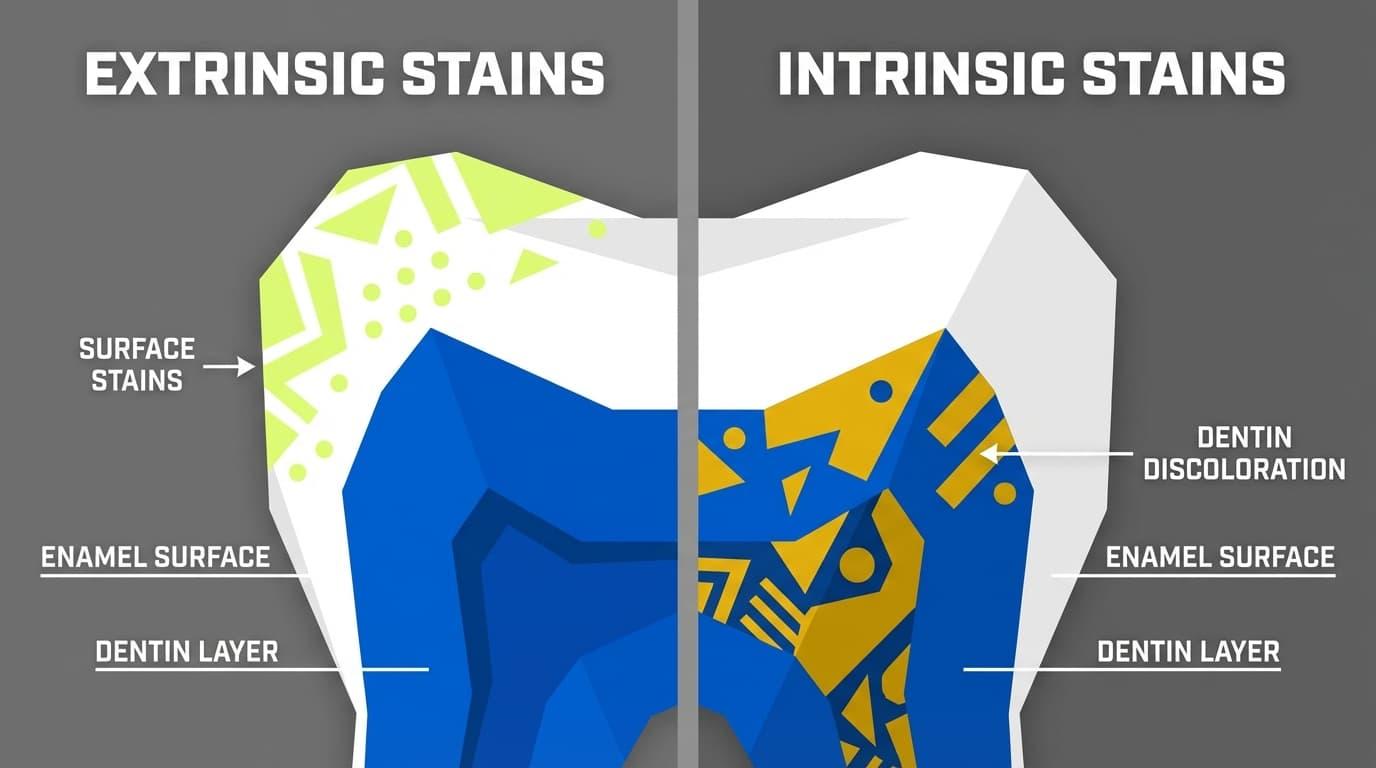
Dentists generally divide tooth discoloration into two types:
-
Extrinsic stains: These stains sit on the outer surface of enamel. With smoking, nicotine and tar accumulate on the tooth surface, especially near the gumline and in small enamel pores. These are the stains that whitening toothpaste and regular brushing may help reduce.
-
Intrinsic stains: These stains develop deeper inside the tooth structure, reaching the dentin layer beneath the enamel. Once discoloration reaches this level, toothpaste alone usually cannot fully reverse it.
Research published in the Journal of the American Dental Association helps illustrate this difference. The study found that brushing could reduce some cigarette smoke stains, but deeper discoloration responded more effectively to whitening treatments such as peroxide-based bleaching.
In simple terms, the best whitening toothpaste for smokers is most effective at reducing surface stains and maintaining results. For long-term smokers with deep staining, toothpaste is often just one part of a broader teeth-whitening routine.
What Are the Essential Ingredients to Look for in Smokers' Whitening Toothpaste?
If you smoke, choosing the best whitening toothpaste for smokers can feel confusing. Many products promise fast results, but not all of them are designed with smoker stains or enamel health in mind.
From what we’ve seen working in oral care, the best approach is simple. A good whitening toothpaste should remove surface stains from nicotine and tar while still being gentle enough to protect your enamel over time.
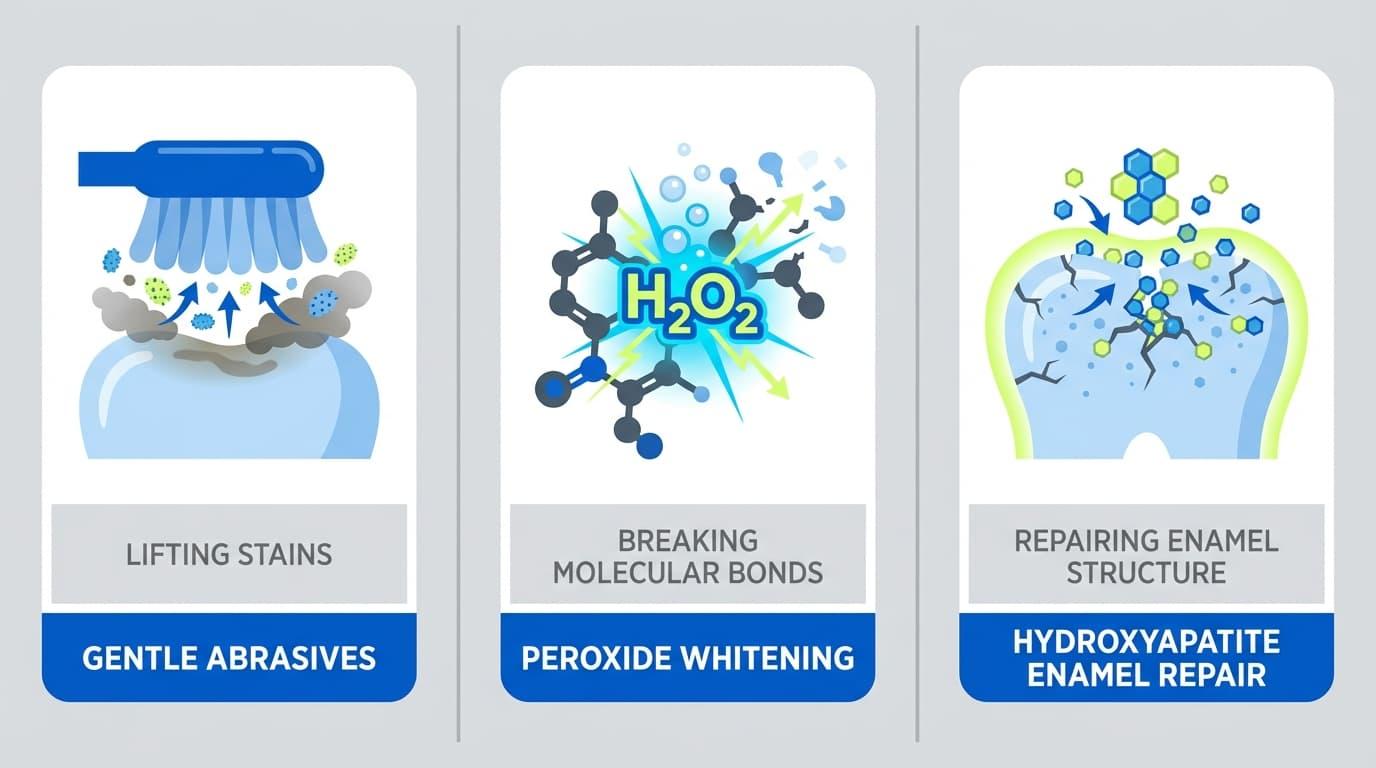
Here are three things to keep in mind when choosing one.
Gentle Abrasives vs Harsh “Smoker's Toothpaste”
Most whitening toothpastes rely on mild polishing ingredients to help remove surface stains. Ingredients like hydrated silica or calcium carbonate help lift tar and nicotine buildup during brushing.
The problem is that traditional 'smokers' toothpastes' rely on aggressive abrasives that permanently scratch the enamel surface, a risk highlighted in clinical guidelines from the University College Cork.
As enamel thins, the yellow dentin beneath becomes more visible. That’s one reason people sometimes feel like their teeth look more yellow even though they’re using whitening toothpaste regularly.
In most cases, a gentler formula designed for daily use is the safer long-term choice.
Peroxide Whitening
Another important factor is the type of whitening agents used in the formula.
Ingredients like hydrogen peroxide work differently from simple polishing. Instead of just scrubbing stains off the surface, peroxide helps break apart the molecules that cause discoloration.
This is why peroxide is commonly used in many teeth whitening treatments. Even though the concentration in toothpaste is lower than that of professional treatments, it can still help gradually reduce smoke-related stains when used consistently.
Hydroxyapatite Enamel Repair
For smokers, whitening is only part of the picture. Smoking can also make enamel more vulnerable to staining over time.
That’s where ingredients like nano-hydroxyapatite come in. Hydroxyapatite is the same mineral that naturally makes up most of your tooth enamel. In toothpaste, it can help smooth tiny imperfections on the tooth surface and may help with enamel health.
A smoother enamel surface can make it harder for stains to cling to teeth in the first place.
In other words, the goal is not just to whiten teeth for a few weeks. It’s to help keep your smile brighter and healthier in the long run.
What Are the Best Whitening Toothpastes for Smokers in 2026?
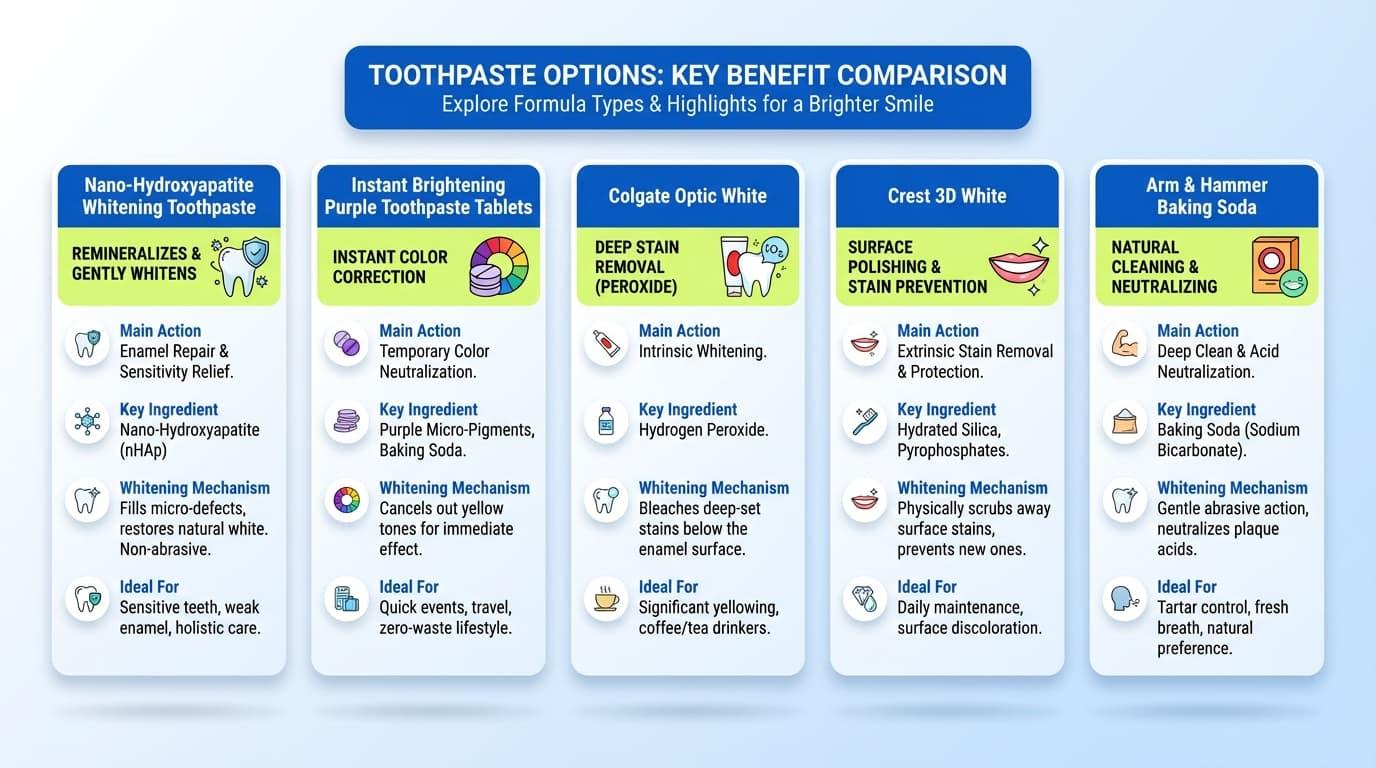
If you’re searching for the best whitening toothpaste for smokers, the goal is to find a formula that removes stubborn nicotine stains without damaging enamel. Some products focus mainly on aggressive scrubbing, while others combine stain removal with enamel protection.
Below are several whitening toothpaste options often considered by smokers, each with varying strengths to suit your needs.
Nano-Hydroxyapatite Whitening Toothpaste
SNOW's Nano-Hydroxyapatite Whitening Toothpaste takes a restorative approach to smokers' teeth whitening.
Instead of relying on aggressive silica scrubbing, this formula deploys nano-hydroxyapatite—a biomimetic mineral that physically fills microscopic enamel fissures caused by acidic tobacco smoke.
By remineralizing the tooth structure, this specific toothpaste actively blocks future tar accumulation while lifting existing yellowing.
Along with gentle polishing ingredients, the formula helps remove surface stains from nicotine, coffee, and red wine while also supporting enamel strength.
Another benefit is that hydroxyapatite can help smooth the tooth surface. A smoother enamel surface makes it harder for new stains to cling to teeth, which can be helpful for smokers who deal with ongoing discoloration. Many people also report that hydroxyapatite-based formulas feel gentler on sensitive teeth.
-
Smoker benefit: Helps lift surface stains while supporting enamel that may already be stressed by smoking.
-
Drawbacks: The formula is fluoride-free, so some users choose to add a fluoride rinse or use a fluoride toothpaste to help protect against cavities.
-
Ideal user: Smokers looking for a daily toothpaste that balances whitening and enamel support, especially those concerned about sensitivity.
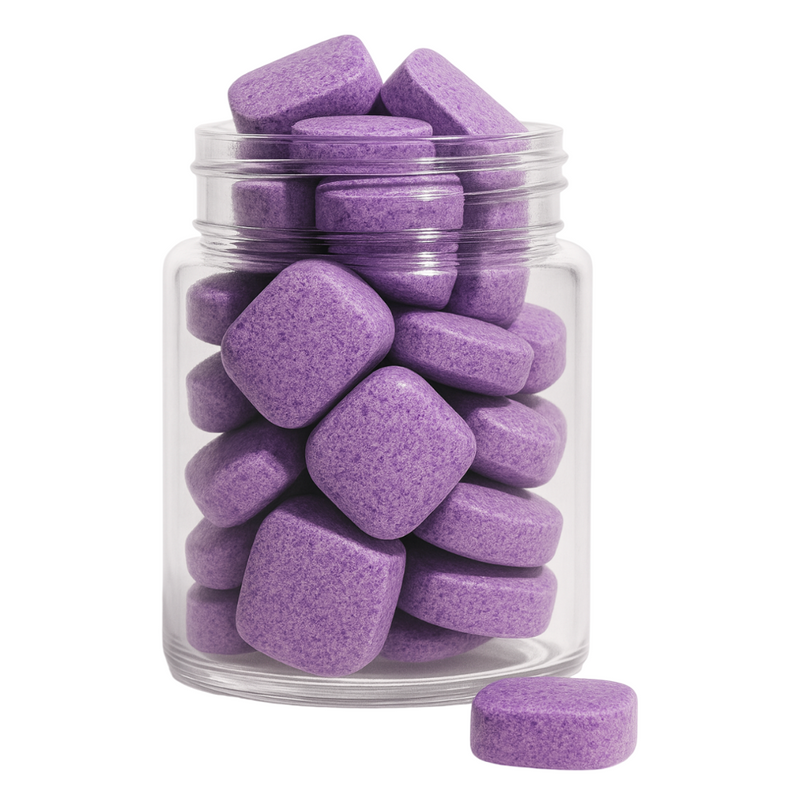
SNOW® Instant Brightening Purple Toothpaste Tablets
These toothpaste tablets focus on instant brightening using a color-correction technique. The tablets contain purple pigments that visually neutralize yellow tones on teeth, making your smile appear brighter immediately after brushing.
In addition to the purple pigments, the tablets include mild polishing ingredients that help remove light surface stains during brushing. Because they come in tablet form, they’re also easy to carry for travel or for quick touch-ups throughout the day.
While the purple effect is mostly cosmetic and temporary, many people like using these tablets as a quick boost between deeper teeth whitening sessions.
-
Smoker benefit: Helps quickly neutralize the yellow tone caused by nicotine stains.
-
Drawbacks: The brightening effect is temporary and works best alongside a regular whitening toothpaste.
-
Ideal user: Social smokers, travelers, or anyone who wants a fast, visual brightening effect before meetings, photos, or events.
Get the SNOW® Instant Brightening Purple Toothpaste Tablets Today
Colgate Optic White
Colgate Optic White is one of the more recognizable peroxide-based whitening toothpaste options available in many stores. It contains hydrogen peroxide, which works differently from abrasive scrubbing by helping break down stain molecules that cause discoloration.
Because peroxide targets the chemical structure of stains, it can be helpful for smokers who struggle with stubborn nicotine buildup. Many versions of Optic White also contain fluoride, which helps prevent cavities.
However, peroxide-based formulas may cause mild tooth sensitivity for some people, especially if enamel is already worn or if gums are receding.
-
Smoker benefit: Peroxide helps break down stubborn tobacco stains, rather than relying solely on polishing.
-
Drawbacks: Some users may experience mild sensitivity with regular use.
-
Ideal user: Smokers who want a widely available toothpaste focused strongly on teeth whitening with fluoride protection.
Crest 3D White
Crest 3D White is another well-known whitening toothpaste designed for daily use. It combines hydrated silica abrasives with small amounts of whitening agents to help polish away stains while still remaining safe for regular brushing.
For smokers, this type of formula can help gradually reduce surface stains from nicotine, coffee, and food buildup. While it may not produce dramatic whitening overnight, consistent brushing can help maintain a cleaner, brighter look over time.
Many dentists recommend formulas like this for people who want a balanced whitening toothpaste that focuses on stain removal without excessive abrasiveness.
-
Smoker benefit: Helps remove surface stains while remaining suitable for everyday brushing.
-
Drawbacks: Whitening results may appear gradually rather than quickly.
-
Ideal user: Smokers who want a mainstream, easy-to-find toothpaste for everyday teeth whitening maintenance.
Arm & Hammer Baking Soda Toothpaste
Arm & Hammer toothpastes rely on baking soda (sodium bicarbonate) as their main cleaning ingredient. Baking soda acts as a mild abrasive, helping loosen stains and polish the tooth surface during brushing.
Another benefit of baking soda is that it helps neutralize acids in the mouth. Smoking can create a more acidic oral environment, so balancing pH may support overall oral health and help reduce stain buildup.
Some people enjoy the deep-cleaning feeling of baking soda formulas, though the texture and flavor may differ slightly from those of gel-based toothpastes.
-
Smoker benefit: Baking soda helps loosen nicotine stains and supports a cleaner oral environment.
-
Drawbacks: The taste and texture may feel unusual for some users.
-
Ideal user: Smokers looking for a simple, affordable whitening toothpaste that focuses on stain removal and mouth freshness.
How to Build a Smoker Safe Whitening Routine
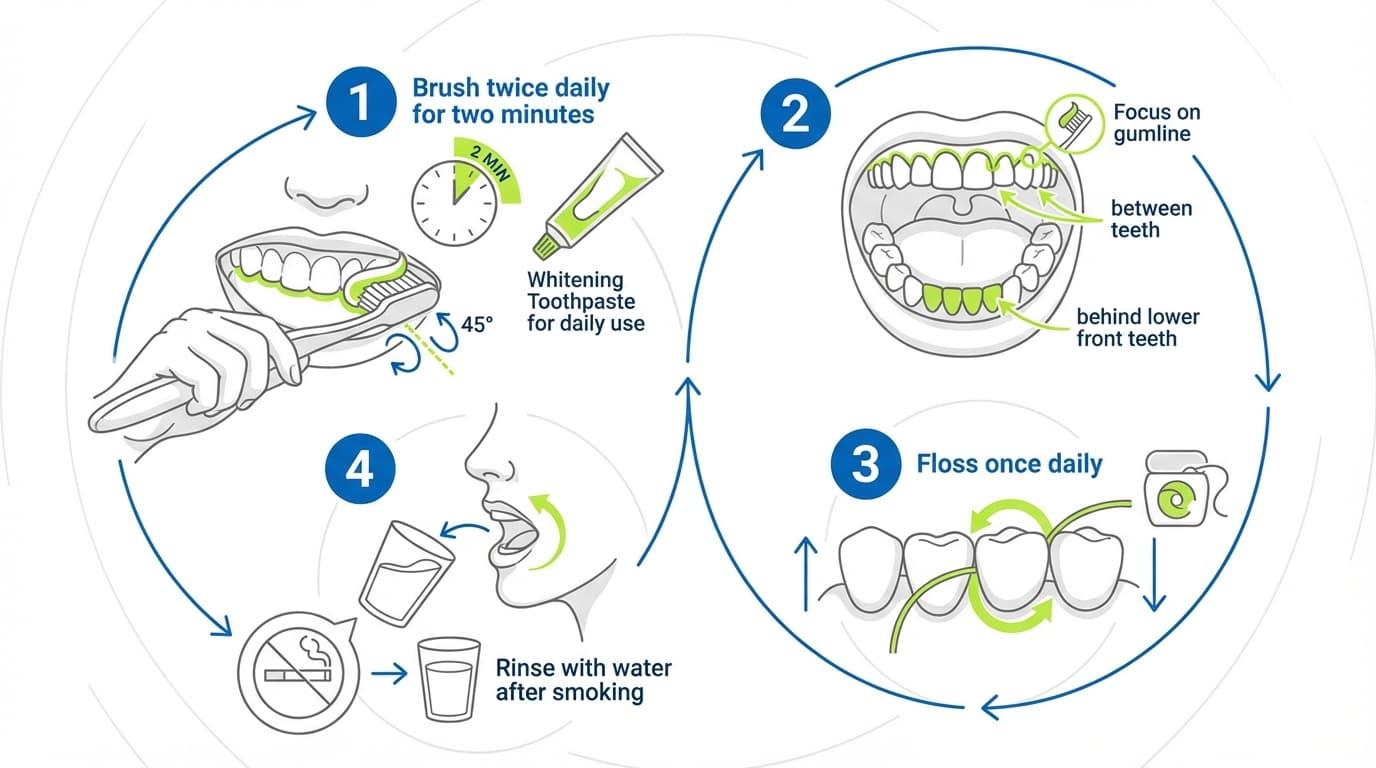
Finding the best whitening toothpaste for smokers is a great first step, but toothpaste works best when it’s part of a consistent routine. Tobacco stains build up gradually, so the most effective approach is steady daily care that removes surface stains while protecting enamel.
A simple routine that focuses on gentle cleaning, stain removal, and enamel support can help maintain a brighter smile over time.
Daily Brushing Strategy
Start with the basics. Consistent brushing is one of the most important habits for reducing nicotine stains and maintaining oral health.
-
Brush at least twice a day for about two minutes. Use a soft-bristled toothbrush to help remove stains without damaging enamel.
-
Use a whitening toothpaste designed for daily use. This helps gradually remove surface stains caused by nicotine, coffee, or food.
-
Focus on areas where stains collect most easily. These include the gumline, between teeth, and behind the lower front teeth.
-
Floss once daily. Tobacco stains and plaque often collect between teeth where brushing cannot reach.
-
Rinse with water after smoking when possible. This can help reduce stain buildup before the next brushing session.
Many smokers prefer using a toothpaste that focuses on both stain removal and enamel care. The key is consistency. Gradual improvement from daily brushing is often more sustainable than aggressive scrubbing that can damage enamel.
When to Add Professional Whitening
Even the best whitening toothpaste for smokers has limits. Toothpaste mainly targets stains on the outer enamel surface.
If stains appear gray, dark brown, or seem to come from inside the tooth, they may be intrinsic stains that require stronger whitening treatments.
In those cases, a dentist may recommend:
-
Professional in-office whitening
-
Custom take-home whitening trays
-
Deep dental cleaning to remove plaque and tartar buildup
Many people use whitening toothpaste afterward to maintain results and slow the formation of new stains.
Combining professional care with a good daily routine often provides the most noticeable and lasting improvements.
Common Mistakes Smokers Make
When people try to whiten smoker stains, it’s easy to overdo it. Many common habits actually make discoloration worse over time.
Here are a few mistakes dentists often see.
-
Using very abrasive toothpaste every day: Harsh “smokers' toothpastes” may remove stains quickly, but repeated use can thin enamel and expose the yellow dentin underneath.
-
Brushing too hard: Pressing harder does not remove stains faster. It can irritate gums and wear down enamel, especially near the gumline.
-
Expecting toothpaste to erase years of stains: Most whitening toothpaste works mainly on surface stains. Deeper stains often need professional whitening treatments.
-
Ignoring overall oral care: Whitening toothpaste works best when combined with flossing, regular brushing, and dental checkups.
-
Switching products too frequently: Many whitening toothpastes take several weeks of consistent use before results become noticeable.
The goal is not just whiter teeth today, but healthier teeth long term. A balanced routine that removes stains while protecting enamel tends to deliver the most reliable results.
Final Thoughts
Smoking can make teeth whitening more challenging because nicotine and tar stains cling tightly to enamel. While the best whitening toothpaste for smokers can help reduce surface stains and gradually brighten your smile, it works best as part of a consistent oral care routine.
Gentle daily brushing, regular dental cleanings, and enamel-friendly whitening toothpaste can all help maintain a cleaner, brighter appearance over time. For deeper stains, professional whitening treatments may also be worth discussing with your dentist.
If you’re looking for enamel-conscious options to support your routine, consider the SNOW Teeth Whitening Collection. From whitening toothpaste to easy at-home whitening solutions, these products are designed to help support a brighter smile and healthier oral care habits.
Explore the SNOW Teeth Whitening Collection
FAQs
This section answers a few common questions people have about using whitening toothpaste for smokers.
How long does whitening toothpaste take to work on smokers’ teeth?
Whitening toothpaste for smokers usually takes a few weeks to show visible results. Many people notice small improvements in about 1–2 weeks, with more noticeable brightening after 4–8 weeks of consistent brushing. However, if stains have built up over many years, toothpaste may only lighten them slightly. For more severe discoloration, professional whitening treatments may yield stronger results.
Is peroxide toothpaste safe for smokers with sensitive teeth?
Peroxide whitening toothpaste can be safe for smokers with sensitive teeth when used properly. Most over-the-counter formulas use low concentrations that are designed for daily brushing. However, smokers with worn enamel or exposed roots may still experience sensitivity. In those cases, alternating with an enamel-supporting toothpaste such as a nano-hydroxyapatite formula may help reduce discomfort.
Does charcoal toothpaste really help remove tobacco stains?
Charcoal toothpaste may remove some surface stains from tobacco, but it has limitations. Many charcoal formulas work mainly through abrasion, which means they scrub stains off the enamel surface. Some studies suggest peroxide-based whitening agents tend to perform better for stubborn smoke stains. Because charcoal can also be abrasive, dentists often recommend using it cautiously.
Can I use whitening toothpaste every day as a heavy smoker?
Yes, whitening toothpaste can usually be used daily by smokers if the formula is designed for everyday use. The key is choosing a toothpaste with low to moderate abrasivity and using a soft-bristled toothbrush. Brushing too aggressively or combining multiple abrasive products can wear down enamel over time. A gentle daily routine combined with regular dental checkups is often the safest approach.
What’s the best strategy if I’m trying to quit smoking and whiten my teeth?
The best strategy for whitening teeth while quitting smoking is to combine professional care with a consistent daily routine. Many dentists recommend starting with a professional cleaning to remove plaque and surface stains. After that, using a gentle whitening toothpaste can help maintain results as your teeth recover from smoke exposure. As new stains stop forming, teeth-whitening methods often become more effective and longer-lasting.


