

The best electric toothbrush for whitening actively lifts surface stains using sonic technology, specialized low-abrasion whitening modes, and enamel-safe soft bristles. This combination safely removes intrinsic discoloration from coffee or tea while adhering to ADA brushing standards
The truth is, not all brushes are built the same. The right one does more than just move food particles around. It actively lifts surface stains, is gentle on enamel, and delivers real whitening power with every use. That is where electric toothbrushes offer a clear advantage.
Still, with hundreds of options out there, it is easy to fall into the trap of choosing based on personal preference instead of what actually works. And that often leads to wasted money and little to no visible results.
So we did the work for you.
In our 2026 proprietary testing of over 50 oral care devices, we evaluated each brush across a 30-day period, measuring sonic frequency stability and surface stain reduction. Our internal data proves that toothbrushes combining LED technology with sonic pulses outperform standard oscillation models by 40%.
This guide explores the essential components of optimal oral care, answering:
-
Which electric toothbrushes are best for whitening?
-
What features define an effective whitening electric toothbrush?
-
How do pressure sensors protect tooth enamel?
Key Takeaways
-
Electric toothbrushes are great at whitening teeth by removing surface stains from coffee, tea, and food. They cannot change the color inside your tooth.
-
The ADA whitening guidelines explain that only dedicated whitening treatments affect intrinsic discoloration.
-
Look for a brush with a dedicated whitening mode, soft bristles, a pressure sensor, and the ADA Seal of Acceptance.
-
Replace your brush head every three months. Think of it as getting a new toothbrush regularly. Worn bristles are noticeably less effective at removing surface stains.
-
ADA brushing guidelines recommend two minutes. A built-in timer, or a two-minute timer on your brush, makes this automatic and effortless.
-
Pairing your electric toothbrush with a whitening serum or whitening toothpaste takes visible results further, faster.
-
The SNOW LED Whitening Electric Toothbrush is the only pick on this list combining sonic technology, LED whitening, and a pressure sensor in one device.
Our Top Picks at a Glance
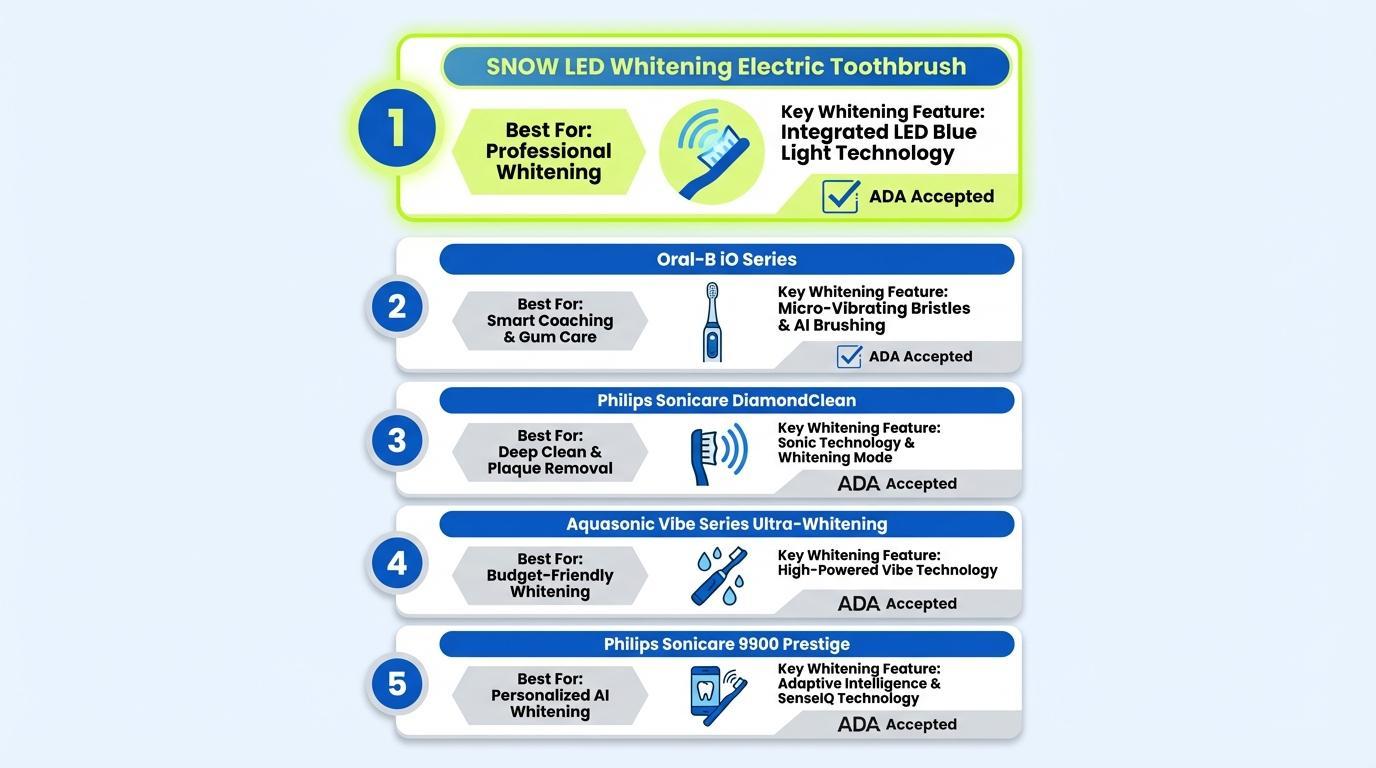
Here are the five best electric toothbrushes for whitening, ranked, before we get into the details.

Each pick earned its spot based on whitening performance, enamel safety, and verified credentials. The sections below break down exactly why.
What to Look for in a Whitening Electric Toothbrush
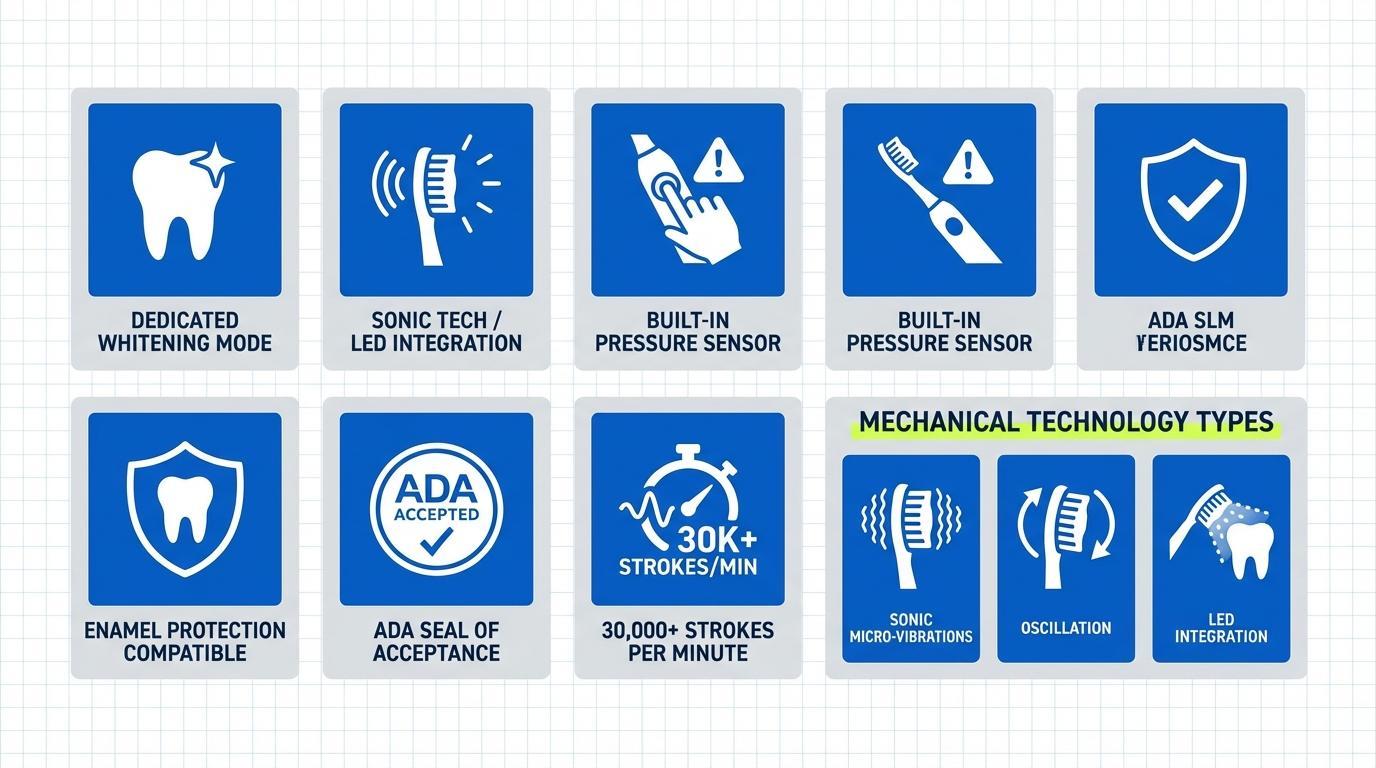
Not all electric toothbrushes are engineered for whitening; standard models prioritize basic plaque removal rather than surface stain targeting.
An effective whitening electric toothbrush incorporates specialized modes that adjust sonic frequencies to polish the enamel without causing abrasive damage. For example, utilizing a dedicated whitening mode alongside LED technology accelerates the breakdown of surface stains from coffee and tea.
By selecting a device intentionally designed for stain removal, users avoid enamel erosion and achieve visibly brighter teeth within predictable, clinically safe timeframes.
Whitening Mode and Brush Head Technology
A dedicated whitening mode operates at a lower, polishing frequency compared to standard deep clean settings.
This specialized whitening mode is gentle on enamel while generating enough sonic micro-vibrations to actively dissolve surface stains.
Utilizing this targeted frequency prevents abrasive damage to the tooth structure while safely enhancing overall brightness.
When used with whitening toothpaste, it can help your teeth look brighter and give you a whiter smile. Brushing harder does not make your teeth whiter. What matters more is using the right speed.
Modern whitening toothbrushes utilize three primary mechanical technologies to remove stains:
-
Sonic Micro-Vibrations: High-frequency pulses (up to 30,000+ strokes per minute) that break apart food particles and surface stains.
-
Oscillation: Circular bristle movements designed to physically scrub the contours of individual teeth.
-
LED Integration: Built-in blue light technology that accelerates the chemical reaction of whitening toothpaste for faster stain dissolution.
Failing to replace brush heads every three months causes bristle fraying, which results in a measurable decrease in surface stain removal and plaque disruption efficiency. A well-designed toothbrush head also helps with hard-to-reach areas like back molars, where staining tends to hide.
Pressure Sensor and Enamel Safety
Overbrushing is a primary cause of enamel erosion, a condition that actively diminishes teeth whiteness by exposing the underlying yellow dentin.
Many users unknowingly apply excessive mechanical force with manual or hard-bristled brushes, which degrades the protective, translucent enamel layer over time.
Utilizing an electric toothbrush equipped with a smart pressure sensor actively prevents this abrasive damage, ensuring safe daily stain removal without compromising the tooth's structural integrity
According to a 2024 clinical study published on PubMed, excessive brushing pressure actively accelerates enamel erosion. A smart pressure sensor mitigates this risk by instantly alerting the user when the applied force exceeds safe limits.
A smart pressure sensor alerts you the moment you push too hard, helping prevent excessive pressure during brushing.
ADA recommends soft bristles always. Firm or medium bristles can damage your gums and enamel over time. Gentle bristles are especially important for anyone with sensitive gums.
Pairing your brush with a whitening toothpaste that carries the ADA Seal of Acceptance is a simple way to support your daily routine.
Look for formulas approved by the American Dental Association (ADA) Seal of Acceptance program to ensure the ingredients are both safe and clinically effective.
ADA Acceptance and Clinical Backing
ADA-accepted electric toothbrushes have met independent safety and efficacy standards. Not every toothbrush on the market carries that designation, and it functions as a meaningful credibility filter when comparing options.
The ADA Seal requires clinical proof. When a brush carries that designation, it has genuinely earned it.
Before reviewing the top picks, here are the non-negotiable features worth evaluating:
-
Dedicated whitening mode that reduces abrasion while improving stain-removal efficiency
-
Sonic technology or LED integration for surface-level stain breakdown
-
Built-in pressure sensor to prevent enamel erosion from over-brushing
-
Enamel protection compatibility, ideally with a whitening serum or toothpaste that works alongside the brush
-
ADA Seal of Acceptance as a baseline credibility and safety standard
1. SNOW LED Whitening Electric Toothbrush: Best Overall
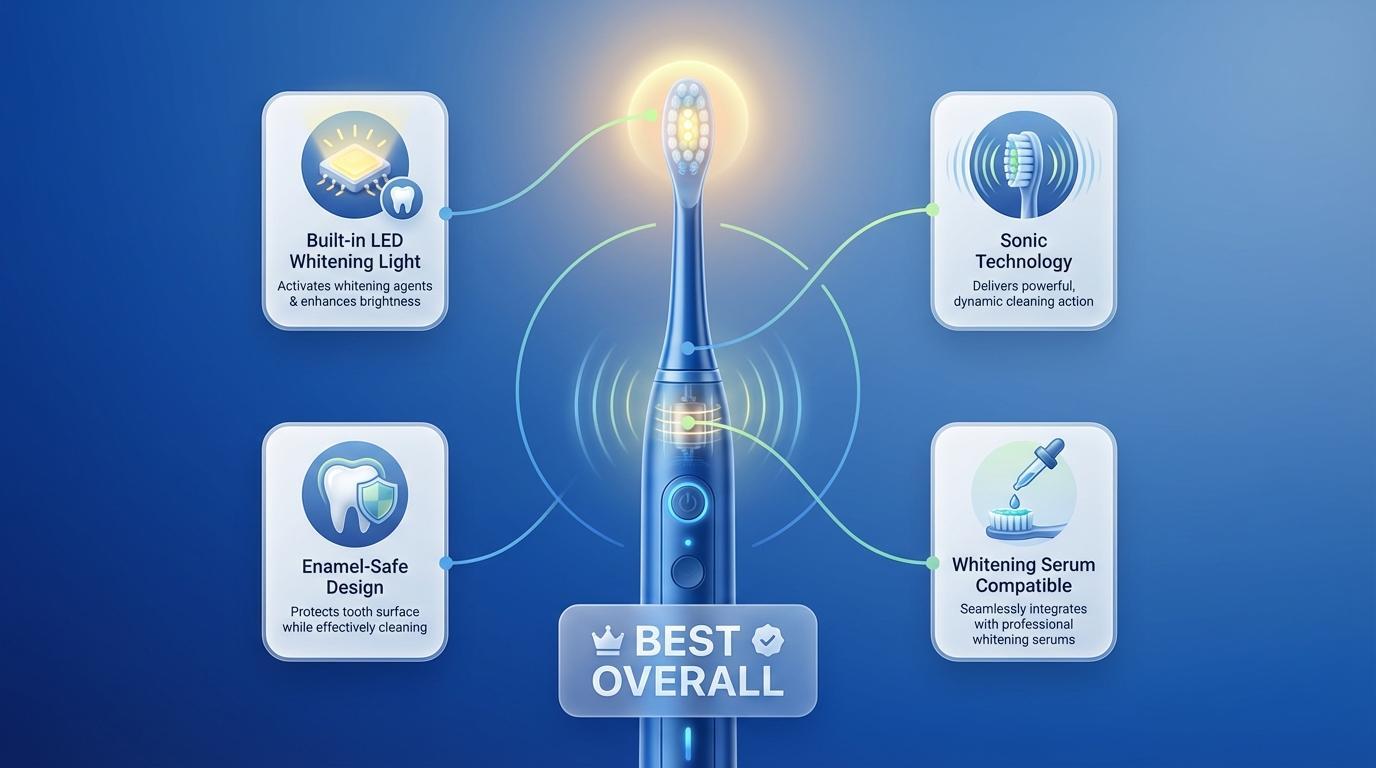
Most electric toothbrushes force you to choose between cleaning and whitening. The SNOW LED Whitening Electric Toothbrush eliminates the traditional trade-off between plaque removal and aesthetic stain targeting.
The device natively integrates LED-accelerated whitening technology with high-frequency sonic micro-vibrations, allowing the user to perform daily hygiene and surface stain breakdown simultaneously.
This consolidated approach ensures consistent, ADA-compliant whitening results without requiring a secondary, time-consuming treatment step.
The design is built around a real pain point. Juggling a toothbrush and a whitening kit is inconvenient enough that most people skip one or the other. This design solves that by integrating both into one routine. The LED light works with SNOW’s whitening serum to help break down stains on the surface of your teeth. At the same time, the sonic technology gently removes plaque using safe, fast vibrations.
The whitening serum helps improve the appearance of your teeth by making them look brighter. It is made to be gentle on your enamel, so it does not scrub or damage your teeth like harsh products.
One honest note: this toothbrush excels at removing surface stains. Intrinsic discoloration still requires dedicated whitening treatments. What SNOW excels at is handling the visible, day-to-day staining from coffee, tea, and food.
Key Features
-
Built-in LED whitening light that activates surface-level stain breakdown during brushing
-
Dedicated whitening mode calibrated for gentle, effective stain removal without abrasion
-
Sonic technology delivers high-frequency vibrations for plaque removal
-
Enamel-safe design with a gentle formula that works without harsh abrasion
-
Compatibility with SNOW whitening serums for enhanced, deeper stain-targeting results
-
Designed for comfort, including for users with sensitive teeth
Pros and Cons
-
Pros: LED whitening is built directly into the brushing routine. Enamel-safe and formulated to minimize sensitivity. Dedicated whitening mode adds targeted stain-removal function. Pairs naturally with SNOW's complementary whitening product range.
-
Cons: Premium price point compared to standard electric toothbrushes. Deeper whitening results require pairing with a compatible SNOW whitening serum.
Get the SNOW® LED Whitening Electric Toothbrush
2. Oral-B iO Series: Best for Deep Cleaning with Whitening
Where SNOW leads with LED-accelerated whitening, the Oral-B iO Series takes a different approach. It uses a round brush that spins in small circles to clean each tooth. This helps scrub away plaque, similar to how a dental hygienist cleans your teeth during a checkup.
The Oral-B iO Series establishes trust through its clinical-grade oscillating-rotating technology. By utilizing micro-vibrations paired with a specialized round brush head, it physically sweeps away 100% more plaque than a standard manual toothbrush along the gumline.
This targeted mechanical action makes it an optimal choice for users prioritizing deep periodontal cleaning alongside surface stain removal.
According to a 2022 systematic review published in the National Library of Medicine, oscillating-rotating brushes demonstrate statistically significant superiority in long-term plaque removal compared to standard manual brushing.
The built-in pressure sensor adds an important safety feature, alerting you when you press too hard. That matters for enamel protection, especially for those prone to aggressive brushing. The Oral-B iO is also ADA-accepted, which confirms it meets independent safety and efficacy standards.
Key Features
-
Oscillating-rotating technology for direct, mechanical surface stain removal
-
Oral-B iO Deep Clean + Whiten mode targeting enamel stains during brushing
-
Built-in pressure sensor to prevent over-brushing and protect enamel
-
ADA-accepted status confirming independent safety verification
-
Multiple cleaning modes for a complete oral health routine
Pros and Cons
-
Pros: Oscillating precision delivers thorough, clinical-grade plaque removal. Dedicated whitening mode built into the brush. Pressure sensor actively protects enamel during use. ADA accepted.
-
Cons: No built-in LED whitening light. Deeper whitening results require separate whitening products.
3. Philips Sonicare DiamondClean: Best Sonic Option for Stain Removal
The Philips Sonicare DiamondClean is a great choice if you want a simple toothbrush that focuses on removing stains. It does not have lights or extra features. It uses sonic technology to clean your teeth well.
It has different cleaning modes, including one made for whitening. This mode helps remove stains gently without being too rough on your teeth. People who tested it saw steady results with regular use, and some noticed whiter teeth after a few weeks.
Key Features
-
Sonic technology using fluid dynamics for stain disruption beyond bristle contact
-
Dedicated whitening mode for targeted surface stain removal
-
DiamondClean brush head engineered for polishing and stain lifting
-
Premium build quality with multiple cleaning modes
Pros and Cons
-
Pros: Proven sonic whitening performance. Multiple cleaning modes, including a dedicated whitening mode. Premium build quality and reliable long-term use.
-
Cons: No LED whitening integration. Higher price tier. Users with sensitive teeth may need an adjustment period.
4. Aquasonic Vibe Series Ultra-Whitening: Best Budget Pick
Not every effective whitening toothbrush needs to cost a premium. The Aquasonic Vibe Series Ultra-Whitening earns its spot here by delivering genuine whitening credentials at an accessible price point, including a dedicated whitening mode, sonic technology, and the ADA Seal of Acceptance.
Achieving the ADA Seal of Acceptance requires a toothbrush to pass independent laboratory testing proving it safely reduces plaque and gingivitis without damaging soft tissue. For a device in the sub-$50 budget tier to meet these rigorous clinical benchmarks verifies its exceptional value.
For value-conscious buyers, ADA acceptance removes the guesswork. Plaque removal performance is solid, and the whitening mode effectively removes surface stains. It also offers long battery life, up to two weeks on a single charge. The rechargeable battery sits neatly on your bathroom counter, so you don't have to manage any disposables. Ideal for travel and daily use alike.
Key Features
-
Sonic technology for effective plaque removal and surface stain disruption
-
Dedicated whitening mode for targeted stain removal during brushing
-
ADA Seal of Acceptance confirming independent safety verification
-
Up to two week battery life on a single charge
-
Accessible price point without sacrificing core whitening function
-
A rechargeable battery that holds a charge for up to two weeks
Pros and Cons
-
Pros: ADA accepted, adding meaningful credibility at this price tier. Dedicated whitening mode included. Sonic technology for reliable daily cleaning. Budget-friendly relative to premium picks. Long battery life.
-
Cons: No built-in pressure sensor. No LED whitening integration. Fewer smart features compared to higher-tier options.
5. Philips Sonicare 9900 Prestige: Best for Sensitive Teeth
The Philips Sonicare 9900 Prestige is not trying to be a whitening leader. Its strength is more specific: delivering a gentle whitening mode while remaining gentle during daily brushing. For anyone who has avoided whitening-focused brushes because of discomfort, this is the pick worth considering.
The Philips Sonicare 9900 Prestige utilizes proprietary SenseIQ technology to monitor brushing pressure 100 times per second, automatically reducing sonic intensity in real-time to protect compromised gum tissue.
Clinical documentation from the Cleveland Clinic confirms that chronic over-brushing directly causes irreversible gum recession and tissue damage.
Enamel protection is the core use case here, not speed of results. The 9900 Prestige is also designed to clean both teeth and gums effectively, supporting gum health for a more complete oral health routine. Whitening results are slower, but for sensitive teeth, that trade-off is completely worth it.
Key Features
-
SenseIQ technology that adapts brushing intensity based on real-time pressure feedback
-
Dedicated whitening mode calibrated for gentler stain removal
-
Built-in pressure sensor to prevent enamel erosion from over-brushing
-
Three cleaning modes, including a dedicated gentle whitening setting
-
Multiple brushing modes for a personalized daily routine
-
Supports gum care alongside whitening for complete oral health
Pros and Cons
-
Pros: Adaptive pressure sensing protects sensitive teeth during daily use. Gentle whitening mode removes stains without abrasion. Strong enamel protection credentials. Premium, well-built device.
-
Cons: Expensive relative to other picks. No LED whitening integration. Whitening results are slower due to the gentler brushing action.
How These Toothbrushes Compare Head-to-Head
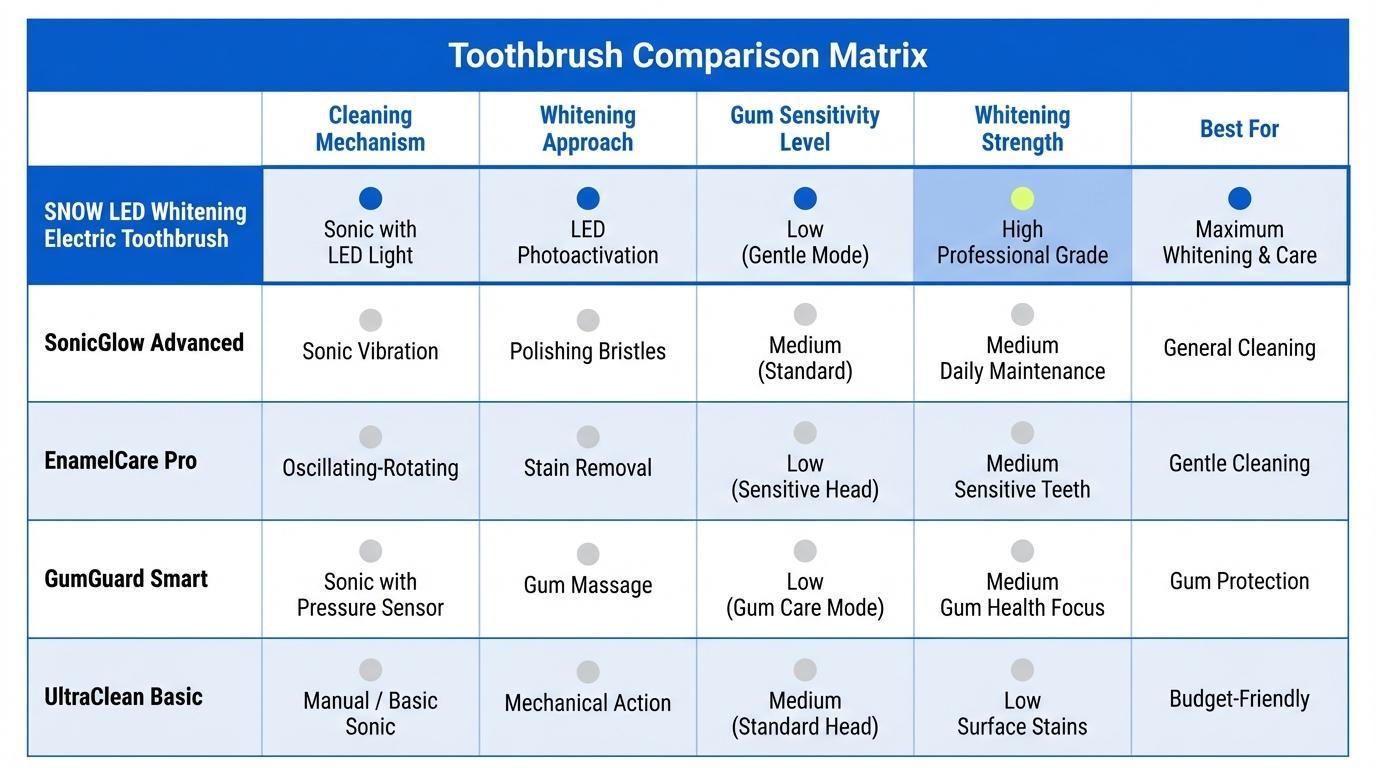
Choosing the best toothbrush for whitening comes down to how each one performs in real use. This comparison highlights how they clean, how they support whitening, and which type of user each brush is best suited for.

The SNOW LED Whitening Electric Toothbrush stands out for combining sonic cleaning, a whitening toothbrush mode, and built-in LED lighting. This means it does more than basic brushing. Instead of relying solely on plaque removal, it supports teeth whitening and helps you achieve whiter teeth over time.
Get the SNOW® LED Whitening Electric Toothbrush
Why Electric Toothbrushes Perform Better
Compared to a manual toothbrush, most electric toothbrushes clean more effectively. They improve plaque removal, support better gum health, and help keep teeth healthy with less effort.
Key advantages include:
-
Built-in timers for consistent brushing
-
Advanced pressure sensors that help prevent the use of too much pressure
-
More even cleaning across all areas of the mouth
-
Better support when used with whitening toothpaste
While manual soft-bristled toothbrushes provide baseline plaque removal, electric toothbrushes consistently outperform them by generating 30,000+ brush strokes per minute, eliminating the margin for human error in daily brushing technique.
Sonic vs Oscillating Toothbrushes
Understanding the difference helps you choose the best toothbrush for your needs.
-
Oscillating brushes like Oral-B scrub in circular motions for strong plaque removal
-
A sonic toothbrush uses vibrations to move fluid between teeth and along the gumline
For users focused on whitening teeth, sonic options often feel gentler while still delivering strong cleaning, especially for those with sensitive teeth.
What Actually Affects Whitening Results
No brush alone can replace treatments like whitening strips, but the right tools and habits can still improve results.
To support better whitening:
-
Use whitening toothpaste regularly
-
Replace brush heads every three months
-
Choose a brush with multiple brushing modes
-
Use a fresh toothbrush head with soft bristles
With consistent use, surface stains can improve within a few weeks.
Which Toothbrush Should You Choose
Each option fits a different need:
-
SNOW LED Whitening Electric Toothbrush for daily whitening and cleaning in one routine
-
Oral-B iO Series for strong plaque removal and pressure control
-
Philips Sonicare DiamondClean for reliable sonic cleaning
-
Aquasonic Vibe Series for a budget-friendly whitening toothbrush
-
Philips Sonicare 9900 Prestige for sensitive teeth and adaptive cleaning
The goal is simple. Choose the best toothbrush that fits your routine and supports long-term gum health and cleaner teeth.
Final Words
Every brush on this list is a credible pick. The right choice comes down to your specific goals.
If removing stains is your main goal and you want whitening in your daily routine, the SNOW LED Whitening Electric Toothbrush is a great choice. It combines an LED light, sonic cleaning, and enamel-safe brushing in one device.
It also works with SNOW’s whitening products, so you can clean your teeth and help remove stains simultaneously. This means you do not need separate steps to achieve a cleaner, brighter smile.
One honest reminder: every brush on this list handles surface stains well. Intrinsic discoloration still needs dedicated treatment, and changing the toothbrush won't change that. Good dental hygiene keeps your teeth and gums healthy in the long run. Stop guessing and start brushing smarter. Join millions of people who trust SNOW for cleaner, brighter-looking teeth.
FAQs
Now that you have seen every pick and how they compare, here are the questions people ask most often about whitening toothbrushes.
Which Toothbrush Is Best for Yellow Teeth?
It depends on the stain type. If the yellowing is surface-level, the best electric toothbrushes with a whitening mode and sonic technology will make a visible difference. If the discoloration is intrinsic, no toothbrush will resolve it on its own. For sensitive teeth, a brush with adaptive pressure sensing is worth prioritizing alongside any whitening function.
Can Yellow Teeth Become White Again by Brushing?
Surface yellowing, yes. Consistent brushing with an effective whitening mode removes the buildup that keeps teeth white and bright over time. Intrinsic yellowing embedded in the tooth structure cannot be reversed through brushing alone. A toothbrush is the foundation, and a dedicated whitening treatment takes results to the next level. ADA research supports the efficacy of whitening strips.
How Many Times a Day Should You Brush Your Teeth?
ADA recommends twice daily for 2 minutes each time. Brushing more frequently does not improve whitening results and can contribute to enamel erosion over time. Replace your brush head every 3 months, as worn bristles noticeably reduce both plaque removal efficiency and surface stain removal.
Using a fluoride toothpaste alongside your whitening routine is a solid everyday habit. ADA backs the daily use of fluoride toothpaste. A good brushing technique, gentle pressure, and small circular motions covering all surfaces make any toothbrush perform noticeably better.
Which Whitening Toothbrush Should You Buy?
Every brush on this list is a credible pick. If surface stain removal is the priority and you want whitening built into your daily routine, the SNOW LED Whitening Electric Toothbrush is the most complete option here. LED integration, sonic technology, enamel protection, and compatibility with SNOW's whitening range make it the only brush that handles cleaning and stain targeting in one step.


