

In 2026, it’s clear that self-care has expanded well beyond serums and sleep schedules.
More people are turning their attention to their teeth, and for good reason. A bright smile is often one of the first things others notice, and one of the first things you notice about yourself every time you look in the mirror.
Teeth whitening has quietly become a meaningful part of modern beauty routines. The global teeth whitening market was valued at around $7.5 billion in 2023 and is projected to reach over $10 billion by 2030. That growth wasn’t driven by vanity alone. It reflects a wider shift toward accessible, non-invasive ways to feel more confident in your own appearance.
In this article, we’ll cover the benefits of adding teeth whitening to your self-care routine, including:
-
A confidence and mood boost backed by peer-reviewed research
-
Significant cost savings compared to in-office treatments
-
The convenience of fitting whitening into your existing routine
-
Better oral health habits over time
-
A fully customizable experience that works for your goals and sensitivity level
Shop SNOW’s At-Home Whitening Collection
Key Takeaways
-
Research shows that teeth whitening is associated with improvements in self-confidence, mood, and social engagement
-
At-home whitening is significantly more affordable than in-office treatments while delivering comparable long-term results
-
It fits into your existing routine on your schedule, with no appointments, no waiting rooms, and no recovery time
-
Whitening supports better oral health habits and can contribute to healthier gums and teeth over time
-
Results are not permanent, but they can be maintained with consistent habits
-
There are a few things worth understanding before you start, covered in full below
Why Teeth Whitening Has Become Part of Modern Self-Care
Self-care is ultimately about investing in the things that help you feel your best, both physically and mentally. Teeth whitening fits naturally into that mindset. It is simple, accessible, and capable of delivering benefits that extend beyond appearance alone. From confidence and convenience to long-term oral health habits, here’s a closer look at why more people are making whitening part of their routine.
It Boosts Your Confidence and Self-Image
Teeth whitening does more than simply change a shade on a color chart. Research shows that a brighter smile can have a real impact on how you feel about yourself every day.
A 2024 study published in Science Direct looked at what happens to people’s confidence after whitening. The results were clear: participants reported statistically significant improvements in self-confidence, social life, professional life, and overall mood, and felt less self conscious about their teeth. They also felt more satisfied with their own smiles after treatment.
A separate randomized, placebo-controlled clinical trial on PubMed confirmed the same thing. People who received real whitening treatment reported notably greater satisfaction with their appearance and less anxiety about how their teeth looked in social situations, compared to those who received a placebo.
Research compiled by Rank My Dentist also found that a whiter smile is linked to how others perceive you, including coming across as more approachable, more hireable in job interviews, and better able to project a confident smile in professional settings.
These benefits are backed by real science and can have a meaningful effect on self esteem. The confidence boost from whitening is one of the most well-documented outcomes in the dental research world.
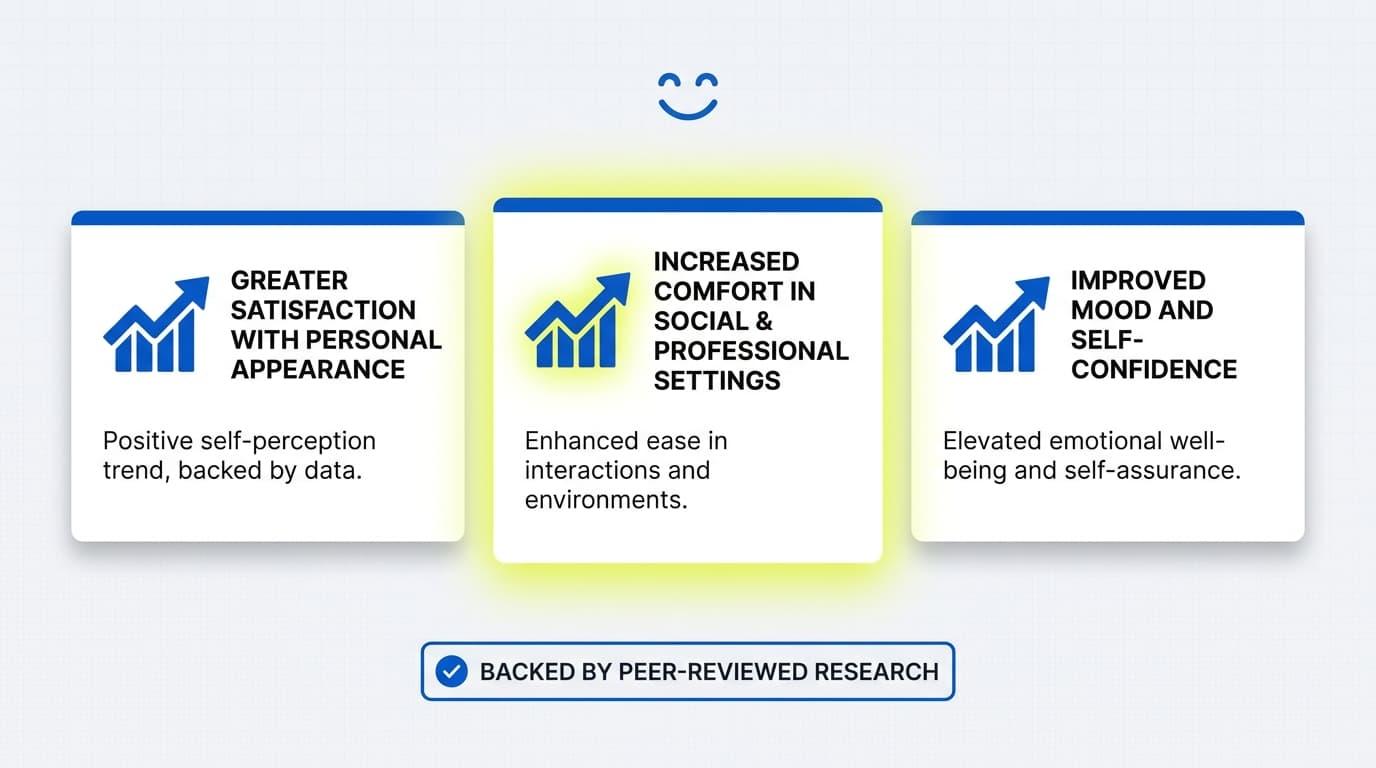
Research suggests that teeth whitening can support:
-
Greater satisfaction with personal appearance
-
Increased comfort in social and professional settings
-
Improved mood and self-confidence, as reported by study participants
It’s More Affordable Than You Think
One of the biggest benefits of at-home teeth whitening is how much money it saves you compared to going to a clinic.
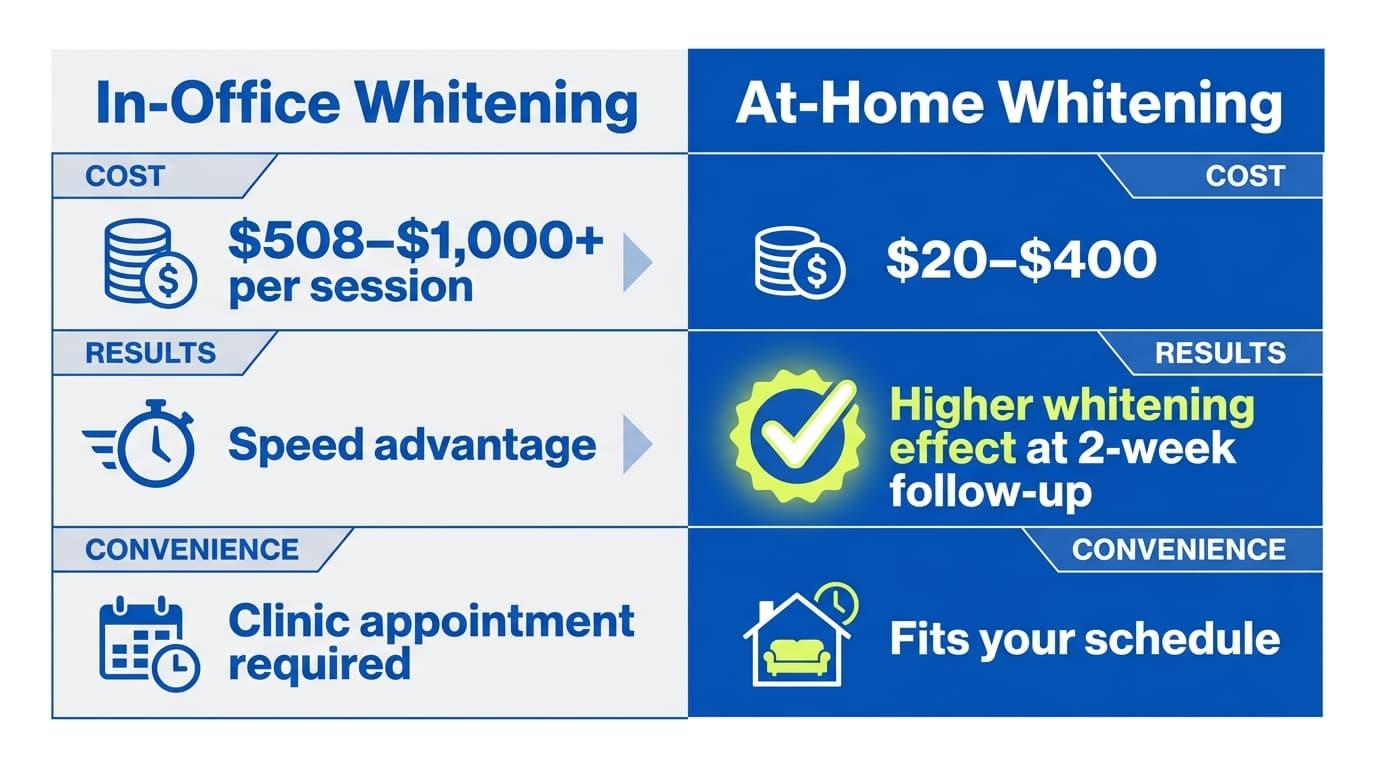
The average cost of in-office teeth whitening in the US is around $508 per session. Depending on your dentist and location, that number can climb to $1,000 or more. At-home kits, by comparison, typically run between $20 and $100 for OTC options, or $100–$400 for dentist-grade formulas.
And here’s the key part: You don’t have to pay more to get similar results. A clinical trial published on PubMed found that at-home whitening with 10% carbamide peroxide actually produced a higher whitening effect than in-office treatment with 35% hydrogen peroxide when measured two weeks after treatment ended. The main thing in-office treatment wins on is speed, not results.
For anyone who wants a genuinely brighter smile without a big bill, at-home whitening is hard to beat.
It Fits Into Your Life, On Your Terms
At-home teeth whitening is a non-invasive experience with no drills, no injections, and no recovery time. It slots right into your morning or nighttime routine alongside everything else you already do for your skin and hair.
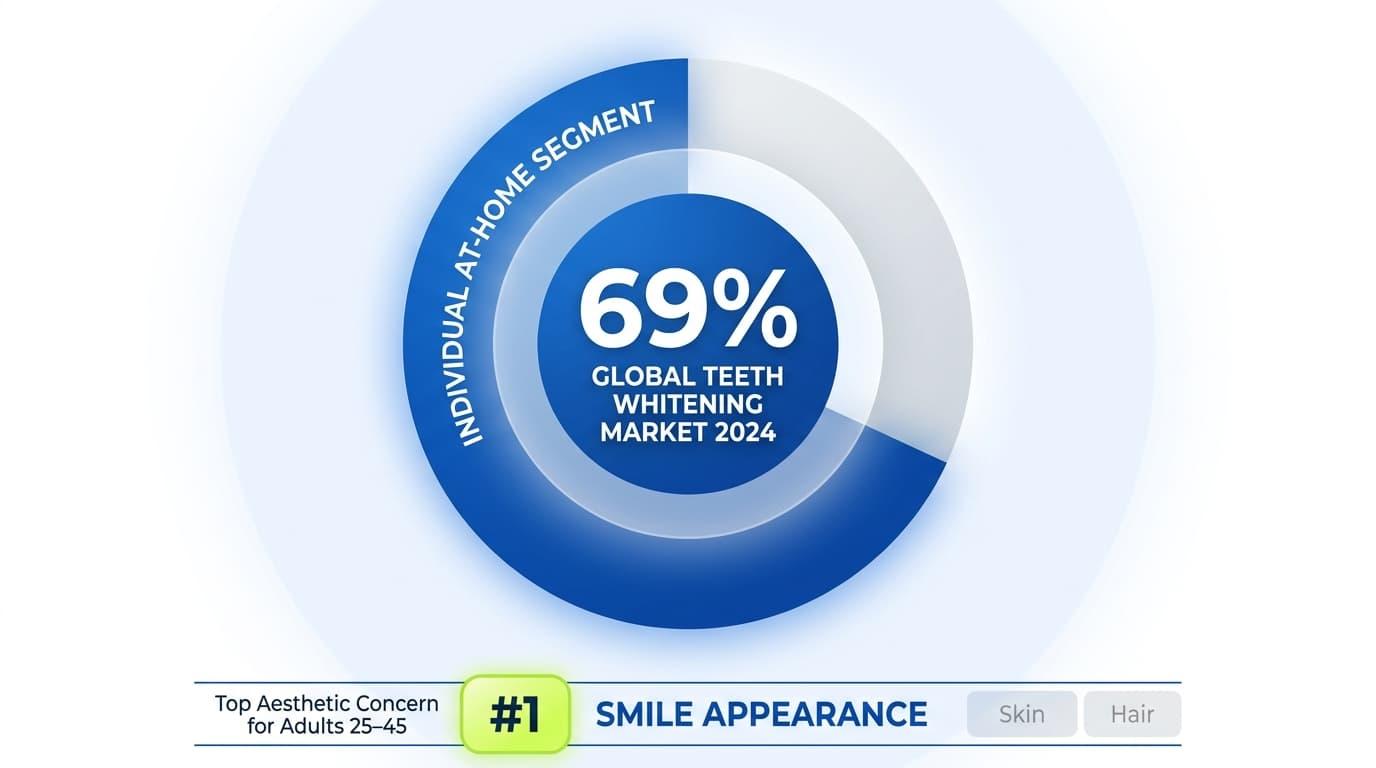
According to a 2025 survey cited by Mordor Intelligence, smile appearance is the number one aesthetic concern for adults aged 25 to 45, ranking above skin and hair. People care deeply about their smiles, and they want solutions that fit into their daily lives.
That’s exactly why the individual at-home segment made up nearly 69% of the global teeth whitening market in 2024. Most people prefer to whiten on their own schedule, not a clinic’s.
You control when and how you do it, fitting it around your skincare wind-down or morning ritual rather than booking an appointment. It isn’t a one-time procedure; it’s a practice you can build into your life at your own pace.
It Supports Better Oral Health Habits
The benefits of whitening go beyond how your teeth look. It can also offer real health benefits for how healthy your mouth actually is.
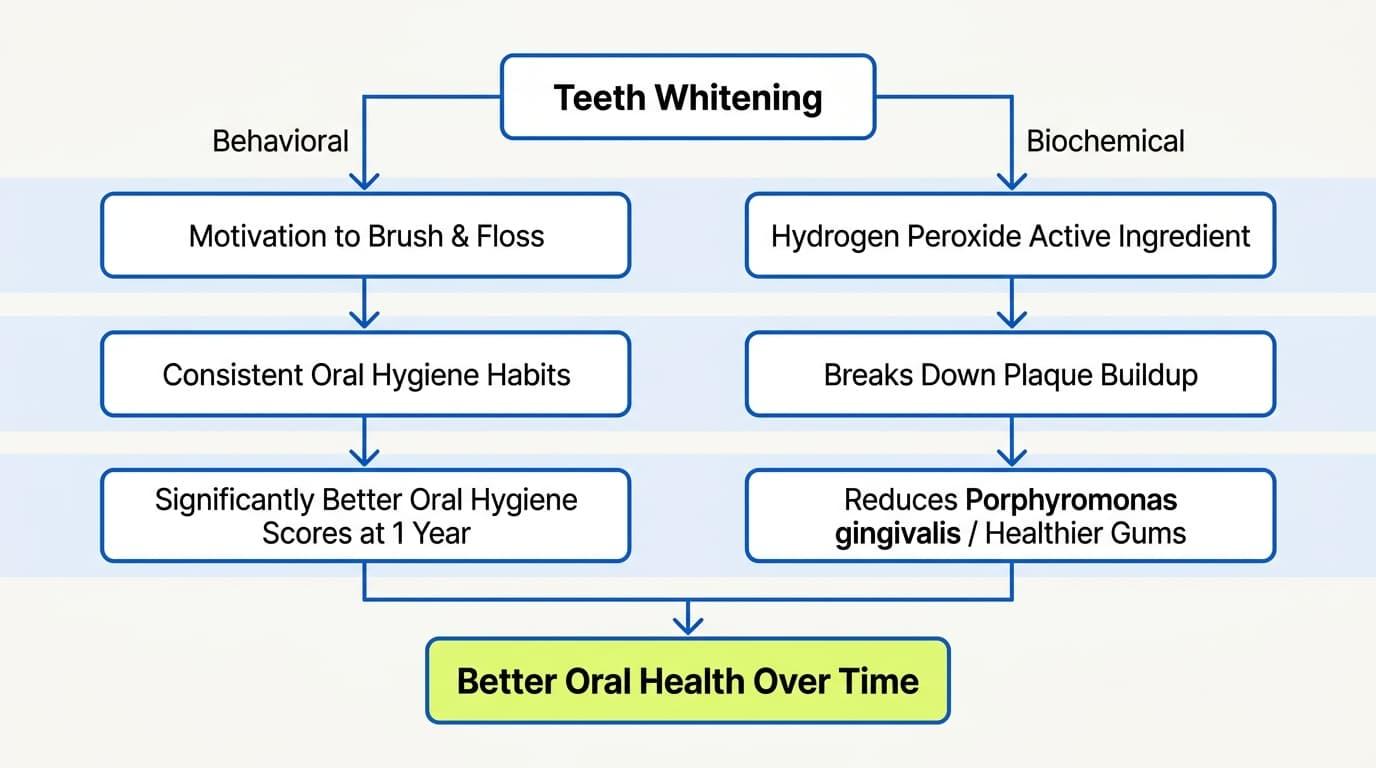
A study published on PubMed followed patients who had professional teeth whitening and tracked their oral hygiene habits for a full year afterward. The finding? Their oral hygiene scores were significantly better than those of the control group. The researchers concluded that teeth whitening acts as a strong motivation to keep up with brushing and flossing long-term.
On top of that, hydrogen peroxide, the active ingredient in most whitening products, is an antibacterial agent. It may also help break down plaque buildup that brushing can miss.
A study in Scientific Reports found that hydrogen peroxide made participants’ gums healthier and reduced levels of Porphyromonas gingivalis, the bacteria most commonly linked to gum disease.
In short, whitening can do double duty: it brightens your smile and helps keep harmful bacteria in check.
When you invest in how your smile looks, you tend to take better care of it overall. That ripple effect is one of the quieter benefits that most people don’t think about upfront, especially since better oral care may also lower the risk of gum disease and tooth decay.
It’s Customizable to Your Needs
One of the things that makes at-home whitening stand out is that you can tailor it to your own situation. There is no single right answer for everyone, and that’s actually a feature, not a flaw.
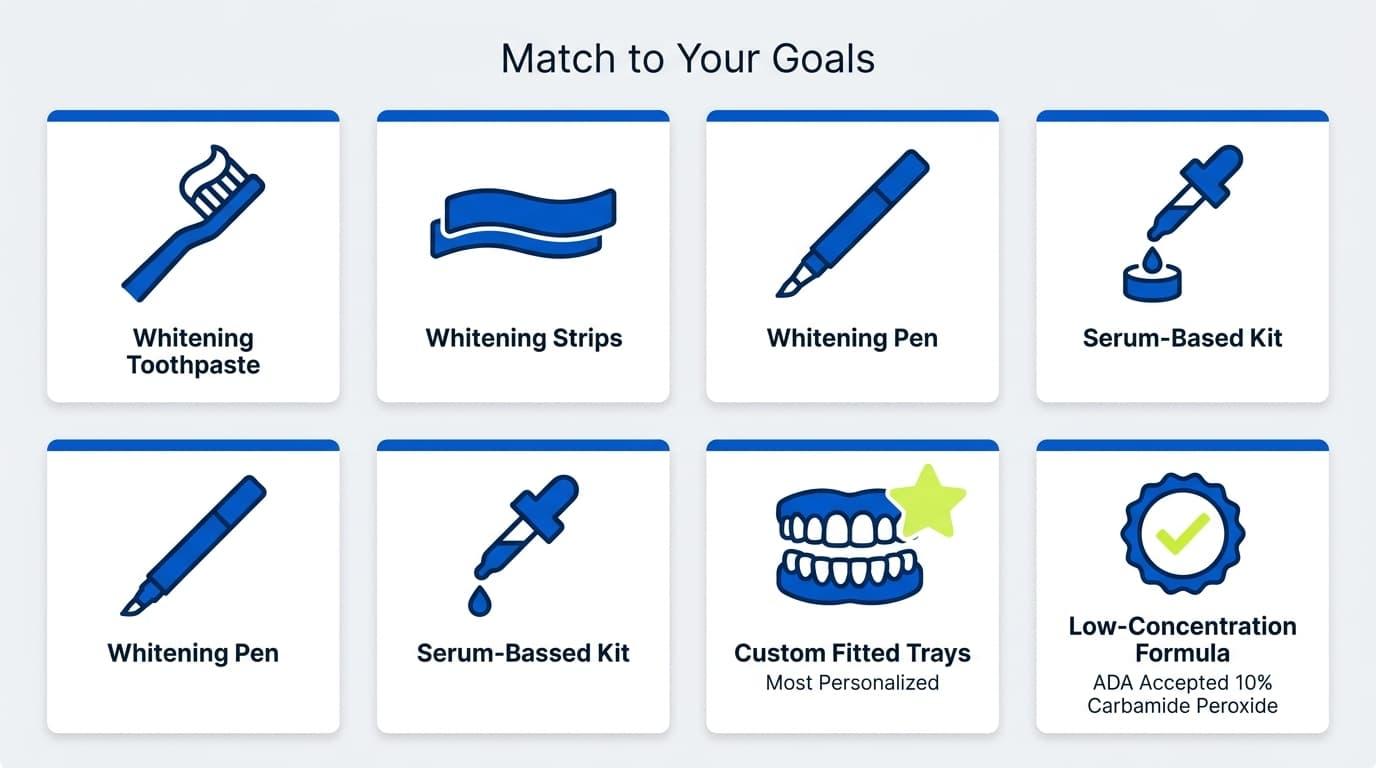
The American Dental Association (ADA) has granted its Seal of Acceptance to 10% carbamide peroxide, confirming that at-home whitening at this concentration is both safe and effective. That means there are dentist-vetted options available across different whitening systems whether you’re dealing with mild everyday staining or want something stronger for more stubborn discoloration.
For people with sensitive teeth, clinical trials show that lower-concentration at-home formulas cause significantly less sensitivity than high-concentration in-office treatments, with no meaningful difference in final whitening results. You get the same outcome with a gentler experience.
Whitening toothpastes, whitening strips, pens, and serum-based kits each serve a different purpose among over the counter products. They’re convenient, but less customized than options that use custom fitted trays.
You can match the approach to your goals, your timeline, and your comfort level, while custom fitted trays remain the more personalized alternative to standard retail options. That kind of personalization simply isn’t possible with a single in-office session.
How Long Do Whitening Results Last?
Most whitening guides will tell you the results last a while.
According to a clinical study on 10% carbamide peroxide bleaching products, measurable color improvement was maintained at the six-month follow-up mark, though some gradual color rebound is normal over time.
For in-office treatments, dental sources and clinical consensus suggest results typically hold for six months to two years, depending heavily on diet, oral hygiene, and lifestyle habits. At-home whitening results tend to fall in a similar range, with periodic maintenance helping to extend them.
No whitening method is permanent. Tooth enamel is porous, and natural exposure to staining foods and drinks means some color rebound happens over time for everyone; as enamel wears, teeth darkens because the dentin underneath shows through more. Everyday stains are different from this age-related deeper color change. The good news is that consistent maintenance keeps results looking fresh without needing to restart a full cycle from scratch.
Habits That Protect Your Results
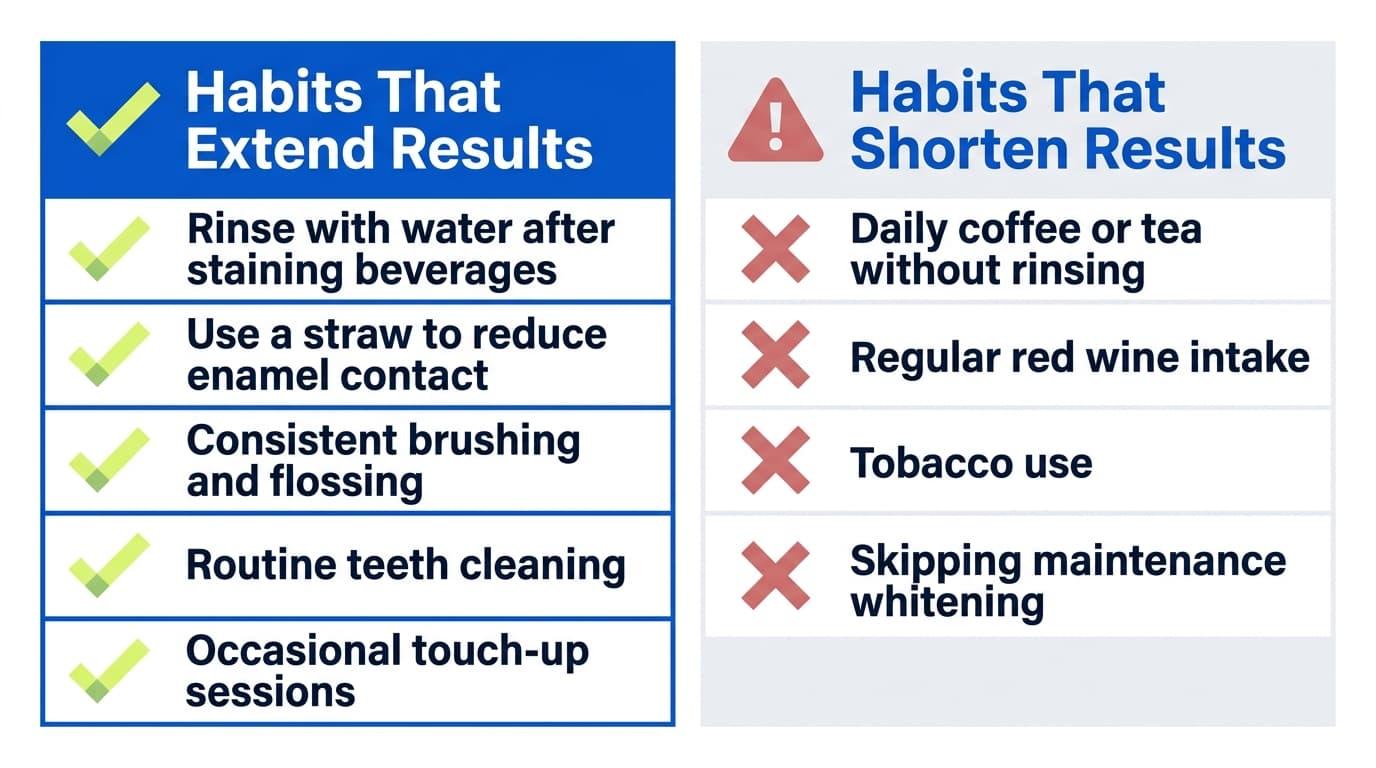
Your post-whitening routine has a direct impact on how long your brightness holds. Here are the habits that make the biggest difference.
Habits that help extend results:
-
Rinsing with water after consuming staining beverages
-
Using a straw to reduce direct contact with tooth enamel
-
Maintaining consistent brushing and flossing habits
-
Keeping up with routine teeth cleaning, since whitening does not address tartar buildup
-
Scheduling occasional touch-up sessions as part of your routine
Habits that tend to shorten results:
-
Daily coffee or tea consumption without rinsing afterward
-
Regular red wine intake, which combines tannins with deep chromogens
-
Tobacco use
-
Skipping maintenance whitening after initial treatment
Maintenance whitening is not a sign that the original treatment failed. It is simply how at-home whitening works long-term, the same way a skincare routine requires consistency to hold results, and good maintenance habits help remove stains from your routine before new discoloration sets in.
Whitening as a Self-Care Ritual: Where It Fits in Your Routine
Teeth whitening has earned its place on the self-care shelf.
Both practices are built around consistency, ingredient awareness, and the quiet confidence that comes from showing up for yourself daily.
Whitening fits into that rhythm the same way a serum does. It is a small, intentional act that compounds over time.
Clean Ingredient Standards Worth Looking For
Consumers who read skincare labels for parabens and sulfates are applying the same scrutiny to oral care, and that is a reasonable standard to hold. When evaluating any whitening product, these are the attributes worth prioritizing:
-
SLS-free formulation
-
Paraben-free formula
-
Vegan and cruelty-free certified
-
Free from alcohol and harsh synthetic additives
SNOW’s dentist-formulated whitening products are built around exactly these standards.
Shop SNOW’s Full Whitening Collection
Things to Know Before You Start
Whitening products are cosmetic products, not medical treatments, and professional whitening usually starts with a dental exam so a dentist can check for dental issues and existing dental work that may affect safety or results. As a cosmetic procedure in cosmetic dentistry, it’s intended to improve appearance rather than diagnose or treat disease.
They’re designed mainly to lift extrinsic stains from the surface and near-surface enamel, while intrinsic stains deeper in the tooth may respond less predictably; discoloration linked to too much fluoride may also not lighten the same way.
If you have active dental concerns such as cavities, gum issues, or damaged enamel, it’s always a good idea to consult a dentist before starting any whitening routine.
The most commonly noted experience with whitening is temporary tooth sensitivity, which typically resolves on its own after treatment ends.
Lower-concentration at-home formulas are generally associated with a more gradual, gentler experience than higher-concentration in-office treatments. If you have pre-existing sensitivity, starting with a gentler formula is a practical first step.
Overusing any whitening product beyond the recommended usage directions is not advisable. Following the instructions on any product you choose is the most straightforward way to get good results, reduce the chance of gum irritation, and keep the experience comfortable.
Common Whitening Myths Worth Setting Straight
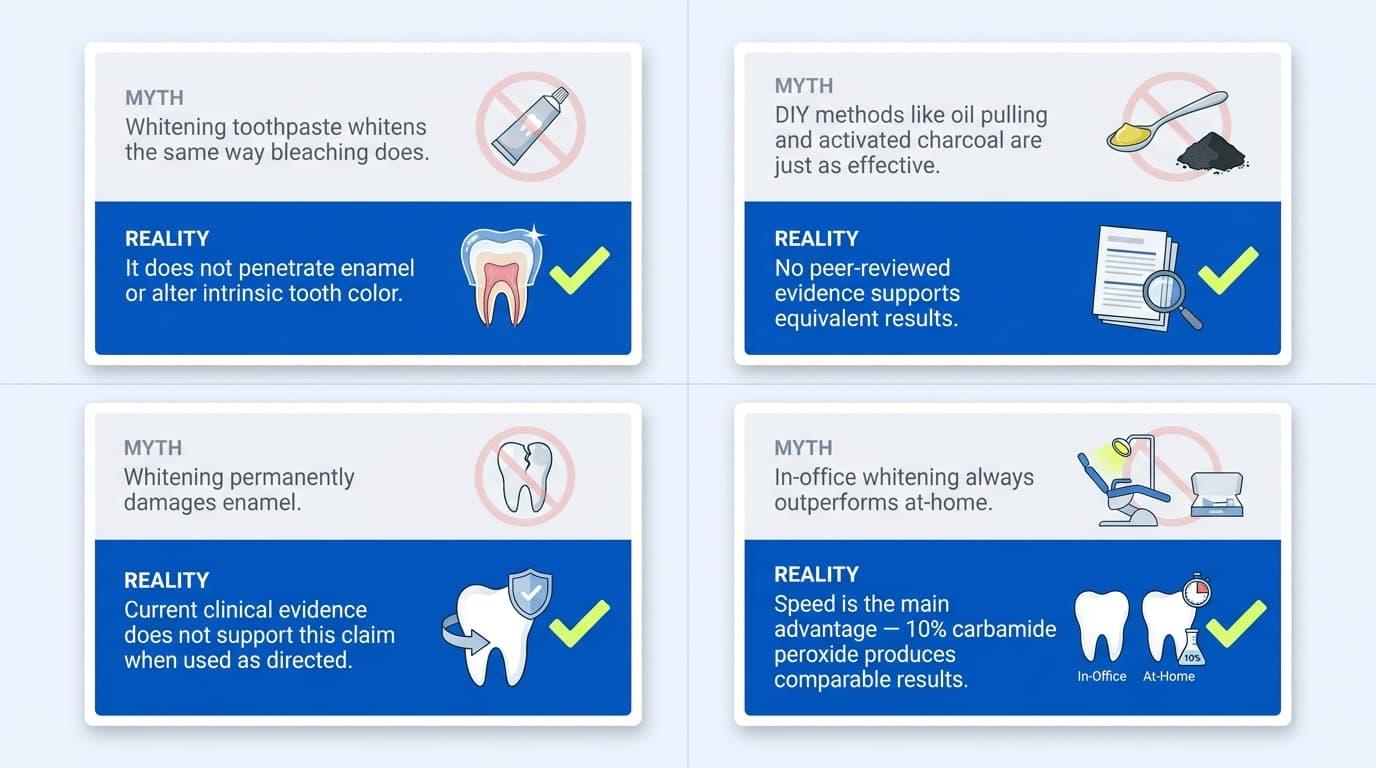
A lot of whitening misinformation circulates online, and some of it actively discourages people from trying treatments that would genuinely work for them.
Myth: Whitening toothpaste whitens the same way bleaching does.
Reality: Whitening toothpaste helps with extrinsic stains through mild abrasion, physically buffing away surface deposits. It does not penetrate tooth enamel or alter intrinsic tooth color. It is a maintenance tool, not a bleaching agent.
Myth: DIY methods like oil pulling and activated charcoal are just as effective as peroxide-based whitening.
Reality: No peer-reviewed evidence supports equivalent results for these methods. Some, particularly activated charcoal, carry a real risk of enamel abrasion with repeated use. Hydrogen peroxide and carbamide peroxide remain the only agents with documented clinical whitening outcomes, and this tooth bleaching process is how teeth whitening work: the whitening agent breaks down stain molecules.
Myth: Whitening permanently damages enamel.
Reality: When used as directed and within recommended concentrations, current clinical evidence does not support this claim. Following product instructions is what keeps the experience safe and comfortable.
Myth: In-office whitening always outperforms at-home whitening.
Reality: Speed is the main advantage of in-office treatment. Long-term outcome is a different question. Multiple clinical studies show that consistent at-home whitening with 10% carbamide peroxide can produce results comparable to in-office treatments on several outcome measures over time.
Final Words
Teeth whitening is a legitimate, non-invasive self-care practice with real, documented associations with confidence, social engagement, and appearance satisfaction. The benefits are tangible: it boosts how you feel about yourself, it fits your lifestyle and budget, it supports better oral health habits, and it compounds over time when you stay consistent.
At SNOW, we built our dentist-formulated collection around this lifestyle. Clean ingredients, a formula designed with sensitive smiles in mind, and results that fit your schedule.
Explore SNOW’s At-Home Whitening Collection
Frequently Asked Questions
Here are answers to the most common questions about the benefits of teeth whitening, what you can realistically expect, and how to get the most out of your routine.
Does teeth whitening actually improve self-confidence?
Yes, and the research backs it up. Whitening can also help people who used to avoid smiling feel more comfortable showing their teeth. A 2024 Science Direct study on Generation Z participants found statistically significant improvements in self-confidence, mood, and smile satisfaction after whitening. A separate PubMed placebo-controlled trial confirmed those findings. The confidence boost that comes with a white smile is one of the most well-documented effects in the whitening literature.
Is at-home teeth whitening worth it compared to in-office treatment?
For most people, yes. In the comparison of teeth whitening treatments, care in a dentist's office is faster, while quality at-home options cost a fraction of that and may take longer. And a published clinical trial found that at-home whitening with 10% carbamide peroxide actually outperformed in-office treatment on certain whitening measures two weeks after treatment. The main win for in-office treatment is speed, not overall effectiveness.
Can teeth whitening support better oral health overall?
There are many benefits to whitening beyond appearance, and it can help in two ways. A PubMed study that followed patients for a full year found that people who used teeth whitening treatments had significantly better oral hygiene scores over time than those who didn’t, suggesting they can encourage better oral care habits over time. On top of that, hydrogen peroxide, the active ingredient in most whitening products, has proven antibacterial properties that help reduce the bacteria linked to gum disease.
How long do the benefits of teeth whitening last?
Results vary depending on diet, oral hygiene, and lifestyle, but clinical studies on at-home whitening show measurable color improvement maintained at the six-month follow-up mark. In-office results typically hold between six months and two years. Neither is permanent, but periodic maintenance helps whitening treatments keep brightness looking fresh without needing to restart a full treatment cycle, and keeping the color of natural teeth the same over time is difficult because foods, drinks, and aging continue to cause stains.
Is teeth whitening safe for people with sensitive teeth?
Yes, when whitening teeth, the right treatment should match your sensitivity level. Lower-concentration at-home products are a great fit for sensitive smiles. Clinical trial data shows they cause less sensitivity than in-office treatments while delivering the same final whitening results. The ADA has also granted its Seal of Acceptance to 10% carbamide peroxide, confirming its safety and effectiveness for at-home use, and whitening gel formulas vary in concentration and should be matched to the user’s needs when possible.


