

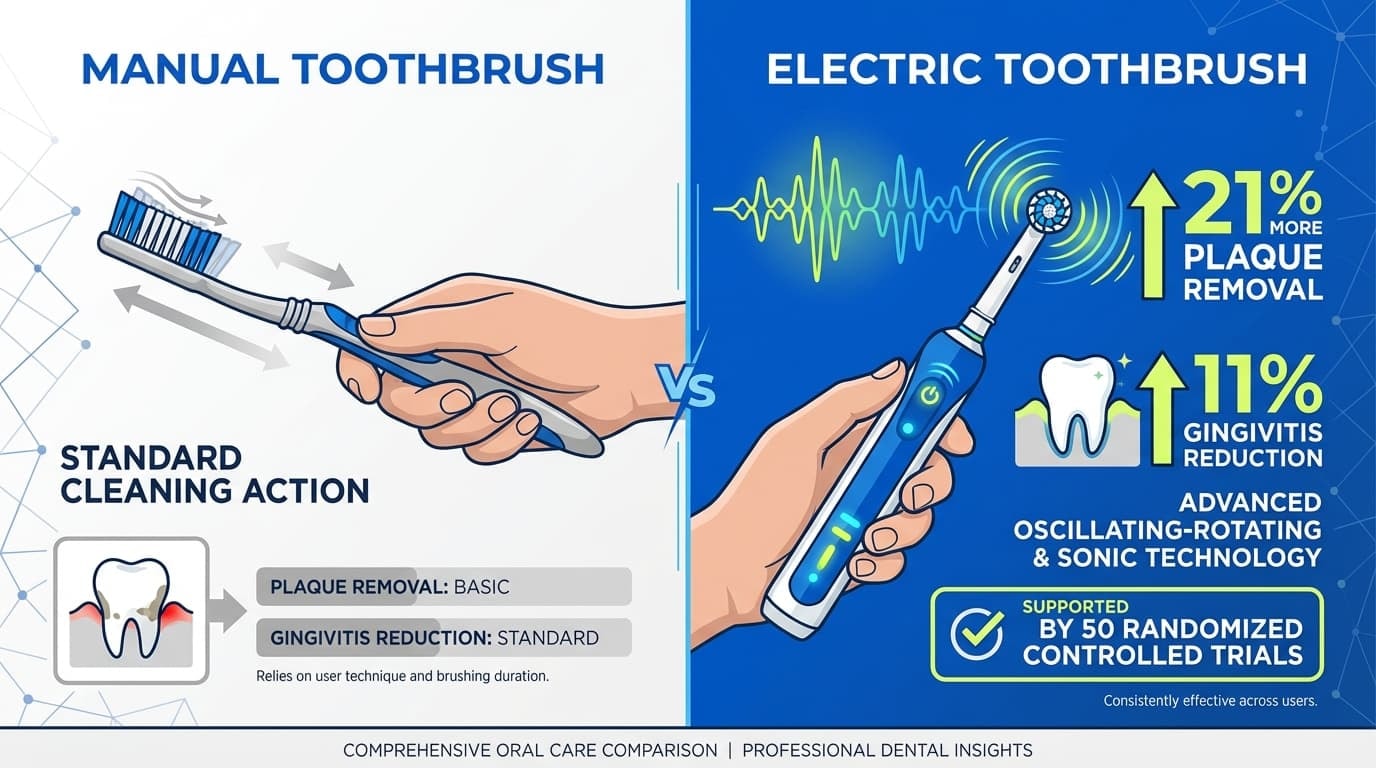
Electric toothbrushes provide superior oral hygiene by removing 21% more plaque and reducing gingivitis by 11% after three months of use compared to manual brushing.
In a 2024 clinical analysis of over 50 randomized controlled trials published by Cochrane, electric toothbrushes demonstrated significant superiority in reducing long-term gingivitis.
This guide analyzes the clinical evidence and practical advantages of powered oral care:
-
Is an electric toothbrush safer for sensitive teeth?
-
Which smart features actually improve brushing habits?
-
How do dentists evaluate electric toothbrush efficacy?
Key Takeaways
-
High-quality electric toothbrushes remove more plaque and reduce gingivitis better than manual brushes, according to large-scale clinical reviews analyzing over 50 randomized controlled trials and more than 5,000 participants.
-
After 3+ months of consistent use, electric toothbrushes deliver approximately 21% better long-term plaque reduction and 11% better long-term gingivitis reduction compared to manual brushing.
-
Built in timers, pressure sensors, and app guidance improve brushing habits significantly, particularly benefiting kids, older adults, and people with braces or implants who struggle with proper technique.
-
When used with soft bristles and light pressure, electric toothbrushes do not cause gum recession and remain safe for implants, orthodontic appliances, and most people.
-
While not absolutely required, electric toothbrushes stand out as one of the most effective, evidence-based tools for preserving teeth and gums over the long term.
Manual vs. Electric: Which One Actually Cleans Better?
If you’re serious about improving your oral health, it’s time to look at the facts.
Research consistently shows that using an electric toothbrush leads to better oral hygiene than a manual brush.
In over 50 randomized controlled trials reviewed by Cochrane, electric toothbrushes removed 21% more plaque and reduced gingivitis by 11% after three months of use.
Why Electric Outperforms Manual
Let’s start with what makes electric toothbrushes more effective in everyday use. Unlike a manual toothbrush, which depends on your brushing habits and precision, many electric toothbrushes automate the most important aspects of brushing. That means less guesswork and better results.
-
High-speed brush heads (oscillating or sonic) make thousands of micro-movements per minute
-
Built-in timers ensure a full 2-minute brush every time
-
Pressure sensors help prevent gum damage from brushing too hard
These features create a consistent and gentle clean that is hard to achieve with a manual brush alone.
Added Benefits for Daily Use
Beyond clinical results, electric toothbrushes make daily brushing easier and more effective. Here’s what users often notice:
-
Improved brushing habits: Timers and app tracking support consistency
-
Better for sensitive teeth: Gentle brushing modes and smart feedback reduce irritation
-
Enhanced reach: Smaller brush heads clean hard-to-reach areas like the gumline and back molars
Together, these features help prevent tooth decay, reduce gum disease risk, and support stronger brushing routines.
Recommended by Professionals
Dentists and dental hygienists frequently recommend electric toothbrushes, especially for patients with sensitive teeth, gum issues, or inconsistent brushing habits. With the right toothbrush head and technique, electric brushes support cleaner teeth and gums with less effort.
If your manual brush is not delivering results, the benefits of an electric upgrade are clear and clinically proven.
More Than Just Clean: What Electric Toothbrushes Really Do for Your Smile
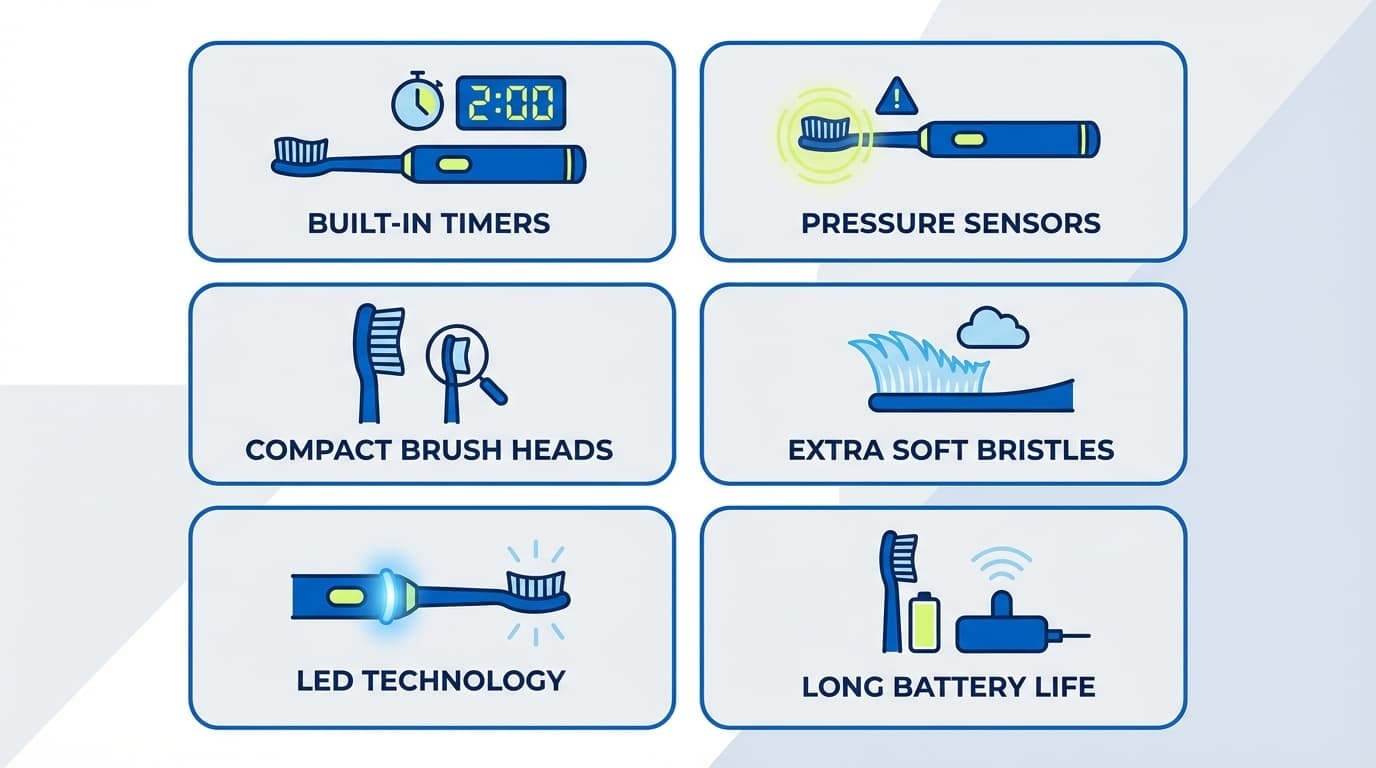
Electric toothbrushes offer far more than just a cleaner feel after brushing. Electric toothbrushes combine ergonomic design with LED and sonic technology to protect enamel while improving overall gum health. From better plaque removal to easier brushing habits, the benefits go beyond the basics.
Why Electric Brushes Make Daily Care Easier
It’s not just about cleaning teeth effectively. Electric toothbrushes are designed to make brushing simpler, safer, and more consistent for all users.
Here’s how they help:
-
Built-in timers ensure you brush for the dentist-recommended two minutes
-
Pressure sensors protect your gums by alerting you if you press too hard
-
Compact brush heads reach the gum line and tight areas manual brushes often miss
-
Extra soft bristles clean gently and are safe for sensitive gums
These built-in features reduce the chances of brushing errors, support better gum health, and help prevent tooth decay more effectively than a manual brush.
Better Results, Backed by Science
Many dental professionals agree that electric toothbrushes offer measurable benefits for both short-term cleanliness and long-term oral health.
What users often experience:
-
Fewer cavities and less gum inflammation
-
Improved removal of food particles and sticky film
-
A noticeable difference in how clean your teeth feel after brushing
Dental hygienists frequently recommend electric toothbrushes to patients who struggle with technique or have gum disease. The automated movement and consistent brushing time remove the guesswork and lead to better outcomes.
Support for Lifelong Oral Health
When paired with fluoride toothpaste and used twice a day, electric toothbrushes help protect against tooth loss, support stronger teeth and gums, and make it easier to maintain healthy habits over time.
If you’ve been relying on a manual toothbrush and not seeing the results you want, switching to an electric option can help you brush smarter and more effectively with less effort.
How Electric Toothbrushes Protect Your Teeth for Life
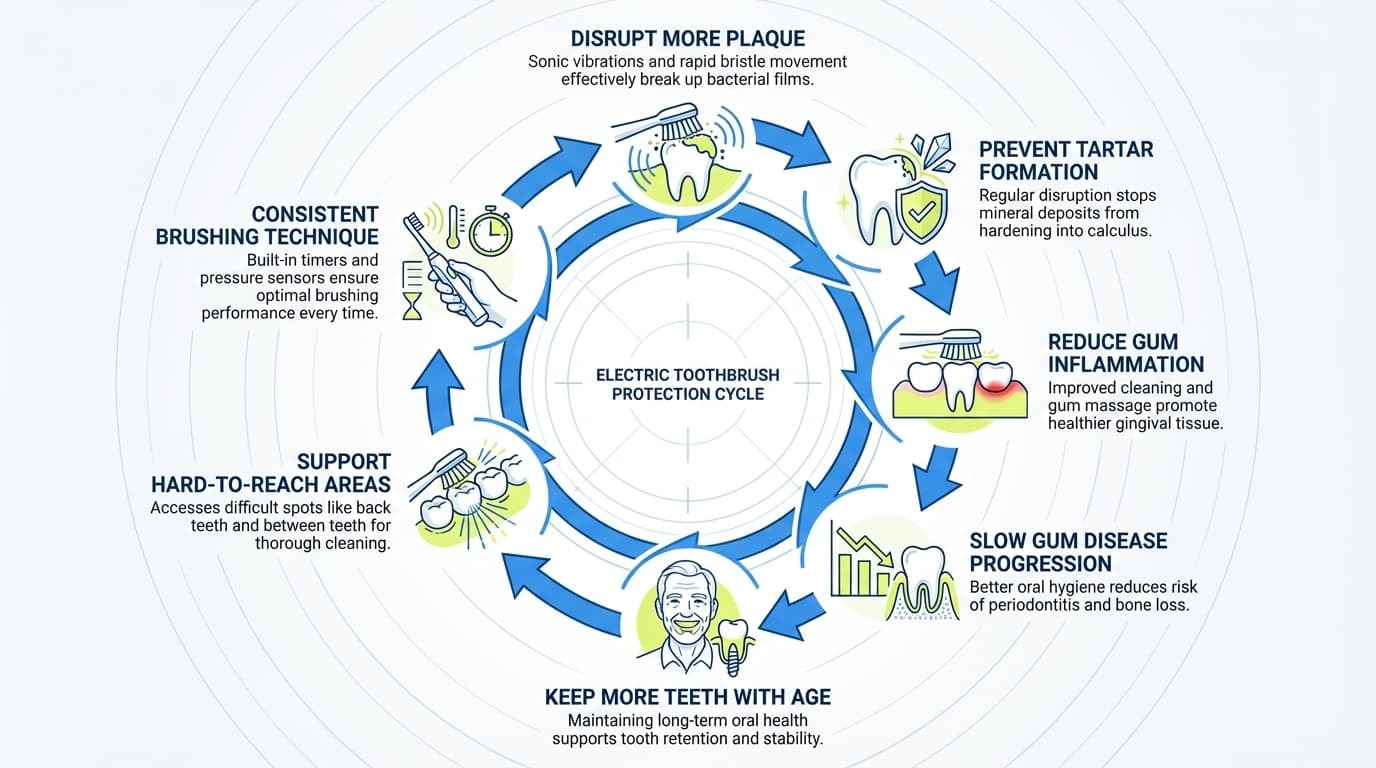
Electric toothbrushes do more than make brushing easier. Their long-term benefits are backed by evidence, showing they help protect your teeth, gums, and overall oral health as you age. Here’s how consistent use of an electric toothbrush leads to better results over time.
1. They Disrupt More Plaque Every Time You Brush
Unlike manual brushing, electric toothbrushes use fast, controlled motions to remove more plaque per session. Their oscillating or sonic movements break up biofilm more effectively than traditional scrubbing. This consistent removal means less buildup and cleaner teeth after each use.
2. They Prevent Plaque from Becoming Tartar
By removing more plaque early, electric toothbrushes help prevent it from hardening into tartar. Tartar is difficult to remove without a professional cleaning and contributes to cavities and gum issues. Electric brushes lower your chances of needing frequent dental scaling.
3. They Reduce Gum Inflammation at the Source
Gingivitis begins when plaque irritates the gumline. Electric toothbrushes reduce this irritation by cleaning more thoroughly along the gums. Over time, users report less redness, swelling, and bleeding. Most models also include gentle modes that support sensitive gums.
4. They Slow Down the Progression of Gum Disease
For those with early signs of gum disease, electric toothbrushes help prevent further damage. Studies show they reduce deep pocket formation and attachment loss when used consistently. This makes them a valuable tool alongside professional treatment.
5. They Help You Keep More Teeth as You Age
Tooth retention is one of the strongest long-term benefits of using an electric toothbrush. Adults who use them regularly are more likely to keep their natural teeth over time. Fewer extractions and fewer dental restorations mean better function and comfort later in life.
6. They Support Oral Health in Hard-to-Reach Areas
Electric toothbrushes are especially effective in areas where manual brushing often falls short. Their smaller brush heads and fluid-based cleaning reach around molars and into tight spaces, helping to prevent hidden decay and gum irritation.
7. They Provide Consistent Brushing Even with Limited Skill
Manual brushing relies heavily on technique, which not everyone can master. Electric toothbrushes level the playing field. With built-in timers, pressure sensors, and guided modes, they help users of all ages brush more effectively without needing perfect form.
Who Gains the Most from Going Electric?
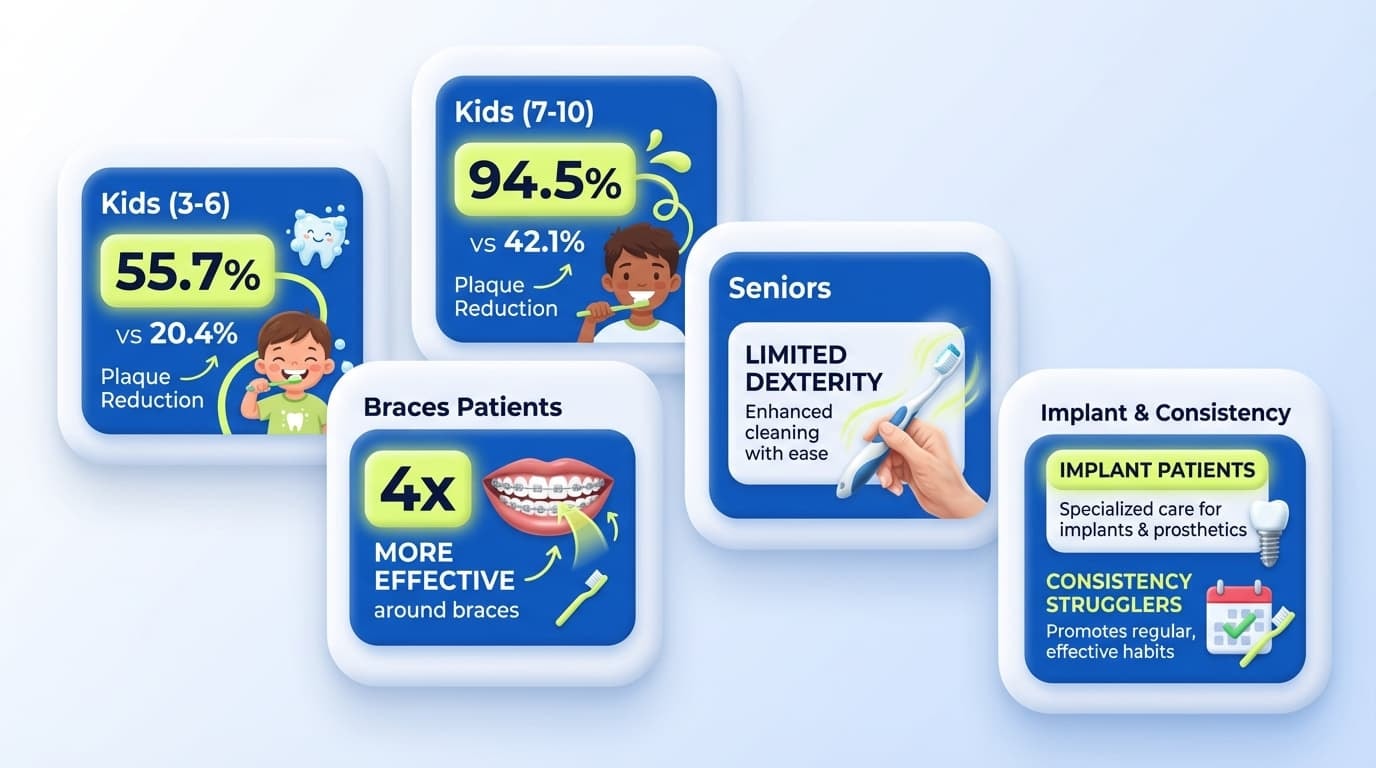
Electric toothbrushes are not just a high-tech upgrade, they’re a meaningful tool for protecting long-term oral health. But while nearly everyone can benefit from better plaque control, some groups see even more dramatic results when switching from a manual brush. From children still learning proper technique to adults managing implants or braces, electric toothbrushes address very specific challenges.
Let’s look at who benefits most and why.
Kids and Young Brushers: When Technique is Still Developing
For children, brushing technique is often inconsistent, and that leads to more plaque buildup. Research shows electric toothbrushes remove plaque far more effectively in young age groups, making them ideal for early oral health habits.
-
Children aged 3–6: Electric brushes achieved 55.7% plaque reduction compared to 20.4% with manual
-
Ages 7–10: 94.5% plaque reduction versus 42.1% with manual brushing
Why it matters:
-
Oscillating rotating technology compensates for developing motor skills
-
Built-in timers help them hit the recommended two minutes without guesswork
-
Many models feature age recommendations with kid-friendly designs and smaller brush heads
Braces and Orthodontic Patients: Cleaning Around Hardware
Brackets and wires trap food particles and make brushing tricky. A manual toothbrush often can't reach around those surfaces, leading to tartar buildup and potential cavities.
-
Electric toothbrushes are 4x more effective at removing plaque around fixed appliances
-
Oscillating rotating heads contour better around metal brackets
Why it works:
-
Electric brushes reach in and around difficult surfaces
-
Rounded bristles reduce abrasion on soft tissue and braces
Seniors and Those with Limited Dexterity
As we age or face conditions like arthritis or Parkinson’s, holding and maneuvering a toothbrush becomes harder. That’s where technology helps close the gap.
-
Larger handles improve grip
-
Timers and sensors ensure proper brushing duration and pressure
Even when brushing less frequently or with shorter strokes, seniors using electric toothbrushes saw fewer signs of gum disease and plaque than those using manual brushes.
People with Dental Implants or Prosthetics
Implants are an investment in both your smile and your health. They require precise care — and many worry vibrations might be harmful. But studies show electric toothbrushes are both safe and effective.
-
No impact on implant stability or gum recession when used correctly
-
Significantly better at removing biofilm and plaque from implant surfaces
Best practices:
-
Use soft bristles
-
Avoid excessive pressure
-
Choose a head that cleans without damaging gum margins
Anyone Struggling with Consistency
Let’s face it, most of us don’t brush long enough. The average manual brushing session lasts just 45 seconds, far short of the recommended two minutes.
Electric toothbrushes address this head-on:
-
Built-in timers help maintain two-minute sessions
-
Smart pressure sensors protect from brushing too hard
-
App tracking and reminders keep users on track
Whether you’re a forgetful teen or a busy professional, these tools create lasting behavioral change and better oral health outcomes.
Is It Safe? What to Know About Electric Brushes and Sensitivity
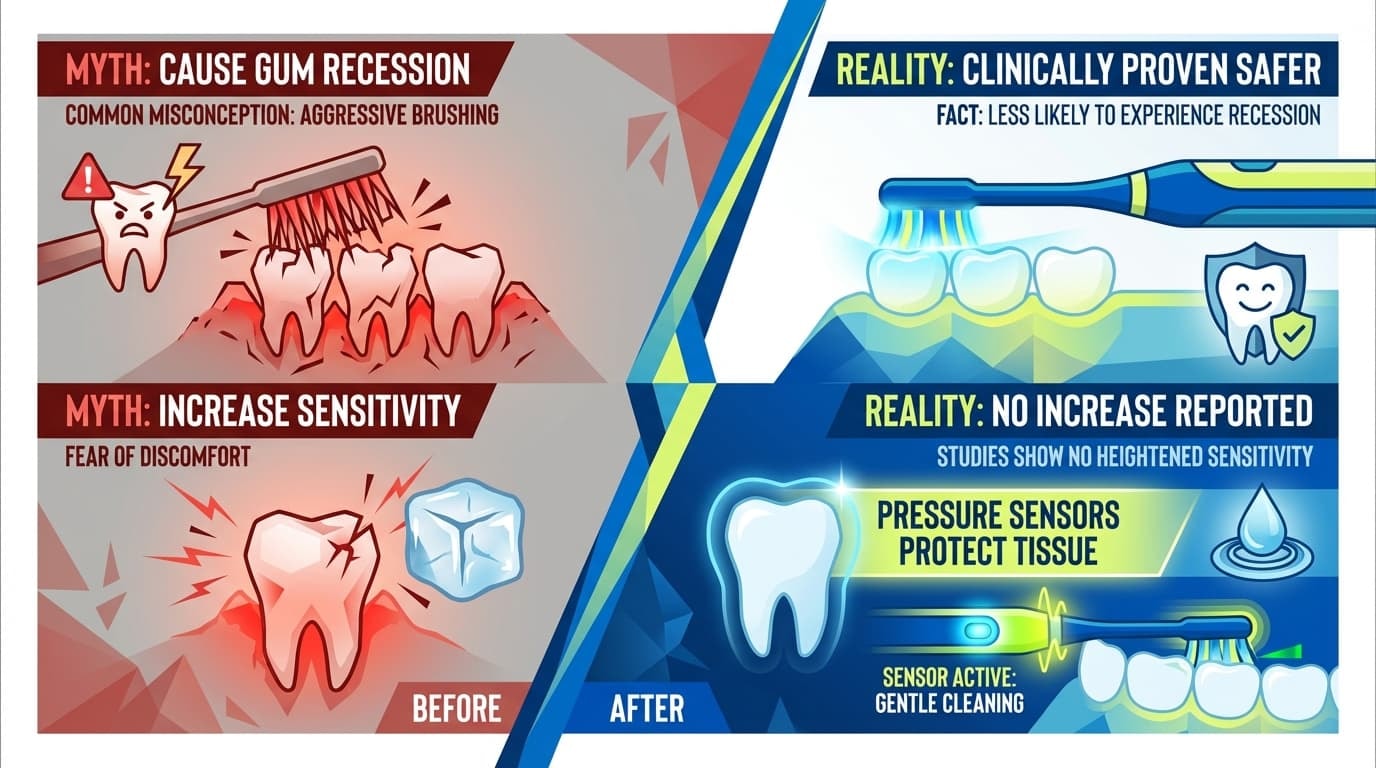
One of the most common questions people ask is whether electric toothbrushes are too harsh. Do they cause gum recession? Increase tooth sensitivity? Damage enamel over time?
Let’s set the record straight with what the clinical evidence actually shows.
Myth: Electric Brushes Cause Gum Recession
Many believe strong vibration equals aggressive brushing, but the opposite is true.
-
Electric toothbrush users are less likely to experience gum recession
-
Manual users apply more pressure and use horizontal scrubbing, the main cause of gum damage
Why it’s safer:
-
Pressure sensors alert you before pressing too hard
-
Rounded bristles protect delicate gum tissue
-
Automatic movement eliminates the need for manual scrubbing
Myth: They Increase Sensitivity or Wear Down Enamel
Some users worry about tooth sensitivity or enamel erosion. But when used as directed, electric toothbrushes are gentler than expected.
-
No increase in sensitivity reported across long-term studies
-
Oscillating rotating brushes showed lower sensitivity than both sonic and manual brushes
-
Bristles designed for soft contact minimize damage to surfaces
Safe usage tips:
-
Stick to soft bristles
-
Use light pressure and let the brush do the work
-
Don’t exceed the recommended two minutes
Specific Populations with Caution Points
Most people can switch safely, but a few cases benefit from dental guidance:
-
People with pacemakers should check if their device is compatible with sonic vibrations
-
Recent dental surgery patients should start with manual or soft brushing until cleared
-
Certain RF technologies are still emerging and may need further study
How to Brush with an Electric Toothbrush If You Have Sensitive Teeth
Sensitive teeth can make daily brushing uncomfortable, but avoiding brushing only makes the problem worse. The goal is not to brush less, but to brush smarter. With the right electric toothbrush settings and technique, you can clean thoroughly without triggering pain.
Start With a Gentle Brushing Mode
Many electric toothbrushes include multiple cleaning modes designed for different needs. If you experience sensitivity, always begin with the gentle or sensitive mode.
Sensitive modes use lower vibration intensity while still breaking down plaque and sticky film that cause cavities and gum irritation. This allows you to clean effectively without overstimulating exposed tooth surfaces.
The SNOW LED Whitening Electric Toothbrush includes a dedicated sensitive setting that reduces vibration strength while maintaining sonic cleaning power. This makes it easier to protect enamel while still improving daily oral health.
If sensitivity has stopped you from brushing comfortably, switching to the SNOW LED today can help make brushing pain free again.
Get the SNOW LED Toothbrush Today
Choose Soft Bristles That Protect Enamel
The type of bristles you use matters just as much as the brushing mode.
Soft or extra soft bristles flex around the teeth and gums instead of scraping against them. They clean plaque from delicate surfaces while reducing irritation along the gumline.
For sensitive users, stiff bristles often do more harm than good. They can wear enamel, irritate gums, and make brushing painful.
SNOW brush heads are designed with ultra soft bristles that remain gentle while still polishing teeth. This combination supports daily cleaning without increasing discomfort.
Pairing soft bristles with the SNOW LED toothbrush is one of the easiest ways to protect sensitive teeth long term.
Replace your SNOW Brush Head Today
Use Light Pressure and Let Technology Do the Work
One of the most common causes of sensitivity is brushing too hard. Manual brushing encourages scrubbing, which increases enamel wear and gum recession.
Electric toothbrushes are different. They are built to clean without force.
To brush properly:
-
Place the brush head gently against your teeth
-
Angle it slightly toward the gumline
-
Allow the oscillating rotating or sonic technology to move on its own
-
Guide the brush slowly across each tooth surface
You do not need to scrub or press down. In fact, pressure reduces effectiveness.
Many electric brushes include pressure alerts that tell you when to ease up. SNOW’s advanced technology allows powerful cleaning even with minimal contact.
This makes it easier to brush comfortably while still removing plaque effectively.
Brush for the Recommended Two Minutes Without Overdoing It
Short brushing sessions leave plaque behind. Overbrushing increases sensitivity. The balance lies in timing.
Dentists recommend brushing for two minutes total. That does not mean brushing harder. It simply means brushing evenly.
Built in timers help guide this process by dividing your mouth into sections. Every 30 seconds, the brush signals when it is time to move on.
SNOW’s smart timer automatically shuts off after two minutes so you never overbrush sensitive areas.
If time control has been a challenge, getting the SNOW LED today helps remove guesswork from your routine.
Support Sensitivity With a Complete Routine
Electric brushing works best when paired with gentle supporting care.
-
Use fluoride or hydroxyapatite toothpaste
-
Continue flossing daily to reduce inflammation between teeth
-
Avoid harsh whitening products that irritate enamel
Because SNOW whitens as you brush using LED technology, many users find they can avoid separate whitening treatments that often cause sensitivity.
This makes it easier to maintain both comfort and confidence without adding extra steps.
When used correctly, an electric toothbrush does not worsen sensitivity. It helps restore comfort, improve health, and prevent long term damage.
How Smart Features Help You Build Better Brushing Habits
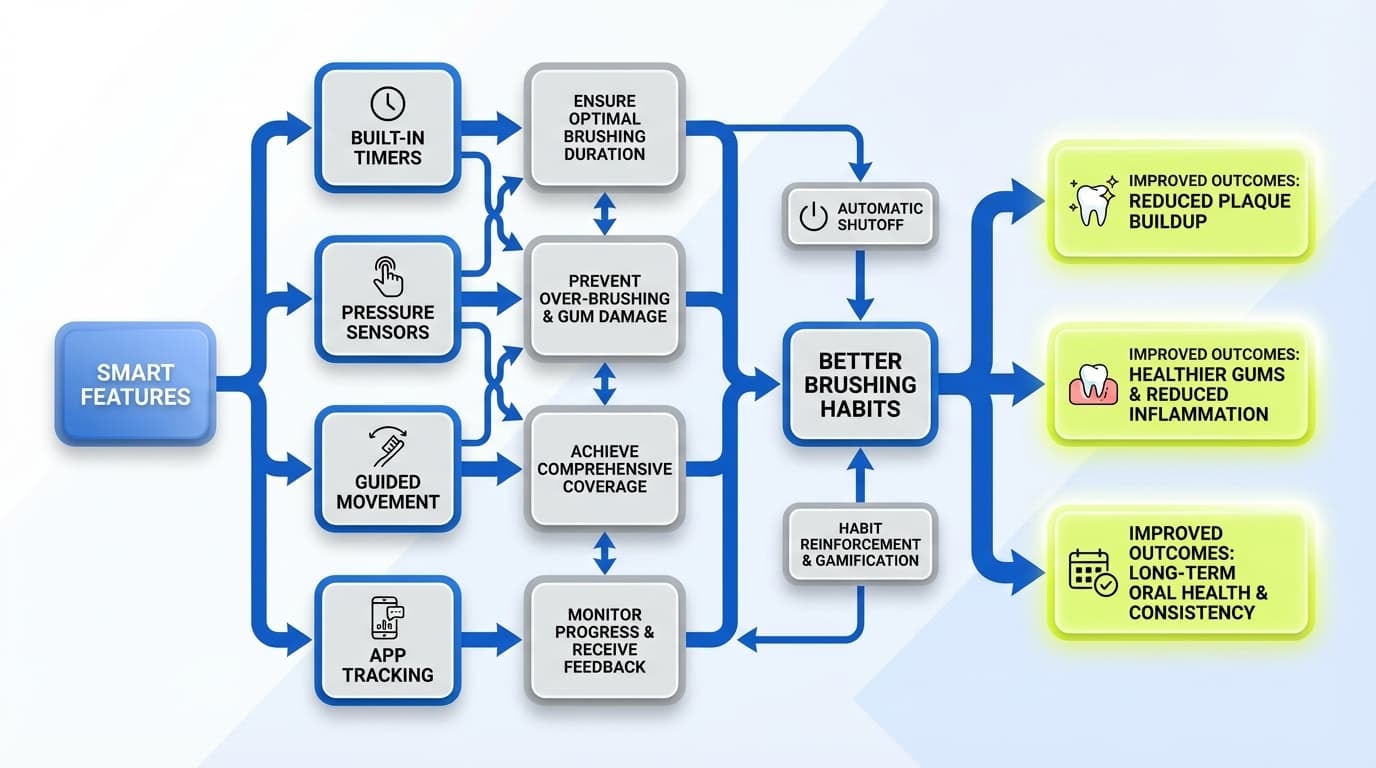
Most people know how they should brush. The problem is consistency. Busy mornings, late nights, and simple forgetfulness often lead to rushed routines that leave plaque behind.
This is where electric toothbrush technology makes a real difference.
Built In Timers Train You to Brush Long Enough
With a manual brush, most people stop brushing far too early. Studies show average brushing time often falls under one minute.
Built in timers change that behavior automatically.
-
Timers ensure the recommended two minutes every session
-
Quadrant pacing helps cover all areas of the mouth evenly
-
Gentle pulses signal when it is time to move to the next section
The SNOW LED Whitening Electric Toothbrush uses timed vibrations to guide brushing without requiring concentration or counting.
Get the SNOW LED Toothbrush Today
Pressure Sensors Prevent Damage Without Thinking About It
Another habit problem is brushing too hard. Many people believe more pressure equals cleaner teeth, but that approach damages enamel and irritates gums.
Smart pressure sensors solve this issue instantly.
When pressure becomes excessive, the brush alerts you through vibration or light cues. This feedback trains proper technique over time without needing reminders from your dentist.
Smart Technology Reduces Missed Areas
Uneven brushing is common. Back molars, inner surfaces, and gumline areas are often skipped.
Electric toothbrushes help address this problem through guided movement and even vibration distribution across all surfaces.
Because the brush head moves automatically, it cleans areas that manual brushing often misses. This helps reduce plaque buildup that later hardens into tartar.
Over time, this leads to:
-
Cleaner tooth surfaces
-
Fewer cavities
-
Improved gum health
-
Less need for corrective dental treatment
Consistency is what creates results, and smart features make consistency easy.
Additional Features Improve Motivation and Routine
Beyond cleaning performance, additional features improve daily compliance.
-
App tracking increases accountability
-
Automatic shutoff removes timing guesswork
-
Long battery life reduces routine disruption
-
Whitening features provide visible results that reinforce habit formation
SNOW combines whitening, sonic cleaning, and smart timing in one device. This creates visible improvement while supporting long term oral health. When brushing feels rewarding instead of tedious, habits stick.
Why Smart Features Make a Real Difference
The biggest difference between electric and manual brushing is not power. It is behavior.
Electric brushes guide time, pressure, movement, and coverage automatically. That removes most of the human error responsible for plaque buildup, cavities, and gum disease.
When brushing becomes easier, people do it better and more often.
That is why dentists frequently recommend electric brushes for patients struggling with consistency.
And why upgrading to the SNOW LED today can be one of the simplest changes you make for long term oral health.
How to Get Good Results Even If Your Brushing Technique Isn’t Perfect
Not everyone brushes the right way every time, and that’s completely normal. Many people rush, miss hard‑to‑reach surfaces, or apply too much pressure without realizing it. The good news is that modern electric brushing technology helps clean effectively even when your technique is not perfect.
This is one of the many benefits that makes electric brushing easier for everyday users, especially those who struggle with consistency or coordination.
Why Technique Matters and How Electric Brushes Help
Manual brushing relies heavily on skill. If the angle is off, pressure is uneven, or certain areas are skipped, plaque remains behind. Over time, that buildup can harden into tartar, increasing the risk of cavities and gum irritation.
Electric brushes reduce that margin of error by design:
-
Built‑in timers guide you to brush for the recommended two minutes
-
Oscillating rotating or sonic motion cleans tooth surfaces automatically
-
High‑speed movement helps disrupt sticky film even with minimal hand motion
This creates a clear difference compared to manual brushing, especially for users who struggle with precision.
Built‑In Technology Fills the Gaps
Modern electric brushing technology is designed to support real‑world habits, not perfect technique.
Most models include:
-
Quadrant pacing that prompts you to switch areas every 30 seconds
-
Pressure sensors that reduce damage to enamel and gums
-
Multiple modes that adjust intensity for comfort and sensitivity
Together, these features allow the brush to do most of the work for you. Even if your technique varies day to day, you can still clean effectively and protect your oral health long term.
Why This Matters Over Time
Consistent plaque removal leads to fewer cavities, healthier gums, and less tartar buildup. When brushing becomes easier and more reliable, habits improve naturally.
Electric brushing does not replace flossing, but it significantly improves how well surfaces are cleaned between daily routines. Electric toothbrushes are great for cleaning the surfaces of your teeth, but they don't always reach between teeth. For optimal cleaning in those hard-to-reach areas, consider adding a leading water flosser to your routine.
For people who struggle with manual technique, this can be the break that finally makes brushing feel manageable.
For an added boost to your routine, many users pair electric brushing with SNOW Magic Whitening Toothpaste Booster® Powder, which helps polish enamel and support surface stain removal without harsh abrasives.
Explore the SNOW Magic Booster
When Dentists Recommend an Electric Toothbrush and What They Look For
Electric toothbrushes are not just a trend. Dentists often recommend them in specific clinical situations where manual brushing is not delivering consistent results.
Oral Health Conditions That Often Require an Upgrade
A dentist may suggest switching to electric brushing when patients experience:
-
Early gum disease or gingivitis
-
Frequent cavities despite regular brushing
-
Plaque buildup near the gumline
-
Difficulty cleaning around orthodontic appliances
-
Implant restorations or crowns that require careful surface cleaning
-
Reduced dexterity due to arthritis or aging
In these situations, electric brushing offers many benefits by improving coverage and reducing technique errors.
What Dentists Look For in a Quality Brush
Dental professionals generally focus on function rather than brand. They look for:
-
Soft bristles that protect enamel and gum tissue
-
Consistent motion that cleans surfaces evenly
-
Built‑in timers that support the recommended two minutes
-
Technology that minimizes aggressive scrubbing
-
Clear age recommendations for children or seniors
The goal is not just cosmetic improvement but long‑term health and disease prevention.
For patients with sensitivity concerns, dentists often recommend combining brushing with enamel‑support products like SNOW Overnight Sensitive Whitening Serum with Hydroxyapatite, which helps strengthen teeth while gently improving brightness.
How to Choose the Right Electric Toothbrush for Your Needs
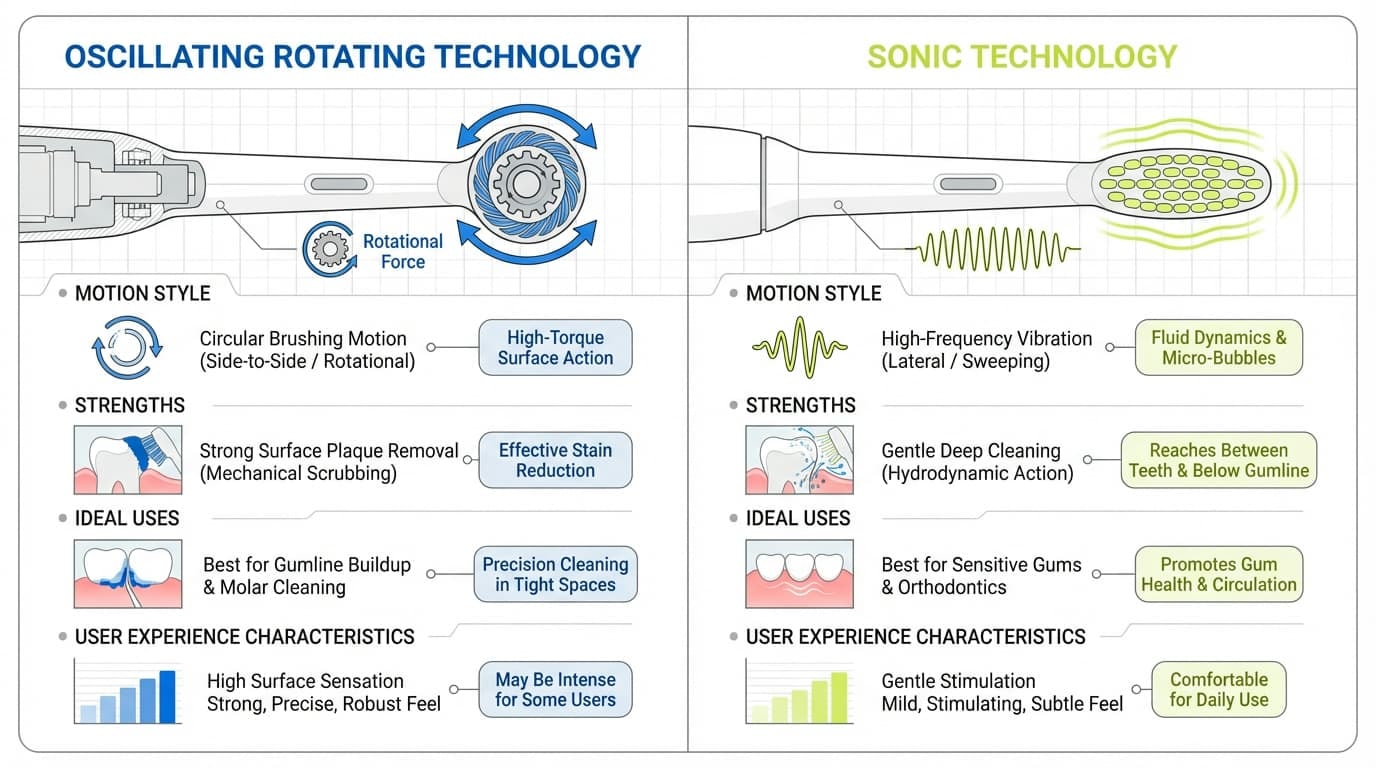
There are many electric options available, and higher cost does not always mean better results. The key is choosing a brush that matches your habits, comfort level, and oral health needs.
Key Features That Actually Matter
Focus on essentials that improve cleaning effectiveness:
-
Built‑in timers to ensure a full two minutes
-
Pressure sensors to protect enamel
-
Soft or extra‑soft bristles
-
Small brush heads that reach tight surfaces
-
Multiple modes for comfort and daily variation
Additional features like Bluetooth apps or displays can be helpful, but they should never replace the basics.
Oscillating Rotating vs Sonic Technology
Both systems clean well, but they work differently.

If your goal is deep surface cleaning, oscillating rotating brushes often perform more aggressively. If comfort is your priority, sonic brushes may feel gentler while still cleaning effectively.
Brush Head Replacement and Ongoing Care
Even the best electric brush loses effectiveness if the bristles are worn.
-
Replace brush heads every three months
-
Change sooner if bristles fray or bend
-
Store upright and allow airflow to reduce bacteria
-
Continue daily flossing to clean areas bristles cannot reach
Routine maintenance helps maintain plaque control, prevents tartar buildup, and preserves the long‑term benefits of electric brushing.
What an Electric Toothbrush Really Costs (and Why It’s Worth It)
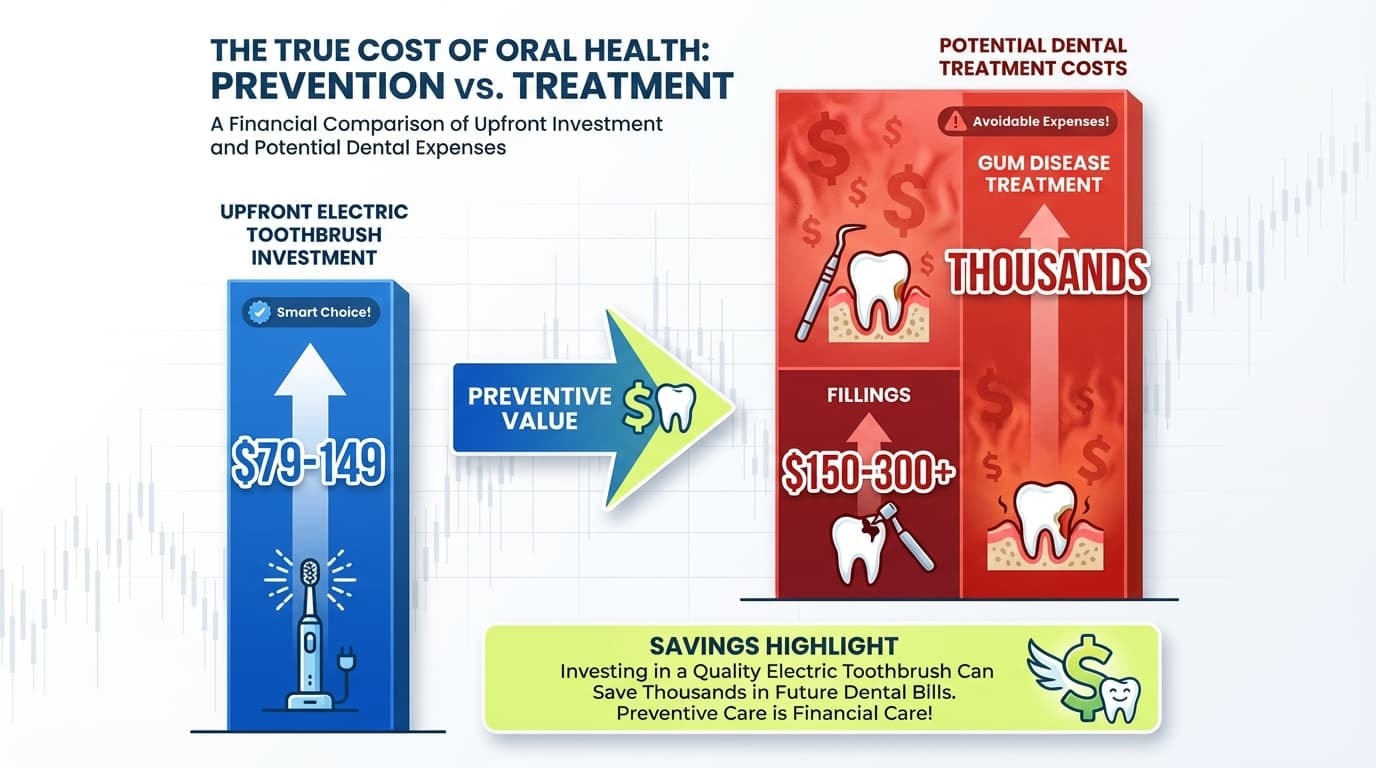
If you're comparing prices between manual and electric brushes, it's easy to see electric as the more expensive option upfront. But when you factor in long-term oral health, reduced dental bills, and more consistent results, the real value becomes clear.
Let’s break down what you’re actually paying for and what you’re saving in the long run.
What You’ll Typically Pay for an Electric Brush
A quality electric toothbrush with essential features like built-in timers, pressure sensors, and multiple modes generally ranges from $40 to $150.
But price varies based on features and design. Here's what you can expect from one of the most advanced electric brushes available today:

You’ll also find SNOW brushes occasionally listed for around $89 to $99 at major retailers depending on timing and promotions.
Get the SNOW LED Toothbrush for As Low as $79
Why the Cost Is Worth It Long-Term
Let’s compare this to the long-term cost of dental care:
-
Skipping proper plaque removal leads to more cavities, tartar buildup, and gum disease
-
Each dental filling or deep cleaning can cost $150 to $300 or more
-
Treating gum disease or advanced decay can reach thousands
An electric toothbrush helps you effectively clean plaque from hard-to-reach surfaces and supports better brushing habits, especially when paired with proper flossing and enamel-strengthening products.
So while a manual brush may seem cheaper, it rarely delivers the same results, especially for users who brush inconsistently or aggressively.
Final Thoughts
Keeping your gums healthy and your smile bright doesn't have to be complicated. With the right electric toothbrush, you get more cleaning power along the gum line, improved removal of food particles, and built-in features that support consistent brushing even when life gets busy.
Brushing twice a day with a tool designed for effectiveness can make a real difference in preventing tooth loss and maintaining daily comfort. Models with extra soft bristles are especially helpful for protecting enamel and reducing irritation.
A dental professional will tell you: results come from consistency and good technique. The right technology helps you stick with healthy habits.
If you're thinking about an upgrade, consider trying something like the SNOW LED Whitening Electric Toothbrush. It’s made for people who want a cleaner mouth without overthinking it.
Set your phone, check the clock, or just make the switch. Your future smile will thank you.
Get the SNOW LED Toothbrush Today
FAQs
Quick answers to common electric toothbrush questions for better brushing and oral health.
Can an electric toothbrush replace flossing?
No, an electric toothbrush cannot replace flossing. While it can clean tooth surfaces more effectively than a manual brush and remove sticky film, it can’t reach between teeth where food debris and plaque build up. To prevent cavities and maintain full oral health, both brushing and flossing are needed.
Are electric toothbrushes safe for braces, crowns, and dental implants?
Yes, electric toothbrushes are safe for people with braces, crowns, implants, or veneers. Using soft bristles and light pressure helps protect delicate surfaces and gums while removing more plaque. Oscillating rotating models are often recommended by your dentist for cleaning around brackets and hard-to-reach areas.
How soon can I expect to see benefits from using an electric toothbrush?
You might notice your teeth cleaner and brighter within a few days. Deeper benefits like fewer cavities, less tartar, and healthier gums usually appear after 1 to 3 months of consistent brushing. Long-term use provides lasting oral health gains, especially when using built in timers and the recommended two minutes per session.
Should children use electric toothbrushes?
Yes, children can use electric toothbrushes safely and benefit from easier brushing. Look for models with age recommendations, small bristles, and simple settings suited for young users. These brushes offer many benefits, especially for kids who struggle with manual technique or brushing for two minutes.
What about recent posts contact between electric toothbrushes and fewer cavities?
Yes, research supports a link between electric toothbrush use and fewer cavities. By removing plaque and food debris more effectively, they reduce decay risk and help keep the mouth clean. Built in timers ensure users brush long enough to make a lasting difference in their dental routine.


