

You scroll through vacation photos, love the tan, and then stop: your teeth look more yellow than you expected.
That usually comes down to three things happening at once—real surface staining from summer habits like iced coffee and wine, a deeper skin tone from tanning that makes teeth look darker by contrast, and bright sunlight or camera settings that pull yellow tones forward.
It is a jarring moment, and it happens to a lot of people every summer, especially if you notice it most after tanning or in photos and want to know whether the color change is real, optical, or both.
This article breaks down why teeth can look more yellow in summer and on camera, how tanning and lighting change what you see, which seasonal habits stain enamel, and what you can do about it—from instant color-correcting options like purple strips to how they compare with traditional whitening, how to use them well, and how to keep your smile looking brighter all summer.
Knowing the cause matters when a yellow-looking smile starts affecting your confidence in close-up, photo-heavy moments, because the right fix depends on whether you are dealing with actual staining, visual contrast, or both.
Why Teeth Look More Yellow in Summer
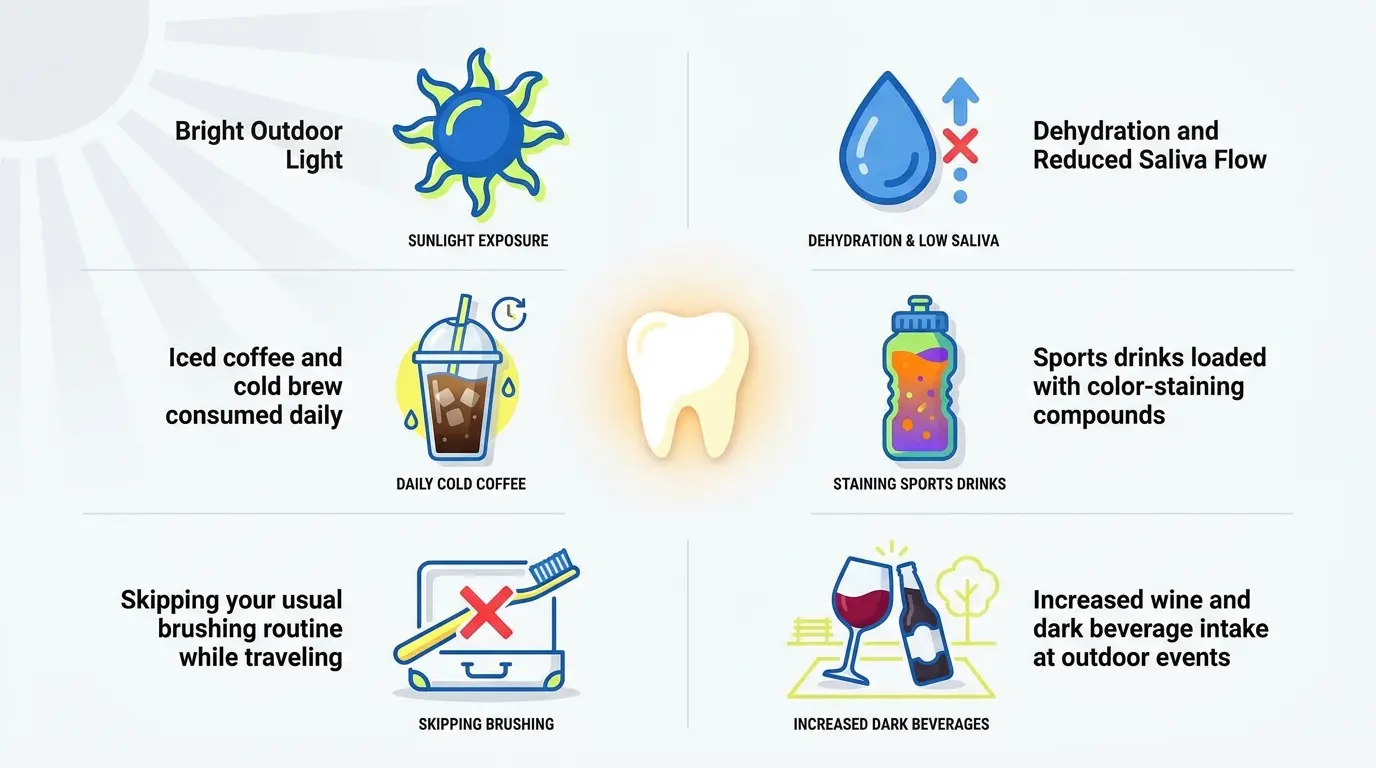
Summer does not just change your skin tone. It changes how your entire smile reads in photos, in mirrors, and in real life. Several seasonal factors stack on top of each other to make tooth discoloration look more pronounced, even when your teeth have not actually changed much.
Bright Outdoor Light Changes Everything
Harsh, direct sunlight amplifies warm and golden tones in everything it touches, including your teeth. At the same time, a summer tan deepens your skin tone, which creates a sharper contrast against your smile. That contrast is one of the biggest contributing factors to yellow-looking teeth that most people never consider. Your teeth did not get darker. The backdrop around them did.
Dehydration and Reduced Saliva Flow
Summer heat quietly works against your smile in another way. When you are dehydrated, saliva production drops. Saliva normally rinses away surface deposits and keeps enamel looking cleaner and brighter.
Dry mouth also increases the risk of tooth staining and decay, so less of it means extrinsic stains from tannins in coffee and tea sit longer on the surface. Certain medications, including some taken for high blood pressure, can also contribute to dry mouth and make staining more noticeable.
Summer also brings habits that compound the problem fast:
-
Iced coffee and cold brew consumed daily
-
Sports drinks loaded with color-staining compounds
-
Skipping your usual brushing routine while traveling
-
Increased wine and dark beverage intake at outdoor events
These are the common causes of yellowing that summer teeth whitening searches spike around every year. The reassuring part is that most of this is surface-level and addressable.
Why Teeth Look Yellow When Tan
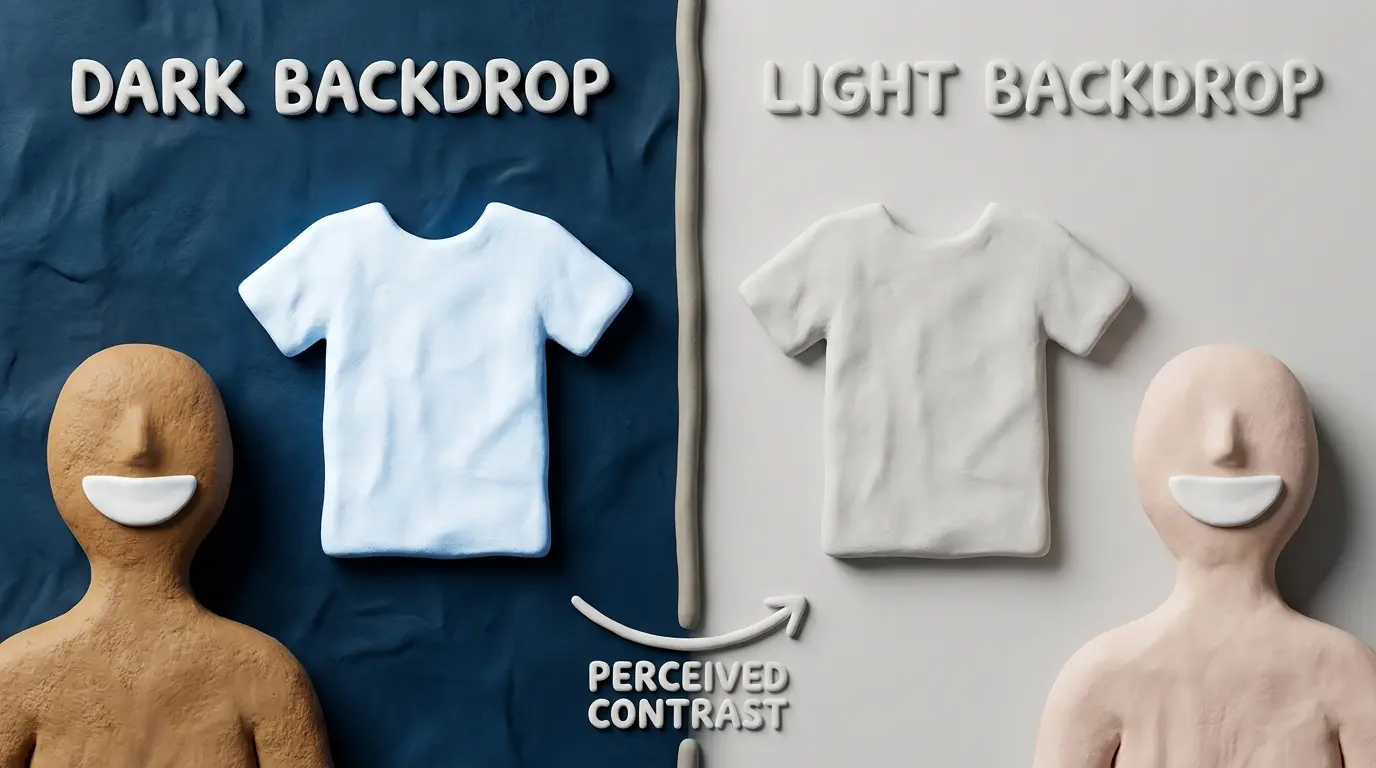
Here is something most people do not realize: your teeth may not have changed at all. What changed is the backdrop around them.
Human vision reads color in context, not in isolation. When your skin deepens into a warm, golden tan, it shifts the visual baseline your brain uses to judge everything nearby, including your smile. In adult teeth, tooth enamel is a translucent hard outer layer, so the underlying dentin that gives teeth their natural warmth can show through more or less depending on enamel density, and genetics can influence that. The contrast between your darker skin tone and your tooth color becomes sharper, and that can make teeth yellow look much more obvious.
Think of it this way: the same white shirt looks brighter against a dark background than a light one. Your teeth work the same way, and natural smiles are not always white teeth, since healthy teeth can be slightly yellow.
This is why so many people wonder why do my teeth look yellow when tan and feel surprised, because the shift feels sudden even though the actual shade may not have moved.
This optical effect is not necessarily a sign of new staining. It is a contrast shift, and research on self-satisfaction with tooth color confirms that perception plays a significant role in how people evaluate their smiles. For a broader look at what noticing yellow teeth can mean, it is worth exploring the broader consequences of noticing yellow teeth.
Why Teeth Look Yellow in Photos
Your teeth can look perfectly fine in the mirror and then appear noticeably yellow the moment a photo is taken. It is a frustrating disconnect, and it comes down to how cameras capture light and color rather than what your teeth actually look like.
Bright sunlight is one of the biggest culprits. A harsh beach shot or midday outdoor selfie floods the frame with warm light, which amplifies yellow undertones while washing out cooler tones.
Camera exposure plays a role too. Overexposed images tend to shift warm tones further toward yellow, making tooth discoloration look more pronounced than it is in person.
Warm-toned filters, which are everywhere on social media, make the effect even worse. A golden-hour filtered selfie can turn a naturally off-white smile into something that reads as visibly yellow. Shade and shadow in outdoor settings shift perceived tooth color in a similar way.
The good news is that teeth look yellow in photos partly because of these technical factors, not always because of poor oral hygiene or deep staining. Knowing the top causes behind yellow-looking teeth helps separate what is real from what the camera is exaggerating, and it is the first step toward building confidence in selfies and outdoor photos.
Summer Habits and Causes of Yellow Teeth That Make Teeth Look More Yellow
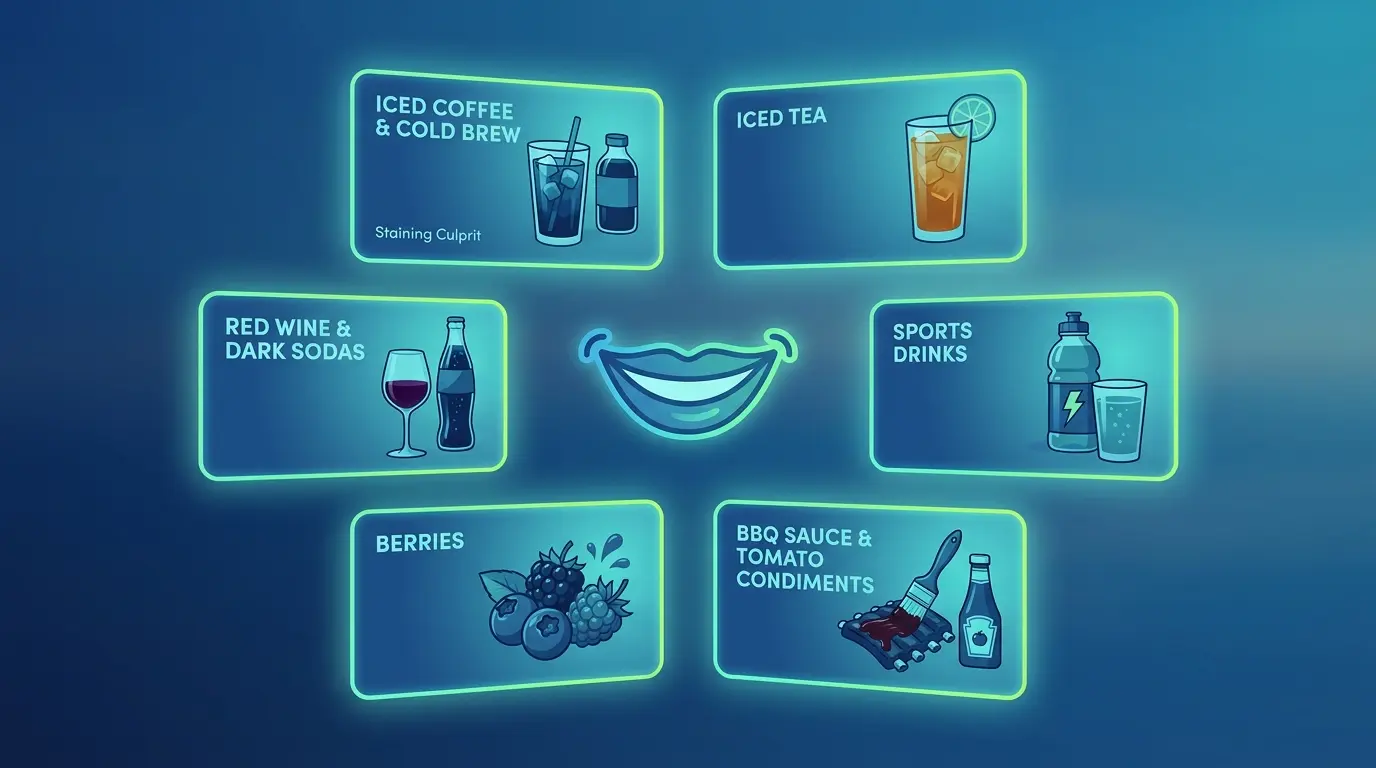
Summer is full of foods and drinks that quietly work against your smile. Most of the staining that builds up between Memorial Day and Labor Day comes from seasonal food and drink, along with the habits that surround them.
These are the biggest culprits:
-
Iced coffee and cold brew: High in tannins, which bind to enamel and leave behind surface discoloration with daily use
-
Iced tea: Black tea carries nearly the same staining risk as hot tea, and the habit is easy to overlook
-
Red wine and dark sodas: Like certain foods and acidic foods, they can wear enamel over time and make staining more likely
-
Sports drinks: The color compounds and acidity in popular sports drinks contribute to a duller-looking smile
-
Berries: Blueberries, blackberries, and acai are summer favorites, but their deep pigments adhere to enamel quickly
-
BBQ sauces and tomato-based condiments: These contain chromogens, color-bearing molecules that cling to the tooth surface after every cookout
Travel also disrupts brushing routines, removing the daily protection that prevents surface buildup, while plaque buildup can trap pigments and create yellow stains over time. Dehydration from heat and outdoor activity reduces saliva flow, which means pigments and debris linger on enamel longer than they normally would.
All of the above contribute to extrinsic and intrinsic tooth discoloration, but summer staining is almost always extrinsic discoloration, meaning surface stains collect on the outer surface of the enamel. That matters because many stains on teeth respond well to whitening. Intrinsic discoloration, which originates deeper within the tooth, requires a different approach entirely. If your concern is coffee and seasonal habits, explore whitening options for coffee and iced coffee drinkers to find what fits your routine.
Instant Teeth Brightening Through Purple Color Correction
If you have ever used a purple shampoo to keep blonde hair from going brassy, you already understand exactly how this works.
Color theory is the principle at play here. On the color wheel, purple and yellow sit directly opposite each other. That means purple pigments cancel out yellow tones visually, not chemically. The same logic that neutralizes warm, brassy tones in hair applies to surface-level tooth discoloration on enamel.
Purple color-correcting products work by temporarily depositing violet pigments onto the tooth surface. This helps teeth appear brighter and helps neutralize yellow tones without any bleaching involved. There is no chemical reaction, no stain removal, and no alteration to the enamel itself. It is purely an optical shift.
The results are immediate. That is what makes this approach so useful before a photo shoot, a last-minute event, or any moment where you want a photo-ready smile without waiting weeks for traditional teeth whitening to work.
Traditional whitening removes stains through a chemical process that takes time, while purple color correction creates the appearance of brightness instantly. Both have a place, and knowing the difference helps you choose the right tool for the moment. Explore the SNOW Purple Collection for instant color-correcting brightening to see how the approach translates into a real product.
The Best Last-Minute Fix Before Beach Photos: SNOW Purple Strips
You have a beach day tomorrow and zero time for a full whitening routine. That is exactly the situation these strips were made for.
SNOW Purple Strips for a photo-ready smile before your next beach day are designed to be your compact, mess-free solution when time is not on your side. No trays, no syringes, no complicated setup. You apply the strip, let the purple pigment technology work, and you are ready to smile in front of a camera without second-guessing yourself.
The purple pigments temporarily help teeth appear brighter by neutralizing yellow tones through the same color-correction principle covered in the previous section.
It is an instant optical shift, not a chemical process, which means results show up fast. This makes them a convenient last-minute option before beach photos, vacation selfies, summer dinners, outdoor parties, or any event where your smile is going to be front and center.
They are compact enough to slip into a carry-on, beach bag, or clutch without taking up any real space. That portability is part of what makes them genuinely useful rather than just a novelty. Think of them as photo-ready smile support that pairs naturally alongside a longer-term teeth whitening routine. They handle the moment. Your whitening routine handles the bigger picture. Together, they cover both oral hygiene maintenance and instant confidence.
Shop Instant Teeth Brightening
Purple Strips vs. Regular Whitening: Which One Do You Need?
The short answer is that they solve different problems. Intrinsic vs extrinsic tooth stains behave differently, and the right tool depends entirely on what you are dealing with and when you need results.
|
Feature |
Purple Strips |
Traditional Whitening |
|---|---|---|
|
How it works |
Violet pigments neutralize yellow tones optically |
Whitening agents lift extrinsic stains from enamel over time |
|
Timeline for results |
Immediate |
Days to weeks with consistent use |
|
Best for |
Same-day or next-day occasions, photo prep |
Deeper extrinsic stains, longer-term brightness goals |
|
Portability |
Compact, fits in a beach bag or clutch |
Varies by format |
|
Use case |
Last-minute color correction |
Ongoing whitening routine |
Compared with dentist-supervised options, over-the-counter products like whitening strips and other teeth whitening products often use lower concentrations of bleaching agents.
Traditional whitening works by targeting extrinsic stains that have built up on the enamel surface. Professional whitening often uses higher concentrations of hydrogen peroxide, whether as an in-office whitening procedure or through custom take-home trays with professional-strength gel.
In-office whitening typically takes about 60–90 minutes, while at-home treatments usually require daily wear for 30–60 minutes. For deeper concerns rooted in dentin, or conditions like fluorosis and tetracycline discoloration, intrinsic discoloration requires professional intervention that neither strips nor color-correcting products can address.
Purple Strips are not a replacement for that process. They are a complement to it, built specifically for the moments when you need a pre-event whitening preparation solution and traditional whitening simply cannot deliver fast enough.
How To Use Purple Strips Before Summer Photos
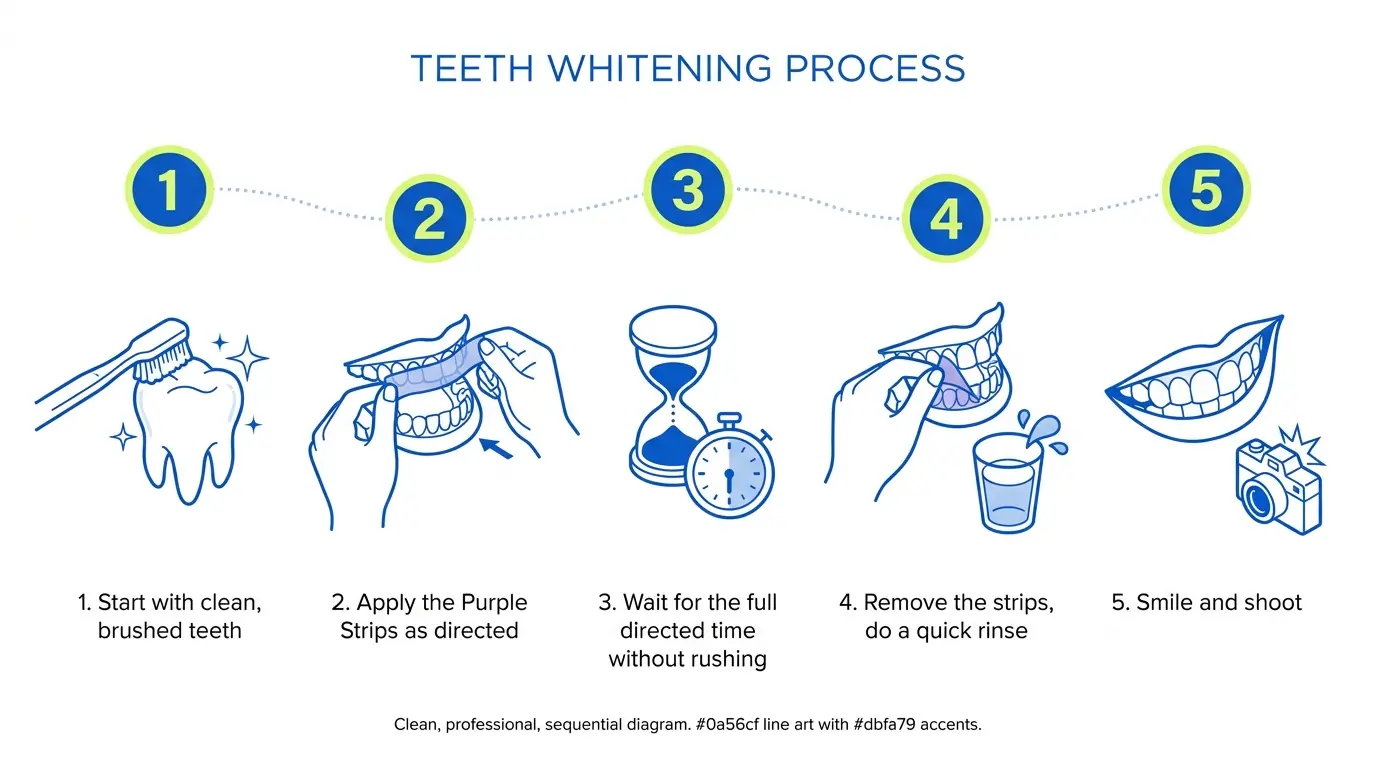
Getting the most out of your strips comes down to a few simple steps. Keep this routine in your back pocket for every beach day, vacation dinner, or summer event on your calendar.
-
Start with clean, brushed teeth so the purple pigments make direct contact with the enamel surface for the best color-correcting result.
-
Apply the Purple Strips as directed on the packaging, pressing them firmly against your teeth for full coverage.
-
Wait for the full directed time without rushing. The violet pigments need those minutes to help neutralize yellow tones and support a photo-ready smile.
-
Remove the strips, do a quick rinse, and skip heavily pigmented drinks like coffee or red wine immediately before your photos.
-
Smile and shoot. Tuck a pack into your beach bag or travel kit so you have a quick oral hygiene touch-up ready wherever the summer takes you.
Looking for clean ingredients to look for in oral care products before you commit to any new addition to your routine? That is always a smart place to start.
How To Keep Teeth Looking Brighter All Summer
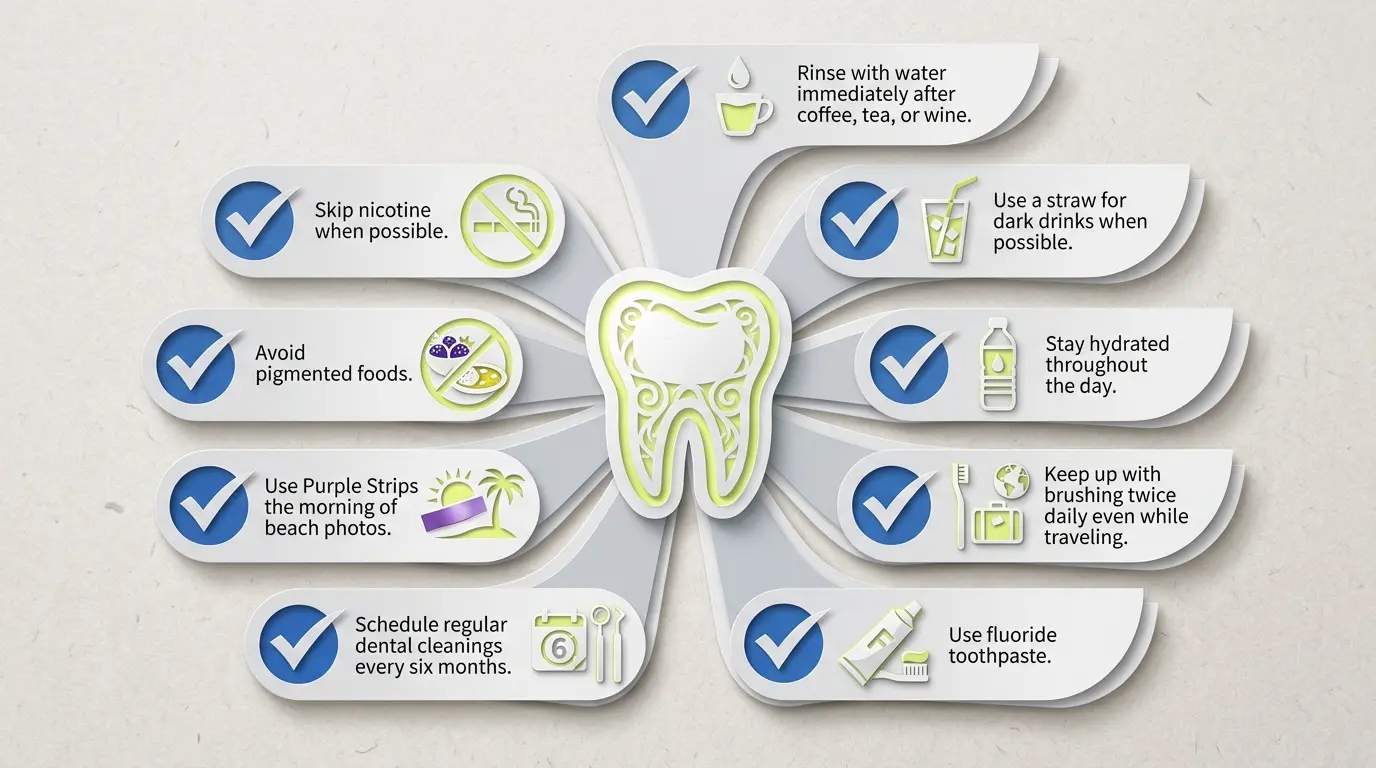
Small daily habits make a bigger difference than most people realize. How daily habits impact tooth color is something dentists talk about constantly, and summer is the season where those habits either protect your smile or quietly work against it.
Here is what actually helps:
-
Rinse with water immediately after coffee and tea, iced drinks, or wine to flush surface pigments before they settle into enamel
-
Use a straw for dark drinks when possible to minimize direct contact with your front teeth
-
Stay hydrated throughout the day — consistent water intake supports saliva production, which naturally rinses away debris and pigments between brushing
-
Keep up with brushing twice daily even while traveling. A travel-size toothbrush in your carry-on takes up almost no space
-
Pack a fluoride toothpaste in your travel bag for daily whitening maintenance for sensitive teeth that fits into any routine
-
Schedule regular dental cleanings every six months to help prevent discoloration by removing plaque buildup and tartar that brushing cannot fully address
-
Use Purple Strips the morning of beach photos, vacation dinners, or summer events for an instant color-correcting boost
-
Avoid heavily pigmented foods like berries, dark sauces, and sodas in the hours before important photos
-
Skip nicotine when possible, as it is one of the fastest ways to introduce stubborn surface discoloration that resists regular oral hygiene routines
Consistency is what keeps summer brightness from fading between events.
When Traditional and Professional Teeth Whitening Makes More Sense
Not every yellowing concern is a surface problem, and it is worth knowing when to reach for something more than a color-correcting strip. Some discoloration originates deeper than any optical fix can reach.
Extrinsic, intrinsic, and internalized tooth discoloration are clinically distinct categories. Intrinsic discoloration develops within the dentin layer itself, often from fluorosis caused by excessive fluoride during childhood, tetracycline exposure, aging, or enamel thinning over time.
Dental trauma can also change tooth color because an injury may damage the pulp and lead to deeper discoloration. These causes require whitening agents that penetrate beyond the surface, making traditional whitening the more appropriate long-term investment.
If years of coffee, tea, smoking, or chewing tobacco have built up significant staining, teeth can shift from yellowing to brown stains and even brown teeth that are harder to improve with regular brushing alone.
Those exploring whitening options for age-related enamel thinning and yellowing will find targeted approaches worth considering. Sensitivity-friendly whitening options are also available for anyone concerned about comfort during a longer routine.
Purple Strips work best as the complement. Use traditional whitening to build your baseline, then reach for Purple Strips when you need same-day brightness.
Your Photo-Ready Smile Starts Here
Yellow teeth in summer are rarely one single problem. They are a mix of real staining, visual contrast from tanning, and lighting conditions that cameras love to exaggerate. Knowing why do my teeth look yellow in these moments means the answer is usually less dramatic than the photo suggests.
At SNOW, we built our products around exactly this kind of moment. From Purple Strips for instant color correction to dental treatments that support oral health that goes beyond cosmetic appearance, we have you covered for every summer ahead, including cosmetic options for discolored teeth when whitening is not enough.
For uneven tooth color or intrinsic staining, a dentist may suggest dental bonding with tooth-colored composite resin, dental veneers, porcelain veneers, or dental crowns; bonding may need touch-ups every 5–7 years, while veneers often last 5–15 years before replacement, all in service of a brighter smile and more radiant smile. Your most confident smile is closer than you think.
FAQs About Yellow Teeth and Summer Brightness
Can yellow teeth become white again?
In many cases, yes. It depends on whether the cause is extrinsic or intrinsic. Extrinsic vs intrinsic stains sit on the enamel surface and respond well to teeth whitening treatments.
Some whitening products, including over-the-counter whitening products, are better suited to everyday surface discoloration, while persistent internal stains may not respond. Intrinsic tooth discoloration, which originates within the dentin layer, is harder to reverse and often requires professional intervention. Overuse can also affect enamel health and trigger tooth sensitivity.
Is it unhealthy for teeth to be yellow?
Not always. Yellow teeth from surface staining or tanning contrast are largely cosmetic concerns rather than clinical ones. Yellow teeth do not automatically mean poor oral health if you have no pain, decay, or gum problems, and healthy gums are a good sign. That said, certain underlying causes of tooth discoloration are worth discussing with a dentist, particularly if the change is sudden or accompanied by sensitivity. Yellow alone does not automatically signal a health problem.
At what age do teeth start yellowing?
Enamel thickness naturally decreases from the mid-20s onward, and thin enamel makes more of the dentin underneath show through as enamel wears over time. Since dentin carries a naturally warmer, more yellow tone, this gradual shift becomes visible over time. Lifestyle habits like coffee, tea, and wine can significantly accelerate that timeline regardless of age, and aggressive brushing can make the change more noticeable.
What is the healthiest color for teeth?
Natural tooth color varies from person to person. A slightly off-white or warm ivory shade is completely normal and healthy. The color of your teeth reflects natural tooth structure, so forcing an unnaturally white shade is not always the goal. Blindingly white is not a clinical benchmark, and research on the prevalence of teeth discoloration and associated risk factors confirms that shade variation across individuals is entirely expected.
What color cancels yellow teeth?
Purple and violet tones cancel yellow on the color wheel, which is the principle behind purple color-correcting dental products. Applying violet pigments to the enamel surface creates an optical shift that helps teeth appear brighter without any chemical whitening process involved.


