





If you've ever had a canker sore, you might have noticed a curious white or yellowish layer covering the painful spot inside your mouth.
So, what exactly is this white stuff in a canker sore? Simply put, it’s a protective fibrin membrane—a natural “internal scab” made up of proteins, white blood cells, and dead tissue—that shields the sore, covers exposed nerve endings, and helps your mouth heal. Far from being pus or infection, this layer is a vital part of your body’s healing process.
In this comprehensive guide, we’ll explore why this white membrane forms, how it aids recovery, and what you can do to care for your canker sores effectively.
Ready to understand and manage these pesky mouth ulcers better?
Let’s dive in!
Key Takeaways
-
The white or yellow center of a canker sore is primarily a fibrin membrane—a protein-based “scab” mixed with dead cells and white blood cells—not pus or an active infection.
-
This white layer forms within 1–3 days after the initial tingling or burning sensation and represents a normal, protective part of the healing process.
-
Most canker sores heal in 7–14 days without treatment, and the white coating gradually thins and disappears as the mouth lining regenerates.
-
Canker sores are not contagious and are not caused by the herpes virus—they result from an immune response, making them fundamentally different from cold sores.
-
See a dentist or doctor if the white center looks unusual (black spots, hardened texture), the sore lasts longer than 2 weeks, or you experience fever and severe pain preventing eating.
What the White Stuff in a Canker Sore Really Is
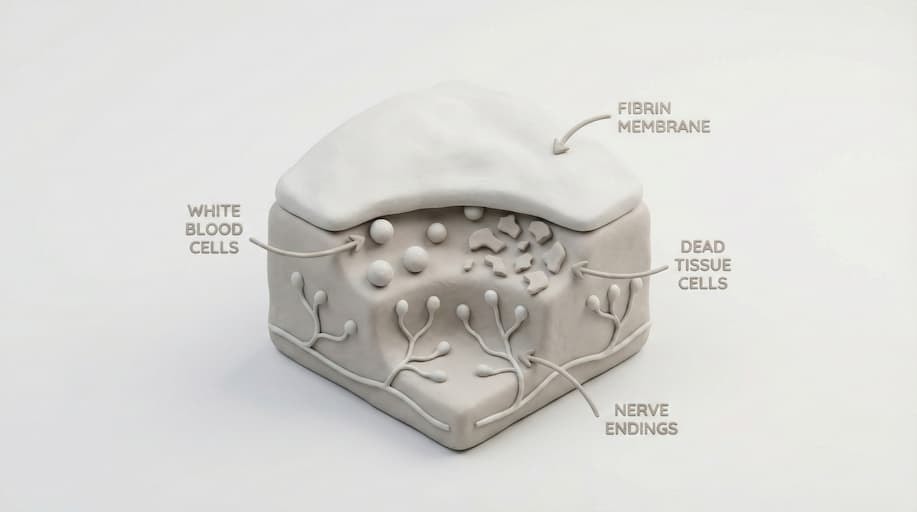
The white or yellow center of an aphthous ulcer is a fibrin membrane rather than a sign of bacterial infection or pus accumulation.
This membrane consists of a protein mesh that traps white blood cells and dead epithelial cells to create a physiological barrier over the ulcerated soft tissue. According to Medical News Today (2024), this protective layer is essential for minor canker sores to heal within a standard 7-to-14-day window.
Maintaining the integrity of this fibrin layer is critical because it prevents external irritants like salt and acids from triggering the exposed nerve endings in the underlying dermis.
This white center appears in most canker sores, especially minor canker sores, which account for about 85 percent of cases. According to Medical News Today, these ulcers are usually smaller than 5 mm and canker sores typically heal within 7 to 14 days without scarring, although the white center may appear concerning.
What Are the Key Facts About the White Center in Canker Sores?
Before exploring causes or treatment, it’s important to understand what this white layer actually means. The points below explain why it forms, when it appears, and how it facilitates healing. Not to mention, these facts apply to minor canker sores, major canker sores, and herpetiform canker sores.
It’s a Healing Layer, Not an Infection
The white or yellow center observed in a canker sore is not indicative of pus, bacteria, or infection. It is a normal part of the healing process. This layer is primarily composed of fibrin proteins formed during blood clotting, along with immune cells such as lymphocytes and neutrophils that respond to tissue damage.
According to a 2024 analysis by WebMD, approximately 80% of canker sores stem from a T-cell immune response where the body mistakenly attacks its own oral mucosa.
These immune cells mistakenly attack the mouth lining, causing an ulcer. The white center forms as your body tries to seal and protect the wound from further damage.
This protective coating is common in aphthous ulcers, the medical term for canker sores. As noted in the Wikipedia entry on aphthous stomatitis, the fibrin layer is not harmful and should not be removed.
This is one of the key ways canker sores differ from cold sores. Unlike cold sores, which are caused by the herpes virus and appear on the outside of the lips, canker sores are non-contagious and only form inside the mouth. They contain no viral fluid and do not spread through contact.
How It Helps the Sore Heal
The white layer in a canker sore functions like a scab inside your mouth. It plays a critical role in recovery by:
-
Covering exposed nerve endings, which reduces pain
-
Protecting the wound from saliva, friction, and bacteria
-
Creating a surface where healing cells can grow
-
Reducing the chance of deeper tissue damage
A clinical study by Universitas Airlangga found that recurrent aphthous ulcers healed within 10 to 14 days when the fibrin layer remained undisturbed. Picking at the white area or using harsh treatments can reopen the wound and slow healing.
This healing layer is also present in herpetiform canker sores, which form in small clusters, and in major canker sores, which are larger and may last for weeks.
What the White Layer Is Made Of
Before examining the healing stages, it’s helpful to understand exactly what the white material in a canker sore is made of. This layer might look alarming, but it’s your body’s way of protecting and repairing damaged tissue.
Components of the Fibrin Membrane
First, let’s break down the main components of the fibrin membrane.
The white or yellow layer inside most mouth sores is called a fibrin membrane. This layer forms after your body detects soft-tissue damage and sends immune cells to protect the area.
According to Wikipedia, the fibrin membrane contains:
-
Fibrin proteins from clotted blood
-
Dead epithelial cells from the ulcer surface
-
Serum fluid (exudate) from leaky blood vessels
-
Polymorphonuclear leukocytes and lymphocytes (immune cells)
These elements create a temporary shield to prevent further injury and support healing. In recurrent canker sores, this white layer forms in response to a T-cell-driven immune reaction, not an infection.
What Affects the Look or Thickness of the White Area
Not all canker sores look the same, even though they share similar structures. The color, texture, and thickness of the white center can vary depending on several factors.
Here are the most common influences on how the white coating appears:
-
Size and depth of the sore: Larger or deeper major canker sores tend to form thicker white layers due to greater tissue damage.
-
Level of inflammation: More swelling and immune activity will produce a denser coating.
-
Dietary irritation: Exposure to acidic or spicy foods can make the sore appear redder or more inflamed.
-
Immune status: People under stress or with vitamin deficiencies may develop white areas that appear darker or slower to shrink.
In severe canker sores or extremely painful cases, the white layer may last longer and appear more raised, but this is part of the natural healing process.
Healing Stages of a Canker Sore
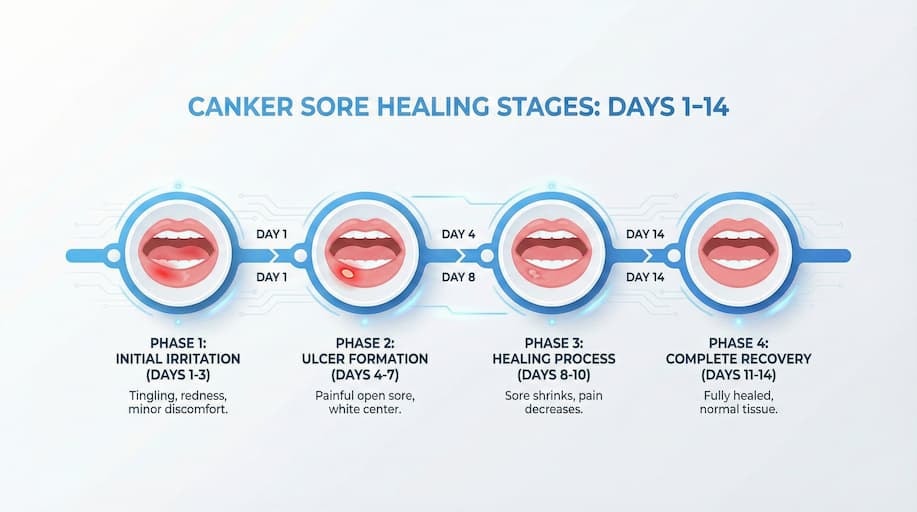
Now that we’ve covered what the white layer is made of, let’s look at how canker sores heal over time. The healing process happens in clear stages that you can track over days.
Days 1–2: Redness and Tingling
Patients typically experience a localized tingling sensation—known as the prodromal phase—24 to 48 hours before a visible canker sore appears.
This feeling may show up on your lip, cheek, tongue, or soft palate, even before anything is visible. This stage is known as the prodromal phase, and it indicates that your immune system is responding to irritation or injury in the soft tissues.
According to the same Medical News Today article, common symptoms during this early phase include:
-
Mild swelling and localized redness
-
Increased sensitivity to touch, heat, or acidic or spicy foods
-
No white center yet, just surface-level discomfort
This is the best window to begin treating canker sores gently. Avoid irritating foods, stay hydrated, and use mild saltwater mouth rinses to keep the area clean. Early care may reduce the severity of the resulting sore.
Days 3–4: White Center Develops
Next, during days 3 to 4, the white center becomes visible.
As the soft tissue breaks down, a shallow ulcer forms. This is when the sore takes on its classic look: a round or oval shape with a white or yellow center and a bright red border. The white layer consists of fibrin, immune cells, and tissue debris that protect the ulcer bed from further damage.
The fibrin layer forms directly over the ulcer base during this phase, acting like a natural internal bandage.
This is also when the sore is typically most painful, especially during eating, drinking, or speaking. You may experience:
-
Stinging or burning pain when the sore is touched
-
A clearly visible white patch with red inflammation around it
-
Sharp sensitivity to hot, salty, or spicy foods
-
Discomfort when brushing or chewing
At this point, the sore is fully developed. Focus on protecting the area and avoiding actions that could delay healing, like picking at the white coating.
Days 5–14: Healing Progresses
Then, between days 5 and 14, healing progresses.
Your body begins to repair the ulcer by rebuilding the surface lining. The fibrin layer begins to thin as new epithelial cells migrate from the edges. The pain usually fades steadily, especially in minor canker sores, which tend to heal faster.
This phase is marked by:
-
A noticeable drop in pain, about 50% less by day 7
-
The white layer fades to gray or pink as tissue regenerates
-
Easier eating, brushing, and speaking
Using gentle mouth rinses during this phase can help prevent infection and reduce irritation. Avoid aggressive or alcohol-based formulas, which can sting and slow healing. A soothing, alcohol-free rinse like SNOW’s whitening mouthwash supports oral health without disrupting the protective layer. It’s formulated to be non-irritating, enamel-safe, and ideal for sensitive mouths, especially while healing.
Explore SNOW’s Gentle Mouthwash Here
Healing Differences by Canker Sore Type
While most canker sores heal within two weeks, others may last longer or leave scars. The healing speed depends on the type, size, and depth of the ulcer.
Based on clinical descriptions from Wikipedia, here’s how long each type typically takes to heal:
-
Minor canker sores (about 80% of cases): Heal in 7 to 14 days with no scarring
-
Major canker sores (10 to 15% of cases): Larger than 1 cm, may take 2 to 6 weeks to heal and can scar afterward
-
Herpetiform canker sores: Appear as clusters of 10 to 100 small ulcers, often lasting up to 1 month
If you frequently develop canker sores, or if your sores are extremely painful or slow to heal, you may need additional support. A healthcare provider can recommend targeted treatments or tests for underlying conditions that make it harder to eliminate canker sores or prevent their recurrence.
How Canker Sores Are Different from Cold Sores
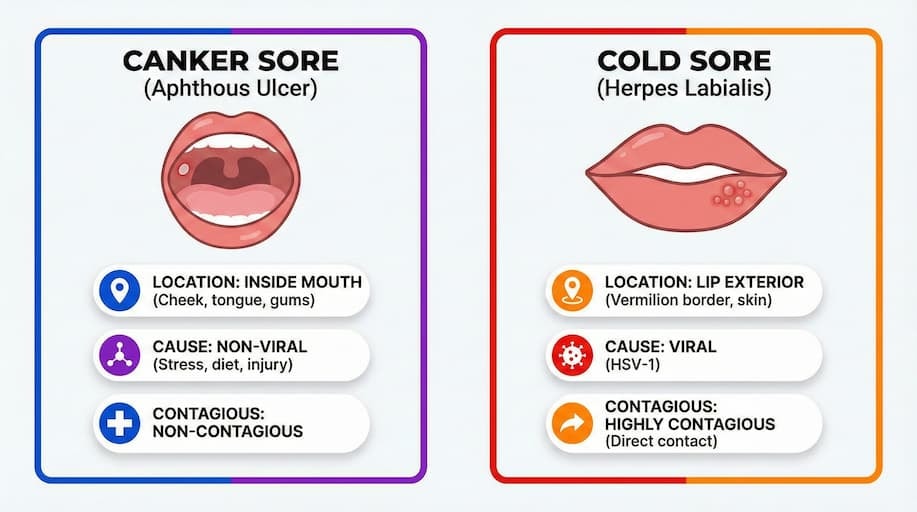
Although they may look similar, canker sores and cold sores differ in location, cause, and contagiousness. Understanding these differences helps you know how to treat each type and avoid unnecessary worry.
Where They Happen in the Mouth
Canker sores, also called aphthous ulcers, form only inside the mouth on soft tissues. You’ll usually find them on the inner cheeks, tongue, gums, or the base of the mouth. These are areas covered by non-keratinized mucous membranes that are more sensitive and prone to injury.
In contrast, cold sores usually appear outside the mouth, such as on the lips, nostrils, or surrounding facial skin. They occur on keratinized areas, such as the vermilion border of the lips.
According to GoodRx, canker sores occur in:
-
Inner cheeks (about 75% of cases)
-
Tongue or floor of the mouth (about 20%)
Cold sores, caused by the herpes simplex virus (HSV-1), most often appear on the outer lip or corners of the mouth (about 90% of cases).
What Causes Each Type of Sore
The root causes of these sores differ significantly. Canker sores are not caused by a virus, while cold sores are a result of herpes virus infections, specifically HSV-1.
As noted in WebMD:
-
Canker sores are often triggered by:
-
Minor injuries like accidentally biting your cheek or irritation from dental work or braces
-
Stress, hormonal changes, or an allergic response
-
Deficiencies in nutrients like B12, folic acid, or iron
-
Eating acidic foods, spicy foods, or using products with sodium lauryl sulfate
-
-
Cold sores are caused by:
-
Reactivation of the herpes simplex virus, which lives dormant in the body and can flare up with stress, illness, or sun exposure
-
Unlike cold sores, canker sores are not caused by a virus and cannot be transmitted from person to person.
Contagious vs Not Contagious
Canker sores are not contagious. You can’t spread them by kissing, sharing utensils, or through skin contact.
Cold sores are highly contagious, especially when active. According to Healthline:
-
Cold sores can shed virus particles for 1 to 2 weeks, even without visible blisters
-
They spread through saliva, skin-to-skin contact, or shared items like lip balm
Understanding this key difference can help reduce stigma around canker sores and prevent the spread of HSV-related fever blisters.
Common Symptoms of Canker Sores
Now that you know what canker sores are and what causes them, let’s look at the symptoms. Knowing what to expect can help you manage pain and avoid complications.
Pain and Sensitivity
Canker sores typically appear as small ulcers with a white or yellow center, surrounded by a red border. The pain level varies but often peaks around days 2 to 5.
According to the Cleveland Clinic:
-
The pain is often described as a stinging pain or a burning sensation
-
Spicy foods, salty foods, or acidic drinks can make it worse
-
The sore may feel tender to the touch or while brushing teeth
If multiple sores appear at once or are large, they can make daily tasks like eating and talking more difficult.
What Causes Canker Sores and Their White Centers
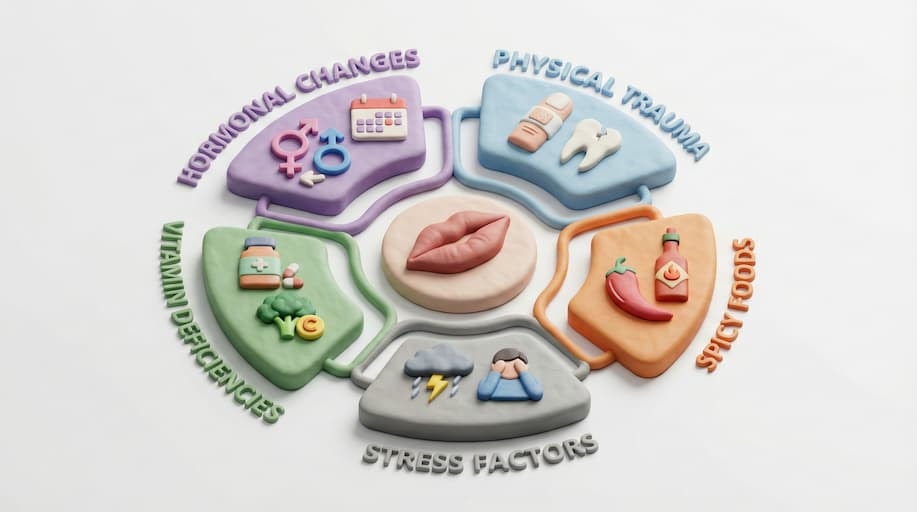
Understanding why canker sores, also called aphthous ulcers, form can help you manage and prevent them more effectively. The white stuff you see is not random, it’s part of your body’s healing process. Below are the most common reasons for the development of these painful sores.
Physical Triggers Like Biting or Dental Work
Many minor canker sores begin after a small injury to the mouth. Accidental biting of the cheek or lip, aggressive toothbrushing, or recent dental work can damage the soft tissues and trigger an ulcer. Clinical reviews indicate that cheek biting precedes approximately 25% of minor canker sores, whereas dental procedures trigger flare-ups in 15% of cases within 2 days.
One study found that 30–40% of people with recurrent canker sores reported trauma as a direct trigger. When tissues are damaged, the body sends white blood cells to the area to start repair, forming a fibrin layer, the white or yellow center in the sore.
Get the SNOW LED Whitening Electric Toothbrush
Diet, Stress, and Hormone-Related Causes
Certain acidic or spicy foods, such as tomatoes or citrus, can irritate the inside of the mouth and trigger aphthous ulcers. Inflammation from poor diet or food sensitivities also plays a role. Stress is another major factor. Studies show that cortisol spikes during stress double the risk of getting a sore in about 27% of cases.
Hormonal changes, especially during menstruation, are linked to about 10–15% of recurrent canker sores. These hormonal shifts may change how your immune system responds, leading to tissue breakdown in the mouth.
Vitamin Deficiencies and Medical Conditions
Low levels of iron, folic acid, and vitamin B12 are common among individuals who frequently experience mouth ulcers. A 2014 clinical study published in the Journal of Oral Pathology & Medicine identified that 66% of patients suffering from recurrent aphthous stomatitis exhibited significant iron deficiencies.
Supplementing with 1,000 mcg of B12 daily reduced the frequency of soreness by 74% in one clinical trial.
In some cases, medical conditions like celiac disease or Behçet’s disease can cause repeated sores. These conditions may trigger your immune system to attack healthy cells, resulting in painful ulcers with a white center.
Get the SNOW Whitening Toothpaste With Hydroxyapatite
When to See a Doctor About a White Patch
While most canker sores heal on their own, some situations require medical attention. Not all white patches in the mouth are harmless.
Signs the Sore Is Not Healing Normally
A canker sore that doesn’t shrink or improve after 10 days, or one that lasts longer than two weeks, may need to be checked. One medical report indicates that sores larger than 1 cm or that don’t heal can indicate more serious underlying conditions.
If the sore continues to grow, becomes extremely painful, or forms irregular edges, you should see a doctor.
What Symptoms May Need Medical Testing
In rare cases, white patches may indicate conditions that require laboratory testing or a biopsy. Symptoms to watch for include:
-
Fever with multiple mouth sores over 5mm
-
Swollen lymph nodes
-
White patches that don’t scrape off (possible thrush or leukoplakia)
These symptoms may prompt physicians to test for conditions such as celiac disease, IBD, or herpesvirus infections.
Get the SNOW Dissolving Whitening Strips
How to Treat a Canker Sore Without Causing More Damage
Treating canker sores should prioritize protection rather than irritation. Over-treating or using harsh products can make the sore worse.
At-Home Remedies That Support Healing
Simple home care can go a long way. Using a saltwater rinse 2–3 times a day may reduce pain by 40%. Natural remedies such as honey have also been shown to accelerate healing, with some studies suggesting that recovery is twice as fast.
Drink water, eat healthy foods, and avoid acidic or spicy foods during the healing process. A soft-bristled toothbrush is also key to protecting tender areas.
Get the SNOW Gentle Whitening Mouthwash
Over-the-Counter Treatments
You can find topical anesthetics, like benzocaine gels, at most drugstores. These provide pain relief in up to 70% of cases during peak discomfort. Apply a small amount to the sore with a clean cotton swab before meals or brushing.
Avoid pastes with sodium lauryl sulfate, which may delay healing.
Prescription Options for Severe Sores
For severe canker sores, prescription treatments may be needed. Steroid mouth rinses are effective in about 80% of difficult cases, especially when sores are large or very painful.
If your sores are persistent, talk to a medical professional about possible treatments or tests.
What to Do and What to Avoid Around the White Area
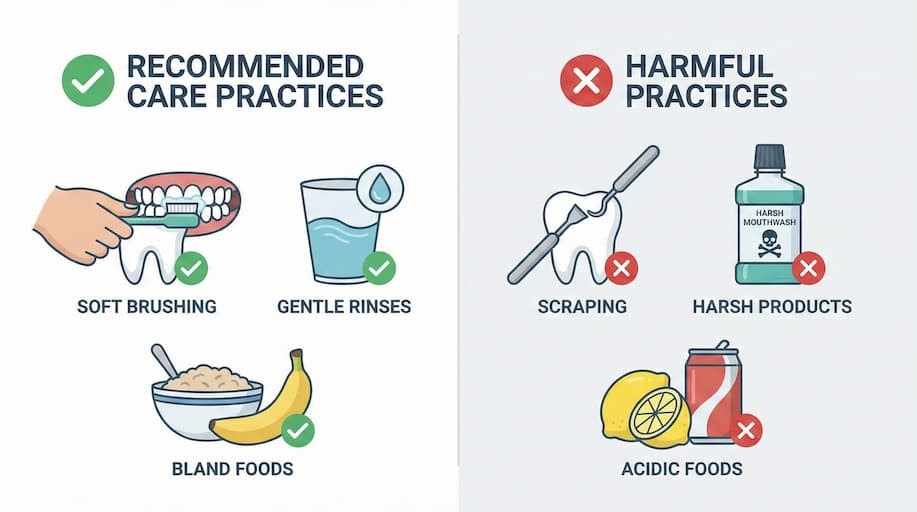
Protecting the white or yellow center of a canker sore is key to helping it heal properly. This layer consists of fibrin, immune cells, and dead tissue that protect the wound while new skin forms beneath. Damaging this layer can slow down the healing process, so it’s important to be gentle and consistent with your care.
By following a few proven strategies, you can speed healing, reduce discomfort, and avoid making the sore worse.
Best Practices for Brushing and Eating
Start by using a soft-bristled toothbrush to avoid scraping the sore. Brush slowly and carefully around the affected area, especially if it's near dental appliances like braces or retainers, which can irritate shallow lesions.
Choose bland, soft foods that are easy to chew and swallow. Cooked vegetables, mashed potatoes, scrambled eggs, and yogurt are all gentle options that won't aggravate the sore. Cold items like smoothies or chilled water can also help reduce pain and inflammation. For added relief, some people apply topical anesthetics such as benzocaine gels to temporarily alleviate discomfort.
Avoid hard, crunchy foods that can reopen the sore or damage the surrounding red border. Cutting back on chewing gum and acidic fruits may also reduce irritation.
Ingredients and Products to Avoid
Certain ingredients can make painful sores worse or delay recovery. Common culprits include:
-
Spicy or salty foods, which increase stinging and inflammation
-
Alcohol-based rinses, which can dry out tissues and slow healing by up to 30%
-
Sodium lauryl sulfate (SLS), a foaming agent found in many toothpastes
One study found that discontinuing SLS-containing toothpaste may reduce canker sore frequency by nearly 50%, particularly among individuals with recurrent canker sores or other known risk factors. For safer oral care, switch to an SLS-free toothpaste and rinse gently with saltwater or mild, alcohol-free mouth rinses to keep the sore clean.
Additionally, avoid overbrushing the area, which can disrupt the protective layer and lead to the accumulation of dead tissue.
Other Conditions That Look Like White Canker Sores
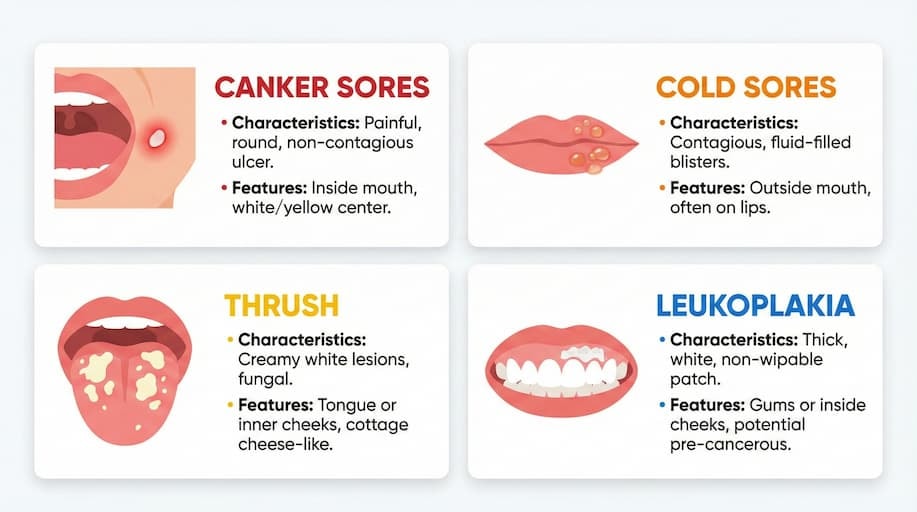
Sometimes, what appears to be a canker sore may actually be another condition.
White spots or red bumps in the mouth can signal different issues, some of which may need medical attention.
Knowing how to tell them apart can help you avoid the wrong treatment and get proper care faster.
Cold Sores, Thrush, and Leukoplakia
Cold sores and canker sores are often confused, but they are very different.
Canker sores appear only on soft tissues inside the mouth, such as the inner cheeks, tongue, or gums. They are not contagious.
Cold sores are caused by the herpes simplex virus. They often begin with a tingling sensation, followed by visible blisters outside the mouth, usually on the lips.
Thrush appears as creamy white patches on the mucous membranes. These can usually be gently scraped away.
It is often linked to:
-
A weakened immune system
-
Recent antibiotic use
-
Conditions like diabetes
Leukoplakia causes thick white patches that do not wipe away. These may result from tobacco use, chronic irritation, or sharp dental appliances and should be examined by a doctor.
How to Tell the Difference
Canker sores, also called aphthous ulcers, are usually:
-
Round with a white or yellow center
-
Surrounded by a red border
-
Painful when eating, brushing, or speaking
They tend to be shallow lesions and may occur in clusters, particularly in herpetiform sores.
Cold sores are characterized by blisters and are highly contagious. Thrush causes no pain at first, but can spread if left untreated. Leukoplakia is typically painless but may indicate long-term irritation or a risk of oral disease.
If you notice other symptoms such as swollen lymph nodes, persistent pain, or a sore that lasts more than two weeks, it’s best to consult a physician.
A medical professional can help diagnose canker sores, rule out other conditions, and provide the right treatment. They may also recommend stress reduction techniques or help you explore options to get rid of canker sores and prevent future outbreaks.
Final Thoughts
The white center in a canker sore is not a cause for concern. It is a natural part of the healing process. This layer, composed of fibrin and immune cells, functions like an internal scab that protects the wound while new tissue grows. While it can be painful, especially in the early days, it is not a sign of infection and should not be scraped away.
Understanding what is normal, treating your mouth gently, and knowing when to speak to a doctor can help you manage symptoms and prevent future sores more effectively.
If you want oral care that supports healing without irritating your mouth, explore the full collection from SNOW. Every product is designed with your comfort and long-term oral health in mind, particularly during moments when your mouth requires extra care.
Explore the SNOW Oral Care Collection
Frequently Asked Questions
Still wondering about that white or yellow spot? Here are quick answers to the most common canker sore questions.
Can I safely wipe or scrape off the white stuff in my canker sore?
No, you should not scrape off the white stuff in a canker sore. That layer consists of white blood cells, fibrin, and dead tissue; it protects soft tissues during the healing process. Removing it can cause more stinging pain and delay healing by reopening the sore.
Why is the white part of my canker sore so painful compared with a normal cut?
The white or yellow center of a canker sore sits atop shallow lesions that expose sensitive nerve endings. Unlike skin, the mucous membranes in your mouth move constantly, irritating the area and causing a burning sensation or stinging pain.
Does the white stuff mean my canker sore is infected and needs antibiotics?
No, the white stuff in a canker sore is not pus or infection. It is a healing membrane that forms during the immune response, not a result of bacterial activity. Antibiotics are not indicated unless there are other symptoms such as swollen lymph nodes or spreading redness.
Is it normal for the white center to change color as it heals?
Yes, the white or yellow center often fades to gray or pink as healthy cells rebuild the area. Color changes are part of the natural healing process, but irregular edges or darkening without improvement should be evaluated by medical professionals.
Can diet or supplements change how often I get these white-centered sores?
Yes, nutritional deficiencies, especially in folic acid, B12, and iron, can increase your risk. Eating healthy foods and using supplements when recommended may help you get rid of canker sores more quickly and reduce how often they come back.


