





Teeth whitening is considered safe for healthy adults when using ADA-approved peroxide products under professional guidance. While effective for removing stains, the process can cause temporary side effects like tooth sensitivity and gum irritation in approximately 50% of users.
According to a 2023 market analysis by Grand View Research, the global teeth whitening market was valued at $2.876 billion.. It's projected to reach $4.147 billion by 2030, growing at a 5.4 percent CAGR. Clearly, more people are searching for whitening treatments that are both effective and safe.
This guide breaks down the science, separates fact from myth, and shows you how to choose the safest and most effective way to whiten your teeth without unnecessary risk.
Key Takeaways
-
Teeth whitening is generally safe for healthy adults when using ADA-approved products and following a dentist’s instructions, though approximately 50% of users experience temporary sensitivity and up to one-third experience gum irritation.
-
Most side effects resolve within 1–2 weeks, with follow-up research showing only about 5% of patients report persistent symptoms at 13 months.
-
Lower-concentration gels (approximately 5–10% carbamide peroxide) offer a safer profile for enamel and pulp cells while still delivering effective results.
-
Whitening is not suitable for everyone. Pregnant individuals, children under 16, those with untreated cavities, those with active gum disease, or those with exposed roots should avoid it until cleared by a dentist.
-
Professional, dentist-supervised whitening (in-office or custom take-home trays) is safer and more reliable than over-the-counter products, especially for people with existing sensitivity or dental restorations.
How Does Teeth Whitening Work?
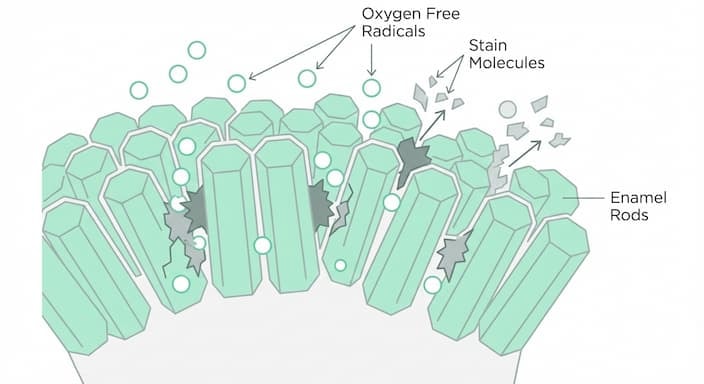
Teeth whitening functions by using peroxide-based agents to chemically oxidize organic pigments within the tooth enamel. Active ingredients like hydrogen peroxide or carbamide peroxide penetrate the porous enamel rods and release oxygen free radicals, which break the double bonds of stain molecules to render them colorless. This chemical process allows for deep stain removal without the abrasive physical scrubbing that can permanently scratch or erode the enamel surface
Here’s how it breaks down:
-
Hydrogen peroxide works quickly to remove stains but can cause sensitivity in some users.
-
Carbamide peroxide breaks down more slowly into hydrogen peroxide, offering a gentler, longer-lasting release. It’s commonly used in professional teeth-whitening treatments to deliver visible results without the risk of irritation.
Not all stains are equal. The type of discoloration on your teeth affects how well whitening works:
-
Extrinsic stains (from coffee, wine, or tobacco) sit on the surface and typically respond well to whitening gels.
-
Intrinsic stains (caused by aging, certain medications, or trauma) lie deeper and may need longer treatment or cosmetic alternatives.
-
Antibiotic stains, such as those from tetracycline, formed during development often require specialized tooth-bleaching solutions.
What about whitening toothpaste? While these don’t contain peroxide in significant amounts, they do include mild abrasives that help remove surface stains. They’re a good option for daily maintenance, but they won’t dramatically lighten your teeth.
If you’re whitening teeth for the first time, understanding these differences helps you choose the right method. It’s not just about brighter results; it's about doing it safely, based on the stain type and your enamel sensitivity.
Is Teeth Whitening Effective?
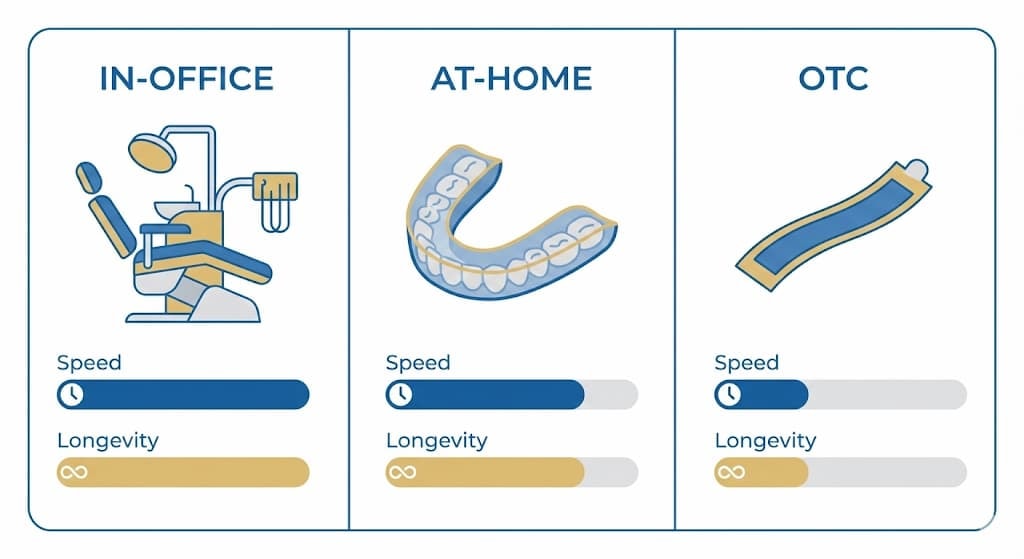
Teeth whitening is highly effective, with professional treatments capable of lightening teeth by 5 to 8 shades in a single session. Peroxide-based agents effectively target chromogens (color-producing compounds) in both extrinsic and intrinsic stains, though effectiveness diminishes with age-related discoloration or gray tones. Understanding that results depend heavily on the stain type—yellow responds best, while gray is resistant—is crucial for setting realistic aesthetic expectations.
Let’s look at how the main types of whitening products perform in real life.
In-Office Whitening
This is the most potent option. Dentists use high-strength hydrogen peroxide, up to 40%, to deliver dramatic results in a single session. A 60-minute appointment can whiten your teeth several shades. However, it comes with a higher price tag and may cause temporary gum irritation or tooth sensitivity.
Overall, it’s incredible for fast results before events. But, it’s even better when combined with a custom take-home routine.
Dentist-Prescribed At-Home Trays
These custom trays offer a professional-level option from the comfort of your home. Using carbamide peroxide, they work gradually over 1–2 weeks and are often just as effective as in-office whitening. It’s best for gradual, consistent whitening with professional guidance.
In our internal product testing, SNOW's Magic Whitening Strips demonstrated a 100% dissolution rate within 15 minutes, effectively eliminating the messy residue common with traditional plastic strips.
Over-the-Counter Products
Over-the-counter (OTC) options like whitening strips, pens, and generic trays utilize lower peroxide concentrations, typically ranging from 3% to 10% hydrogen peroxide equivalent.
Because these products lack custom-fitted reservoirs, saliva often dilutes the gel before it can fully penetrate the enamel, leading to slower results requiring 10-14 days of daily application.
While accessible, the lack of professional isolation increases the risk of gum irritation and patchy, uneven whitening results compared to dentist-prescribed systems.
You can use this for mild surface stains or occasional touch-ups. However, watch out for poor application, which can lead to patchy results or gum irritation
For portable touch-ups, the SNOW Whitening Pen is an excellent on-the-go option. It quickly removes coffee or wine stains without requiring a whole routine. The pen uses a gentle, dentist-approved formula and is ideal for maintenance after deeper treatments.

To achieve the most reliable, long-lasting whitening results, consider professional whitening or proven at-home teeth-whitening products, such as SNOW's dermatologist-tested systems. These offer a smart balance of effectiveness and safety, especially if you're managing tooth sensitivity.
Are There Risks to Teeth Whitening?
Teeth whitening is widely used and generally safe when done correctly, but like any cosmetic or medical treatment, it isn’t risk-free. Whether you’re using a professional system or an over-the-counter product, you may experience some temporary side effects.
The most common issues include tooth sensitivity, gum irritation, and concerns about enamel health, especially with long-term or aggressive use.
The good news is that most side effects are mild and short-lived. But understanding what causes them and how to manage them can help you whiten your teeth more safely and effectively.
Let’s break down the key risks and how to minimize them:
Tooth Sensitivity
Tooth sensitivity is one of the most common side effects of teeth whitening. It usually feels like a sudden, sharp discomfort when you drink something hot, cold, or sweet. Most people experience it during their whitening routine or within the first day or two after.
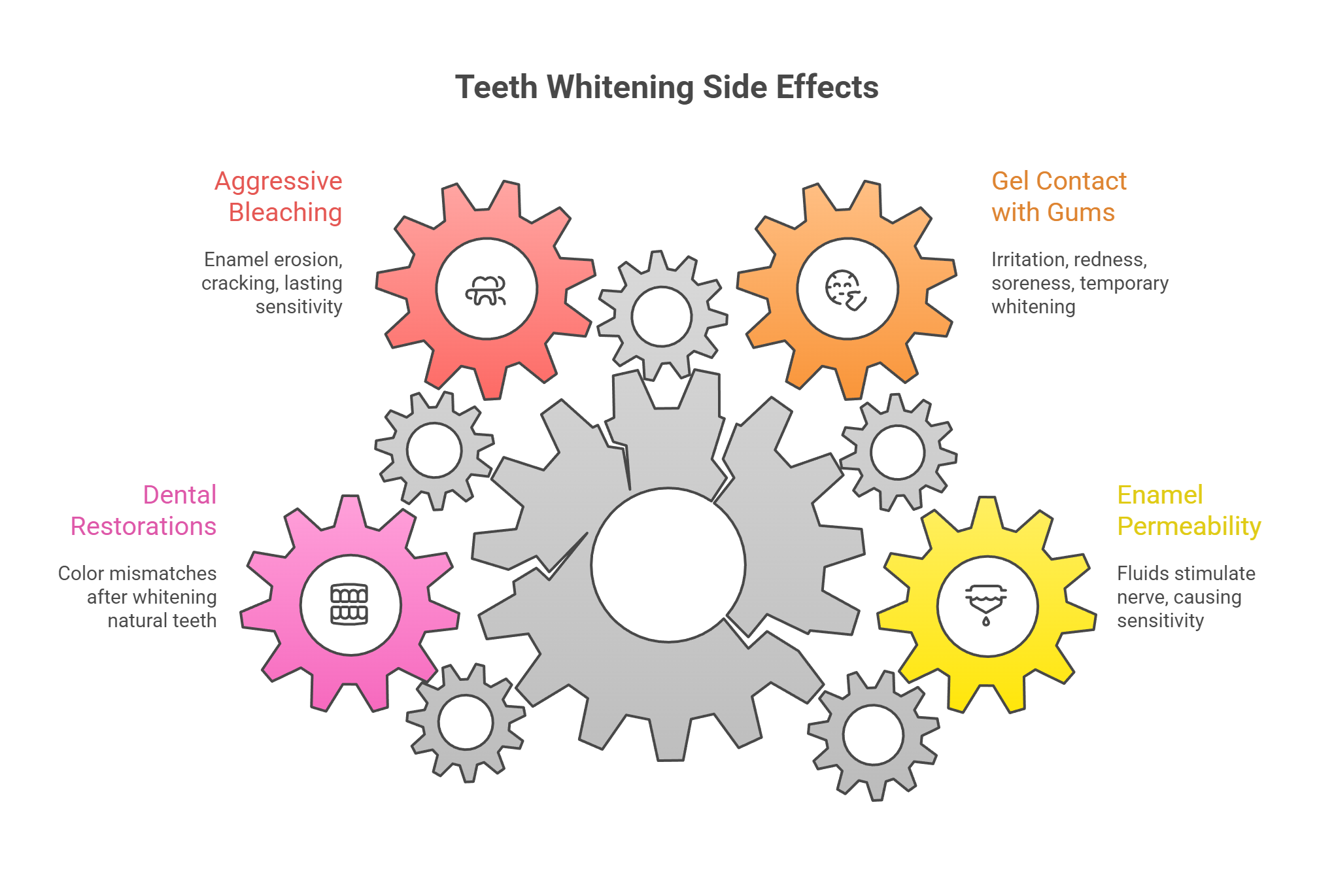
Increased enamel permeability allows fluids to traverse the dentinal tubules. These microscopic channels connect the tooth surface directly to the pulp nerve, transmitting thermal triggers that cause pain.
This allows fluid to move more easily through tiny channels called dentinal tubules, which connect the surface of your tooth to the nerve inside. That fluid movement stimulates the nerve, triggering the familiar zing.
A 2018 study published in Scientific Reports confirms that higher concentrations (35% carbamide peroxide) cause pulp cell cytotoxicity significantly faster than lower concentrations
In contrast, 5% carbamide peroxide had a much slower and less harmful effect on the pulp, showing a significantly better safety profile.
How to manage sensitivity:
-
Use a toothpaste with potassium nitrate or stannous fluoride for one to two weeks before and during treatment.
-
Space out sessions to every other day instead of daily.
-
Reduce wear time if discomfort starts.
-
Avoid very hot or cold foods for a day or two after each session.
Most whitening-related sensitivity peaks early and disappears within two weeks of stopping treatment. If it doesn't, consult your dentist for advice.
Gum Irritation
Whitening gels are made for tooth enamel, not gum tissue. If the gel touches your gums, it may cause redness, soreness, or temporary whitening. This is known as gingival irritation, and it’s more likely to happen with over-the-counter trays or strips that don’t fit snugly.
In contrast, professional treatments use customized trays or protective barriers that shield your gums and ensure the gel remains in place. Poorly fitting trays or strips can leak, especially when overfilled, and expose your gums to whitening agents.
You’re more likely to experience gum irritation if:
-
Trays are overloaded with gel
-
Whitening strips slip out of place
-
You wear high-strength gels longer than instructed
What helps:
-
Wipe off excess gel immediately if it touches the gums.
-
Pause whitening for a day or two to let your gums recover.
-
Use a plain, non-whitening toothpaste while the area heals.
Most cases of irritation go away quickly. If you notice persistent burning, white patches, or swelling, contact your dental provider for evaluation.
Effects on Enamel and Tooth Structure
Many people worry that whitening might weaken their enamel. But when done correctly, research shows it is safe and does not cause permanent damage.
According to a 2014 in vitro study by Navarra et al, low-concentration gels (10% carbamide peroxide) induce only minor, reversible microhardness changes in enamel. For example, one study reported only a 5.4% reduction in enamel protein, which remineralizes naturally with saliva and fluoride use.
Here’s what the science confirms:
-
Temporary roughness and mineral loss may occur during whitening
-
These changes typically resolve within weeks
-
A six-month follow-up found no lasting enamel damage when using gels as directed
The concern rises when whitening is done too often or with high-strength products that are not professionally supervised. This aggressive bleaching can increase the risk of enamel erosion, cracking, and lasting tooth sensitivity.
If you have naturally thin enamel or a history of acid erosion, consult your dentist before beginning whitening. They may recommend a gentler approach to protect your tooth structure long term.
Effects on Dental Restorations
Whitening only works on natural teeth, not on dental restorations like crowns, veneers, tooth-colored fillings, or ceramic implants. These materials do not respond to peroxide the same way enamel does, so they stay the same color while your natural teeth whiten.
This can lead to color mismatches, especially if the restorations are visible in your smile. For example, a porcelain crown on a front tooth may appear darker than the freshly whitened natural teeth next to it. In many cases, people choose to update these restorations after whitening for a more uniform look.
If you have visible restorations or a complex dental history, it’s smart to discuss your whitening goals with your dentist ahead of time. They can help create a plan that delivers a whiter smile without sacrificing balance or safety.
Who Should Avoid or Be Cautious With Teeth Whitening?
Teeth whitening can be a safe and effective option, but it isn’t right for everyone. Certain conditions and life stages make your teeth or gums more vulnerable to irritation, sensitivity, or damage during whitening treatments.
If you fall into one of the categories below, it’s best to talk with your dentist before starting any whitening routine, even with over-the-counter products.

Just because a whitening product is available over the counter doesn’t mean it’s safe for every smile. If you have any of the conditions above, skipping the dentist’s input can lead to severe discomfort or damage that isn’t worth the short-term gain.
Always get a dental exam before whitening. It’s not just about looking good; it’s about keeping your mouth healthy while you work toward a brighter smile.
How Can You Whiten Your Teeth Safely?
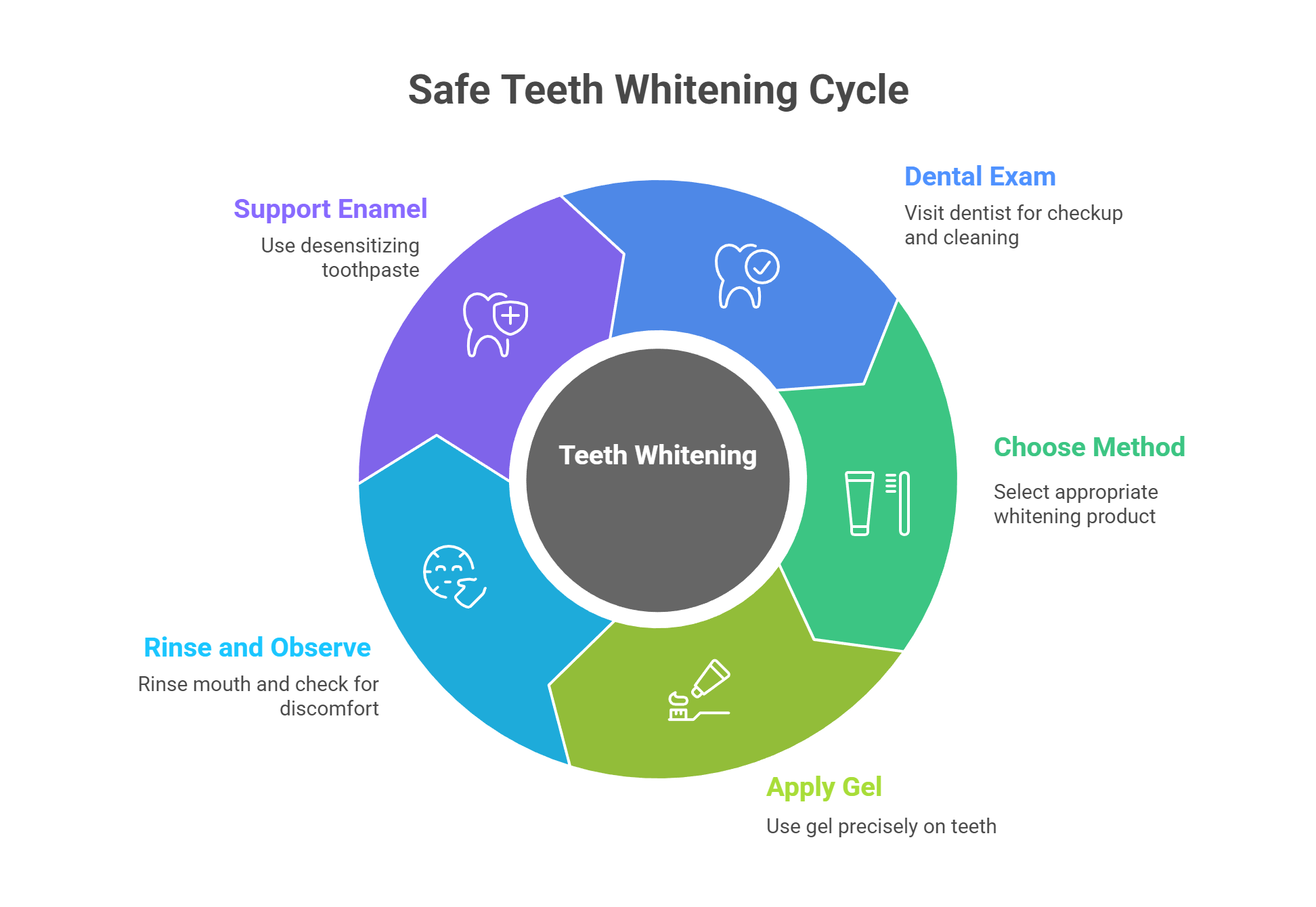
Whitening your teeth can be both safe and effective, as long as you follow a few key principles. It all comes down to using the right product, the right concentration, and the proper schedule, ideally under the guidance of a dental professional, especially if you’re dealing with sensitive teeth or past dental work.
Step-by-Step Whitening Routine
Here’s your step-by-step whitening routine:
1. First Things First, Get A Dental Exam
Before starting any tooth bleaching treatment, visit your dentist for a full checkup. This helps identify issues like gum disease, cracked teeth, or existing dental restorations that may affect the outcome. A pre-treatment cleaning also ensures that the whitening gel can properly contact clean enamel for maximum effectiveness.
2. Next, Choose Your Whitening Method Wisely
Not all whitening products are created equal. If you're new to whitening or have sensitive teeth, start with lower-concentration formulas (such as 5–10% carbamide peroxide) to reduce irritation. Professional teeth whitening options often deliver faster results, but OTC products with peroxide can also work when used correctly.
DiamondSeries® Teeth Whitening Kit with Hydroxyapatite & Potassium Nitrate is SNOW’s best-selling whitening kit, featuring three enamel-safe serums to whiten teeth while reducing sensitivity. The hydroxyapatite strengthens tooth structure, and potassium nitrate soothes nerve endings for a more comfortable experience. This is a great at-home alternative to in-office treatment, and the system is trusted by thousands of users worldwide.
Shop the DiamondSeries® Whitening Kit
3. Apply The Gel With Precision
Use only a small amount of whitening gel, a pea-sized dab per tooth, and avoid smearing it onto your gums. Follow the wear-time instructions carefully, and don’t leave the trays in longer than recommended.
4. After Whitening, Rinse And Observe
Rinse your mouth thoroughly after each session, and check how your teeth and gums feel. If you notice any discomfort, take a break and speak with your dentist before continuing treatment.
5. Support Enamel Health Along The Way
Use a desensitizing toothpaste that contains fluoride or hydroxyapatite to help remineralize enamel, especially during multi-day whitening treatments.
Try Fluoride-Free Hydroxyapatite Whitening Toothpaste with Coconut Oil & Xylitol. SNOW toothpaste is gentle enough for daily use and contains hydroxyapatite to rebuild enamel without harsh chemicals. It’s fluoride-free and made with xylitol and coconut oil for natural antibacterial support. Ideal for anyone seeking to maintain a brighter smile after whitening treatments.
Try SNOW’s Hydroxyapatite Toothpaste
Strategies to Minimize Side Effect
Even with safe whitening agents, some users experience mild gum irritation or sensitive teeth. Fortunately, most side effects are temporary and manageable. Here’s how to reduce your chances.
1. Start Slow, Especially If You're Sensitive
Begin with lower-strength products and shorter wear times to give your teeth and gums time to adjust. Avoid stacking multiple whitening treatments at once, which can lead to overexposure.
2. Spread Out Your Sessions
Whitening every other day instead of daily can help minimize sensitivity. Think of it as giving your teeth room to recover between treatments.
3. Choose Formulas Made For Sensitive Users
Try SNOW® Overnight Sensitive Teeth Whitening Serum. This gentle whitening serum is ideal for users with sensitive teeth or gum concerns. It’s safe for daily use and works while you sleep to lift surface stains without causing discomfort. The formula also contains enamel-supporting ingredients, making it a great long-term addition to your routine.
Try the Overnight Sensitive Whitening Serum
4. Watch What You Eat And Drink
After whitening, avoid very hot or cold drinks, and skip acidic foods like citrus or soda for at least 24 hours. These can weaken enamel or trigger discomfort in sensitive areas.
5. Maintain Daily Oral Care
Use a soft-bristled brush, floss regularly, and avoid over-the-counter products that aren’t ADA-approved or lack clear peroxide concentration labels.
Is Teeth Whitening Safe Long-Term?
If you're wondering whether teeth whitening is safe over time, the evidence is encouraging. When used correctly, peroxide-based whitening treatments are safe, supported by decades of research and use by millions of people. The key is to stay within professional guidelines and avoid overuse.
Here’s what long-term research reveals:
-
Most changes observed in enamel under microscopy are reversible and do not lead to tooth erosion or increased fracture risk, even after six months.
-
Permanent pulp damage or tooth loss from properly used whitening treatments is sporadic, with reported rates well below 1 percent.
-
Hydrogen peroxide breaks down quickly in the mouth thanks to salivary enzymes. Studies show no systemic toxicity at the concentrations used in whitening. Harmful effects only occur at levels far above clinical use.
Whitening is considered safe when used within recommended limits and under a dental professional's guidance.
Best Practices for Maintaining Results
Whitening results naturally fade over time. Staining foods like coffee, tea, and red wine, as well as tobacco use, can cause your teeth to darken again. Aging also plays a role.
You can keep your smile brighter longer by following these habits:
-
Brush twice daily with a fluoride or hydroxyapatite toothpaste
-
Floss daily to prevent plaque buildup and stain accumulation
-
Get regular professional dental cleanings
-
Limit dark-colored beverages and avoid smoking
When Whitening Isn’t the Right Fit
Not all stains respond well to peroxide-based whitening. Some discoloration is internal or caused by factors outside the enamel surface.
Examples include:
-
Tetracycline stains from antibiotic use during tooth development
-
Fluorosis caused by high fluoride exposure
-
Darkening after root canal treatment
-
Deep intrinsic stains from trauma or developmental conditions
In these cases, your dentist may suggest cosmetic alternatives:

Final Words
Teeth whitening is safe, effective, and accessible when done correctly. Whether you choose in-office treatments or a dentist-approved at-home kit, the key to long-term success lies in using the right products, following professional guidance, and maintaining good oral health.
From managing sensitivity to maintaining your results with healthy habits, whitening can be a simple part of your oral care routine, not a risky experiment. Talk to your dentist, set realistic expectations, and focus on what feels right for your smile.
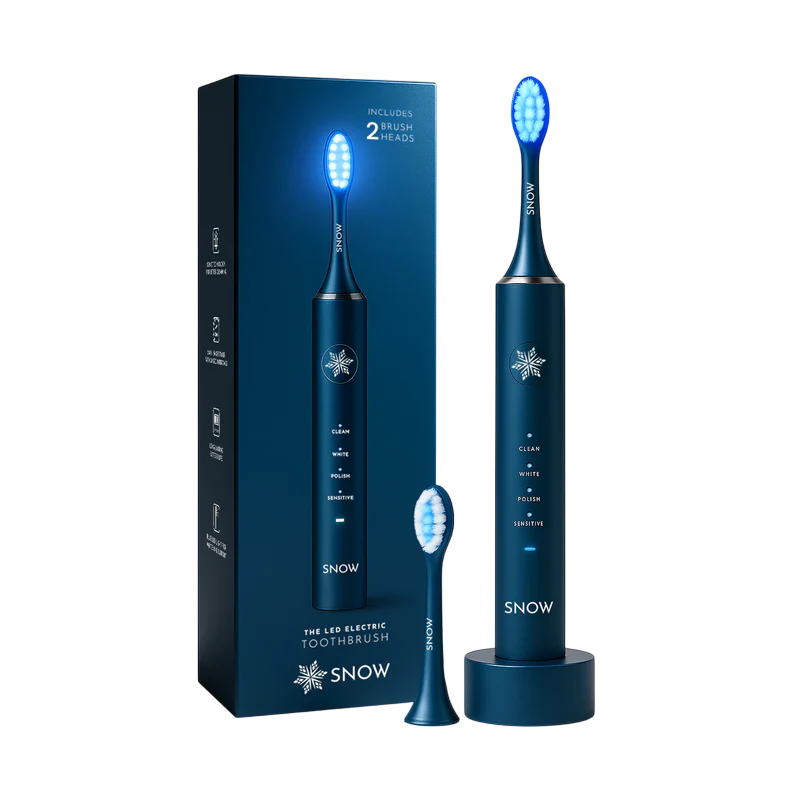
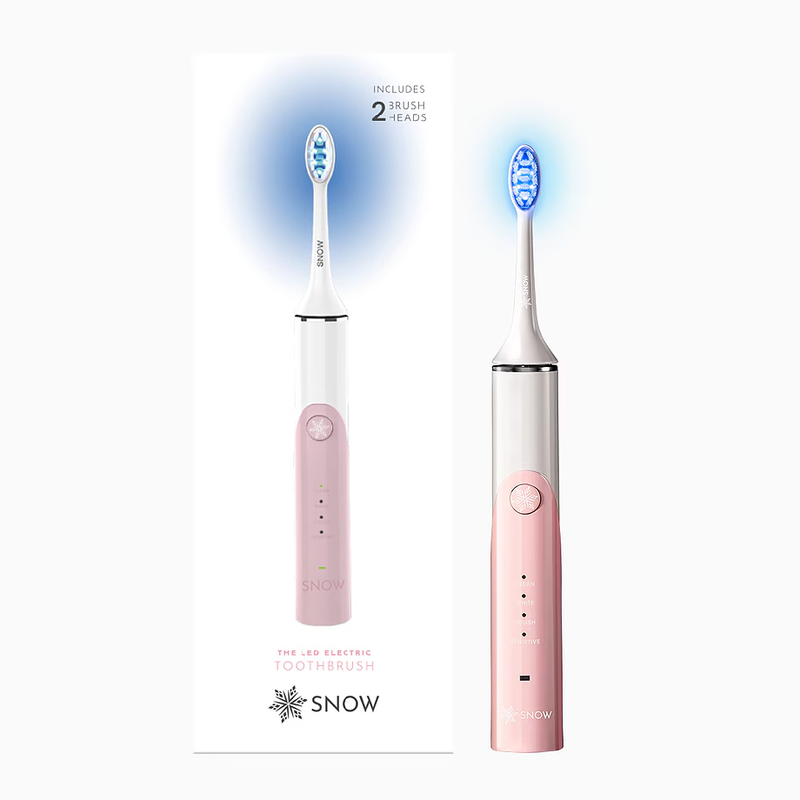
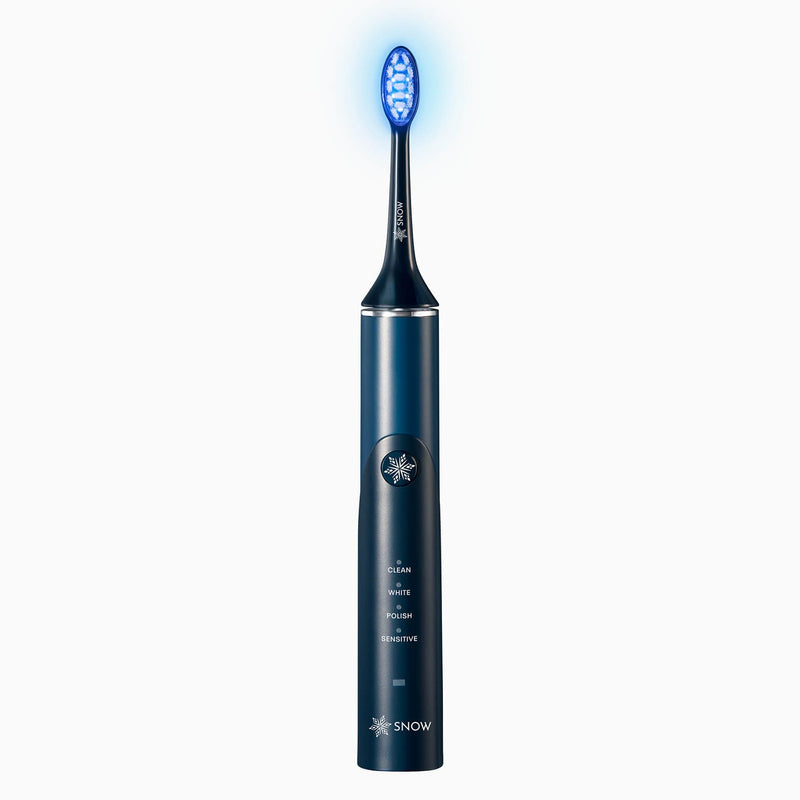
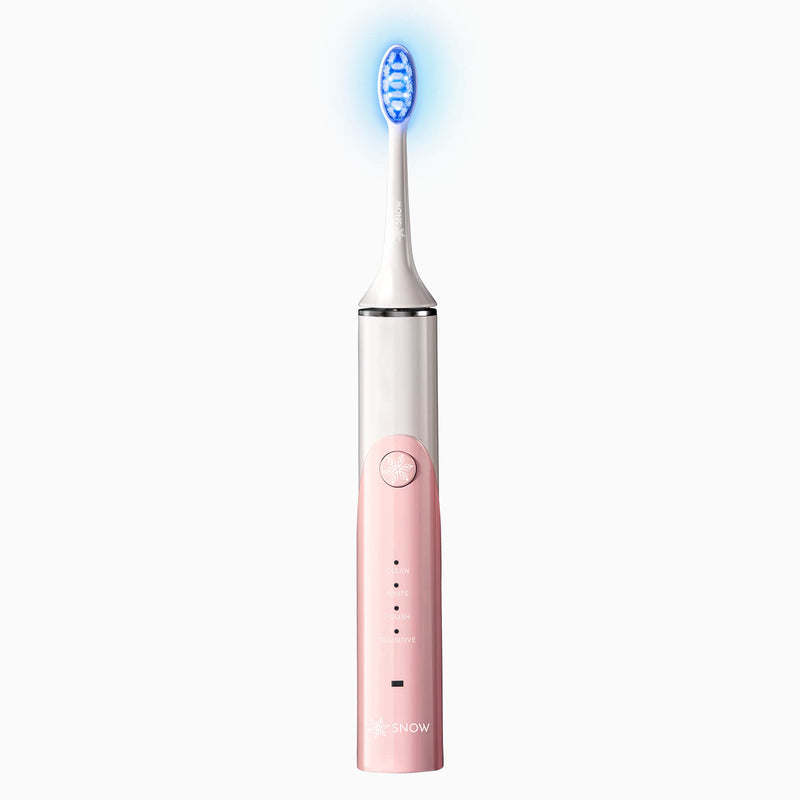
SNOW offers a complete collection of science-backed whitening solutions designed for every lifestyle, tooth type, and sensitivity level. From dissolvable strips and dual-peroxide pens to booster powders and LED-powered toothbrushes, each product is crafted to help you whiten brighter, not harsher.
Explore the Full SNOW Collection Today
Frequently Asked Questions (FAQ)
Got more questions? Here are quick, clear answers to help you whiten safely and with confidence.
How often can I safely whiten my teeth?
You can safely whiten your teeth about once per year as a complete treatment. Touch-ups every few months are fine, as long as you're not whitening continuously without breaks. If you notice increased sensitivity, it's a good idea to pause and consult your dentist before continuing.
Is teeth whitening safe if I have braces or clear aligners?
Teeth whitening is not recommended while you have fixed braces, since the gel can’t reach the enamel underneath the brackets. For clear aligners, some whitening products can be used inside the trays, but only under your dentist’s guidance. For the best and even results, wait until your orthodontic treatment is complete.
Can teeth whitening increase my risk of oral cancer or other systemic diseases?
No, there is no evidence that teeth whitening increases the risk of oral cancer or systemic diseases. Hydrogen peroxide in whitening gels is quickly broken down by saliva and is present at very low concentrations. Clinical studies show no link between whitening and serious health risks when used as directed.
Will whitening work on nicotine, coffee, or wine stains I’ve had for years?
Yes, whitening can help reduce long-term stains from smoking, coffee, or red wine. These extrinsic stains often respond well to professional treatments, though it may take more time or higher-concentration products. However, internal stains from medications or trauma may require alternative treatments, such as veneers or bonding.
What should I do if I accidentally swallow some whitening gel?
If you accidentally swallow a small amount of whitening gel, rinse your mouth with water and discontinue use of the product for the day. It’s usually not harmful in small amounts. If you feel unwell or have swallowed a large amount, contact your dentist or poison control for guidance immediately.


