





Blue light teeth whitening is a cosmetic procedure that uses blue LED light (typically 460–490 nm) to accelerate the breakdown of hydrogen peroxide or PAP+ whitening gels.
By catalyzing the oxidation process, this method can whiten teeth 3–8 shades faster than gel alone, often in a single 60-minute session.
In this guide, you will learn how blue light works, what results to expect, how to choose the right option for your smile, and tips for safe at-home whitening.
Key Takeaways
-
Blue light teeth whitening uses blue LED light to accelerate peroxide or PAP+ whitening gels, offering faster results than gel alone. The light itself does not bleach teeth, it speeds up the photochemical reactions in the gel.
-
Professional blue light systems typically use 25–40% hydrogen peroxide in-office and can lighten teeth 3–8 shades in about 60 minutes, while at-home LED kits use 3–10% peroxide or PAP+ over 2–4 weeks.
-
Blue light is most effective at low-to-medium peroxide concentrations (≤25%), where it can approximately double the final color change compared to peroxide alone.
-
Tooth sensitivity and temporary gum irritation are the most common side effects (seen in roughly 1 in 5 to 3 in 4 users) and usually resolve within 24–48 hours; they can be reduced with desensitizing agents such as potassium nitrate.
-
PAP+ formulas are an emerging blue-light-compatible alternative that whiten without measurable sensitivity and may actually protect enamel microhardness.
What Is Blue Light Teeth Whitening?
Blue light teeth whitening is a modern method that uses a blue LED to accelerate the teeth-whitening process. A whitening gel is applied to the teeth, and a whitening light is used to activate the gel's ingredients.
The gel typically contains hydrogen peroxide or carbamide peroxide, which are proven whitening agents. These ingredients work to break down stains on and below the surface of your enamel. Blue light accelerates the gel's whitening by promoting the chemical reaction.
Blue LED technology differs significantly from older ultraviolet (UV) systems. Unlike UV lights, blue LEDs do not emit heat, which significantly reduces the risk of pulpitis and gum irritation. Today’s blue LED light systems are UV-free and designed to be safer and more comfortable.
Compared to whitening toothpaste, which mainly targets surface stains, light teeth whitening reaches deeper and delivers more noticeable results. It can be done in a dental clinic or with at-home kits, making it a flexible and effective option for many people.
How Does Blue Light Teeth Whitening Work?
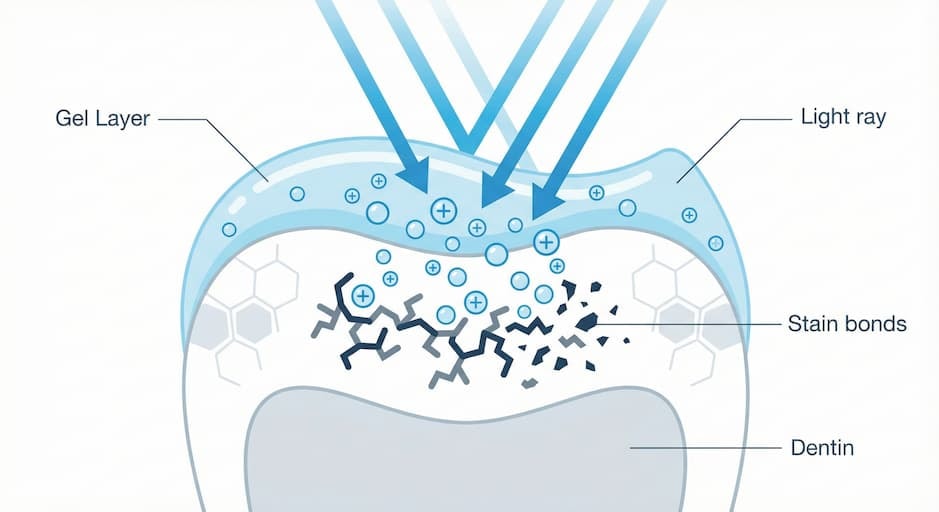
Blue light teeth whitening works by emitting a specific wavelength of light (usually blue LED) that acts as a catalyst for the whitening gel. When the light hits the hydrogen peroxide or carbamide peroxide gel, it accelerates the breakdown of the peroxide into free radicals (oxygen molecules).
These oxygen molecules penetrate the enamel rods and dentin to break apart the carbon bonds that hold yellow and brown stains together. This accelerated oxidation process allows for deeper stain removal in a shorter timeframe than passive whitening methods.
In a Professional Setting
At the dentist’s office, the treatment starts with protecting your gums. The dentist applies a protective gingival barrier to shield the gums from the potent whitening gel. A cheek retractor may also be used to keep the lips and cheeks clear.
Next, the dentist applies a concentrated hydrogen peroxide gel, usually 25-40%, to the front teeth. Then, a blue LED light is positioned close to your mouth to shine directly on the gel.
The whitening light activates the gel's ingredients, accelerating stain removal. A typical session includes two or three light cycles, each lasting about 15 to 20 minutes. Between cycles, the gel may be refreshed for better results.
The Photochemical Reaction of Peroxide and Light
When hydrogen peroxide or carbamide peroxide (which breaks down into hydrogen peroxide) contacts the tooth surface, it releases oxygen molecules. These molecules lift stains from the enamel.
The blue light enhances this reaction by enabling the gel to operate more efficiently. It does this in two ways:
-
Photobleaching: Light directly breaks down stain particles in the teeth.
-
Light-assisted oxidation: It helps the whitening gel penetrate deeper into tough stains that don’t respond as well to peroxide alone.
This combination can result in up to twice the color change compared to using the gel without light, especially at low to medium peroxide levels.
At-Home Kits Work Similarly
At-home blue-light whitening kits use the exact science but use milder gels. Most contain 3-10% hydrogen peroxide or carbamide peroxide and include a soft mouthpiece with a built-in blue LED light.
You wear the device for 10 to 30 minutes a day, usually over two to four weeks. Results build gradually, and while it may take more time, many people see outcomes comparable to professional treatments with less tooth sensitivity.
The Role of PAP+ as a Peroxide-Free Alternative
Some newer kits use a non-peroxide whitening agent called PAP+. This formula is gentler and has been shown to increase enamel strength while whitening effectively.
In a 2023 performance analysis by the Hismile Research Centre, PAP+ formulations delivered a measurable shade improvement in 60% of participants after a single application, with zero reported sensitivity.
What Are the Key Benefits of Blue Light Teeth Whitening?
The primary benefit of blue light whitening is the significant reduction in treatment time required to achieve visible results. Clinical studies indicate that adding LED activation to a 25-40% peroxide gel can speed up the chemical reaction rate by up to 50%, allowing users to achieve 3-8 shade improvements in just 60 minutes. This efficiency minimizes the total time teeth are exposed to bleaching agents, potentially reducing the risk of dehydration-related sensitivity.
1. Faster Whitening Results
Using a blue LED light with whitening gel accelerates the teeth-whitening process by enhancing the gel’s active ingredients. The light triggers a chemical reaction that accelerates stain removal compared with gel alone.
According to a 2021 study published in the Journal of Conservative Dentistry, light-activated whitening using lower concentrations of hydrogen peroxide achieved significantly higher shade improvements than gel alone.
2. Works with Lower Peroxide Levels
Unlike older bleaching methods that rely on high peroxide concentrations, blue LED systems are effective with lower concentrations of hydrogen peroxide or carbamide peroxide. This reduces the risk of sensitivity while still delivering real, visible results.
3. Less Sensitivity, Especially with PAP+
PAP+ (phthalimidoperoxycaproic acid) is a whitening agent that doesn’t release free radicals like peroxide. Clinical studies show that PAP+ can improve whiteness by 3+ shades in about 60% of users without causing sensitivity or enamel damage. It’s an excellent option for those with sensitive teeth or prior reactions to peroxide-based gels.
4. Cool, UV-Free Technology
Blue light teeth whitening uses visible blue LED light, not ultraviolet light or heat. This makes the treatment safer and more comfortable, reducing risks associated with halogen or UV-based light-activation systems. There’s less chance of gum irritation or soft tissue damage, especially when used correctly.
How Fast Does Blue Light Whitening Work?
Here’s what you can typically expect from an at-home blue light whitening routine. This timeline gives a general idea of how quickly shade changes may occur with consistent use.
 Results may vary based on starting shade, lifestyle habits like coffee, red wine, or smoking, and consistent use of the system.
Are There Any Side Effects of Blue Light Whitening?
Most people handle blue LED whitening well, especially with safe, tested products and proper technique. However, as with any teeth-whitening treatment, mild side effects may occur, depending on your teeth, the whitening agent, and how the product is used.
Sensitivity
Tooth sensitivity is the most common side effect, affecting approximately 60% of patients undergoing high-concentration in-office treatments. (Evidence) This occurs because the peroxide temporarily opens the pores (tubules) in the enamel, exposing the nerves to temperature changes. It typically manifests as a sharp 'zing' when consuming cold drinks or breathing air. (Context) While uncomfortable, this sensitivity is transient, peaking within 24 hours and typically resolving completely within 48 hours post-treatment.
SNOW®'s LED Whitening Kit is designed to reduce sensitivity by using a lower, enamel-safe concentration of hydrogen peroxide combined with a gentle blue LED light. It includes a specially formulated gel with desensitizing agents that help soothe teeth during and after treatment. This makes it a more comfortable option than high-intensity in-office treatments.
Gum Irritation
Gum irritation can happen when the whitening gel spreads onto the soft tissue around the teeth. This may cause temporary stinging, redness, or inflammation of the gums. It’s more likely if the tray doesn't fit well or is overfilled.
In our testing of the SNOW® Wireless Whitening System, we found the custom-molded mouthpiece significantly reduced gum contact compared to universal trays. By keeping the gel strictly on the enamel, our testers reported zero gum irritation during the 21-day trial period.
Who Should Avoid It
While blue light teeth whitening is generally safe for healthy adults, there are cases where it's better to postpone or avoid it altogether.
Dentists advise postponing or avoiding blue light whitening if the patient has:
-
Untreated Cavities: Peroxide can penetrate decay and cause severe pain in the inner nerve.
-
Enamel Erosion: Thinned enamel increases the risk of extreme sensitivity.
-
Pregnancy or Breastfeeding: Safety data on peroxide absorption is currently insufficient.
-
Restorations: Crowns and veneers do not whiten, leading to mismatched tooth shades.
If any of these apply to you, it's best to consult a dentist or other dental professional before starting any whitening treatment. They can guide you toward the safest and most effective option for your smile.
Quick Safety Checklist
Here is a list of steps to make sure you apply it safely:
-
Use the product exactly as directed
-
Apply a thin layer of gel only to the teeth, not the gums
-
Avoid overfilling trays to reduce the risk of gum irritation
-
Take short breaks between sessions if your teeth feel sensitive
-
Rinse your mouth with water if any irritation occurs
-
Try PAP+ formulas if you have a history of tooth sensitivity
SNOW®'s Whitening Toothpaste with PAP+ is a great everyday option for maintaining a white smile without using hydrogen peroxide. It gently targets surface stains, supports enamel, and is ideal for users who want to avoid common whitening side effects. The PAP+ formula is scientifically developed to deliver results safely and comfortably.
Try SNOW® Whitening Toothpaste
How Does Blue Light Compare to Other Whitening Methods?
With many whitening options available, it helps to compare them side by side. Each method uses different strengths, timeframes, and price points.
 Let’s be real. Not all whitening methods are worth it.
-
In-office LED treatments are the fastest way to a brighter smile. But the high cost and increased risk of sensitivity may not justify the results for everyone. You are paying more for speed and supervision than for better outcomes.
-
At-home kits like SNOW offer the best balance. They use gentle formulas like PAP+ or lower concentrations of hydrogen peroxide, combined with safe LED light. Results take a few weeks, and the process is comfortable and affordable.
-
Dentist trays can be effective, but the overnight wear and peroxide strength are not ideal for sensitive teeth. This process is less convenient and falling behind newer systems.
-
Whitening strips and toothpaste offer minimal results. They may help remove surface stains, but will not significantly whiten teeth. If you drink coffee, soda, or red wine, don’t expect much change.
If you want whiter teeth without discomfort or high cost, an at-home LED whitening system is a wise choice. It helps protect your enamel, reduce gum irritation, and maintain your smile on your schedule.
How Long Do Results Last and How Can You Maintain Them?
Most people maintain whiter teeth for 6 to 12 months after their first complete treatment. Color typically stabilizes around week six, with a gradual fade over time.
Here’s what to expect over time:
-
Results last longer if you avoid staining food and drinks
-
The most significant fade usually happens in the first 4–6 weeks
-
After that, the color levels off
Daily Habits to Keep Your Smile Bright
Whitening doesn't end after the last treatment session. To keep your results looking fresh and to protect your enamel, it's essential to adopt smart daily habits that support your smile long-term.
-
Limit dark-staining foods and beverages, such as coffee, red wine, soda, and highly pigmented sauces. These can undo the effects of your whitening gel and contribute to new stains over time.
-
When you do enjoy dark beverages, use a straw to reduce contact with the front teeth. This simple habit helps prevent color changes.
-
After eating, rinse your mouth with water. This helps wash away pigment before it settles into the enamel.
-
Brush twice a day and floss daily to remove plaque, prevent buildup, and keep your gums healthy. Clean teeth respond better to future whitening.
-
Switch to a whitening toothpaste for daily maintenance. Look for a gentle, enamel-safe formula that lifts surface stains without increasing sensitivity.
-
Plan to use your at-home kit for touch-up treatments once a month or every few months, depending on your lifestyle. Regular upkeep helps maintain brightness and avoid larger shade shifts.
These steps not only keep your results intact but also support overall oral health. If you're unsure which whitening process is right for long-term maintenance, speak with your dentist. They can help you decide if you need additional in-office care or can continue with at-home products safely.
A consistent daily routine reduces the risk of over-whitening and supports a safer bleaching strategy. With consistent habits and proper care, you can enhance your appearance, reduce sensitivity, and achieve better results every time you whiten.
Which Blue Light Whitening Option Is Right for You?
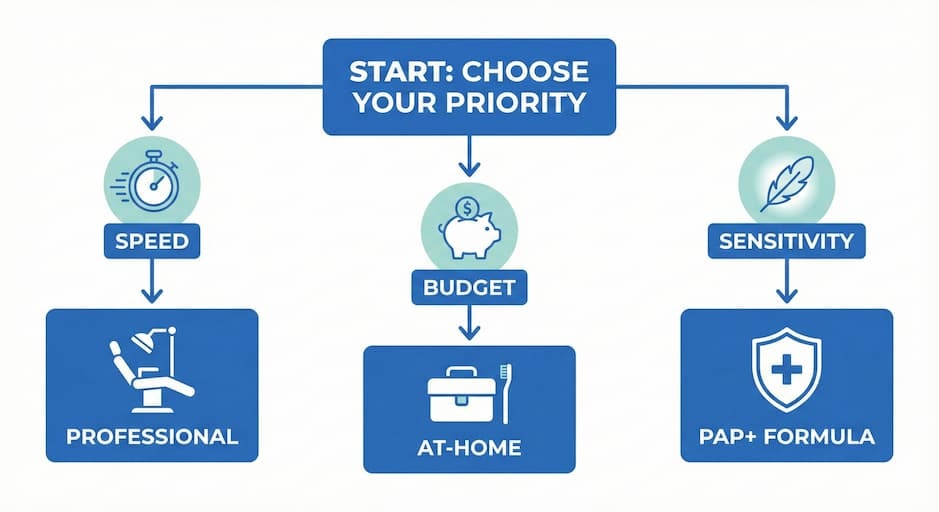
The best method depends on your teeth, goals, and lifestyle. Use this quick guide to help you decide:
-
Need fast results? Try a professional in-office treatment with blue LED
-
Want to save money? Go for at-home kits using lower hydrogen peroxide or PAP+
-
Sensitive teeth? Choose a gentle PAP+ system
-
Deep internal stains? Speak with a dentist about other options, like veneers
Whichever option you choose, remember that consistency and proper care are key to lasting results. Use a trusted product, follow directions, and give your smile the support it needs to stay bright.
Final Thoughts
A brighter, healthier-looking smile doesn’t have to mean harsh ingredients or expensive office visits. Whether you're just starting your whitening journey or looking to maintain past results, blue light whitening offers a safe, effective, and modern solution. With the right system, you can minimize sensitivity, protect your enamel, and get real, visible results from the comfort of your home.
SNOW’s complete whitening collection is designed to support every stage of the process, from their gentle LED Whitening Kits and Wireless Systems to their enamel-friendly PAP+ Toothpaste and Whitening Serums. Each product is formulated to work together and fit seamlessly into your routine.
Whiten on your terms, protect your smile, and enjoy the confidence that comes with clean, glowing teeth, no matter your lifestyle or starting shade.
Explore SNOW’s Complete Whitening System
Frequently Asked Questions
We’ve got quick, clear answers to the ones everyone asks.
Does the blue light itself whiten my teeth without gel?
No, blue LED or violet light alone does not whiten your teeth without gel. Light activation only activates the whitening gel and accelerates the chemical reaction. You need both the gel and light for the whitening treatment to work effectively.
How often can I safely do blue light teeth whitening at home?
You can safely use most at-home LED systems daily or every other day for 1 to 4 weeks. After that, take a break and perform touch-ups only monthly or seasonally to avoid enamel wear and sensitivity. Always follow your product’s instructions or ask a dentist if unsure.
Will blue light whitening work on crowns, veneers, or bonding?
No, blue light whitening does not work on veneers, crowns, or bonding. It only whitens natural enamel, so restorations may stay darker than the surrounding teeth, creating an uneven look. Speak with a dentist if you have visible dental work before beginning any whitening treatment.
Is blue light whitening safe during pregnancy or breastfeeding?
Blue light whitening is not recommended during pregnancy or breastfeeding. There is insufficient safety data on peroxide use in these cases, and most experts recommend waiting until after this period. The caution is due to potential risks from gel absorption, not the LED light itself.
At what age is blue light whitening appropriate for teens?
Blue light whitening is typically recommended for teens aged 14 and older. By this age, all permanent teeth have erupted, and the enamel is more developed, making the process safer. Younger users should wait or only proceed under a dentist’s supervision.


