

Yes, green tea stains teeth, though the discoloration is typically grayer and duller than the yellow stains caused by coffee. Learning how tea staining compares to coffee can help you understand which beverage poses a greater risk to your smile.
This guide explains why tannins bind to your enamel, how green tea compares to other beverages, and 5 specific strategies to prevent discoloration while enjoying your daily cup
Key Takeaways
-
Green tea can stain your teeth, but causes less discoloration than black tea, coffee, or red wine
-
Tannins in green tea create grayish stains on tooth enamel over time with regular consumption
-
Green tea offers significant health benefits, including antioxidants and antibacterial properties that support oral health
-
Simple prevention strategies like rinsing with water and using a straw can minimize staining while preserving green tea’s benefits
-
Professional whitening treatments can effectively remove existing green tea stains when preventive measures aren’t enough
Does Green Tea Actually Stain Your Teeth?
Yes, green tea can stain your teeth, but the discoloration tends to be more subtle than stains caused by black tea, coffee, or red wine, where targeted whitening options for coffee drinkers can help lift deeper pigments, or red wine. Instead of deep yellow or brown staining, green tea stains typically appear as a soft grayish film that gradually dulls your natural tooth color.
This is most noticeable in people who drink green tea regularly, especially without rinsing afterward or maintaining consistent oral hygiene. While green tea has many oral health benefits, such as fighting bacteria and reducing inflammation, it still contains natural compounds that can adhere to enamel and cause mild tooth discoloration over time.
For most people, occasional drinking won't cause visible stains. But if you drink green tea daily, it’s essential to take steps to reduce staining. Simple habits like rinsing your mouth with water, using a straw for iced tea, or brushing twice a day with a whitening toothpaste can help keep your smile bright.
Why Green Tea Can Stain Your Teeth?
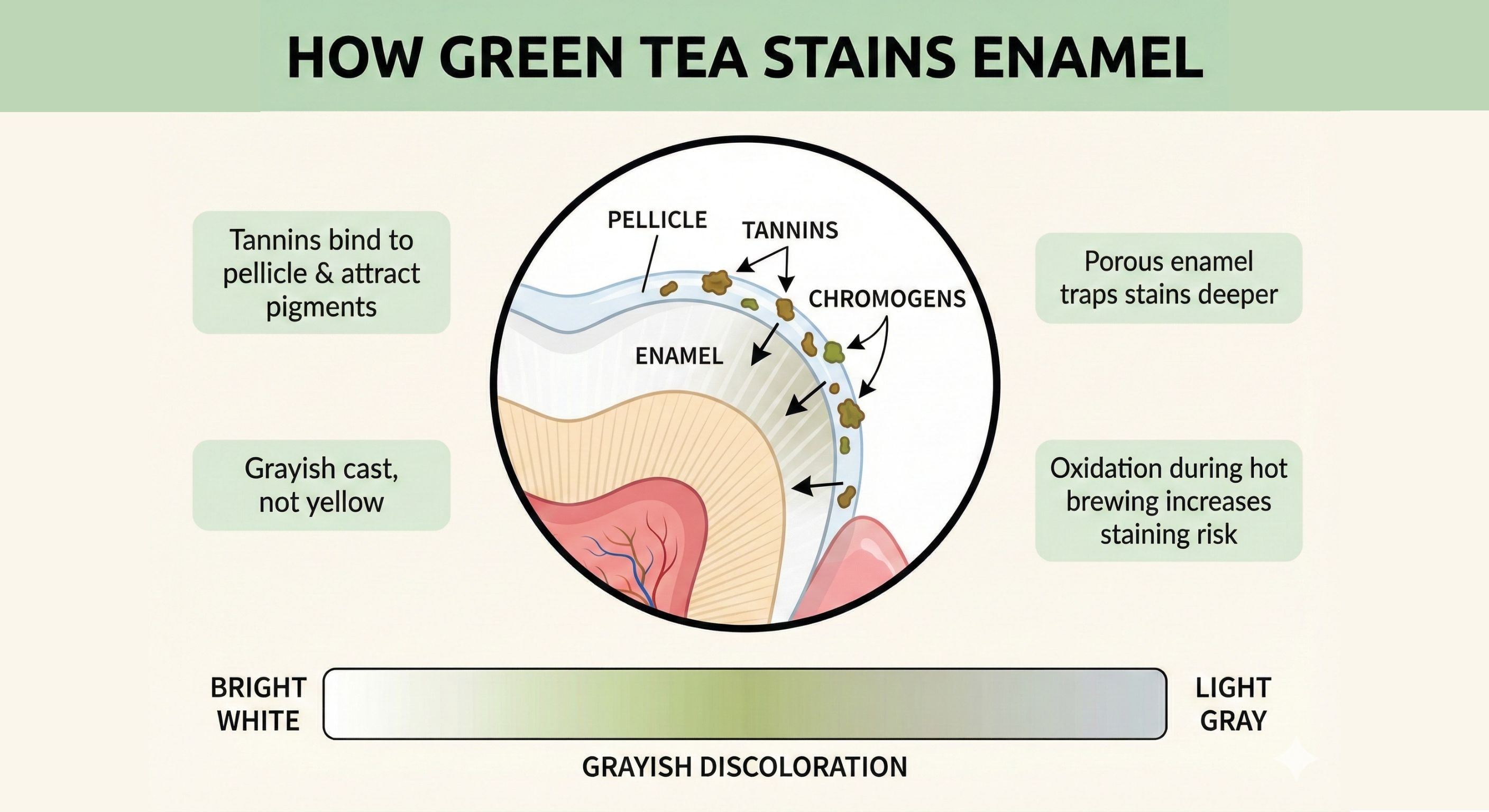
Green tea causes discoloration primarily due to tannins, plant-based compounds that bind to the teeth. These tannins adhere to the pellicle (the protein film on tooth enamel) and attract chromogens, which are pigmented molecules that darken the tooth surface.
Although green tea contains fewer tannins than black tea, this accumulation creates a distinct grayish cast over time rather than the yellowing seen with coffee.
1. Tannins Bind to Tooth Surfaces
According to Dr. S. Katz, tannins in green tea bind to the dental pellicle, attracting pigments that lead to grayish discoloration. These tannins stick to a thin layer on your teeth called the pellicle.
Once attached, they:
-
Create a sticky film on your enamel
-
Attract and hold on to pigments from the tea
-
Begin the staining process even after just a few days of daily drinking
Even though green tea has less tannin than black tea, repeated exposure can still lead to staining.
2. The Stains Are Usually Gray, Not Yellow

The type of stain from green tea is different from that of coffee or red wine:
-
Clinical observations from Oxboro Family Dental note that while black tea causes yellow-brown stains, green tea typically results in a subtler, gray discoloration.
-
Coffee and black tea usually cause yellow or brown stains
-
These gray stains may look less evident at first, but can build up over time
This is why your smile may seem less bright even if you brush regularly.
3. Your Enamel's Porosity Affects Staining
Tooth enamel has tiny pores, and some people naturally have more porous enamel than others. If your enamel is porous:
-
Tannins and pigments can soak deeper into the tooth
-
Stains become harder to remove
-
You may notice discoloration faster than others
Enamel thickness and texture are often influenced by genetics and age.
4. Oxidation During Brewing Increases Staining
When you brew green tea, especially with hot water:
-
Catechins (a type of antioxidant in green tea) can oxidize
-
Oxidation changes the color of the tea and increases its ability to stain
-
This makes brewed green tea more likely to stain than cold or lightly steeped tea
The longer you brew, the more likely it is to stain your teeth.
Green Tea vs. Other Drinks: How It Compares for Teeth Staining
Green tea is a 'moderate' stainer, causing significantly less discoloration than black tea or coffee. Black tea has a pH of 4.9–5.5 and high tannin levels, leading to deep yellow-brown stains, whereas green tea has a more neutral pH (7–10) and creates milder, gray surface stains.
This makes green tea a safer alternative for enamel health, though it still requires preventive care to maintain a white smile.
The table below compares green tea's staining potential, main compounds, and typical stain color with those of other popular beverages known to cause discoloration.

This comparison shows that green tea is a moderate stainer, but much less harsh than many other drinks. With proper oral care and simple prevention strategies, you can still enjoy green tea without sacrificing your smile.
What Are the Oral Health Benefits of Green Tea?
Green tea might slightly stain your teeth, but its health benefits far out
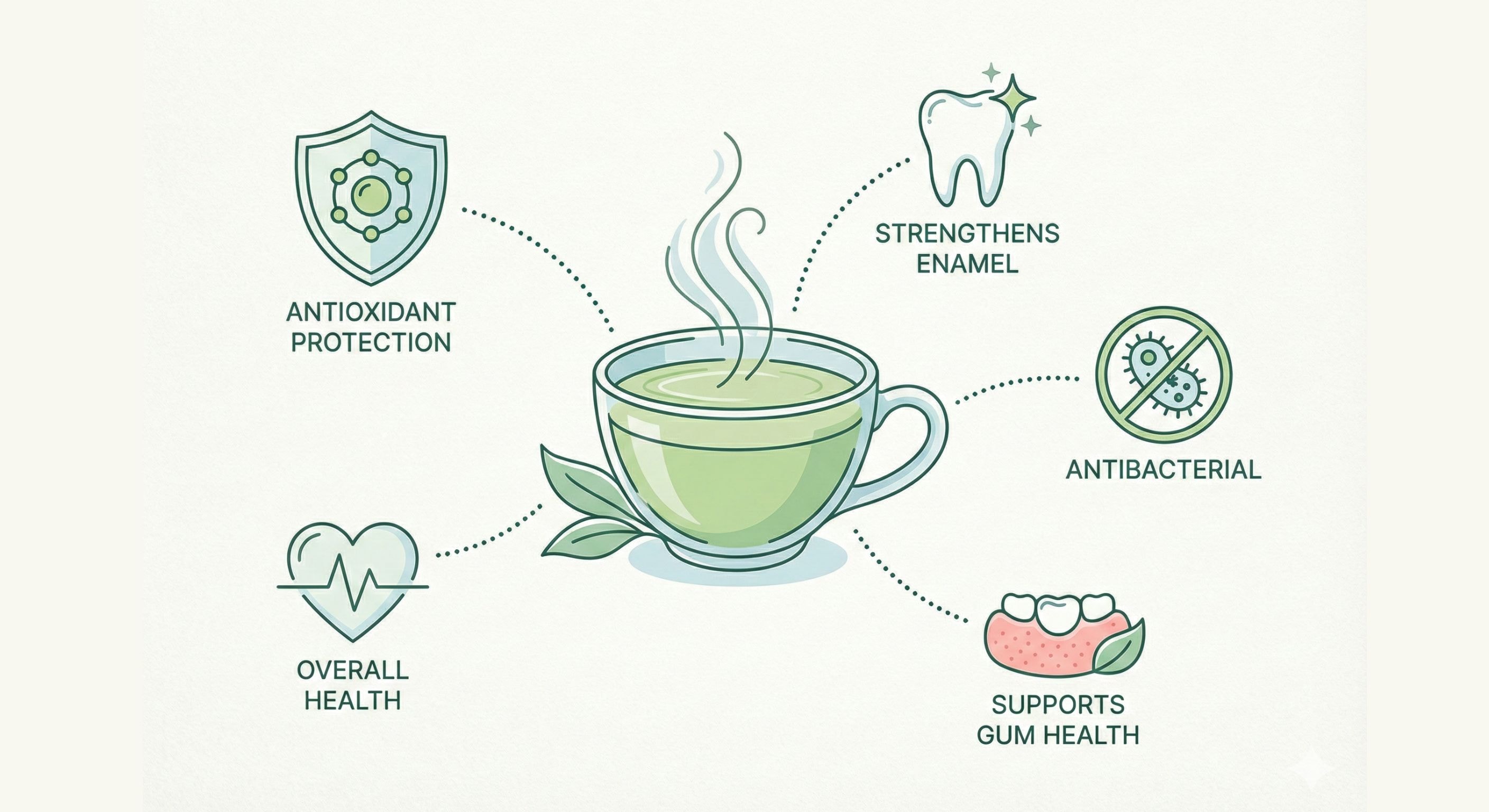
weigh this cosmetic concern, especially when paired with consistent oral care.
1. Rich in Antioxidants That Support Oral Health
Green tea contains powerful antioxidants, particularly catechins like EGCG (epigallocatechin gallate), which help fight harmful bacteria in the mouth. Studies show these compounds can reduce levels of bacteria that cause bad breath, tooth decay, and gum inflammation, supporting better oral health overall.
2. Natural Antibacterial Properties
Green tea’s polyphenols help disrupt bacterial growth, limiting plaque formation and promoting a cleaner mouth environment. This antibacterial action helps protect tooth enamel and can reduce the chance of cavities when green tea is consumed as part of a healthy lifestyle.
3. May Strengthen Enamel Naturally
A 2025 review in Applied Sciences confirms that green tea leaves contain significant fluoride, with infusions releasing between 0.06 to 5.99 mg/L depending on brewing time.
Though not a replacement for fluoride toothpaste, regularly drinking tea can add an extra layer of enamel support when combined with daily brushing and flossing.
4. Reduces Inflammation in Gums
The anti-inflammatory compounds in green tea may help ease gum sensitivity and reduce the risk of gum disease. For tea drinkers with tooth sensitivity, this soothing benefit can offer additional comfort beyond what other beverages provide.
5. Supports Overall Health Beyond Your Mouth
Beyond oral care, green tea supports metabolism, heart health, and immune function. If you're weighing it against coffee or soft drinks, green tea is clearly the better alternative, offering energy and focus without added sugar or excessive acidity.
How Can You Prevent Green Tea Stains in Teeth?

If you love your daily cup of green tea but worry about how it might stain your teeth, you're not alone. Green tea stains tend to build up slowly, and while they’re not as severe as those from coffee or black tea, they can still dull your bright smile over time. Fortunately, there are simple and effective ways to prevent tea stains without giving up your favorite drink.
Here are practical, research-backed tips to keep your enamel healthy and your teeth looking their best.
1. Rinse Your Mouth Right After Drinking
The easiest and most important habit? Rinse your mouth with water immediately after drinking tea. This helps wash away tannins before they can bind to your enamel and cause surface stains.
Swish the water around your mouth for about 30 seconds, especially over your front teeth, where tea stains are most visible. Doing this can reduce the tea’s staining potential significantly.
For extra stain protection, consider using SNOW Whitening Mouthwash a few times per week. It targets surface stains and supports overall oral health without causing tooth sensitivity.
Try SNOW’s Gentle Whitening Rinse For Everyday Stain Prevention.
2. Use a Straw (Especially for Iced Tea)
Drinking tea through a straw is a simple but powerful trick. It helps minimize contact between the tea and your teeth, especially the visible front surfaces. This is most effective with iced green tea, smoothies, or other drinks that might lead to tooth discoloration.
Position the straw toward the back of your mouth to prevent tannins from settling on your enamel. This one small change can make a big difference over time.
Want to reverse old stains? Use the SNOW LED Teeth Whitening Kit for professional-level whitening at home.
Shop SNOW’s Bestselling Kit to Restore Your Beautiful Smile
3. Wait Before You Brush
After drinking tea, your enamel may become slightly softened due to its natural acidity. Brushing right away can actually scrub the softened enamel, making it thinner and more vulnerable to stains and tooth sensitivity.
To avoid damaging weakened enamel, Dentists recommend waiting 30–60 minutes before brushing because, as noted by Manor House Dental, immediate brushing on enamel softened by mild acidity can accelerate wear and erosion.
If you’re concerned about freshness in the meantime, rinse your mouth with water or chew sugar-free gum to boost saliva production.
4. Add Milk to Your Tea
Adding milk to green tea significantly reduces staining because casein, a milk protein, binds to the tannins before they can adhere to the tooth enamel.
Research has shown that this can significantly reduce surface stains, particularly in green and black tea. It’s a wise choice for people who drink tea several times a day and want to protect their oral health while still enjoying their favorite beverage.
5. Choose Lighter Teas and Don’t Over-Steep
Not all teas stain your teeth equally. Green tea contains fewer dark pigments than black or red teas, but stronger varieties like matcha or over-steeped green tea can still have high tannin levels.
To reduce staining effects, choose lighter green teas like Sencha or white tea, and steep for only 2–3 minutes. Oversteeping pulls more tannins into your cup, increasing the risk of staining.
Also, avoid combining green tea with citrus fruits or other acidic flavorings, as these can further soften enamel and allow tannins to adhere more readily.
What Daily Habits Protect Your Smile?
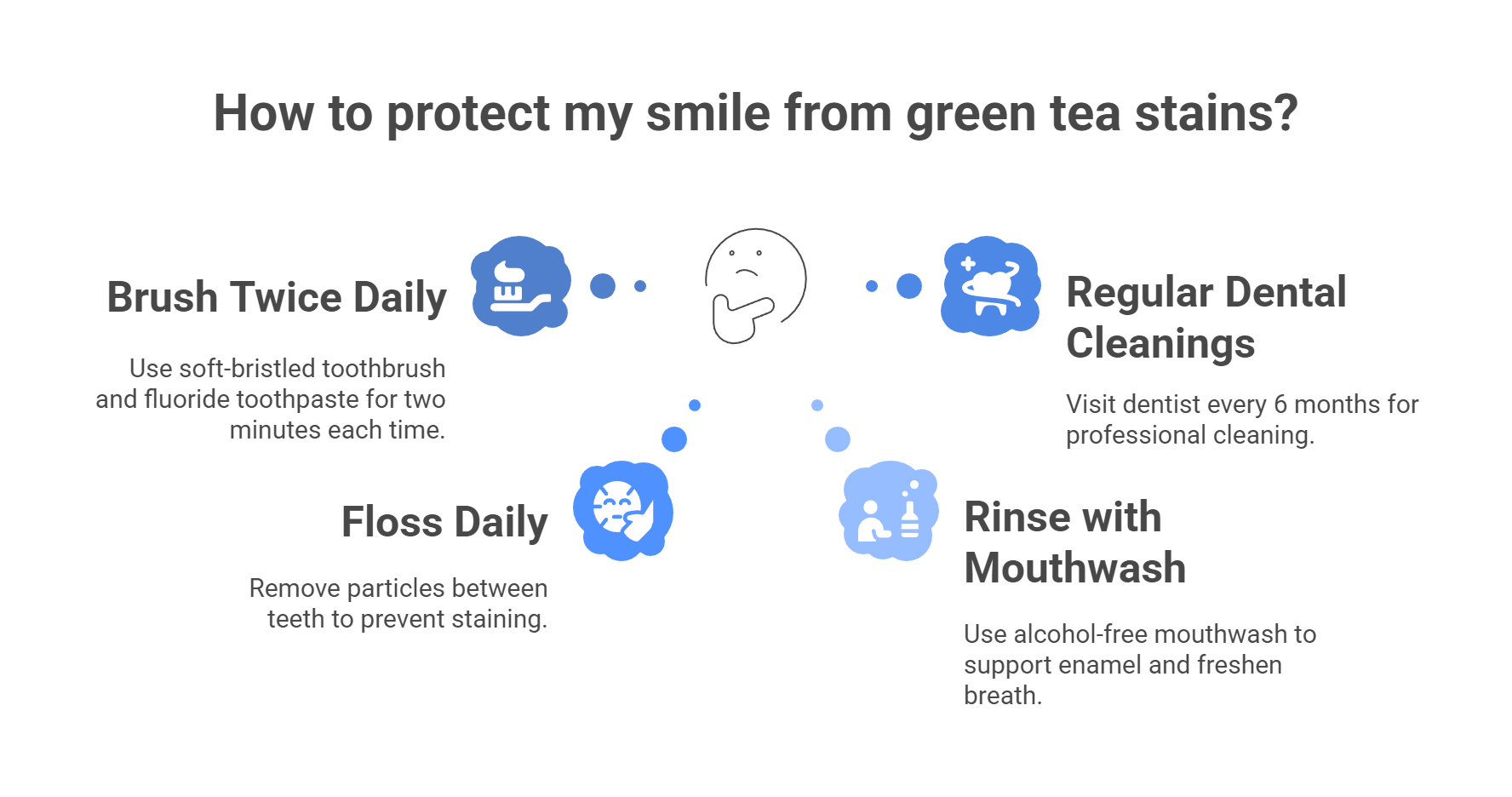
If you enjoy green tea daily, your oral hygiene habits are the foundation for keeping your teeth healthy and your smile bright. While stain prevention helps reduce contact, consistent daily care removes buildup and keeps surface stains from setting in.
Brush Your Teeth Twice A Day Using The Proper Technique
Use a soft-bristled toothbrush and fluoride toothpaste to brush for two full minutes in the morning and before bed. Pay extra attention to your front teeth, which are more prone to visible stains. Brushing too hard can wear down enamel, so use gentle pressure.
Floss Daily To Prevent Staining Between Teeth
Tea stains can settle in tight spots between your teeth where brushing doesn’t reach. Flossing every day removes trapped particles and keeps your gum line clear of buildup that can darken over time.
Rinse With An Alcohol-Free Mouthwash
Use a mouthwash that supports enamel and freshens breath without drying out your mouth. A dry mouth can reduce saliva flow, making teeth more vulnerable to stains. A whitening rinse can also help reduce surface discoloration.
Keep up with regular dental Cleanings
Visit your dentist every 6 months for professional cleanings. These appointments remove hardened plaque and stains that brushing and flossing can’t reach. They’re essential for tea drinkers who want to avoid long-term discoloration.
How Can You Remove Existing Tea Stains?
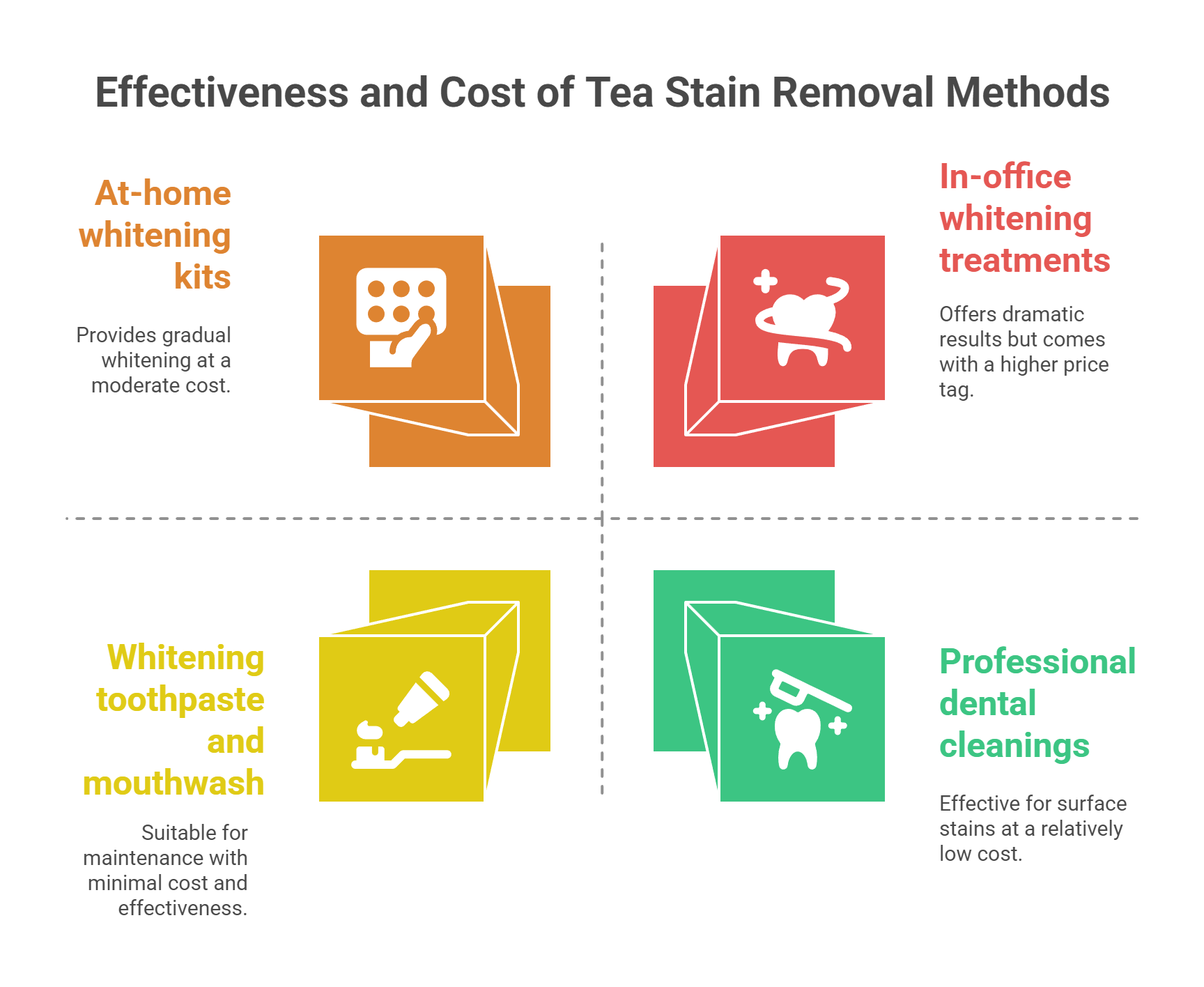
If you already have green tea stains on your teeth, several effective treatment options can help restore your bright smile. The key is choosing the right approach based on the severity of your staining and your individual needs.
-
Professional dental cleanings remain the first line of treatment for surface stains. During regular cleanings every six months, your dental hygienist can remove surface stains and plaque buildup that make discoloration more apparent. These cleanings are particularly effective for green tea stains since they tend to be less deeply embedded than stains from coffee or red wine.
-
In-office whitening treatments offer the most dramatic results for existing stains. Professional teeth whitening can lighten stains by 3-8 shades in a single session, effectively removing years of accumulated discoloration. These treatments use higher concentrations of whitening agents than over-the-counter products, making them particularly effective for stubborn tea stains that haven’t responded to regular cleaning.
-
At-home whitening kits prescribed by dentists provide a middle ground between professional treatments and store-bought products. These custom-fitted trays and professional-strength gels allow for gradual stain removal over several weeks. This option works well for people with tooth sensitivity or those who prefer a more gradual whitening process.
-
Whitening toothpaste and mouthwash serve as maintenance tools between professional treatments. Look for products containing gentle abrasives that can remove surface stains without damaging enamel. These products work best for preventing new stains and maintaining results from professional whitening rather than removing significant existing discoloration.
-
When to consult a dentist - If you notice persistent staining despite good oral hygiene, or if you experience tooth sensitivity along with discoloration, consult your dentist. They can determine whether your staining requires professional intervention and rule out other causes of tooth discoloration. Professional guidance is essential if you’re considering whitening options, as some treatments may not be appropriate for everyone.
It’s worth noting that some staining may be intrinsic (within the tooth structure) rather than extrinsic (on the surface), particularly if you have weakened enamel or other dental issues. Your dentist can help distinguish between different types of staining and recommend the most appropriate treatment approach for your specific situation.
Final Thoughts
Green tea is one of the healthiest drinks you can enjoy, but it’s not completely harmless for your smile. While the stains it causes are milder than coffee or black tea, they can still dull your teeth over time. The good news is that with a few simple habits, like rinsing after drinking, adjusting your oral care routine, and using preventive techniques, you can keep enjoying your daily cup without sacrificing a bright smile.
And if discoloration has already set in, it’s never too late to reverse it. Whether you choose professional cleanings, whitening treatments, or just want to maintain a cleaner-looking smile at home, there are plenty of options available.
One of the most effective ways to tackle tea stains at home is with SNOW Teeth Whitening. Their at-home whitening systems are gentle on enamel but powerful enough to lift years of staining from tea, coffee, and other drinks.
Get SNOW Teeth Whitening Kit Today!
FAQ
Have questions? No worries, our team at SNOW is here to help!
How long does it take for green tea to stain teeth?
Green tea stains typically develop gradually over 2-4 weeks of daily consumption without proper oral hygiene. The staining process is cumulative, with tannins building up on tooth enamel over time. Individual factors like enamel porosity, saliva production, and oral care habits affect how quickly stains appear. Research shows that visible discoloration can occur after just 72 hours of continuous exposure in laboratory conditions, but real-world staining develops much more slowly under typical consumption patterns.
Can I drink green tea at night without increasing staining risk?
Drinking green tea at night doesn’t significantly reduce staining compared to drinking it during the day. The key factor is oral hygiene after drinking tea, not the time of day. If you drink green tea before bed, rinse with water and maintain your regular brushing routine to minimize tannin buildup on teeth overnight. However, drinking tea close to bedtime may interfere with sleep due to caffeine content, so timing should consider both dental and sleep health factors.
Are there specific green tea types that cause less staining?
White tea and lighter green tea varieties like Sencha tend to have lower tannin levels than darker varieties like Gyokuro or aged green teas. Japanese green teas are often steamed rather than pan-fired, which can result in slightly lower tannin content. However, all true teas from the Camellia sinensis plant contain some staining compounds. Herbal teas that don’t contain actual tea leaves may be less likely to stain teeth, though they don’t provide the same health benefits as authentic green tea.
Will switching from coffee to green tea improve my tooth color?
Switching from coffee to green tea may reduce new stain formation since green tea has lower tannin levels and less acidity. However, existing coffee stains won’t disappear on their own. You’ll need professional whitening or consistent stain-removal products to address current discoloration while preventing new green tea stains. The transition can be beneficial for long-term oral health, but addressing existing stains requires active treatment beyond simply changing beverages.
Do green tea supplements avoid the staining problem entirely?
Green tea supplements in capsule form bypass direct tooth contact, eliminating staining risk while providing many health benefits. However, supplements don’t offer the same oral health benefits as drinking green tea, such as the natural fluoride content and antibacterial effects from direct mouth contact. Consider supplements if staining is a primary concern, but you’ll miss out on some of the oral health advantages that come from actually drinking the tea. Combining supplements with occasional tea consumption and good preventive care might offer the best of both approaches.


