
To prevent and treat wine-stained teeth, you must neutralize acidity before brushing and use oxidation-based whitening agents to lift settled pigments. While red wine contains anthocyanins that dye enamel, white wine erodes the surface, making teeth more porous and susceptible to staining.
This guide explains the chemistry of wine stains, why immediate brushing causes damage, and which ingredients effectively reverse discoloration.
Why Does Red Wine Stain Teeth? (And How Does White Wine Contribute?
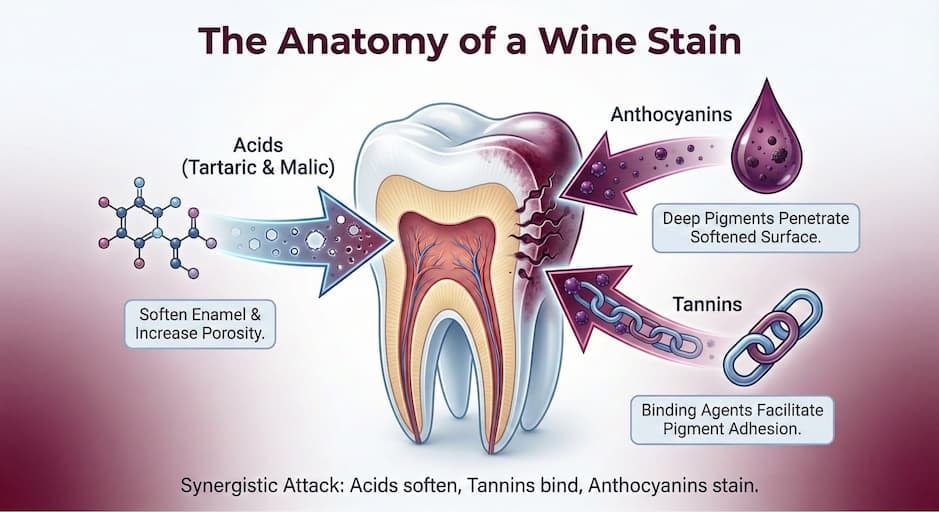
Wine-stained teeth aren’t just a surface issue. According to a 2022 study published in the National Library of Medicine, wine stains result from a chemical process that weakens and discolors tooth enamel over time. When you drink red wine, your teeth face a combination of acid, pigment, and tannins that work together to cause staining.
Red wine stains teeth through a synergistic attack involving three distinct components:
-
Acids (Tartaric & Malic): These lower the mouth's pH to 3.0–4.0, softening enamel and increasing porosity.
-
Anthocyanins: These are the deep purple/red pigments that penetrate the softened enamel surface.
-
Tannins: These binding agents facilitate the adhesion of pigments to the tooth structure.
In short, both red and white wines can stain. Red wine provides pigment and tannins, while white wine creates conditions that allow stains to take hold more easily. This is why wine stains are particularly stubborn and why a more strategic approach is needed beyond traditional teeth-whitening methods.
How Do Wine Stains Differ From Other Surface Stains?
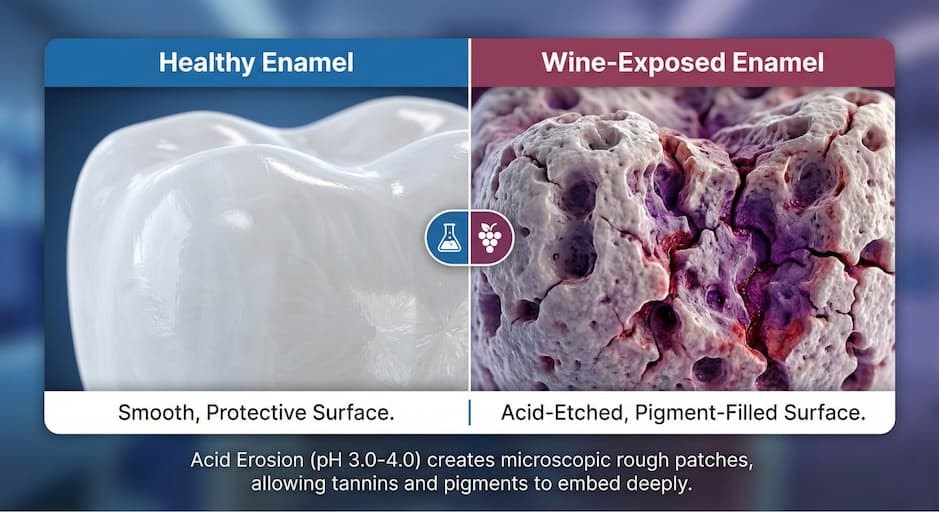
Wine stains differ from standard food stains because they utilize a 'double-action' mechanism of acidic etching followed by pigment binding.
Unlike coffee, which primarily deposits tannins on the surface, wine acids (pH 3.0–4.0) microscopically roughen the enamel, creating deep channels for anthocyanins and tannins to inhabit.
This physical alteration of the tooth surface makes wine stains significantly harder to remove with standard brushing than other extrinsic stains.
1. Acidic Erosion Softens Enamel
Data from Food Chemistry indicates that white wine has a surprisingly low pH of 3.0–3.4, making it highly acidic.
This acid begins to erode enamel the moment it comes into contact with your teeth. Once the enamel is softened and more porous, it becomes easier for pigments from later drinks or meals—like coffee, black tea, or red wine—to settle deep into the surface.
Even though white wine doesn’t appear to stain your teeth directly, it creates the perfect environment for future discoloration.
2. No Pigment, But Major Enamel Impact
White wine doesn’t contain anthocyanins or dark natural dyes like red wine does. However, that doesn’t make it safer. Its erosive power lies in its ability to alter the structure of your enamel chemically. When enamel loses minerals, it becomes rough and vulnerable to plaque buildup and extrinsic stains from everyday foods and drinks.
This silent damage often goes unnoticed until you notice yellowing, dullness, or persistent stains that brushing can't fix.
3. Red Wine Becomes Worse After White
Drinking white wine before red wine dramatically increases your risk for noticeable discoloration. The acids in white wine strip away protective enamel layers, allowing pigments and tannins in red wine to penetrate your teeth more quickly and deeply.
This sequencing problem makes white wine a hidden amplifier of red wine stains. If you're planning to enjoy a glass of red, it’s better to skip the white beforehand—or rinse thoroughly before switching to red.
4. Alcohol Reduces Saliva, Weakening Natural Defenses
Like all alcoholic drinks, white wine lowers saliva production. Saliva is your mouth’s natural defense system; it washes away acids, buffers pH, and helps remineralize enamel. When saliva flow drops, your mouth can’t clear acids or protect enamel effectively.
This leaves your teeth exposed longer, increasing the risk of both erosion and future stains, especially if you don’t brush, rinse, or drink water shortly after.
5. Damage Is Easy to Miss, Until It Builds Up
Because white wine doesn’t cause immediate purple or brown staining, its effects often go unnoticed. But even a single glass can begin softening enamel, and repeated exposure adds up. You may not realize the cause of the dullness or new stains on your teeth until discoloration becomes visible or irreversible.
To protect your smile and oral health, it’s essential to treat white wine with the same caution as red, even if the impact isn’t as apparent at first.
Why Can Brushing Your Teeth After Wine Backfire?
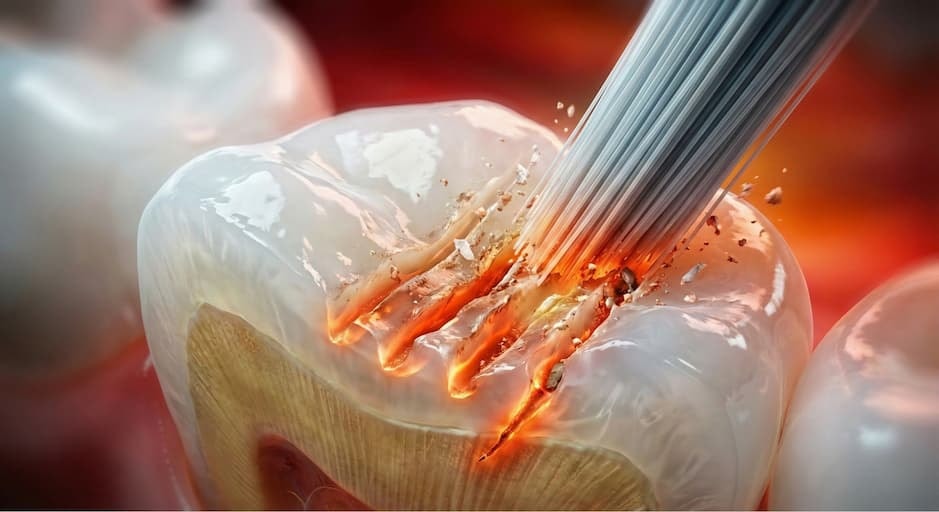
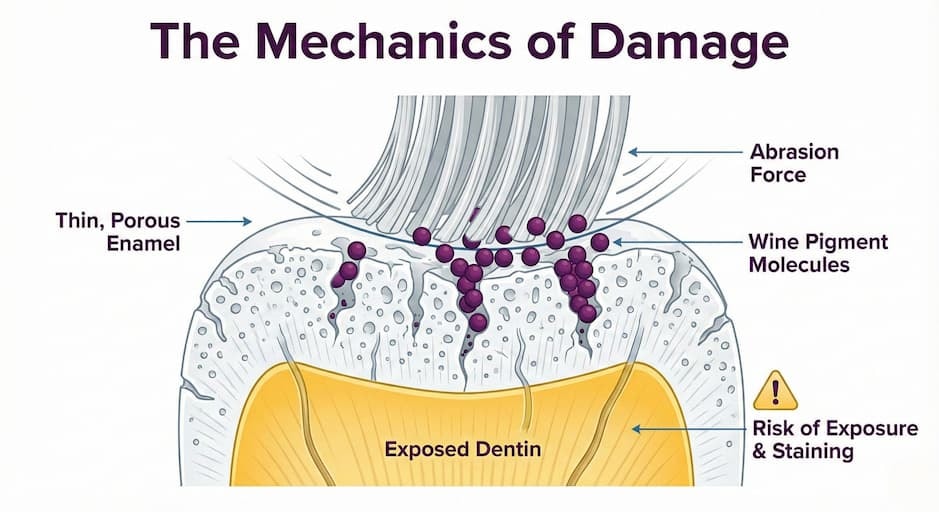
Brushing immediately after drinking wine backfires because the enamel is in a temporarily softened, demineralized state.
Acidic exposure renders the tooth structure vulnerable to abrasion; brushing during this window strips away layers of enamel rather than just removing surface stains.
This abrasion increases porosity, permanently weakening the tooth's defense system and allowing future pigments to penetrate deeper
Here’s why:
1. Enamel is Most Vulnerable Right After Wine
Both red wine and white wine contain acids that soften tooth enamel. When you brush during this softened state, you risk scraping away enamel instead of protecting it. Once lost, enamel doesn’t grow back, and thinner enamel makes stained teeth harder to manage.
2. Brushing Can Push Pigments Deeper
Wine pigments, especially from red wine, settle quickly onto the surface of your teeth. Brushing too soon can embed these pigments deeper into the enamel’s porous structure, making wine stains more permanent and harder to remove later.
3. Toothbrush Abrasion Makes Teeth More Porous
Medium or hard-bristled toothbrushes create microscopic scratches when used on acid-softened enamel. These tiny grooves give future food particles and pigments more surface area to cling to, accelerating discoloration over time.
4. Early Brushing Disrupts Saliva’s Protective Role
Your saliva naturally helps neutralize wine acids and re-harden enamel. Brushing right away interrupts this process, preventing your saliva from repairing the enamel and removing leftover food particles effectively.
5. Increased Sensitivity Over Time
Repeatedly brushing after wine leads to gradual enamel thinning. This not only increases your risk of wine teeth but also makes your teeth more sensitive to temperature and touch, impacting your overall comfort and dental health.
When Is the Best Time to Brush After Wine?
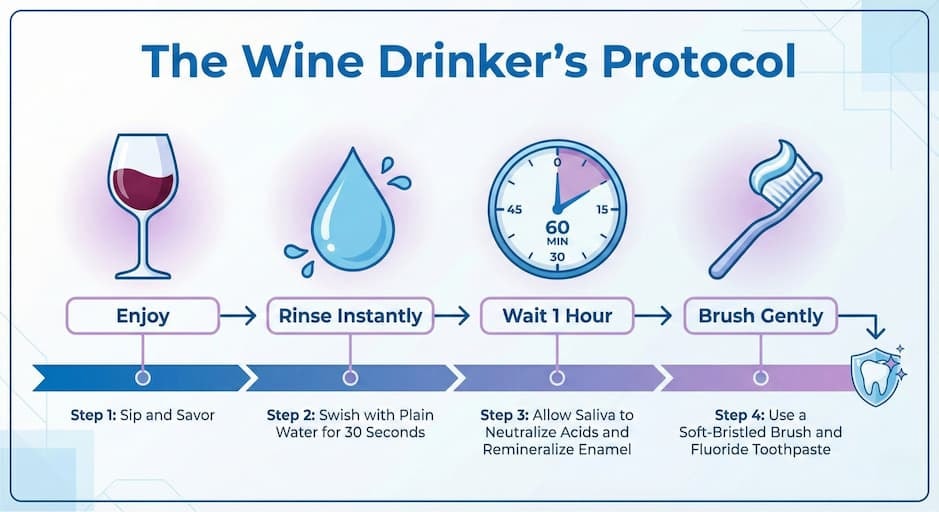
Brushing your teeth too soon after drinking red or white wine can actually make staining worse. That’s because wine acids soften tooth enamel, and brushing during this period may scrub away enamel while locking stains in deeper.
Here’s how to do it right:
1. Wait 45 to 60 Minutes Before Brushing
Let your saliva do its job first. After drinking wine, wait at least 45 minutes before brushing. This helps your enamel recover and reduces the risk of permanent staining.
2. Rinse with Water Right After
Swishing with plain water for 30 seconds helps wash away food particles, acids, and pigment before they settle into your enamel.
3. Use a Gentle Fluoride Mouthwash
After rinsing, use a non-alcoholic fluoride mouthwash to start remineralizing and protect against further staining.
In our product testing and development at SNOW, we formulated the Whitening Mouthwash to be fluoride-rich and alcohol-free.
Our clinical analysis suggests this combination supports enamel strength while lifting early surface stains without the dehydration caused by alcohol-based rinses.
4. Brush with a Soft Brush and Gentle Whitening Toothpaste
Once the wait is over, brush with a soft-bristled toothbrush and low-abrasive fluoride toothpaste.
SNOW Sensitive Whitening Toothpaste uses a peroxide-free formula that’s safe for enamel and helps reduce stains without irritation.
Get SNOW Sensitive Whitening Toothpaste
What Ingredients Actually Help Fight Wine Stains?
When it comes to removing wine stains and preventing noticeable discoloration, ingredients matter. Red wine, white wine, and even sparkling wine can stain your teeth or weaken enamel, but certain clinically backed compounds, especially when paired with the right product, can protect your smile and keep wine from leaving a lasting mark. These SNOW essentials combine science, convenience, and cosmetic-grade whitening results.
Fluoride-Free Toothpaste with Hydroxyapatite
Hydroxyapatite, a naturally occurring mineral in tooth enamel, plays a critical role in reversing acid erosion caused by wine. While wine acids can demineralize your teeth, hydroxyapatite repairs and fills in those weakened areas, helping you maintain strong enamel and reduce the chance of future stains.
SNOW® Fluoride-Free Whitening Vitamin Toothpaste w/ Hydroxyapatite is a dentist-formulated toothpaste that rebuilds enamel without using harsh ingredients like peroxide. It also helps protect against future discoloration from wine and food particles while supporting oral health.
Get Snow’s Enamel-Safe Toothpaste
PAP Whitening Strips with Enamel Support
PAP (phthalimidoperoxycaproic acid) is a non-peroxide whitening ingredient that dissolves wine pigments safely without triggering sensitivity. Unlike hydrogen peroxide, which can irritate the mouth and weaken enamel over time, PAP gently targets extrinsic stains like those caused by red wine, black tea, and other drinks.
DiamondSeries® Dissolving Teeth Whitening Strips with Hydroxyapatite combine PAP with enamel-repairing minerals to remove stains and reinforce tooth structure simultaneously. These are perfect for frequent wine drinkers looking for whitening without damage.
For even more brilliance, Purple Dissolving Teeth Whitening Strips brighten your smile while protecting enamel using SNOW’s patented technology.
Get Snow’s Peroxide-Free Whitening Strips
Teeth Whitening Kit for Sensitive Teeth
If you love red wine but struggle with sensitivity, you’ll want a whitening treatment that’s strong on stains but gentle on your enamel. Potassium nitrate, often used to reduce nerve sensitivity, helps calm irritated nerves after wine acids have lowered saliva production and exposed enamel.
DiamondSeries® Teeth Whitening Kit with Hydroxyapatite & Potassium Nitrate delivers professional-grade results with three whitening serums. The formula includes potassium nitrate to reduce discomfort and hydroxyapatite to restore tooth enamel after every session. It’s ideal for anyone who wants to treat wine stains without triggering pain or long-term damage.
Get Snow’s Expert-Grade Whitening Kit
Whitening Boosters with Magic Powder
Red wine, especially varieties like cabernet or pinot noir, often leaves extrinsic stains on the enamel’s outer layer. Baking soda and other abrasives can be too harsh, especially when enamel is already softened. Instead, polishing minerals combined with hydroxyapatite gently remove surface stains while restoring enamel.
Magic Whitening Toothpaste Booster® Powder with Hydroxyapatite lets you sprinkle or dip into any toothpaste to enhance stain removal without damaging enamel. The powder targets stains on your teeth from wine, coffee, and natural dyes while helping remineralize the enamel.
Purple Brightening Magic Whitening Toothpaste Booster® Powder offers the same benefits with a slight violet tint to instantly neutralize yellowish hues and brighten your smile between treatments.
Get Snow’s Enamel-Safe Whitening Booster
Extra-Strength Whitening Pen for On-the-Spot Stains
Some wine stains appear fast after just one glass of red wine and settle into the enamel. For a fast fix that doesn’t require trays or strips, SNOW’s serum pen is the perfect tool. It’s designed to target specific areas of noticeable discoloration and works on both extrinsic stains and deeper discoloration.
Extra-Strength Whitening Gold Serum Pen uses a dual-peroxide formula that’s strong enough to lift wine stains but designed with sensitivity in mind. It’s great for people who want whitening on the go after wine tastings, dinner events, or long weekends of indulgence.
Get Snow’s Targeted Whitening Serum
Final Thoughts
Red wine stains don’t have to mean the end of a bright smile. With a better understanding of how wine affects enamel and a few smart changes to your routine, you can enjoy your favorite glass without worrying about long-term discoloration.
For extra support, SNOW’s dentist-developed whitening products help gently remove stains and protect enamel without harsh ingredients or sensitivity. Whether you need a quick fix or a full whitening system, SNOW offers safe, effective solutions you can trust.
Shop Snow’s Enamel-Safe Whitening Lineup
FAQ
If you have more questions about wine-stained teeth, our team at SNOW is happy to help!
How long after drinking wine should I wait before brushing my teeth to avoid enamel damage?
You should wait 45 minutes to 1 hour after drinking wine before brushing your teeth. Wine’s acidity temporarily softens your tooth enamel, and brushing during this vulnerable period can cause mechanical abrasion and additional enamel loss. Instead, rinse gently with water immediately after wine consumption and wait for your saliva to neutralize the acids and begin remineralizing the enamel before brushing.
Can drinking wine through a straw effectively prevent tooth staining?
Drinking wine through a straw can reduce direct contact between wine and your teeth, potentially minimizing both staining and acid exposure. However, this method has significant limitations—it doesn’t prevent wine from contacting your teeth entirely, and it may interfere with the tasting experience that wine enthusiasts value. While straws can be helpful for casual consumption, they’re not practical for wine tasting or social drinking situations.
Are there specific toothpaste ingredients that work better for preventing wine stains?
Fluoride toothpastes provide the best foundation for wine stain prevention by strengthening enamel against acid erosion. Look for toothpastes containing calcium carbonate or hydroxyapatite, which help remineralize enamel. Avoid highly abrasive whitening toothpastes if you drink wine regularly, as they can increase enamel porosity and make teeth more susceptible to staining. Toothpastes with enzymes like papain can help break down surface proteins that tannins use to anchor stains.
What is the recommended frequency for professional dental cleanings if I drink wine regularly?
Wine enthusiasts should consider professional dental cleanings every 3 to 4 months rather than the standard 6-month interval. Regular wine consumption increases plaque buildup (which provides a surface for tannins to bind stains) and contributes to enamel erosion that requires professional monitoring. Professional wine tasters may benefit from even more frequent cleanings—every 2 to 3 months—along with specialized fluoride treatments to protect against occupational dental damage.
How do wine stains compare to coffee and tea stains in terms of permanence and removal difficulty?
Wine stains are generally more persistent and difficult to remove than coffee or tea stains due to their triple-action mechanism involving acids, tannins, and chromogenic pigments. While coffee and tea primarily create surface stains through tannin binding, wine’s acidity opens enamel pores, allowing deeper pigment penetration. Coffee stains (pH 4.85-5.10) and tea stains (pH 6.37-6.95) are less acidic than wine (pH 3.0-4.0), making them easier to remove through conventional whitening treatments. Wine stains often require professional intervention for complete removal, while coffee and tea stains may respond better to at-home whitening products.