

A brighter smile should not force you to rearrange your day. Purple whitening strips promise a fast tone refresh, but the experience can feel very different once wear time, removal, and formula enter the picture.
At SNOW, we make premium whitening easier to fit into real life. This comparison explains how SNOW Purple Strips and Dr. Dent Purple Whitening Strips differ, where their formulas overlap, and which routine may suit your priorities.
Key Takeaways
-
Both options use violet pigment to visually balance yellow tones and create an immediate color-correcting effect.
-
SNOW Purple Strips dissolve in about 15 minutes, so there is nothing to peel off or rinse away.
-
Dr. Dent uses PAP in a peroxide-free strip that stays on for 30 to 60 minutes before removal.
-
SNOW suits quick touch-ups, travel, photos, and busy routines; Dr. Dent suits a longer, planned whitening session.
-
The best choice depends on format, time, and ingredient preference rather than purple pigment alone.
SNOW vs Dr. Dent Purple Whitening Strips at a Glance
Both products pair purple color correction with a whitening-focused formula. The clearest differences show up in the active ingredients, session length, and what happens when the timer ends.
|
Feature |
SNOW Purple Strips |
Dr. Dent Purple Strips |
|---|---|---|
|
Color correction |
Violet pigment |
Violet pigment |
|
Formula focus |
P3 Technology and hydroxyapatite |
PAP, hydroxyapatite, and potassium citrate |
|
Peroxide |
Check current label before use |
Peroxide-free |
|
Typical wear time |
About 15 minutes |
30 to 60 minutes |
|
Format |
Dissolving strip |
Peel-off strip |
|
Removal or rinse |
Not needed |
Remove after wear |
|
Best routine fit |
Fast touch-ups and on-the-go use |
Longer planned sessions |
How SNOW Purple Strips Work
SNOW focuses on speed and a low-mess finish. The strip presses onto the upper or lower teeth, stays in place while it dissolves, and does not leave a plastic backing to remove.
Color Correction and Surface Stain Care
Our dissolving purple strips use violet pigment for instant optical brightening, plus P3 Technology and hydroxyapatite in the formula to support enamel health and remineralization. The purple tint visually balances yellow tones, while the whitening-focused ingredients help lift the look of surface stains. This is cosmetic brightening, not a dental treatment.
That distinction matters. Purple pigment can change how yellow tones look right away, but it does not replace professional whitening or change the natural structure of your teeth.
A 15-Minute Dissolving Format
SNOW strips dissolve in about 15 minutes, though timing can vary by person. Once the strip has dissolved, there is no backing to peel off and no strip to throw away. That makes the format easy to use before photos, on a commute, or while getting ready for an event.
The product is built for people who have skipped whitening in the past because the routine felt too fussy. SNOW has shipped more than 100 million treatments worldwide, and the Purple Strips bring that same results-first approach to a portable color-correcting format. Use them as directed and stop if discomfort occurs.
How Dr. Dent Purple Whitening Strips Work
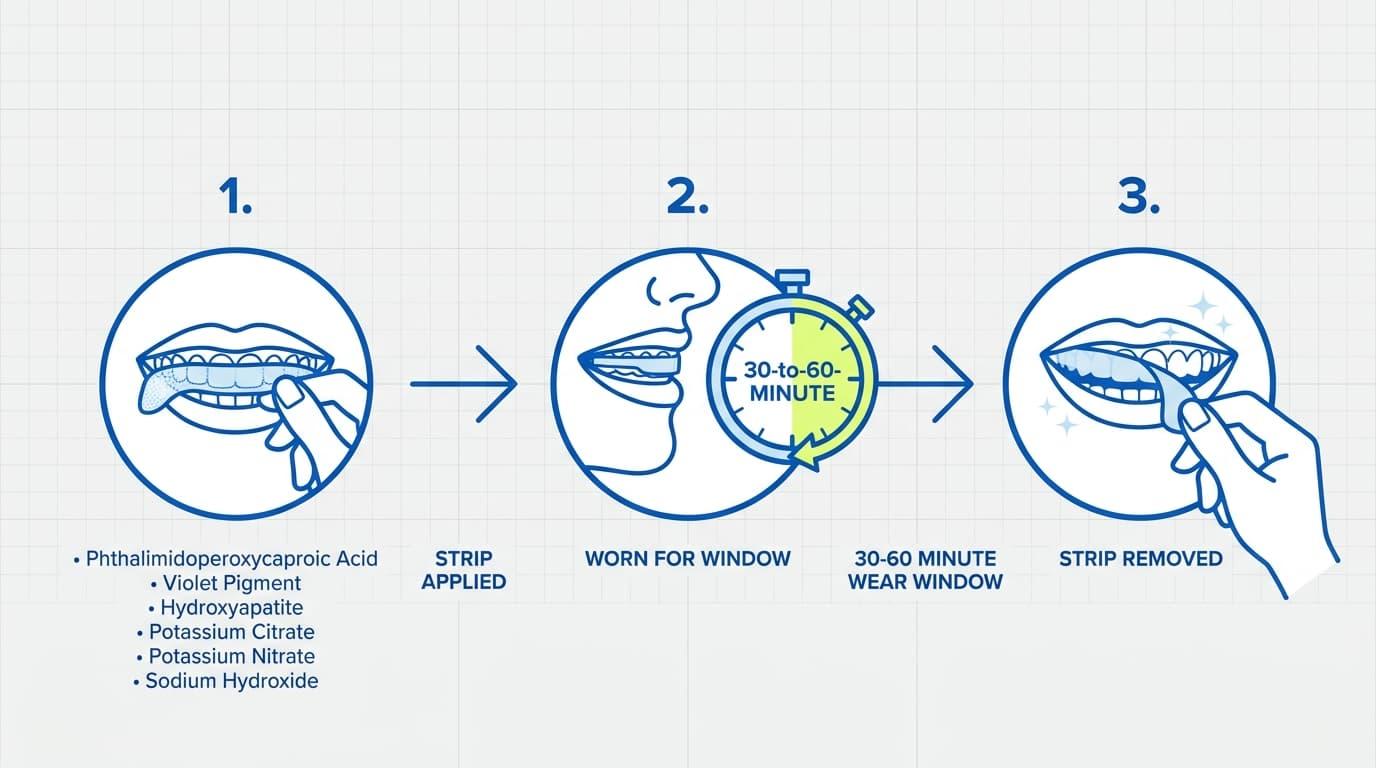
Dr. Dent takes a more traditional peel-off approach. Its purple strips stay on the teeth for a longer session, then come off when the wear window ends.
A PAP-Based, Peroxide-Free Formula
The brand lists Phthalimidoperoxycaproic Acid as its active whitening ingredient, and it targets surface stains while being combined with violet pigment, hydroxyapatite, potassium citrate, and Potassium Nitrate for sensitive teeth.
Sodium Hydroxide also appears on the ingredient list as part of the strip formula. Dr. Dent describes a 30-to-60-minute wear window followed by removal.
The peroxide-free formula may appeal to shoppers looking for sensitive teeth whitening and is designed for a more gentle, non-sensitive experience, but it should not be treated as a promise of zero discomfort.
A Longer, Planned Session
The strip stays in place for 30 to 60 minutes. Many users report that the strips deliver a visible brightening effect after the first use, often after the very first use in a 30-minute application.
That can work well during a quiet evening or another part of the day when you have time to complete the full session. It is less convenient when you need a fast touch-up or do not have a private place to remove the strips.
The advantage is familiarity. If you already like a defined wear period and do not mind peeling strips away at the end, the format may feel simple and predictable.
Color Correction vs Whitening Action
Purple strips can look similar on the package while doing more than one job in the formula. Understanding those jobs makes the comparison much easier.
What Violet Pigment Does
Purple sits opposite yellow on the color wheel. When violet pigment coats the visible tooth surface, it temporarily softens the look of yellow tones. The result is an optical brightening effect that can show up quickly.
That color shift is visual, not permanent. A deeper look at how purple whitening strips work can help you separate fast color correction from longer-term stain care before you buy.
What the Rest of the Formula Does
This is where the products split. SNOW uses P3 Technology with hydroxyapatite in a dissolving strip. Dr. Dent lists PAP as its active whitening ingredient in a peel-off, peroxide-free strip.
Neither formula should be judged by purple pigment alone. Look at the full ingredient list, follow the product directions, and set expectations around cosmetic surface-stain results rather than professional whitening outcomes.
What Whitening Research Can Actually Tell You
A study citation can make any whitening claim sound decisive. The useful question is whether the research tested the exact product, a similar ingredient, or only the wider product category. Those are three different levels of evidence.
Most over-the-counter teeth whitening product formulas use lower dosages of active ingredients than professional treatments.
Whitening Strips Have Category-Level Evidence
The broad evidence supports whitening strips as a product format, but it does not prove that every strip performs the same way.
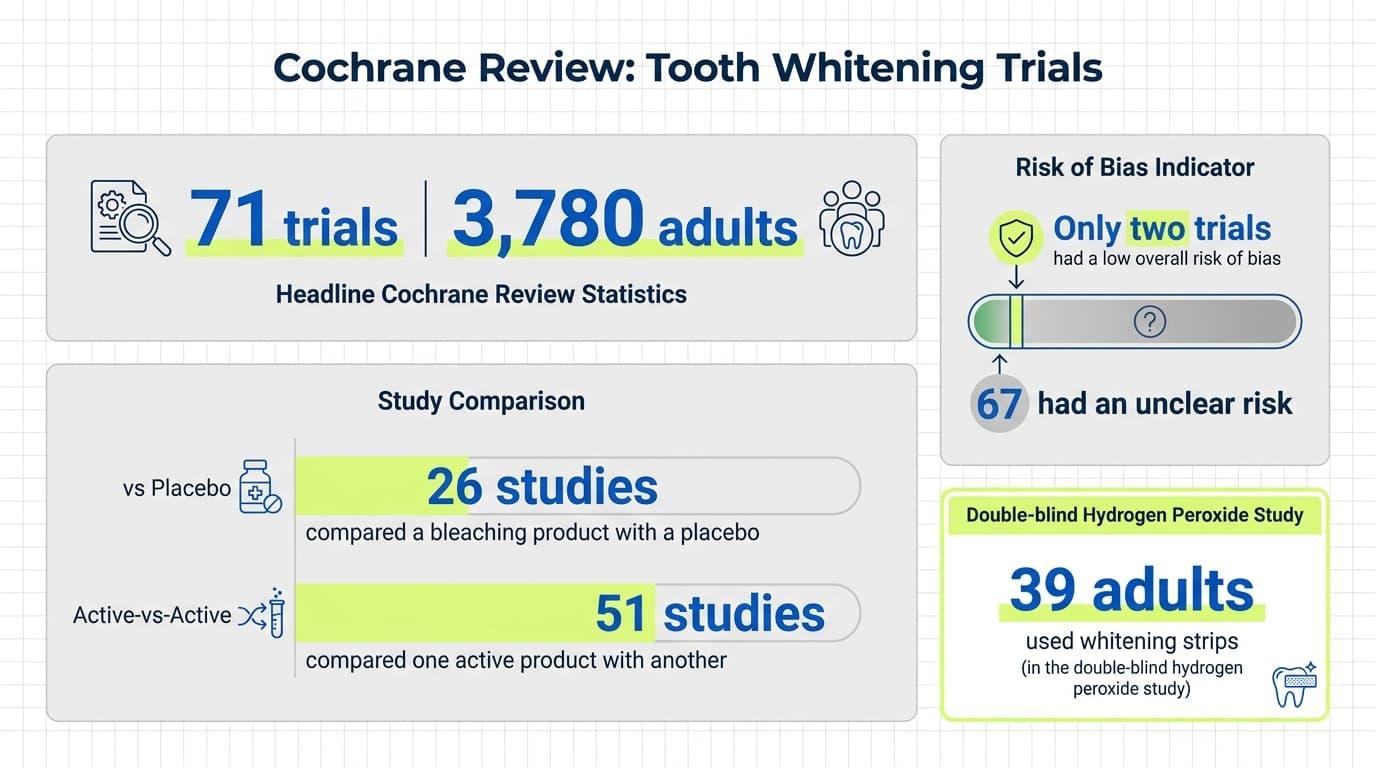
A Cochrane review covered 71 trials involving 3,780 adults across several home-whitening methods. Twenty-six studies compared a bleaching product with a placebo, while 51 compared one active product with another.
The review found short-term whitening benefits compared with placebo, with study periods ranging from two weeks to six months. It also rated the overall evidence as low to very low certainty because methods, formulas, timing, and sample sizes varied widely.
Only two trials had a low overall risk of bias, while 67 had an unclear risk.
That finding matters in a SNOW Purple Strips vs Dr. Dent Purple Whitening Strips comparison. Research can support the idea that whitening strips are a legitimate cosmetic format. It cannot be used to declare a winner between these two products without a direct head-to-head trial.
One Trial Shows Why Formula and Timing Matter
In one double-blind study, 39 adults used whitening strips with either 10% hydrogen peroxide or placebo. Participants wore the strips twice a day for 30 minutes over seven days. The active group showed a statistically significant color improvement after three treatment days, with further improvement by day eight.
This does not test SNOW Purple Strips or Dr. Dent. It does show why ingredient type, contact time, and repeated use cannot be separated when interpreting results. A 15-minute dissolving strip and a 30-to-60-minute PAP strip follow different routines, so results from one formula should not be borrowed to promise results for the other.
PAP Research Is Promising but Still Developing
PAP has attracted interest as a peroxide-free whitening ingredient.
A 2023 laboratory comparison of OTC whiteners tested PAP and several other products against a 6% hydrogen peroxide control. The experiment recorded color change and surface effects under controlled conditions.
The important limitation is the setting. Laboratory results on extracted teeth cannot tell you exactly how a product will feel, fit, dissolve, stay in place, or perform during a normal routine. They also do not establish that Dr. Dent outperforms SNOW. The study supports PAP as an ingredient worth evaluating, not a guaranteed result for every PAP strip.
The same standard applies to SNOW's P3 Technology and dissolving delivery. Product-page facts can verify what the formula contains and how the strip is used. They should not be stretched into clinical claims that the available research did not test.
Why Longer Wear Time Does Not Automatically Mean Better Results
Thirty to 60 minutes sounds more intensive than 15 minutes. That does not make it universally stronger. Contact time is only one part of a whitening formula, and it works alongside ingredient concentration, strip adhesion, staining type, directions, and the number of sessions.
Wear Time Is a Routine Variable
Dr. Dent asks for a longer PAP session. SNOW uses a shorter dissolving format. You cannot compare those numbers as though both strips contain the same gel and use the same delivery system.
A longer session may suit someone who enjoys a planned evening routine. A shorter session can be more useful for someone who will otherwise skip whitening. The practical result depends partly on whether the full directions are realistic for your schedule.
Consistency Starts With Friction
The more steps a routine requires, the more chances there are to delay it. A peel-off strip needs a clear start time, a 30-to-60-minute window, and a removal step. A dissolving strip removes that final task and shortens the time commitment.
That convenience does not prove greater whitening power. It gives SNOW a clear behavior advantage for travel, workdays, event preparation, and other moments when an hour-long session is unlikely to happen. A product you can use correctly has more practical value than a product that stays in the drawer.
Surface Stains, Deep Discoloration, and Purple Pigment
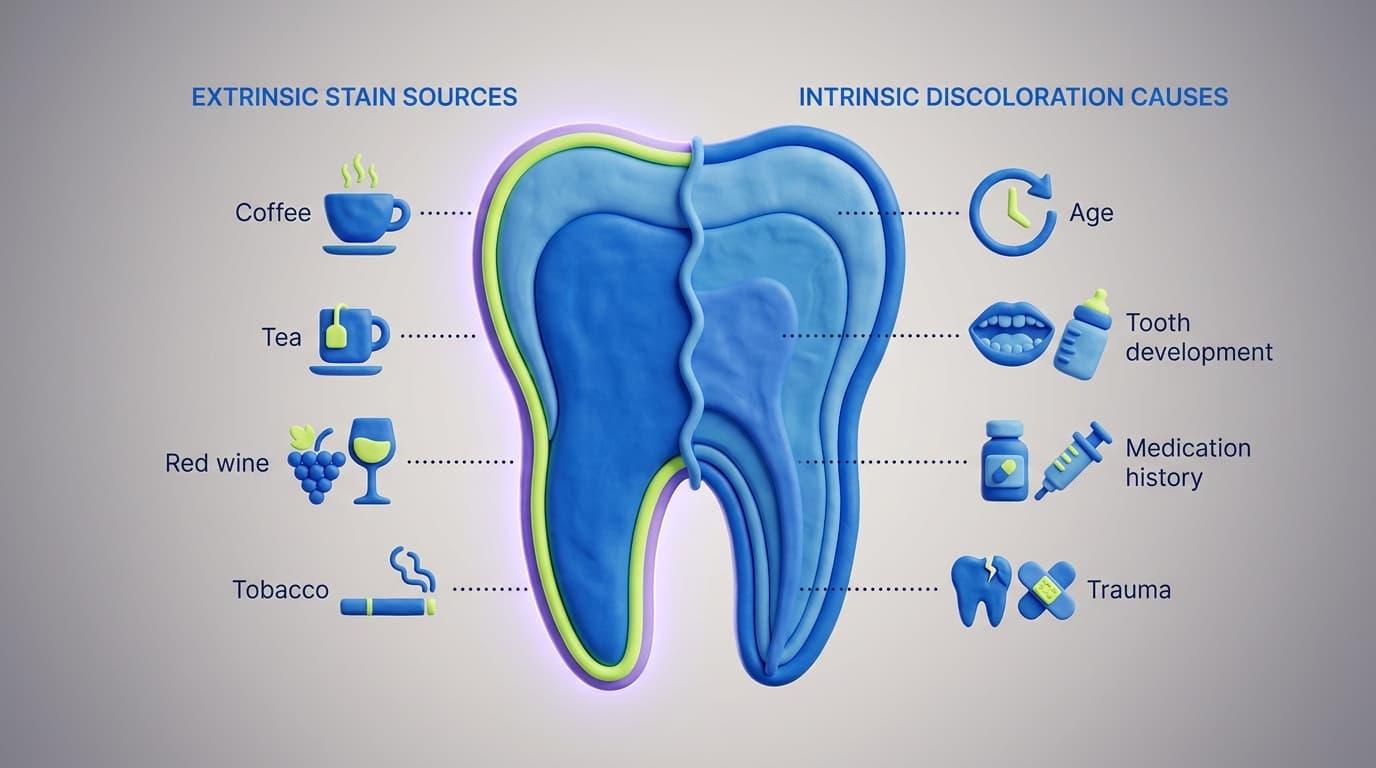
Not all yellow-looking teeth have the same cause. The stain type affects what a purple strip can change, what may take repeated whitening, and what needs professional advice.
Surface Stains Are the Clearest Target
Coffee, tea, red wine, tobacco, and highly pigmented foods can leave color on the outer tooth surface. These marks are commonly described as extrinsic stains. Whitening-focused ingredients may help lift their visible appearance, while violet pigment can temporarily balance yellow tones.
Knowing the difference between surface and deeper tooth stains helps set a realistic goal. A quick purple treatment may give surface yellow tones a visible refresh, but the outcome depends on the stain source and the rest of the formula.
Intrinsic Color Needs Different Expectations
Intrinsic discoloration develops inside the tooth. Age, tooth development, medication history, trauma, and other factors can influence it. Purple pigment on the surface cannot remove the source of deeper discoloration.
That does not make color correction pointless. It means the value is cosmetic and temporary. If the shade looks uneven, changes suddenly, or does not respond as expected, a dental professional can help identify the reason before you keep adding whitening sessions.
Purple Is Not a Permanent Shade Change
Violet pigment works like visual tone correction. It can make yellow tones look less noticeable while the pigment is present, but eating, drinking, rinsing, and normal saliva reduce the effect over time. That makes purple strips especially relevant for photos, meetings, dinners, and events where immediate appearance matters.
The other ingredients determine whether a strip is positioned for more than temporary color correction. SNOW pairs purple pigment with P3 Technology and hydroxyapatite. Dr. Dent pairs it with PAP, hydroxyapatite, and potassium citrate. Those formula differences matter more than the shared purple color.
Comfort and Sensitivity Without Empty Promises
A history of whitening discomfort can make a new strip feel like a gamble. The honest approach is to compare formulas and directions without promising how the routine will feel.
Sensitivity Is Common Across Whitening Methods
A meta-analysis of seven randomized trials using 6% hydrogen peroxide strips found that 20% reported sensitivity and 22% irritation during a two-week routine. Those figures apply to the tested peroxide strips, not to SNOW or Dr. Dent, but they show why absolute comfort claims do not belong in a fair comparison.
The American Dental Association notes that temporary sensitivity may appear two to three days after a whitening routine begins and often settles after treatment ends. Formula concentration, contact time, existing restorations, and personal history can influence the experience.
Peroxide-Free Does Not Mean Risk-Free
Dr. Dent avoids peroxide and uses PAP. That is a valid formula preference for shoppers who want a different active ingredient. It should not be translated into a guarantee of no tingling, irritation, or discomfort.
SNOW's Purple Strips use a different dissolving formula. The best comparison is not 'safe versus harsh.' It is a choice between two ingredient approaches, two session lengths, and two application formats. Follow the current directions for the product you select and stop if something feels wrong.
Use History as Part of the Decision
If past whitening caused discomfort, do not treat that experience as a minor detail. Check the current ingredient label, avoid extending the wear time, and do not stack multiple whitening products in one session unless the directions specifically allow it.
Readers who want more context can review what may cause discomfort after whitening strips before starting a new routine. Ongoing tooth pain, cavities, gum concerns, or exposed roots need professional attention rather than another cosmetic product.
Crowns, Veneers, Bonding, and Fillings
Dental restorations change the decision because they do not respond like natural teeth. Purple pigment may briefly alter the way nearby tones look, but it does not permanently whiten restorative material.
Only Natural Teeth Change With Bleaching
The American Dental Association explains that only natural teeth change color during bleaching. Crowns, implants, veneers, fillings, and bonded areas keep their existing shade, which can create a mismatch if the surrounding teeth become lighter.
Purple color correction does not change that rule. A temporary violet tint may influence the overall look in the moment, but it cannot recolor porcelain, composite resin, or another restorative material.
Check the Visible Smile Zone
Before using either strip, look at the teeth that show when you smile. If a front crown, veneer, or bonded area already matches your current tooth shade, whitening the natural teeth around it may make the restoration stand out.
A dentist can help plan the order of cosmetic work when matching matters. That conversation is especially useful before a wedding, professional photo session, or another event where you want an even result rather than simply a lighter one.
A Practical Pre-Event and Travel Plan
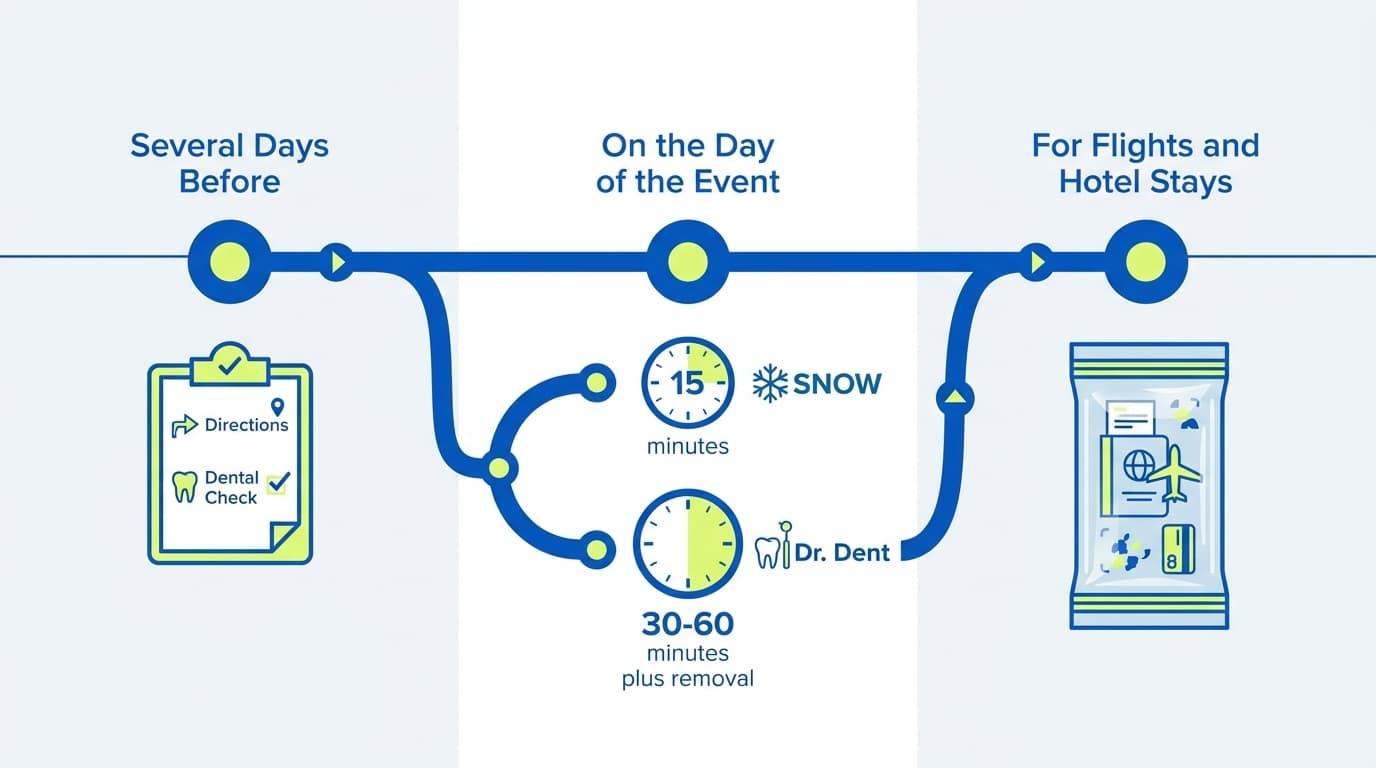
The best whitening plan starts before the outfit, flight, or camera. A simple timeline helps you avoid rushed decisions and gives you room to see how your mouth responds.
Several Days Before
Read the current directions and ingredient label. If you have never used the product, do not make the event day your first test. Check for existing discomfort, irritated gums, cracked teeth, or dental work that may affect the final shade.
If gradual surface-stain care is part of your goal, begin only within the product's recommended schedule. More sessions and longer wear do not automatically create a better result. They increase the chance that you will use the product outside its directions.
On the Day of the Event
Choose a window that fits the format. SNOW needs about 15 minutes and dissolves during wear, making it easier to use while finishing hair, makeup, packing, or other preparation. Dr. Dent needs 30 to 60 minutes plus removal, so it works better when you have a quiet block of time.
Apply the strip carefully and keep it close to the visible tooth surfaces rather than pressing excess material onto the gums. Do not extend the timer because the event is important. A correct session is more useful than an improvised one.
For Flights and Hotel Stays
Pack strips in their original sealed packaging and keep the directions with you. Heat, moisture, and loose storage can make travel less predictable. A flat dissolving strip is easier to carry when bathroom access is limited, and you do not want to manage a used backing.
SNOW's wider comparison of purple strips, serum, and tablets can help match the format to an event, photo, or travel routine. For this head-to-head comparison, the dissolving strip remains the clearest convenience advantage.
How to Compare the Labels Before Buying
Product names and purple packaging can blur meaningful differences. A quick label check keeps the decision grounded in what you will actually use.
-
Active approach: Identify peroxide, PAP, or another listed whitening ingredient.
-
Color correction: Confirm that violet pigment is part of the formula rather than the only benefit described.
-
Wear directions: Note the full session time and any waiting period after use.
-
Removal: Check whether the strip dissolves or must be peeled away.
-
Pack size: Compare treatments, not just the number of strips, because a session may use one strip for the upper teeth and another for the lower teeth.
-
Warnings: Review age limits, sensitivity guidance, storage directions, and when to stop use.
This check prevents one attractive claim from carrying the entire decision. SNOW wins on the shorter dissolving routine. Dr. Dent appeals to shoppers who prioritize PAP and a peroxide-free formula. The right choice becomes clearer once those benefits are tied to your time, habits, and expectations.
Which Strip Fits Your Routine Best?
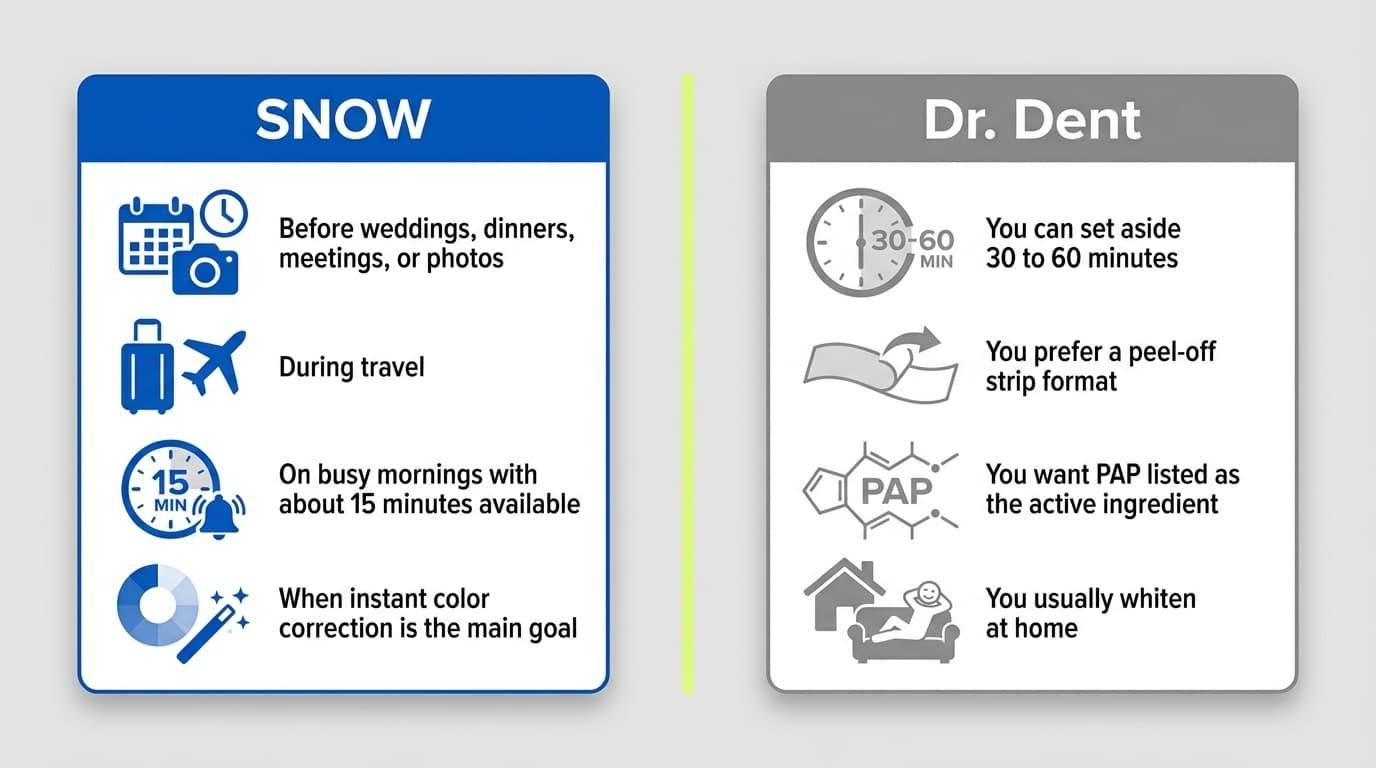
The better product is the one you will use correctly and consistently. Start with the moment when you are most likely to reach for a strip.
Choose SNOW for Fast, Flexible Touch-Ups
SNOW is the stronger fit when time and convenience lead the decision. The dissolving format works well when your routine needs to keep moving.
-
Before weddings, dinners, meetings, or photos
-
During travel when sink access is limited
-
On busy mornings with about 15 minutes available
-
When you do not want a peel-off removal step
-
When instant color correction is the main goal
At SNOW, we designed the Purple Strips for those real-life moments. The formula delivers a quick visual refresh, and the strip disappears as you wear it. If you are unsure about committing, the brand's 60-day money-back guarantee gives first-time shoppers room to try the routine.
Choose Dr. Dent for a Longer Session
Dr. Dent may make more sense when a peroxide-free PAP formula matters more than speed. It also suits shoppers who like a familiar strip that stays on for a set period and comes off at the end.
-
You can set aside 30 to 60 minutes
-
You prefer a peel-off strip format
-
You want PAP listed as the active ingredient
-
You usually whiten at home, not on the go
The longer session is not automatically better. It is simply a different routine. If you are likely to rush the wear time or skip sessions because removal feels inconvenient, the format may not suit your habits.
How to Make the Final Choice
A short decision check can keep the purple packaging from doing all the talking. Compare the products on the factors that affect your real routine.
-
Time: Pick the session length you can complete without rushing.
-
Format: Decide between a dissolving strip and a peel-off strip.
-
Formula: Review the current label for peroxide, PAP, and other listed ingredients.
-
Goal: Separate instant color correction from gradual surface-stain care.
-
Comfort: Follow directions and stop use if you notice discomfort.
If you have cavities, gum concerns, dental restorations, or ongoing tooth discomfort, speak with a dental professional before whitening. A cosmetic strip cannot diagnose or address an oral health issue.
Two Purple Strips, One Clear Fit
SNOW Purple Strips and Dr. Dent Purple Whitening Strips both use violet pigment to soften the look of yellow tones. The real choice is between a fast strip that dissolves and a longer PAP-based strip that you remove.
For photos, travel, events, and packed days, SNOW keeps the routine simple. Our Purple Strips dissolve in about 15 minutes and leave no backing behind, so brighter-looking teeth can fit into the plans you already have.
Get the SNOW Purple Whitening Strips Today
FAQs About Purple Teeth Whitening Strips
These quick answers cover the details shoppers often compare before choosing a purple strip.
Are SNOW Purple Strips Better Than Dr. Dent?
SNOW is a better fit for fast touch-ups, travel, and events because the strips dissolve in about 15 minutes. Dr. Dent may suit shoppers who prefer PAP, a peroxide-free formula, and a longer 30-to-60-minute session. The better option depends on how much time you have and which format you will use as directed.
Do Purple Whitening Strips Actually Whiten Teeth?
Purple pigment visually balances yellow tones, so teeth can look brighter right after use. Some products also include whitening-focused ingredients intended to lift the look of surface stains. Results vary by formula and use, and a cosmetic strip does not provide the same outcome as professional dental whitening.
How Long Do Dr. Dent Purple Strips Take?
Dr. Dent directs users to wear its Purple Whitening Strips for 30 to 60 minutes. The strips must be removed after the session. Always follow the directions on the current package because instructions may change with product updates.
Can I Use Purple Strips Before Photos?
Yes. Violet pigment is designed to soften the visible look of yellow tones, which makes purple strips appealing before photos or events. SNOW's dissolving format is especially convenient for last-minute prep because it takes about 15 minutes and does not require a peel-off step.


