
As we reach our 40s, our smiles naturally begin to show signs of aging due to a combination of biological shifts and decades of lifestyle factors. The 40-year-old smile is fundamentally different from what it was in our 20s. It’s a reflection of cumulative wear that finally reaches a visible tipping point.
During this decade, enamel thins, gums recede, and teeth may shift, often leading to a noticeable surge in sensitivity.
Understanding these transitions is the first step toward reclaiming your glow. By adapting your dental care routine to meet your current biology, you can preserve a healthy, vibrant, and confident smile for decades to come.
In this article, you’ll find answers to important questions such as:
-
What are the most common dental changes that occur around age 40?
-
How do hormonal shifts, especially in women, affect oral health during this decade?
-
Why do traditional whitening methods often stop working effectively after 40?
-
What daily habits and professional treatments can help maintain a youthful smile?
-
How can you build a personalized, sustainable dental care plan for your 40s and beyond?
Want to protect and enhance your smile as you age?
Read on to learn how you can adapt your oral routine to take advantage of modern dental solutions designed specifically for the 40+ smile.
Key Takeaways
-
After age 40, enamel thinning, gum recession, and teeth shifting become more noticeable and change how your smile looks and feels.
-
Tooth retention drops almost 50% between ages 20–39 (67%) and 40–49 (34%), while periodontal disease nearly doubles in this decade based on CDC-cited clinical summaries.
-
For women, hormone shifts during perimenopause (typically 40–55) can cause dry mouth, gum inflammation, bone density loss in the jaw, and new sensitivity. This, unfortunately, is not usually discussed in dental visits.
-
Adapting your routine with gentler brushing, remineralizing ingredients like hydroxyapatite, sensitivity-aware whitening, and regular dental visits can keep your healthy smile bright and comfortable for decades.
-
Modern treatments like clear aligners, dental implants proven to last 40+ years, and enamel-safe professional whitening treatments, are now specifically designed for 40+ smiles.
What Actually Changes in Your Smile Around 40?
Your 40s are a turning point decade for your oral health. This is the decade where the aging process transitions from invisible internal shifts to visible changes in the mirror.
That slightly duller appearance, the sudden sharp sensitivity to your morning cold brew, or a tooth that looks longer than it used to are rarely the result of a single bad habit. Instead, they are the cumulative impact of decades of chewing, acidic foods, and natural wear finally reaching a tipping point.
The statistics highlight a dramatic shift during this life stage. According to CDC-cited clinical summaries, only about 34% of adults aged 40 to 49 still retain all of their natural teeth. This is a significant drop from the 67% seen in the 20 to 39 age group.
The stakes are higher, too: periodontal disease nearly doubles in this decade, affecting roughly 46% of adults.
Before you choose a new whitening treatment or dental care products, you must understand the specific biological shifts occurring in your mouth. Differentiating between surface staining, permanent enamel thinning, and gum recession is the essential first step in protecting your smile. This guide breaks down the structural changes, hormonal influences, and lifestyle factors that define the 40+ aging smile.
The Biology of the 40-Year-Old Smile
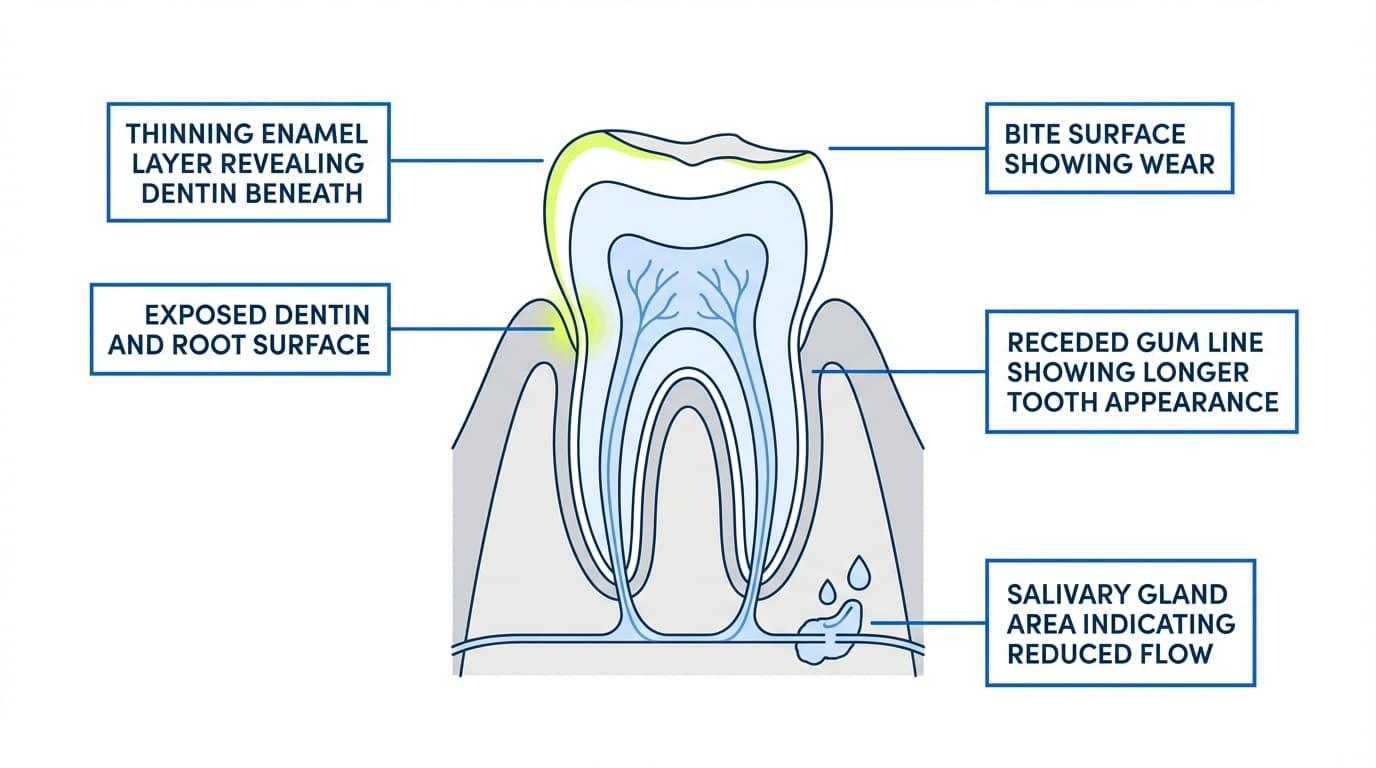
The way your smile ages is driven by a series of quiet biological shifts that tend to converge once you hit 40. Modern research highlights that these changes are a natural part of the aging process and require a more sophisticated approach to daily care.
Enamel Thinning
Decades of chewing and exposure to acidic and sugary foods gradually wear enamel, revealing more yellowish dentin underneath. A 2023 PMC systematic review confirms this as a primary age-related shift. Since enamel cannot regenerate, this wear is considered permanent.
Dentin Exposure and Sensitivity
As enamel thins and gums recede, dentin and root surfaces become exposed. That sharp response to ice water or at-home whitening that wasn’t there at 25? This is why. Your teeth naturally become more reactive.
Gum Health and Recession
Gums recede with age, but this accelerates after 40, especially with aggressive brushing or untreated gum disease. Teeth appear longer, and exposed roots increase the risk of root cavities and sensitivity.
Reduced Saliva
Many 40+ adults take blood-pressure meds, antidepressants, or antihistamines that decrease saliva production. Lower saliva raises cavity risk, contributes to bad breath, and makes tooth decay more likely.
Facial and Bite Changes
Periodontology findings from 2020 show teeth continue to erupt slightly and facial features continue subtle growth into the 40s and 50s. This affects lip support, smile lines, and how your upper and lower teeth display when you speak or laugh.
How Hormones and Health After 40 Show Up in Your Smile
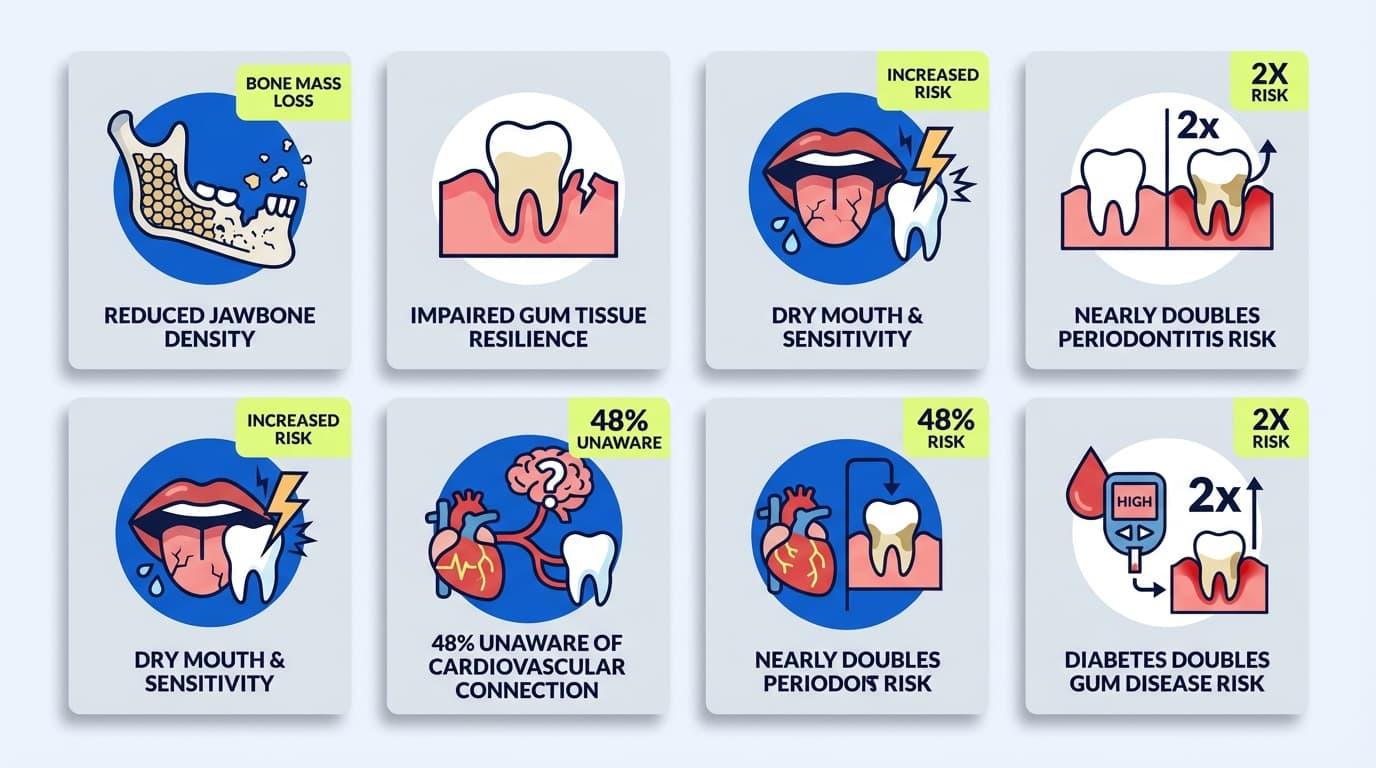
For women navigating perimenopause and menopause (typically 40–55), oral health shifts can feel sudden and confusing.
Delta Dental’s 2024 Oral Health & Menopause Report found that 35% of women 40+ notice oral health decline. Yet, only 18% have discussed these changes with a dentist. A whopping 93% say tailored advice would help, and 83% of dentists are open to having that conversation.
Here’s what estrogen decline does:
-
Reduces jawbone density, weakening the foundation for your teeth
-
Impairs gum tissue resilience, increasing the risk of gum disease
-
Contributes to dry mouth and heightened sensitivity from enamel thinning
-
Nearly doubles the periodontitis risk, which directly correlates with tooth loss
The cardiovascular connection matters too: nearly 48% of women 40+ are unaware that menopause-related gum disease is tied to elevated cardiovascular risk. Your dentist can help flag broader health conditions during routine exams.
Systemic health conditions compound these effects. Diabetes roughly doubles the risk of gum disease by impairing the immune response. Osteoporosis accelerates bone loss in the jaw, loosening teeth around existing dental work. If you’re managing any chronic condition or taking medications that cause dry mouth, proactive communication with your dental team becomes essential.
Why Your Old Whitening Routine Stops Working in Your 40s
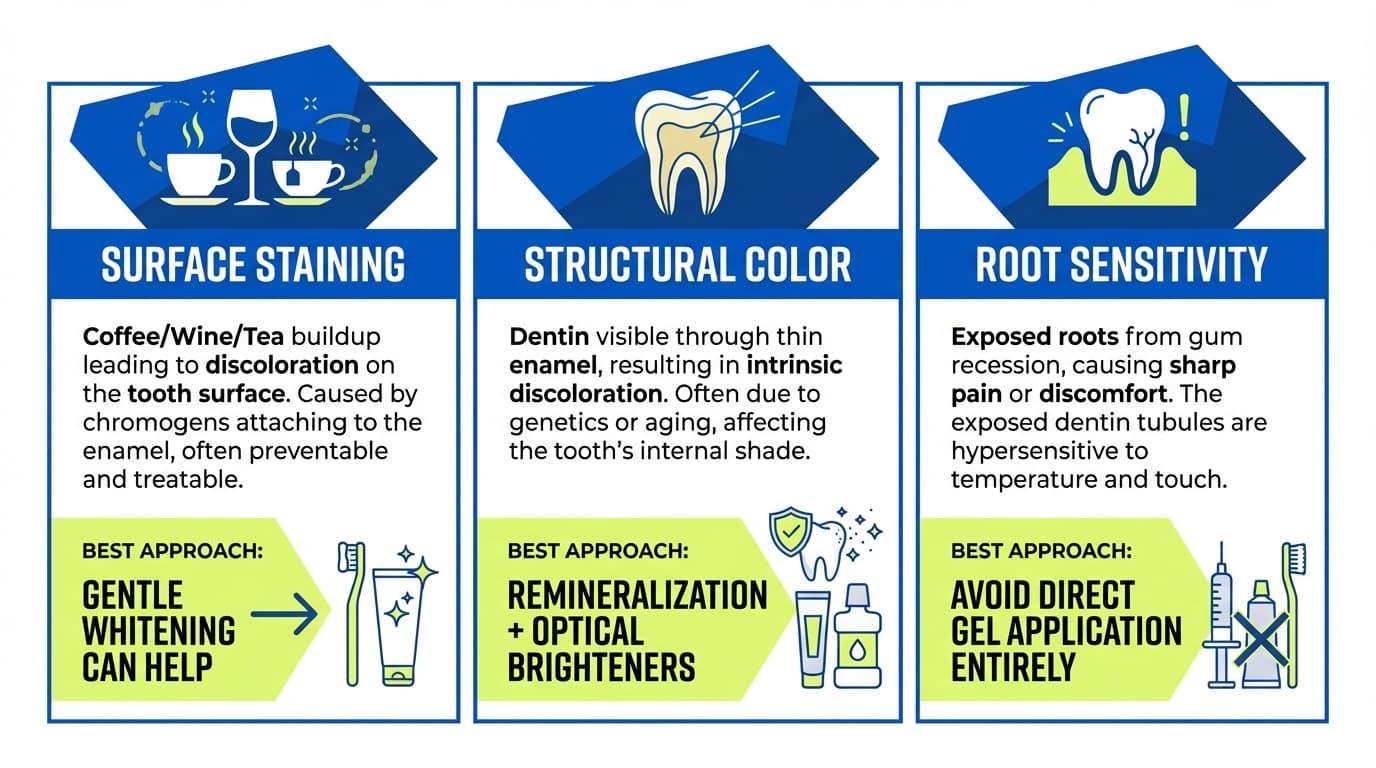
You loved whitening strips at 26. They worked fast, no real sensitivity, bright results. Then you tried them at 42 and got two days of zingers, chalky patches, and vowed never again.
This isn’t your imagination. By your 40s, a much larger share of the “yellow” you see is dentin showing through thin enamel, not only coffee stains on the surface. High-peroxide gels designed for thicker, younger enamel hit differently now.
Studies on age-related changes in teeth structure found that older dentin provokes heightened sensitivity, slower color shifts, and demands lower peroxide concentrations with abbreviated contact times to avoid pain.
Three distinct issues need separating:

Traditional over-the-counter strips were engineered around the biology of 18–30-year-old enamel. Treating a 42-year-old mouth like a 22-year-old’s explains why so many older adults develop whitening avoidance after painful experiences.
Daily Habits to Support Your Smile After 40
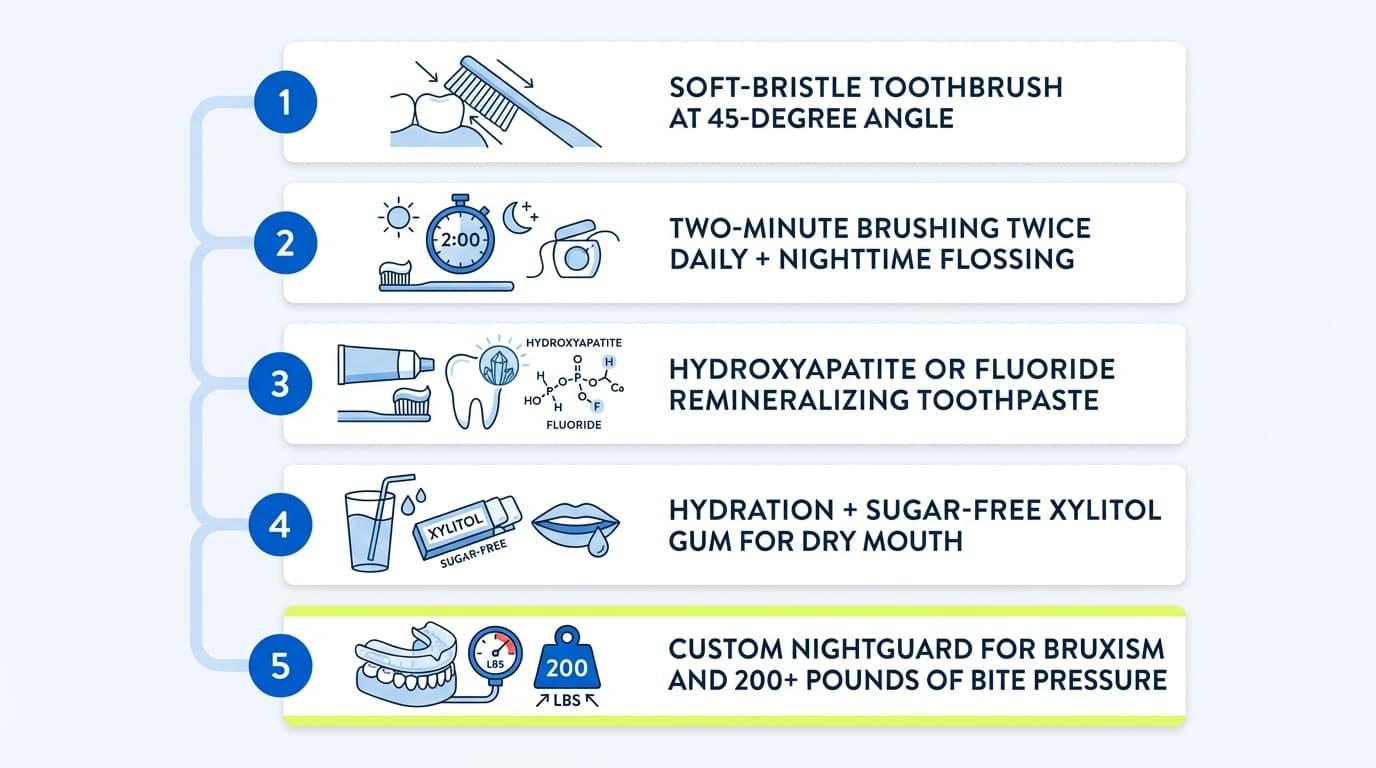
Sustainable changes beat drastic overhauls. Here’s how to adapt everyday habits to 40+ biology:
Change the Type of Your Brush
Switch to a soft-bristle toothbrush and use light pressure at a 45-degree angle along the gum line. This removes plaque buildup without accelerating gum recession or abrasion on thinning enamel.
Prioritize Effective Brushing
Commit to proper brushing for two minutes, twice daily, and incorporate nighttime flossing. Flossing becomes even more critical after 40, given the documented surge in periodontal disease during this decade.
Improve Dental Care with Minerals
Add remineralizing ingredients like hydroxyapatite or fluoride toothpaste. These help refill microscopic cracks and reduce sensitivity to temperature and whitening.
Combat Dry Mouth
Hydration is your smile's best friend. Carry water throughout the day, use sugar-free xylitol gum to stimulate flow, and consult your dentist about saliva substitutes if you take medications that cause chronic xerostomia.
Protect Against Teeth Grinding
Watch for morning jaw pain, flattened edges, or worn front teeth that suggest bruxism. Since molars can sustain over 200 pounds of pressure per bite, a custom nightguard is essential to distribute this force and protect your smile from accelerated enamel wear and gradual structural damage.
Adapting Professional Care for the 40-Year-Old Smile
Regular dental visits matter more after 40, even if you’ve “never had issues.” Here’s what a 40+ checkup should include:
-
Periodontal probing to measure gum pocket depths (anything over 4mm signals disease)
-
Screening for root caries, which becomes more common with gum recession
-
Evaluation of existing dental work for microleaks, fractures, or failing edges
-
Oral cancer screening, since the incidence rises after 40
Consider more frequent cleanings, such as every 3–6 months, if you have bleeding gums, diabetes, dry mouth from medications, or a history of gum health issues.
Replacing failing fillings, smoothing rough edges, and repairing small chips early prevents cracks that might otherwise require dental crowns or root canals later.
The American Dental Association (LINK) emphasizes that consistent professional cleanings have been linked not only to better dental health outcomes but also to lower rates of systemic conditions tied to chronic oral inflammation.
Don’t wait for your dentist to ask about perimenopause, hormone therapy, or new medications. Bring it up yourself. Most clinicians will only go into depth if prompted.
Modern Treatment Options Tailored to 40+ Smiles
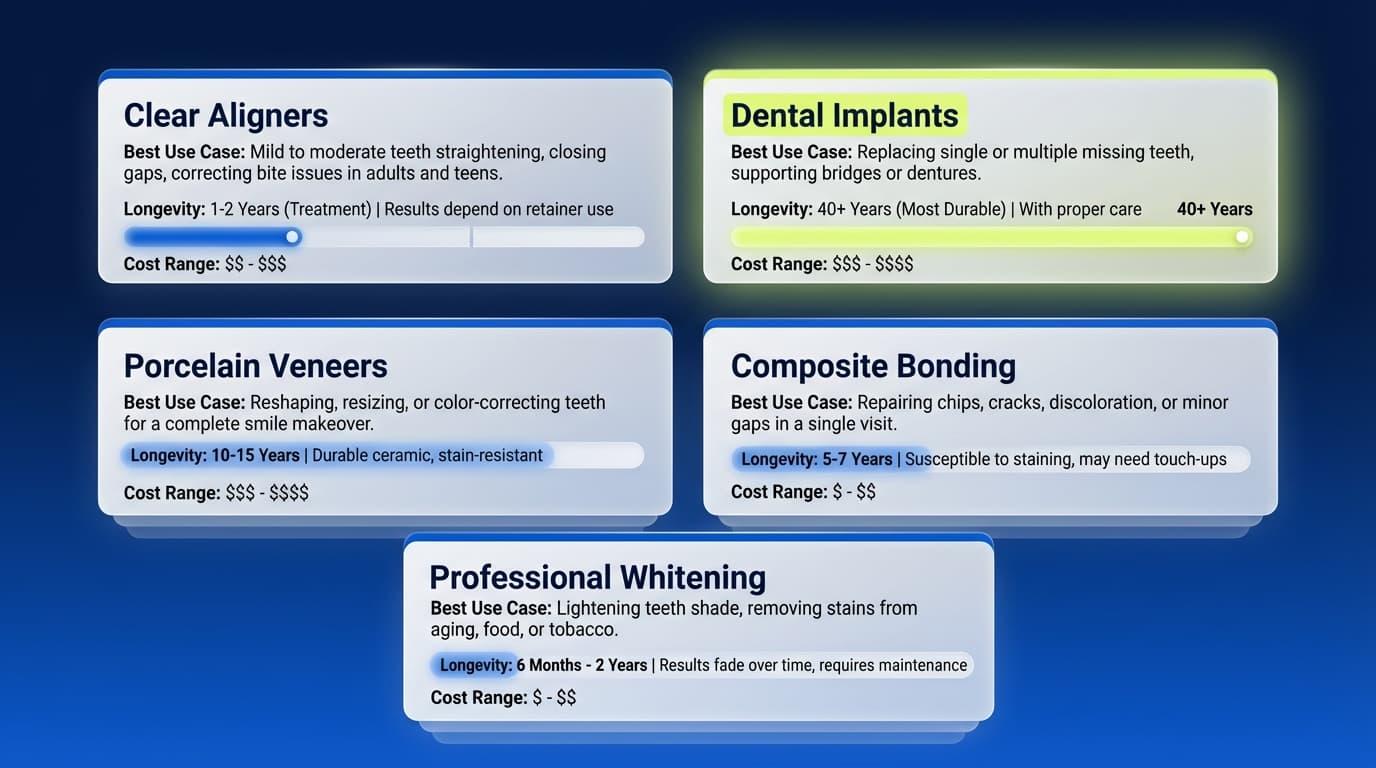
Today’s restorative treatments and cosmetic dentistry options are designed with 40+ biology in mind:

Adult orthodontics through clear aligners can address the teeth shifting and crowding that often appears between 40 and 55. There’s no age ceiling for orthodontic treatment as long as gum health and bone density support tooth movement.
A 2025 longitudinal study from the University of Gothenburg confirmed that dental implants placed in healthy adults over 40 retain their functional efficacy for four decades or more. This makes them a reliable, rest-of-life solution rather than a temporary fix for missing teeth.
For those wary of whitening, ask specifically about protocols designed for sensitive, 40+ teeth: lower peroxide concentrations, shorter contact times, and pairing with remineralizing ingredients.
How to Build a 40+ Smile Plan You Can Actually Stick With
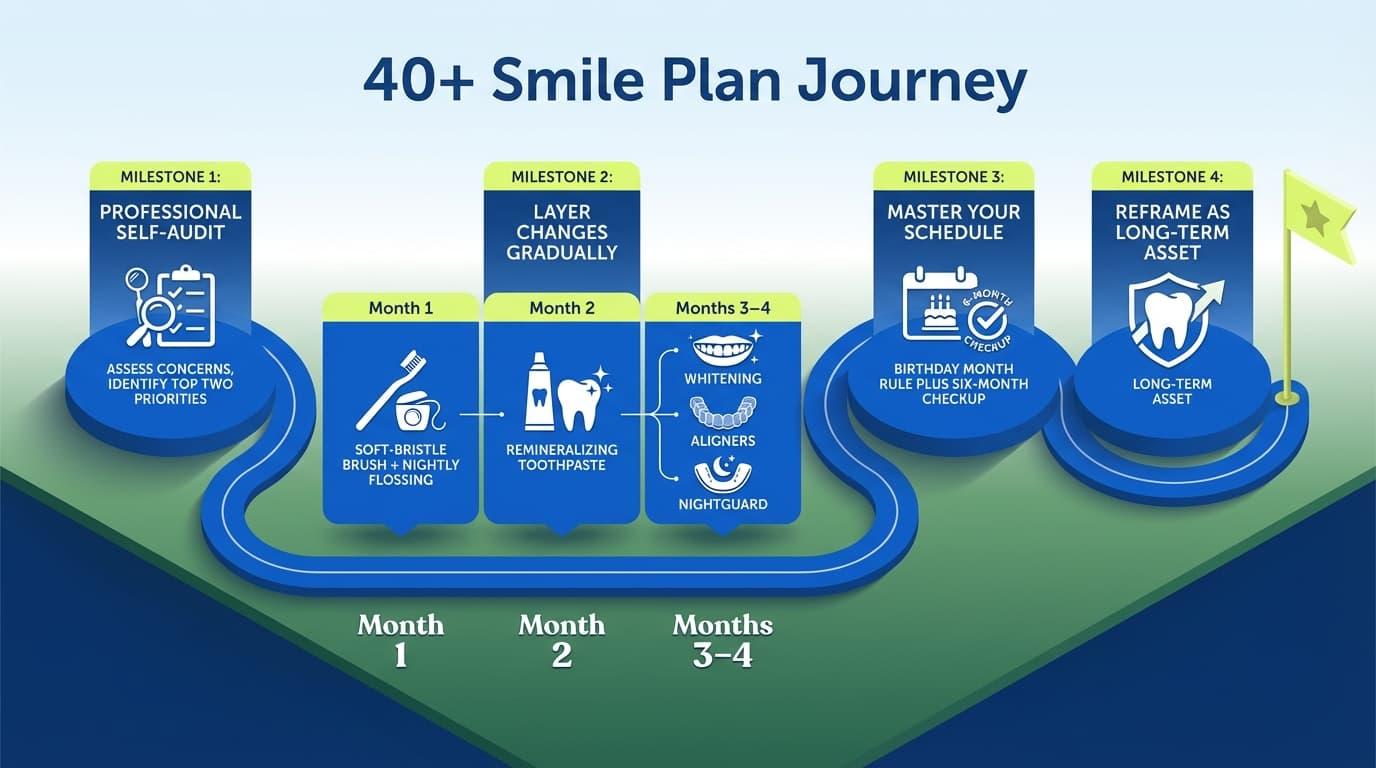
The secret to a lifetime of confidence isn't found in a single, drastic overhaul. Instead, it’s about shifting your mindset from reactive repair to proactive preservation.
1. Perform a Professional Self-Audit
Take a moment to truly assess your smile in the mirror and note what you see. Are you dealing with increased yellowing, new sensitivity to temperature, or visible gum line changes?
Identify your top two dental concerns and commit to addressing them over the next six months. Narrowing your focus prevents burnout and ensures you’re tackling the issues that matter most to your confidence.
2. Layer Your Changes Gradually
Don't try to change everything in a single week. Success lies in a phased approach that allows your habits to stick:
-
Month 1: Master the basics by switching to a soft-bristle brush and committing to nightly flossing.
-
Month 2: Elevate your routine by introducing a remineralizing toothpaste to strengthen your enamel.
-
Months 3–4: Once your foundation is solid, explore gentle, sensitivity-aware whitening or schedule a consultation for aligners or a custom nightguard.
3. Master Your Schedule with Predictability
Take the guesswork out of your dental health by booking your visits at the same time every year. A simple "birthday month" rule, followed by a checkup six months later, ensures that professional care becomes a seamless part of your calendar. This shift transforms your dental visits from crisis responses into routine maintenance that catches small issues before they become expensive problems.
4. Reframe Your Smile as a Long-Term Asset
It’s time to stop thinking of oral care as just "cosmetic tweaking." Your smile is a functional asset that supports your ability to eat, speak clearly, and project confidence in every professional and social setting. When you view midlife dental care as an investment in your future self, staying consistent with your routine becomes an act of self-care rather than a chore.
Investing in a Lifetime of Dental Health for a Confident Smile in Your 40s and Beyond
The evolution of your smile in your 40s is a biological reality, but it doesn't have to define your confidence. By prioritizing proper care today, you are protecting more than just aesthetics; you are preserving your chewing ability and the structural integrity of your enamel and surrounding teeth for years to come.
Many 40+ changes are modifiable. With consistent habits and a treatment plan suited to your current needs, preserving a comfortable, confident smile is realistic. Whether you’re interested in professional teeth whitening results or guidance from experienced professionals, making your health a priority ensures your smile remains a vibrant asset.
At SNOW, we specialize in high-performance oral care that delivers clinical-grade whitening without the sensitivity that often comes with age. Our doctor-formulated systems are designed to strengthen your enamel while you brighten, giving your 40+ smile the premium care it deserves.
Explore the SNOW Teeth Whitening Collection
Frequently Asked Questions
At what age does your smile change noticeably?
Subtle changes like minor crowding can start in your late 20s and 30s. But most people notice real differences (darker teeth, more sensitivity, gums receding visibly) between about 40 and 55. Heavy coffee consumption, poor oral hygiene, or teeth grinding can accelerate this timeline, while excellent oral health habits and regular dental checkups can delay visible signs. If you see a sudden big change in color or comfort over a few weeks, that’s not the natural process of aging. Schedule a thorough evaluation with your dentist promptly.
Is gum disease inevitable after 40?
Not at all, though your risk nearly doubles during this decade. While nearly half of adults over 40 show signs of periodontal disease, consistent flossing, professional cleanings, and monitoring hormonal shifts can effectively prevent its progression and protect your natural teeth for the long term.
Is it ever too late for adult orthodontics?
There’s no upper age limit for orthodontic treatment as long as your gums and jawbone are healthy enough to support tooth movement. Many adults in their 40s, 50s, and beyond use clear aligners or traditional braces to correct crowding, close gaps, or fix bite issues that developed over decades. A comprehensive evaluation of bone levels and gum health should come first, since active gum disease must be controlled before starting any tooth movement.
Can enamel grow back once it’s worn down?
Natural enamel does not regenerate once physically lost. This is why enamel thinning confirmed in recent aging studies is considered permanent. However, you can strengthen remaining enamel and dentin using remineralizing agents like fluoride and hydroxyapatite, which fill microscopic defects and reduce sensitivity. Combine these with gentle proper brushing and reduced exposure to acidic foods to preserve what enamel remains.
Are dental implants a permanent solution for missing teeth?
Yes, modern dental implants are designed to be a lifelong solution. Research confirms that implants placed in healthy adults over 40 can maintain functional efficacy for over four decades, offering a durable and natural looking alternative to bridges or dentures as you age.
How do I know if sensitivity is normal or a dental concern?
Common sensitivity after 40 involves brief twinges to cold or sweet that resolve quickly. Warning signs of a bigger issue include: pain lingering more than a few seconds, sensitivity to light chewing, pain when releasing a bite, or one tooth that repeatedly hurts differently from neighboring teeth. Any sudden change in sensitivity pattern warrants a dental exam to rule out cracks, deep tooth decay, or nerve problems.
Do I need more frequent cleanings after 40, even with excellent oral health?
Even with a good history, the risk curve shifts after 40. Gum disease and root cavities become more common and often develop silently. At a minimum, maintain annual exams and professional cleanings. If you have bleeding gums, diabetes, a history of periodontal therapy, or multiple medications causing dry mouth, every 3–6 months is appropriate. Catching problems early with healthy teeth means simpler, less expensive treatments and better chances of keeping your natural teeth for life.