
While both methods improve oral hygiene, clinical research indicates that water flossers are statistically superior for gum health, reducing gingival bleeding by up to 93% and plaque by 29% compared to traditional string floss.
However, string floss remains a cost-effective standard for removing tightly wedged debris in healthy, aligned teeth.
Both can improve oral health, yet clinical trials, including Goyal et al. (2013) and 2023 RDH Magazine findings, demonstrate that water flossing may reduce gum bleeding. more effectively, especially for those with dental implants or tight schedules.
When comparing water floss vs string floss, the best choice depends on your needs, habits, and comfort.
This guide breaks down how each works so you can choose the right dental floss method for a cleaner, healthier smile.
Key Takeaways
-
Both water flossers and string floss improve oral health, but multi-week clinical research shows water flossers reduce plaque by approximately 29% more and gum bleeding by up to 93% more than string floss in most studies.
-
Single-use plaque removal is similar between methods (87-89%), but long-term gingival bleeding and inflammation control generally favors water flossers.
-
String floss costs only a few dollars per year and remains highly effective when used correctly, while water flossers are easier for people with braces, dental implants, or limited manual dexterity.
-
The “best” choice is daily use of whichever method (or combination) you will actually stick to, with a slight clinical edge to water flossers for gum health and inflammation reduction.
At a Glance: Which One Wins for Oral Health?
Flossing plays a major role in your daily oral hygiene routine, helping prevent plaque buildup, gum disease, and even periodontal disease. While both traditional string floss and oral irrigators can support good oral health, they work in different ways.
This quick comparison highlights which flossing method delivers better results for your needs. Whether you're focused on plaque removal, battling gum sensitivity, or simply looking for the easiest tool to use, here’s how string floss and using a water flosser stack up.
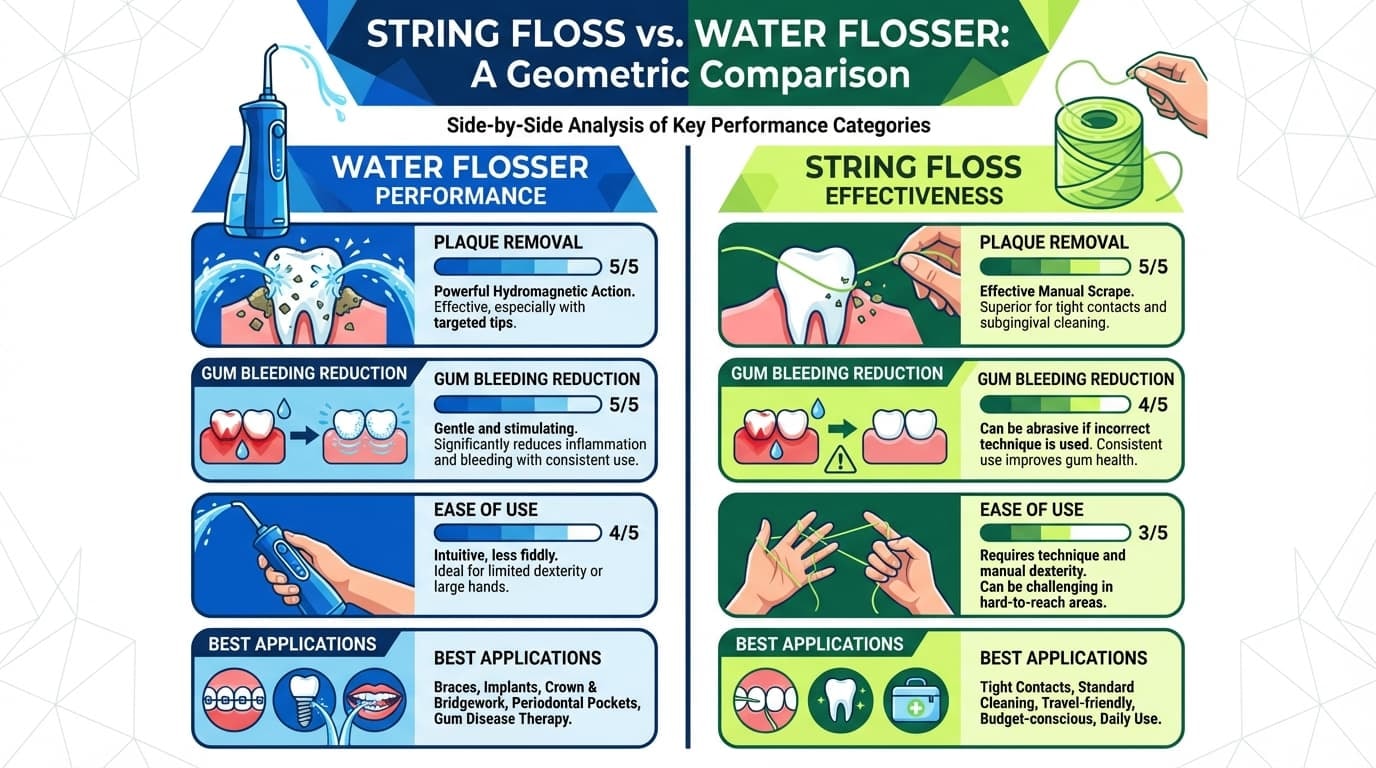
The American Dental Association supports both tools as part of a complete oral health routine, especially when paired with regular dental checkups and brushing.
Whether you choose traditional flossing, a dental water jet, or a combination, the key is to stick with a method you'll use daily to floss your teeth, remove food particles, and reduce the risk of gum disease.
Why Flossing Between Teeth Is Non-Negotiable
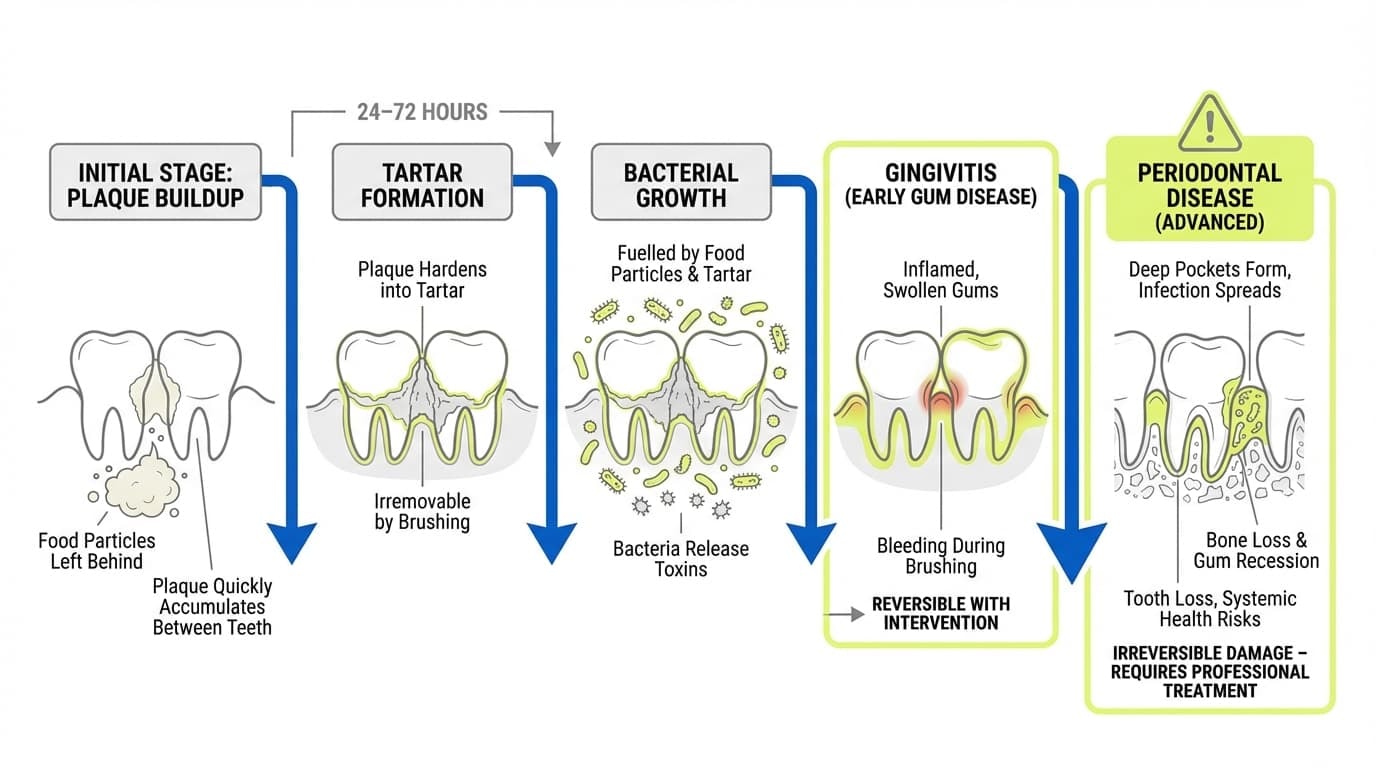
Brushing alone won’t cut it. While brushing twice a day removes plaque from exposed tooth surfaces, it can’t reach the tight spaces between teeth or the deep areas below the gum line. That’s where flossing becomes critical.
The Hidden Risks of Skipping Flossing
Neglecting interdental cleaning can lead to a chain reaction of oral health issues:
-
Plaque buildup quickly accumulates between teeth, forming a sticky film full of bacteria.
-
If not removed, this plaque hardens into tartar within 24–72 hours and requires professional removal.
-
Food particles left behind fuel bacterial growth, leading to gum inflammation and decay.
-
Over time, this results in gingivitis, cavities, and even periodontal disease, all preventable with daily flossing.
According to dental professionals, flossing daily disrupts the oral bacteria colonies that trigger gum disease and helps protect against tooth loss and systemic inflammation. This makes interdental cleaning non-negotiable for good oral hygiene.
What Are the Differences in Mechanism Between Water and String Floss?
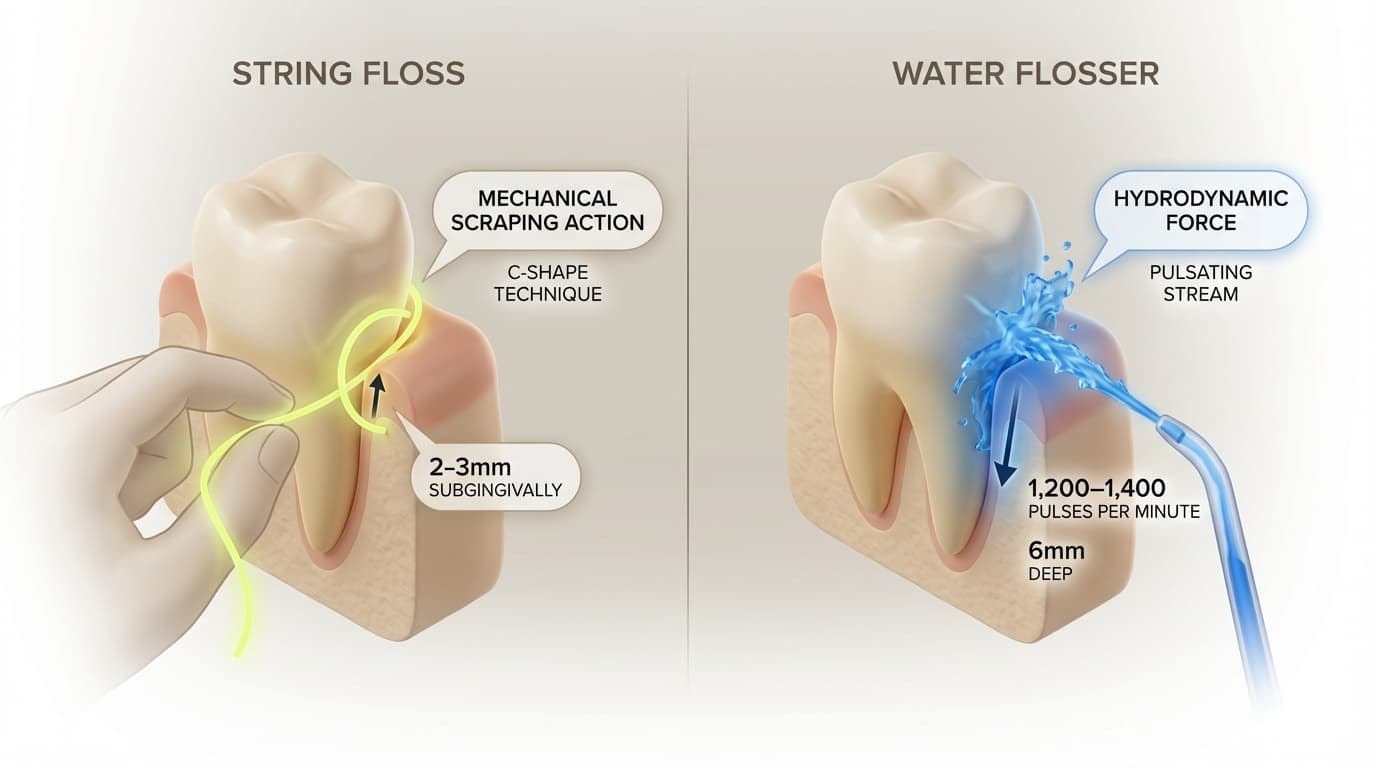
Understanding how string floss and water flossers work helps you choose the flossing method that fits your mouth, lifestyle, and needs.
String Floss: Traditional but Technique-Heavy
String floss functions as a mechanical scraping tool that physically disrupts biofilm from interdental contact points.
When executed with the proper 'C-shape' technique, it removes plaque 2-3mm subgingivally; however, its efficacy is highly user-dependent.
Because it requires high manual dexterity, improper use often results in 'clefting' or gum trauma, making it less ideal for patients with limited mobility or orthodontic appliances.
It physically scrapes away plaque and food particles from the sides of the teeth and just beneath the gum line using a gentle C-shaped motion. Available in waxed, unwaxed, textured, flavored, and pick formats, it offers a straightforward, affordable way to clean where your toothbrush can’t reach.
Here’s why many dental professionals still recommend string floss:
-
Direct contact: Lets you physically scrape plaque off both tooth surfaces
-
Affordable: A year’s supply often costs less than a single coffee shop latte
-
Compact and convenient: Fits easily into your pocket or bag
-
No power required: Great for travel, camping, or everyday use without a charger
However, despite its simplicity, string floss is only effective when used properly, which many people find challenging.
Common drawbacks to be aware of include:
-
Technique-dependent: Requires precise motion and angling to be effective
-
Can be tricky with tight teeth: May shred or snap between closely spaced contacts
-
Not ideal for everyone: Difficult for people with braces, bridges, or limited dexterity
-
Risk of injury: Can cut or irritate the gums if used too forcefully
Because of these challenges, string floss isn’t the best fit for everyone.
It’s typically best suited for:
-
People with good dexterity and hand coordination
-
Users with straight, evenly spaced teeth
-
Those who already floss correctly and consistently
-
Anyone seeking a budget-friendly, no-frills option
While string floss can still be the most effective option when used correctly, the technique demands consistency and care. For those who find flossing difficult or uncomfortable, newer options like water flossers or powered interdental tools may be more realistic and sustainable.
Water Flosser: Comfortable and Powerful
A Water Flosser (Oral Irrigator) utilizes a pressurized, pulsating water stream (1,200–1,400 pulses per minute) to create hydrodynamic shear force. This mechanism flushes plaque and food debris from periodontal pockets up to 6mm deep, significantly surpassing the 3mm reach of traditional string floss.
Also known as an oral irrigator or dental water jet, this tool uses a stream of pressurized, pulsating water to clean between teeth and flush below the gumline.
Water flossers are clinically indicated for patients managing orthodontic brackets, dental implants, or arthritis-related dexterity deficits, where mechanical flossing is often physically impossible.
Here’s how it works:
-
The user directs pulsating water jets between interdental spaces to dislodge debris.
-
The water creates hydrodynamic pressure to remove plaque and debris
-
It can reach 5 to 6 millimeters below the gumline, going deeper than traditional floss
This method is not only more accessible for some users but often more pleasant.
Benefits of using a water flosser include:
-
Easy to use for people with braces, dental implants, arthritis, or mobility challenges
-
Comfortable for those with sensitive gums or early signs of gum disease
-
Cleans deeper and more thoroughly in areas string floss may miss
-
Helps reduce gum bleeding and inflammation over time
While the advantages are strong, there are some limitations to consider.
Things to keep in mind before switching:
-
The initial cost is higher than that of string floss, with most models priced between $25 and $100
-
Requires electricity or regular charging, depending on the model
-
Needs routine cleaning to prevent mold or mineral buildup inside the device
-
Takes a little practice to use without splashing or mess
Despite those considerations, water flossers can be an excellent choice in the right context.
Best suited for people who:
-
Orthodontic Patients: Cleans around brackets and wires where string floss often shreds.
-
Periodontal Cases: Reduces inflammation for users experiencing chronic gingival bleeding.
-
Dexterity Challenged: Provides an automated solution for users with arthritis or limited manual coordination.
A growing body of research supports the effectiveness of water flossers. A 2023 study published in RDH Magazine found that they reduced bleeding on probing by 41 percent, compared to just 19 percent with string floss. That’s a 93 percent improvement in gum health outcomes.
Another clinical trial reported a 29% greater plaque reduction with water flossers, especially among users with braces or dental restorations. If you're looking for a flossing method that is gentle, effective, and easy to maintain, a water flosser could be the best fit for your routine.
What Does Clinical Data Indicate About Flossing Effectiveness?
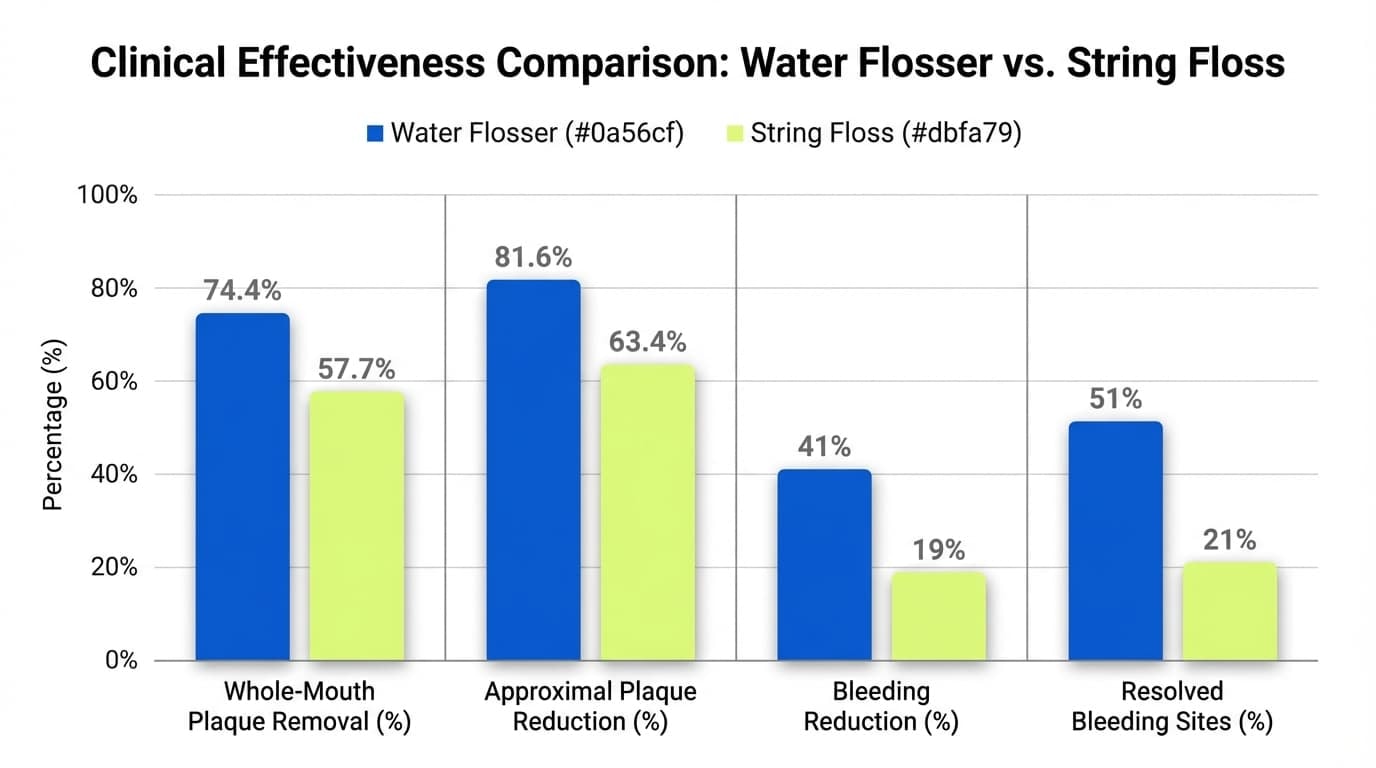
When comparing flossing methods, looking beyond anecdotal preferences and into hard data can help guide your choice. Clinical research over the last decade shows notable performance differences, especially in long-term outcomes.
Multi-Week Comparison: Plaque and Gum Bleeding
A landmark study by Goyal et al. (2013) found water flossers removed 74.4% of plaque from the whole mouth, compared to 57.7% with string floss, a 29% improvement.
On the sides of teeth (approximal surfaces), the difference widened further: 81.6% plaque reduction with water flossers versus 63.4% with string floss.
A 2024 systematic review of 25 trials echoed these findings, confirming water flossers outperform string floss in multi-week plaque control.
Water flossers also outshine in reducing gum bleeding. In a 2023 study, patients who used a water flosser alongside brushing experienced a 41% drop in bleeding on probing, compared to 19% for those using string floss. After just 2 weeks, 51% of bleeding sites had resolved in the water-flosser group, compared with only 21% in the string-floss group.
Single-Use Performance: Nearly Identical
Despite differences in long-term results, both tools are nearly equal in single-use plaque removal. One controlled trial found that both string floss and water flossers removed approximately 87–89% of plaque in a single session.
The statistical similarity in single-session plaque removal (87–89%) suggests that the real-world superiority of water flossing is driven by patient compliance and ease of use rather than raw mechanical potential.
Inflammation and Bacterial Control
A 12-week prospective study revealed that daily water flossing not only reduced oral malodor but also significantly lowered the levels of anaerobic bacteria that contribute to gum disease. Water flossers reduced total aerobic bacteria by 86%, compared with less than 25% with antimicrobial rinses alone.
This deeper bacterial control is largely due to subgingival reach. String floss cleans 2–3 mm under the gumline, while water flossers penetrate 5–6 mm, making them more effective at reducing inflammation in periodontal pockets.
Clinical Performance Summary

For those looking to pair flossing with whitening, SNOW’s Water Flosser offers dual benefits. In addition to its plaque-clearing pulsating jet, it features a whitening solution compatibility option that gently targets stain-prone areas between the teeth and under the gumline. It’s a powerful addition for those who want healthier gums and a visibly brighter smile.
Should You Use Both?
While it’s tempting to pick just one flossing tool, research and dental professionals increasingly support a hybrid approach. For many users, especially those managing braces, dental implants, or mild gum disease, using both string floss and a water flosser may deliver the most comprehensive clean.
Who Benefits Most From a Combined Routine?
A dual-method approach is particularly helpful for:
-
People with braces, where food and plaque collect around brackets
-
Individuals with dental implants, where deep pockets or hardware make string floss less effective alone
-
Anyone with limited manual dexterity who struggles with traditional flossing
-
Users aiming to reduce inflammation and plaque without missing the tight spaces between teeth
By combining both tools, you can maximize plaque removal and inflammation control—especially if done consistently. For example, a 2024 clinical review noted that dual-tool users achieved lower gingivitis scores than those using only one method.
Sample Sequence: When and How to Combine
Here's a dentist-recommended hybrid sequence:
-
Water flossing first: flush out debris and bacteria from periodontal pockets
-
String floss next: scrape away residual plaque, especially in tight spaces
-
Brush with fluoride toothpaste to finish
For best results, perform this routine at night, when plaque and food particles have built up throughout the day. If you snack frequently or wear orthodontic appliances, a midday rinse or a water flossing session can help, too.
Want to brighten your smile while maintaining your gum health? The SNOW Teeth Whitening Kit can complement your flossing routine. This at-home system combines LED-accelerated whitening with peroxide-based serum, helping lift stains without sensitivity. When paired with consistent flossing, it helps achieve a smile that’s as healthy as it is radiant.
Which Flossing Method Fits Your Life Best?
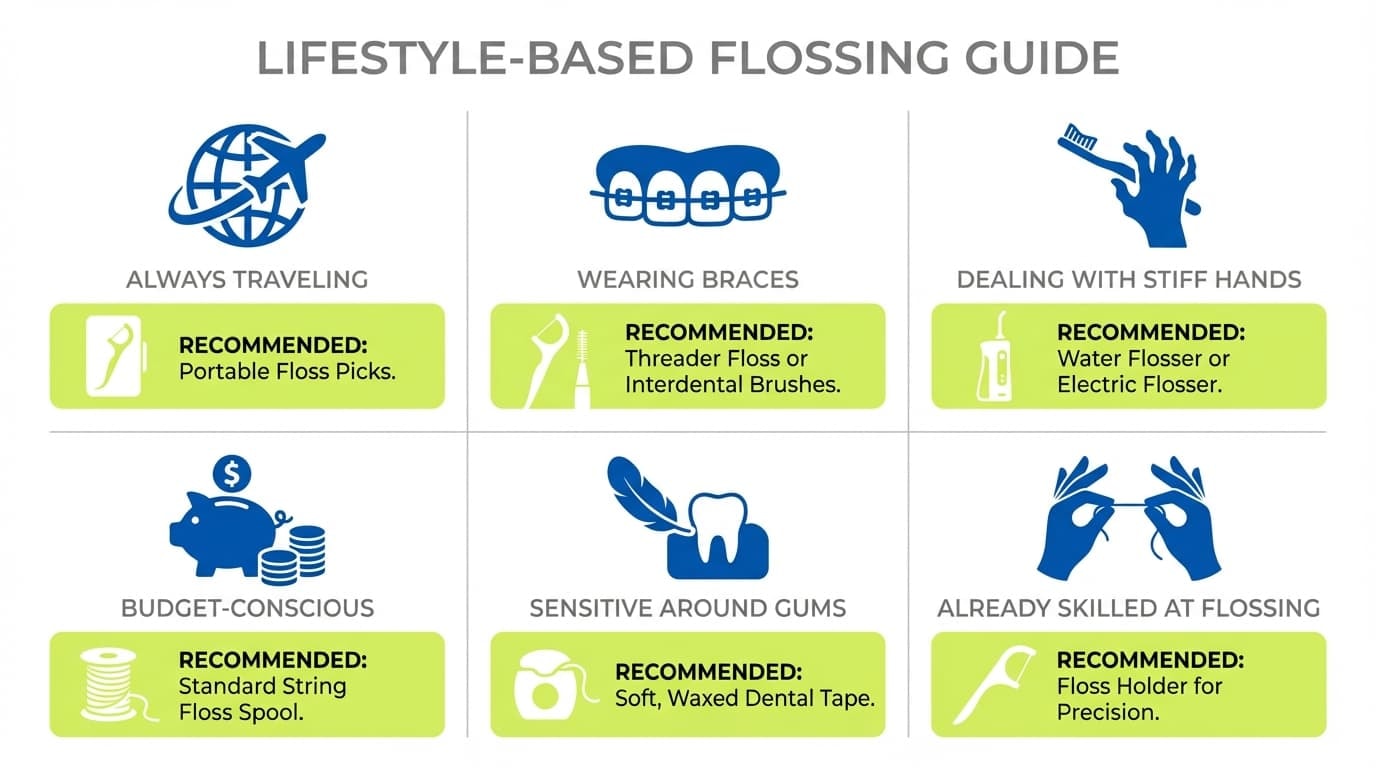
The best flossing tool is the one you’ll actually use. Whether you’re always on the go, have braces, or just want something quick and easy, there’s a flossing method that fits your lifestyle. No guilt, no pressure.
Floss picks are ideal for travel and tight schedules. If you have limited manual dexterity or find using string floss difficult, a water flosser offers a much easier experience. These are especially useful for people with braces or sensitive gums.
Some still prefer traditional string floss, and that works too. It’s affordable, precise, and fits well between tight spaces between teeth. The key is finding something that fits into your daily flossing routine without adding stress.
Quick Match: Which Method Is Right for You?

If you’re unsure which flossing tool best suits you, talk to your dentist or dental hygienist for simple, personalized guidance to improve your oral hygiene.
Step-by-Step: How to Floss the Right Way
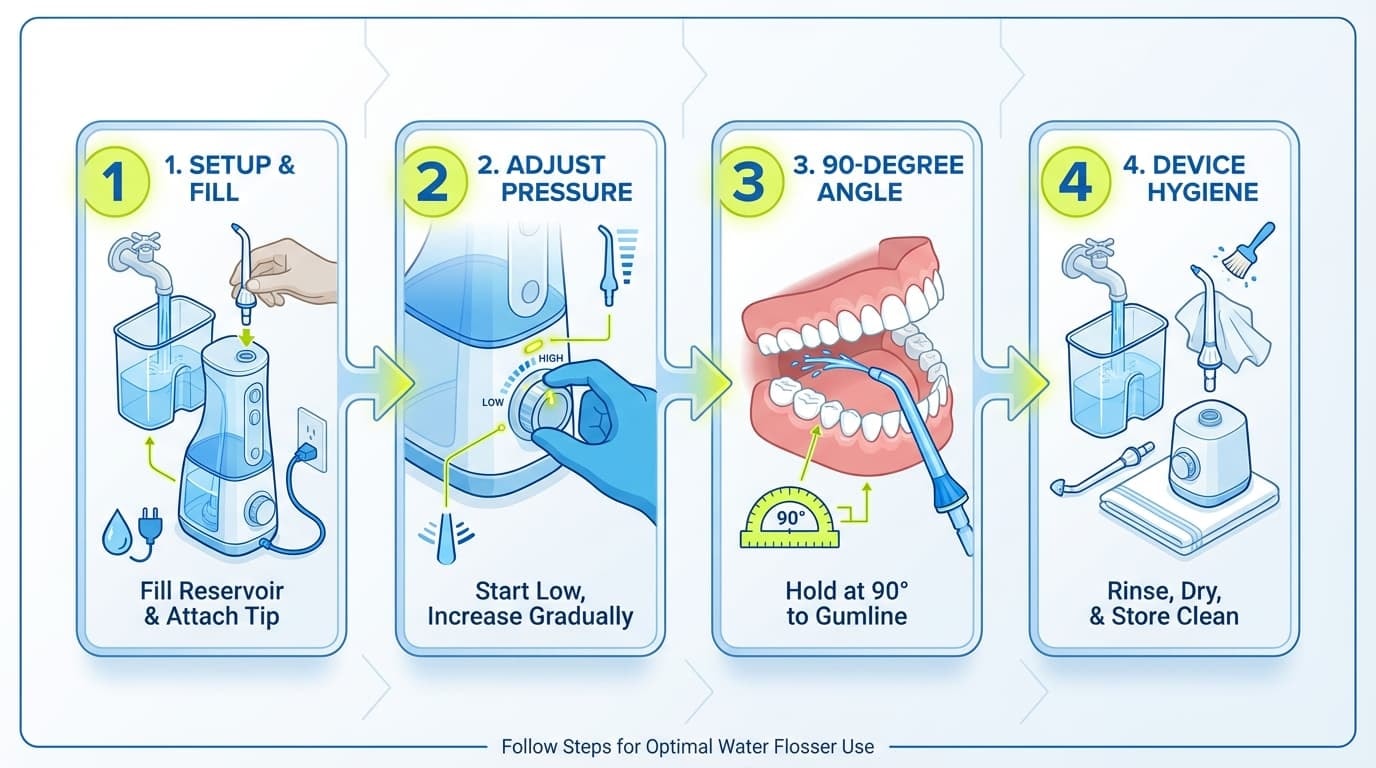
Flossing is more than just a quick swipe between teeth; it’s a key part of your daily oral hygiene routine that helps prevent plaque buildup, gum disease, and periodontal issues. Whether you're using traditional string floss or a modern water flosser, proper technique ensures you're getting the most out of your effort.
Using a Water Flosser Safely and Effectively
For many people, using a water flosser feels easier and more comfortable than traditional flossing. But like any flossing method, it works best when done correctly. Here’s how to make every session count:
1. Setup
Start by filling the reservoir of your oral irrigator, like a Waterpik water flosser, with warm water. For an added boost, some people include a whitening or antimicrobial rinse. Position yourself over the sink and gently close your lips around the flosser tip to avoid splashing.
2. Adjust Pressure
If you're new to water flossing or have sensitive gums, begin with the lowest pressure setting. Over time, you can increase it for deeper interdental cleaning. Be mindful not to aim directly into the gums, as too much force can irritate delicate tissue.
3. Angle It Right
Hold the tip at a 90-degree angle toward the gum line. Glide it slowly along each tooth surface, pausing briefly between teeth. This ensures you’re flushing out food particles and effectively removing plaque where it hides most, in the spaces between teeth and just under the gumline.
4. Practice Good Device Hygiene
Just like your toothbrush, your flosser needs regular cleaning. Empty and rinse the reservoir after each use, and clean the tip regularly. This keeps bacteria and mold at bay, preserving both the tool and your oral health.
Water flossing is especially beneficial for those with braces, dental implants, or limited manual dexterity, as it offers a comfortable way to maintain healthy gums as part of your oral health routine.
Mastering String Floss Technique
If you prefer traditional string floss, technique is everything. Done right, it’s still considered a gold standard in interdental cleaning. Done wrong, it can be ineffective or even harmful. Let’s walk through the correct way to floss teeth with a string.
1. Learn the Proper Method
Use about 18 inches of dental floss, winding most around your middle fingers. Gently guide the floss between teeth using your index fingers and thumbs. Curve the floss into a “C” shape around each tooth, moving it up and down to clean beneath the gum line and dislodge plaque or food debris.
2. Avoid Common Mistakes
Never snap or force the floss. This can damage your gums and cause bleeding. Also, avoid using the same section of floss between multiple teeth, as this can spread bacteria. A gentle yet thorough motion is the key to reducing your risk of gum disease.
3. Use Helpful Tools When Needed
If using string floss feels awkward, there are plenty of options. Floss picks, pre-threaded holders, and floss threaders can make traditional flossing easier, especially for people with braces, tight spaces, or arthritis. These tools help ensure you're sticking to a consistent flossing routine, no matter your needs.
Whether you prefer the precision of string or the ease of a dental water jet, mastering your method matters. Regular flossing, along with regular dental checkups, builds the foundation for good oral health and a healthy smile.
What Dentists Recommend (And Why It Matters)
While daily flossing is a key part of any oral hygiene routine, understanding what your dentist and dental hygienist actually look for during checkups can help you improve your approach and outcomes.
When Dentists Recommend One Method Over the Other
Dental professionals often tailor their advice based on your specific needs. Here's how they generally recommend each method:
-
Water Flosser: Most commonly suggested for patients with braces, dental implants, sensitive gums, or limited manual dexterity. If you're at risk of gum disease, struggle with traditional flossing, or experience gum bleeding, a water flosser can make interdental cleaning more comfortable and effective.
-
String Floss: Often preferred for those with straight teeth, good dexterity, and tight contacts. If you can easily maneuver floss and have no dental appliances, traditional floss may provide more precise plaque removal, especially just under the gum line.
In some cases, dental professionals may recommend using both methods, especially if you're managing plaque buildup or undergoing orthodontic treatment.
What Hygienists Check During Cleanings
During your cleaning, dental hygienists are trained to spot signs of inadequate flossing. They’ll check for:
-
Red or inflamed gums
-
Bleeding during probing
-
Tartar or hardened plaque between teeth
-
Food debris in hard-to-reach areas
-
Signs of periodontal disease or gingivitis
They may also ask about your current flossing method and how often you floss. If they notice recurring issues in the same areas, they may suggest adjusting your technique or switching to a different tool, like a water flosser or floss picks.
Ask Your Dentist What’s Right for You
If you are unsure which flossing method is right for you, ask your dentist during your next visit. They can assess your gum health, oral anatomy, and daily habits to recommend a personalized oral health routine.
Whether you're using string floss, a dental water jet, or a combination of tools, following your provider’s advice is one of the most important steps toward a healthier smile.
Final Thoughts
Choosing between water flossing and string flossing comes down to your comfort, routine, and dental needs. Both methods support better oral health, but water flossers may offer added comfort and improved gum care, especially if you have braces, implants, or sensitive gums.
String floss is still a great, affordable choice for those with good technique and dexterity. For many, using both tools in a daily oral hygiene routine delivers the best results.
SNOW offers user-friendly options, like their Water Flosser and Whitening Kit, designed to boost gum health and support a whiter, cleaner smile.
Pair your flossing method with regular dental checkups and the right tools to stay ahead of plaque and gum issues.
Ready for a cleaner, brighter smile? Try SNOW's advanced flossing tools today and elevate your daily routine.
FAQs
Here are quick answers to common flossing questions.
Can a water flosser completely replace string floss?
A water flosser can effectively remove plaque and food particles, but it may not fully replace string floss for everyone. String floss is still recommended for tight spaces and areas below the gum line. Ask your dental hygienist which flossing method is best for your daily oral hygiene routine.
Is it safe to share a water flosser if we each use our own tip?
Sharing a water flosser, even with separate tips, is not considered safe by dental professionals. Oral bacteria can accumulate inside the device, and studies have shown that its internal parts may harbor germs. To protect your oral health, it’s best to use one device per person.
Will using both water floss and string floss damage my gums?
Using both water floss and string floss will not damage healthy gums when used correctly. In fact, combining the two can improve interdental cleaning, reduce plaque buildup, and support long-term oral hygiene.
How long does it take to see results after switching methods?
Most people see improvements, such as less gum bleeding and fresher breath, within 1 to 2 weeks of switching flossing methods. A 2023 study found that water flosser users achieved 51 percent bleeding site resolution in just 2 weeks, compared with 21 percent with string floss.
What if my gums bleed more when I start water or string flossing?
Mild gum bleeding is common when inflamed gums first start being cleaned regularly. If your gums bleed more when you begin water or string flossing, it usually signals existing inflammation, not injury. With consistent daily flossing and proper technique, bleeding typically decreases within one to two weeks. If bleeding persists, consult your dentist to rule out gum disease.