

The biggest difference between SNOW dissolving purple strips and peel-off whitening strips shows up when the session ends: SNOW’s dissolving purple strips dissolve completely after use, while peel-off strips stay intact and have to be removed by hand.
For anyone choosing a teeth whitening option for instant optical brightening and a simpler routine, that format change affects convenience, feel, cleanup, and the cosmetic result you can expect.
At SNOW, we designed our Dissolving Purple Teeth Whitening Strips for people who want instant optical brightening without peeling away a plastic strip.
This comparison guide explains how the dissolving format compares with peel-off strips in application and cleanup, what the purple color-correcting formula can realistically do, what relevant research says, and which option may suit your routine.
Key Takeaways
-
The dissolving purple format leaves no plastic strip to peel away after use.
-
Peel-off strips stay intact and require manual removal at the end of the labeled wear time.
-
SNOW uses a purple color-correcting formula to instantly brighten yellow tones.
-
Purple color correction is cosmetic and should not be presented as a permanent shade change.
-
The better format depends on your preferred texture, cleanup, timing, and cosmetic goal.
What’s the Main Format Difference Between Whitening Strips?
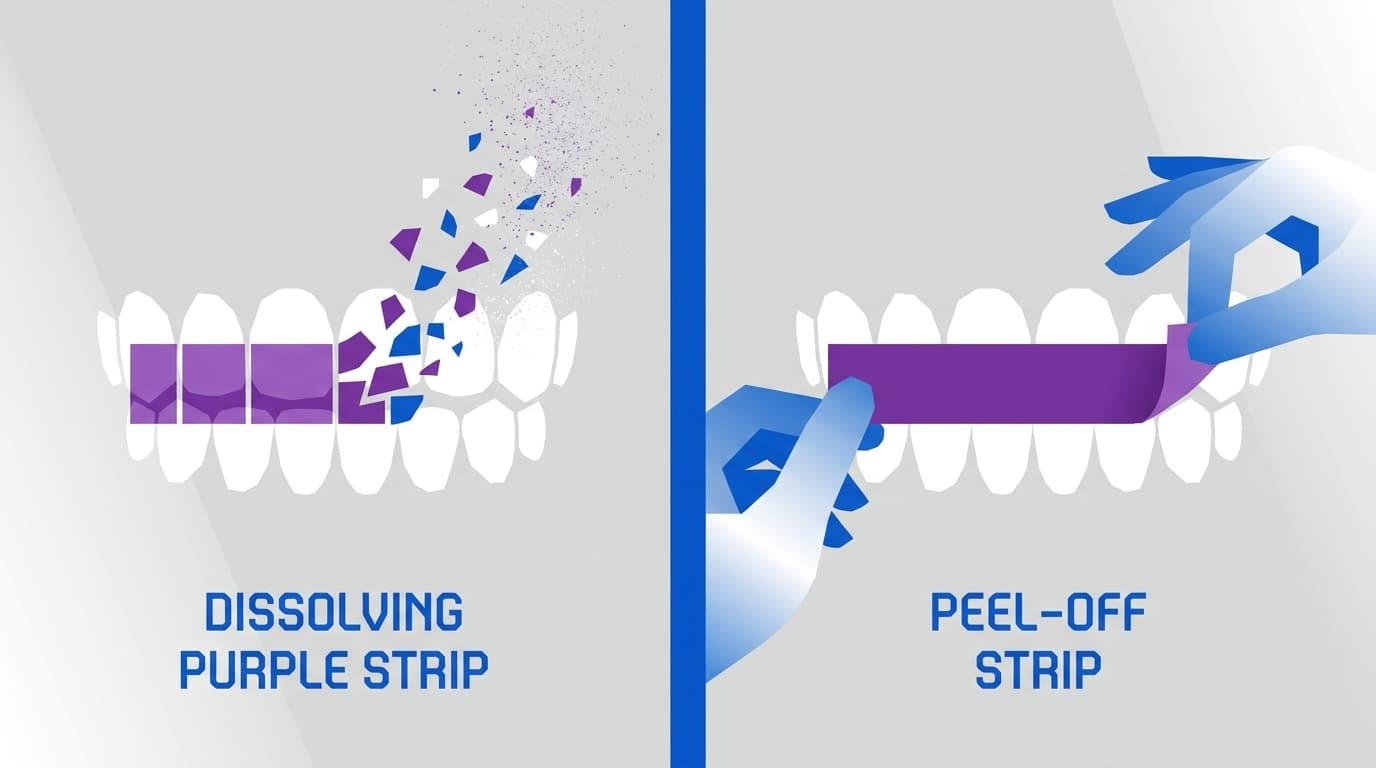
Both products place a thin strip across the visible front teeth. From there, the experience splits. A peel-off strip stays intact until you remove it, while SNOW’s purple format is designed to dissolve completely.
That means the difference isn’t simply purple versus clear. It changes the final step, the amount of handling, and what remains after the session. The formula and labeled directions still matter, but the physical format shapes the day-to-day experience.
Dissolving Strips Finish Without a Peel-Off Step
The live product page describes SNOW Dissolving Purple Strips as a completely dissolving format with no messy removal. Once the strip breaks down, there is no plastic layer to pull from your teeth or place in the trash.
This can feel more natural for busy mornings, travel days, or getting ready before an event. You still need to follow the package directions, but the routine does not end with a peel-off step.
Discover the Difference of SNOW's Purple Strips
Peel-Off Strips Stay Intact Until Removal
Conventional peel-off whitening strips use a flexible backing that stays on the teeth for the full labeled wear time. When the timer ends, you remove the upper and lower strips by hand. Depending on the formula, some gel or tacky residue may remain.
That format gives you a clear start and finish. Some shoppers like seeing the strip come off, while others would rather skip the handling and cleanup. Neither preference is wrong, it just comes down to what you’ll actually use consistently.
How the Application and Cleanup Compare
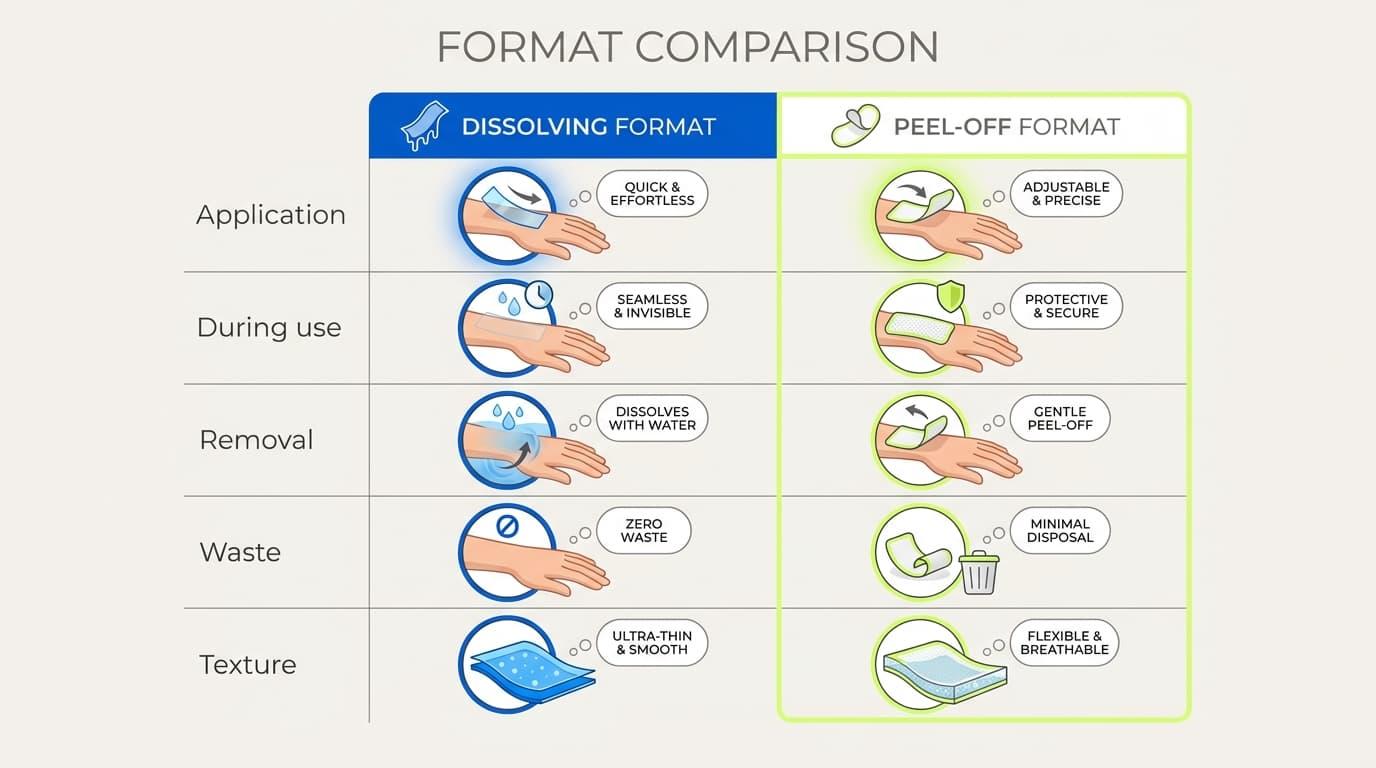
The first steps look similar. You position the strip across the front teeth, press it into place, and wait for the directed period. The practical difference arrives during wear and removal.
Here’s the simplest side-by-side view:
-
Application: Both formats need careful placement across the visible teeth.
-
During use: SNOW’s film gradually dissolves, while a peel-off backing stays intact.
-
Removal: SNOW needs no plastic peel-off step; conventional strips must be removed by hand.
-
Waste: Peel-off formats leave used strip backings, while the SNOW film dissolves.
-
Texture: A dissolving film changes as it breaks down, while a peel-off strip keeps its shape.
Dry Placement Helps Either Format Sit Better
Moisture can make placement harder before a strip settles. Start with clean hands, follow the label instructions, and apply the strip carefully over the intended tooth area. Avoid pushing material onto the gums.
For a practical placement sequence, SNOW’s instructions on using whitening strips cover positioning, timing, and following the product label. With dissolving formats, place one strip on the upper teeth and one on the lower teeth, pressing each into place carefully.
Always use the directions included with the product in your pack. SNOW does not require a rinse after the film dissolves, but you should still follow the exact package directions.
Dissolving Doesn’t Mean Texture-Free
A dissolving strip changes texture as the film breaks down quickly. That can feel different from the steady plastic backing of a peel-off strip. Some people prefer the lower-handling finish, while others prefer a strip that stays intact until removal.
This is a comfort-and-convenience difference, not proof that one format delivers a stronger cosmetic result. The best choice is the one whose application and finish feel more convenient and nice in your routine.
Why the Purple Formula Looks Different
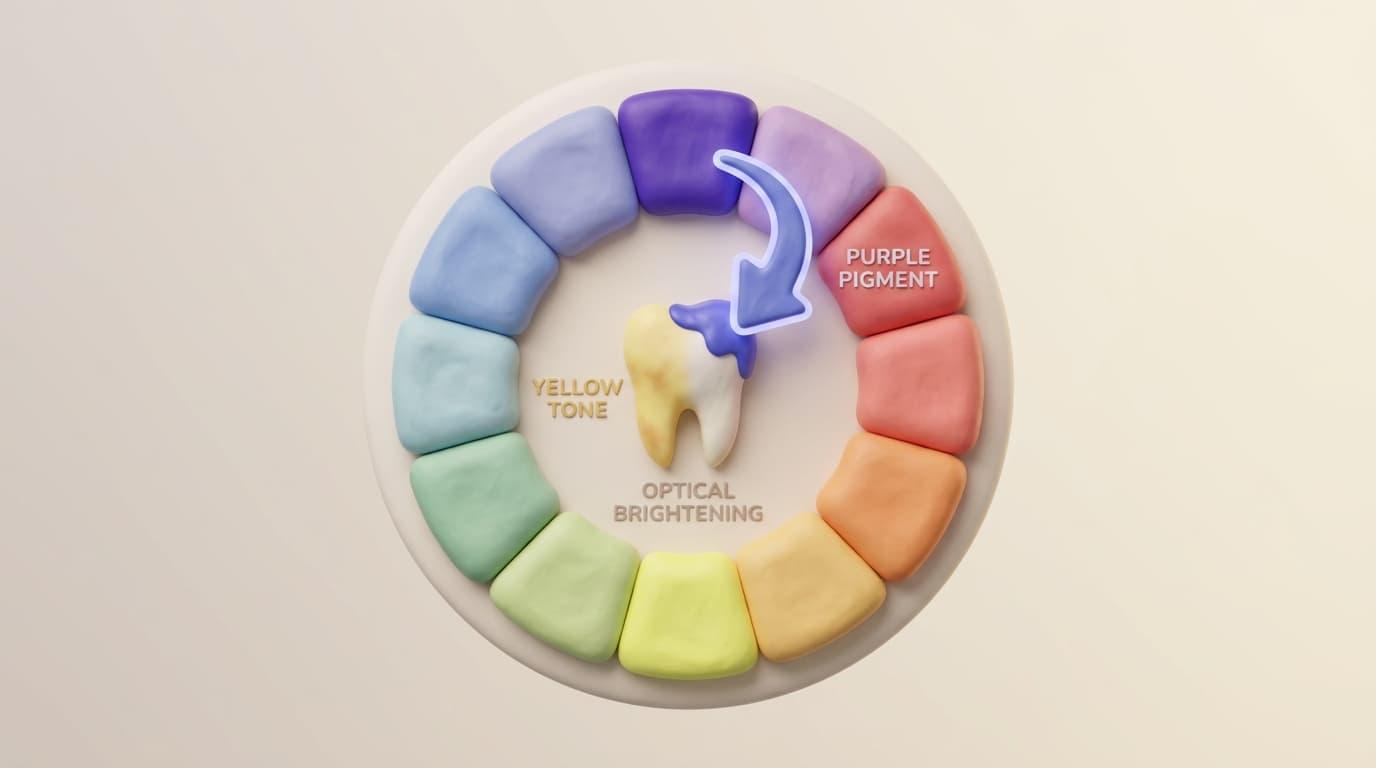
SNOW’s purple shade has a specific cosmetic purpose. Purple and yellow sit opposite one another on the color wheel, so violet pigment can make visible yellow tones appear cooler. The result is optical brightening, not a reason to claim that the underlying tooth color permanently changed.
Purple Color Correction Targets Yellow Tones
Think of the effect like color-correcting makeup. The purple formula changes how warm yellow tones look while the color-correcting effect is visible. This makes the format useful before photos, meetings, or a wedding, or any time you want a quick cosmetic refresh and a temporarily whiter-looking smile.
Results can vary depending on the starting shade, lighting, and the source of discoloration.
Peel-Off Doesn’t Automatically Mean Peroxide
Many conventional strips use whitening gels, but shoppers should never assume every peel-off strip contains the same formula or strength. For example, Dr. Dent strips contain Phthalimidoperoxycaproic Acid (PAP) rather than peroxide, and the brand positions that peroxide-free formula for sensitive teeth. The label is the source of truth.
The same accuracy rule applies to SNOW Purple Strips. The current product page verifies a purple color-correcting formula, hydroxyapatite, P3 Technology, and a dissolving film. It does not support the original draft’s claim that hydrogen peroxide creates a permanent baseline shade change in this product.
Experience the Power of Purple
What U.S. Whitening Research Actually Shows
Studies on conventional whitening strips can help explain why ingredients matter, but their findings cannot be applied to a different formula. Research about a peroxide strip supports the tested peroxide strip under the study conditions. It doesn’t prove that every strip, purple formula, or dissolving film produces the same outcome.
A 2025 Trial Tested a Peroxide Strip
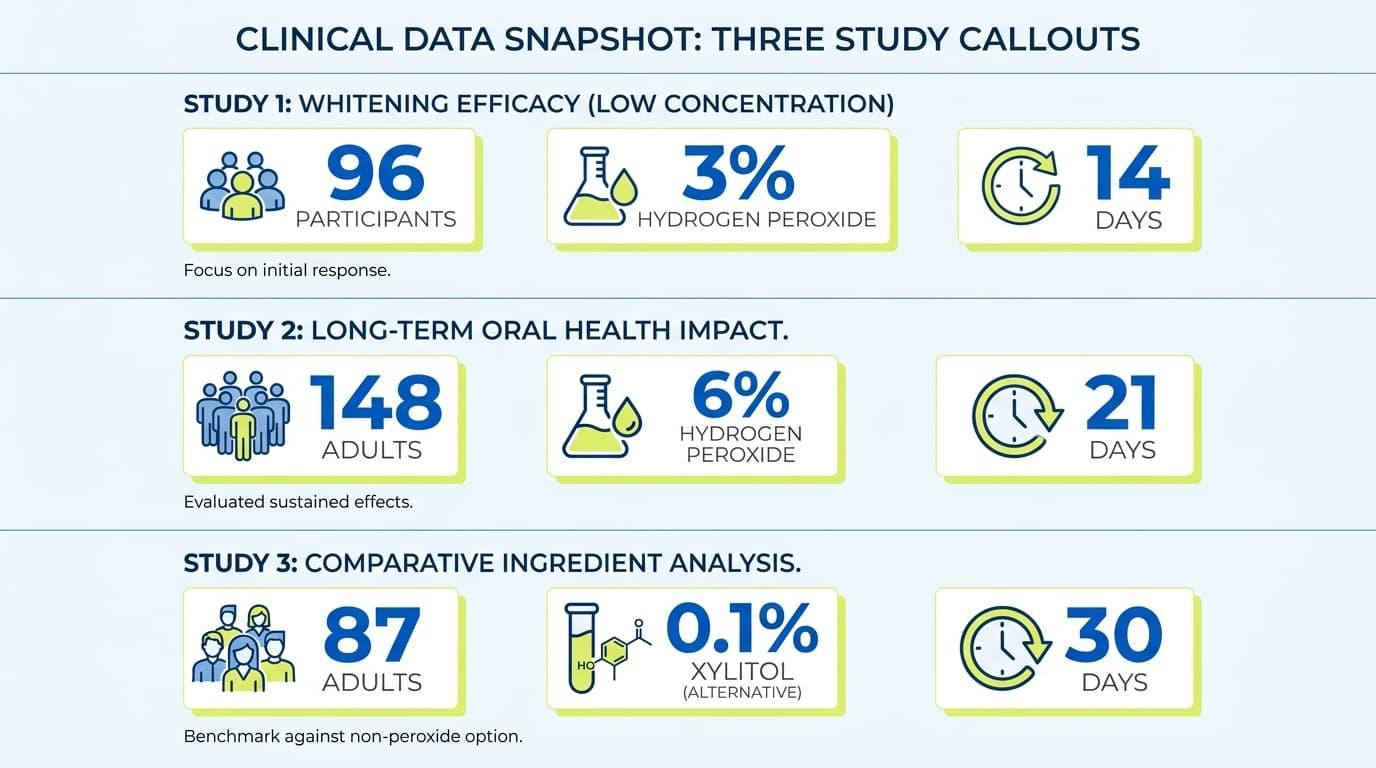
A 2025 randomized controlled trial followed 96 participants and compared two strips containing 3% hydrogen peroxide. Participants used the assigned strip for 30 minutes daily over 28 days, and researchers measured color at several points. That study is recent and useful for conventional peroxide-strip evidence, but it did not test the SNOW purple dissolving formula.
The boundary matters. We can say the trial measured whitening with the tested peroxide products. We can’t use it to invent an application time, ingredient level, guaranteed shade change, or durability claim for a separate product. The live label and product page remain the correct sources for product-specific directions.
Older Strip Studies Reinforce the Formula Point
A seven-trial meta-analysis of 148 adults reported measurable lightness and yellowness changes with 6% hydrogen peroxide strips after one and two weeks. The researchers also recorded tooth sensitivity and oral irritation during the trials. Those findings belong to the tested 6% peroxide system, not to every strip format on the market.
Another randomized study of 87 adults compared 6% hydrogen peroxide strips, an 18% carbamide peroxide gel, and a placebo toothpaste. The strip group showed the largest measured color changes eight weeks after the products were dispensed. Again, the useful lesson is that formulation and study design drive the evidence. The word “strip” alone does not guarantee the same result.
What Results Can You Realistically Expect?
Format affects convenience, but it doesn’t erase the need for realistic expectations. SNOW Purple Strips are positioned for instant optical brightening and a cooler-looking yellow tone, so the visible change is better framed as cosmetic improvement than as a guaranteed shade number or permanent outcome.
Peel-off strips vary widely by formula. Some products are designed for repeated whitening sessions and aim to whiten teeth or lift surface stains over time, while purple correction creates a different cosmetic result. Compare the ingredients, directed schedule, and supported claims rather than judging the product by its backing alone.
Your Starting Shade Still Matters
Purple works most naturally against visible yellow tones and surface stains. Brown, gray, patchy, or unexplained discoloration developing inside the tooth may not respond in the same way and should be assessed professionally. Crowns, veneers, fillings, and bonding can also look different from nearby natural teeth after whitening.
Dental restorations do not whiten like natural teeth, according to the American Dental Association’s clinical overview. If matching is a concern, ask a dentist to review the full smile before starting a whitening routine, especially if you are planning cosmetic work.
Lighting Can Change the Big Reveal
A bright bathroom light, a warm bulb, and a phone flash can make the same smile look different. Compare before-and-after photos in the same room, at the same distance, and with the same camera settings. This keeps lighting from taking credit for the entire result.
A consistent photo setup is especially useful for purple color correction because the effect is visual. If yellow tones look cooler under the same conditions, you have a fairer picture of what changed.
How Smoking Can Affect Whitening Results
A format comparison becomes more useful when it reflects the stains people are trying to manage. Smoking is still relevant for millions of U.S. adults, and tobacco exposure can contribute to visible staining, as can tea. Purple correction may cool yellow tones for a moment, but it isn’t a special nicotine-removal treatment and should never be sold as one.
Purple Strips Do Not Remove Hardened Buildup or Surface Stains
A film placed over the front teeth cannot replace professional cleaning. If yellow or brown material is hardened on the tooth surface, adding purple pigment over it does not remove the deposit. The same limit applies to a standard peel-off whitening strip.
This is also where intent matters. Someone searching for a fast optical refresh may be satisfied with color correction. Someone expecting deep stain removal, a permanent shade shift, or the removal of hardened buildup needs to have a different conversation with a dentist. Clear expectations make the product comparison more honest.
Which Format Fits Your Routine Better?
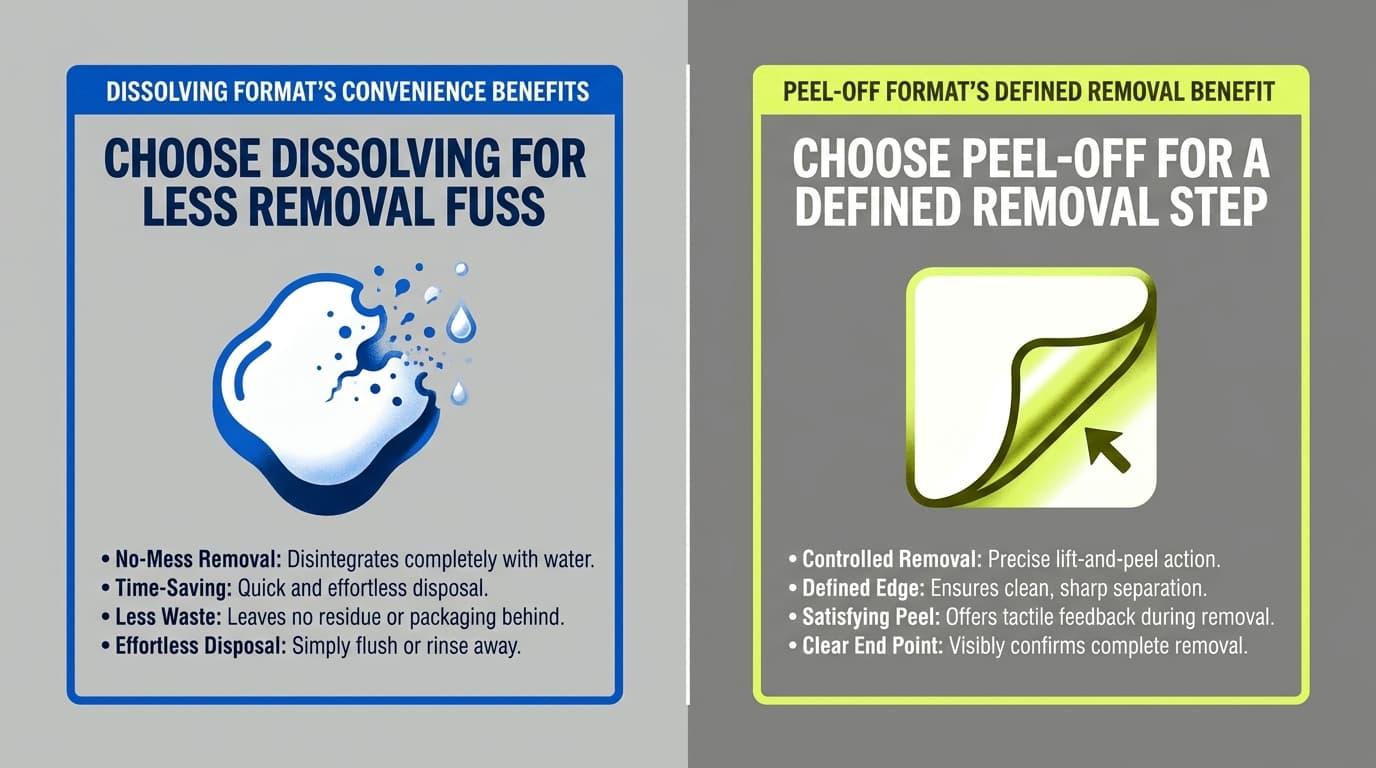
Choose based on the experience you will actually repeat to help you decide. A product can have polished marketing and still be a poor fit if you dislike the texture, timing, or cleanup. Start with your schedule, then compare the supported cosmetic results to judge the overall value of the experience and cosmetic payoff.
Choose Dissolving for Less Removal Fuss
SNOW’s format makes sense if peeling used strips away is the part you dislike most. The film dissolves completely, the purple formula delivers instant optical brightening, and the live page currently offers 7-treatment and 21-treatment options. The page also shows a 4.8 rating based on 661 reviews as of August 2026.
At SNOW, we keep the promise focused on appearance and convenience. The product is made for a quick purple boost and can be worth it if you prioritize convenience over a traditional removal step, though individual results can vary.
It can be especially convenient when you’re getting ready quickly for plans or events.
Choose Peel-Off for a Defined Removal Step
A conventional format may suit you if you prefer a strip that keeps its shape until the session ends. You can remove it at a clear stopping point and immediately see that the backing is gone. Just plan for handling the used strips and follow any cleanup directions on the label.
Do not extend wear time to chase a stronger result. More minutes won’t turn an unsupported claim into a better one, and the product directions should set the limit.
How to Compare Labels Before You Buy
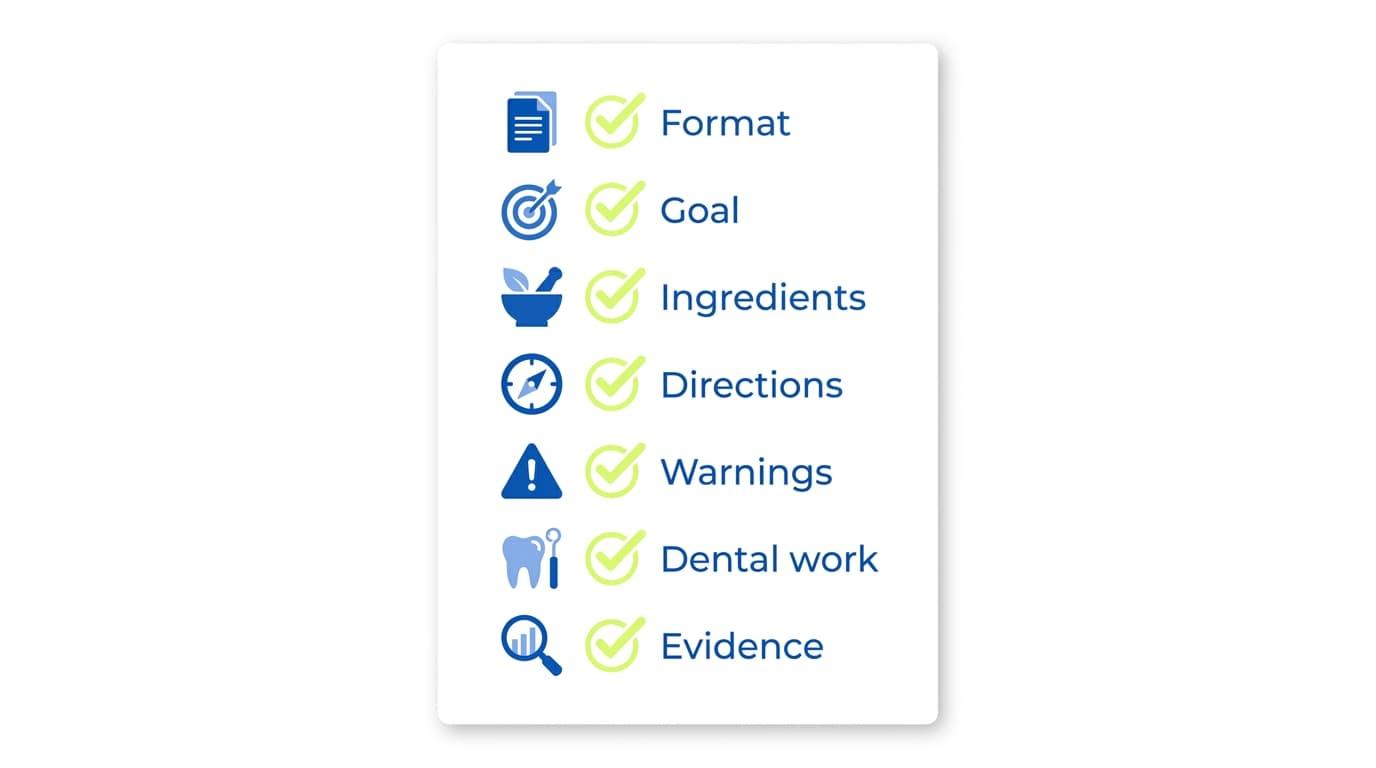
The front of the box gives you the headline. The directions and ingredient list give you the real comparison. Take one minute to check the format, cosmetic goal, use schedule, warnings, and treatment count before adding a product to your cart.
Use this short checklist to separate marketing language from useful information and help you learn from labels rather than marketing alone:
-
Format: Confirm whether the film dissolves or stays intact for manual removal.
-
Goal: Look for optical brightening, stain removal, or bleaching language, and do not treat those claims as identical.
-
Ingredients: Never assume a strip contains peroxide, hydroxyapatite, or another ingredient based on its color or backing.
-
Directions: Follow the wear time and frequency printed on the current package; some products may call for use more than once a week, while others use a different schedule.
-
Warnings: Check age guidance, storage notes, and instructions for accidental swallowing or irritation.
-
Dental work: Remember that restorations may not respond like natural teeth.
-
Evidence: Match every claim to the exact product and formula tested.
Do Not Borrow Directions From Another Strip
A 30-minute schedule appears in several peroxide-strip studies, but that does not make 30 minutes a universal rule. Dissolving time, ingredient contact, and frequency vary.
Use the directions in the current pack, even if another product looks almost identical. Some labels also say to avoid eating or drinking for about 30 minutes after use, so post-use directions matter too.
The same rule applies to social media routines. Stacking products, doubling sessions, or extending wear time can move you outside the label. More product is not a shortcut to a supported result. Stop using the product and contact a dentist if you have a concerning reaction.
Check Live Product Details Before Checkout
Prices, treatment options, guarantees, ratings, and stock can change. The SNOW product page currently lists 7-treatment and 21-treatment options, a 4.8 rating from 661 reviews, and a 30-day smile guarantee as of August 2026.
Reviews can also help shoppers get an idea of how the dissolving experience feels in real use, including comments from buyers who were glad they tried the dissolving-strip idea for convenience, but live product details still need to be verified at checkout. Those facts should be checked again on the day the article is published.
Who Should Pause Before Whitening?
A cosmetic product is not the right first step for every smile. Pause and ask a dentist about unexplained discoloration, pain, broken or loose teeth, sores, active dental work, or a shade mismatch involving crowns, veneers, fillings, or bonding. The goal is not to diagnose the issue online. It is to avoid covering a question that deserves an exam.
Dental Restorations Can Create an Uneven Match
Natural teeth and dental restorations do not necessarily change color in the same way. If the surrounding teeth look cooler or brighter while a crown or filling stays the same, the difference can become more visible.
A dentist can help set expectations before you begin, because over-the-counter strips can brighten appearance but are not the same as bleaching, bonding, or professional whitening when shade matching around restorations is the goal.
This matters with both dissolving and peel-off strips. Changing the backing does not change the material used in a restoration. The format may improve convenience, but it cannot guarantee a uniform result across natural teeth and dental work.
Sensitive Teeth and Irritation Need Accurate Language
Conventional whitening-strip studies have reported temporary tooth sensitivity and oral irritation in some participants, so any gentle language around sensitivity needs to come from the exact formula and evidence, not assumptions about all strips.
That does not justify saying a product treats sensitivity, prevents irritation, or is risk-free. Claims must stay within the evidence for the exact formula.
Keep the strip on the intended tooth surface, follow the label instructions, and do not continue if you experience significant discomfort. If symptoms are strong, persistent, or worrying, stop and contact a dentist. Cosmetic brightening should never be framed as a reason to ignore what your mouth is telling you.
A Cleaner Finish for a Faster Routine
Dissolving purple strips differ from peel-off whitening strips in the way they finish, feel, and frame the result. The dissolving film breaks down completely and uses purple color correction for instant optical brightening. Peel-off strips stay intact until you remove them, and their formulas vary by product.
At SNOW, we created Dissolving Purple Teeth Whitening Strips for people who want fewer removal steps and a fast cosmetic refresh. Check the live product page for current options, follow the package directions, and judge your result in consistent light.
Frequently Asked Questions
These quick answers cover the most common questions about dissolving and peel-off strip formats.
Do SNOW's Purple Strips Need to Be Peeled Off?
No. SNOW Purple Strips are designed to dissolve completely, so there is no plastic strip to peel away after use. Follow the package directions and allow the film to break down as intended. The dissolving finish is the main convenience difference from a conventional strip that stays intact until removal.
Are Dissolving Strips Stronger Than Peel-Off Strips?
The format alone does not determine strength or results. SNOW Purple Dissolving Whitening Strips differ from peel-off strips mainly in format, not automatically in whitening power, because dissolving and peel-off products can use different formulas, ingredients, and schedules.
Compare the label, directed wear time, and supported cosmetic claims instead of assuming that removal style determines performance. Convenience and formula are separate parts of the buying decision.
Do Purple Strips Permanently Change Tooth Color?
Purple pigment creates an optical color-correcting effect that can make yellow tones look cooler. That should not be presented as proof of a permanent shade change. Results vary depending on the starting shade, lighting, and the type of discoloration. Compare photos under the same conditions to judge the visible effect.
Can I Use Study Wear Times for a Different Product?
No. A wear time used in a clinical trial applies to the product and protocol tested in that study. It is not a universal direction for every whitening strip. Follow the current instructions included with your product, and do not extend the session or increase frequency to imitate another formula’s research schedule.
Are Purple Strips a Special Treatment for Smoking Stains?
No. Purple pigment can make visible yellow tones appear cooler through temporary optical color correction. It is not a nicotine-removal treatment and does not remove hardened buildup. Continued smoking can add new discoloration, while unusual, heavy, or persistent staining is a reason to speak with a dentist before relying on cosmetic products.


