

You count the weeks. Your event is six weeks out, maybe eight.
You tell yourself this time you will actually whiten your teeth, but then you remember the last time: The shooting pain after a single session, the sensitivity that made cold water unbearable for three days. For those whitening sensitive teeth, it's common to experience sharp pain during or after treatment. If you experience sharp pain, it's important to pause and consult a dental professional to ensure your safety and comfort. So you do nothing. Again.
That cycle isn’t about willpower. It’s about the product you use.
Most whitening formulas are built for people who can tolerate high peroxide loads. If that’s not you, no amount of commitment can fix the wrong formula.
This guide explains why sensitivity occurs, which ingredients actually help, and how to build a realistic timeline around your event date.
Key Takeaways
-
Sensitive teeth can be whitened safely before a big event when the formula matches your needs.
-
Starting two to four weeks before your event is ideal for best results and minimal sensitivity.
-
Consider professional whitening options for rapid, reliable, and safe results, especially if you have sensitive teeth.
-
Use whitening toothpaste formulated for sensitive teeth to help maintain and enhance your results after whitening.
-
Hydroxyapatite and potassium nitrate are the two ingredients that make whitening tolerable for sensitive teeth.
-
High-peroxide products, staining foods, and last-minute full kit cycles all work against you in the final days.
-
LED-accelerated whitening kits can deliver visible results in as few as 9 to 21 days.
-
Maintaining results after the event takes less effort than getting them. A consistent, light routine is all it takes.
Why Whitening Triggers Tooth Sensitivity in the First Place
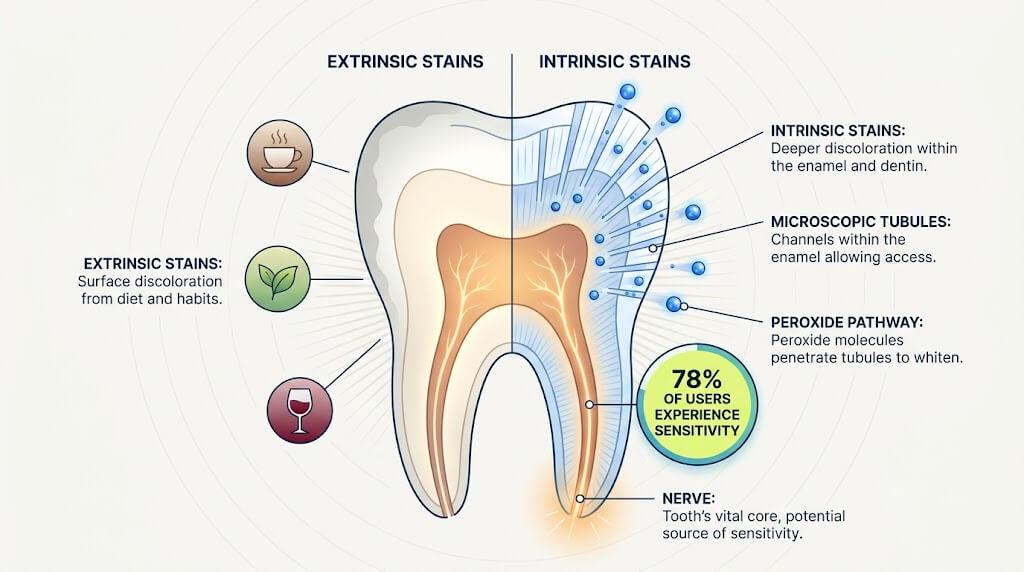
When hydrogen peroxide penetrates the enamel, it temporarily opens microscopic tubules in the tooth structure, lifting embedded stain molecules.
That process can reach the nerve inside the tooth, which is what produces the aching or sharp sensitivity after a session.
According to a study published in the Journal of Dentistry, tooth sensitivity is the most commonly reported side effect of peroxide-based whitening, affecting up to 78% of users at some point during treatment.
The critical thing to understand: This is a physiological reaction to peroxide concentration, not a sign of permanent damage. Lower the concentration, add the right buffering ingredients, and the reaction becomes manageable or disappears entirely.
Extrinsic vs. Intrinsic Stains: Setting Realistic Expectations
Not every stain responds to at-home whitening, and knowing which type you are dealing with shapes what results you can expect.
-
Extrinsic stains: Sit on the outer enamel surface and are caused by coffee, tea, red wine, and dark foods. These respond well to at-home whitening products, including gel-based kits and whitening strips.
-
Intrinsic stains: Occur deeper within the tooth structure, typically due to aging, certain medications, or past trauma. These generally require professional in-office treatment rather than over-the-counter solutions.
For most people reading this, the stains driving the frustration are extrinsic, meaning surface-level discoloration that responds to the right at-home formula. That’s the good news.
Your Whitening Timeline Before a Big Event
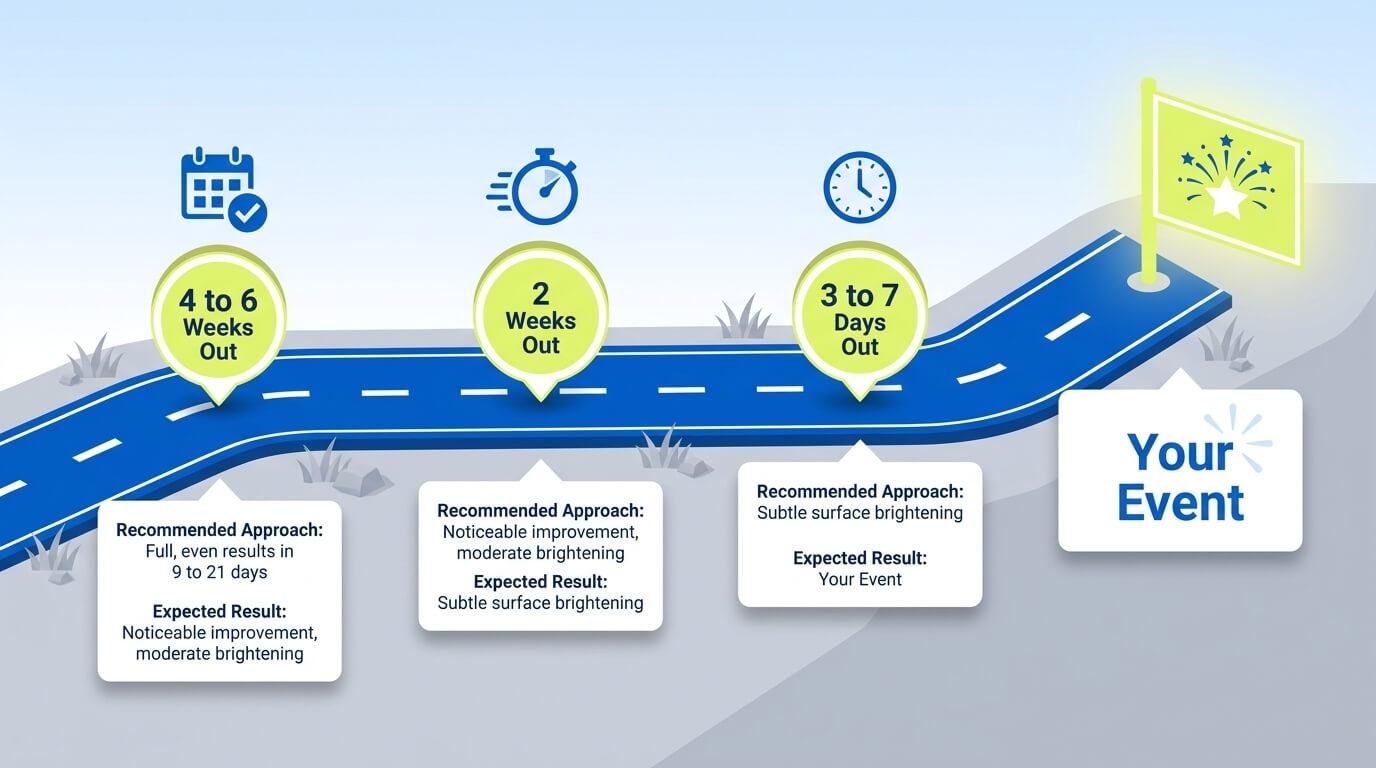
How far out you start your teeth whitening routine determines which approach makes sense. Starting your whitening routine a few weeks before your event gives you time to reach your desired shade and allows for proper preparation. The table below provides a clear framework, and each window is then broken down in detail.

Four to Six Weeks Out: The Ideal Window
This is the window that gives you real, even results without any last-minute scrambling. Four to six weeks is enough runway to complete a full 21-day whitening cycle and still let any mild reactivity settle before the event.
Spacing out whitening sessions during the treatment period allows your enamel to remineralize and reduces cumulative sensitivity, making the process safer and more comfortable.
Start with one to two weeks of desensitizing toothpaste before you begin whitening sessions. That pre-treatment phase primes the nerve response inside each tooth and makes your first sessions noticeably more comfortable from day one.
The SNOW Diamond Series Teeth Whitening Kit fits this window well. It includes a wireless LED mouthpiece and three whitening serums, enough to complete a full cycle with product to spare.
Professional take-home whitening kits or custom whitening kits from a dentist provide a more controlled whitening process at home, as they include trays made specifically for your teeth to ensure even gel distribution and less gum exposure. This approach helps you achieve your desired shade with greater comfort and effectiveness.
Two Weeks Out: Still Workable
Two weeks is a tighter window, but it is not a lost cause. Research shows that visible whitening improvement can appear within 9 to 14 days of consistent use, even with lower-peroxide formulas. The key here is not skipping sessions and choosing a formula with built-in sensitivity management.
Shorten your cycle slightly, don’t skip any days, and keep the formula gentle. Consistency over two weeks can still produce a meaningful difference by event day.
Three to Seven Days Out: Skip the Full Kit
Don’t start a full whitening cycle this close to your event. There isn’t enough time to complete it properly, and starting mid-cycle can leave your teeth more reactive the next day.
A whitening pen is the right tool for this time window. These products are designed to target surface stains quickly, fit into any schedule, and do not require a full serum application. Keep expectations realistic. Surface brightening is the goal, and that is achievable.
What to Look for in Whitening Kits for Sensitive Teeth
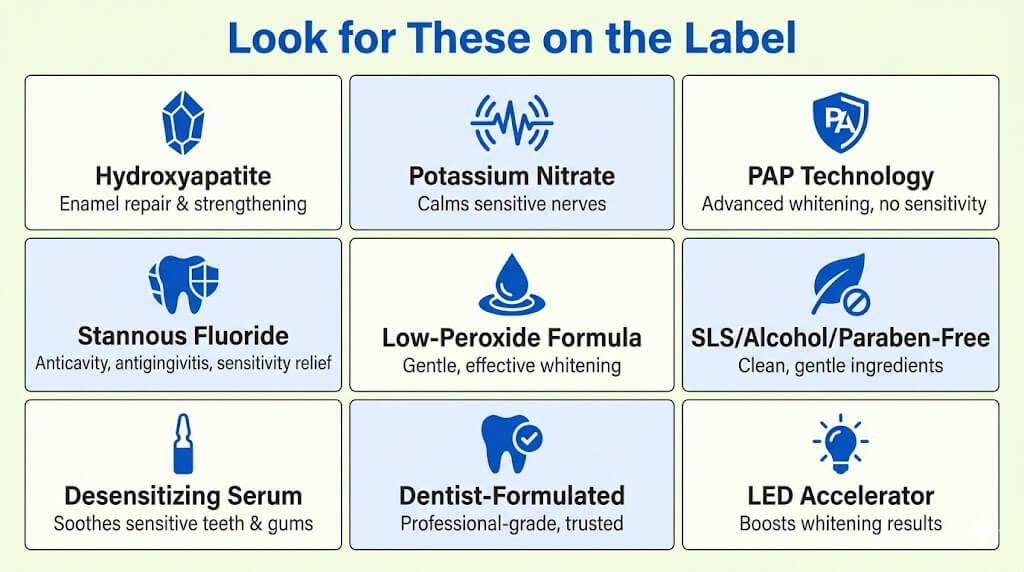
The ingredient label tells you almost everything you need to know before buying.
Most OTC whitening products fail sensitive teeth users, not because whitening itself is inherently painful, but because the formula wasn’t designed with sensitivity in mind. Teeth whitening treatments and products for sensitive teeth use gentler formulations and lower peroxide concentrations to balance effectiveness and minimize discomfort, making them suitable for those with mild whitening needs.
Hydroxyapatite and Potassium Nitrate: The Two Ingredients That Matter
Hydroxyapatite is a mineral compound that makes up the majority of your tooth enamel. When included in a whitening formula, it works alongside the whitening agent to support the enamel surface throughout the process rather than leaving it temporarily exposed.
Potassium nitrate is a clinically recognized desensitizing agent. It works by calming the nerve response inside the tooth during whitening.
A clinical review in Operative Dentistry confirmed that potassium nitrate significantly reduces whitening-associated sensitivity when used consistently in at-home-use formulas.
Some whitening gels also use PAP (phthalimidoperoxycaproic acid) technology to whiten teeth without damaging enamel, offering an alternative whitening method for those with sensitivity.
Stannous fluoride is another effective desensitizing agent found in some toothpastes and whitening products, helping to strengthen enamel and reduce sensitivity.
Additionally, fluoride rinses can be used before and after whitening to further support enamel health and minimize discomfort.
Together, these ingredients do what most OTC formulas skip entirely. Peroxide-free or low-peroxide serums round out the picture. They reduce post-session discomfort without sacrificing visible results.
Before committing to any kit, look for these on the label:
-
Hydroxyapatite for enamel surface support during whitening
-
Potassium nitrate as a desensitizing agent
-
Stannous fluoride for enamel strengthening and sensitivity reduction
-
Peroxide-free or low-peroxide whitening gel or serum
-
PAP technology for enamel-safe whitening
-
SLS-free, alcohol-free, and paraben-free formulation
-
A desensitizing serum is included in the kit
-
Dentist-formulated credentials on the packaging
Why LED Technology Makes a Difference
LED light accelerates the activation of the whitening gel or serum, which means each session can be shorter while delivering the same level of brightening. Shorter sessions mean less total peroxide exposure per use, which is a meaningful advantage for anyone managing sensitivity.
Wireless, hands-free LED kits also fit into real life. You can whiten while getting ready, answering emails, or moving through a morning routine. No cord, no being tethered to a counter.
A controlled clinical study found that LED-accelerated whitening produced results comparable to longer non-LED sessions, with users reporting lower overall sensitivity scores.
Using a desensitizing toothpaste regularly after whitening can help manage sensitivity and protect your teeth from discomfort during the recovery period.
How SNOW Makes Sensitive Whitening Work
SNOW was founded in 2017 with one specific problem in mind: The people most frustrated by whitening products are the very ones whitening brands ignore. People with sensitive teeth who have tried and quit, tried again and quit, and eventually stopped trying at all.
While professional whitening treatments, such as in-office whitening, are an excellent option for those seeking a whiter smile quickly and safely, SNOW offers an effective at-home alternative for sensitive teeth.
In-office whitening treatments can use high-concentration gels with desensitizing agents like potassium nitrate or fluoride, and dentists apply protective barriers to the gums to prevent irritation. Professional in-office whitening can remove up to eight shades of discoloration in about one hour, making it the fastest way to achieve a brighter smile before your event.
For those who want to brighten your smile with minimal sensitivity, professional whitening options and office whitening provide personalized care and fast results.
The SNOW Sensitive Teeth Whitening Kit combines a desensitizing serum with controlled peroxide levels. The formula was developed by Dr. Brian Harris, DDS, and every ingredient decision is made to minimize discomfort without sacrificing results.
Over 15,000 five-star reviews from real users back that up, including people who had given up on whitening entirely before finding SNOW.
Both Good Housekeeping and Cosmopolitan have covered the SNOW at-home experience as meaningfully different from standard OTC options. Not a minor upgrade, but a different product category for people who need it.
Right now, you can also save 20% sitewide, making it a good time to grab the kit before your event and stock up on whatever you need to maintain your results afterward. Get the SNOW Diamond Series Teeth Whitening Kit and start your countdown with a plan that actually works.
What to Avoid in the Days Before Your Event
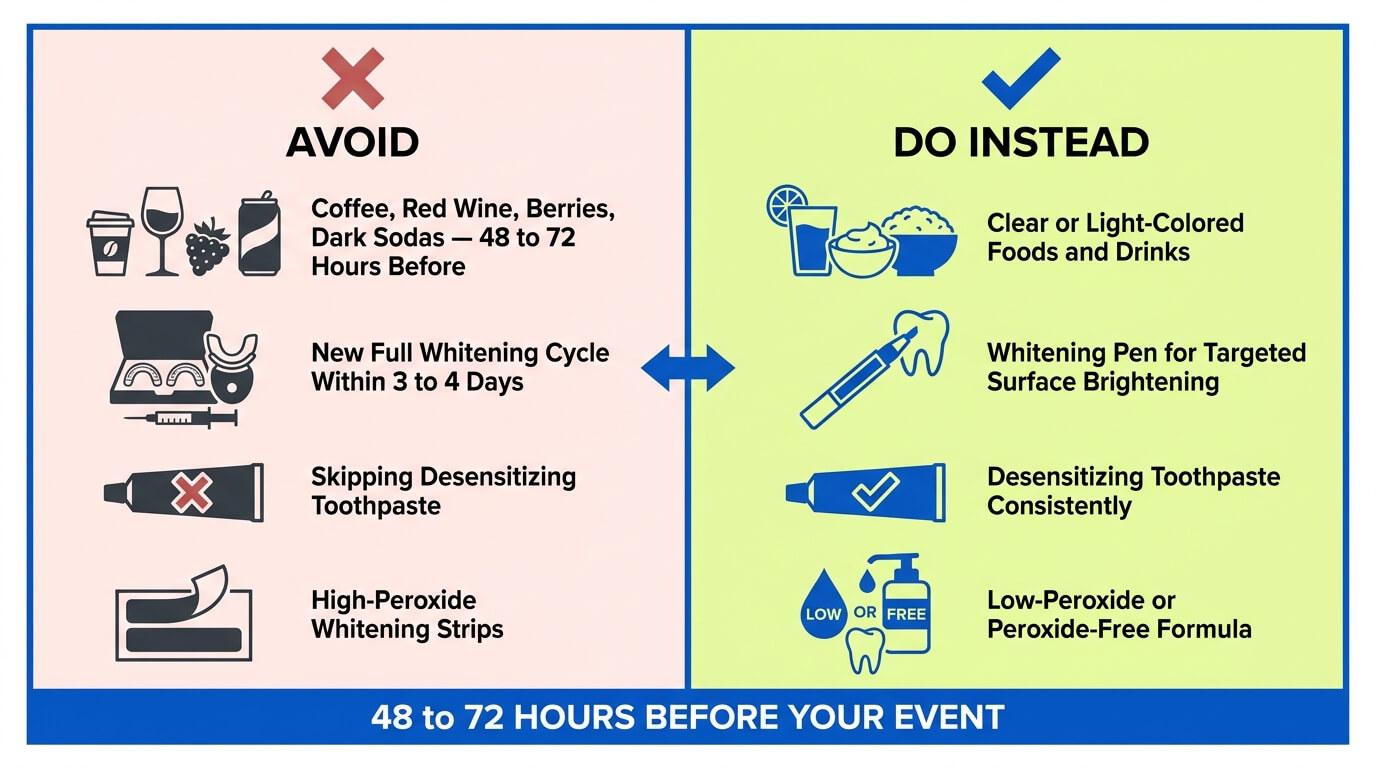
Smart preparation is just as much about what you skip as what you do.
A few common missteps in the final days can dull your results or leave your teeth more reactive right before you need them to look their best.

To keep it simple, here’s your event-week checklist:
-
Avoid staining foods and drinks for the final 48 to 72 hours
-
Use desensitizing toothpaste every day during your whitening period
-
Do not start a full whitening kit cycle fewer than four days out
-
Use a whitening pen for any last-minute surface touch-ups
-
Avoid whitening strips with very high peroxide concentrations close to your event date
-
Keep your routine consistent and gentle right up to the big day
Maintaining Your Results After the Big Day
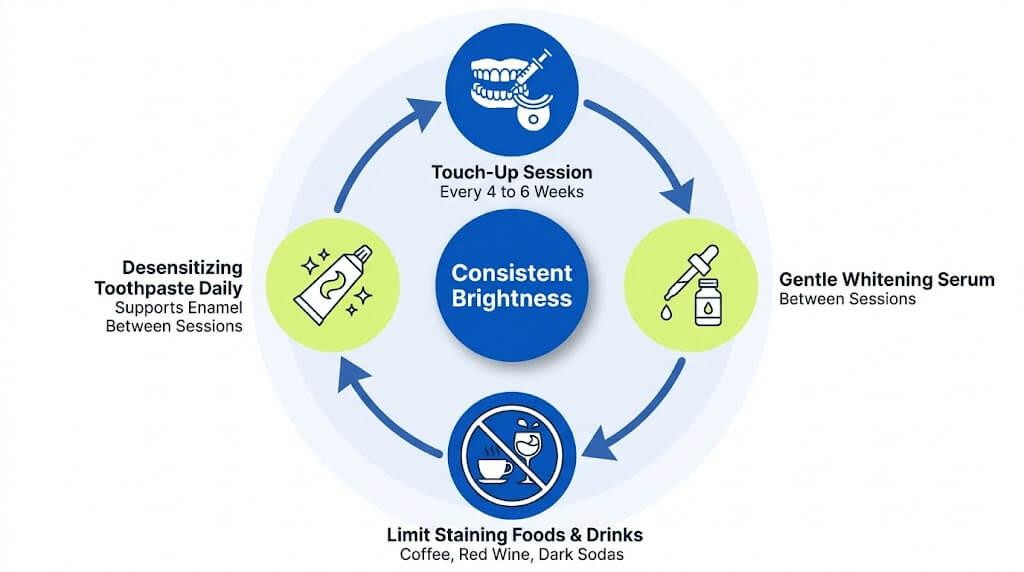
Maintaining whitening results is easier than getting them. Sensitive teeth are not a long-term barrier once you have found a formula that works with your teeth rather than against them.
A touch-up session every four to six weeks keeps your brightness consistent without overdoing it. Pairing that with a gentle whitening serum between sessions makes a noticeable difference in how long your results hold between full cycles.
Your daily habits carry more weight than most people realize. Limiting your intake of coffee, red wine, and dark sodas preserves brightness longer than any single treatment can. A desensitizing toothpaste used regularly also supports your enamel between sessions and keeps discomfort low as you maintain your routine.
Final Thoughts
Whitening for sensitive teeth before big events is a form of cosmetic dentistry, designed to enhance your smile’s appearance and boost confidence. If you have sensitive teeth, it’s best to consult a dental professional before starting any whitening treatment.
Start four to six weeks out, use a formula built around potassium nitrate and hydroxyapatite, and avoid high-staining foods and new full cycles in the final days. That’s the whole plan.
SNOW’s sensitive whitening line was built for people who have been let down by other products. Dentist-formulated, virtually zero sensitivity, and backed by a 60-day money-back guarantee. Shop the SNOW Sensitive Collection and lock in your 20% discount before your event.
Frequently Asked Questions
Still deciding if whitening is worth it before your event? These quick answers cover the most common concerns about timing, sensitivity, and how to keep your results looking fresh longer.
Is SNOW Teeth Whitening Safe for Sensitive Teeth?
SNOW formulas include desensitizing ingredients like potassium nitrate and hydroxyapatite to support a low-sensitivity whitening experience. The kits were developed by Dr. Brian Harris, DDS, with controlled peroxide levels that keep the process gentle. These are cosmetic products formulated to minimize discomfort during whitening. However, if you have gum disease, inflamed gums, or exposed tooth roots, you should consult a dental professional before starting any whitening treatment. They are not intended to treat tooth sensitivity as a medical condition.
How Soon Before an Event Should I Start Whitening?
The ideal window is four to six weeks out. That gives you enough time to complete a full whitening cycle and let any mild reactivity settle before your event. Two weeks is still workable with a consistent, gentle routine. If you are three to seven days out, use a whitening pen for light surface brightening instead of starting a full kit cycle.
Will My Teeth Restain After Whitening?
Whitening results are not permanent. But they are easy to sustain with periodic touch-up sessions every four to six weeks paired with a low-peroxide or peroxide-free serum between cycles. Limiting high-staining foods and drinks in your regular habits extends your results further between sessions.
What Should I Do If I Experience Sensitivity or Discomfort?
Whitening treatments can temporarily increase tooth sensitivity, especially if your enamel is already compromised. If you experience severe tooth sensitivity, gum irritation, or prolonged sensitivity, you should stop the treatment immediately and consult your dentist. If sensitivity persists, it may indicate an underlying issue that needs professional attention.
Are Whitening Strips Safe for Sensitive Teeth?
Peroxide-free whitening strips use natural ingredients to gently lift mild surface stains without causing nerve pain, making them a good option for sensitive teeth. Applying whitening strips every other day rather than daily allows your tooth pulp to recover from sensitivity and reduces the risk of discomfort.
What Are My Whitening Options If I Have Sensitive Teeth?
There are several teeth whitening options for sensitive teeth. Over-the-counter (OTC) whitening products, such as whitening strips and gels, are typically the most affordable but may take longer to show results compared to professional treatments. Professional whitening options often use lower peroxide concentrations specifically designed for sensitive teeth, balancing effectiveness with comfort and safety.
How Do Teeth Whitening Treatments Work and What Are the Risks?
Teeth whitening treatments work by using chemical bleaching agents to remove stains and brighten teeth. In-office treatments and take-home kits use different application techniques, but both can be effective. Whitening treatments can temporarily increase tooth sensitivity, especially if the enamel is already compromised, and higher concentrations of bleaching agents can weaken enamel, leading to increased sensitivity and potential damage. Always follow recommended usage guidelines to protect your enamel.
Who Should Avoid Teeth Whitening?
Individuals with exposed tooth roots, severe tooth sensitivity, gum disease, or inflamed gums should avoid whitening treatments and consult a dentist first. People with these conditions are at higher risk for complications, and whitening may aggravate their symptoms.