
You do not have to choose between remineralization and whitening. Remineralization repairs enamel by redepositing calcium, phosphate, and hydroxyapatite, while peroxide-based whitening chemically removes stains.
The optimal clinical approach is to remineralize for 2-4 weeks prior to whitening to prevent sensitivity and structural damage.
This guide explores the biochemical relationship between enamel strength and tooth brightness:
-
What is the biological process of tooth remineralization?
-
How do peroxide-based whitening treatments affect enamel microhardness?
-
What are the key differences in ingredient profiles?
-
How can you safely combine both strategies using modern nano-hydroxyapatite formulas?
Key Takeaways
-
Remineralization repairs and strengthens tooth enamel by redepositing essential minerals like calcium, phosphate, fluoride, and hydroxyapatite into weakened areas, while whitening uses peroxide-based agents to chemically bleach stains.
-
Peroxide whitening can temporarily reduce enamel microhardness and cause sensitivity in 18–78% of people, but remineralizing agents applied before or after bleaching can prevent or repair this damage.
-
Hydroxyapatite and nano-hydroxyapatite toothpastes can both rebuild enamel and gently brighten teeth by smoothing the surface and reflecting more light, though results are subtler than peroxide bleaching.
-
The smartest strategy is not “remineralization vs whitening” as an either/or choice, but combining them: remineralize first (2–4 weeks), then use safe whitening, and maintain with a remineralizing toothpaste afterward.
-
According to a May 2025 clinical study published in the Journal of Dentistry, BioMin bioactive glass paste demonstrated the highest rates of calcium, phosphate, and fluoride incorporation when compared to standard sodium fluoride toothpastes.
What Is Tooth Remineralization?
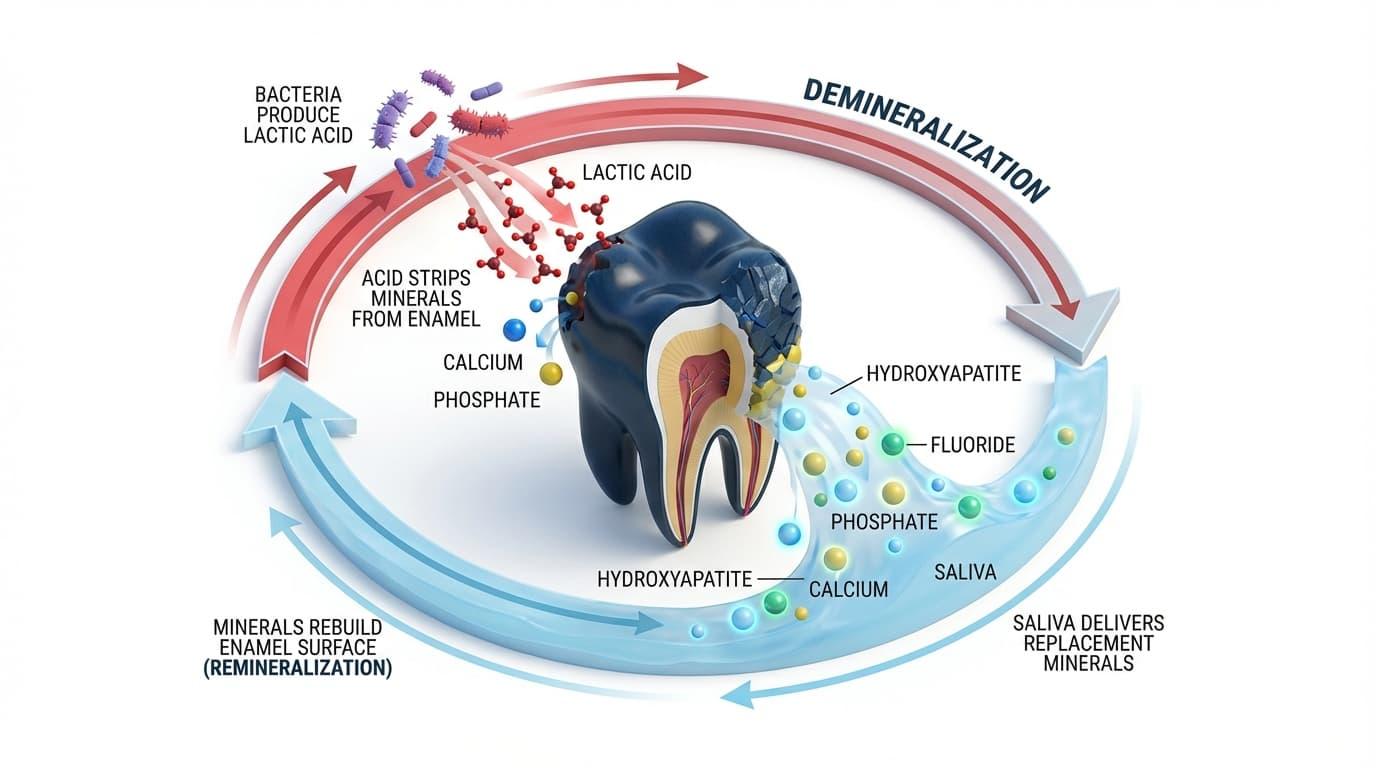
Tooth remineralization is the biological process of redepositing essential minerals back into the enamel matrix to repair microscopic acid damage.
Every time you consume sugary or acidic foods, oral bacteria produce lactic acid that strips calcium and phosphate from your teeth in a process called demineralization. To counteract this, healthy saliva washes away the acid and delivers replacement minerals directly to the porous enamel surface.
By actively supporting this natural remineralization cycle, you can reverse early-stage micro-cavities (white spot lesions) before they require invasive dental drilling or permanent fillings.
Every day, enamel goes through a cycle of mineral loss and repair. When you eat sugary or acidic foods, bacteria in your mouth produce acids that pull minerals out of enamel. This process is called demineralization. If it continues for too long, enamel can weaken, eventually leading to cavities.
Remineralization is the opposite process. It occurs when minerals are redeposited on the enamel surface. This helps strengthen teeth, repair very early enamel damage, and make teeth more resistant to future acid attacks.
Saliva plays a major role in this process. It helps wash away acids and supplies important minerals that enamel needs to rebuild itself. When saliva levels are healthy, your mouth naturally supports enamel repair throughout the day.
Remineralization is especially helpful in the early stages of enamel damage. It can help repair tiny weakened areas before they develop into cavities that require dental treatment.
Some of the key minerals involved in tooth remineralization include:
-
Calcium, which forms the basic structure of enamel
-
Phosphate, which helps rebuild mineral crystals in teeth
-
Fluoride, which helps enamel become more resistant to acid
-
Hydroxyapatite, which is the primary mineral that makes up tooth enamel
Supporting this natural process with the right oral care routine can help keep enamel strong while protecting teeth from long term damage.
How Do Remineralizing Toothpastes Repair Weakened Enamel?
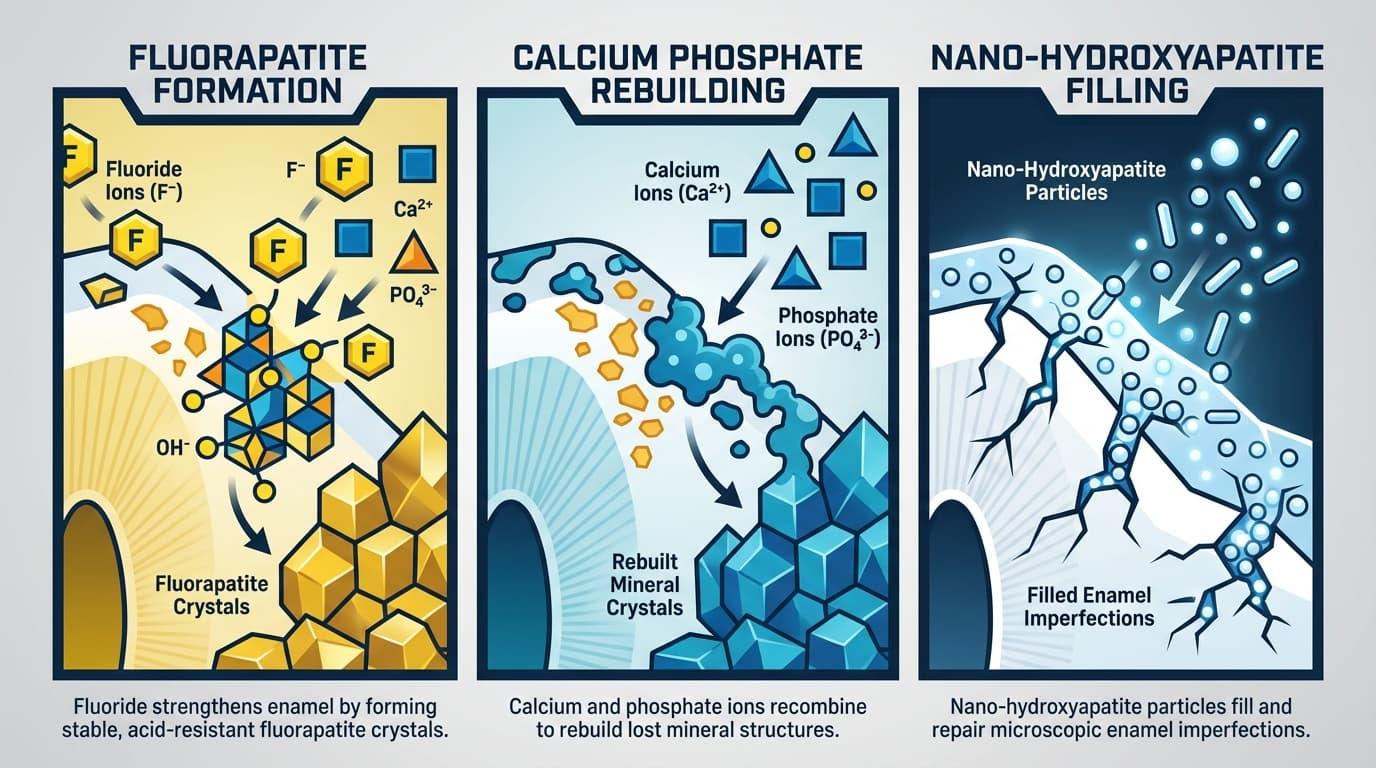
Remineralizing toothpastes work by directly delivering high concentrations of calcium, phosphate, and fluoride ions to weakened enamel surfaces, bypassing the body's reliance on saliva alone.
These advanced mineral systems settle into microscopic defects and structural fissures, physically rebuilding the tooth's outer crystalline layer
Most remineralizing toothpastes rely on one of three main mineral systems.
Fluoride's Role in Forming Acid-Resistant Fluorapatite
Fluoride has been used in oral care for decades and is widely recognized for its role in cavity prevention. When fluoride interacts with enamel, it helps form a stronger mineral structure known as fluorapatite. This form of enamel is more resistant to acid attacks from bacteria and food.
Fluoride toothpastes are commonly recommended by dentists because they help slow down mineral loss and support enamel repair in the early stages of damage.
Calcium Phosphate Systems for Rebuilding Mineral Crystals
Calcium phosphate systems provide two of the main minerals that make up tooth enamel. These formulas help deliver calcium and phosphate ions directly to weakened areas of the tooth surface.
When these minerals settle into microscopic defects in enamel, they help rebuild mineral crystals and strengthen the outer layer of teeth. Calcium phosphate formulas are also often used to help reduce sensitivity by blocking tiny openings in dentin.
Nano-Hydroxyapatite for Biomimetic Enamel Restoration
Nano-hydroxyapatite is a newer ingredient that closely mimics the natural mineral structure of enamel. Because the particles are extremely small, they can settle into tiny enamel imperfections and help rebuild the surface.
This process can make enamel smoother and stronger over time. A smoother enamel surface can also reflect light better, which may give teeth a slightly brighter appearance.
What Is Teeth Whitening?
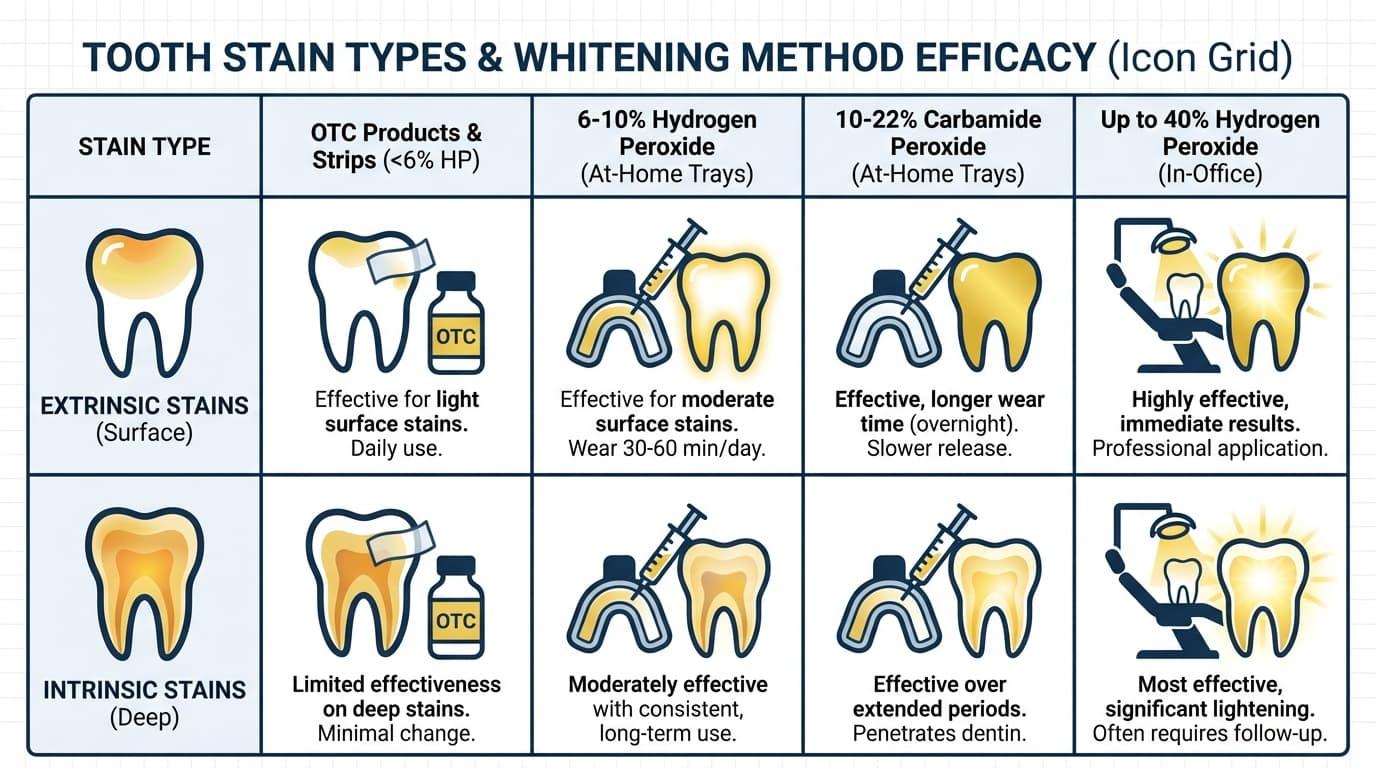
Teeth whitening is the process of making teeth look brighter by reducing stains and discoloration. These stains usually fall into two main categories, and understanding the difference helps explain how whitening treatments work.
Extrinsic stains sit on the outer surface of enamel. These are commonly caused by coffee, tea, red wine, smoking, and certain foods. Because they are on the surface, many whitening toothpastes and professional cleanings can help remove them.
Intrinsic stains form deeper inside the tooth structure, usually within the dentin layer beneath the enamel. These stains can develop from aging, certain medications, trauma, or long-term discoloration. Intrinsic stains are harder to remove and often require stronger whitening treatments.
Most whitening treatments rely on peroxide-based ingredients such as hydrogen peroxide or carbamide peroxide. These compounds release oxygen molecules that break apart stain molecules inside the tooth. As the stain particles break down into smaller pieces, teeth appear lighter and brighter.
Today, there are several common ways people whiten their teeth:
-
Abrasive Whitening Toothpastes: Utilize mild abrasives (like hydrated silica) to mechanically polish and remove extrinsic surface stains.
-
Over-the-Counter Strips and Pens: Apply a low-concentration hydrogen peroxide gel (typically 6-10%) to gradually oxidize stains over 1-2 weeks.
-
Dentist-Dispensed Custom Trays: Utilize custom-fitted molds to hold moderate-concentration carbamide peroxide (10-22%) tightly against the enamel for overnight bleaching.
-
In-Office Laser Procedures: Employ high-concentration hydrogen peroxide (up to 40%) activated by LED or laser light to rapidly break down deep intrinsic stains in a single 60-minute session.
Each method works a little differently, but the goal is the same. Whitening treatments help reduce stains so teeth appear cleaner and brighter.
How Do Peroxide Whitening Treatments Affect Tooth Enamel?
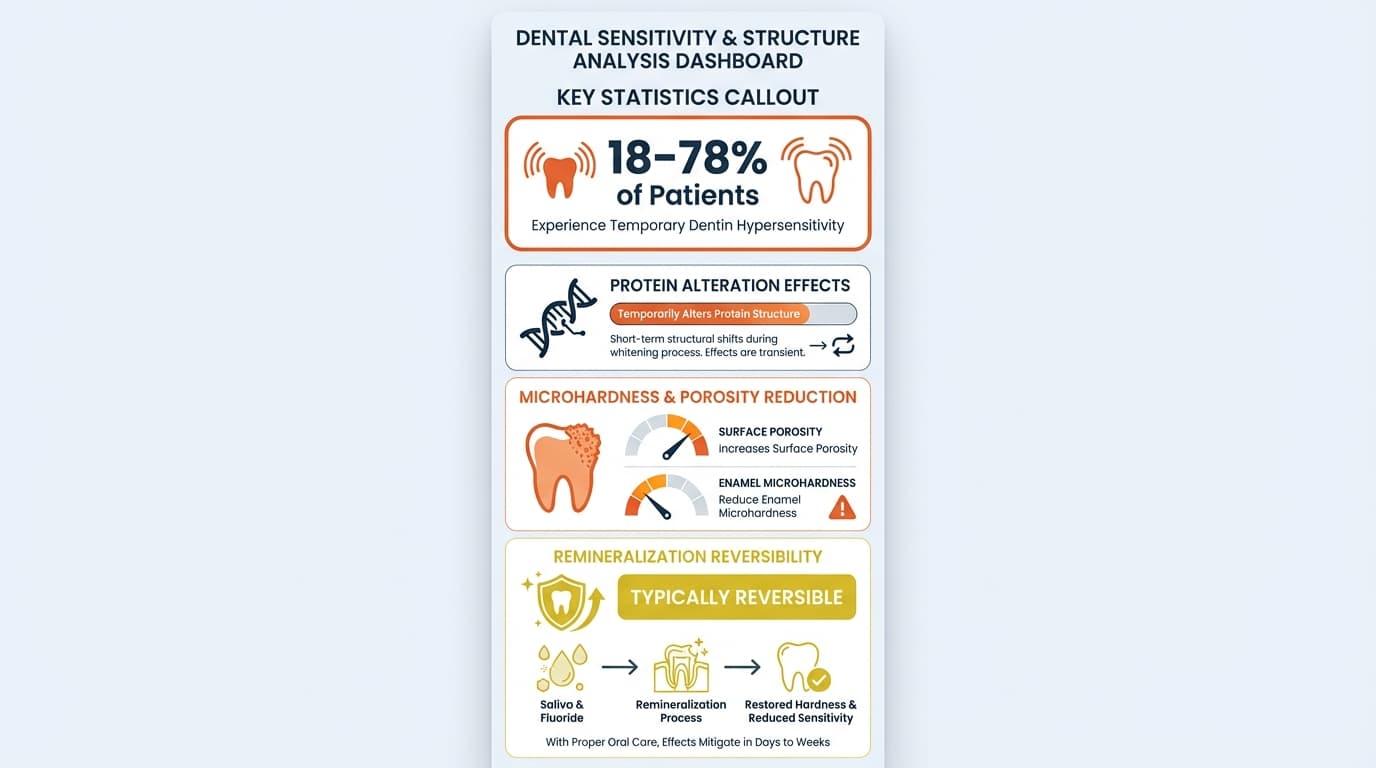
Teeth whitening can safely brighten your smile when used correctly, but it can also temporarily affect enamel. Understanding these effects helps you use whitening treatments in a way that protects your teeth.
Peroxide-Induced Nerve Irritation and Tooth Sensitivity
One of the most common side effects of whitening is tooth sensitivity. Peroxide molecules used in whitening treatments can travel through enamel and reach the inner layers of the tooth. This process may temporarily irritate the nerves inside the tooth, which is why some people feel sensitivity to cold drinks or sweet foods during whitening.
According to a 2023 systematic review published in the Journal of the American Dental Association (JADA), mild to moderate tooth sensitivity occurs in 18–78% of patients utilizing peroxide-based whitening systems.
Temporary Protein Alteration and Enamel Softening
Whitening treatments can also temporarily soften enamel. Hydrogen peroxide can temporarily alter the protein structure of enamel and increase surface porosity.
While this protein alteration is not permanent, the increased porosity leaves the enamel highly vulnerable to bacterial acid attacks and secondary staining from dark liquids for 24 to 48 hours following the bleaching session.
Short-Term Reductions in Enamel Microhardness
Researchers also measure whitening effects by assessing enamel microhardness, which indicates the strength of the enamel surface. Some studies have found that peroxide treatments can temporarily reduce enamel hardness by affecting its mineral content.
For example, laboratory studies have shown that peroxide whitening can reduce enamel microhardness in the short term, along with small losses of calcium and phosphate from the enamel surface. These changes are typically reversible when remineralizing agents such as fluoride or hydroxyapatite are used afterward.
This is why many dentists recommend combining whitening treatments with remineralizing toothpaste to help restore minerals and support enamel recovery
What Are the Key Clinical Differences Between Remineralization and Whitening?
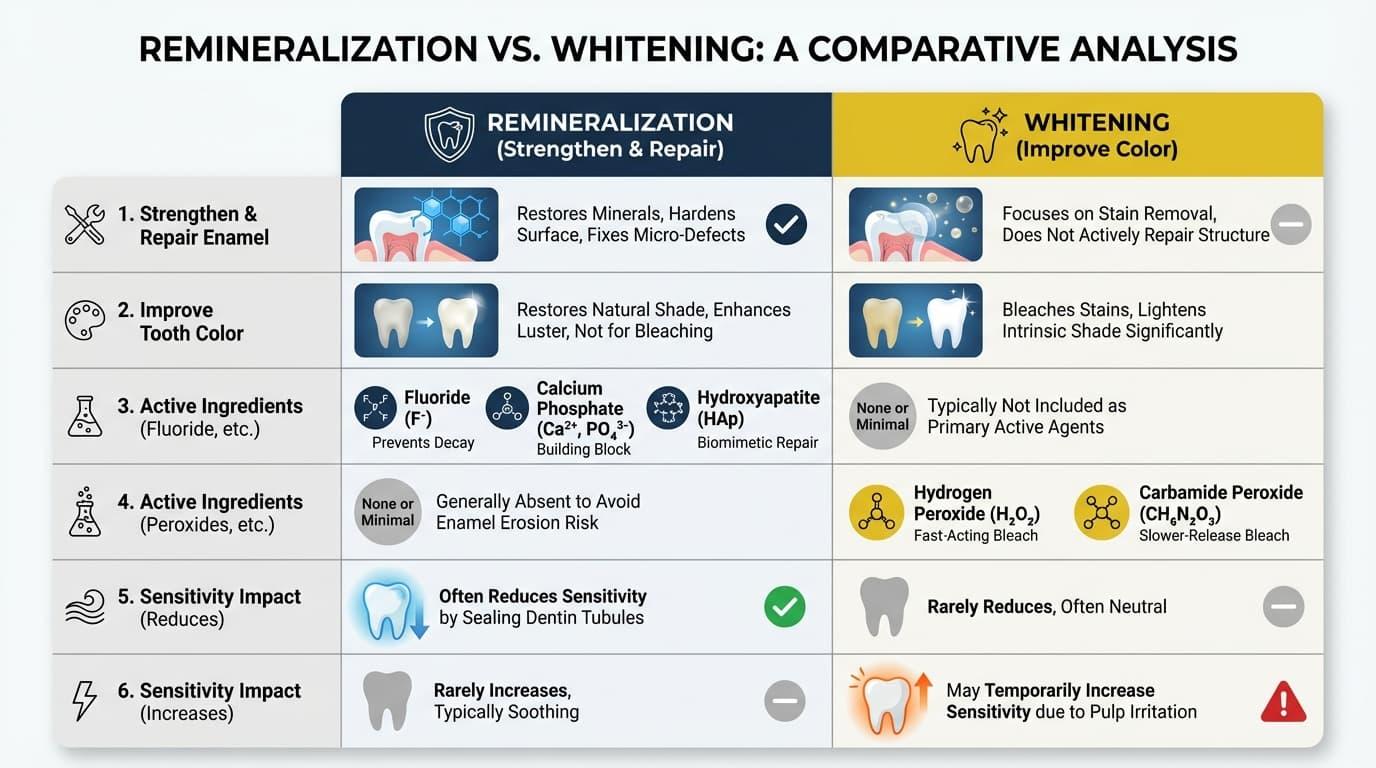
Remineralization and teeth whitening are often discussed as if you must choose one or the other. In reality, they serve different purposes and can work together in a healthy oral care routine.
Remineralization focuses on strengthening and repairing enamel, while whitening focuses on improving tooth color by reducing stains. When used together correctly, they can help you achieve both healthier enamel and a brighter smile.
Here is a simple comparison.

The important takeaway is that remineralization and whitening are not competing approaches. Remineralization helps protect and repair enamel, while whitening improves the appearance of teeth.
When combined properly, remineralizing products can help support enamel before and after whitening treatments, allowing you to maintain both stronger enamel and a brighter smile.
Can Remineralizing Toothpaste Also Whiten Teeth?
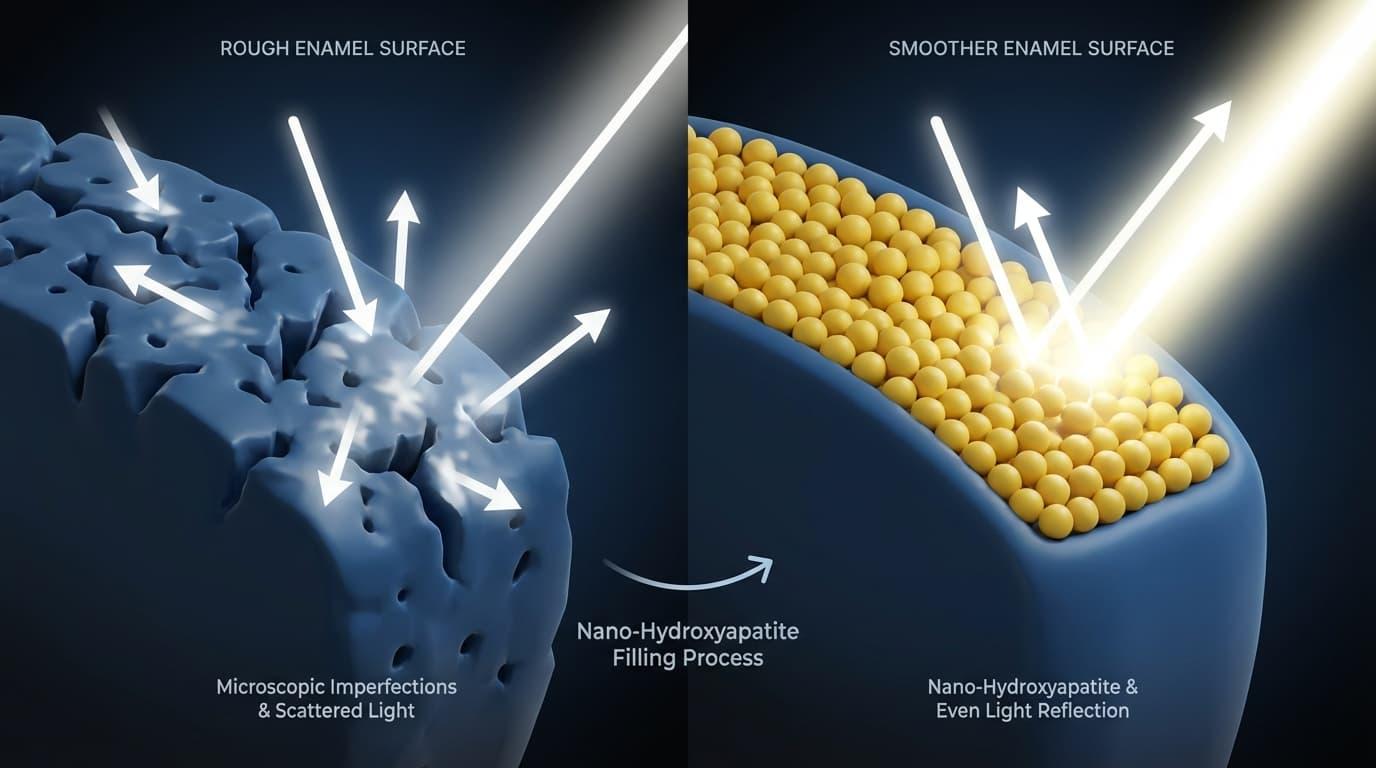
Yes, remineralizing toothpaste can naturally brighten teeth by utilizing nano-hydroxyapatite to fill microscopic imperfections, creating a smoother enamel surface that reflects light more evenly.
Unlike peroxide bleaching, which chemically oxidizes deep stains, remineralizing formulas physically repair the tooth's outer crystalline structure.
This results in a highly polished, glossy appearance that restores the tooth's natural luminosity without the risk of chemical softening.
Instead of chemically bleaching stains, remineralizing formulas focus on strengthening enamel. Over time, minerals can fill in tiny imperfections and weakened spots on the tooth surface. This process helps smooth the enamel, which makes teeth look cleaner and more polished.
When enamel becomes smoother, it can also reflect light more evenly. Teeth with a smoother surface may appear naturally brighter because less light is scattered by rough areas or microscopic defects.
Because of this, remineralizing toothpastes often create gradual brightening rather than dramatic whitening. The change usually happens slowly over several weeks of consistent brushing.
How Should You Combine Remineralization and Whitening Protocols?
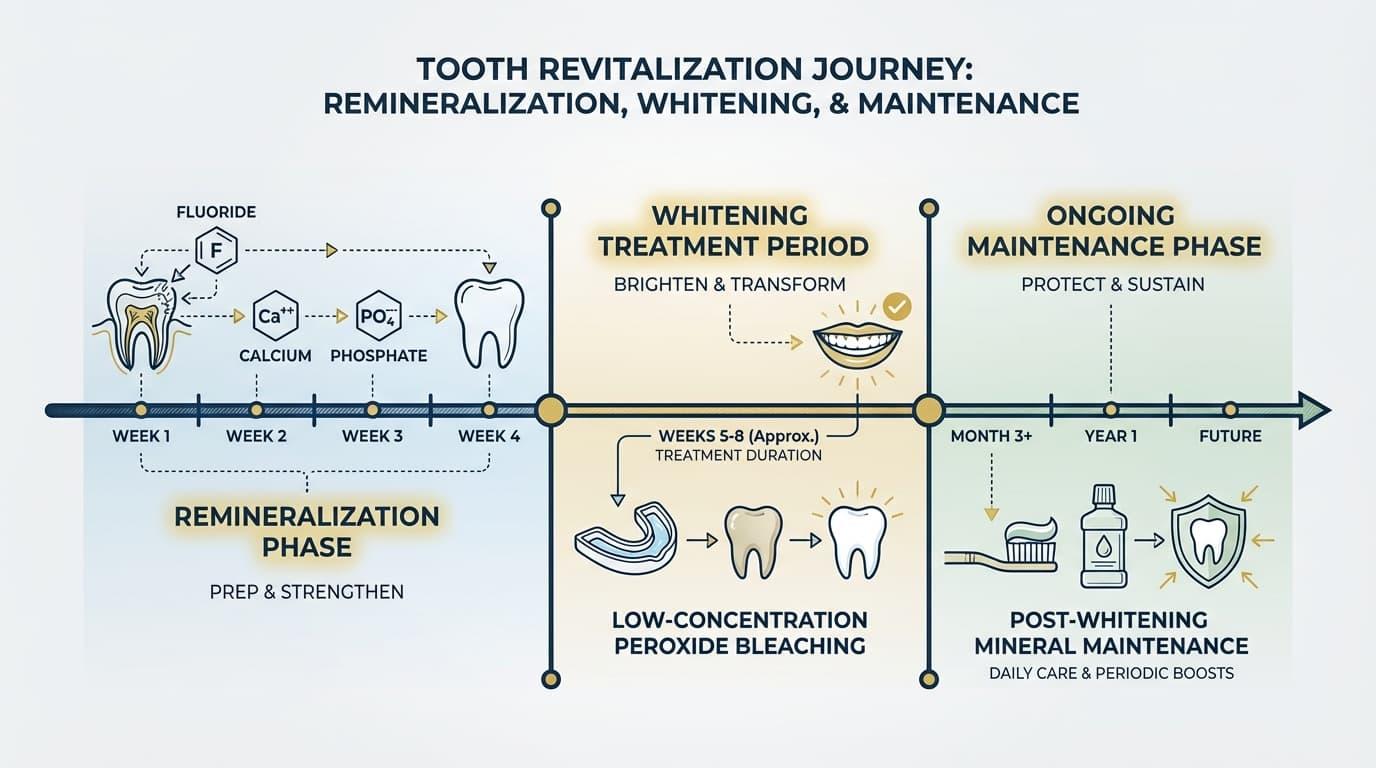
When it comes to remineralization vs. whitening, the smartest approach is to choose both. The most effective routine is a combination of both. This helps you brighten your smile while also protecting enamel and supporting long-term oral health.
Phase 1: Pre-Whitening Enamel Remineralization (Weeks 1-4)
Before starting whitening, it helps to remineralize enamel for a few weeks. This natural process helps replace minerals that may have been lost through demineralization, which often happens when we consume acidic foods, sugary snacks, or certain drinks.
Using a remineralizing toothpaste containing ingredients such as fluoride, calcium, or phosphate may help oral health.
Phase 2: Low-Concentration Peroxide Bleaching
Once enamel is stronger, you can introduce whitening treatments to target stains. Whitening works by breaking down discoloration on or within the tooth surface.
Using gentle whitening toothpaste, strips, or dentist-recommended treatments can help brighten teeth without excessive enamel wear. Good oral habits, such as regular brushing, flossing, and rinsing your mouth with water after eating, can also help remove plaque and debris that contribute to staining.
Phase 3: Post-Whitening Mineral Maintenance
After whitening, maintaining enamel is key. Continuing to use remineralizing toothpaste may help restore minerals and protect teeth from future demineralization. This type of daily routine may help keep your enamel strong while preserving your whitening results.
Which Toothpaste Formula is Right for Your Specific Oral Care Goals?
The best toothpaste depends on your oral health, your enamel condition, and your whitening goals. Different formulas support remineralization, stain removal, or long-term enamel prevention.
If You Have Sensitive Teeth
Choose a remineralizing toothpaste with fluoride, calcium, and phosphate. These ingredients may help remineralize enamel, block exposed dentin, and reduce sensitivity.
If You Want Stain Removal
Look for a gentle whitening toothpaste that removes plaque and surface stains without excessive abrasion. Proper brushing after drinks like coffee or wine can help prevent stains from building up.
If You Want Stronger Enamel
Toothpastes containing fluoride and calcium phosphate may help replenish minerals, support natural remineralization, and reduce the risk of cavities and enamel decay.
If You Want To Maintain Whitening Results
A combination toothpaste with gentle whitening and remineralizing ingredients may help maintain good oral health. A balanced oral care routine, a healthy diet, and regular visits to your dentist all help maintain enamel strength and long-term whitening results.
Final Thoughts
Remineralization and whitening do not have to compete. In fact, the healthiest approach to a brighter smile is often a balance of both. Remineralization helps restore essential minerals like calcium and phosphate to enamel, while whitening helps reduce stains that build up from everyday foods and drinks.
By supporting enamel first and using gentle whitening methods, you can brighten your smile while helping protect long-term oral health. A consistent routine that includes proper brushing, flossing, and the use of remineralizing toothpaste can help maintain strong enamel and reduce sensitivity.
In our SNOW clinical testing facilities, we formulated our Enamel Care products specifically to bridge this gap.
By utilizing a proprietary blend of hydroxyapatite and gentle polishing agents, our systems are engineered to simultaneously restore lost minerals while lifting extrinsic stains, ensuring you never have to sacrifice structural integrity for aesthetics.
Explore the SNOW Teeth Whitening Collection
FAQs
Here are answers to some common questions about remineralization, whitening, and protecting your enamel.
How long does it take for remineralizing toothpaste to work?
The timeline for enamel remineralization depends on the severity of the demineralization:
-
1 to 3 Days: Microscopic mineral deposition begins, temporarily soothing exposed dentin tubules.
-
2 to 4 Weeks: Clinically noticeable improvements occur, including significantly reduced hot/cold sensitivity and a smoother tooth texture.
-
4 to 12 Weeks: Measurable gains in enamel microhardness are achieved, and early-stage white spot lesions begin to reverse and blend with the surrounding enamel.
Can I use whitening strips and a remineralizing toothpaste at the same time?
Yes, current data show no major reduction in whitening efficacy when combining strips with remineralizing toothpaste. The best practice is to brush with your remineralizing paste immediately after removing strips—this helps counteract temporary mineral loss and soothes any sensitivity. Follow the strip manufacturer’s directions on frequency, and consult a dentist if you experience severe or persistent pain. This combination approach gives you the best results from both products.
Is hydroxyapatite better than fluoride for enamel repair?
Both are proven effective but work differently. Fluoride primarily makes enamel more acid-resistant by forming fluorapatite, while hydroxyapatite directly adds mineral content and fills micro-defects. Some 2024–2025 studies suggest nano-hydroxyapatite can match fluoride in preventing demineralization and may be superior for repairing white spot lesions and reducing sensitivity. Combined formulations offer potentially synergistic benefits. Which is “better” often depends on your individual risk factors, preferences, and whether you’re concerned about fluoride intake.
Can whitening toothpaste damage enamel if I use it every day?
The primary risk from whitening toothpastes is typically abrasive wear rather than chemical bleaching, since most contain low or no peroxide. Choose products with moderate RDA values and some remineralizing ingredients. Avoid aggressive scrubbing with hard toothbrushes—gentle circular motions protect enamel better. People with thin or eroded enamel should alternate between whitening and remineralizing toothpastes, or switch primarily to remineralization and seek dental advice before daily use of any strong whitening formula.
Should I see a dentist before starting any at-home whitening routine?
A pre-whitening dental exam is important to check for cavities, cracks, gum disease, or significant enamel wear that bleaching could worsen. Your dentist can recommend personalized concentrations, treatment durations, and appropriate remineralization products to reduce sensitivity and protect your teeth. This is especially important if you have a history of sensitivity, reflux, dry mouth, or multiple restorations. Professional guidance helps you achieve healthy, lasting results rather than relying solely on over-the-counter products.