
You did it. You’ve achieved a radiant smile—your teeth are brighter, and summer is finally here. Now comes the part nobody really warns you about: maintaining white teeth and keeping those results alive through every rosé rooftop, iced coffee run, and BBQ that somehow ends with sauce on everything.
We get it. You worked hard for that smile. The last thing you want is to watch it fade before July even hits. Practicing good oral hygiene and prioritizing dental health are essential to prevent discoloration and preserve your whitening results through summer, which is way more manageable than most people think.
At SNOW®, we have helped over 2.4 million people achieve and maintain a radiant smile that stays bright. This guide walks you through exactly how to maintain white teeth and prevent discoloration after whitening. Oh, and if you’re already overdue for a touch-up, snag 20% off your next SNOW® order before it’s gone.
Key Takeaways
-
Your teeth are most vulnerable to staining in the 48 hours after whitening, when enamel porosity is at its peak.
-
Dark foods and drinks like coffee, red wine, berries, and BBQ sauce are the biggest threats during that first 48-hour window.
-
Simple habits make a real difference: use a straw, rinse with water after staining drinks, and time your brushing right.
-
The white diet is a short-term guide, not a forever rule, and it is manageable and worth it.
-
Whitening touch-ups every 4 to 6 weeks, especially with professional treatments, can help maintain a whiter smile and achieve your desired results, keeping your results lasting 3 to 6 months.
These habits help you maintain a brighter smile all summer.
Why the First 48 Hours After Whitening Are the Riskiest
Your whitening procedure is only half the equation. The impact of this treatment on the appearance of your teeth is significant, but what you do afterward determines whether your smile stays bright through the entire summer or starts fading weeks later.
The next 48 hours are more important than almost anything else you will do for your smile this summer, as this is when tooth discoloration and staining teeth are most likely to occur. Now let’s talk about why.
What Enamel Porosity Actually Means for Your Smile
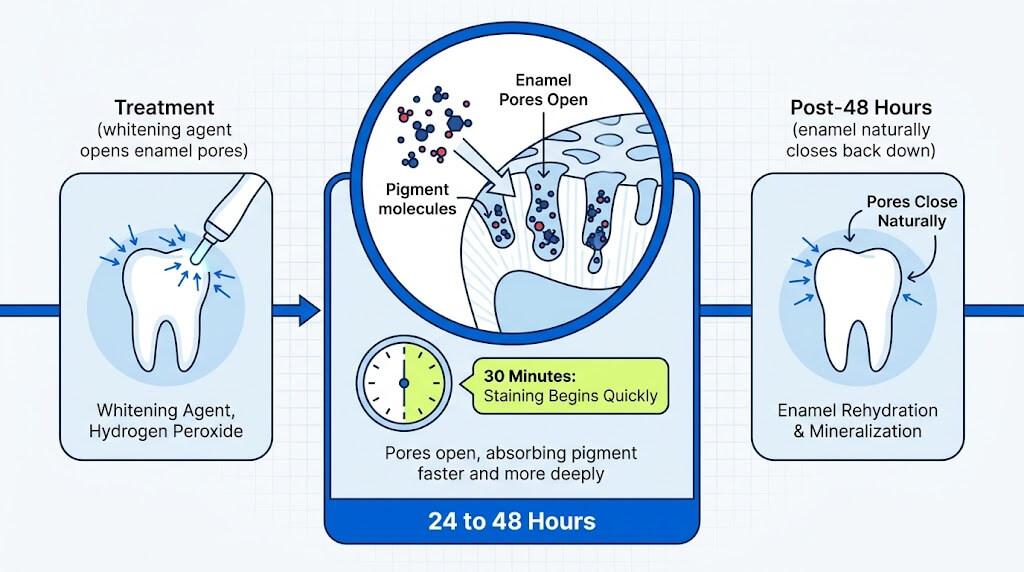
Whitening treatments use hydrogen peroxide and other bleaching agents to lift surface stains from your natural enamel. These bleaching agents and whitening agents interact with the enamel by temporarily opening up the tiny pores, allowing them to reach and break down deeper discolorations.
However, it's important to note that maintaining enamel health during and after whitening is crucial to protect the tooth's outer layer and ensure lasting results.
Here’s the catch, though: Those pores do not close back up the moment your treatment ends, and that’s where things get interesting. There are three reasons why this matters so much for your results.
Reason 1: Your enamel pores stay open long after your treatment ends.
Research confirms that enamel pores remain open for 24 to 48 hours post-whitening, depending on the treatment concentration. During that window, your teeth are absorbing pigment faster and more deeply than they ever normally would.
That glass of red wine, that iced coffee, even a dark berry smoothie can work its way into those open pores and re-stain your enamel before it even has a chance to recover.
It's important to note that dental restorations, such as crowns or veneers, do not respond to whitening in the same way as natural enamel and may not change color during whitening treatments.
Reason 2: Staining during this window happens shockingly fast.
And we’re not talking about gradual fading over weeks. The research is pretty striking. A 2014 study published in the European Journal of Dentistry found that red wine, tea, and cola—common staining liquids—caused measurable color changes on bleached teeth, with red wine producing the greatest staining effect.
These staining liquids, along with other staining substances, are quickly absorbed by porous enamel after whitening. A separate study confirmed that bleached enamel showed red wine staining in as little as 30 minutes after whitening procedures. 30 minutes, that’s it.
Reason 3: The 48-hour rule is grounded in real science, not guesswork.
This is not some arbitrary restriction somebody made up. It’s based on how your tooth enamel actually behaves post-treatment, and understanding that makes it a lot easier to take seriously. The really good news is that your enamel naturally closes back down on its own.
However, it's important to note that excessive fluoride exposure can cause deep stains in teeth, which are often resistant to whitening treatments.
Once that window passes, your teeth return to their normal absorption rate, and you can ease right back into your regular routine. Think of these first two days as the most important investment you can make in your summer smile.
The Foods and Drinks That Stain Fastest (And What to Do Instead)
 snow
snow
Summer is full of moments worth savoring, and honestly, most of them come with a drink that stains and can cause discoloration.
Knowing which ones to manage smartly is genuinely half the battle, and the good news is you do not have to give anything up. Practicing good oral hygiene habits, like brushing and flossing, helps remove stains before they set and keeps your smile brighter.
Here’s why certain foods and drinks are a bigger threat than others, and what to do about each one.
Coffee, Red Wine, and the Summer Drinks List
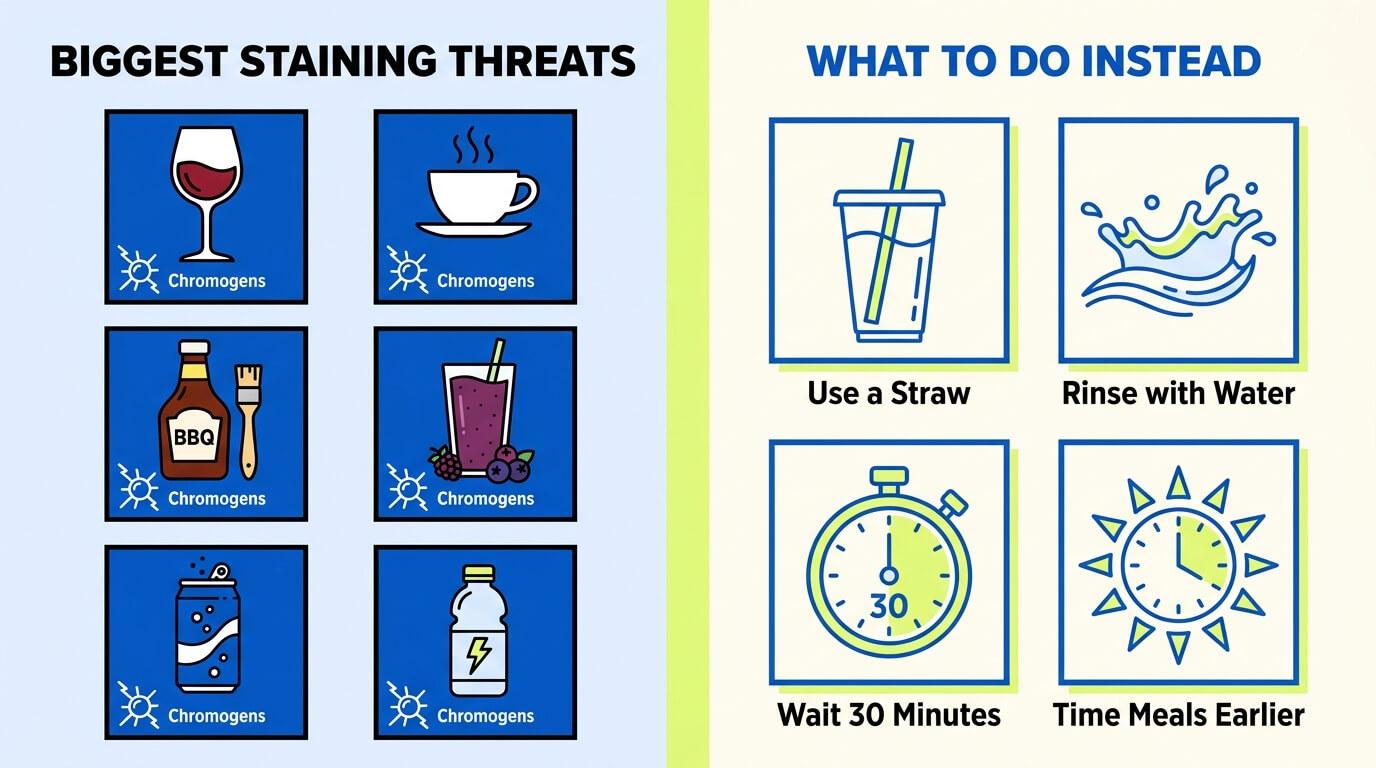
Some offenders are obvious. Coffee, tea, cola, and red wine are common beverages that can stain teeth, and cutting back on these can help maintain a whiter smile and a bright appearance after whitening treatments. Red wine, coffee, berries, tomato-based sauces, and BBQ sauce are the heaviest hitters when it comes to surface stains.
Summer, though, adds a few more to the list. Rooftop rosé, iced coffee on the go, sports drinks, and dark sodas all contain pigments that can settle into tooth enamel faster than you might expect.
Before getting into the fixes, it helps to understand why these specific drinks cause so much damage in the first place.
Why these drinks do the most damage:
-
They contain concentrated chromogens, the chemical compounds responsible for deep staining, which quickly absorb into porous enamel.
-
Many of them are also acidic, which temporarily softens enamel and makes it even more vulnerable to pigment absorption, on top of the staining itself.
-
Summer consumption patterns make it worse: These drinks tend to be sipped slowly over hours rather than gulped down in seconds, which means prolonged contact with your enamel throughout the day.
With that said, a sunset dinner with red wine or a BBQ weekend with smoky sauces doesn’t have to mean giving up your results. A few small moves make a surprisingly big difference, and none of them require skipping anything you love.
What to do instead:
-
Use a straw for iced coffee and dark sodas to limit direct contact with your enamel.
-
Rinse your mouth with water immediately after drinking anything deeply pigmented.
-
Wait at least 30 minutes before brushing after consuming acidic food or drinks, since brushing too soon can push the acid further into softened enamel.
-
Time your staining meals earlier in the day when possible, so you have time to rinse and recover before bed.
It’s not about elimination at all. It’s about timing and small, consistent habits that quietly protect your results and help maintain a bright appearance without changing a single thing about your summer.
With that covered, there’s one more category worth addressing on its own.
Tobacco and Vaping: The Fast-Track to Stained Teeth
Tobacco use and vaping sit in a different category altogether, and it’s worth being upfront about that. Eliminating tobacco use is crucial for preventing tooth staining and improving overall dental health and overall health, as tobacco products are notorious for causing discoloration and negatively impacting oral health.
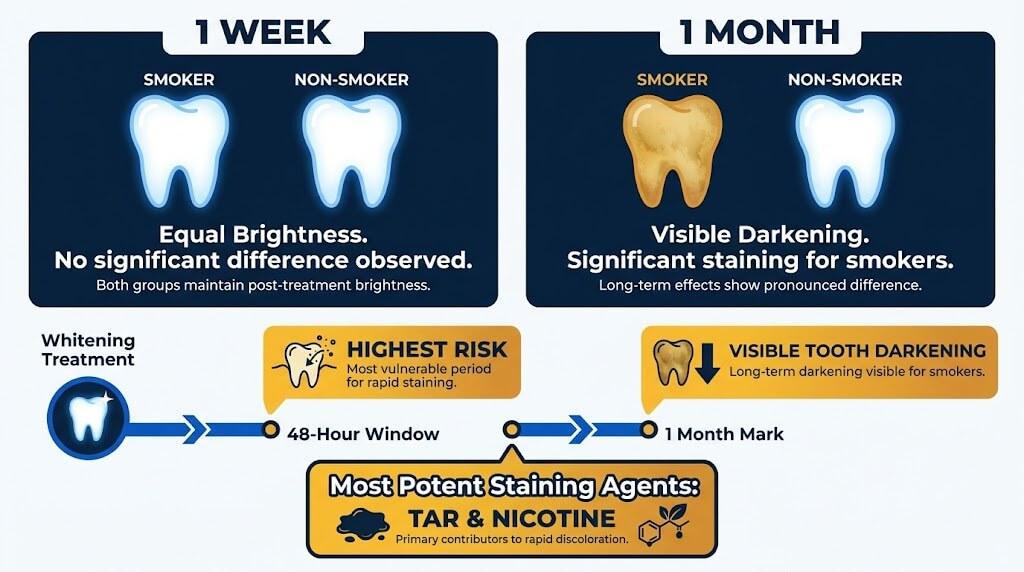
Tar and nicotine deposit directly onto tooth enamel, and staining can appear in hours, not days. Understanding exactly why this is so damaging to whitening results makes the 48-hour waiting period much easier to respect.
Why tobacco and vaping are especially destructive to whitening results:
-
Tar and nicotine are among the most potent staining agents that come into contact with enamel, far more aggressive than most foods or drinks.
-
One study found that smokers had visible tooth darkening within one month of a whitening treatment, and a separate clinical trial found that smokers showed slightly darker teeth after just one month, even when their whitening results matched those of non-smokers at the one-week mark.
-
During the 48-hour post-whitening window, specifically, the risk climbs even higher since enamel pores are still wide open and absorbing everything faster than usual.
The approach is the same with food as with drinks: smart timing and rinsing matter. Brushing and rinsing promptly after use and maintaining consistent oral hygiene can help meaningfully slow re-staining. It won’t eliminate it entirely, but it makes a real difference in how long your results actually hold up.
How to Make Your Daily Habits Keep Results Lasting
Whitening gets you there. Daily habits keep you there.
Once that critical 48-hour window closes, the routine you build determines how long your bright smile lasts. Brushing twice daily and flossing daily are essential for good oral hygiene, helping to prevent plaque buildup and maintain your teeth's whiteness.
And here’s the thing that surprises most people: The routine doesn’t have to be complicated, time-consuming, or restrictive to actually work. It’s all about building it right.
How to Brush, Rinse, and Time Everything Correctly
Most people think that if you brush your teeth twice a day, it’s enough on its own. It is a great start, but the timing and the habits around it are what actually make the difference between a smile that stays bright and one that quietly fades.
Using a whitening toothpaste can help remove surface stains and may contain hydrogen peroxide to whiten teeth from the inside out.
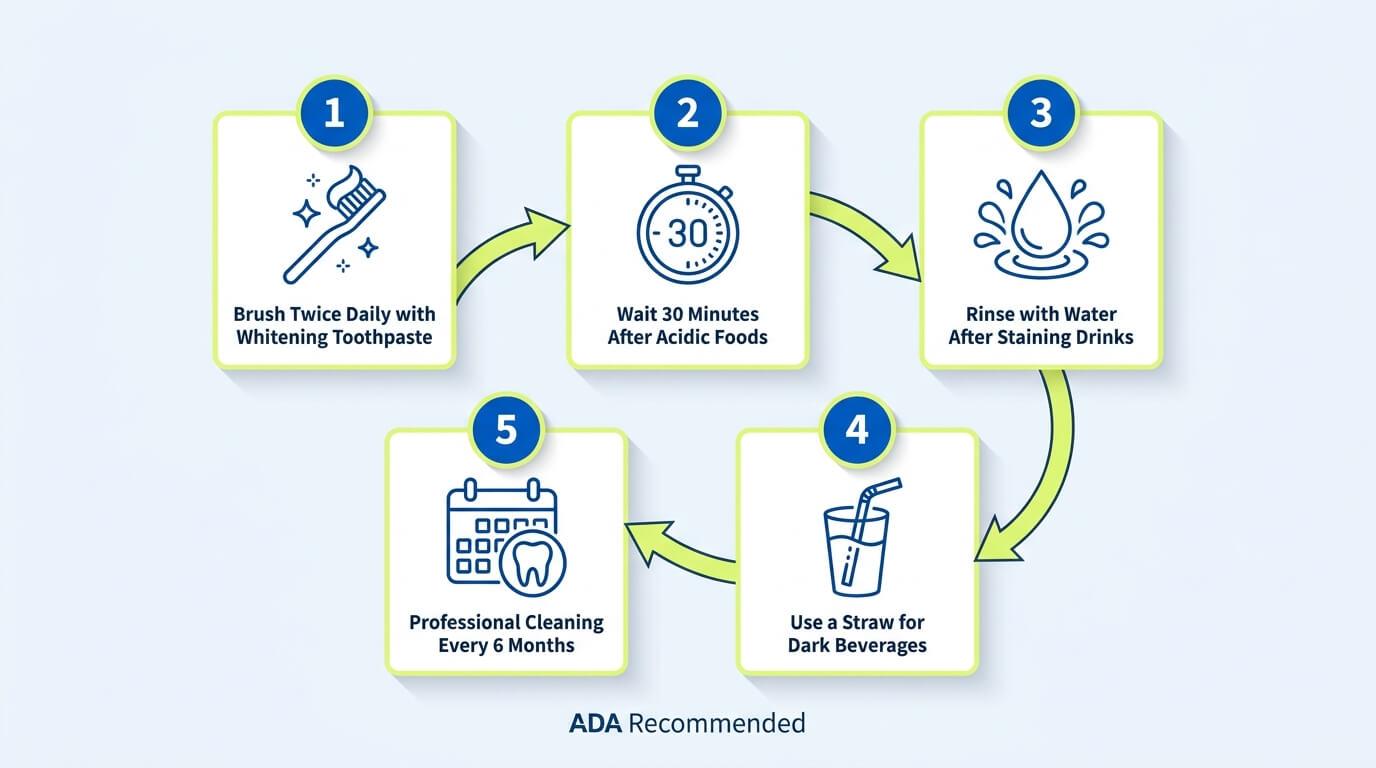
Follow these five steps, and you’ll be ahead of most people without any extra effort.
Step 1: Brush twice daily with a whitening toothpaste.
This keeps surface stains from quietly building up between treatments, as whitening toothpaste often contains whitening agents and sometimes bleaching agents to help maintain whiteness. It’s simple, but it’s the foundation that everything else sits on. Get this one locked in before anything else.
Step 2: Wait 30 minutes after anything acidic before you brush.
Brushing too soon pushes acid further into softened enamel, which is the exact opposite of what you want. Set a reminder on your phone if you need to. It sounds like a small thing, but skipping this step regularly is one of the most common ways people end up working against their own results.
Step 3: Rinse with water immediately after a staining drink.
This takes 3 seconds and meaningfully reduces the amount of pigment that settles into your enamel. Make it as automatic as putting your glass down. Every single time.
Step 4: Use a straw for iced coffee, cold brew, and dark sodas.
This eliminates direct contact between pigment-rich drinks and your teeth. While it feels like a tiny move, combined with rinsing, it adds up to a meaningful reduction in daily exposure to staining over the course of a whole summer.
Step 5: Schedule professional cleanings every six months.
Everything above helps at the surface level, but professional cleanings and other professional treatments provided by your dental team go deeper.
The ADA recommends dental cleanings every six months for most adults with stable oral health, and those cleanings—performed with expert care—remove the kind of buildup that daily brushing simply can’t reach.
Research cited alongside ADA guidelines found that regular dental visits can reduce the risk of cavities and gum disease by up to 50%, leading to a cleaner, less-stained smile over the long run and helping maintain your whitening results.
How to Follow the White Diet Without Losing Your Mind
Once you have the brushing and rinsing habits in place, the white diet is the final piece of the immediate post-whitening puzzle.
The white diet is simply a short-term guideline for the 48 hours right after whitening. That’s it. Two days. Here’s how to do it without making it harder than it needs to be.
Step 1: Stick to light-colored foods only.
Think chicken, rice, eggs, white fish, bananas, and yogurt. The goal is simple: no dark pigments touching your enamel while it is at its most porous.
Step 2: Use the "white shirt" rule as your filter.
You don’t need to memorize a list. Just ask yourself: Would this leave a mark on a white shirt? If yes, skip it for the next 48 hours. If not, you’re good. It’s a surprisingly effective mental shortcut that makes the whole two days much easier to navigate.
Step 3: After 48 hours, resume your regular oral hygiene routine.
Think of the white diet as a head start on your results, not a lifestyle overhaul you have to maintain forever. Once the window closes, you’re back to normal.
To pull everything together, check out this quick-reference table for all the habits covered in this section so you can see the full picture at a glance.

How to Keep Your Smile Bright On the Go This Summer
Knowing the right habits is one thing, but actually putting them into practice—especially when you want to maintain white teeth and a beautiful smile during a packed summer schedule filled with BBQs and rooftop parties where everyone is pouring rosé—is another thing entirely.
This section is about exactly that: real scenarios, easy step-by-step fixes, and the one product worth keeping in your bag all season long to help preserve the appearance of your smile.
How to Handle Pool Days, BBQs, and Rooftop Parties
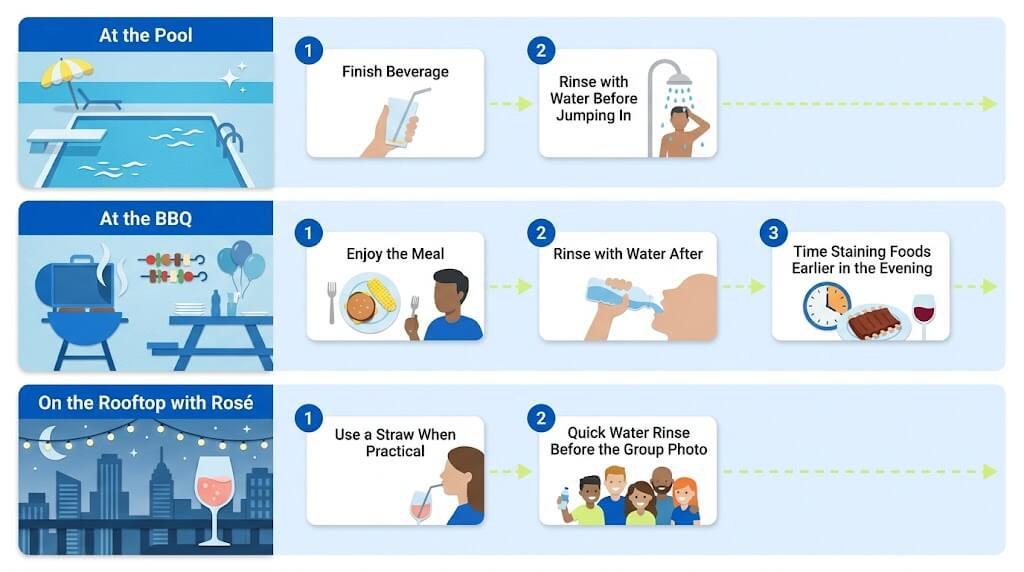
Summer doesn’t slow down, and neither do the things that stain your teeth. The good news is you don’t need a full routine to stay on top of it. You just need a few smart moves in the right moments, and it honestly becomes second nature pretty fast. Let’s talk about how to handle the three most common scenarios.
At the pool:
Sports drinks and colorful cocktails are everywhere poolside, and most of them are packed with pigments. To avoid letting them ruin your bright smile, follow these simple steps:
-
Step 1: Finish your sports drink or dark beverage.
-
Step 2: Rinse your mouth with water before you jump back in.
That single step reduces the amount of pigment that settles onto your enamel from surface contact. Easy, fast, and completely painless.
At the BBQ:
It’s the combination that tends to get people at cookouts: smoky sauces, red drinks, and hours of grazing. A little planning goes a long way here.
-
Step 1: Enjoy the meal, smoky sauces and all.
-
Step 2: Rinse your mouth with water after eating.
-
Step 3: If you can, time your staining foods earlier in the evening so your mouth has time to recover before bed.
On the rooftop with rosé:
Rooftop situations are where most summer whitening results quietly take a hit. A straw and 10 seconds of rinsing is all it takes to stay ahead of it.
-
Step 1: Use a straw when practical.
-
Step 2: Do a quick water rinse before the group photo.
None of these are restrictions. They are micro-habits that silently extend your whitening results without changing a single thing about how you enjoy the night.
And for those moments when you want an extra edge, this is where the right product makes all the difference.
How to Use a Whitening Pen for On-the-Go Touch-Ups
The SNOW® Extra Strength Whitening Pen genuinely earns its place in your summer bag. It was designed exactly for the moments described above: quick, portable, and zero effort.
Here’s how to use it.
Step 1: Uncap the pen.
That’s truly the hardest part. No setup, no trays, no waiting around.
Step 2: Apply the whitening gel directly to your teeth.
A single pass across your teeth is all it takes. The formula starts working immediately upon surface contact.
Step 3: Let it work. You’re done in under a minute.
No lights, no mess, no prep. Whether that is right after a staining meal or right before photos when you want your smile at its brightest, it fits into any summer moment without disrupting a thing.
Whitening strips are another convenient over-the-counter option for maintaining your results. However, over-the-counter whitening products like whitening strips and toothpaste typically contain lower concentrations of bleaching agents than professional treatments, so they may be less effective for deeper stains.
The people who protect their whitening results best aren’t doing more work. They’re just doing it smarter, and consistent touch-ups during small moments are exactly how they do it. Your summer bag already contains sunscreen and lip balm. The SNOW® Whitening Pen is just the next logical addition to the lineup.
Get The SNOW® Extra Strength Whitening Pen
When to Schedule a Whitening Touch-Up (And How to Stretch Results)
Your daily habits are the foundation, and you’ve already covered that part.
Touch-ups are what keep the results visible week after week, season after season. Among the treatment options available, professional whitening treatments stand out for their effectiveness. These treatments use higher concentrations of hydrogen peroxide or carbamide peroxide, which can break down stains more effectively than at-home products. To maintain your desired whitening results, professional touch-up treatments may be necessary every 6 to 12 months.
Why Regular Touch-Ups Matter More Than Most People Realize
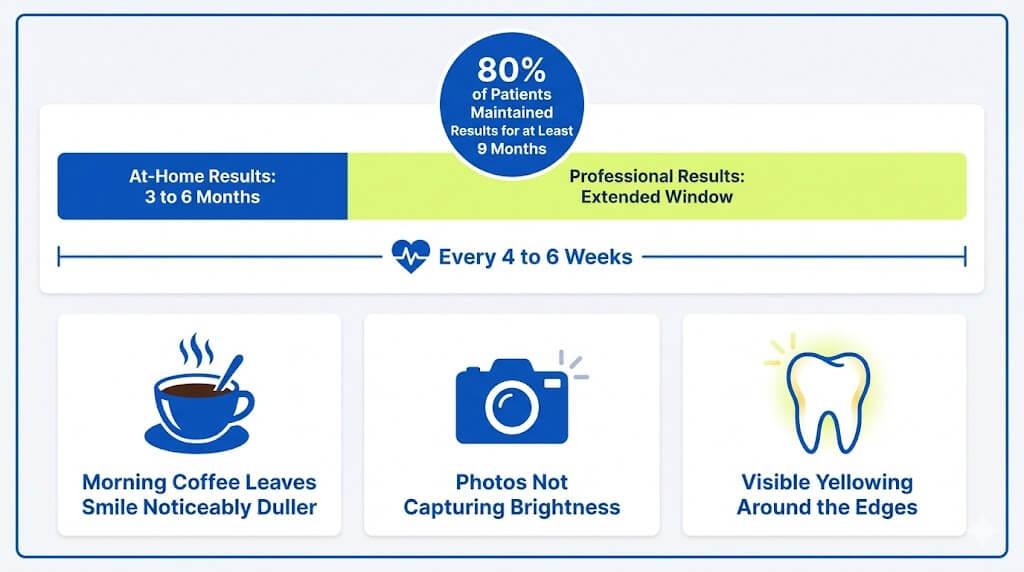
Whitening results don’t last forever, but they last a whole lot longer when you’re intentional about maintenance. According to Healthline, at-home whitening results typically last 3 to 6 months, while professional in-office treatments can extend that window considerably.
A study cited by Summit Dental found that 80% of patients maintained whitening results for at least 9 months when consistent oral hygiene habits were maintained. That’s a long time to stay bright, and it’s absolutely achievable. Here’s why touch-ups are what make that kind of longevity possible.
Why touch-ups make all the difference:
-
Surface staining accumulates gradually and invisibly, and by the time you notice it, it’s already built up over weeks of daily habits and meals.
-
Touch-up treatments every 4 to 6 weeks intercept that buildup before it deepens into visible re-staining, keeping you ahead of the fade instead of chasing it.
-
Pairing those touch-ups with dental cleanings every 6 months means you are removing what even daily brushing simply can’t catch on its own.
So how do you know when you’re actually due for a touch up? The signs are usually pretty clear once you know what to look for.
Signs it’s time for a touch-up:
-
Your morning coffee leaves your smile looking noticeably duller by mid-week.
-
The photos aren't capturing the brightness you remember right after whitening.
-
There is a visible yellowing creeping back, especially around the edges.
When any of those show up, it’s time. Don’t wait for it to get worse before acting. And once you are in a regular touch-up rhythm, this next section will show you exactly how to make it as effortless as possible.
How to Fit SNOW® Boosters Into Your Maintenance Routine
Doing a full whitening kit every few weeks isn’t realistic for most people. It’s time-consuming, and frankly, it’s more than your smile even needs once you have already hit your brightness goal. That’s the exact gap SNOW® Boosters are designed to fill. Here’s the right way to use them.
Step 1: Complete your full whitening treatment first.
Boosters are built for maintenance, not for starting from scratch. Start strong with the SNOW® Diamond Series Teeth Whitening Kit to get your results where you want them, then shift into maintenance mode.
Step 2: Run a booster session every 4 to 6 weeks between full treatments.
This is where the SNOW® Magic Teeth Whitening Powder earns its place. It fits into any existing routine without adding real effort, and it keeps your results looking fresh without the full commitment of a complete whitening regimen every few weeks.
Step 3: Keep going. Consistency is the only thing that separates bright smiles from fading ones.
There’s no shortcut here, but there doesn’t need to be. Think of boosters as the upkeep, not the overhaul. Consistent booster use is what separates smiles that stay bright for 6 months from ones that quietly fade by month two.
How to Manage Sensitivity While Keeping Your Teeth White
If your teeth feel a little sensitive after whitening, that’s completely normal, and you’re not alone.
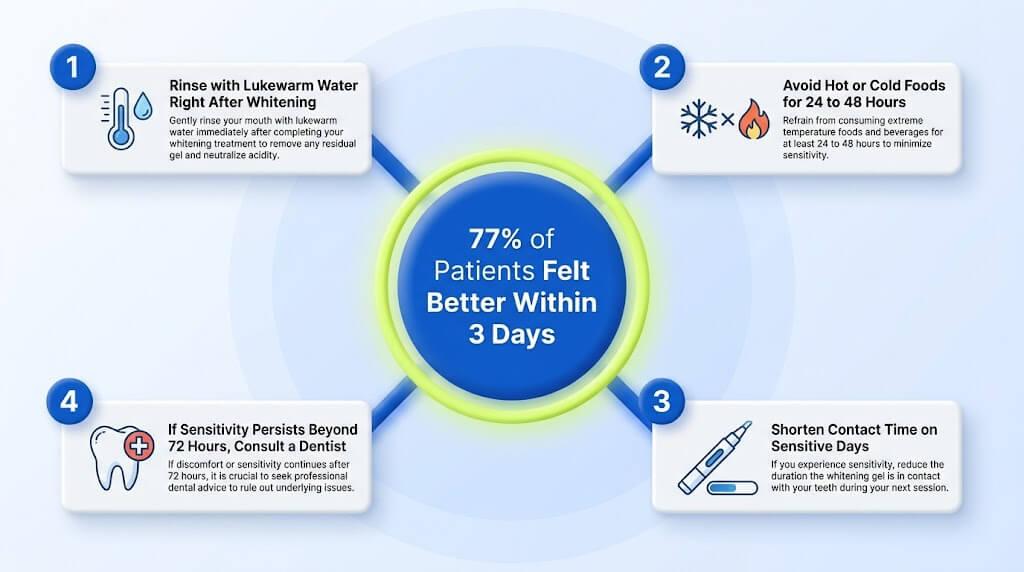
Post-whitening sensitivity is one of the most common experiences, and the reassuring part is that it almost always fades on its own within 24 to 48 hours.
Clinical data consistently supports this. About 77% of patients experiencing sensitivity felt better within three days or less.
With that in mind, below is how to get through that window as comfortably as possible without falling off your routine.
Step 1: Rinse with lukewarm (not cold) water right after whitening.
Cold water hitting freshly treated enamel is one of the most common triggers for that post-whitening zing. Lukewarm water helps reduce the shock to your enamel during its most vulnerable period, and it’s a simple swap that makes a noticeable difference right away.
Step 2: Avoid extremely hot or cold foods and drinks for the first 24 to 48 hours.
Temperature extremes are the biggest driver of sensitivity during this window. Keeping things closer to room temperature for a day or two makes the experience noticeably more comfortable without asking much from your routine at all.
Using a desensitizing toothpaste can help alleviate temporary sensitivity after a whitening procedure. Additionally, remineralizing toothpaste supports enamel health, reduces sensitivity, and can improve the appearance of your teeth.
Step 3: Shorten contact time rather than skipping your whitening pen on sensitive days.
The key is to adjust your habits, not abandon them entirely. Consistency still wins, even when you dial things back a little. On particularly sensitive days, the SNOW® Overnight Sensitive Whitening Pen is a gentler option formulated for exactly that situation, so you can stay on track without pushing through discomfort.
Step 4: If sensitivity persists beyond 72 hours, pause and consult a dentist.
This is the step most people are reluctant to take, but trust us when we say it’s the right call. Your enamel always comes first, and there’s absolutely no shame in taking an extra day or two to let things settle before picking your routine back up. A quick check-in with your dentist can rule out anything that needs attention and get you back on track with confidence.
Final Thoughts
Keeping your smile bright after whitening really comes down to three things: protecting your enamel during that first 48-hour window, building a few smart daily habits, and keeping whitening touch-ups within reach when summer gets messy. These strategies help you maintain white teeth, achieve a brighter smile, and enjoy a beautiful smile all summer long.
None of it’s complicated, and none of it asks you to sit out the season.
At SNOW®, every product we build is designed around real life: the coffee runs, the rooftop nights, and the BBQs that go way too late. Professional whitening gets you there. SNOW® is here to help you stay there, all summer long.
Shop SNOW® And Get 20% Off Today
FAQs
These are the questions we hear most often about maintaining whitening results through summer, along with straightforward answers to each.
Please note: The information provided here is for educational purposes only and is not a substitute for professional advice, diagnosis, or treatment. Always consult a qualified healthcare provider, dentist, or other qualified healthcare provider if you have concerns about your oral health or if you have a medical condition that may affect your dental care.
How Do I Keep My Teeth White After Whitening Them?
The key is building a few consistent daily habits and sticking with them. Avoid deeply pigmented foods and drinks for 48 hours after whitening, rinse with water after staining beverages, and brush twice daily with a whitening toothpaste. Scheduling touch-ups every four to six weeks keeps your results from quietly fading between full treatments.
What Is the 2-2-2 Rule for Teeth?
The 2-2-2 rule is a simple oral hygiene framework: brush twice a day, for two minutes each session, and visit your dentist twice a year. Those regular dental cleanings are especially valuable because they remove surface buildup before it can deepen into visible staining over time.
Do Teeth Turn Yellow Again After Whitening?
Yes, some re-yellowing is natural over time, and that’s completely normal. Diet, daily habits, and consistency with your oral hygiene routine all influence how quickly it happens. With regular touch-ups and smart daily habits, most people can keep their results looking bright for three to six months before needing another full treatment.
How Many Hours After Teeth Whitening Can I Smoke?
Dentists generally recommend waiting at least 48 hours. During that window, your enamel pores are still more open than usual, making them especially vulnerable to tar and nicotine staining from both tobacco and vaping. Staining during this period tends to occur more quickly and penetrate more deeply than it normally would.