
Activated charcoal only removes mild, extrinsic surface stains through physical abrasion; it cannot chemically alter the natural color of teeth or reverse deeper intrinsic yellowing. Repeated use of highly abrasive charcoal formulas risks permanent enamel degradation, exposing the yellow dentin underneath and increasing tooth sensitivity.
But here’s the real question. Does charcoal actually whiten teeth?
Charcoal can help remove some surface stains from things like coffee, tea, or wine. What it cannot do is change the natural color of your teeth or fix deeper discoloration.
In our clinical development at SNOW, we analyze the Relative Dentin Abrasivity (RDA) of whitening agents. Our internal testing confirms that relying solely on highly abrasive carbon particles fundamentally degrades the protective enamel layer over a 6-month period.
This guide explores the clinical realities of charcoal dentifrices:
-
What is activated charcoal in toothpaste?
-
How does charcoal chemically and physically whiten teeth?
-
Is charcoal toothpaste safe for daily enamel health?
-
What are the science-backed alternatives to charcoal whitening?
Key Takeaways
-
Activated charcoal can help remove some surface stains from teeth caused by coffee, tea, or red wine, but it cannot change the natural color of teeth or treat deeper discoloration caused by aging, trauma, or certain medications.
-
Research shows that charcoal toothpaste may provide modest whitening improvements at first, but results often plateau quickly. In one study, charcoal whitening plateaued after the first two weeks, while hydrogen peroxide whitening continued to produce stronger results.
-
The whitening effect of charcoal comes mainly from its mildly abrasive particles, which help scrub stains from tooth surfaces. Over time, repeated abrasion may wear down tooth enamel, making teeth appear more yellow as the dentin layer becomes more visible.
-
Unlike many regular toothpaste formulas designed to fight cavities, many charcoal-based dentifrices do not contain fluoride. Because of limited safety data, charcoal toothpaste has not received the American Dental Association Seal of Acceptance.
-
Although charcoal appears in many wellness trends and beauty products, including face masks, its whitening benefits remain limited. Modern whitening options, such as hydroxyapatite or peroxide-based treatments, are designed to whiten teeth while also aiding long-term oral health.
What Is Activated Charcoal in Toothpaste?
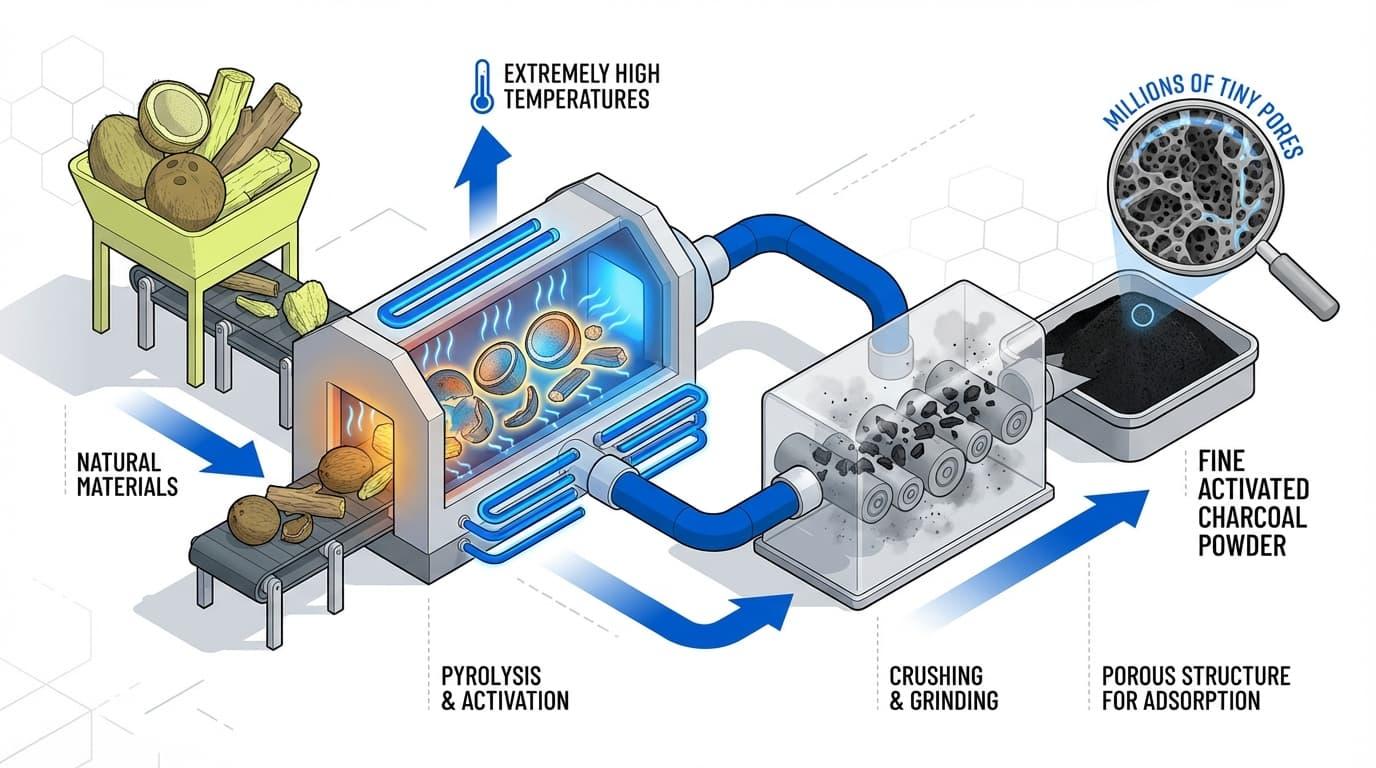
Activated charcoal is a fine black powder made by heating natural materials, such as coconut shells or wood, at extremely high temperatures. This process creates millions of tiny pores in the charcoal, allowing it to trap and hold certain particles on its surface.
You’ve probably seen charcoal everywhere over the past few years. It showed up in face masks, detox drinks, and skincare products that promised to pull out impurities. Naturally, people started wondering if it could do the same thing for their teeth.
That curiosity is exactly how charcoal ended up in toothpaste. Brands began adding activated charcoal to toothpastes and powders and marketing it as a natural way to lift stains and brighten your smile.
We completely understand why the idea caught on. A simple, natural ingredient that helps clean and whiten your teeth sounds great. But when you look a little closer at how charcoal actually works on teeth, the story becomes a bit more interesting.
Does Charcoal Actually Whiten Teeth?
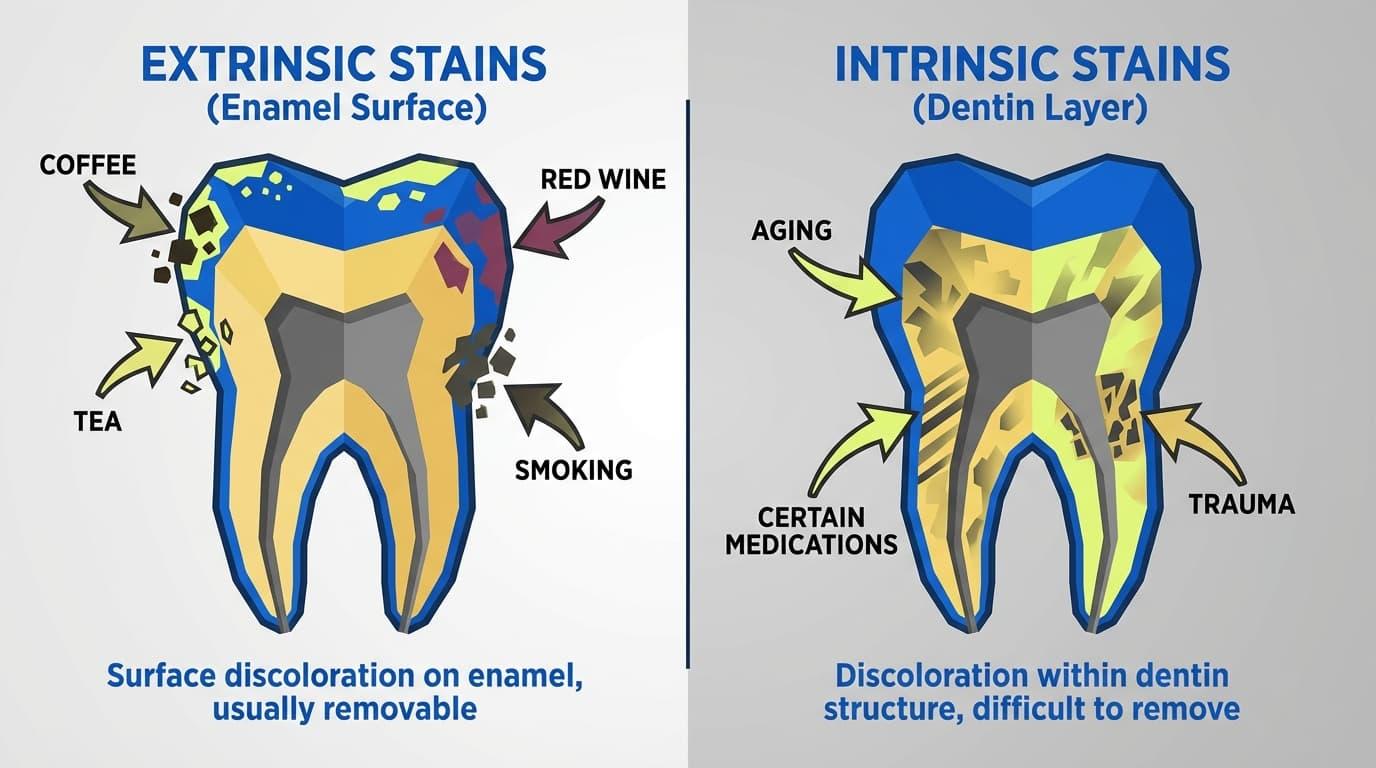
To answer this clearly, it helps to understand that not all tooth stains are the same. In dentistry, discoloration is usually divided into two main types: extrinsic and intrinsic.
Extrinsic stains sit on the outer surface of your enamel. These are the common stains most people get from coffee, tea, red wine, smoking, and certain foods that leave pigments on the teeth.
Intrinsic stains are different. These stains develop deeper inside the tooth structure, often within the dentin layer. They can occur due to aging, certain medications, trauma, or natural enamel thinning over time.
According to a 2005 clinical review in Dental Update, intrinsic dentin stains cannot be reversed with abrasive surface cleaning, requiring chemical peroxide penetration instead.
This is where charcoal reaches its limit.
Activated charcoal mainly works on surface-level stains. When you brush with charcoal toothpaste, the particles help lift or scrub away some of the discoloration sitting on the enamel. That can make teeth appear a bit brighter if the stains are mild.
However, charcoal cannot penetrate the tooth or change its natural color. If your teeth look yellow because of aging or deeper staining, charcoal will not solve that problem.
Research reviews support this. A 2022 systematic review published in the Annals of Anatomy concluded that charcoal toothpastes exhibit lower whitening efficacy than peroxide agents while carrying a significantly higher risk of abrasive enamel damage.
In simple terms, charcoal can help polish away some surface stains, but it does not deliver the deeper whitening results many people expect.
How Does Activated Charcoal Chemically and Physically Whiten Teeth?
To understand charcoal whitening, it helps to look at how the ingredient interacts with your teeth during brushing.
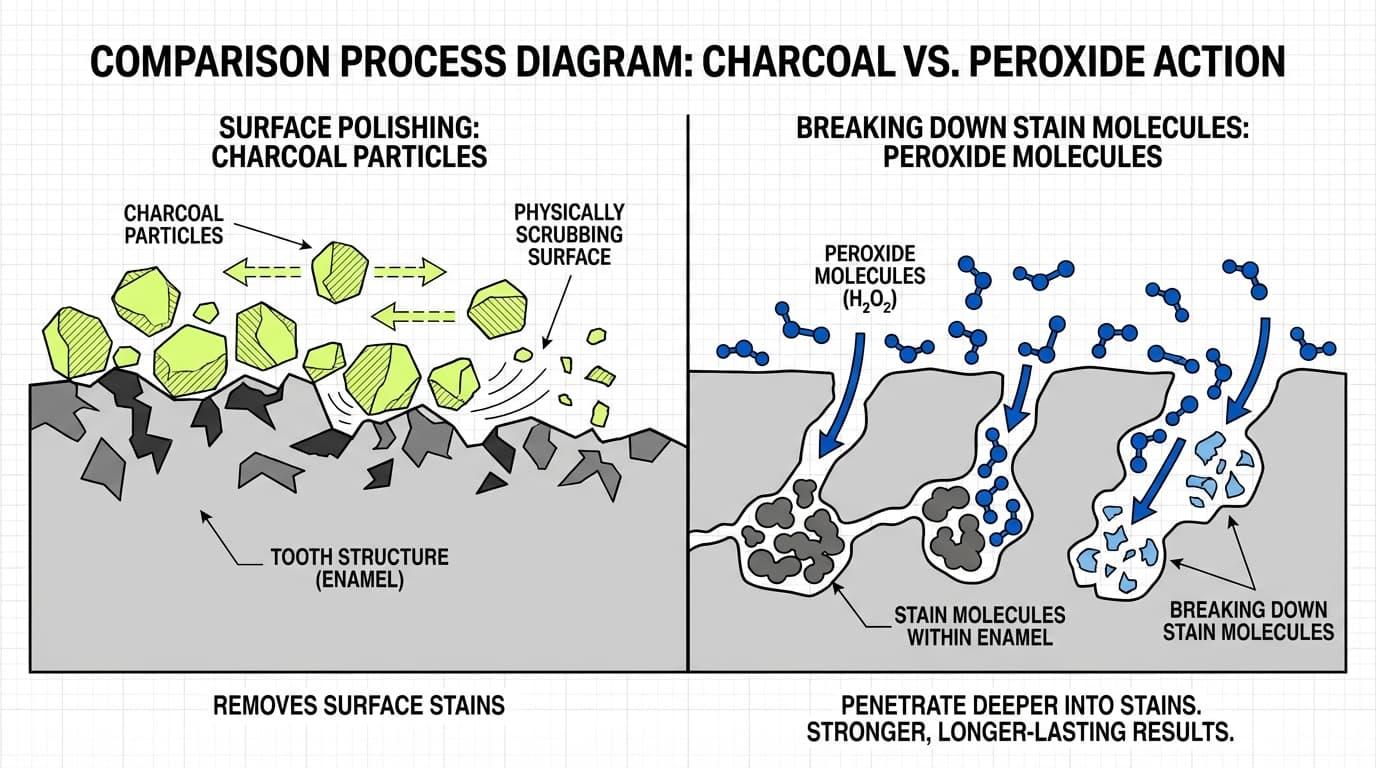
Activated charcoal mainly works through abrasion. The small particles act like a gentle scrub, helping remove the thin layer of stains that builds up on the enamel's surface. When you brush with charcoal toothpaste, you are essentially scrubbing away surface discoloration from things like coffee, tea, or wine.
Initial physical abrasion removes the outer pellicle layer of plaque and dietary pigments, resulting in a temporary, minor brightening effect during the first two weeks of charcoal use.
The charcoal creates a polishing effect, removing the outer film of stains and plaque that can dull a tooth's appearance.
But here is the important part. Once those surface stains are removed, the effect quickly levels off. Charcoal cannot reach deeper stains within the tooth structure, so whitening results often plateau after a short period of use.
Research comparing charcoal toothpastes with peroxide whitening products highlights this difference. An in-vitro study found that hydrogen peroxide whitening toothpaste reduced discoloration more effectively than charcoal-based or purely abrasive toothpastes.
The reason comes down to how the whitening happens.
Charcoal relies on surface polishing.
Peroxide whitening works chemically by breaking down stain molecules within the enamel.
Because peroxide can penetrate deeper into stains than charcoal can, peroxide-based whitening systems typically produce stronger, longer-lasting results.
Is Charcoal Toothpaste Safe for Teeth?
Charcoal toothpaste is often marketed as a natural way to whiten teeth. But when dentists evaluate whitening methods, they also consider how those products affect enamel and long-term oral health.
Here are a few key concerns experts often discuss.
Enamel Abrasion
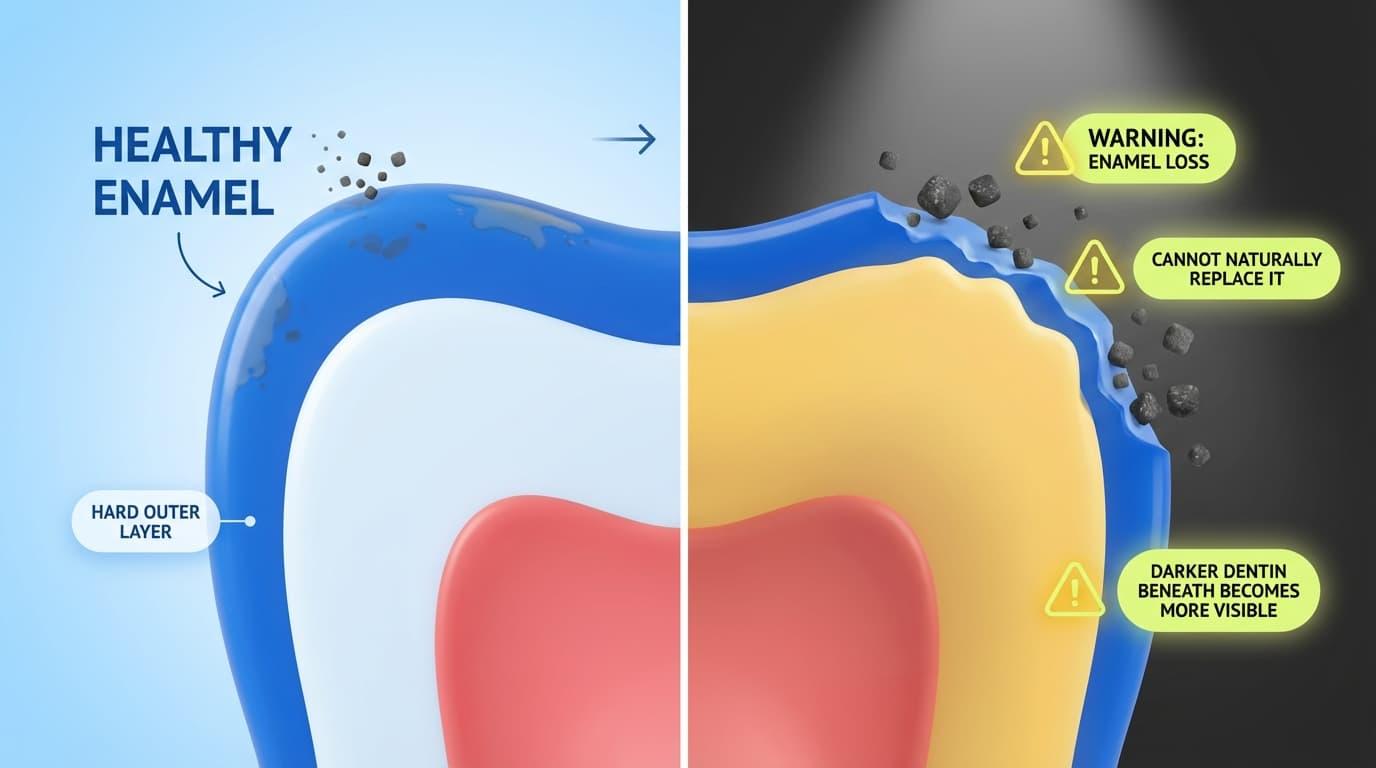
Charcoal works by scrubbing away surface stains from enamel. While that can create a short-term brightening effect, the abrasive particles can also wear down small amounts of enamel with repeated brushing.
Enamel is the hard outer layer that protects your teeth. Once it is lost, your body cannot naturally replace it. Over time, excessive abrasion can make teeth look more yellow, as the darker dentin beneath becomes more visible.
Increased Tooth Sensitivity
When enamel gradually thins, the inner layers of the tooth become more exposed. This can lead to increased sensitivity, especially when drinking cold beverages or eating sweet foods.
Some people notice this sensitivity after regularly using highly abrasive whitening products.
Many Formulas Lack Fluoride
Another concern is that many charcoal toothpastes do not contain fluoride. Fluoride helps strengthen enamel and plays a key role in protecting teeth from cavities.
If someone replaces their regular fluoride toothpaste with a charcoal version that lacks it, they may lose an important layer of daily enamel protection.
American Dental Association (ADA) Non-Acceptance
As of 2026, no charcoal-based dentifrice has received the American Dental Association (ADA) Seal of Acceptance due to insufficient safety data regarding long-term enamel abrasion and fluoride omission.
A More Enamel-Focused Approach
At SNOW, enamel health always comes first. Our whitening systems are designed to brighten smiles while also supporting enamel using science-backed ingredients like hydroxyapatite, a mineral that helps reinforce the natural structure of teeth.
A brighter smile is important, but protecting your enamel is what keeps it healthy in the long term.
How Does Charcoal Compare to Other Teeth Whitening Options?
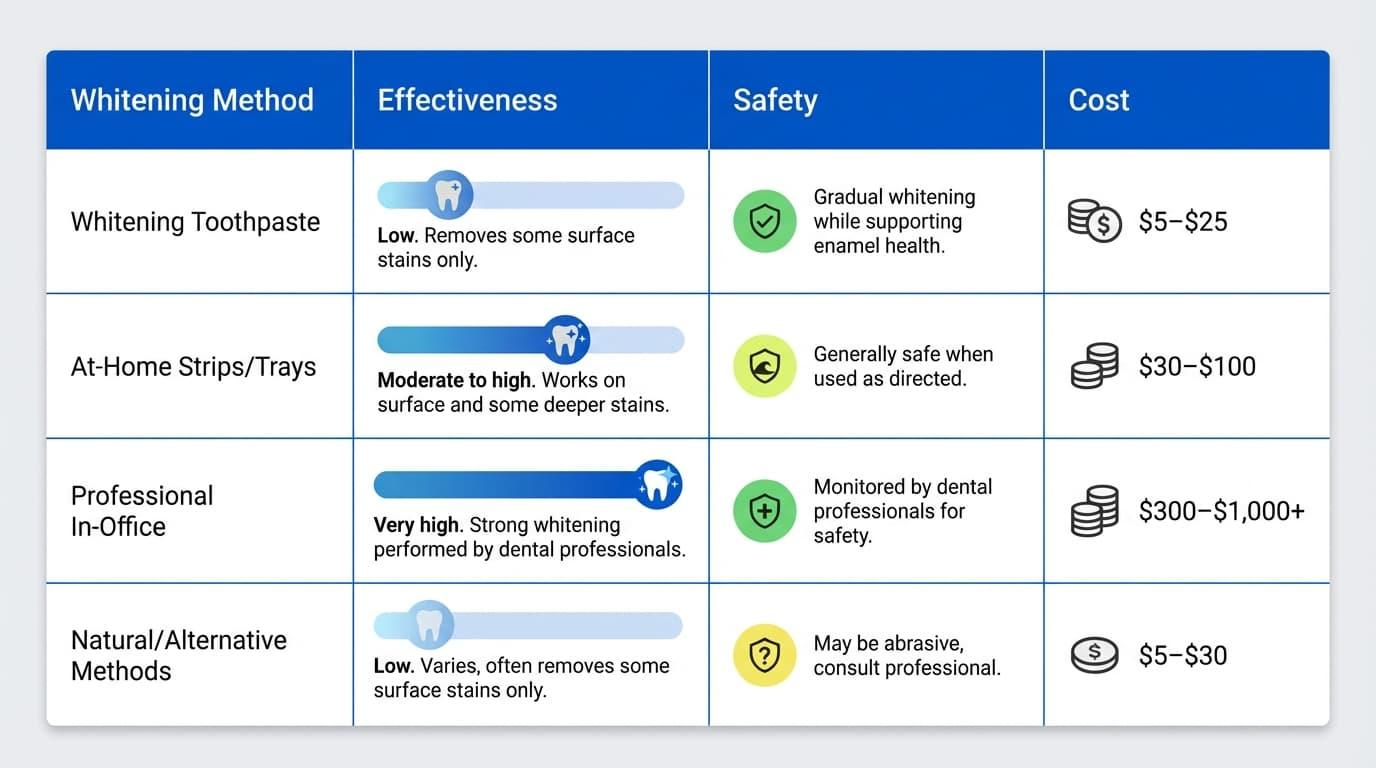
If you are trying to whiten your teeth, charcoal is just one of several options available today. Each method works differently and produces different levels of results.
Here is a simple comparison to help put things into perspective.

As you can see, charcoal mainly acts as a surface stain remover, while peroxide-based whitening works by breaking down stain molecules inside the enamel. This is why peroxide treatments usually produce more noticeable whitening results.
SNOW® Diamond Teeth Whitening Kit
For people looking for stronger whitening without visiting a dentist, at-home whitening systems have become a popular option. The SNOW® Diamond Teeth Whitening Kit combines a professional-grade whitening serum with an LED mouthpiece to accelerate the whitening process.
The formula is designed to lift the appearance of stains from common sources like coffee, tea, wine, and everyday foods while being gentle on enamel. Millions of customers already use SNOW products as part of their oral care routine.
If you want a professional-level whitening experience at home, this kit is designed to deliver noticeable results in a simple daily routine.
Get the SNOW® Diamond Teeth Whitening Kit Today
Who Should Avoid Charcoal Whitening?
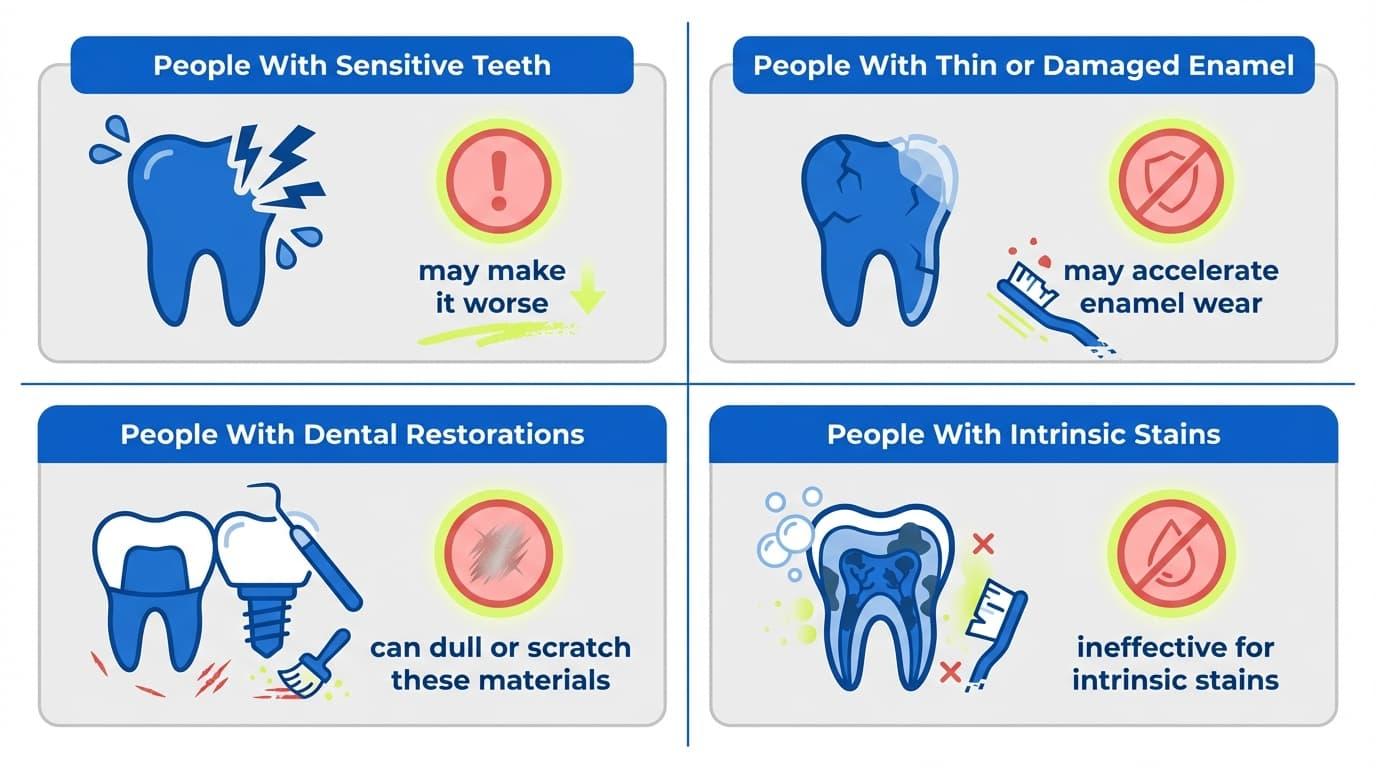
Activated charcoal has become a popular whitening option, but it is not the right solution for everyone. Because charcoal-based toothpaste works by abrasion, some people may face a higher risk when using charcoal teeth-whitening products.
Here are a few groups who should be cautious.
People With Sensitive Teeth
If you already experience tooth sensitivity, using charcoal toothpaste may make it worse. Charcoal particles are mildly abrasive and can gradually wear down tooth enamel during brushing. When enamel becomes thinner, the dentin layer underneath becomes more exposed, which can increase sensitivity to cold drinks, sweet foods, or temperature changes.
People With Thin or Damaged Enamel
Healthy enamel protects teeth from tooth decay and cavities. But if enamel is already thin or damaged, using charcoal-based dental products may accelerate enamel wear.
Dentists often warn that excessive abrasion can expose the dentin layer, making teeth appear more yellow over time. This is the opposite of the brighter smile most people are hoping to achieve.
People With Dental Restorations
If you have veneers, crowns, white fillings, or other dental restorations, charcoal toothpaste may not be a good fit. Charcoal particles can dull or scratch these materials, creating uneven color between natural teeth and dental work.
Unlike natural enamel, most dental restorations cannot be whitened once they become stained or roughened.
People With Intrinsic Stains
Charcoal teeth whitening also struggles with intrinsic stains. These deeper stains often develop from aging, trauma, or certain medications and sit within the dentin layer rather than on the tooth surface.
Because activated charcoal only works on surface stains, it cannot reach or correct intrinsic discoloration.
In these situations, dentists typically recommend more effective teeth-whitening products or professional whitening treatments rather than charcoal-based solutions.
What Are the Safest, Science-Backed Alternatives to Charcoal Whitening?
If your goal is a brighter smile without harming enamel, there are safer and more reliable ways to whiten teeth. Modern teeth whitening products are designed to remove surface stains while also supporting long-term oral health.
A good whitening routine usually includes regular brushing with fluoride toothpaste, professional dental cleaning, and targeted whitening treatments that work beneath the enamel.
Many modern whitening solutions rely on ingredients like hydrogen peroxide, which can break down stain molecules inside the enamel rather than simply scrubbing the surface.
SNOW® Extra Strength Teeth Whitening Pen
One convenient whitening option is the SNOW® Extra Strength Teeth Whitening Pen. This pen uses a carefully formulated whitening serum designed to help remove surface stains from coffee, red wine, and other everyday foods, while remaining gentle on tooth enamel.
The pen makes whitening easy because you can apply the serum directly to your teeth in seconds. Many people use it as part of their daily oral care routine to gradually whiten teeth without complicated trays or strips.
SNOW products are trusted by millions of users and have been featured in major publications such as GQ, Cosmopolitan, and Oprah Magazine for their focus on effective, enamel-conscious whitening.
Get the SNOW® Extra Strength Teeth Whitening Pen Today
SNOW® Magic Teeth Whitening Powder
Another option for boosting your whitening routine is the SNOW® Magic Teeth Whitening Powder. This powder can be added to your regular toothpaste to help lift surface stains during brushing.
The formula is designed to brighten your smile while supporting enamel health. Many people use it alongside their regular toothpaste to enhance stain removal from coffee, tea, and other common sources of discoloration.
Because it fits easily into a daily brushing routine, it provides a simple way to maintain a brighter smile while supporting overall dental health.
Get the SNOW® Magic Teeth Whitening Powder Today
Final Verdict: Is Charcoal Worth It?
Activated charcoal has become a popular trend in oral care. While it can help remove some surface stains from coffee, tea, or red wine, its whitening effect is usually limited. Charcoal works mainly by abrasion, which means it polishes the tooth surface but cannot change the natural tooth color or treat deeper intrinsic stains.
For people who want a brighter smile while protecting enamel, modern whitening solutions may be a better option. Ingredients like hydrogen peroxide and hydroxyapatite are designed to whiten teeth while supporting overall oral health.
SNOW offers a range of science-backed teeth-whitening products trusted by millions of customers and featured in publications such as GQ, Cosmopolitan, and Oprah Magazine.
Explore the SNOW Teeth Whitening Collection
FAQs
Still wondering how charcoal affects your teeth? Here are answers to a few common questions.
How long does it take for charcoal to whiten teeth if it works at all?
Lab data from the 2025 study on extracted teeth showed that most visible whitening occurred within the first 1–2 weeks, then plateaued by day 30 with no further improvement. In real life, you might notice slight brightening of surface stains after several uses, but continued improvement beyond a couple of weeks is unlikely. If your stains are intrinsic—deeper in the tooth structure—no meaningful change will occur regardless of how long you use charcoal.
Can I safely use charcoal toothpaste once in a while?
Occasional, gentle use (perhaps once every week or two) is likely lower risk for most adults with strong, healthy enamel. Use a soft brush, apply light pressure, and avoid extended scrubbing. However, evidence remains limited, and your daily brushing should be done with a non-abrasive toothpaste containing fluoride or hydroxyapatite. Keep charcoal as an infrequent polish only if your dentist has cleared it for your specific situation.
Does charcoal damage dental work like veneers or white fillings?
Research and clinical reports indicate that charcoal can roughen or stain certain restorative materials, including composite fillings and some veneers, making them look dull or grayish over time. Unlike natural enamel, most dental restorations cannot be “bleached” back once damaged—they may require professional polishing or complete replacement. If you have visible cosmetic work on front teeth, avoid charcoal unless your dentist specifically approves it.
Is charcoal toothpaste better than regular whitening toothpaste from the drugstore?
Controlled studies show charcoal toothpastes are not more effective than conventional whitening toothpastes—and are often less effective than products using peroxide or blue covarine. Standard whitening toothpastes with the ADA Seal have documented levels of abrasivity and evidence for safety when used as directed, while charcoal options lack that validation. Choose products with established whitening agents and safety profiles rather than relying on charcoal’s trend appeal.
Can charcoal help if my teeth are yellow from aging or medication?
Age-related yellowing and medication-related discoloration (such as tetracycline stains) are intrinsic—they occur inside the tooth structure, not on the surface. Charcoal cannot reach or change these deeper stains; it only acts on the outer enamel surface. For intrinsic discoloration, consult a dentist about professional whitening, veneers, or bonding that can effectively address these concerns. Natural home remedies and surface treatments simply cannot penetrate to the source of the problem.