
Choosing the right toothpaste is an essential part of maintaining oral health. However, the debate between fluoride and fluoride-free options can be confusing.
The simple answer is: fluoride toothpaste remains the gold standard for preventing tooth decay and strengthening enamel. This is backed by decades of research and professional endorsements.
But is a "one-size-fits-all" approach really the best way to protect your unique smile?
Today, fluoride-free alternatives offer promising benefits. So, if you're seeking natural ingredients or managing specific health considerations, read on!
In this article, you’ll find answers to questions such as:
-
How exactly does fluoride protect and repair teeth compared to fluoride-free ingredients?
-
What are the pros and cons of using fluoride versus fluoride-free toothpaste?
-
Who should consider fluoride-free toothpaste as a viable option?
-
How do advanced fluoride-free technologies like hydroxyapatite and bioactive glass work?
-
What factors should influence your choice of toothpaste for optimal dental health?
Want to cut through the marketing noise and discover which formula truly supports your long-term oral health?
Let’s dive in and explore the facts behind fluoride vs fluoride-free toothpaste.
Key Takeaways
-
Fluoride toothpaste (≥1,000 ppm) remains the gold standard for cavity prevention, endorsed by the American Dental Association, FDI, and the American Association for Dental, Oral, and Craniofacial Research.
-
Advanced fluoride free toothpaste options using 10% nano-hydroxyapatite (nHAP) or bioactive glass show remineralization comparable to low-dose fluoride in clinical studies.
-
The real trade-off isn’t “fluoride vs fluoride-free”; it’s surface protection (fluoride) versus structural rebuilding (hydroxyapatite).
-
Your decision should be based on cavity risk, tooth sensitivity, ingredient preferences, and guidance from your dentist.
Fluoride vs Fluoride-Free Toothpaste: Quick Answer
Fluoride has the strongest long-term data for preventing tooth decay. Today, credible fluoride free options exist.
Toothpastes with over 1,000 ppm (parts per million) fluoride consistently reduce dental caries by approximately 25% across populations, as reported in a meta-analysis by Cochrane Oral Health Group.
Modern hydroxyapatite toothpaste (10% nHAP) shows non-inferior enamel remineralization versus low-dose fluoride in Randomized Control Trials (RCTs). Although head-to-head trials against standard 1000 — 1,450 ppm formulations remain limited.
Historically, most major toothpaste companies focused exclusively on fluoride as the primary active ingredient for cavity protection. However, the rise of biomimetic technology has pushed these same companies to explore alternative minerals that align with modern consumer preferences.
For high-cavity-risk users, most dentists default to fluoridated toothpaste. For label-conscious users prioritizing biocompatible natural ingredients, nHAP-based pastes offer a compelling fluoride free alternative. Young children, people with thyroid concerns, and those in high-fluoride water areas should decide with their dentist.
What Exactly Is Fluoride?
Fluoride is the ionic form of fluorine. Florine is a naturally occurring mineral found in rocks, soil, and many drinking water sources worldwide.
Here are some quick facts:
-
In dental care, fluoride is delivered as sodium fluoride, sodium monofluorophosphate, or stannous fluoride at 1,000–5,000 ppm.
-
It works topically by integrating into tooth enamel to form acid-resistant fluorapatite.
-
After brushing, salivary fluoride levels rise 100–1,000 times baseline for 1–2 hours, hence “spit, don’t rinse”.
-
The AADOCR reaffirmed in 2025 that fluoride toothpaste at 1,000 to 1,500 ppm is the current gold standard for maintaining oral health.
How Fluoride Toothpaste Works (and Its Pros & Cons)
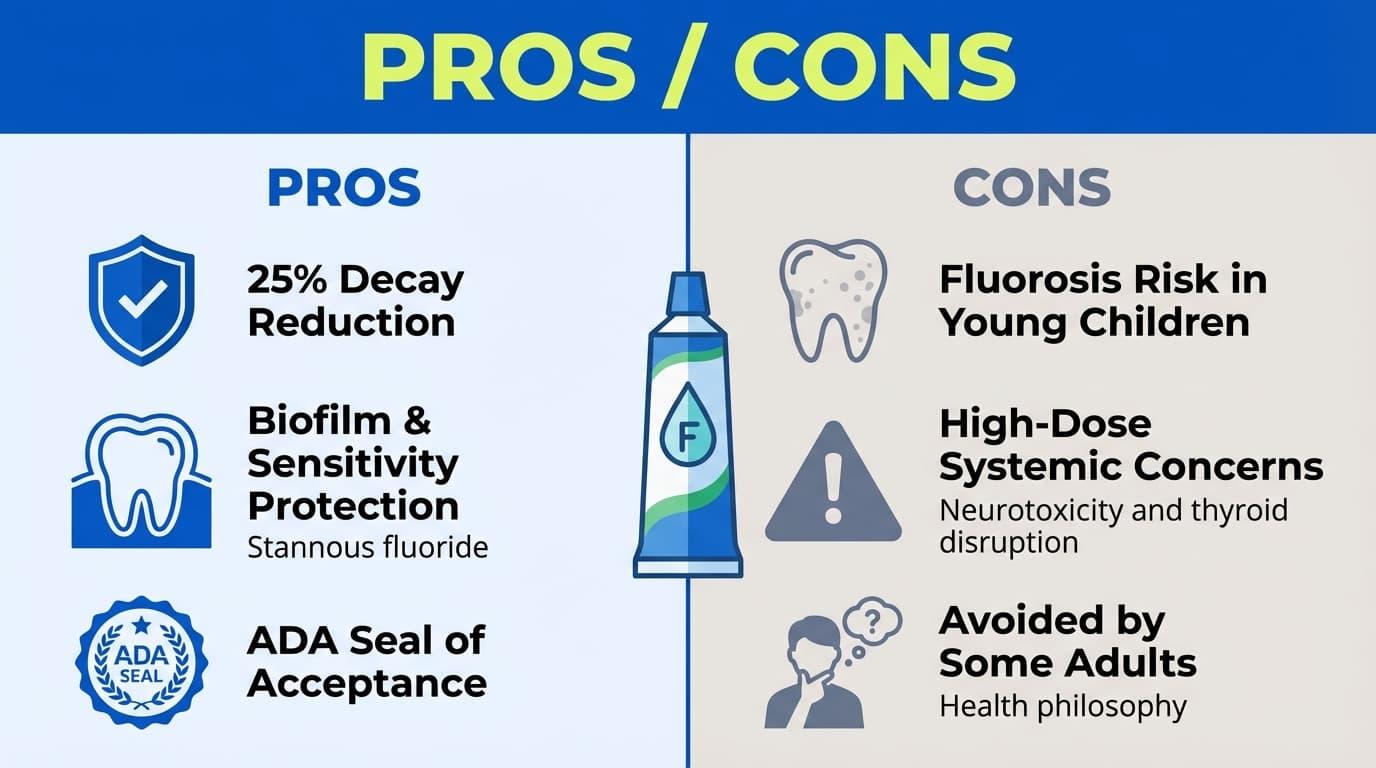
Fluoride toothpastes have been mainstream since the 1950s. It works on the mechanism that fluoride slows the demineralization process, promotes enamel repair, and helps reduce bacteria in plaque buildup.
Pros
-
Consistent use can effectively prevent tooth decay by at least 25% in adults and children.
-
Stannous fluoride formulas offer extra benefits. These include biofilm reduction, gum disease protection, and as a sealant for the tiny holes in your enamel to block out tooth sensitivity.
-
Carries ADA Seal of Acceptance and global professional endorsements
Cons
-
Dental fluorosis (permanent white enamel spots) risk in very young children who swallow toothpaste during teeth formation.
-
High-dose systemic fluoride exposure (far above toothpaste levels) shows signals for potential neurotoxicity and thyroid disruption.
-
Some adults avoid fluoride due to health philosophy, existing conditions, or community water fluoridation exposure.
For most people, the benefits of fluoride and fluorinated mouthwash outweigh the risks. This is most notable when you use a pea-sized amount of toothpaste as directed.
What “Fluoride-Free” Really Means
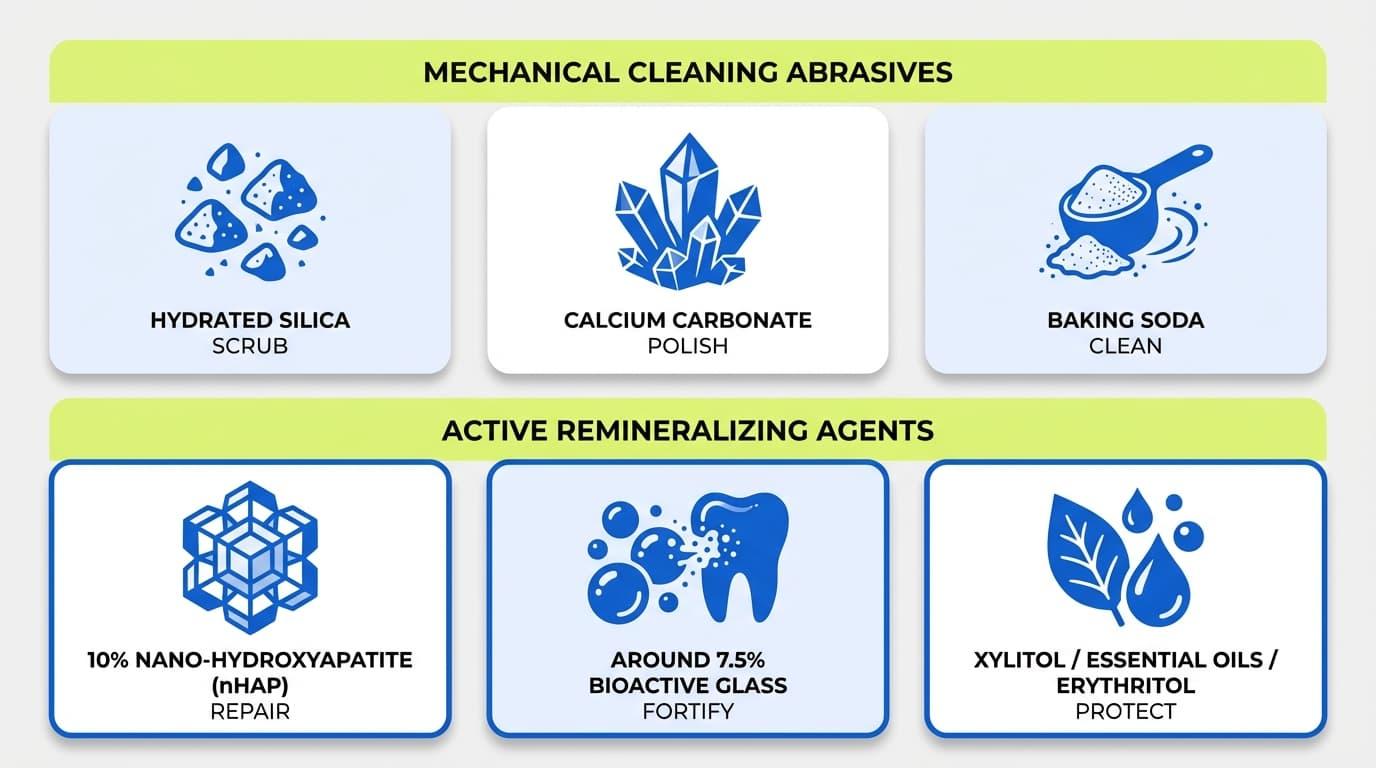
“Fluoride-free” simply means no added fluoride compounds. This doesn’t automatically translate to safer or more effective for dental hygiene habits.
Basic non fluoride toothpaste relies on mechanical cleaning via abrasives like hydrated silica, calcium carbonate, or baking soda. Modern fluoride free options usually contain active remineralizing agents such as:
-
10% nano-hydroxyapatite (nHAP)
-
Around 7.5% bioactive glass
-
Supportive ingredients like xylitol, essential oils, erythritol.
The biggest risk with fluoride-free toothpaste isn’t toxicity. It's the risk of inadequate cavity control if the formula lacks clinically tested actives or if proper brushing techniques are neglected.
Fluoride-Free, Reimagined: Hydroxyapatite & Bioactive Glass
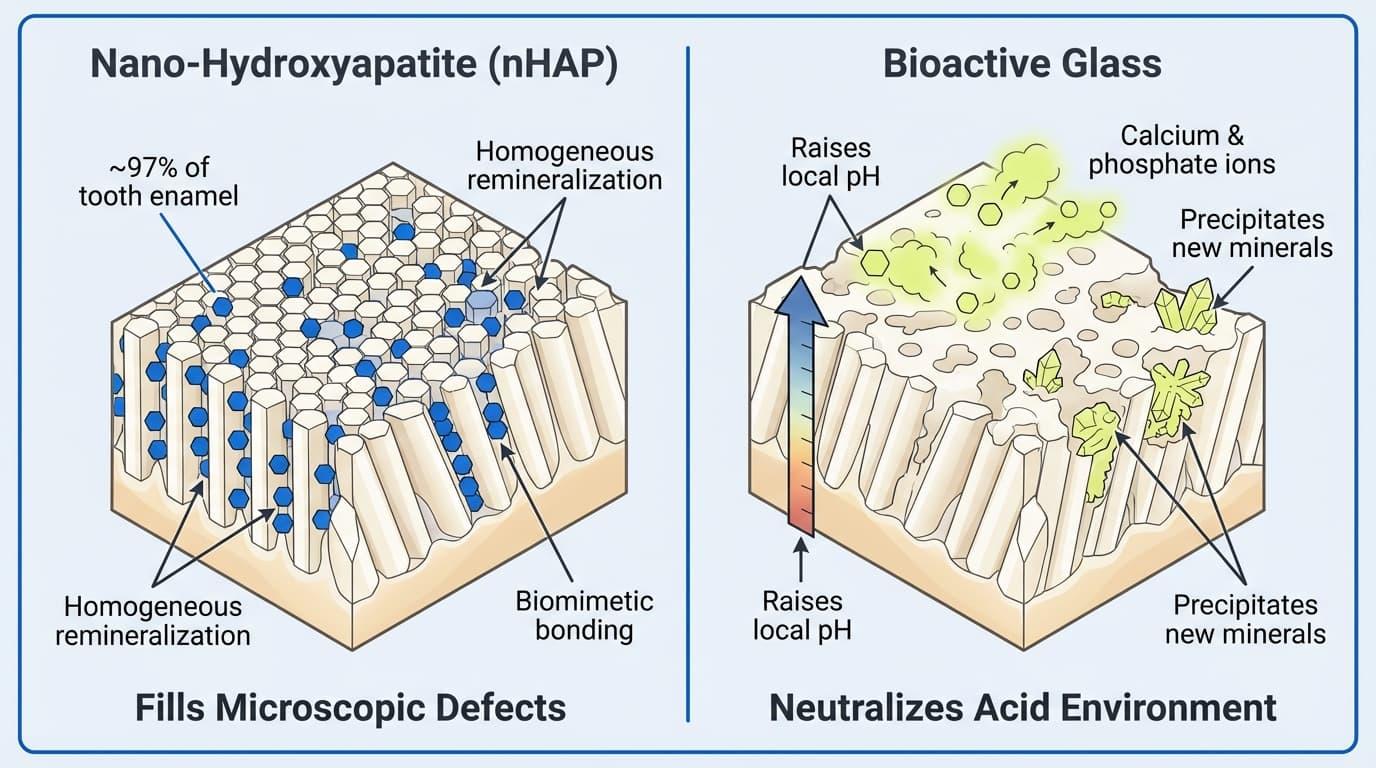
Nano-hydroxyapatite and bioactive glass represent the two best-studied fluoride free technologies for enamel repair.
Hydroxyapatite is the natural mineral comprising ~97% of your tooth enamel. Unlike fluoride’s surface-layer protection, nHAP particles physically bond to the tooth. They fill up microscopic defects and create homogeneous remineralization throughout the lesion depth.
The Clinical Case for Hydroxyapatite
-
A randomized control trial by the University of Texas Health Science Center at San Antonio found 10% nHAP achieved remineralization of early caries statistically equivalent to fluoride toothpaste, fully preventing demineralization on sound enamel.
-
A 2025 systematic review showcased four robust RCTs proving nano-hydroxyapatite toothpaste's non-inferiority to fluoride for caries prevention in low-to-moderate risk populations.
Because nHAP is chemically identical to your natural tooth structure, it doesn't just sit on the surface. It integrates into the enamel to replace lost minerals exactly where they are needed. This phenomenon is referred to as bionimetic bonding.
The Science of Bioactive Glass
Bioactive glass releases calcium and phosphate ions. These ions raise the local pH to create an environment that is less hospitable to cavity-causing bacteria. By neutralizing the acidic conditions these bacteria thrive in, the glass helps precipitate new minerals onto the enamel surface.
In a 27-month study that tested 1,063 young kids on two toothpastes—one with bioactive glass and one with 800 ppm fluoride.
The two toothpastes slowed tooth decay about equally. However, both of them allowed around 2+ new cavities per child, underperforming higher fluoride standards.
This suggests that bioactive glass can be a good teammate for remineralization. But its standalone power in high-risk scenarios may not yet match the high-concentration fluoride benchmarks.
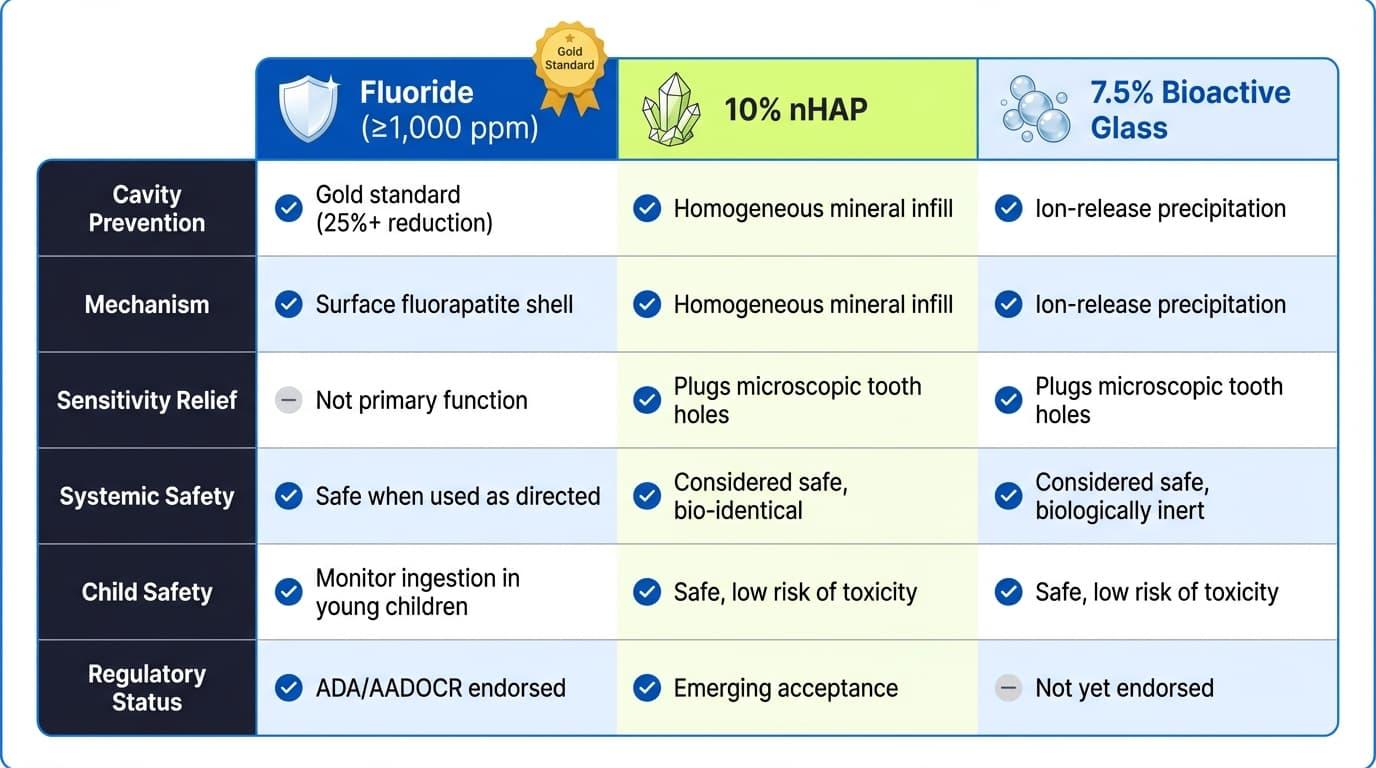
Fluoride vs Fluoride-Free: Head-to-Head Comparison
Who Might Prefer Fluoride Toothpaste?
Fluoride remains the pragmatic choice if you fall in any of these categories:
-
Adults with a history of multiple cavities or frequent new decay.
-
People with high sugar/acid exposure or dry mouth conditions.
-
Orthodontic patients prone to white-spot lesions.
-
Those without access to regular dental check-ups or routine dental care.
-
Communities without water fluoridation where fluoride intake is limited.
Who Might Prefer Fluoride-Free Toothpaste?
For the “label detective” who already reads every ingredient:
-
Adults comfortable with meticulous diet and brushing habits seeking clean-ingredient alignment.
-
Individuals with thyroid or kidney concerns working to minimize fluoride consumption.
-
Families in areas with high fluoride levels in water supply wanting to reduce total exposure.
-
Those who’ve experienced dental fluorosis (called dental fluorosis in mild cases: white streaks) and want to avoid fluoride going forward.
As observed by Today's RDH, a dental hygiene resource for clinical news, toothpaste with 10% nano-HA has been shown to be just as effective as fluoridated toothpaste for the prevention of caries.
Safety, Side Effects & Misconceptions
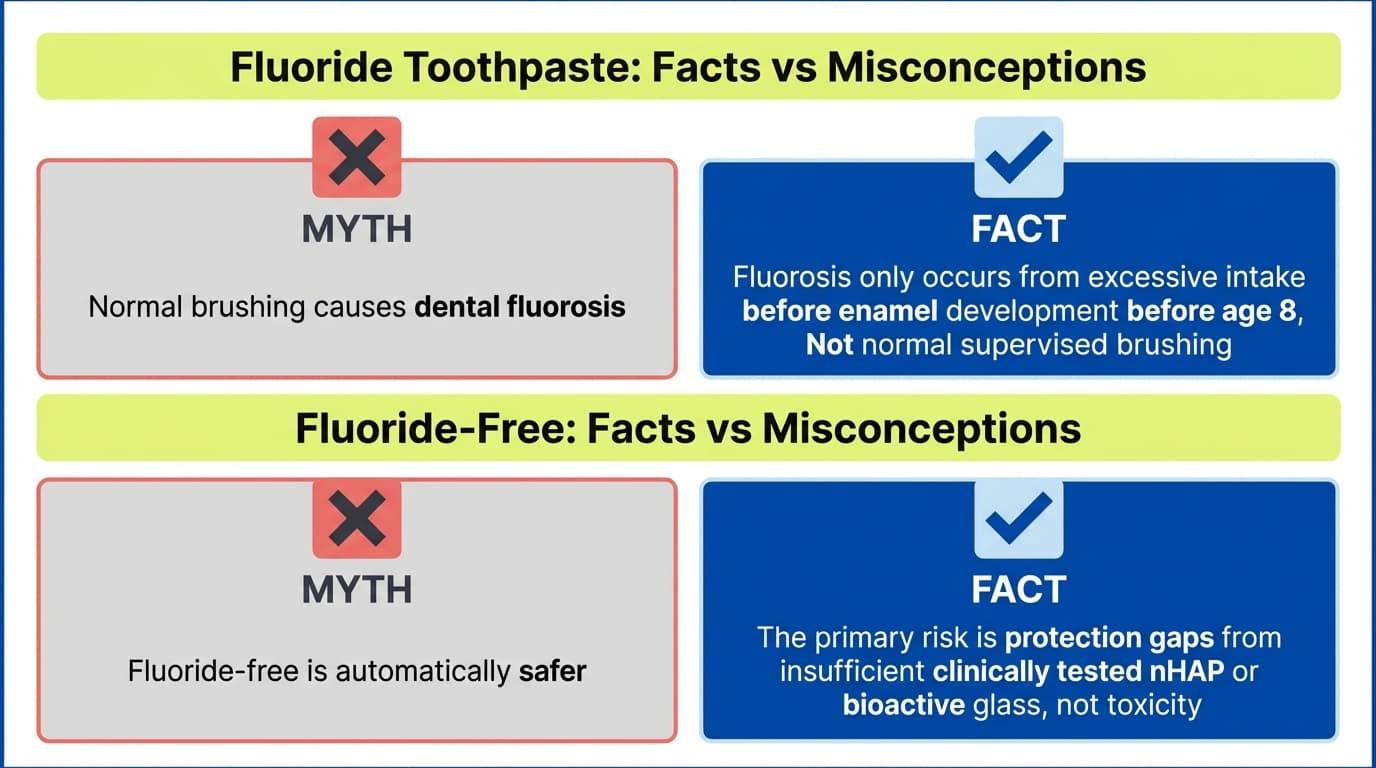
Both fluoride and fluoride-free toothpastes are generally safe when used as directed. Understanding the nuances of each helps separate clinical facts from common internet myths.
Is Fluoride Toothpaste Safe?
The consensus among health organizations remains that fluoride toothpaste is safe at levels well-established for daily use.
-
Dental Fluorosis: This condition (permanent white enamel spots) only occurs from excessive fluoride intake during enamel development before age 8. It is caused by chronic overexposure like swallowing too much fluoride from overfluorinated water or paste, not normal supervised brushing.
-
Toxicity Thresholds: Acute toxicity requires ingesting far more than normal brushing provides. High-dose systemic concerns are valid in industrial or unregulated water contexts. This, however, differs from twice-daily brushing with recommended amounts.
The Safety Profile of Fluoride-Free Options
Modern fluoride-free alternatives offer a high degree of biocompatibility. These often come without the need for strict ingestion warnings.
-
Biocompatibility: Since nHAP is chemically identical to your teeth and bones, it has no known systemic toxicity at toothpaste levels and is safe if small amounts are accidentally swallowed.
-
The Primary Risk: The documented risk here isn't toxicity, but rather "protection gaps." If the formula lacks clinically tested levels of nHAP or bioactive glass, or if your brushing habits are suboptimal, you may be lacking on the key benefits of healthy teeth because you're not getting enough cavity prevention.
How to Choose the Right Toothpaste for You
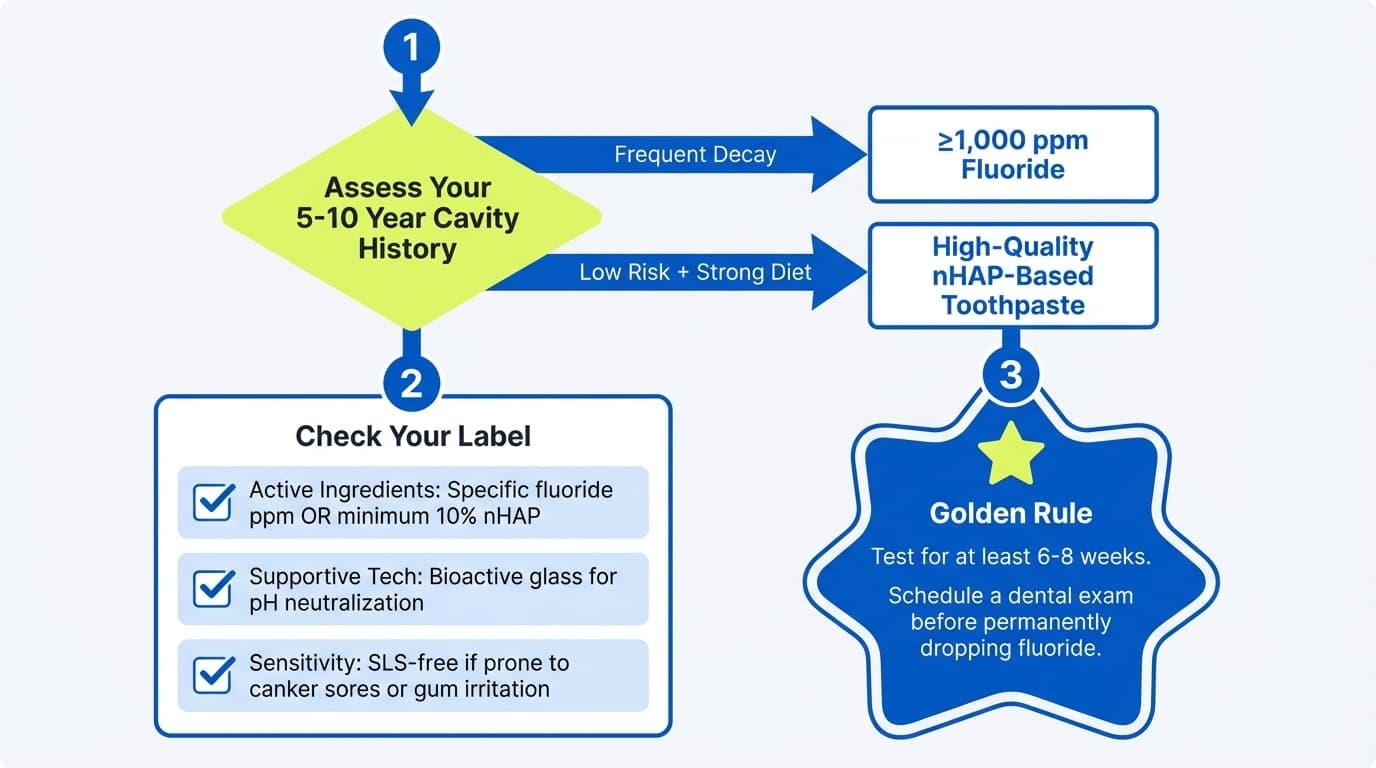
Selecting a toothpaste is about risk, values, and lifestyle, not ideology. Your goal is to find a formula that effectively helps remineralize enamel while fitting into your daily routine.
-
Assess your 5–10 year cavity history honestly. If you have a history of frequent decay, you likely need the high-strength surface protection of ≥1,000 ppm fluoride.
-
For low-risk users with strong dietary habits, opt for high-quality nHAP-based toothpastes. These fluoride-free alternatives are sufficient for daily maintenance.
The Essential Label Checklist
-
Active Ingredients: Look for a specific fluoride concentration (ppm) or a minimum of 10% nHAP to ensure the paste actually helps remineralize enamel.
-
Supportive Tech: Check for bioactive glass, which provides an extra layer of defense against acid attacks by neutralizing mouth pH.
-
Sensitivity Factors: Choose SLS-free (Sodium Lauryl Sulfate, the foaming agent) formulas if you are prone to canker sores or gum irritation.
The Golden Rule: Test any new toothpaste for at least 6–8 weeks. Always schedule a dental exam to discuss your choice before permanently dropping fluoride. Your dentist can review your X-rays for early signs of decay or weakened enamel that might not be visible to the naked eye.
Diet, Lifestyle & Oral Microbiome: Beyond the Toothpaste Debate
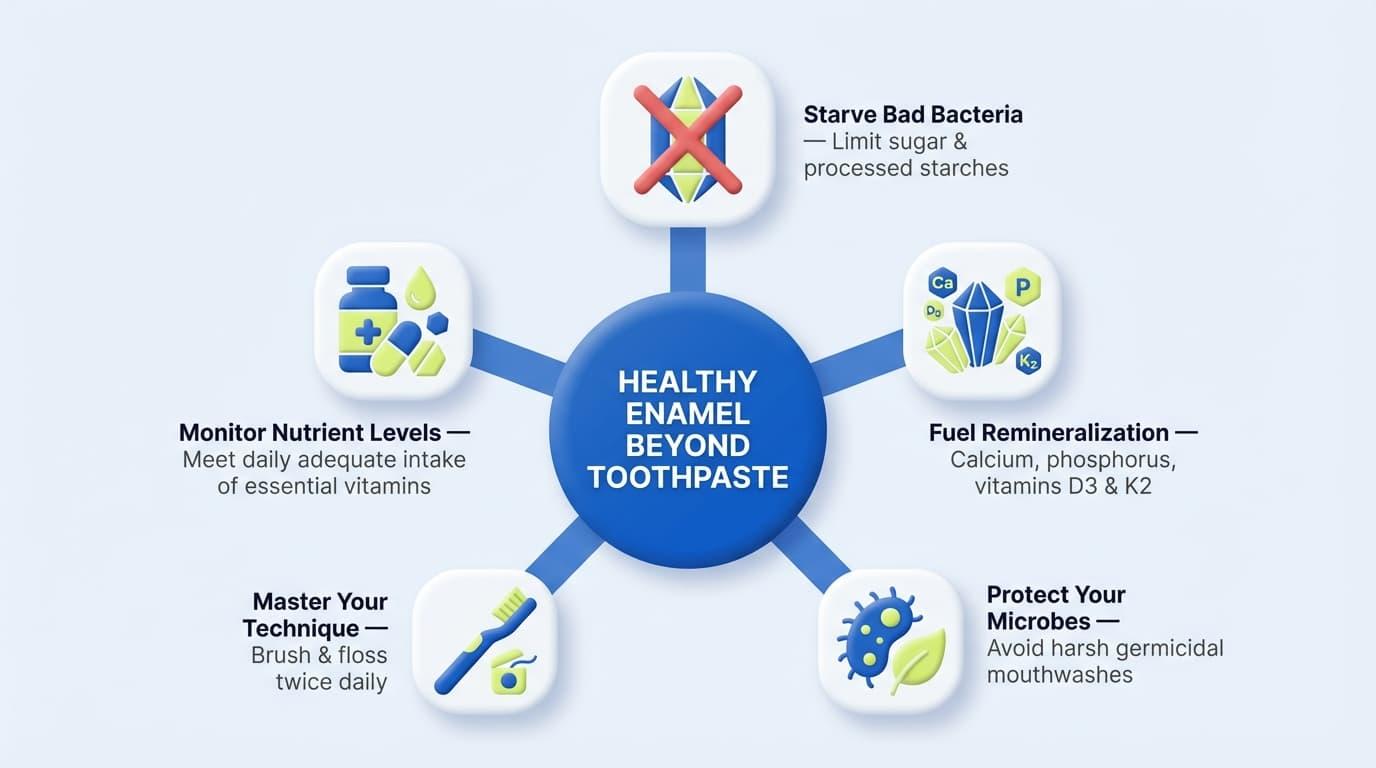
No toothpaste can fully compensate for a diet high in sugary snacks or a neglected oral care routine. Upgrading your toothpaste works best when paired with lifestyle changes that reduce the daily burden on your enamel.
-
Starve the Bad Bacteria: Limit frequent sugar and processed starches, which act as the primary fuel sources for acid-producing bacteria.
-
Fuel Remineralization: Maintain a mineral-rich diet centered on calcium, phosphorus, and vitamins D3 and K2 to support the structural integrity of your teeth from the inside out.
-
Protect Your Microbes: Support oral microbiome balance by avoiding harsh, germicidal mouthwashes that can disrupt eubiosis and kill off beneficial bacteria.
-
Master Your Technique: Clean your teeth twice daily with proper brushing and flossing; consistency remains the absolute foundation of dental health.
-
Monitor Nutrient Levels: Ensure you are meeting the recommended daily adequate intake of essential vitamins, as even the best toothpaste can't fix a systemic mineral deficiency.
Although it's good to focus on "natural" lifestyle changes. There are a few disadvantages to relying on a diet without a clinically proven remineralizing agent. This is especially true if your genetics or saliva quality put you at a higher risk for decay.
For example, dietary changes may fail to reach the tiny areas where decay starts. Without a remineralizing agent, your teeth may lack the extra defense needed to withstand daily acid exposure.
Frequently Asked Questions
Can I alternate between fluoride and fluoride-free toothpaste?
Alternating is reasonable. Use fluoride toothpaste at night (lower saliva, higher decay risk) and nHAP in the morning. This provides regular fluoride contact while lowering total exposure. Adding fluoride strategically lets you strengthen enamel overnight while supporting daytime remineralization. Discuss this hybrid approach with your dentist if you have active decay.
Is fluoride-free toothpaste enough for children?
Major organizations still recommend fluoride toothpaste for most children in age-appropriate amounts. If parents choose fluoride-free for toddlers who can’t reliably spit, prioritize brushing technique, diet control, and professional fluoride applications as advised. Stopping community water fluoridation or avoiding fluoride entirely requires careful dentist guidance based on individual caries risk.
How long does it take to see benefits from hydroxyapatite toothpaste?
Many users report reduced sensitivity and smoother enamel within 2–4 weeks. Clinical studies evaluate remineralization over 4–12 weeks. Visible improvements in white spots are gradual. It is best assessed by dentists' spitting technique or radiographs at recall visits.
Does fluoride-free toothpaste help with whitening as much as fluoride toothpaste?
Whitening comes primarily from abrasives and stain-lifting agents, not fluoride itself. Some nHAP formulations improve appearance by filling surface defects and increasing light reflection. For significant shade changes, rely on a dedicated whitening system. Both fluoride and fluoride-free pastes serve as maintenance for clean teeth.
Should I switch to fluoride-free toothpaste if I’m already cavity-free?
If you have a long history of being cavity-free and continue to receive routine dental care, you might be a great candidate for an nHAP-based paste. However, it is important to check your teeth for developing cavities over the first 12–24 months. Moving away from fluoride isn't permanent. But choosing a suboptimal formula could potentially harm tooth enamel protection if your oral environment changes.
Can I use a natural mouthwash with these toothpastes?
Yes, but timing matters. Using a natural mouthwash immediately after brushing can wash away the concentrated fluoride or hydroxyapatite before they have a chance to bond to your teeth. To get the most out of your remineralizing toothpaste, wait at least 30 minutes before rinsing with any mouthwash. This will ensure your enamel gets the full benefit of the active ingredients.